Uploaded Tactic
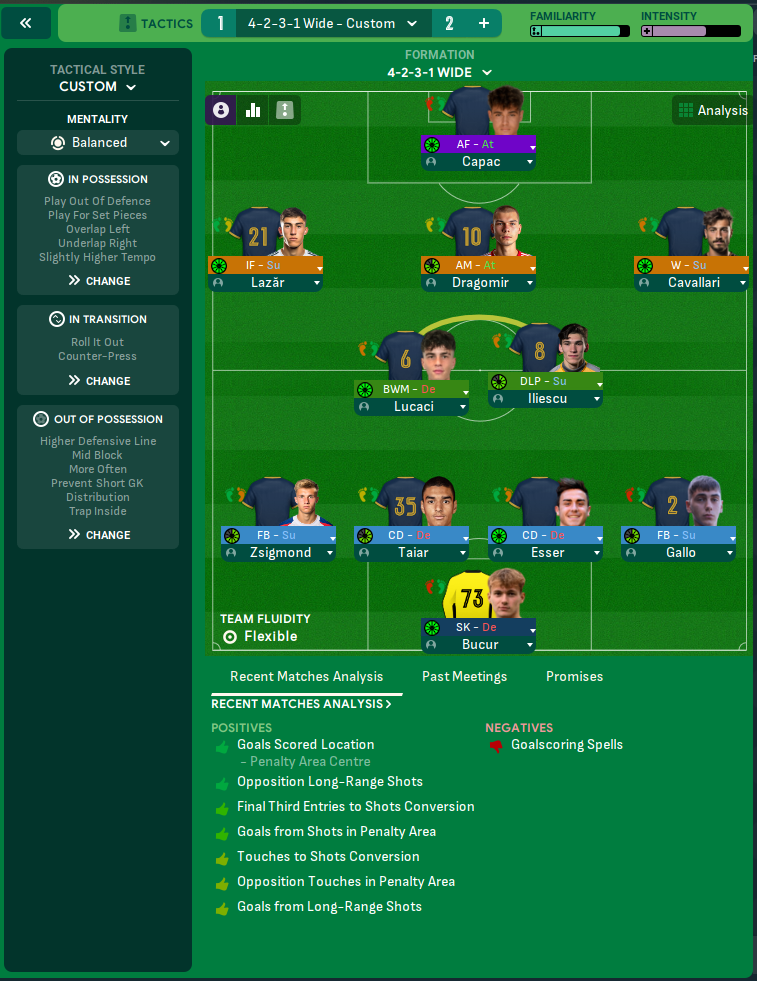
Formation & Style
Tactical Style:Custom
Mentality:Balanced
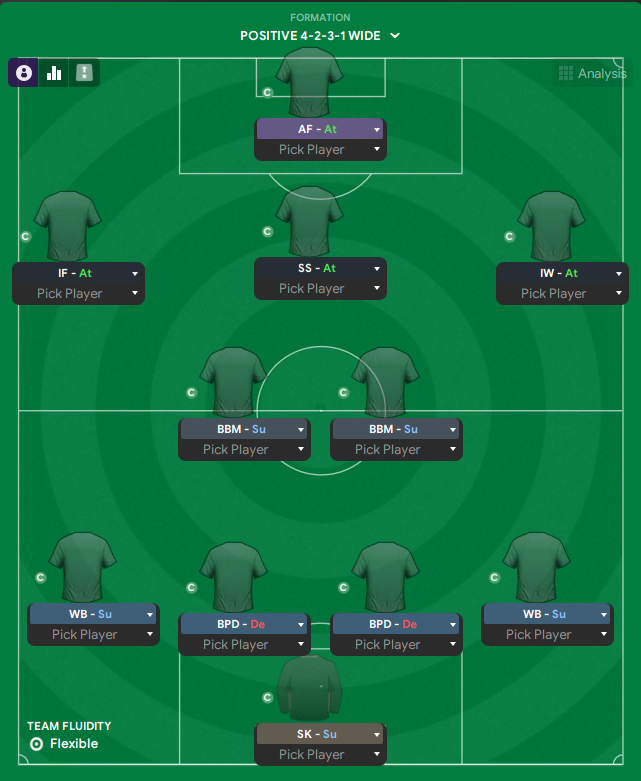
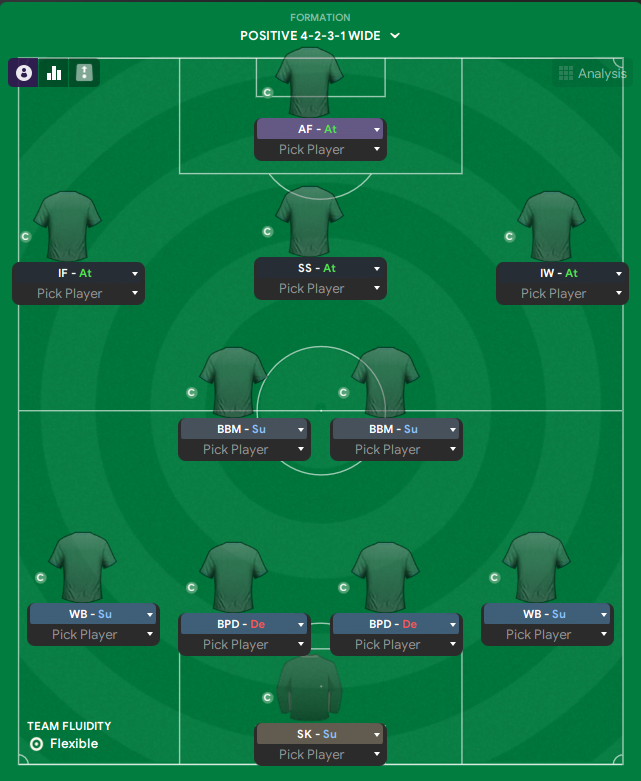
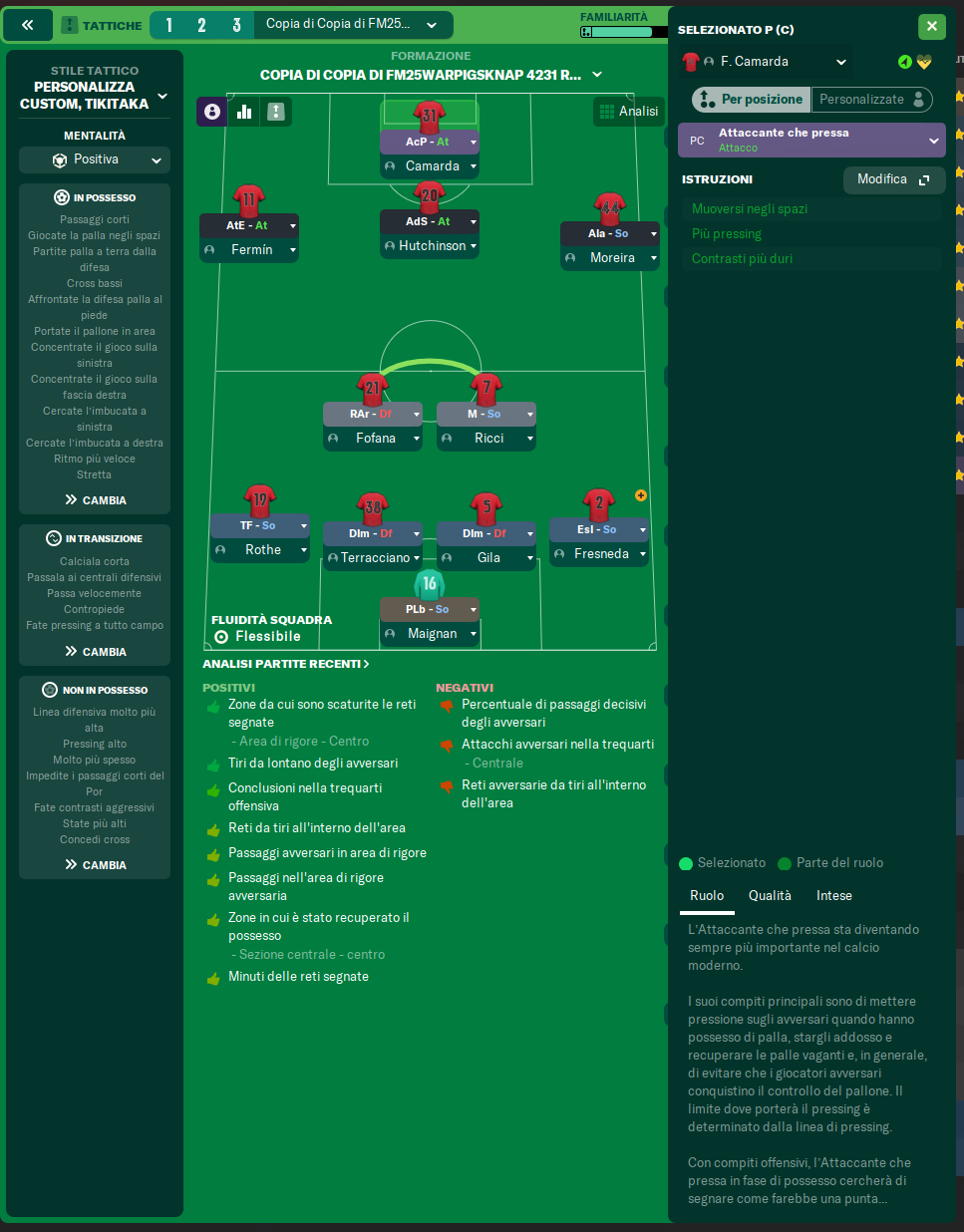
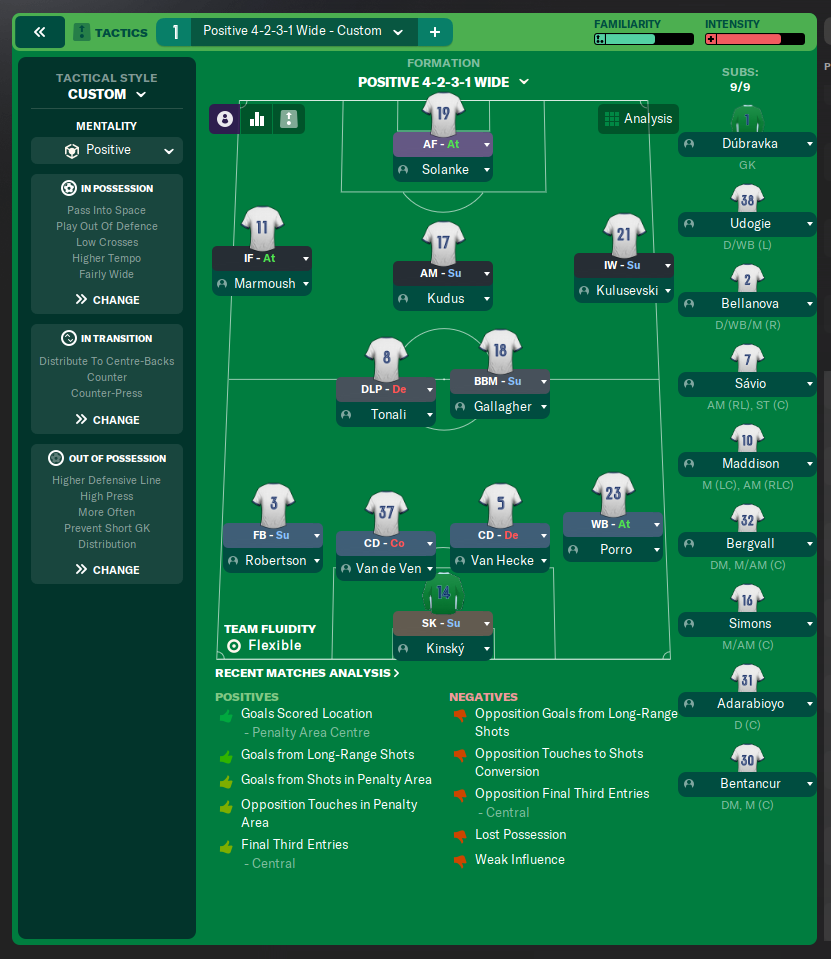
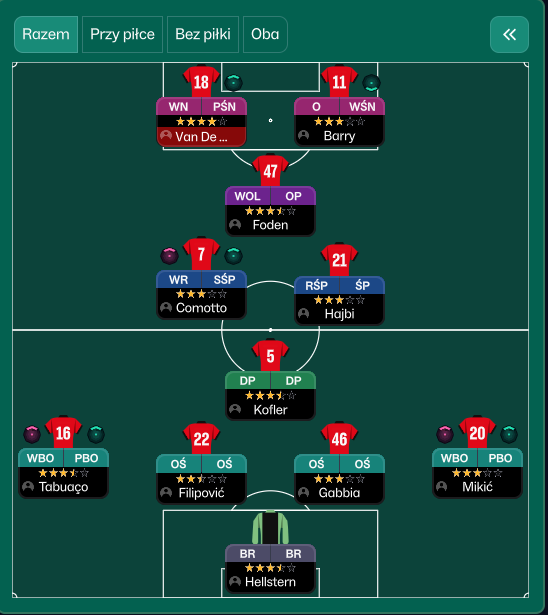
Formation:4-2-3-1 Wide
Team Fluidity:Flexible
In Possession
Play Out Of Defence
Play For Set Pieces
Overlap Left
Underlap Right
Slightly Higher Tempo
In Transition
Roll It Out
Counter-Press
Out of Possession
Higher Defensive Line
Mid Block
Prevent Short GK Distribution
Trap Inside
Team Shape Without Ball
No team shape without ball data available
Team Shape With Ball
No team shape with ball data available
Key Strengths
Attacking Versatility
With a mixture of roles like the Advanced Forward and Inside Forward, the tactic can create diverse attacking options, stretching defenses.
Midfield Control
The combination of a Deep Lying Playmaker and a Ball Winning Midfielder allows for both build-up play and defensive stability in midfield.
Wide Play Exploitation
Utilizing both Winger and Full Back roles, width can be effectively used to open up defenses, creating crossing opportunities.
Defensive Solidity
A balanced defensive setup, including a mid block and a higher defensive line, provides a sound defensive structure against counter-attacks.
Conflicting Directions
Mixed Mentality Peer Pressure
With a balanced mentality but a slight emphasis on attacking roles (e.g., Advanced Forward), this can lead to imbalance if the players are not adequately synchronized.
Counter-Press Risk
While counter-pressing can be effective, it may leave gaps if the attacking players do not track back, especially with players in higher positions.
High Line Vulnerability
A higher defensive line can expose the team to fast attackers, particularly if the midfield does not provide sufficient cover.
Inconsistent Pressing
The combination of a mid block with a higher defensive line can lead to confusion about when to press opponents effectively.
Tactical Suggestions
Adjust Defensive Line
To minimize vulnerability against fast attackers, consider lowering the defensive line or adopting tighter marking to complement the counter-press.
Role Adaptation in Midfield
Evaluate using a more attacking role to balance with the Ball Winning Midfielder, allowing for a dynamic midfield presence while retaining stability.
Improve Width in Attack
Consider enhancing width further by encouraging full-backs to overlap more aggressively, which can stretch opposing defenses and open up more space.
Focus on Set Pieces Strategy
Emphasizing set piece training can take advantage of the set pieces tactic and improve goal scoring opportunities from dead-ball situations.
Ask Questions About Your Lineup
Related Tactics
Guides for this formation
The tactical theory behind the 4-2-3-1 Wide: roles, instructions, and the trade-offs that decide whether the system holds up.
Player pairings
Midfield Pairs in 4-2-3-1 and 4-4-2
Double pivots and flat pairs in 4-2-3-1 and 4-4-2: when each pairing works, when it collapses, and the AMC unicorn that rescues both.
Read guide
Playing styles
Gegenpressing: A Full Guide
Klopp-style gegenpressing in FM, including squad profile, line-and-press pairing, sustainable workload, and the antipatterns to avoid.
Read guide