Uploaded Tactic
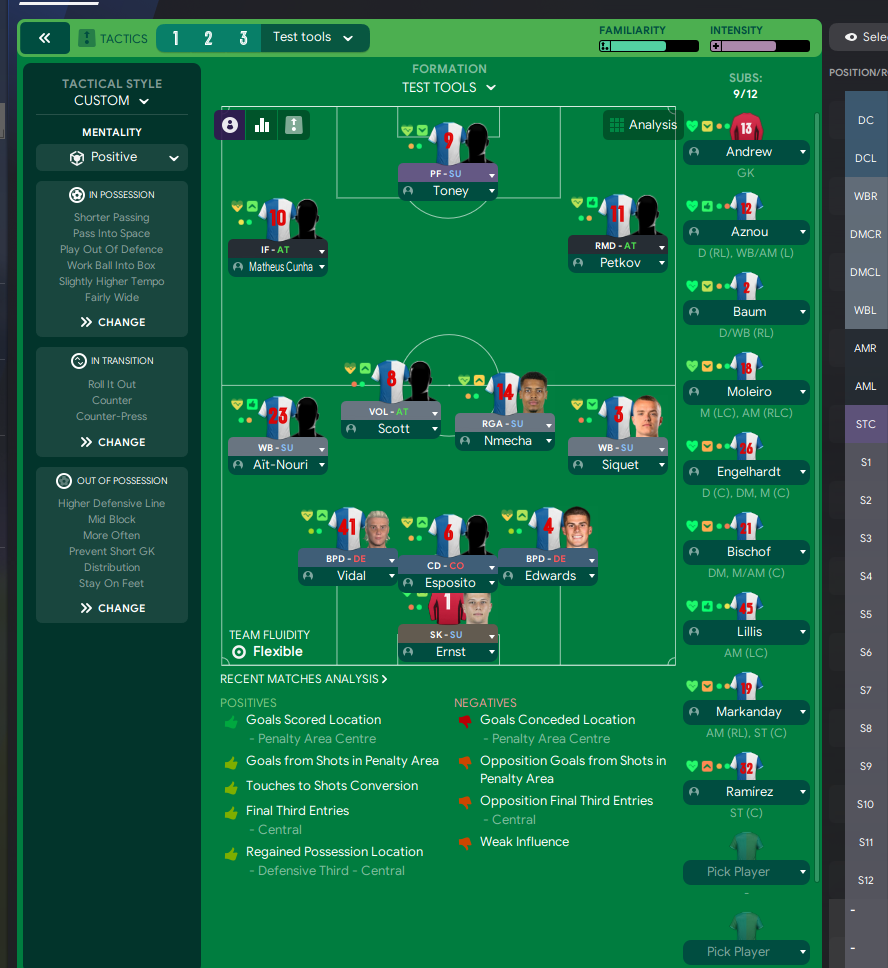
Formation & Style
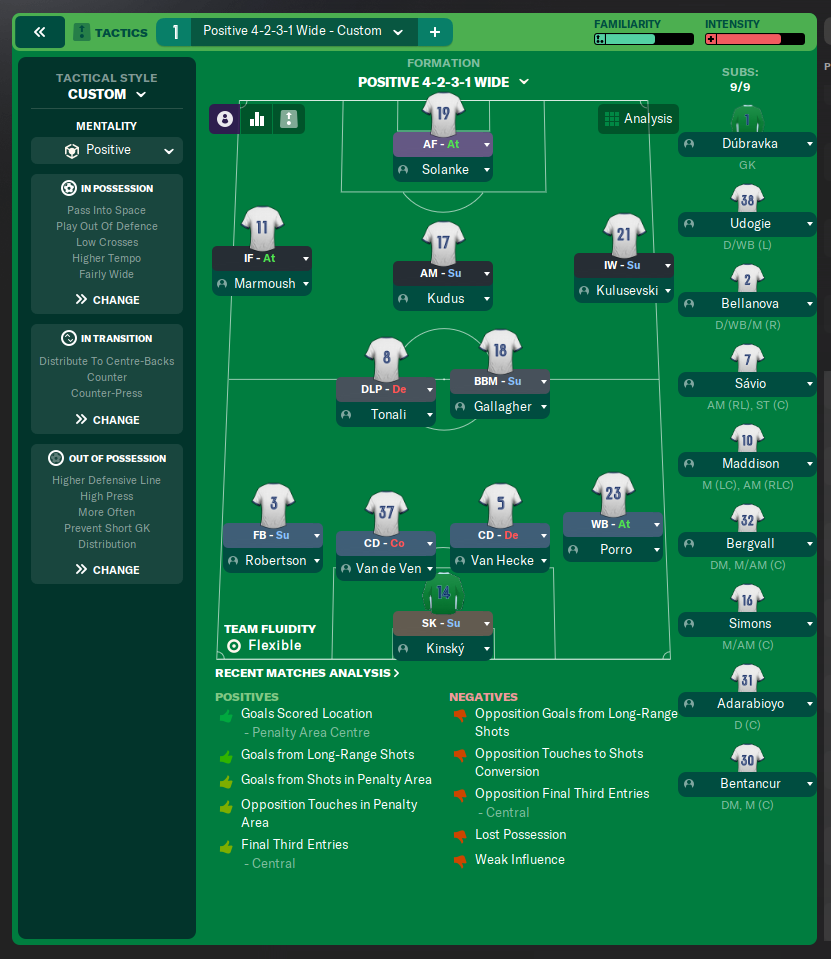
Tactical Style:Custom
Mentality:Positive
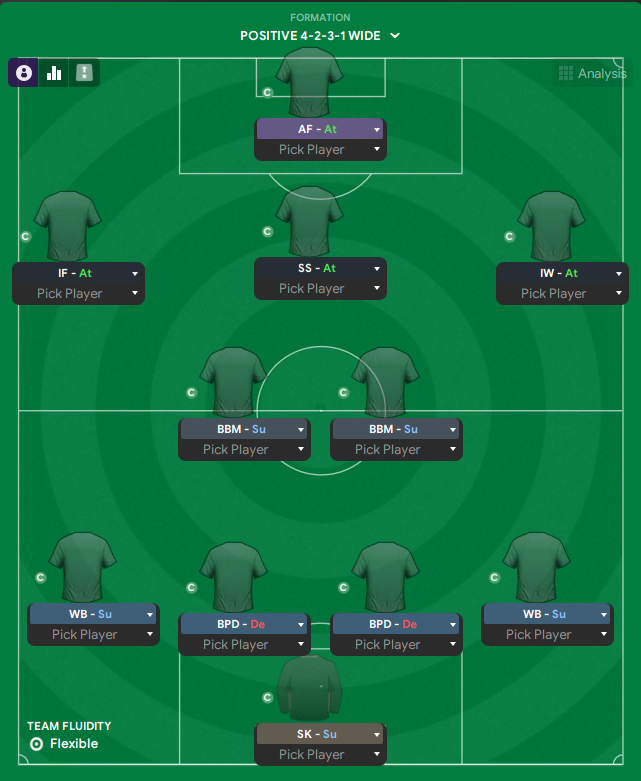
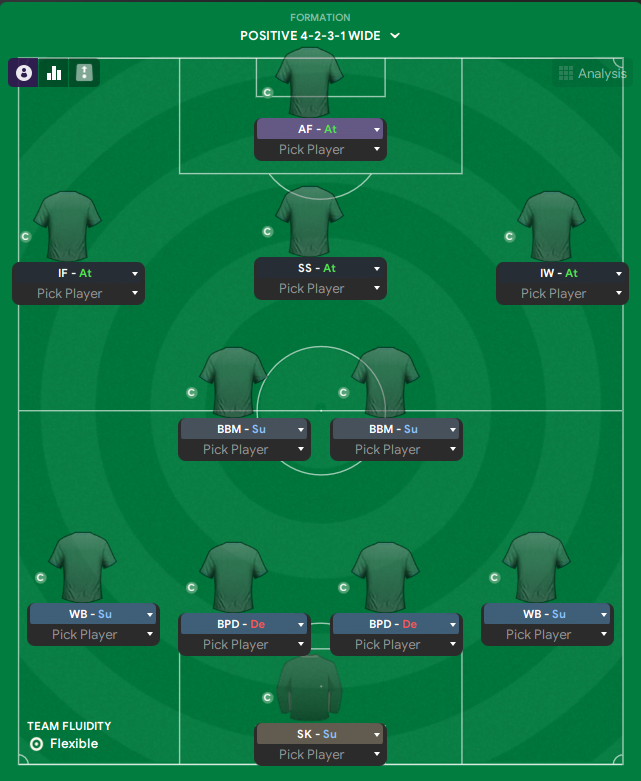
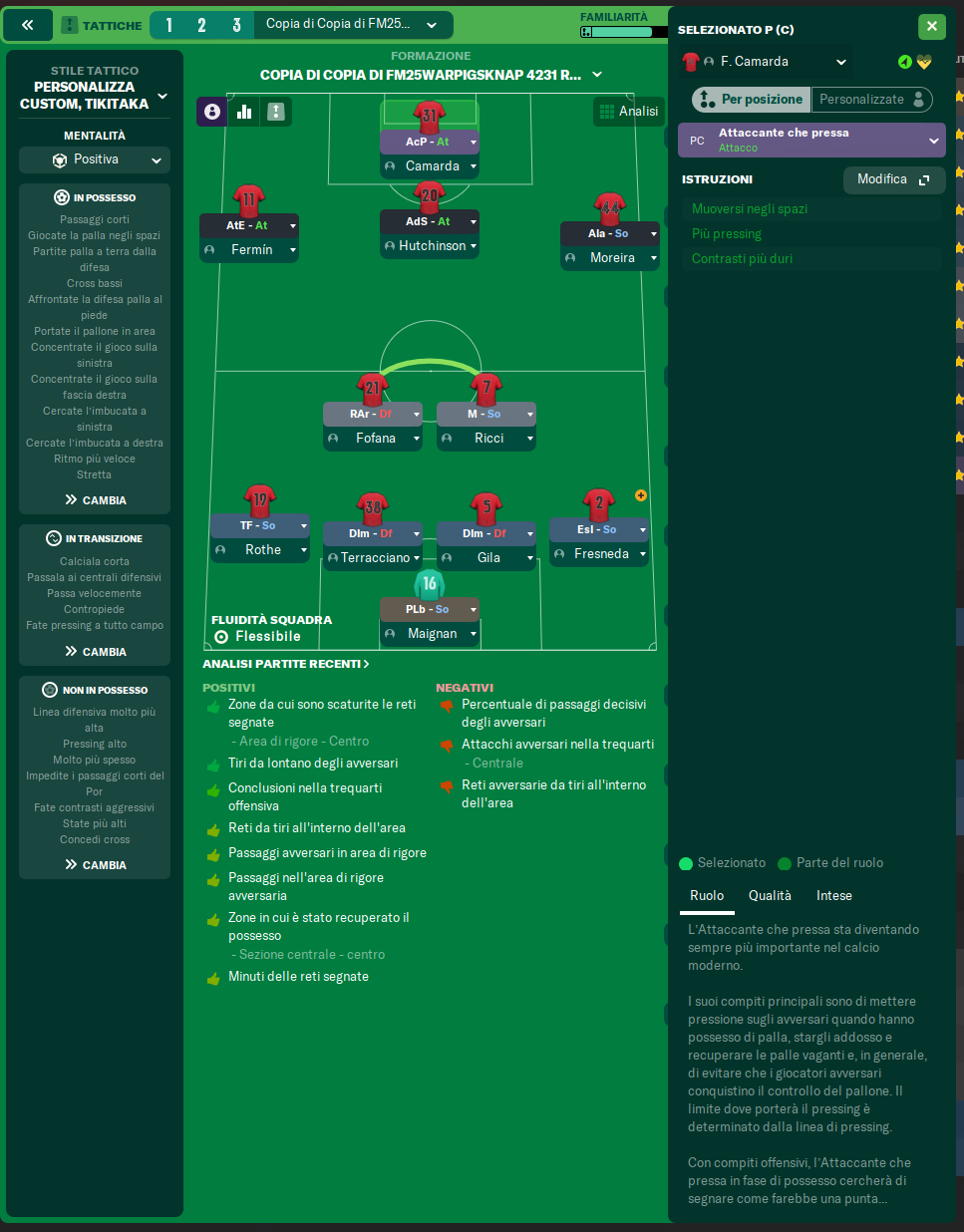
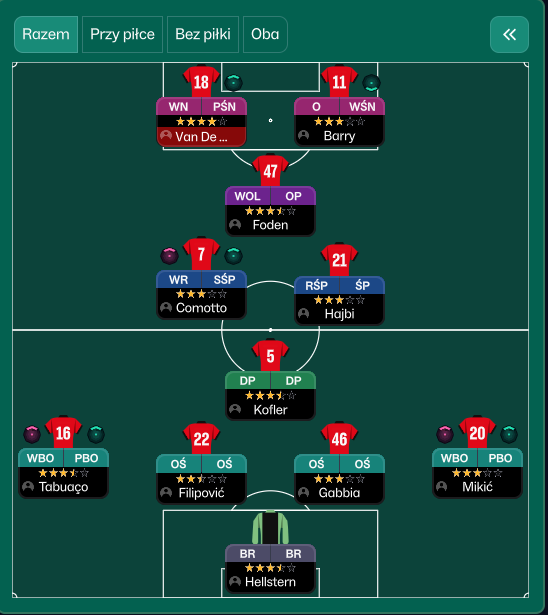
Formation:4-2-3-1 Wide
Team Fluidity:Flexible
In Possession
Shorter Passing
Pass Into Space
Play Out Of Defence
Work Ball Into Box
Fairly Wide
Slightly Higher Tempo
In Transition
Roll It Out
Counter
Counter-Press
Out of Possession
Higher Defensive Line
Mid Block
More Often Prevent Short GK Distribution
Stay On Feet
Team Shape Without Ball
Shape:Mid Block
Description:The team maintains a mid-block to control the central areas and limit the opposition's passing lanes.
Evidence:Higher Defensive Line combined with 'Stay On Feet' speaks to a balance of aggression and control.
Team Shape With Ball
Shape:4-2-3-1
Description:Four attackers including an inside forward and an advanced playmaker who provide both width and central penetration.
Evidence:Utilization of inside forwards and roaming playmaker indicates intent to exploit gaps in opposition lines.
Phase Description
Attacking Play
Focuses on creating chances through patient build-up, utilizing width and individual skill, encouraging shots from within the penalty area.
Defensive Transition
Quickly regains possession by employing a counter-pressing style while maintaining a mid-block.
Main Focus
Operational efficiency through structured build-up play and exploiting spaces left by opponents.
Key Strengths
Goal Creation
The focus on working the ball into the box leads to higher-quality chances.
Defensive Solidity
The combination of a higher defensive line and a ball-playing defender ensures effective possession recycling.
Fluid Midfield Play
The two midfielders provide depth and support, aiding both attack and defense efficiently.
Conflicting Directions
Counter-Press Effectiveness
Counter-press may be undermined by a mid-blocking strategy, potentially slow to regain possession.
Wide Play Threat
Over-reliance on wing-backs can be exposed against teams employing wide players.
Overcommitment in Attack
With multiple attacking roles, defensive transition may suffer if possession is lost high.
Tactical Suggestions
Increase Defensive Cohesion
Consider using a more conservative CB role to bolster defensive stability.
Adjust Offensive Roles
Experiment with a more classic winger role to provide width without cutting inside too much.
Enhance Counter-Press
Adjust pressing to be more aggressive when regaining possession to complement the mid-block.
Ask Questions About Your Lineup
Related Tactics
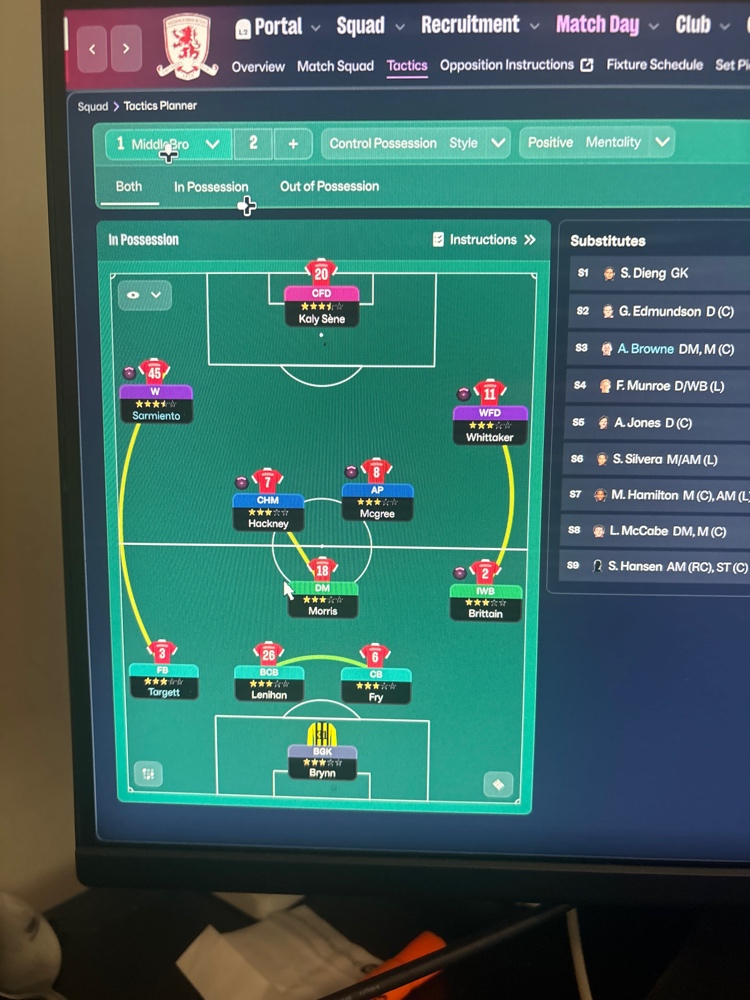
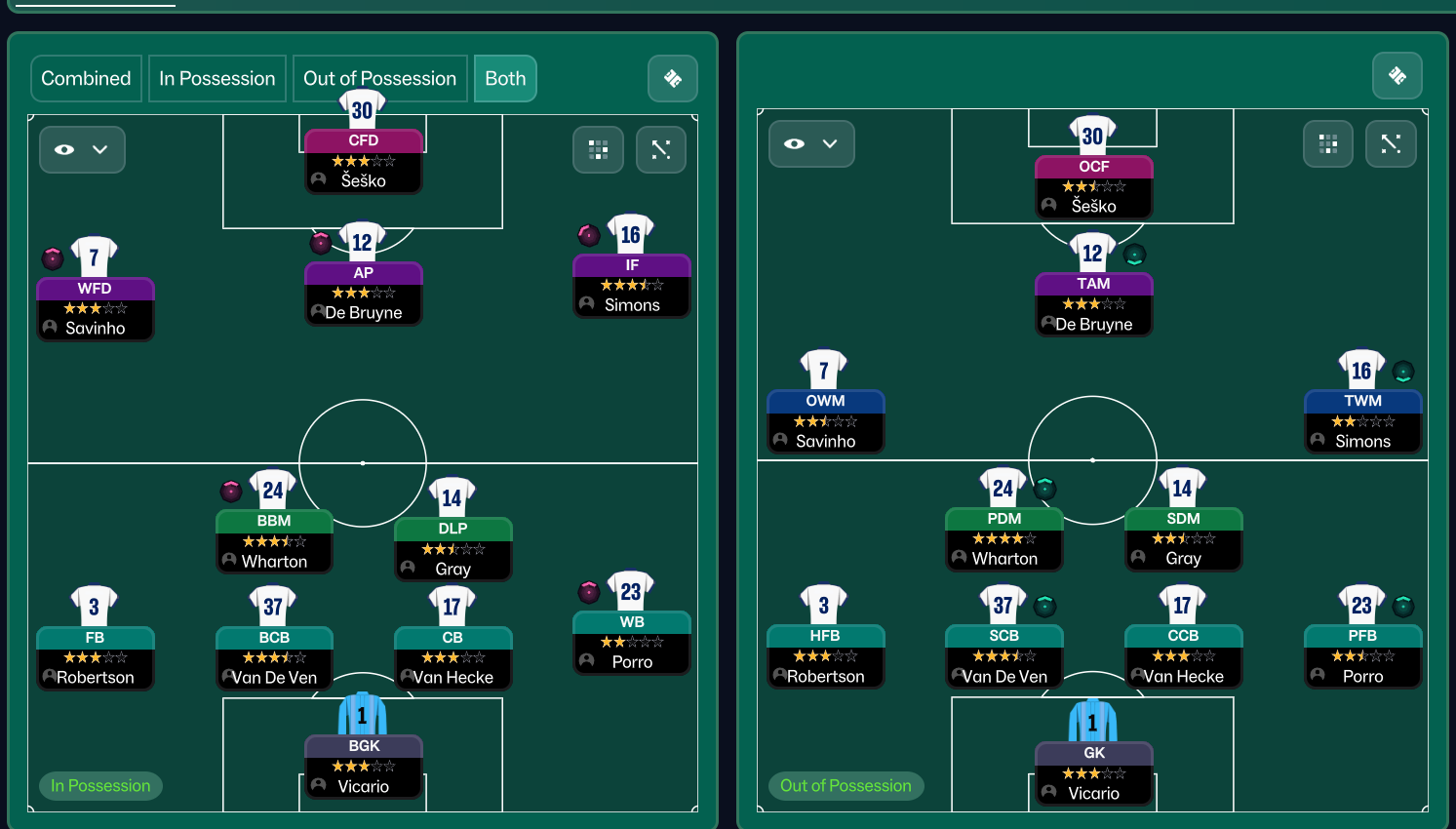
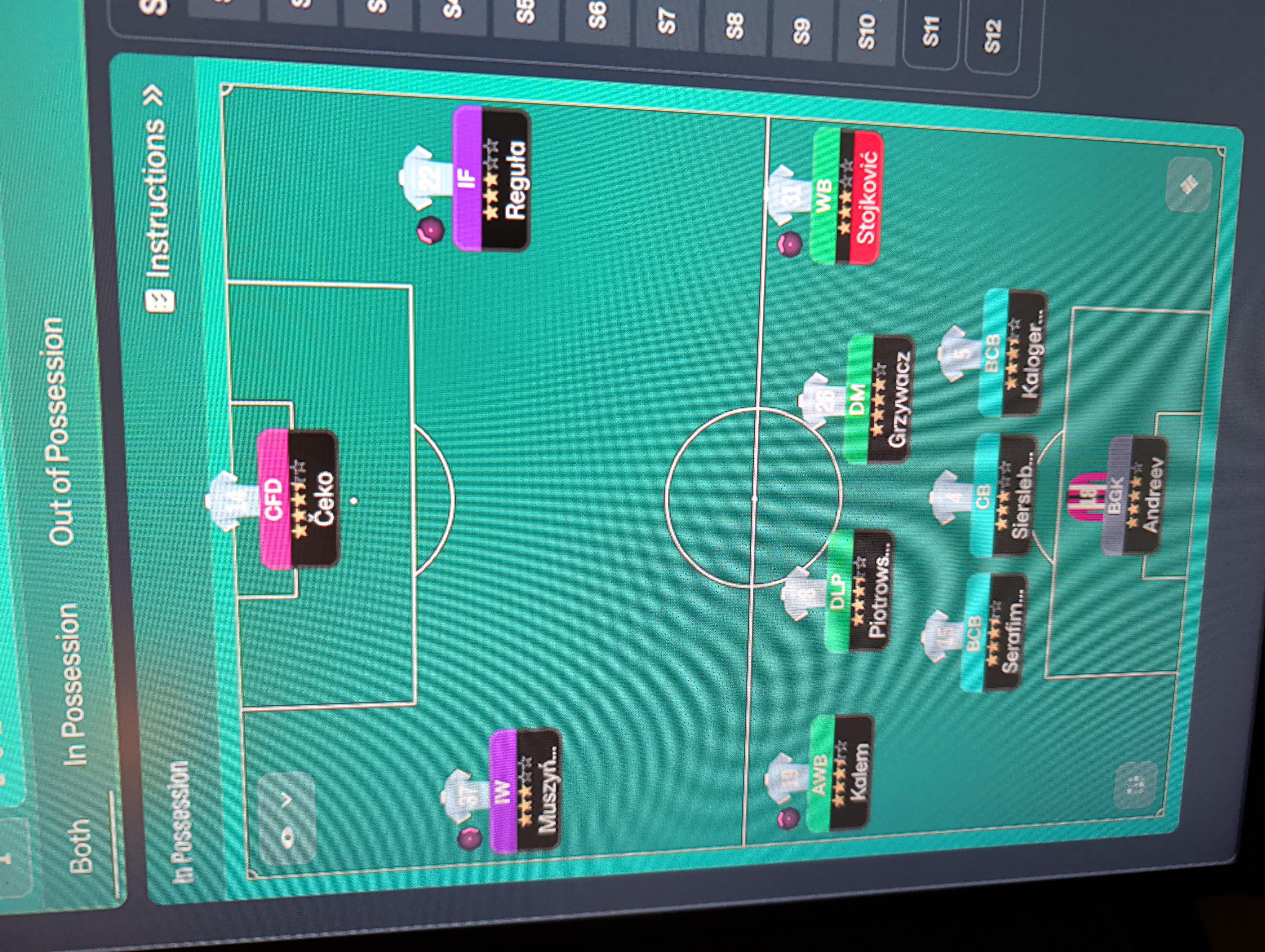
Guides for this formation
The tactical theory behind the 4-2-3-1 Wide: roles, instructions, and the trade-offs that decide whether the system holds up.
Player pairings
Midfield Pairs in 4-2-3-1 and 4-4-2
Double pivots and flat pairs in 4-2-3-1 and 4-4-2: when each pairing works, when it collapses, and the AMC unicorn that rescues both.
Read guide
Playing styles
Gegenpressing: A Full Guide
Klopp-style gegenpressing in FM, including squad profile, line-and-press pairing, sustainable workload, and the antipatterns to avoid.
Read guide