Uploaded Tactic
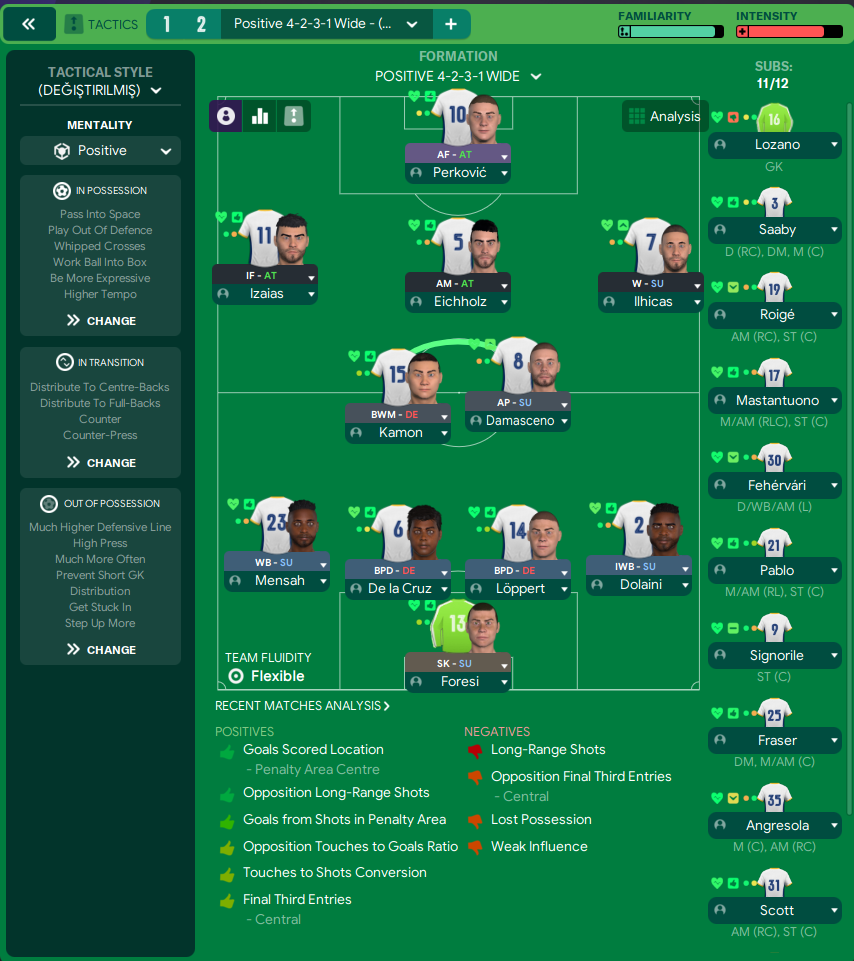
Formation & Style
Tactical Style:Positive
Mentality:Positive
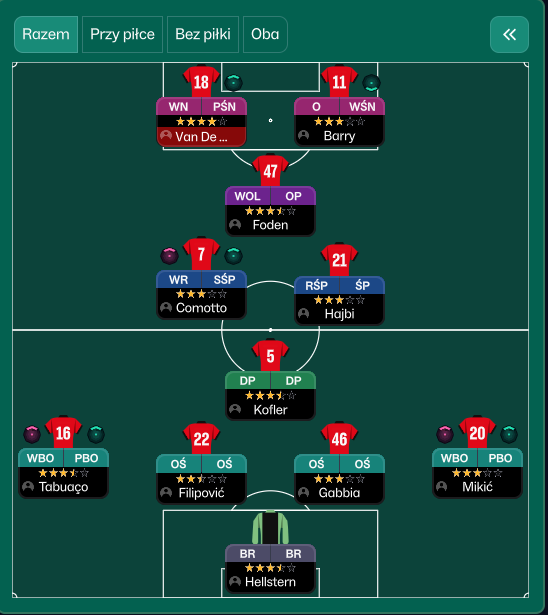
Formation:4-2-3-1 Wide
Team Fluidity:Flexible
In Possession
Pass Into Space
Play Out Of Defence
Whipped Crosses
Work Ball Into Box
Be More Expressive
Higher Tempo
In Transition
Distribute To Centre-Backs
Distribute To Full-Backs
Counter
Counter-Press
Out of Possession
Much Higher Defensive Line
High Press
Much More Often Prevent Short GK Distribution
Get Stuck In
Step Up More
Team Shape Without Ball
Shape:4-2
Description:A compact shape with two holding midfielders providing cover for the back line in a high defensive setup.
Evidence:BWM-D at [3,3] and AP-S at [3,4] support the defence.
Team Shape With Ball
Shape:3-2-1
Description:An attacking shape with three players in advanced positions supported by two in midfield, allowing for varied attacking options.
Evidence:Advanced Forward at [6,3], Inside Forward at [6,2], and Attacking Midfielder at [5,3] maximize space.
Phase Description
Attacking Play
The team focuses on utilizing width through the use of Inside Forwards and Wing-Backs, complemented by a positive mentality to encourage forward play.
Defensive Transition
Upon losing possession, the team quickly counters with a high pressing system to regain the ball, supported by a higher defensive line.
Main Focus
Utilizing the attacking width to create space in central areas for goal-scoring opportunities.
Key Strengths
Goals Scored Location
Effective at scoring through the Central area of the penalty box, reflecting high conversion.
Opposition Long-Range Shots
Efficiently limits long-range shots from opponents, reducing threat levels.
Touches to Goals Ratio
High conversion rate from touches in the penalty area to goals.
Conflicting Directions
Long-Range Shots
Struggles with allowing long-range shots against, indicating a potential weakness in defensive coverage.
Lost Possession
Team occasionally loses possession too frequently, risking counter-attacks.
Weak Influence
Some players may frequently underperform or lack impact in matches.
Tactical Suggestions
Enhance Defensive Depth
Consider adjusting roles to include more defensively minded players to handle opposition counter-attacks effectively.
Balance Attacking Width
Ensure consistent overlapping play from Full-Backs to create width while maintaining central control.
Maintain Possession
Implement more short passing options to minimize lost possession incidents.
Ask Questions About Your Lineup
Related Tactics
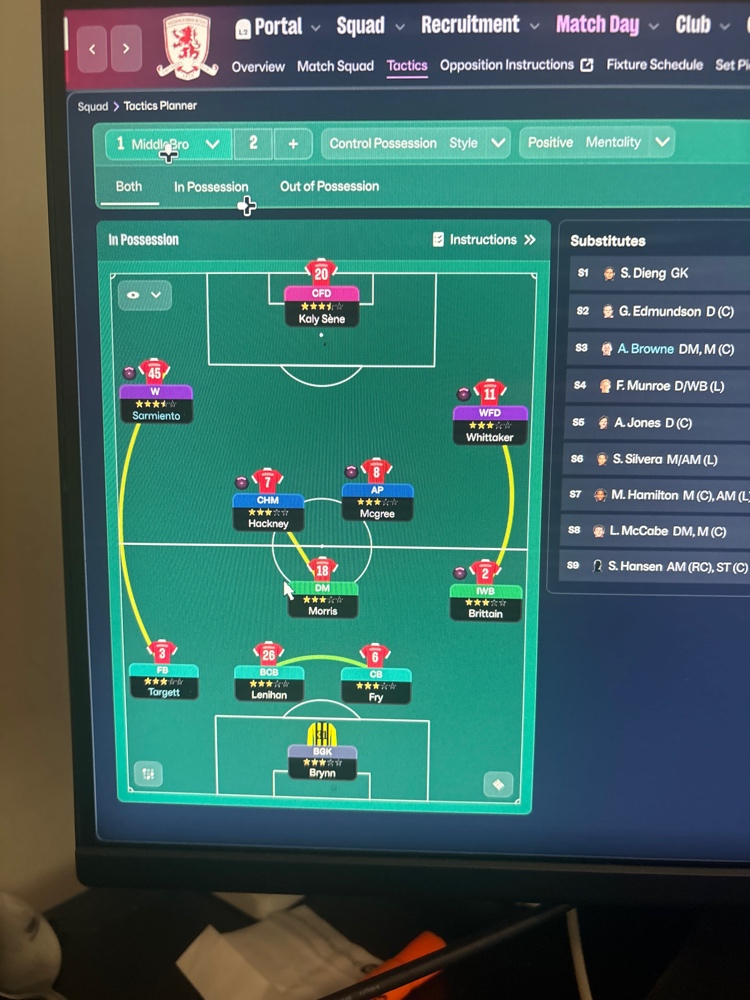
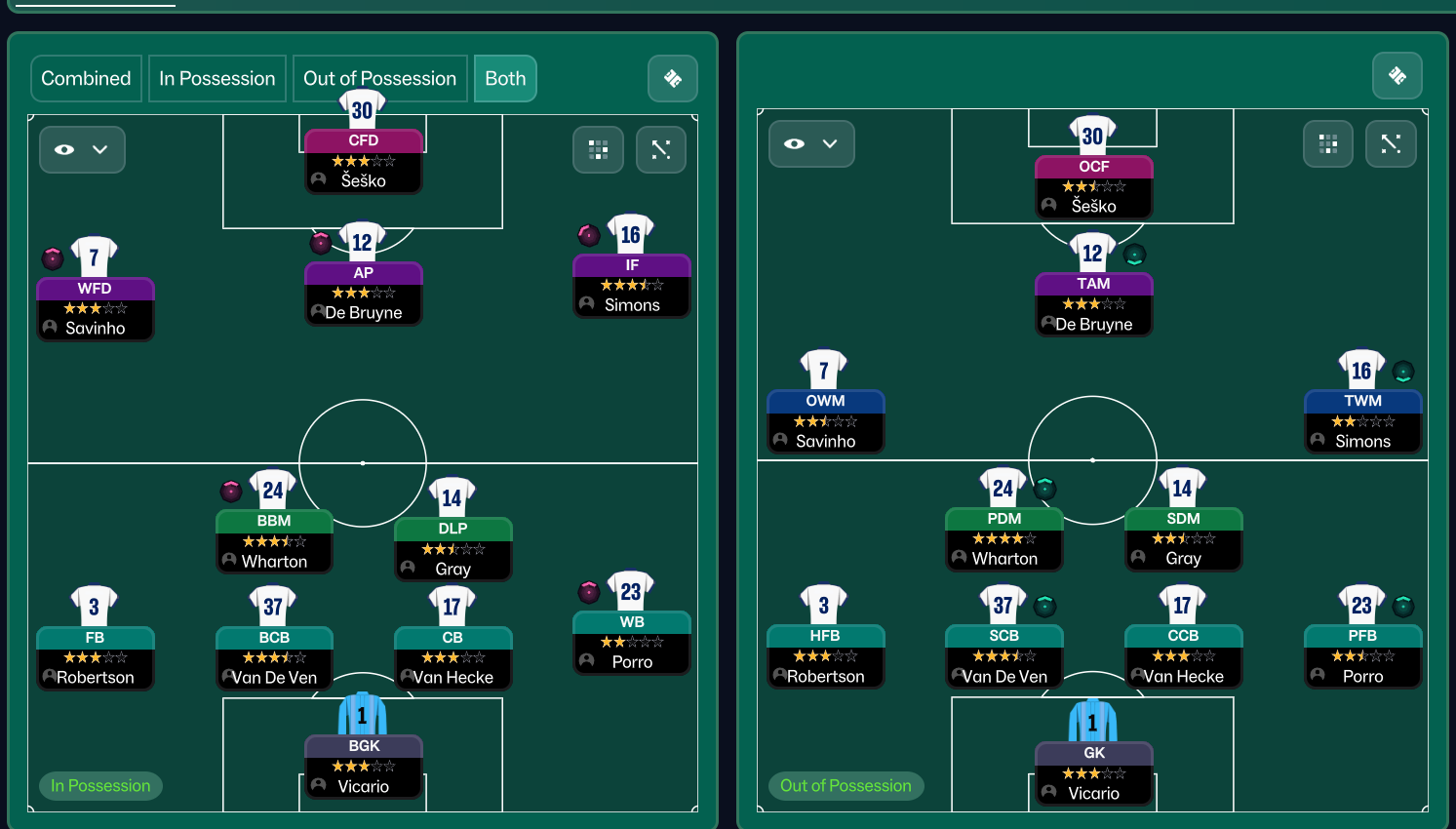
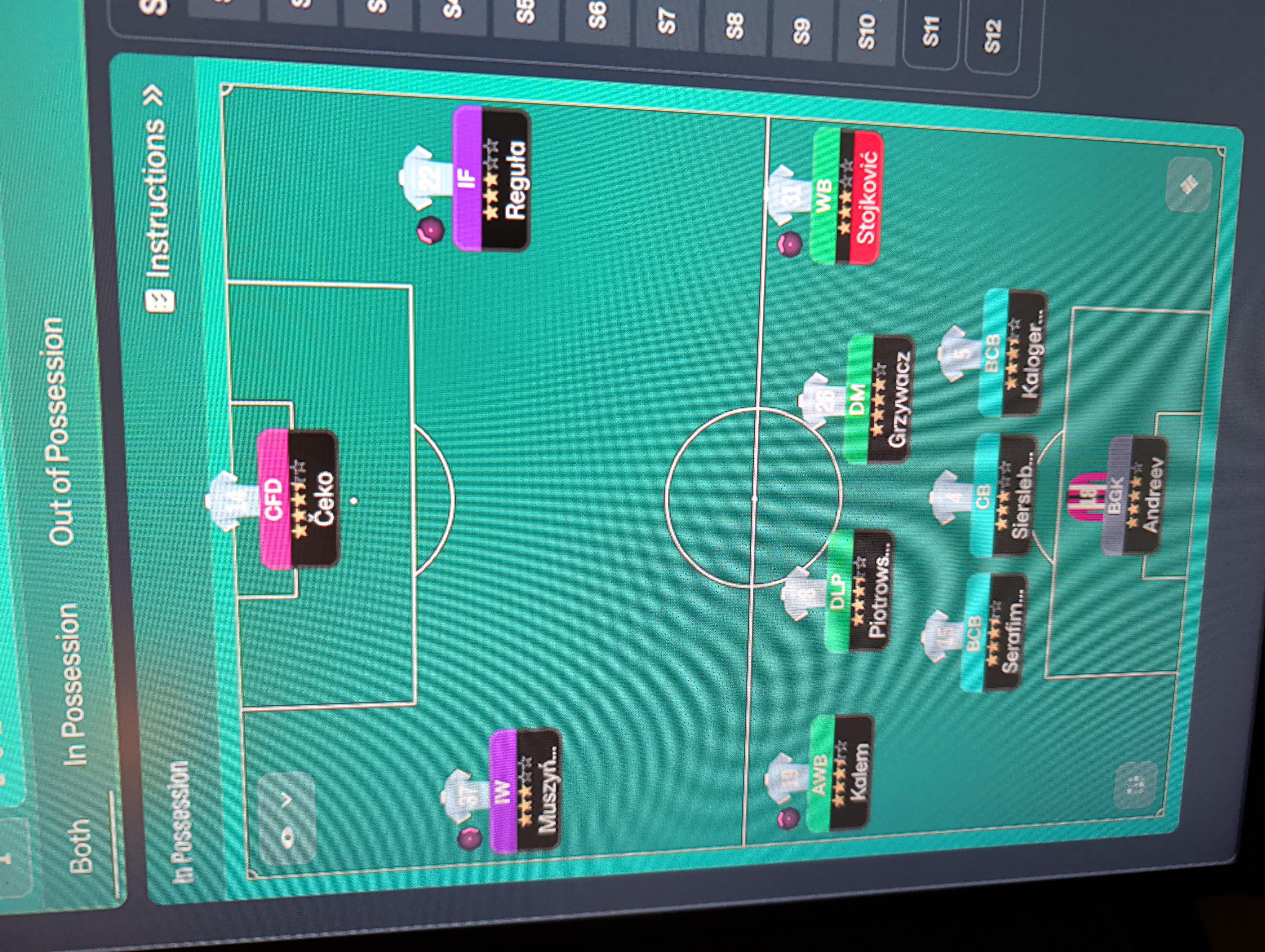
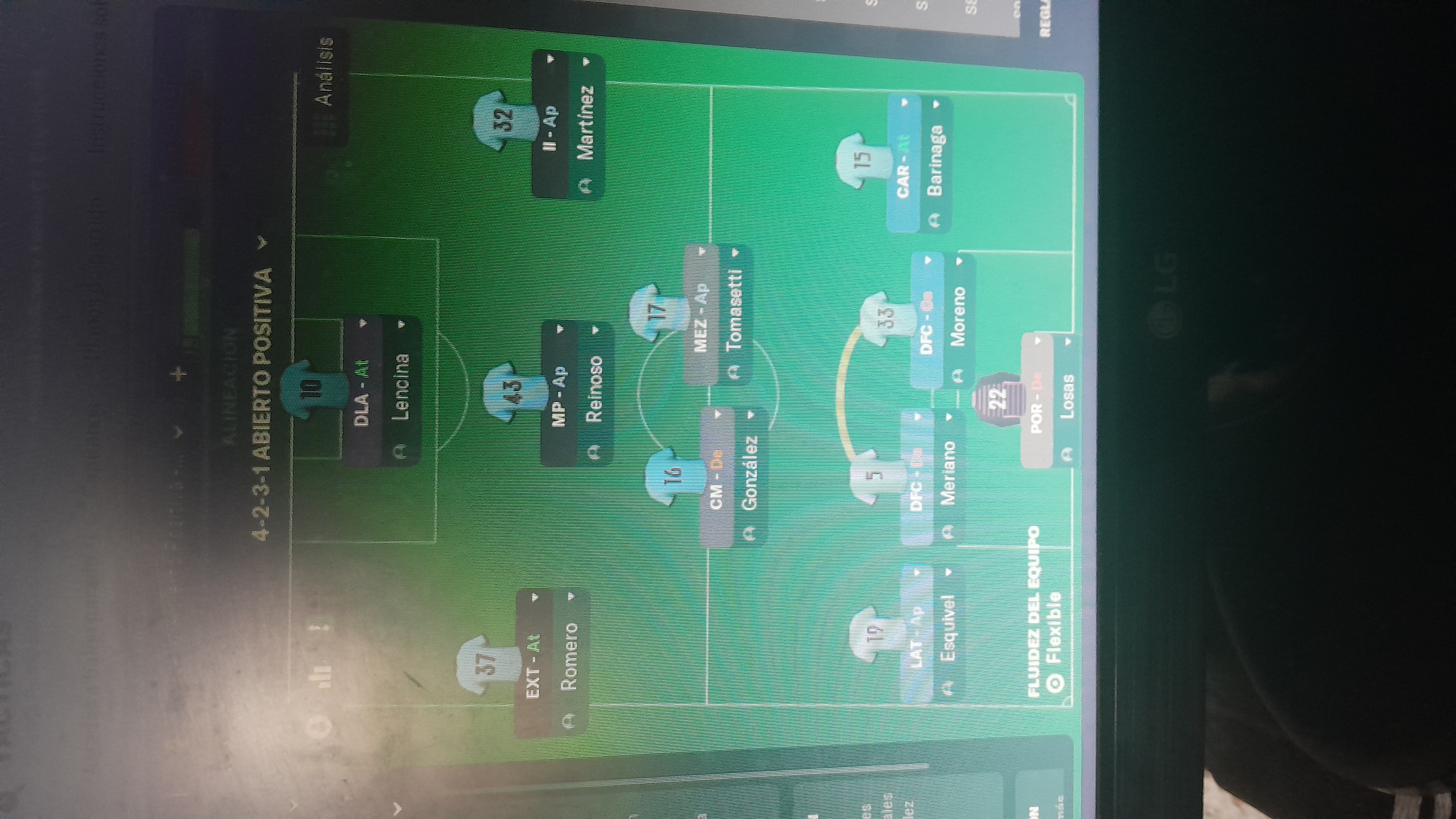
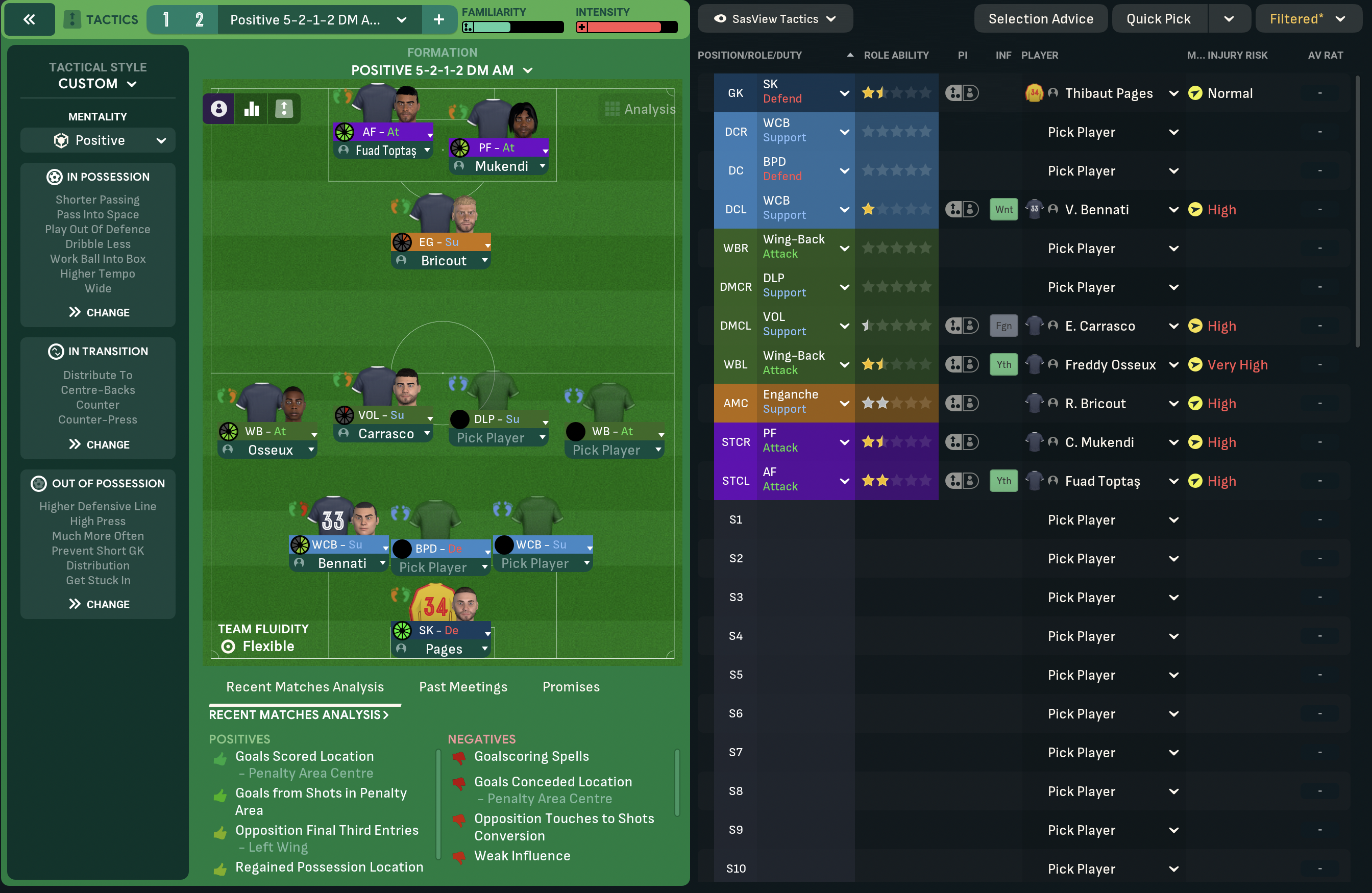
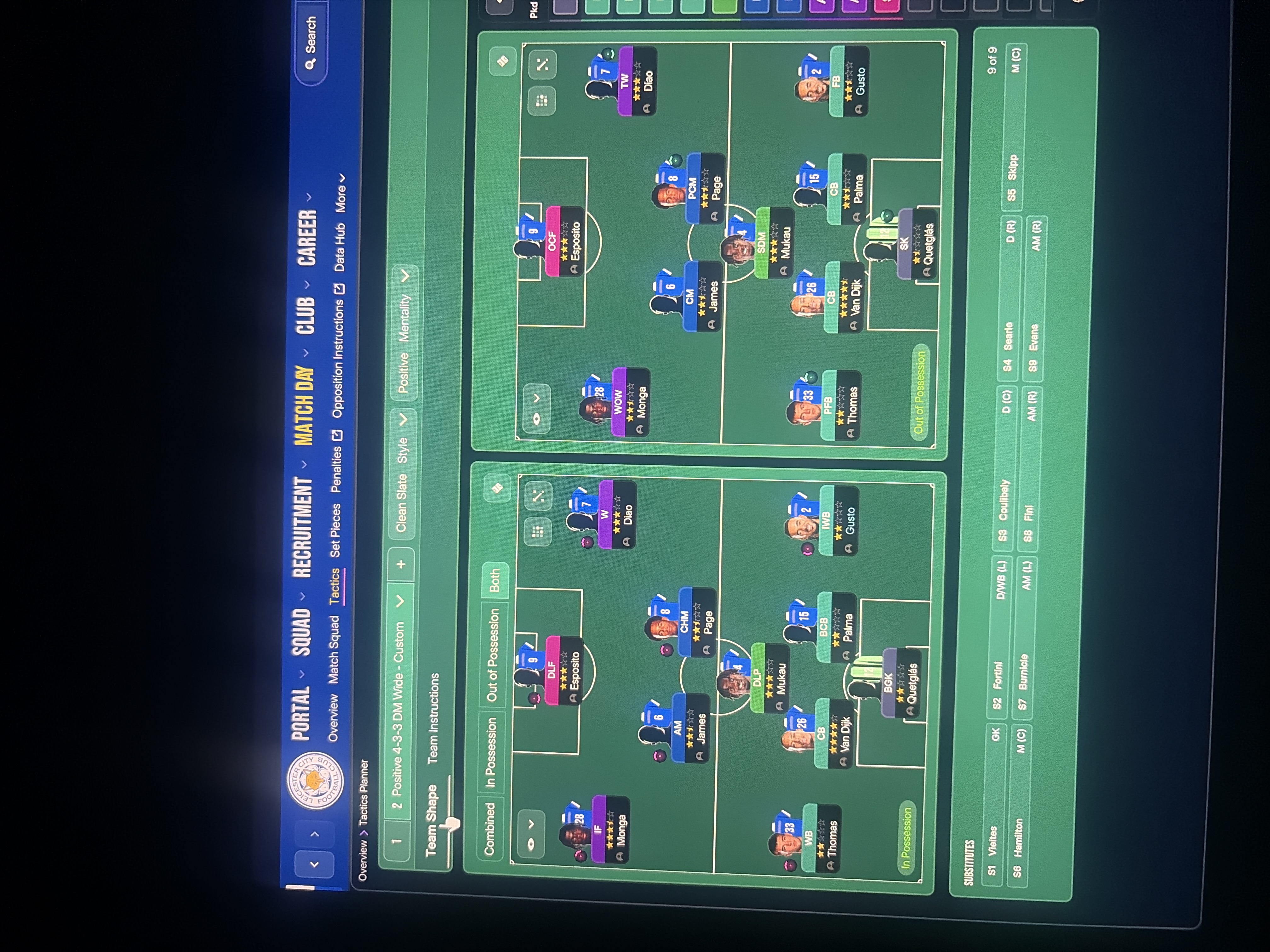
More Positive tactics
Guides for this formation
The tactical theory behind the 4-2-3-1 Wide: roles, instructions, and the trade-offs that decide whether the system holds up.
Player pairings
Midfield Pairs in 4-2-3-1 and 4-4-2
Double pivots and flat pairs in 4-2-3-1 and 4-4-2: when each pairing works, when it collapses, and the AMC unicorn that rescues both.
Read guide
Playing styles
Gegenpressing: A Full Guide
Klopp-style gegenpressing in FM, including squad profile, line-and-press pairing, sustainable workload, and the antipatterns to avoid.
Read guide