Uploaded Tactic
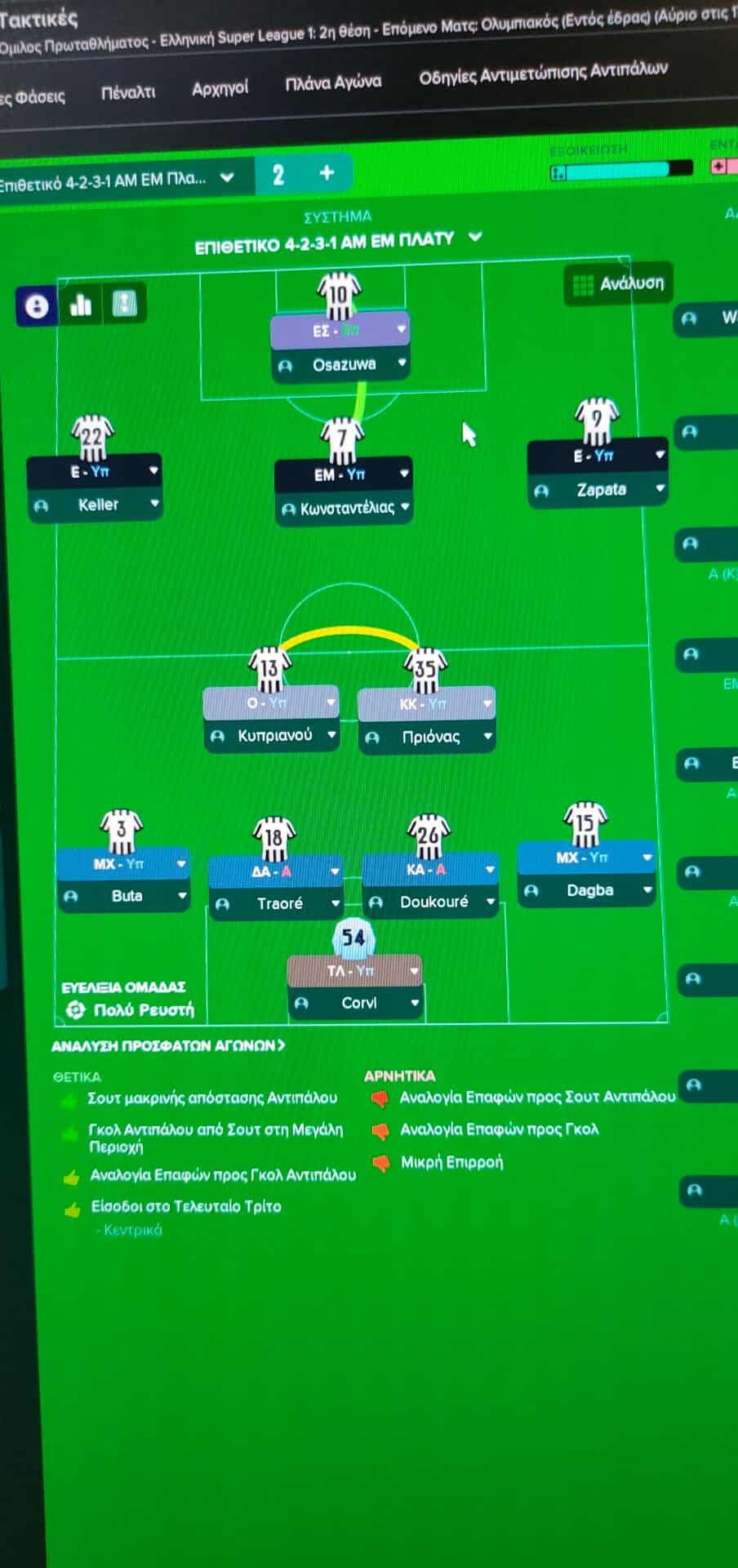
Formation & Style
Tactical Style:Attacking
Mentality:Positive
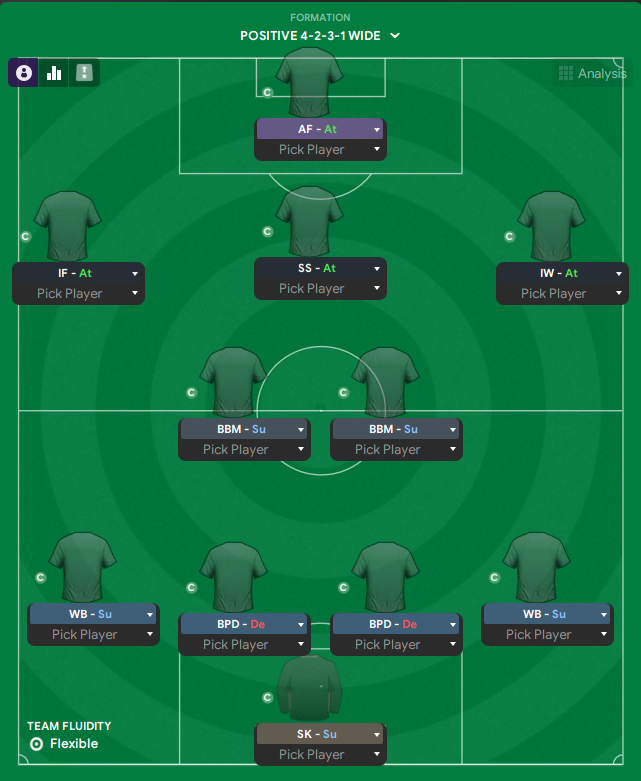
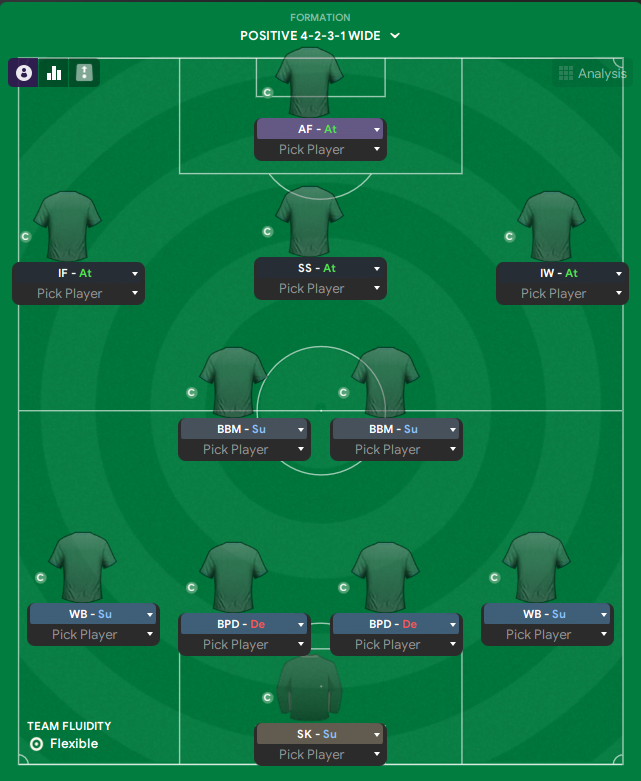
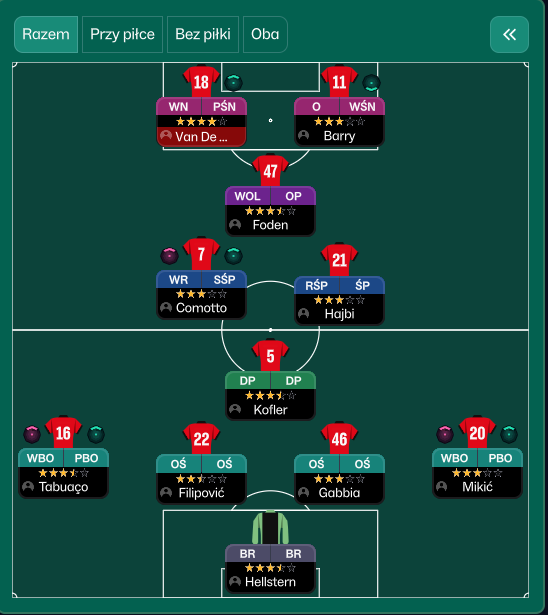
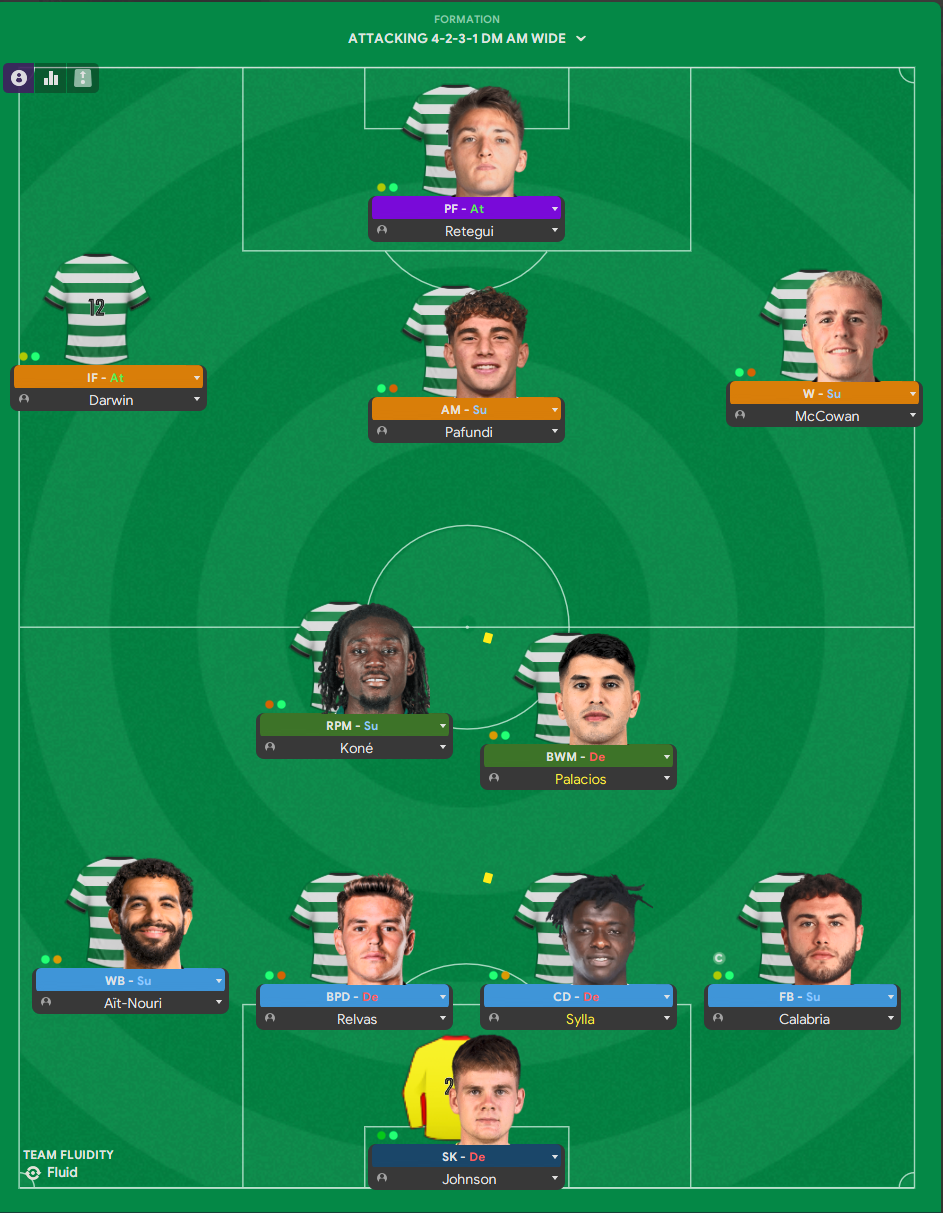
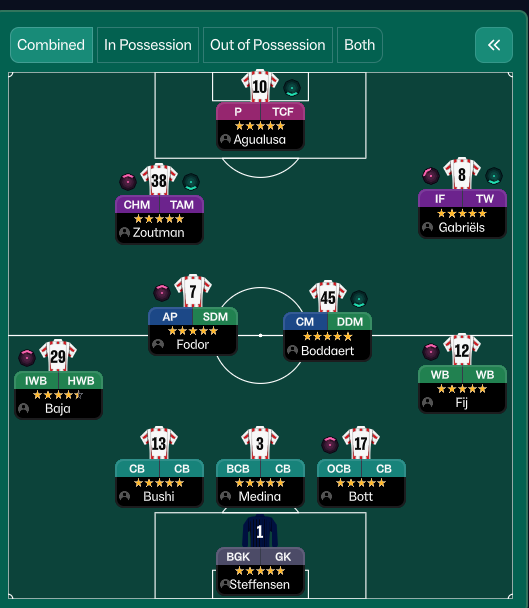
Formation:4-2-3-1 Wide
Team Fluidity:Very Fluid
In Possession
Focus on building from the back.
Utilize overlapping full-backs.
Encourage quick passing in the final third.
In Transition
Counter-press after losing possession.
Aim for quick transitions to exploit opposition gaps.
Out of Possession
Adopt a higher defensive line.
Use a compact shape to limit spaces between defenders.
Team Shape Without Ball
Shape:4-2
Description:Compact formation, reducing space for opposition attackers.
Evidence:RB and LB (FB-A at [2,4] and [2,2]) push up while CBs sit back.
Team Shape With Ball
Shape:4-3-3
Description:Utilizes width from the full-backs and creativity from the AM.
Evidence:Inside forwards (IF-A at [6,4] and [6,2]) move infield to create goal-scoring opportunities.
Phase Description
Attacking Play
Focus on exploiting wide areas with full-backs providing width.
Defensive Transition
Prioritize immediate pressing to win back possession quickly.
Main Focus
To maintain possession and create goal-scoring opportunities through quick, incisive passing.
Key Strengths
Wide Play
Effective utilization of the width with wing-backs provides multiple routes for attack.
Midfield Control
Strong midfield presence allows for ball retention and dynamic gameplay.
High Press
The pressing forward creates immediate pressure on opposing defenders.
Conflicting Directions
Potential Overexposure
Over-reliance on wing-backs may lead to defensive vulnerabilities.
Defensive Counter
High line may be exploited by quick counter-attacks.
Transition Risks
Quick transitions may leave gaps if the team is outnumbered.
Tactical Suggestions
Adjust Defensive Line
Consider lowering defensive line to mitigate speed threats from opposition.
More Balanced Midfield
Introduce a more defensive midfielder for greater stability.
Utilize Substitutes
Rotate players to maintain energy levels, particularly the wing-backs.
Ask Questions About Your Lineup
Related Tactics
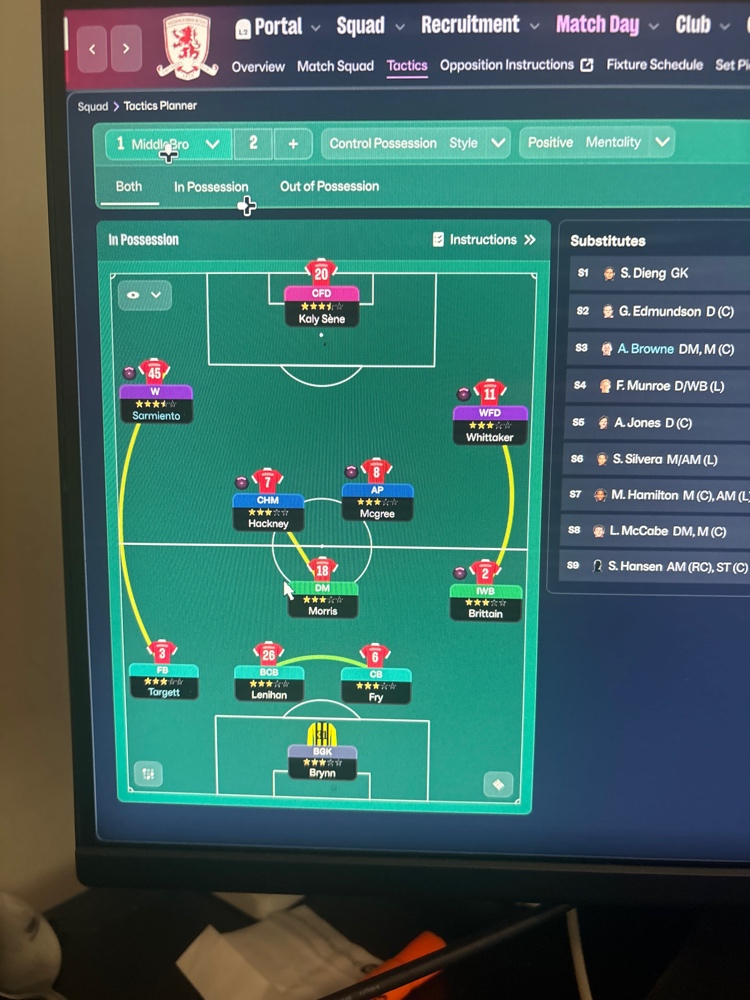
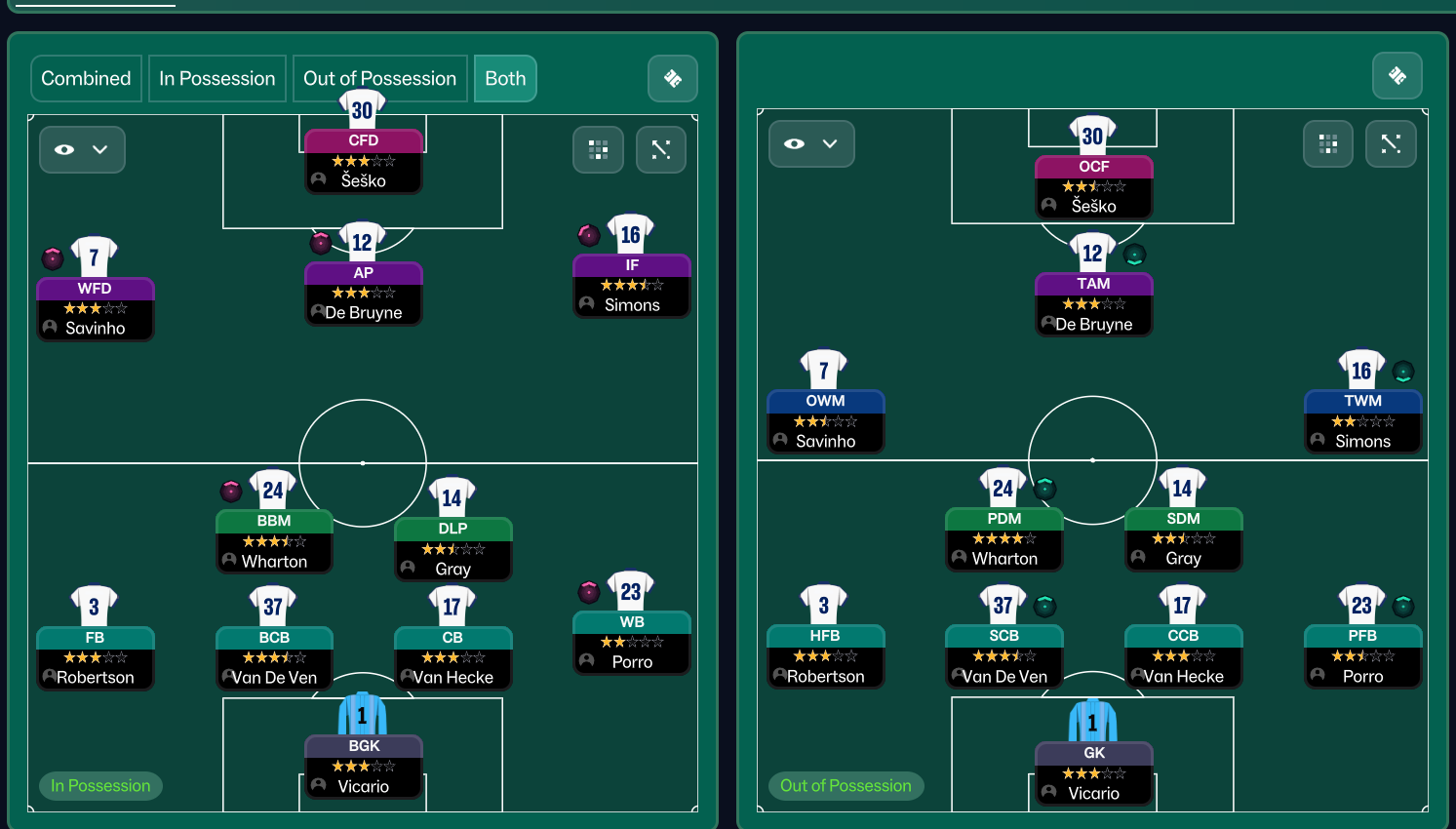
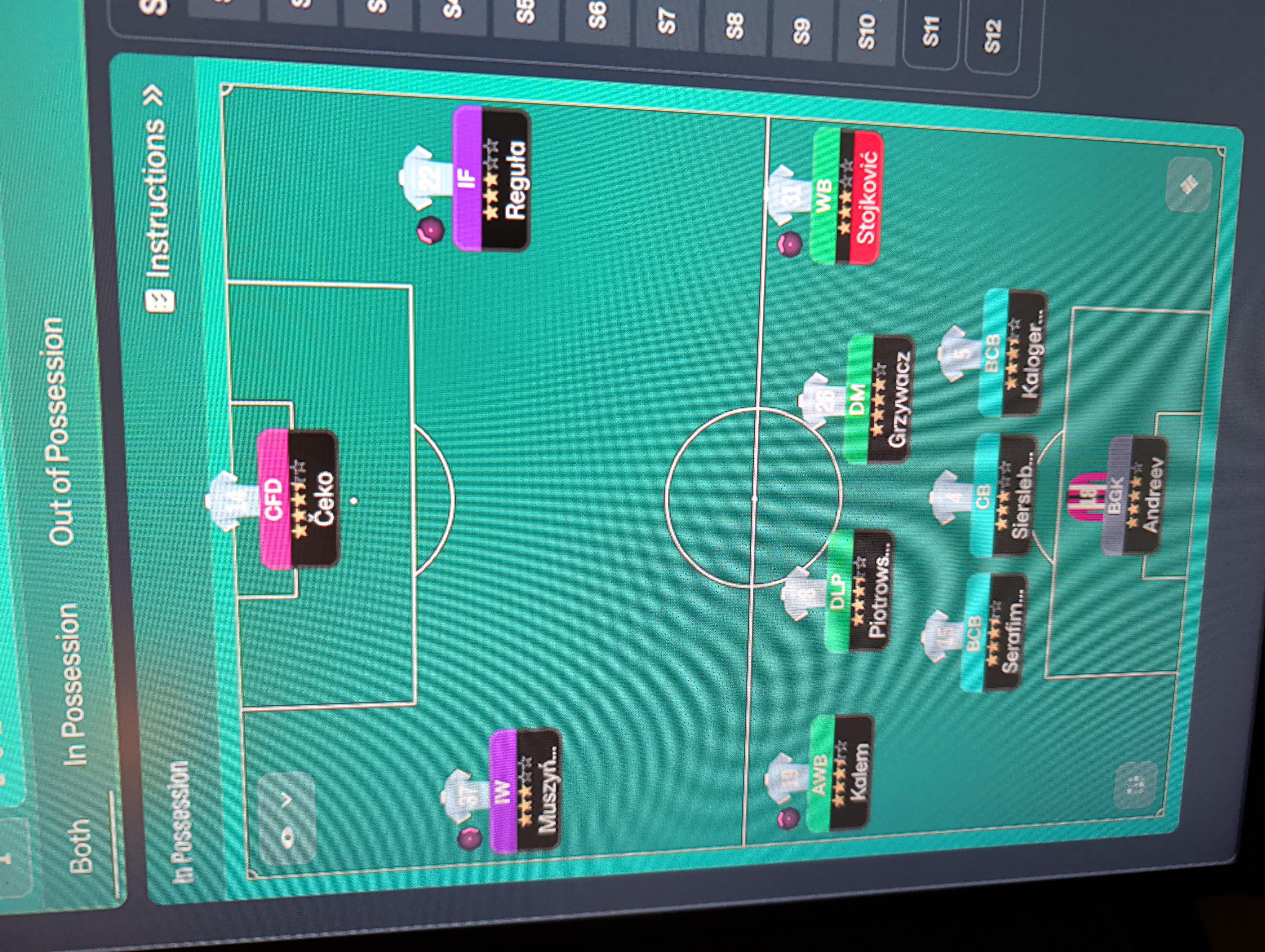
More Attacking tactics
Guides for this formation
The tactical theory behind the 4-2-3-1 Wide: roles, instructions, and the trade-offs that decide whether the system holds up.
Player pairings
Midfield Pairs in 4-2-3-1 and 4-4-2
Double pivots and flat pairs in 4-2-3-1 and 4-4-2: when each pairing works, when it collapses, and the AMC unicorn that rescues both.
Read guide
Playing styles
Gegenpressing: A Full Guide
Klopp-style gegenpressing in FM, including squad profile, line-and-press pairing, sustainable workload, and the antipatterns to avoid.
Read guide