Uploaded Tactic
Formation & Style
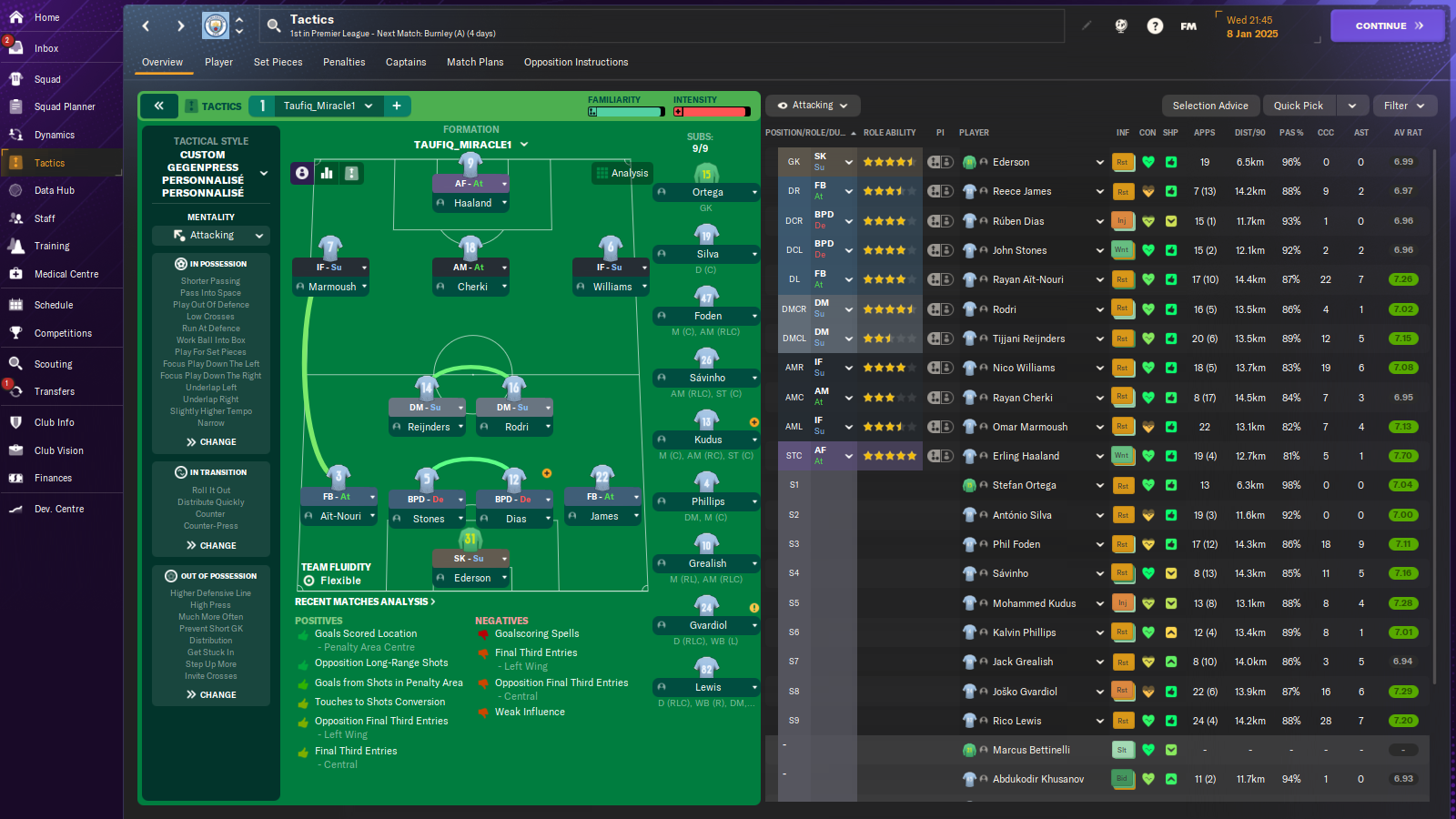
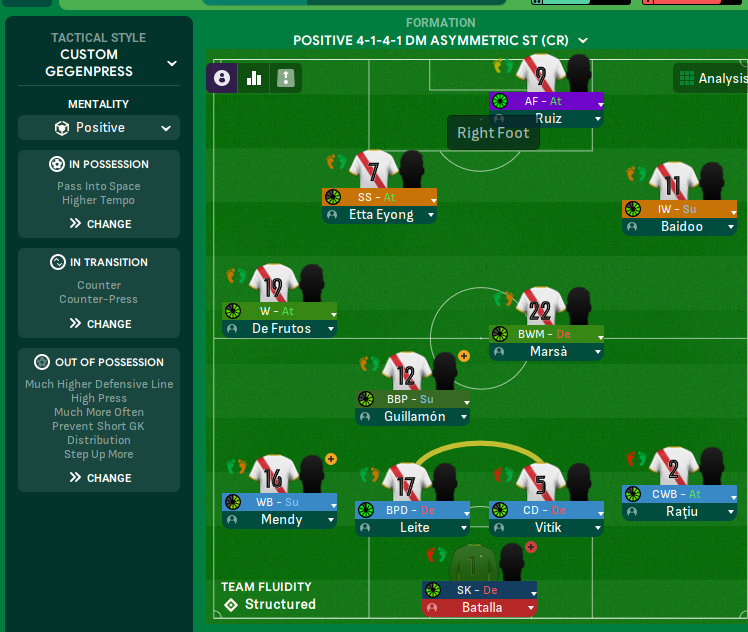
Tactical Style:Custom Gegenpress
Mentality:Attacking
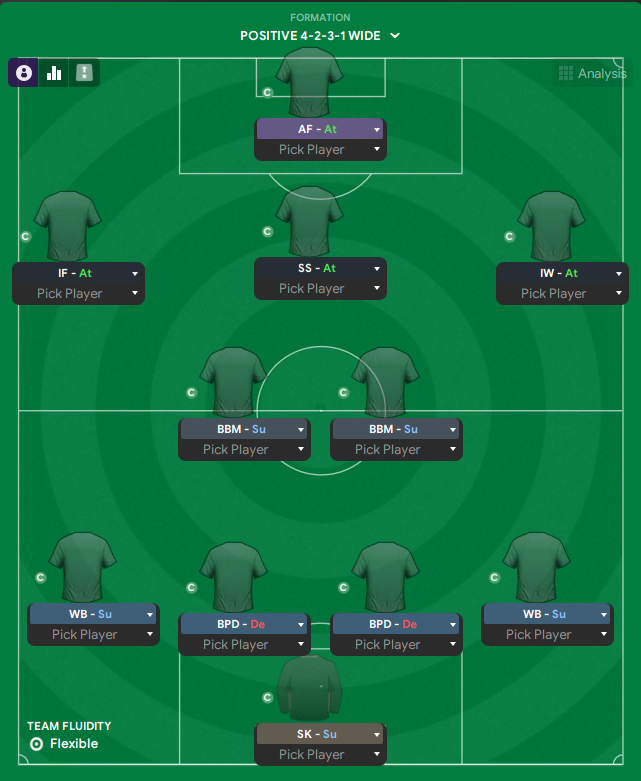
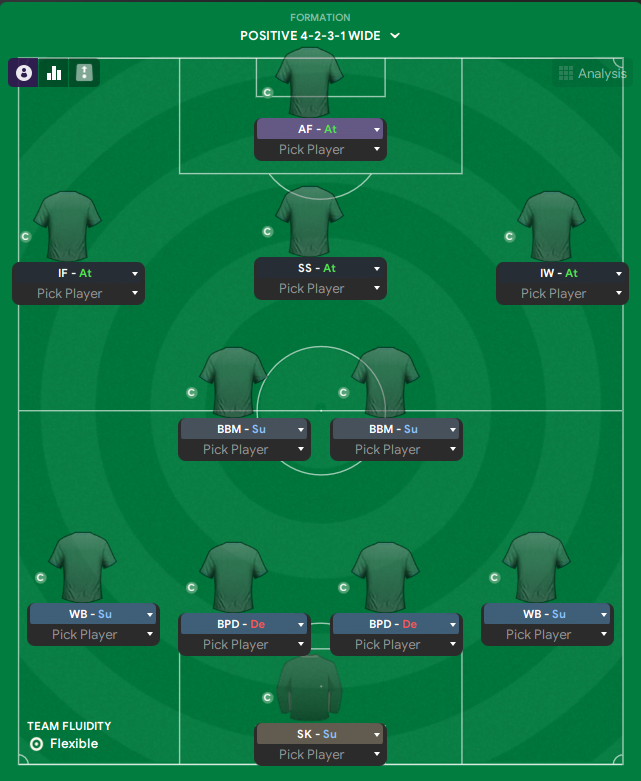
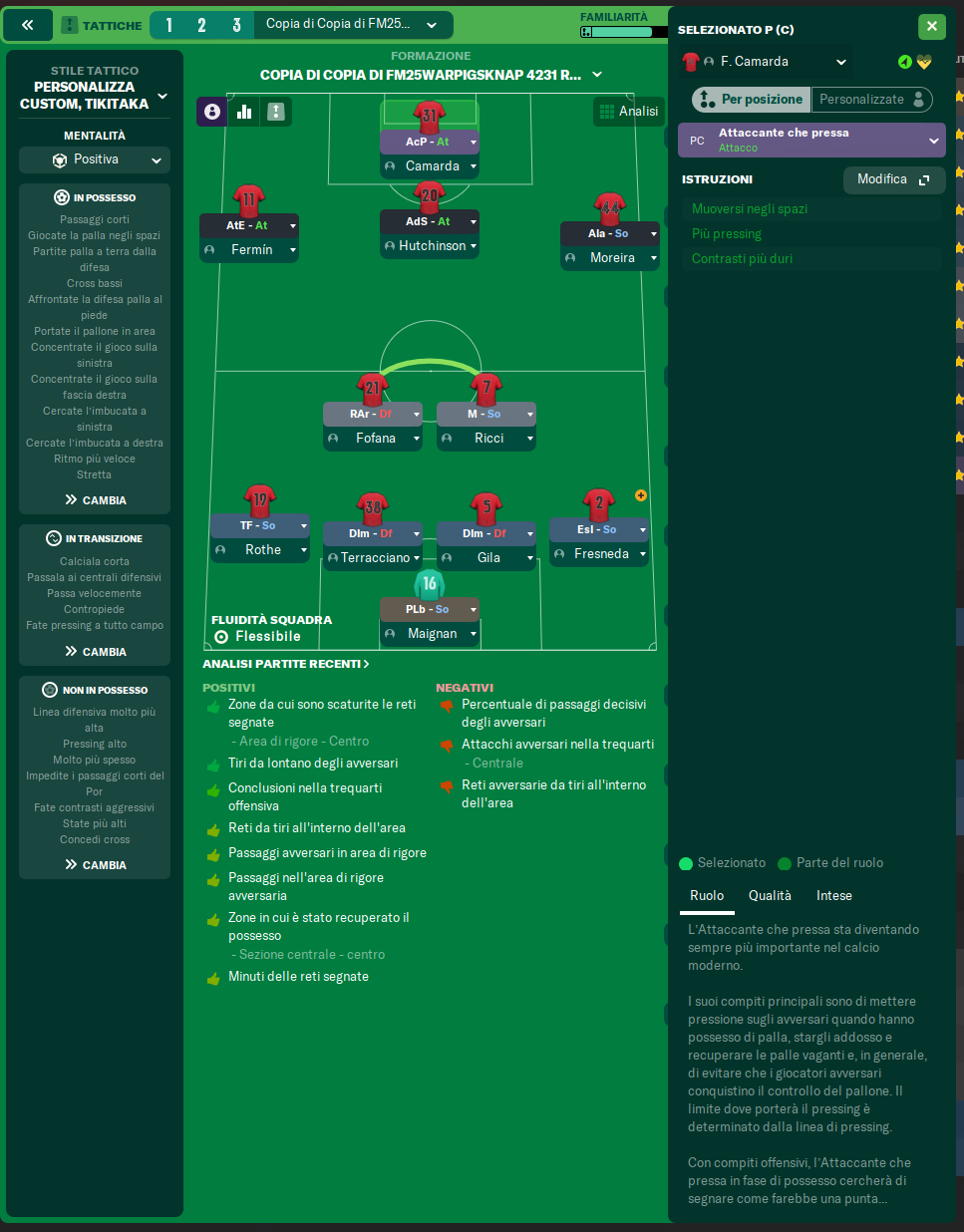
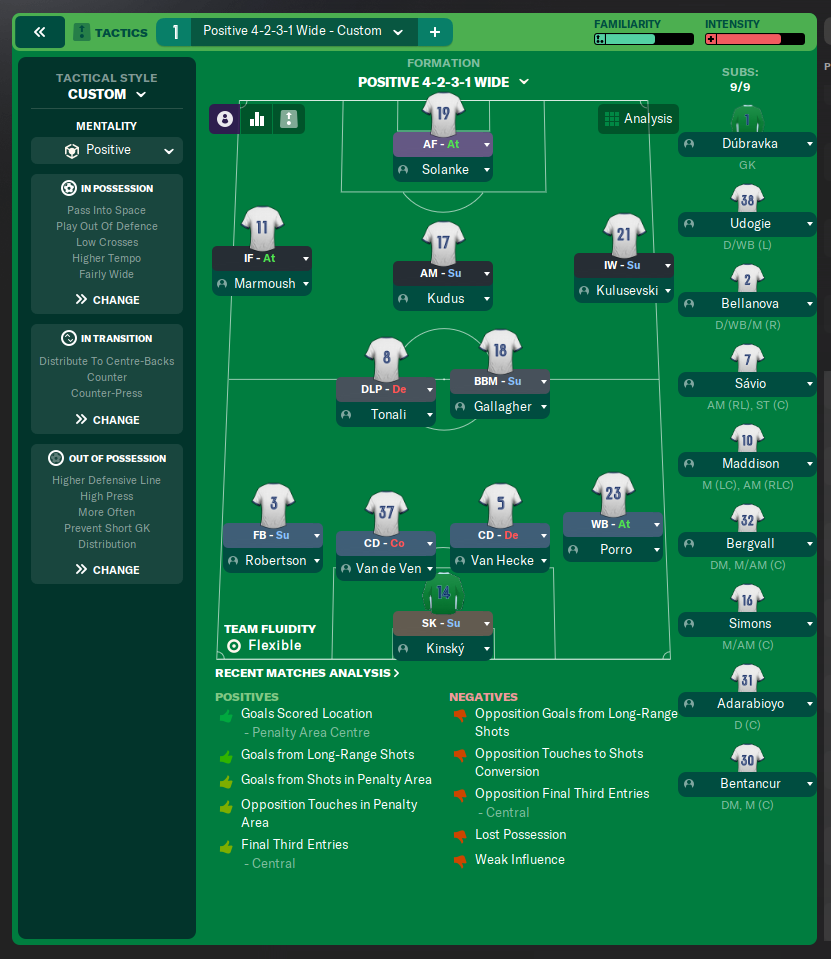
Formation:4-2-3-1 Wide
Team Fluidity:Flexible
In Possession
Shorter Passing
Pass into Space
Play Out of Defence
Low Crosses
Run at Defence
Focus Play Down Left
Underlap Left
Slightly Higher Tempo
Narrow
In Transition
Roll It Out
Distribute Quickly
Counter
Counter-Press
Out of Possession
Higher Defensive Line
Much More Often Prevent Short GK Distribution
Get Stuck In
Step Up More
Invite Excesses
Team Shape Without Ball
Shape:Compact 4-2-3-1
Description:The shape remains compact, with defensive midfielders providing additional protection.
Evidence:DM-S at [3,2], [3,3] supporting CBs BPD-D at [2,2], [2,3] and FB-A at [2,1], [2,4]
Team Shape With Ball
Shape:Fluid attacking shape
Description:Allows for width and creativity through inside forwards and overlapping full-backs.
Evidence:IF-A at [6,2], [6,3] and AM-A at [5,3] utilizing overlapping FBs [2,1], [2,4]
Phase Description
Attacking Play
The team employs quick passing and direct runs to penetrate the opposition's defence, utilizing an overlap on the left.
Defensive Transition
Upon losing possession, players engage in a high press to immediately regain control.
Main Focus
Creating space through quick passing and player movement to exploit defensive weaknesses.
Key Strengths
Fluid Attacking Transitions
The inside forwards and attacking midfielder create multiple options in attack, facilitating fast transition play.
Stable Midfield Base
Two DM roles ensure solid defence and ball retention during transition phases.
High Pressing Philosophy
Effective in regaining possession quickly and forcing errors from the opposition.
Conflicting Directions
Potential Vulnerabilities on the Wings
The focus on overlapping play may leave wide areas exposed when possession is lost.
High Defensive Line Risks
A higher defensive line can be susceptible to counter-attacks, particularly in transition.
Reliance on Direct Play
Shorter passing may become predictable and lead to turnovers if opposing teams adapt.
Tactical Suggestions
Adjust Defensive Width
Consider decreasing width to avoid vulnerability on the sides during transitions.
Incorporate Solid Crossing Options
Introduce crossing options to maximize the attacking potential of the overlapping full-backs.
Explore More Direct Offensive Play
Incorporate more direct passing options to break through stubborn opposition defenses.
Ask Questions About Your Lineup
Related Tactics
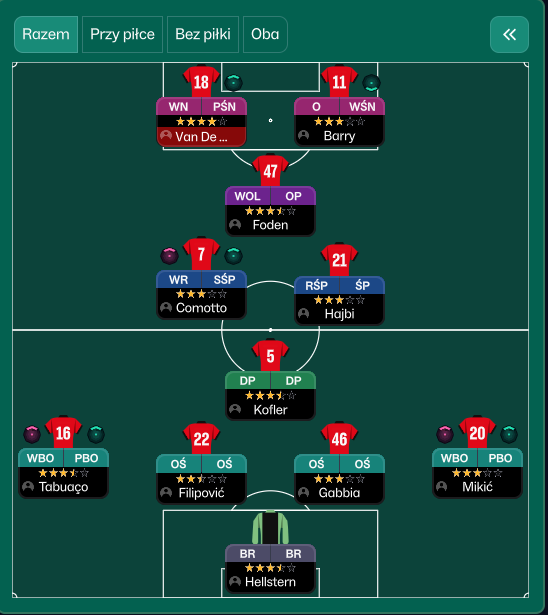
More Custom Gegenpress tactics
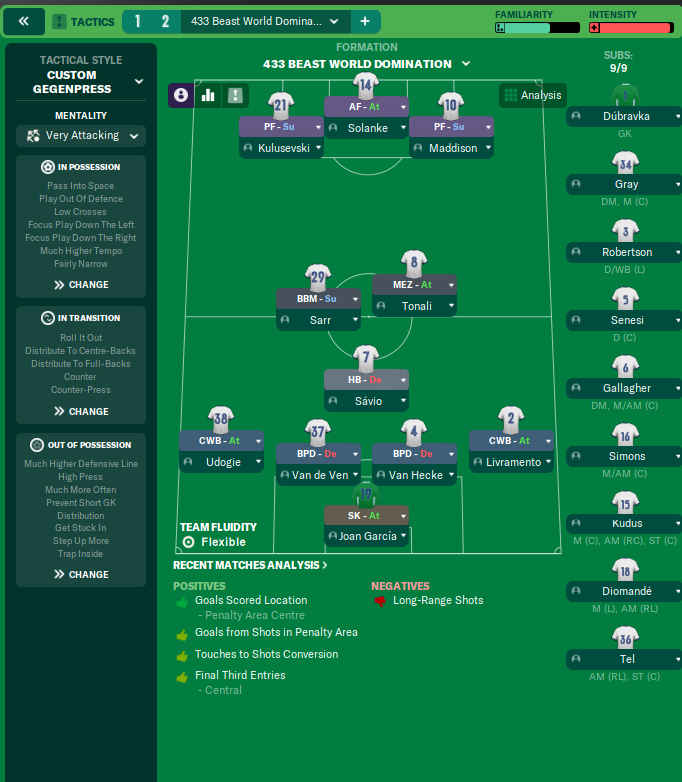
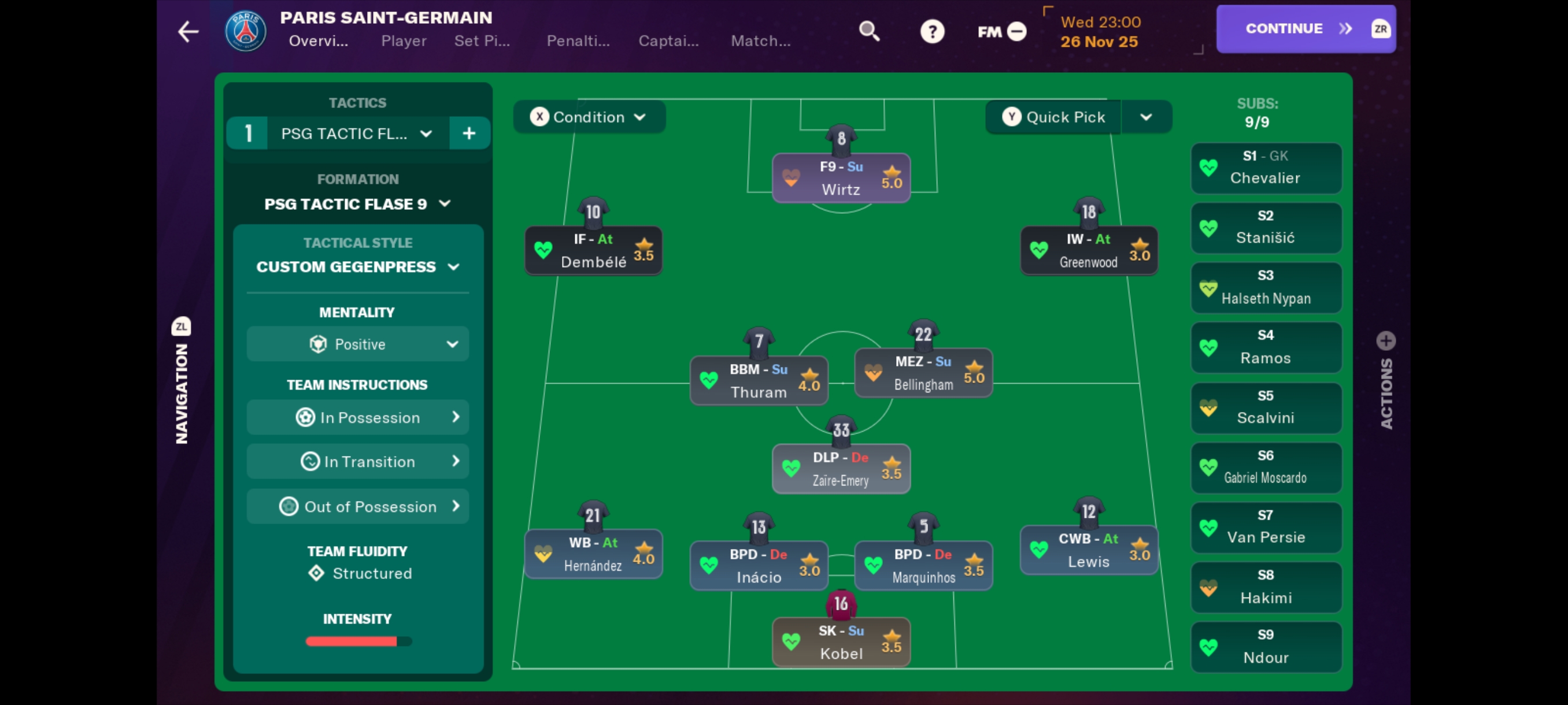
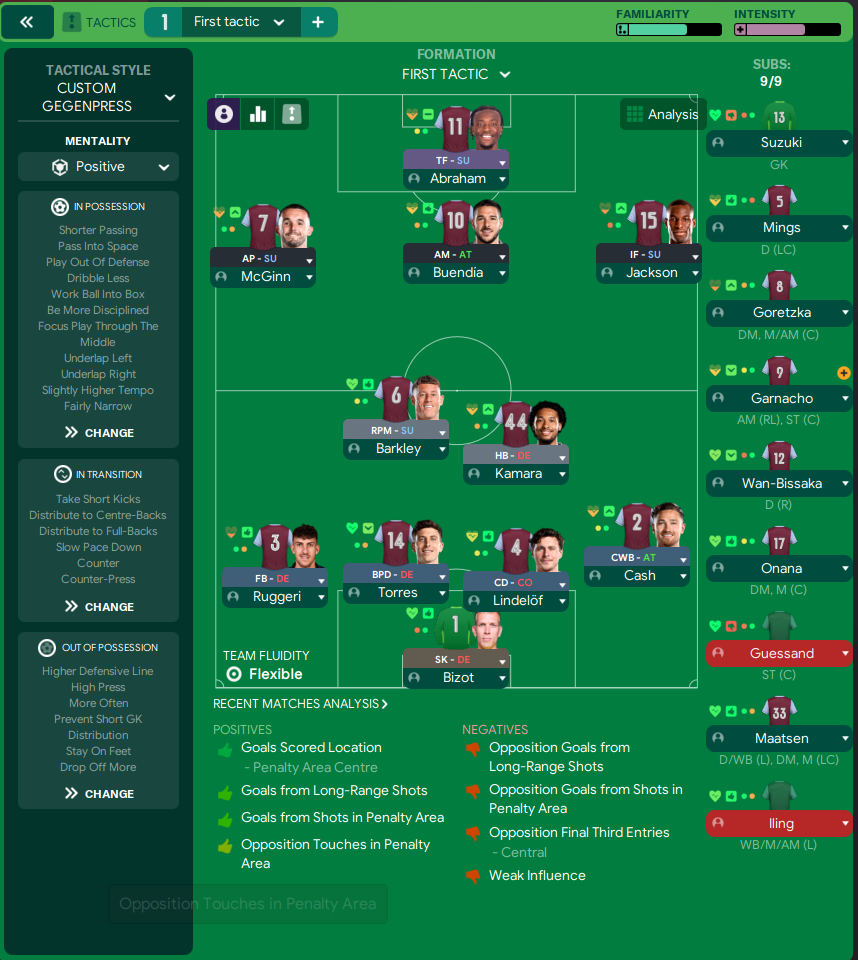
Guides for this formation
The tactical theory behind the 4-2-3-1 Wide: roles, instructions, and the trade-offs that decide whether the system holds up.
Player pairings
Midfield Pairs in 4-2-3-1 and 4-4-2
Double pivots and flat pairs in 4-2-3-1 and 4-4-2: when each pairing works, when it collapses, and the AMC unicorn that rescues both.
Read guide
Playing styles
Gegenpressing: A Full Guide
Klopp-style gegenpressing in FM, including squad profile, line-and-press pairing, sustainable workload, and the antipatterns to avoid.
Read guide