Uploaded Tactic
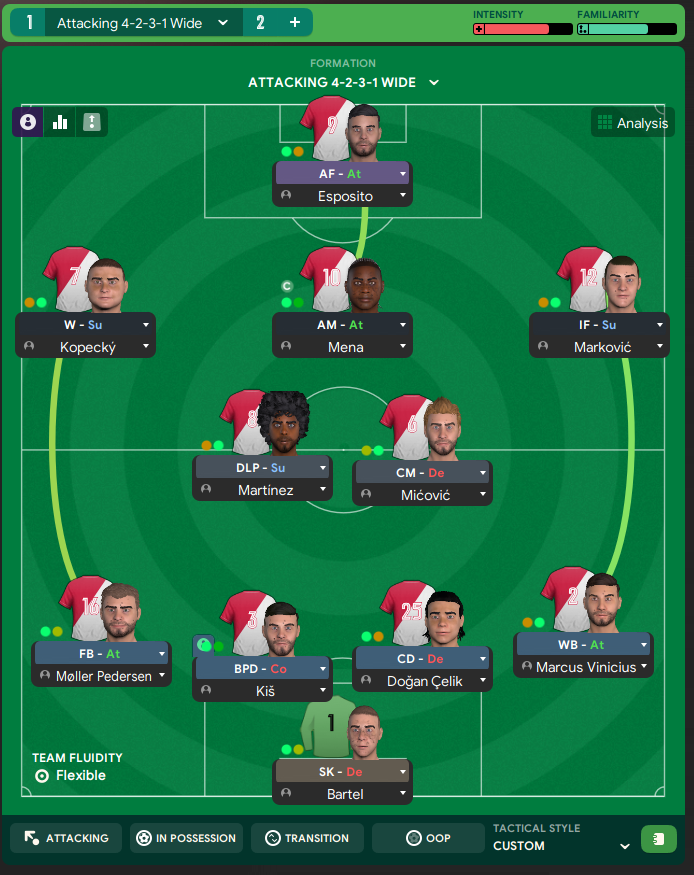
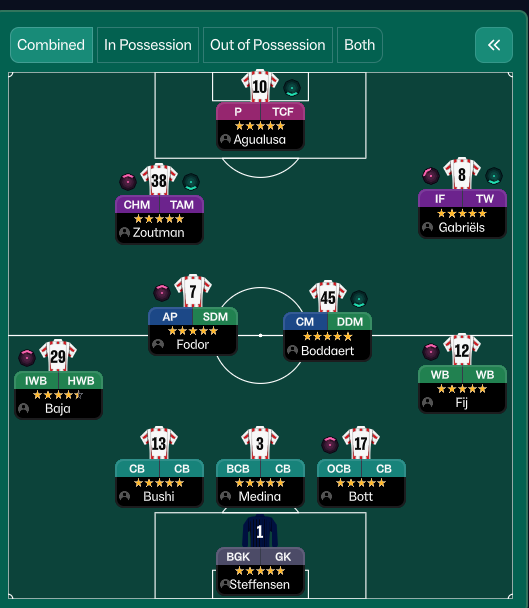
Formation & Style
Tactical Style:Attacking
Mentality:Attacking
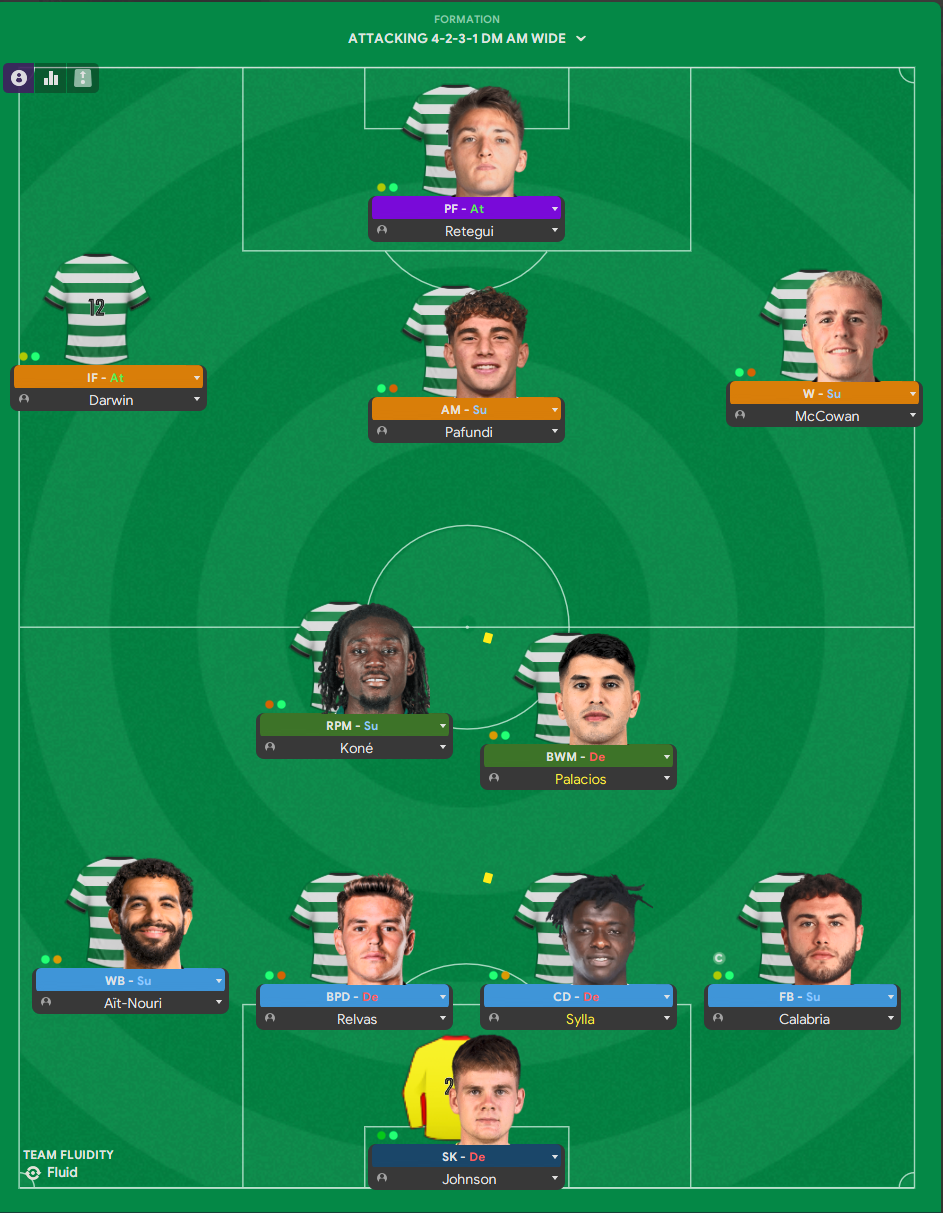
Formation:4-2-3-1 Wide
Team Fluidity:Flexible
In Possession
Focus play down the wings
Utilize the width provided by Winger and Wing-Back
Encourage overlapping runs from the WB
In Transition
Counter-press after losing possession
Transition quickly into attack
Out of Possession
Higher defensive line
Press more often to win back possession
Team Shape Without Ball
Shape:4-4-2
Description:Defensive shape aims to compact the space and prevent through balls.
Evidence:Two banks of four with the midfielders tracking back effectively.
Team Shape With Ball
Shape:4-2-3-1
Description:Asymmetry in attack with wing play and central penetration.
Evidence:Utilization of Winger and Inside Forward who operate in tandem with the Advanced Forward.
Phase Description
Attacking Play
Utilizes width and quick combinations to overload the wings and create space for central attackers.
Defensive Transition
Employs an aggressive counter-pressing strategy to quickly regain possession.
Main Focus
Creating width in attack while maintaining a solid defensive structure.
Key Strengths
Attacking Width
Effective use of the wings to stretch the opposition and create crossing opportunities.
Midfield Control
The central midfield roles allow for both defensive stability and creative passing options.
Pressing Strategy
High pressing can disrupt opponent's build-up and create turnovers.
Conflicting Directions
Over-Reliance on Width
May become predictable when utilizing the wings excessively without central play.
Vulnerability in Transition
Great attacking intent can leave gaps when losing possession.
Defensive Midfield Balance
DLP-S may not offer enough defensive cover against stronger midfield opponents.
Tactical Suggestions
Consider a More Balanced Midfield
Introduce a more defensively minded player to support the DLP-S.
Adjust Pressing Intensity
Modifying pressing focus to prevent overloads in midfield against quick opponents.
Utilize Central Attacking Options
Encourage your AM-A to exploit spaces between the lines for more central attacks.
Ask Questions About Your Lineup
Related Tactics
More Attacking tactics
Guides for this formation
The tactical theory behind the 4-2-3-1 Wide: roles, instructions, and the trade-offs that decide whether the system holds up.
Player pairings
Midfield Pairs in 4-2-3-1 and 4-4-2
Double pivots and flat pairs in 4-2-3-1 and 4-4-2: when each pairing works, when it collapses, and the AMC unicorn that rescues both.
Read guide
Playing styles
Gegenpressing: A Full Guide
Klopp-style gegenpressing in FM, including squad profile, line-and-press pairing, sustainable workload, and the antipatterns to avoid.
Read guide