Uploaded Tactic
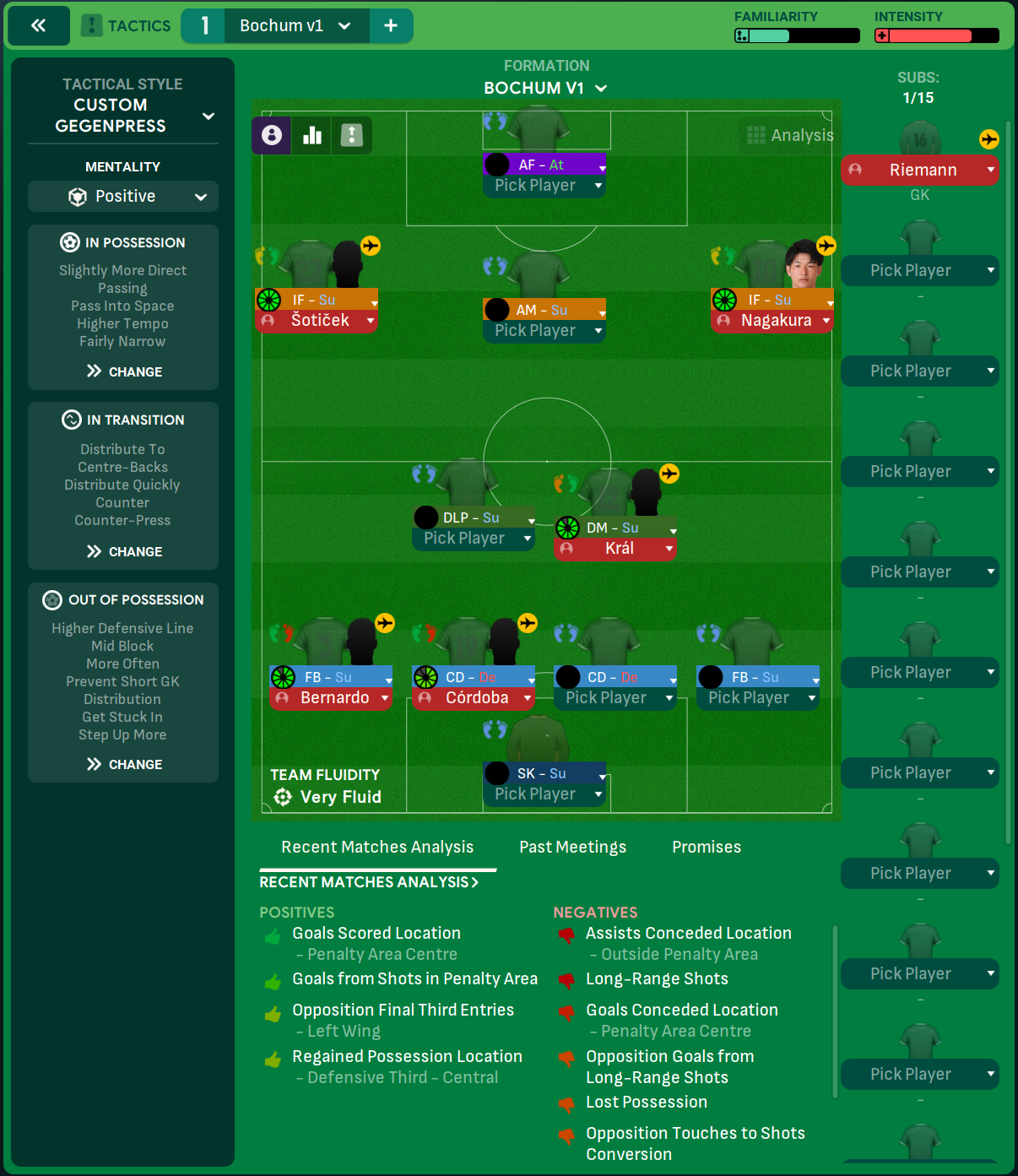
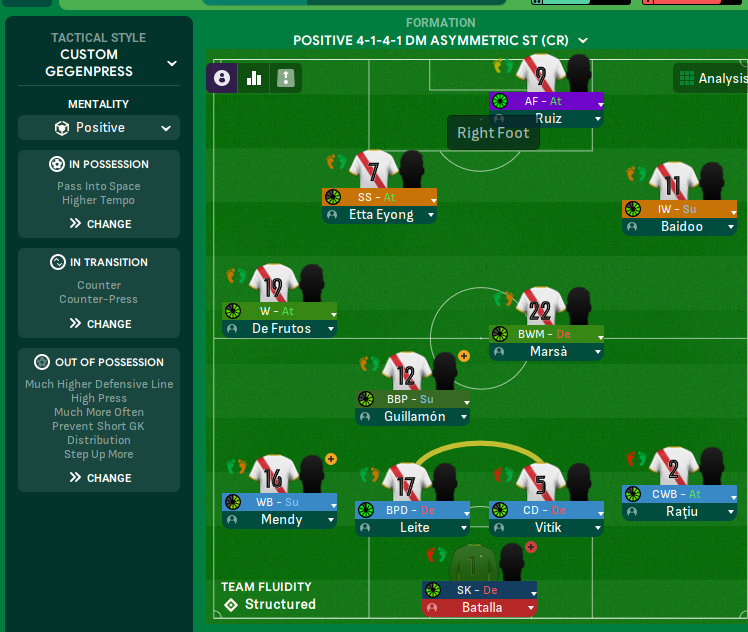
Formation & Style
Tactical Style:Custom Gegenpress
Mentality:Positive
Formation:4-2-3-1 Wide
Team Fluidity:Very Fluid
In Possession
Slightly More Direct Passing
Pass Into Space
Higher Tempo
Fairly Narrow
In Transition
Distribute To Centre-Backs
Distribute Quickly Counter
Counter-Press
Out of Possession
Higher Defensive Line
Mid Block
More Often Prevent Short GK Distribution
Get Stuck In
Step Up More
Team Shape Without Ball
Shape:4-2
Description:Defensive line comprises two centre-backs supported by two full-backs and dual pivot midfielders, ensuring a compact formation.
Evidence:CD-De at [2,2] & [2,4] and DM-Su, DLP-Su at [3,3] & [3,4].
Team Shape With Ball
Shape:4-3
Description:A combination of wide and central attacking play with an advanced forward leading the line supported by two inside forwards.
Evidence:AF-At at [6,3], IF-Su at [6,2] & [6,4].
Phase Description
Attacking Play
Utilizes rapid movement through the center and wide areas, aiming to exploit spaces created by inside forwards and a versatile attacking midfielder.
Defensive Transition
Quickly reallocates players to maintain pressure and win back possession post-loss.
Main Focus
Leverage quick attacks and high pressing to disrupt opponents’ rhythm.
Key Strengths
Dynamic Attacking Presence
Utilizes various attacking roles to stretch opposing defenses and exploit gaps.
Effective Midfield Control
The dual midfield protectors support both defence and attack, creating a balanced midfield.
High Pressing Intensity
The gegenpressing style helps regain possession quickly after losing the ball.
Conflicting Directions
Exposed Defensive Full-Backs
With higher defensive lines and aggressive pressing, full-backs may be susceptible to counter-attacks.
Reliance on Central Congestion
Heavy reliance on midfield control may lead to predictable play patterns if opponents overload.
Vulnerability to Long-Range Shots
A higher defensive line might increase exposure to long-range shots by opponents.
Tactical Suggestions
Consider Width Adjustment
Introduce wingers or adjust inside forward roles for better wing play and to stretch defenses.
Reassess Defensive Line Height
A slightly lower defensive line may reduce exposure to counter-attacks.
Enhance Set-Piece Strategy
Implement specific instructions for defending set-pieces to reduce conceded goals.
Ask Questions About Your Lineup
Related Tactics
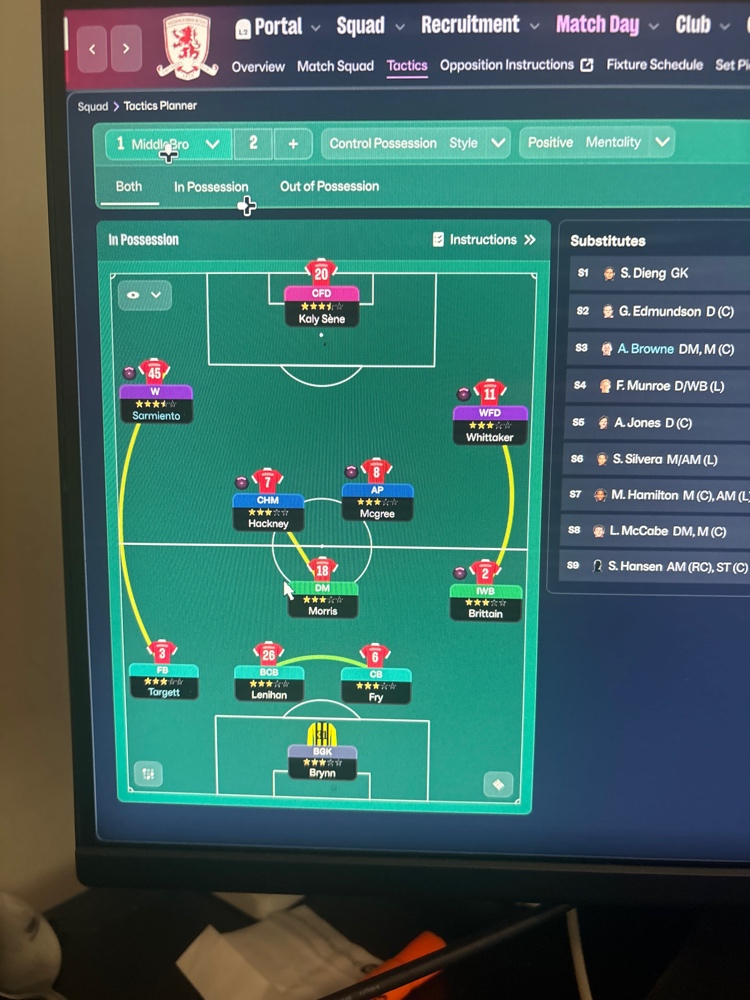
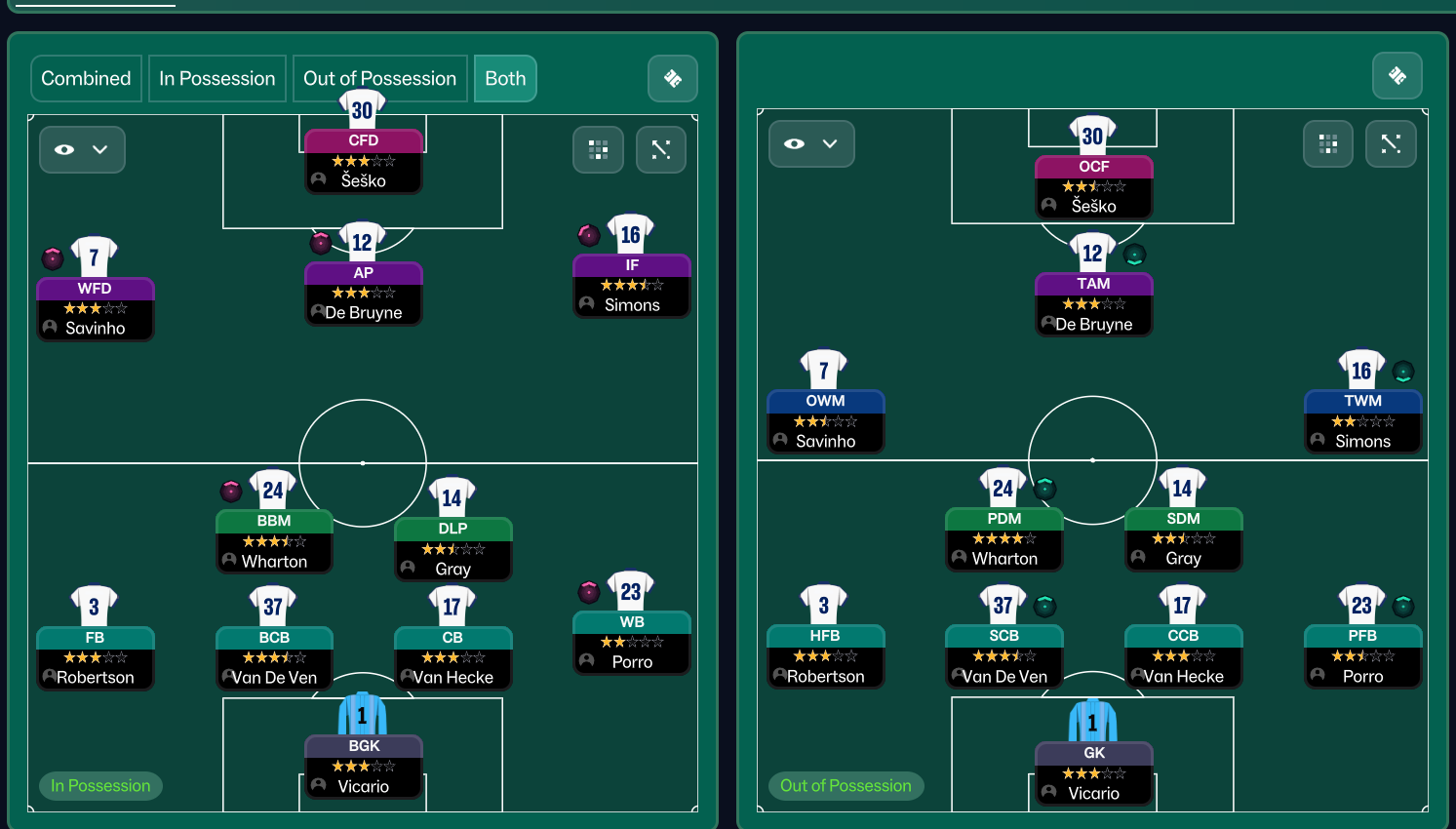
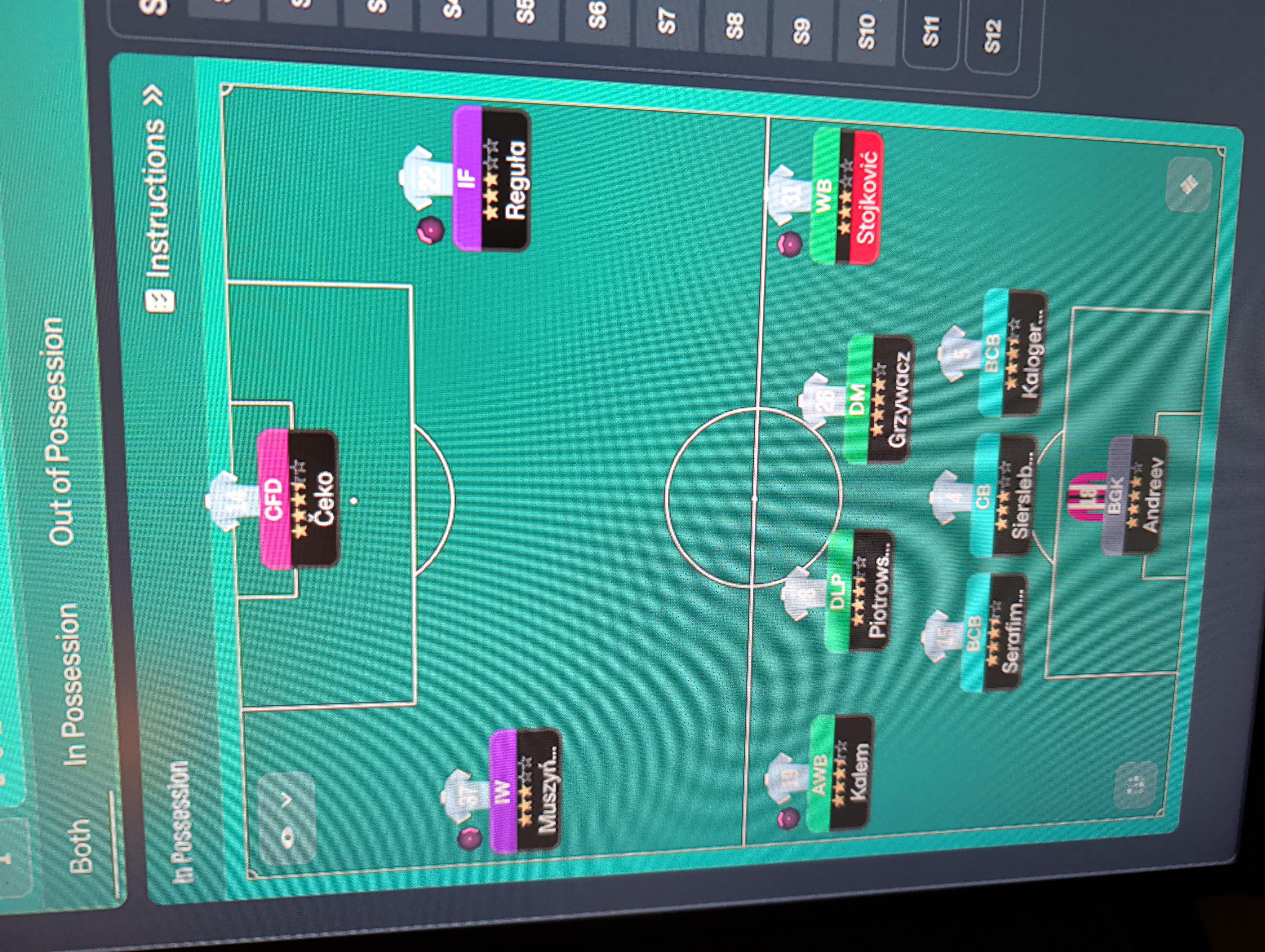
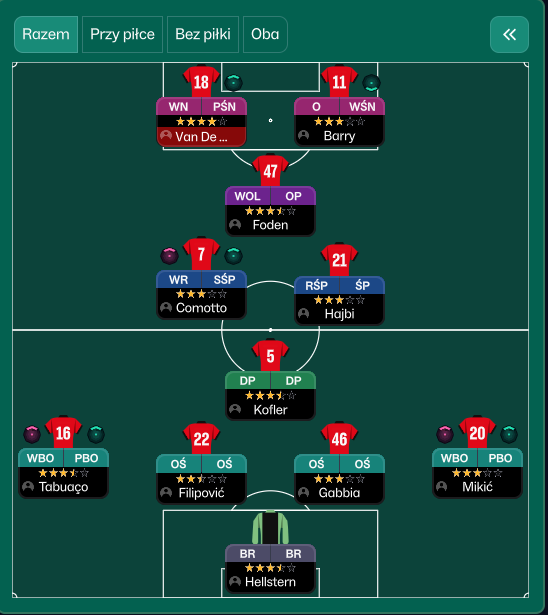
More Custom Gegenpress tactics
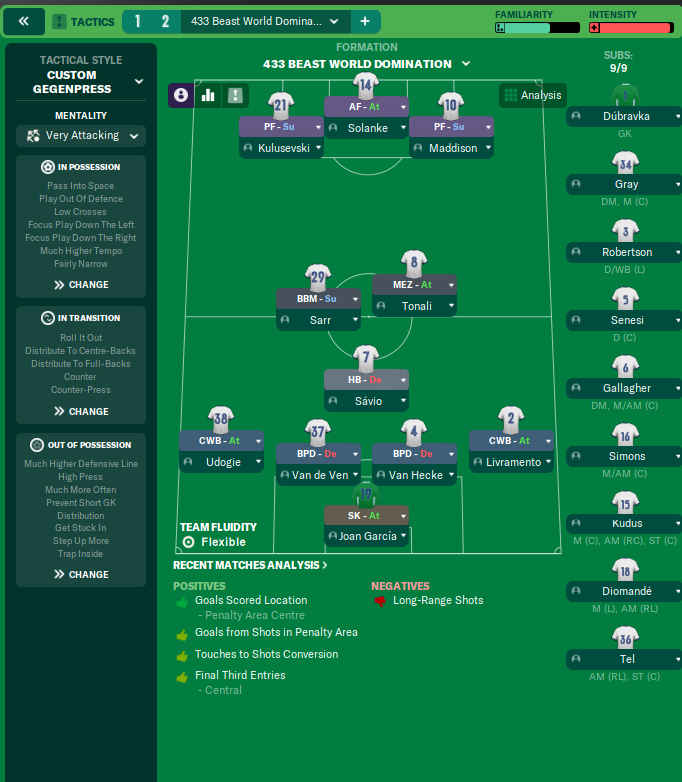
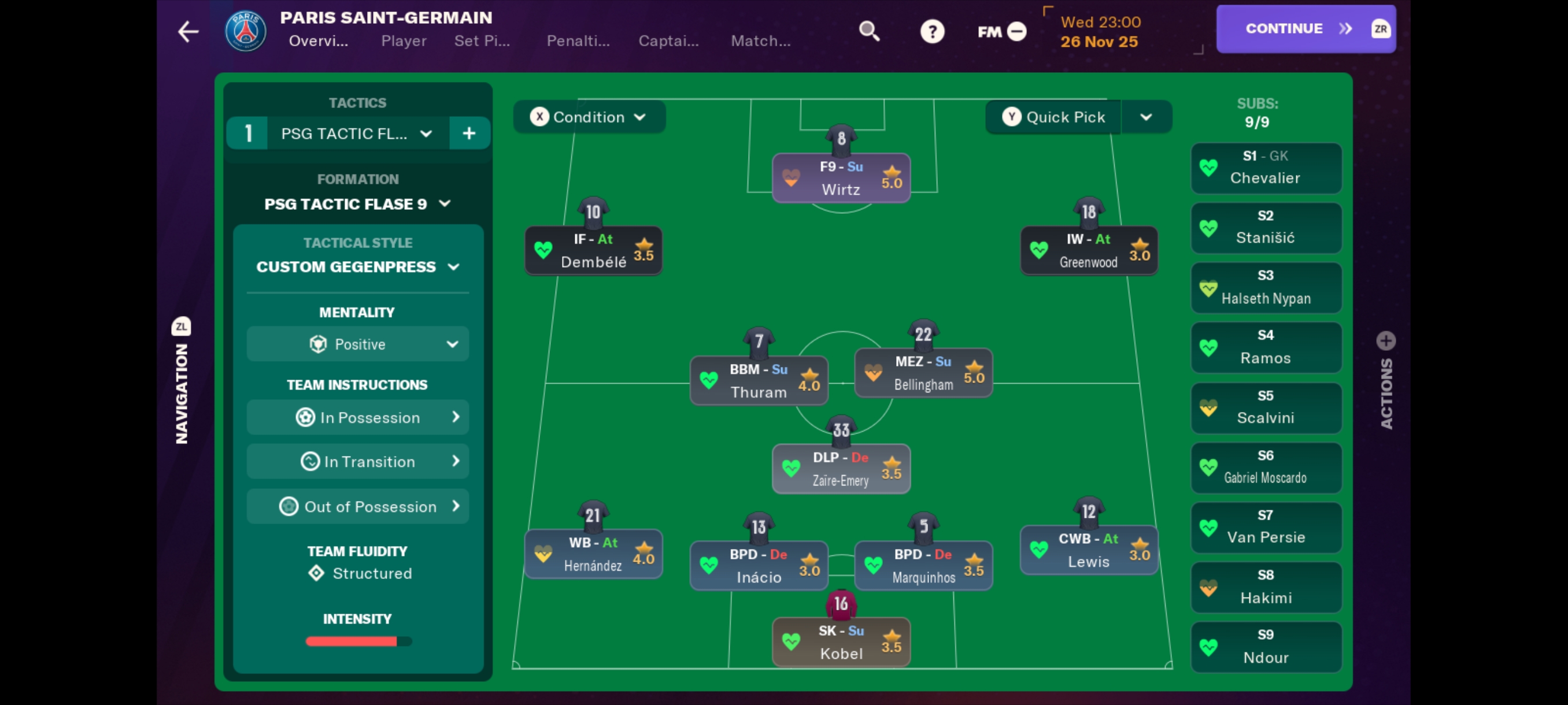
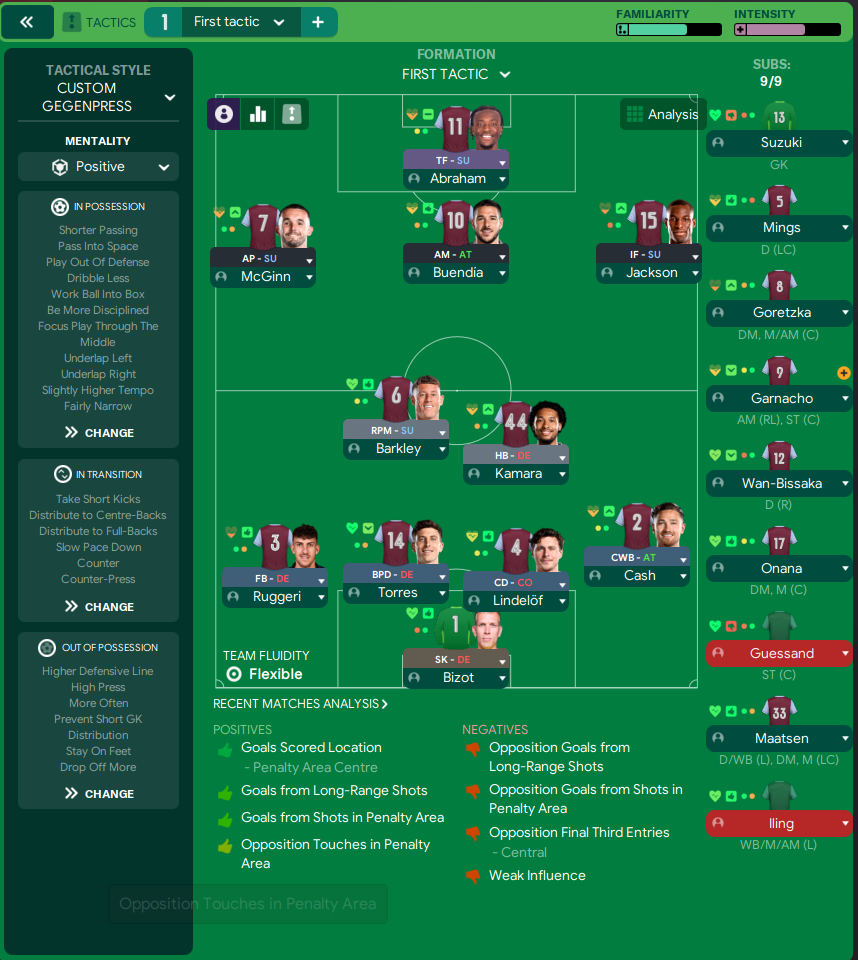
Guides for this formation
The tactical theory behind the 4-2-3-1 Wide: roles, instructions, and the trade-offs that decide whether the system holds up.
Player pairings
Midfield Pairs in 4-2-3-1 and 4-4-2
Double pivots and flat pairs in 4-2-3-1 and 4-4-2: when each pairing works, when it collapses, and the AMC unicorn that rescues both.
Read guide
Playing styles
Gegenpressing: A Full Guide
Klopp-style gegenpressing in FM, including squad profile, line-and-press pairing, sustainable workload, and the antipatterns to avoid.
Read guide