Uploaded Tactic
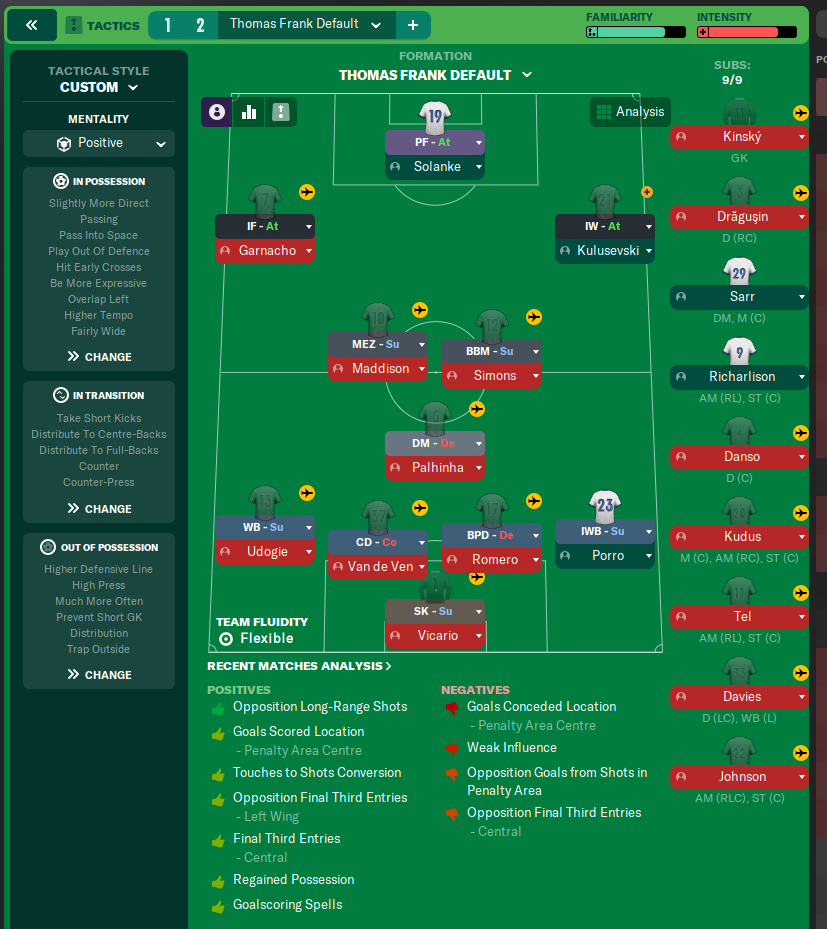
Formation & Style
Tactical Style:Custom
Mentality:Positive
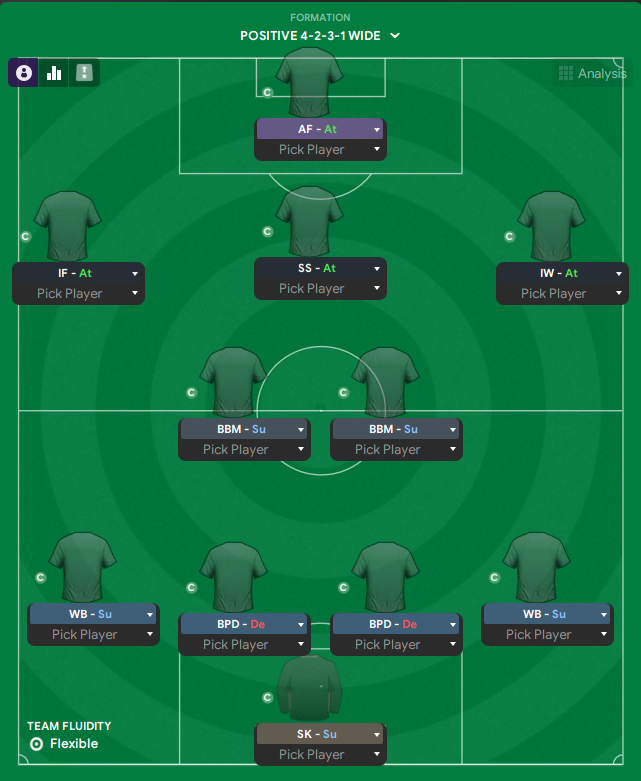
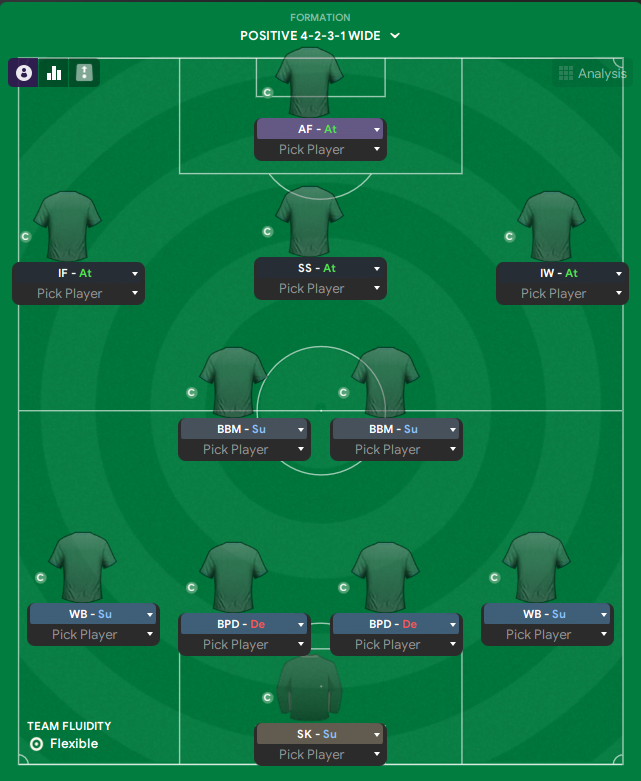
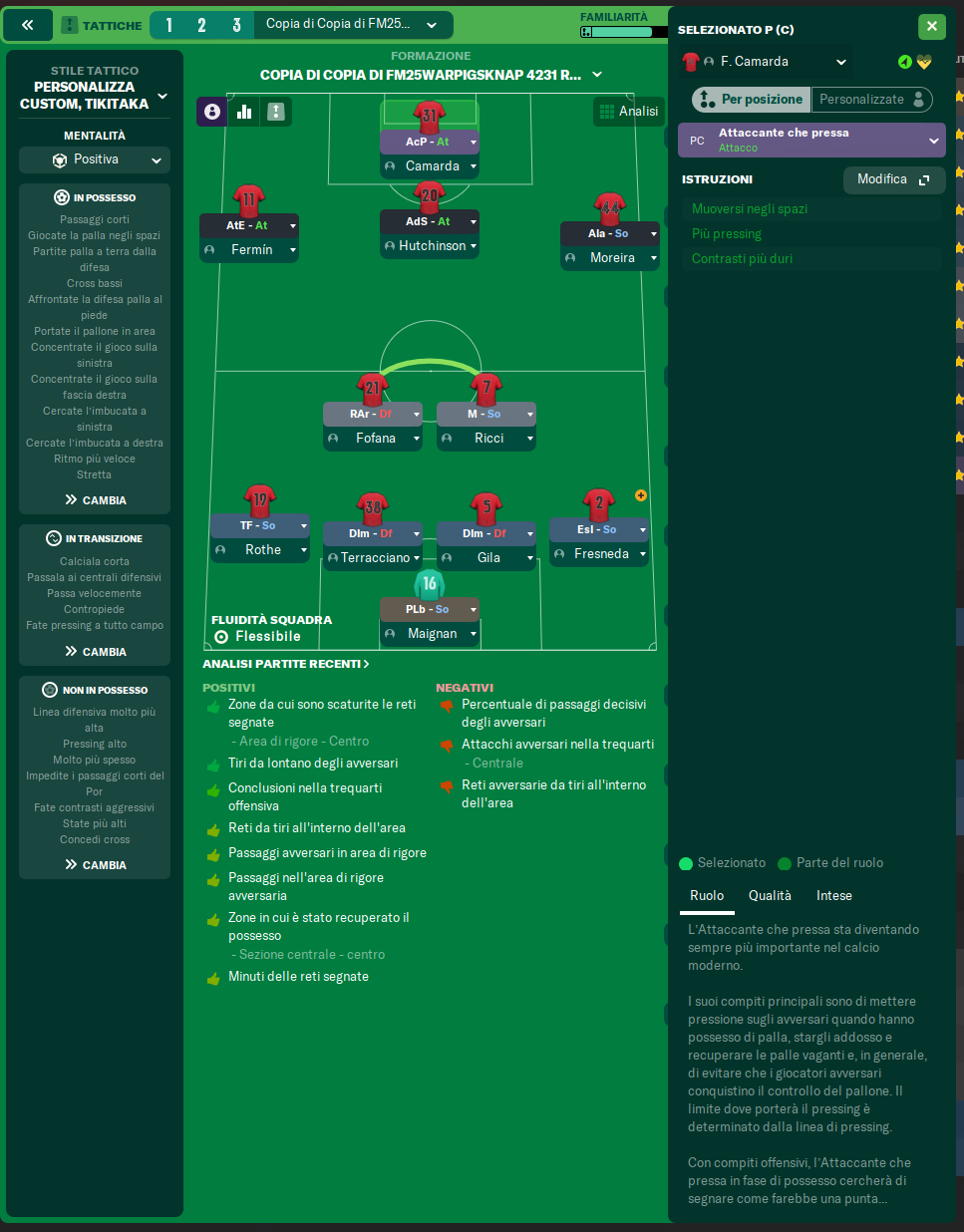
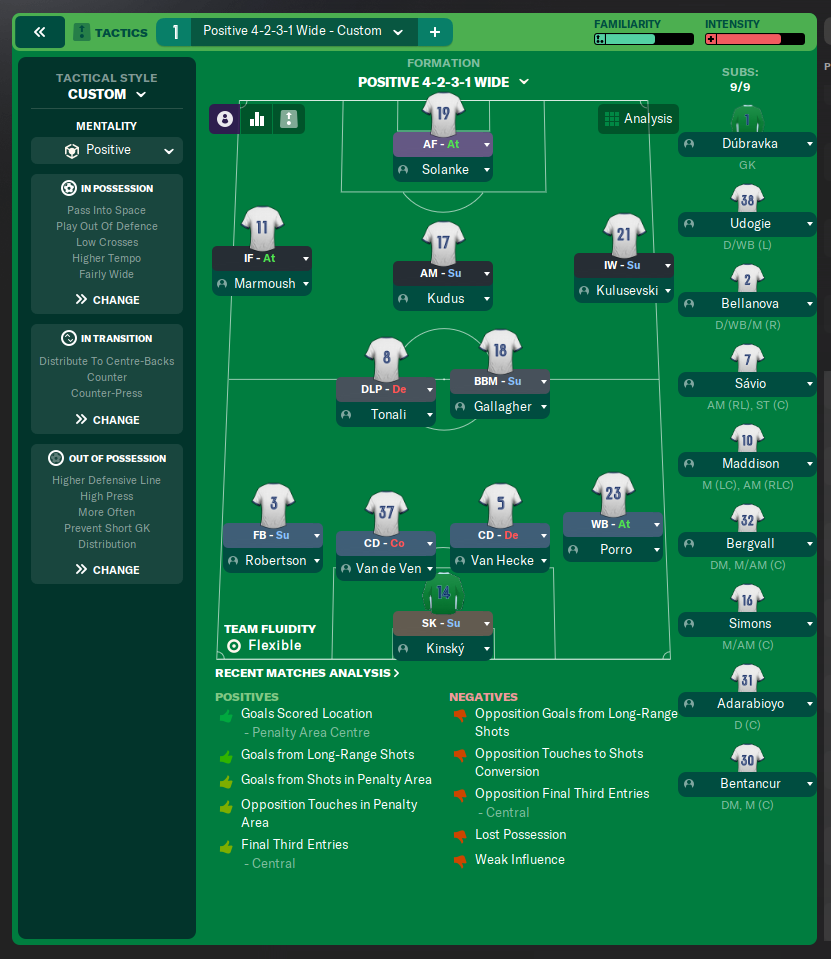
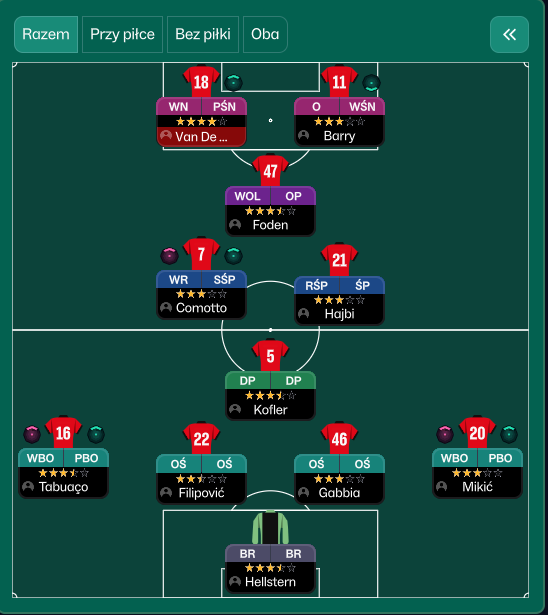
Formation:4-2-3-1 Wide
Team Fluidity:Flexible
In Possession
Slightly More Direct Passing
Pass Into Space
Play Out Of Defence
Hit Early Crosses
Be More Expressive
Overlap Left
Higher Tempo
In Transition
Take Short Kicks
Distribute To Centre-Backs
Distribute To Full-Backs
Counter
Counter-Press
Out of Possession
Higher Defensive Line
High Press
Much More Often Prevent Short GK Distribution
Trap Outside
Team Shape Without Ball
Shape:4-2
Description:The team maintains a structured 4-2 shape in defensive transitions, providing both width and stability.
Evidence:DM - De at [3,3] serves as the shield for the back line, while the CB and BPD cover central areas.
Team Shape With Ball
Shape:4-3
Description:The formation expands with wingers pushing high up, increasing options in attack while utilizing the Mezzala and Box-to-Box Midfielder to support.
Evidence:IF-A at [5,1] and IW-A at [5,3] creating space and width for Solanke, PF-A at [6,3].
Phase Description
Attacking Play
The setup encourages passing into space with direct play and overlapping runs from the full-backs, while varying tempo ensures fluidity and adaptability.
Defensive Transition
Close down opponents quickly with high pressing to regain possession effectively.
Main Focus
Creating goal-scoring opportunities through quick transitions and utilizing width from the wingers.
Key Strengths
Dynamic Attacking Options
Utilizing multiple attacking roles combined with higher support from midfielders increases threat in the final third.
Solid Defensive Structure
A well-organized backline featuring a BPD and a traditional Centre-Back ensures robustness against opposition attacks.
Effective Pressing Strategy
High pressing and quick regain of possession allows for swift transitions and counters.
Conflicting Directions
Vulnerability to Counter-Attacks
High defensive line may leave spaces behind, which opponents could exploit during swift transitions.
Central Defensive Exposures
The balance between pressing and maintaining defensive shape could create gaps that opponents can exploit.
Weakness Against Strong Wings
A lack of adequate cover could expose the full-backs against teams that play well on the wings.
Tactical Suggestions
Adjust Defensive Line
Consider lowering the defensive line to minimize vulnerability against counter-attacks.
Enhance Width in Attack
Encourage wingers to hug the touchline to stretch the opposition and create more space for midfielders.
Fluidity in Midfield Roles
Consider varying roles within the midfield to create more unpredictability and support for the attack.
Ask Questions About Your Lineup
Related Tactics
Guides for this formation
The tactical theory behind the 4-2-3-1 Wide: roles, instructions, and the trade-offs that decide whether the system holds up.
Player pairings
Midfield Pairs in 4-2-3-1 and 4-4-2
Double pivots and flat pairs in 4-2-3-1 and 4-4-2: when each pairing works, when it collapses, and the AMC unicorn that rescues both.
Read guide
Playing styles
Gegenpressing: A Full Guide
Klopp-style gegenpressing in FM, including squad profile, line-and-press pairing, sustainable workload, and the antipatterns to avoid.
Read guide