
4-2-3-1 Wide
The use of an Advanced Playmaker and Winger provides varied options in attack, facilitating creative movements and passing.
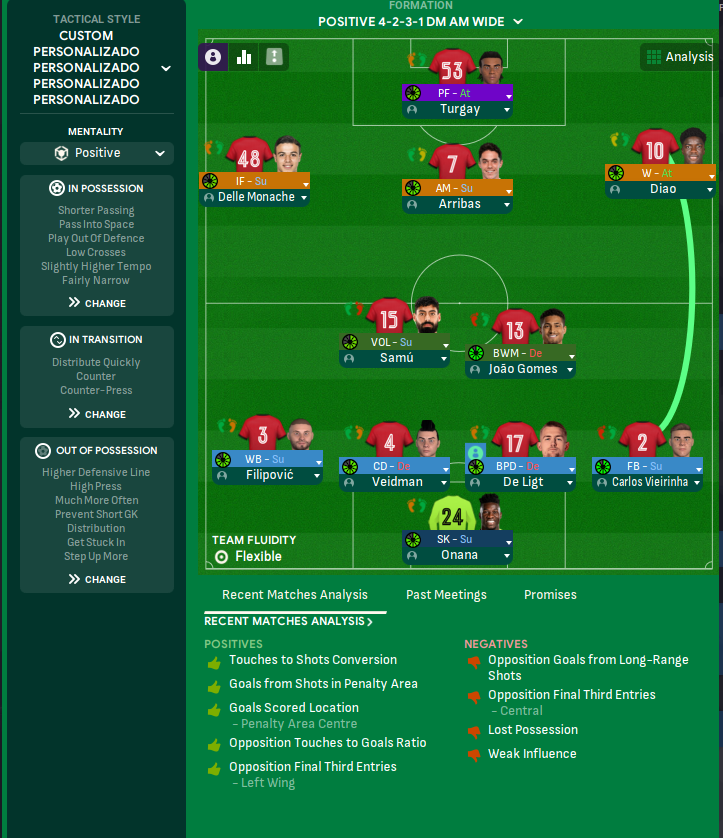
Loading tactical analysis...
Custom
Positive
4-2-3-1 Wide
Flexible
Shorter Passing
Pass Into Space
Play Out Of Defence
Slightly Higher Tempo
Low Crosses
Fairly Narrow
Distribute Quickly
Counter
Counter-Press
Higher Defensive Line
High Press
Prevent Short GK Distribution
Get Stuck In
Step Up More
ST
Pressing Forward
Attack
AM
Advanced Playmaker
Support
W
Winger
Attack
VOL
Volante
Support
BWM
Ball Winning Midfielder
Defend
The use of an Advanced Playmaker and Winger provides varied options in attack, facilitating creative movements and passing.
The combination of a Volante and Ball Winning Midfielder ensures control in the center of the pitch, aiding both defense and distribution.
A higher defensive line may be at odds with high pressing, causing players to be out of position during quick counter-attacks.
A fairly narrow approach may limit width and exploit space, contradicting the 4-2-3-1 wide formation.
How effective is the current pressing strategy against different opponents?
Are the player roles contributing effectively to both defensive stability and attacking freedom?
Is the current passing style allowing for optimal ball movement?
How are we addressing the weaknesses highlighted in recent matches?
Could a tactical substitution strengthen the attacking dynamic?
What adjustments can be made during matches to counter specific threats?
The tactical theory behind the 4-2-3-1 Wide: roles, instructions, and the trade-offs that decide whether the system holds up.
Klopp-style gegenpressing in FM, including squad profile, line-and-press pairing, sustainable workload, and the antipatterns to avoid.
Double pivots and flat pairs in 4-2-3-1 and 4-4-2: when each pairing works, when it collapses, and the AMC unicorn that rescues both.
Protect a 1-0, chase a 1-0, hold a draw away. How to manage game state in FM through duties and roles, not by lurching to Defensive.







