Uploaded Tactic
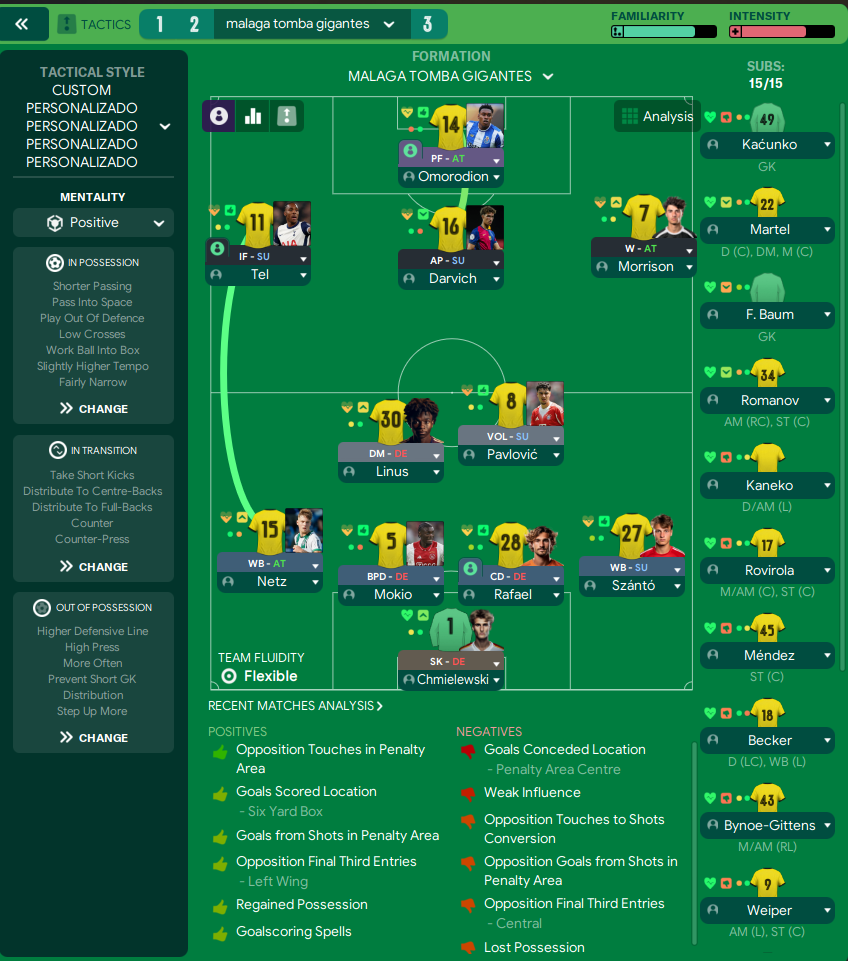
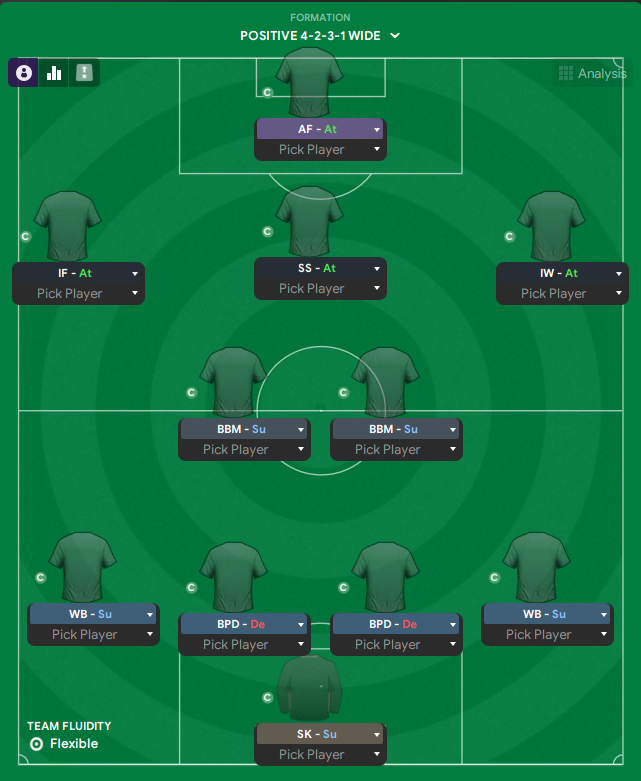
Formation & Style
Tactical Style:Custom
Mentality:Positive
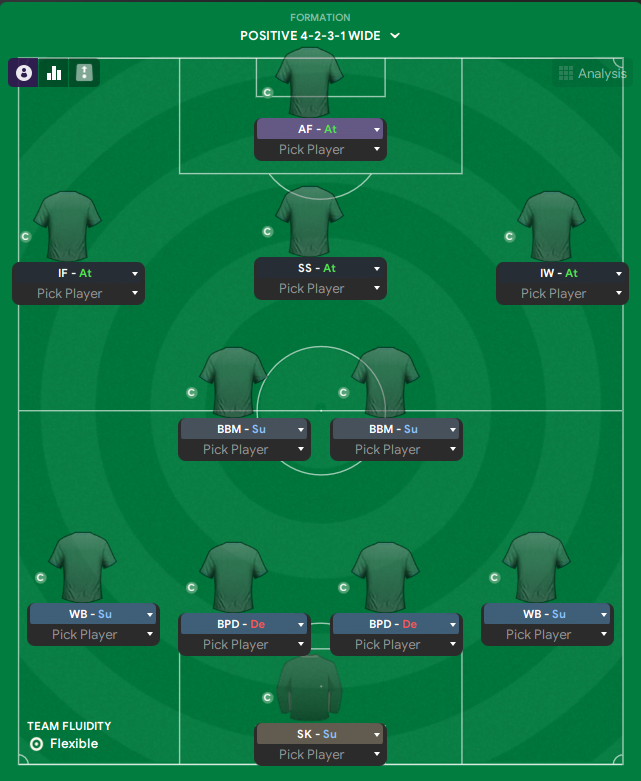
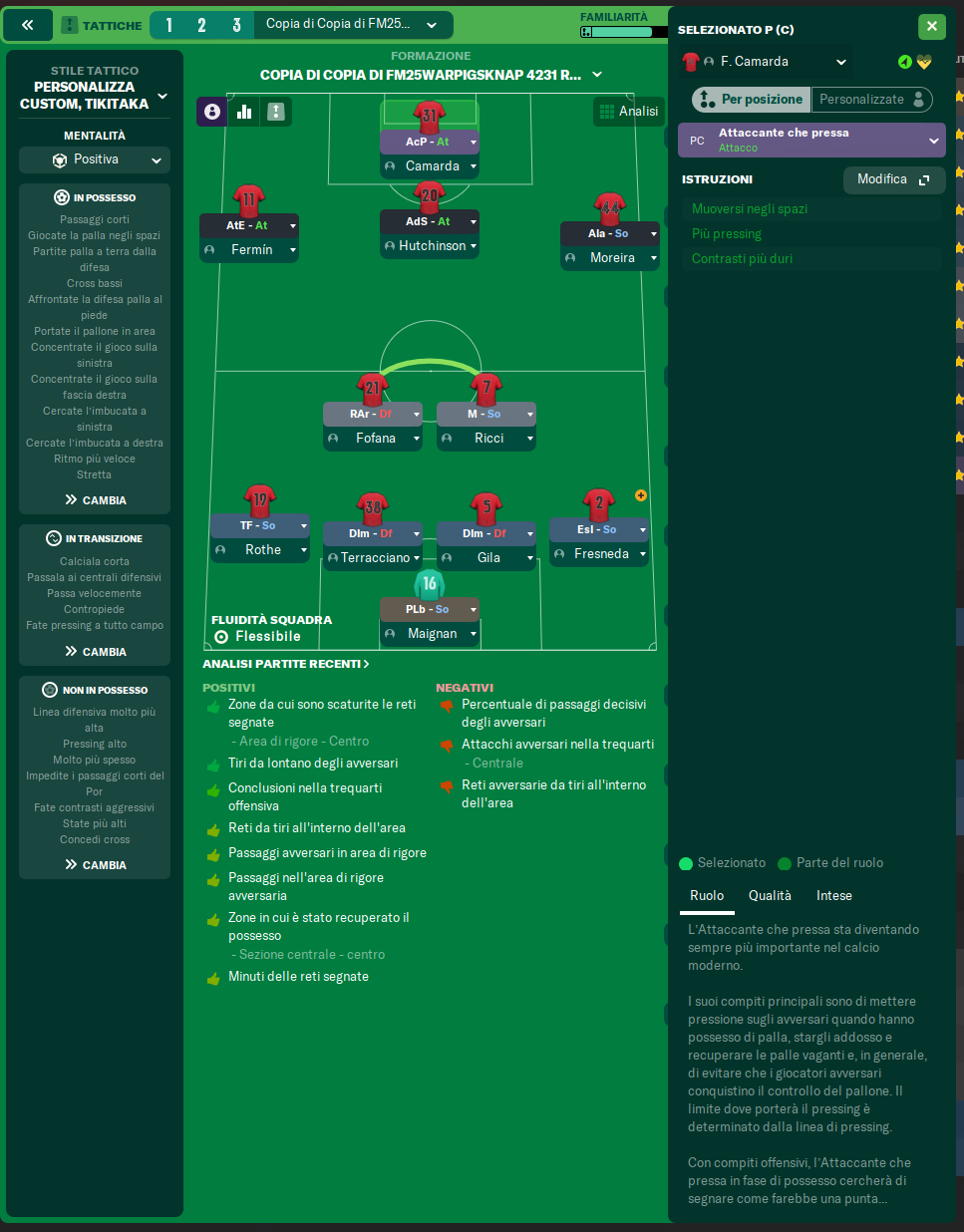
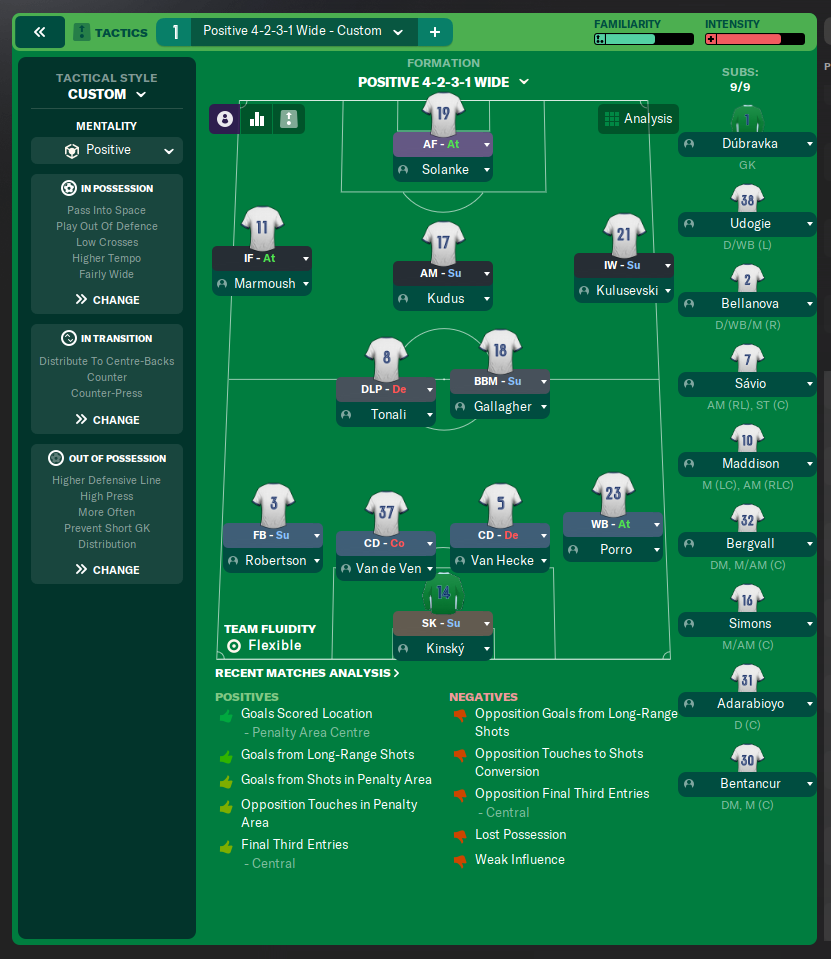
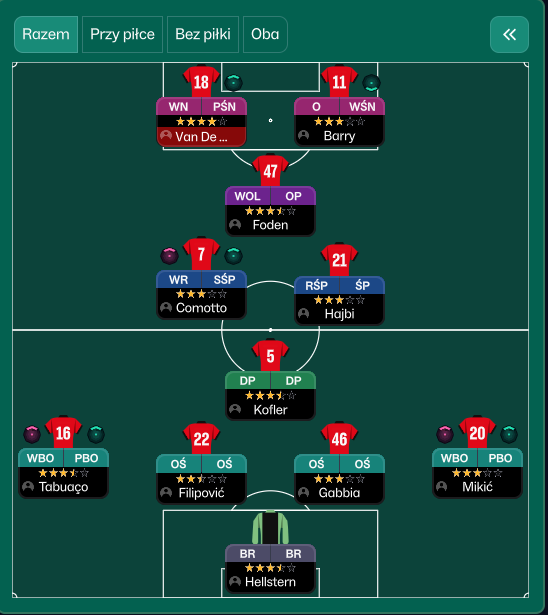
Formation:4-2-3-1 Wide
Team Fluidity:Flexible
In Possession
Shorter Passing
Pass Into Space
Play Out Of Defence
Low Crosses
Work Ball Into Box
Slightly Higher Tempo
Fairly Narrow
In Transition
Take Short Kicks
Distribute To Centre-Backs
Distribute To Full-Backs
Counter
Counter-Press
Out of Possession
Higher Defensive Line
High Press
More Often Prevent Short GK Distribution
Step Up Own Half
Team Shape Without Ball
Shape:4-2
Description:A compact formation aiming to restrict central penetration.
Evidence:Defensive Midfielder at [3,3] and Ball-Playing Defender at [2,2] supporting defensive solidity.
Team Shape With Ball
Shape:4-3
Description:Overlapping wing-backs provide width with the advanced playmaker centralizing potential plays.
Evidence:Wing-Backs at [2,1] and [2,5] with the Advanced Playmaker at [5,3] orchestrating attacks.
Phase Description
Attacking Play
Utilizes a midfield link with an Advanced Playmaker and two wide options to create scoring opportunities.
Defensive Transition
Quick redistribution from defence to exploit any counter-attacking opportunities.
Main Focus
Exploit the flanks while maintaining a central threat through the advanced playmaker.
Key Strengths
Width in Attack
Wing-backs provide depth and spread the opponent's defensive line.
Defensive Transition
Effective counter-pressing with a high defensive block.
Balanced Midfield Options
The dynamic between the Segunda Volante and DM creates fluidity.
Conflicting Directions
Potential Defensive Vulnerability
High line combined with pressing may leave gaps if countered effectively.
Weak Influence of Central Midfielder
With a central focus, potential over-reliance on one playmaker.
Inconsistent Pressing Initiation
If not coordinated, pressing can lead to defensive mismatches.
Tactical Suggestions
Consider a More Solid Midfield Role
Switch a central midfielder to a more defensive role to ensure better coverage.
Adjust Full-Back Duties
Rotate WB duties based on match context to provide flexibility in attack and defence.
Implement Specific Pressing Triggers
Streamline pressing strategy to avoid gaps during transitions.
Ask Questions About Your Lineup
Related Tactics
Guides for this formation
The tactical theory behind the 4-2-3-1 Wide: roles, instructions, and the trade-offs that decide whether the system holds up.
Player pairings
Midfield Pairs in 4-2-3-1 and 4-4-2
Double pivots and flat pairs in 4-2-3-1 and 4-4-2: when each pairing works, when it collapses, and the AMC unicorn that rescues both.
Read guide
Playing styles
Gegenpressing: A Full Guide
Klopp-style gegenpressing in FM, including squad profile, line-and-press pairing, sustainable workload, and the antipatterns to avoid.
Read guide