Uploaded Tactic
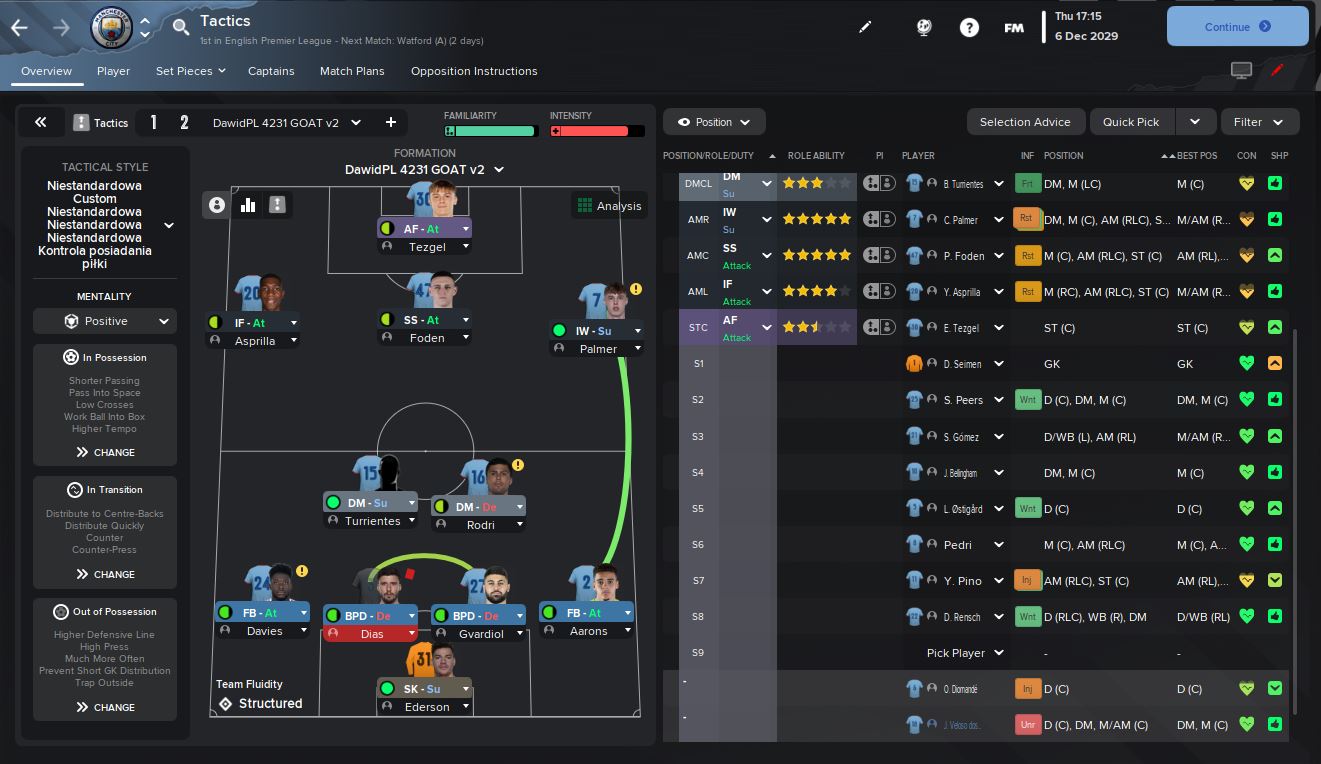
Formation & Style
Tactical Style:NieStandardowa Custom
Mentality:Positive
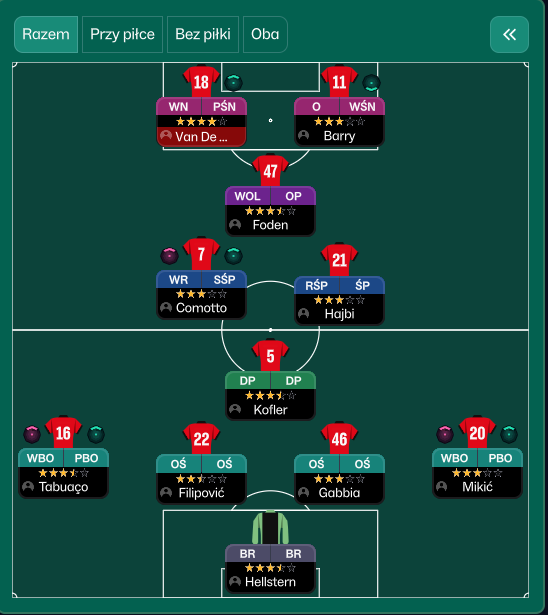
Formation:4-2-3-1 Wide
Team Fluidity:Structured
In Possession
Shorter Passing
Pass Into Space
Low Crosses
Work Ball Into Box
Higher Tempo
In Transition
Distribute to Centre-Backs
Distribute Quickly
Counter
Counter-Press
Out of Possession
Higher Defensive Line
High Press
Much More Often Prevent Short GK Distribution
Trap Outside
Team Shape Without Ball
Shape:4-2-3-1
Description:Compact and disciplined defensive block with depth provided by two holding midfielders.
Evidence:2 BPDs at [2,2], [2,4] and 2 DMs at [3,2], [3,3]
Team Shape With Ball
Shape:4-2-3-1
Description:Wide formation that exploits spaces with full-backs pushing high and attackers cutting inside.
Evidence:FBs at [2,1], [2,5] and attacking players positioned at [6,3], [5,2], [5,3], [5,4]
Phase Description
Attacking Play
Focus on width and intricate passing to unlock defenses, utilizing inside forwards to cut in.
Defensive Transition
Quick recovery and immediate pressure on opponents to regain possession.
Main Focus
Creating overloads on the flanks and utilizing full-backs' width.
Key Strengths
Dynamic Attacking Options
The combination of inside and inverted wingers allows for variation in attack.
Controlled Build-up Play
The use of shorter passing alongside a higher tempo facilitates fluid movements.
High Pressing Capability
High pressing effectively disrupts opponent builds, leading to quick turnovers.
Conflicting Directions
Counter-Pressing vs. Deep Defending
High pressing may leave vulnerabilities at the back during quick counters.
Full-back Support
Aggressive full-backs might be caught out of position when attacking.
Utilizing Width vs. Compact Midfield
Formation encourages wide play that might isolate attackers if not supported properly.
Tactical Suggestions
Consider Adjusting Defensive Line
A slightly lower defensive line could reduce vulnerability to pacey counter-attacks.
Balance Full-back Roles
One full-back could adopt a more conservative duty to balance attack and defense.
Instill Specialized Roles in AMs
Tailoring AM roles to specific duties can create better synergy and fluidity in attack.
Ask Questions About Your Lineup
Related Tactics
Guides for this formation
The tactical theory behind the 4-2-3-1 Wide: roles, instructions, and the trade-offs that decide whether the system holds up.
Player pairings
Midfield Pairs in 4-2-3-1 and 4-4-2
Double pivots and flat pairs in 4-2-3-1 and 4-4-2: when each pairing works, when it collapses, and the AMC unicorn that rescues both.
Read guide
Playing styles
Gegenpressing: A Full Guide
Klopp-style gegenpressing in FM, including squad profile, line-and-press pairing, sustainable workload, and the antipatterns to avoid.
Read guide