Uploaded Tactic
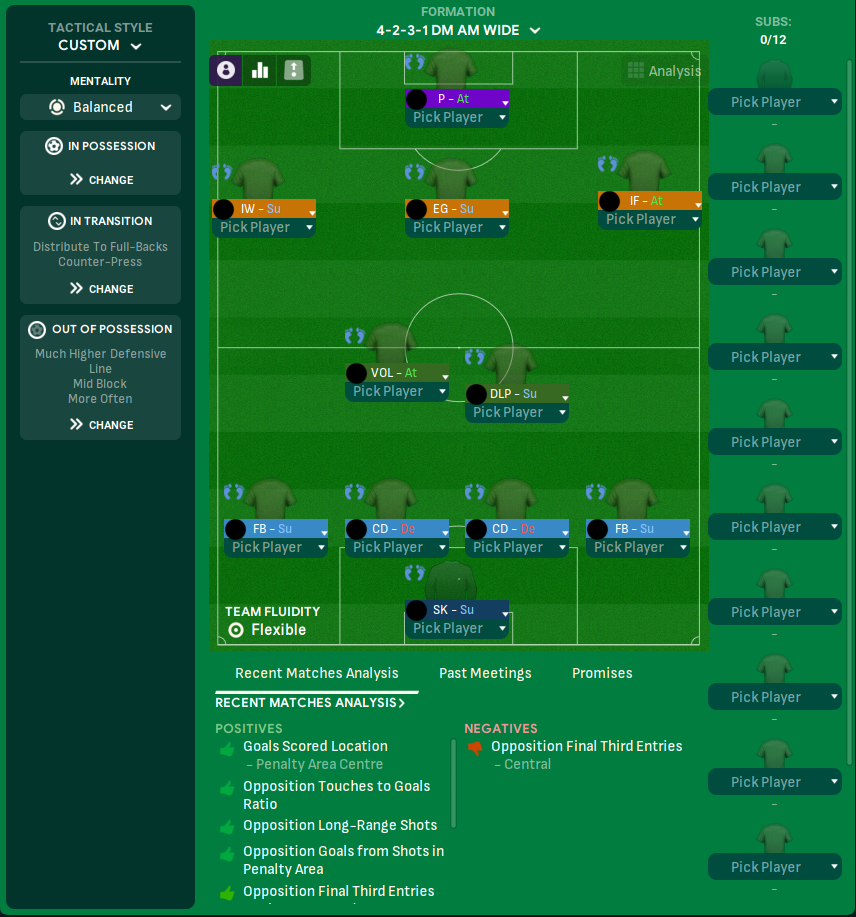
Formation & Style
Tactical Style:Custom
Mentality:Balanced
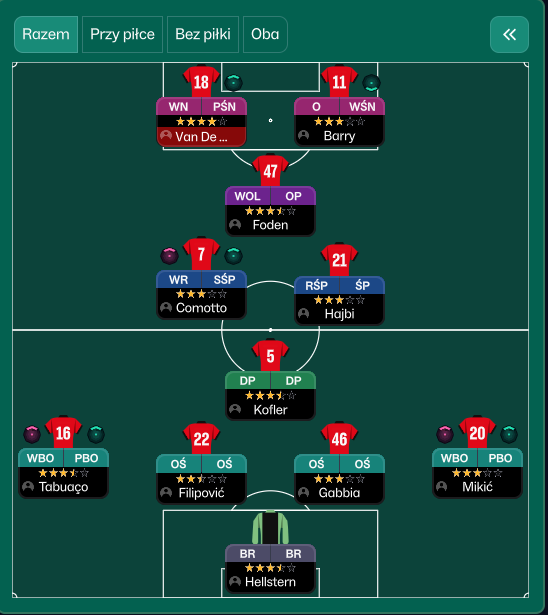
Formation:4-2-3-1 Wide
Team Fluidity:Flexible
In Possession
Distribute To Full-Backs
Counter-Press
In Transition
Counter-Attack:Enabled
Counter-Press:Immediate
Goalkeeper Distribution:Short
Throw-ins:Quick
Out of Possession
Much Higher Defensive Line
Mid Block
More Often
Team Shape Without Ball
Shape:4-2
Description:A compact shape that controls the midfield and limits space for opposition attackers.
Evidence:The two centre-backs (CD-De) and a ball-winning midfielder (BWM-A) at [3,3] help maintain defensive solidity.
Team Shape With Ball
Shape:3-3-1
Description:A forward line that utilizes width and central playmakers, ensuring diverse attacking options.
Evidence:With an Inside Forward (IF-A) positioned at [6,4], an Enganche (ENG-S) at [5,3], and a Poacher (P-A) at [6,3], the team has multiple scoring avenues.
Phase Description
Attacking Play
The team aims to exploit the width using the Inside Forward and Wide Midfielder, while the Enganche plays a pivotal role in linking the midfield with the attack.
Defensive Transition
Upon losing possession, the team looks to counter-press to regain the ball quickly.
Main Focus
Attacking play focuses on exploiting space and utilizing the strong presence in the penalty area.
Key Strengths
Variety in Attack
Multiple attackers with different roles provide flexibility and unpredictability.
Balanced Midfield
The midfield setup allows both defensive cover and creative opportunities.
Defensive Solidity
A strong defensive organization supports both counter-attacks and possession play.
Conflicting Directions
High Defensive Line vs. Counter Press
A higher defensive line may create vulnerabilities against fast counter-attacks.
Mid Block with High Line
These strategies can create space for long balls behind the defence.
Fluidity vs. Structure
A Flexible team fluidity combined with set roles can lead to confusion in positional play.
Tactical Suggestions
Adjust Defensive Height
Consider lowering the defensive line to reduce vulnerability to counters.
Reassess the Counter-Press Frequency
Tweak counter-press instructions to harmonize with defensive tactics.
Strengthen Midfield Presence
Consider a third midfield player for enhanced control and ball retention.
Ask Questions About Your Lineup
Related Tactics
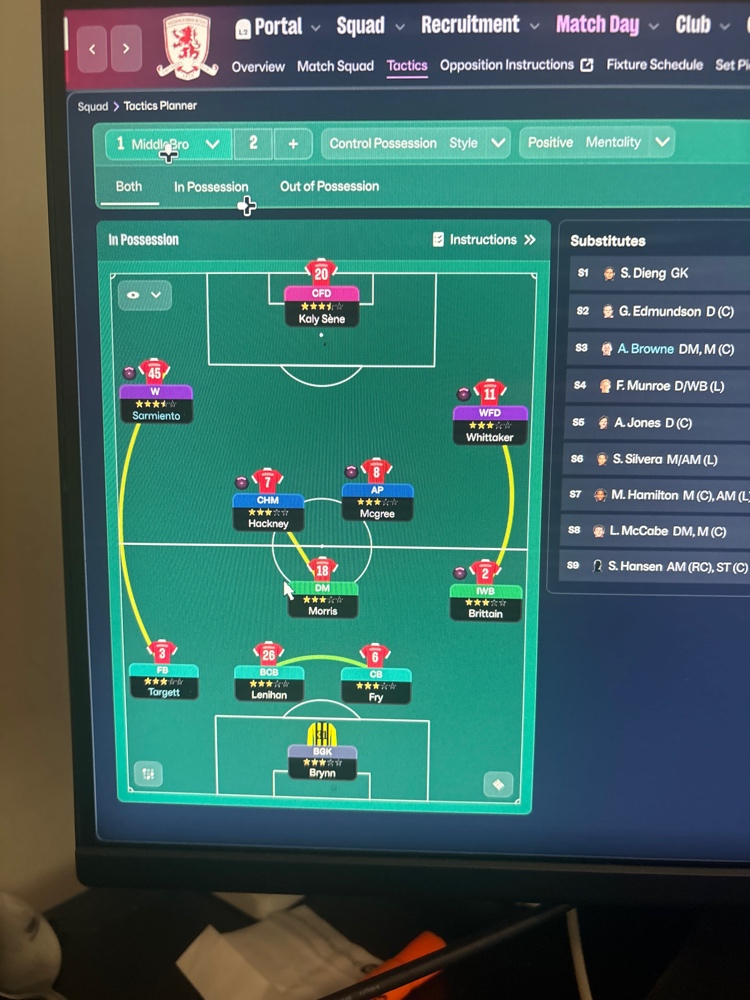
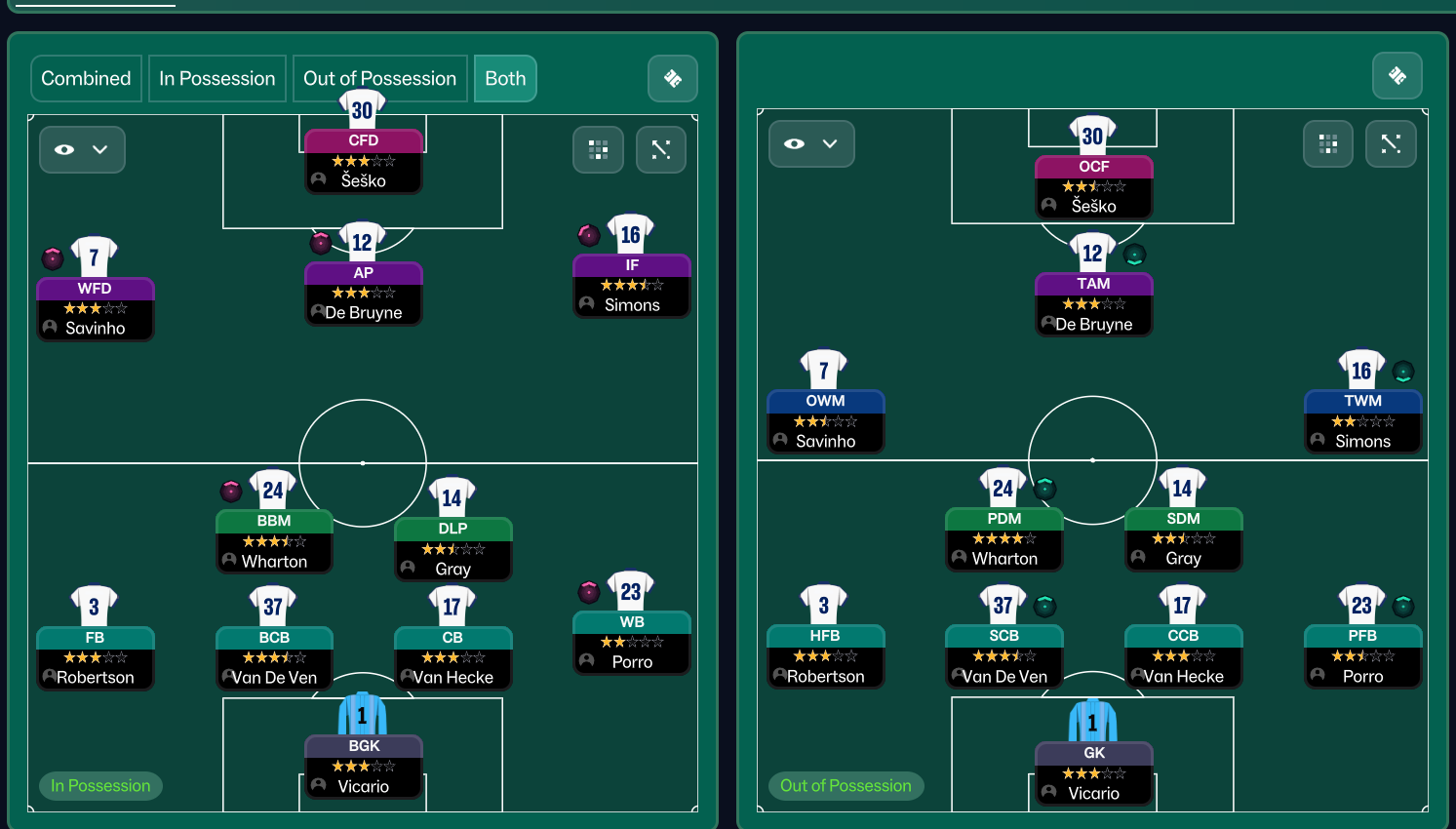
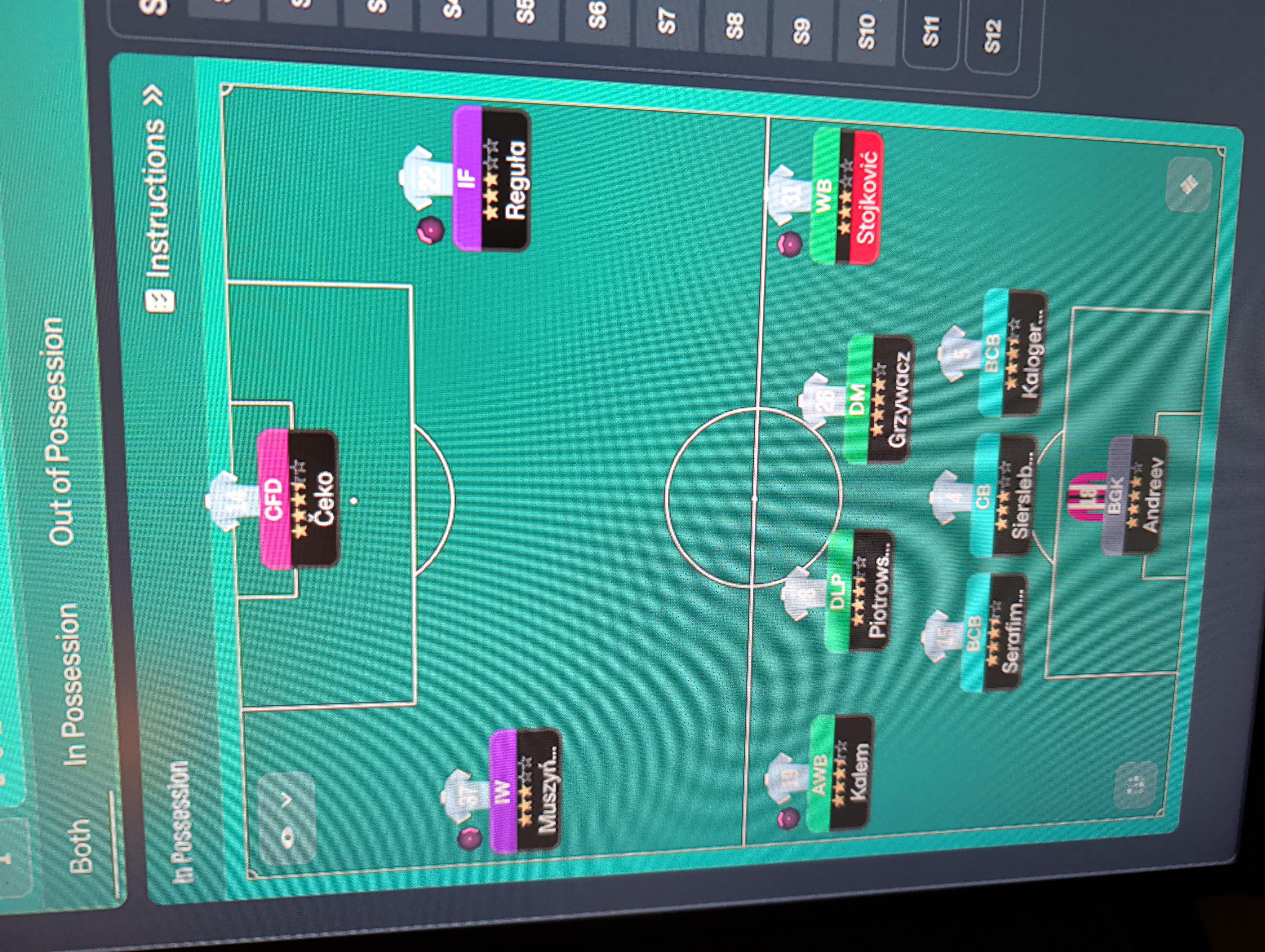
Guides for this formation
The tactical theory behind the 4-2-3-1 Wide: roles, instructions, and the trade-offs that decide whether the system holds up.
Player pairings
Midfield Pairs in 4-2-3-1 and 4-4-2
Double pivots and flat pairs in 4-2-3-1 and 4-4-2: when each pairing works, when it collapses, and the AMC unicorn that rescues both.
Read guide
Playing styles
Gegenpressing: A Full Guide
Klopp-style gegenpressing in FM, including squad profile, line-and-press pairing, sustainable workload, and the antipatterns to avoid.
Read guide