Uploaded Tactic
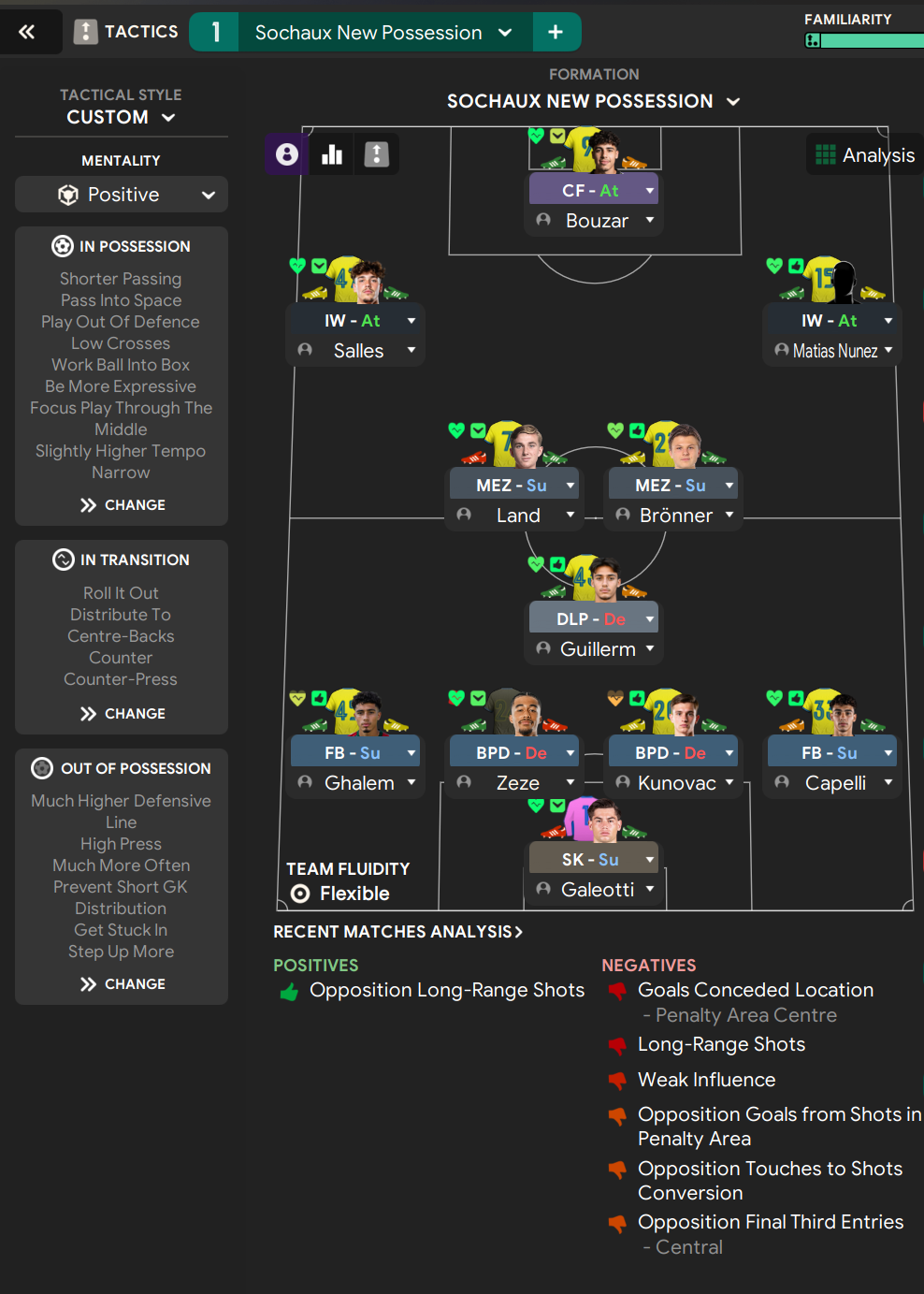
Formation & Style
Tactical Style:Custom
Mentality:Positive
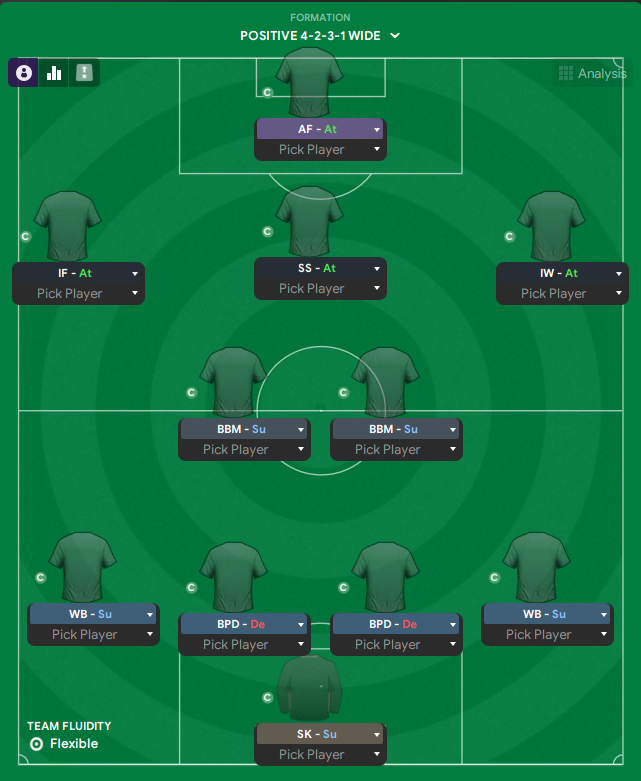
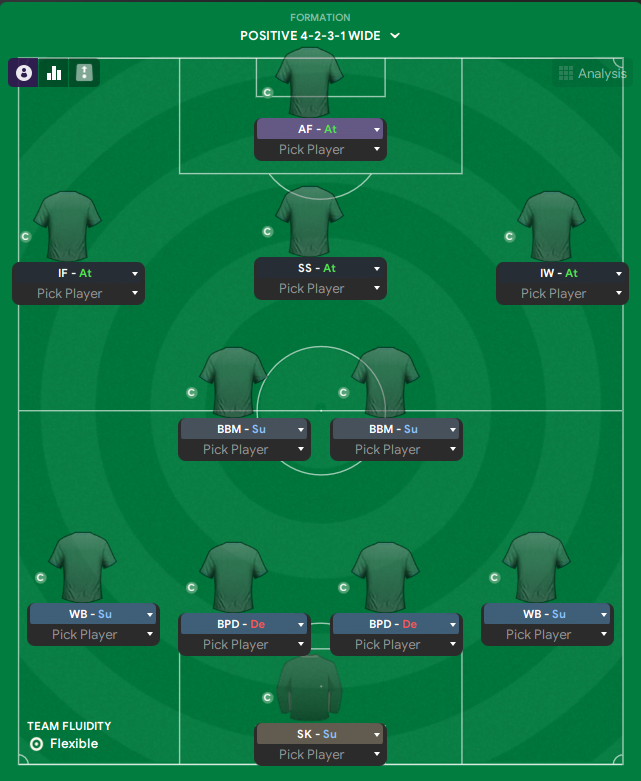
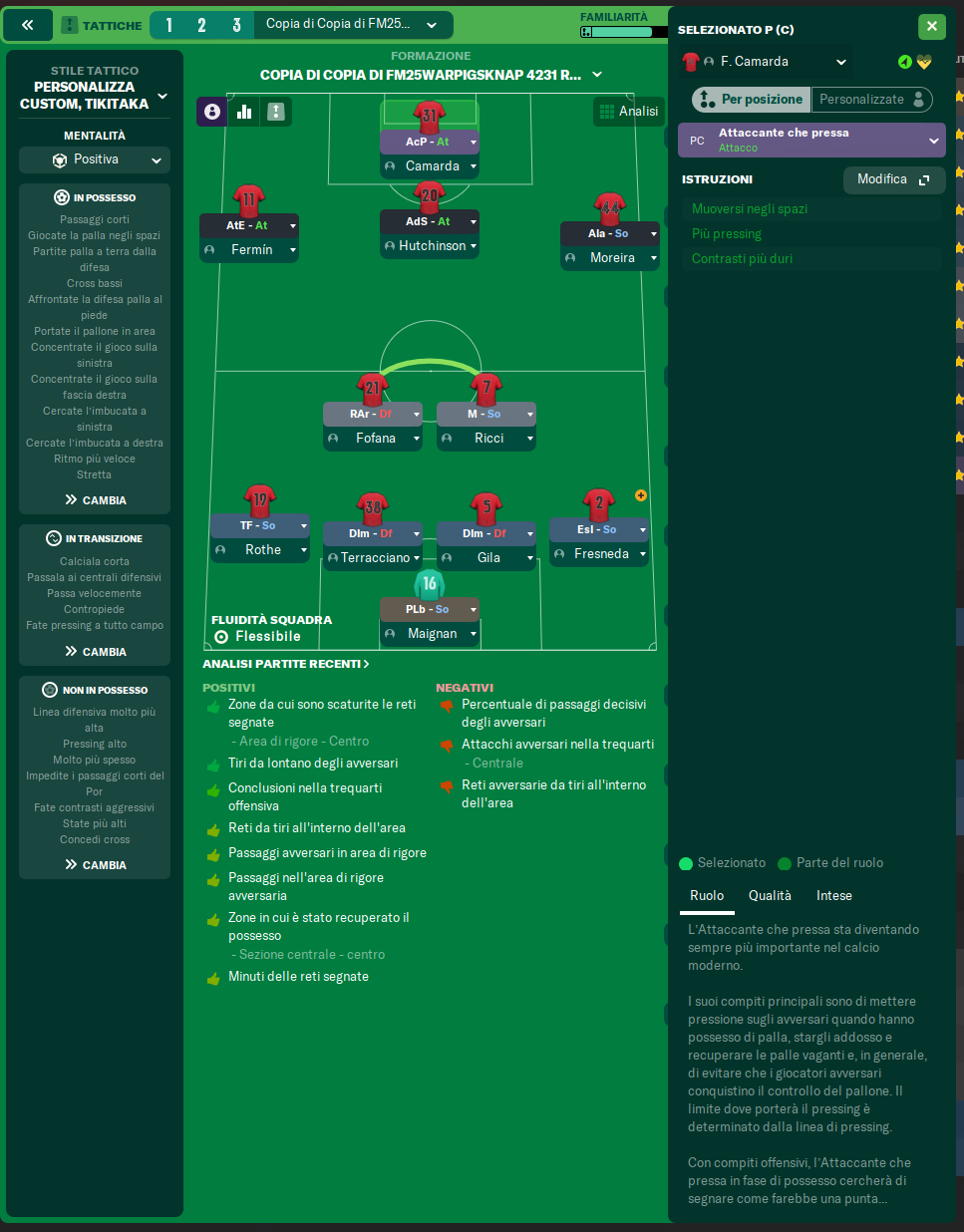
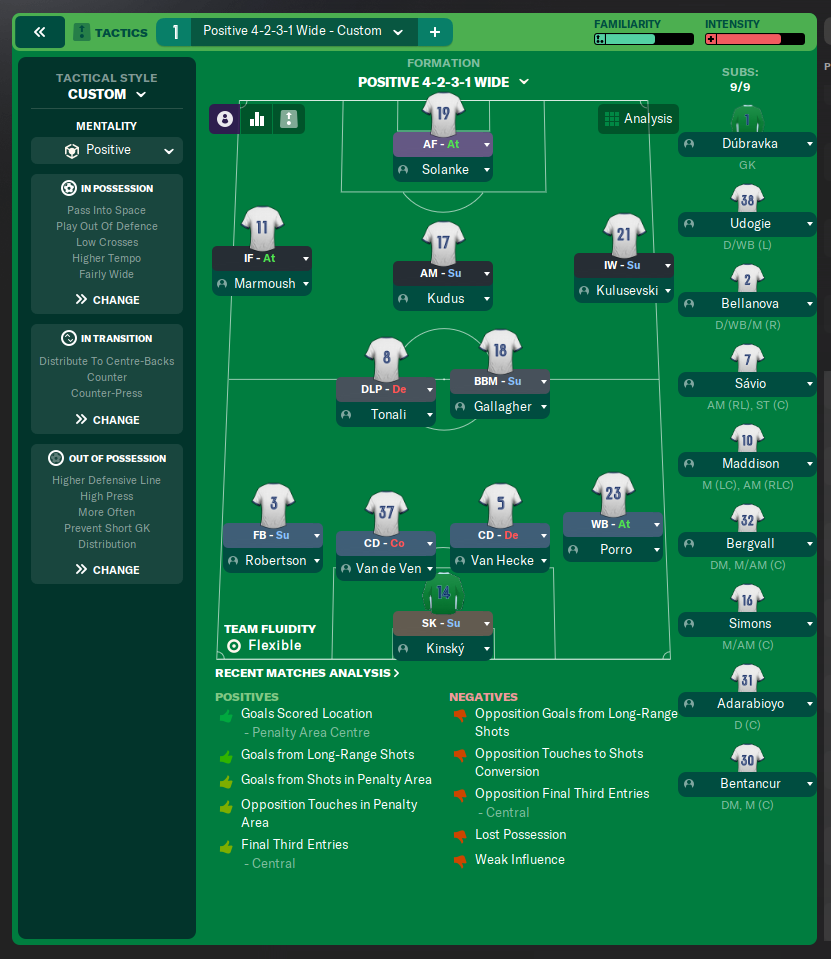
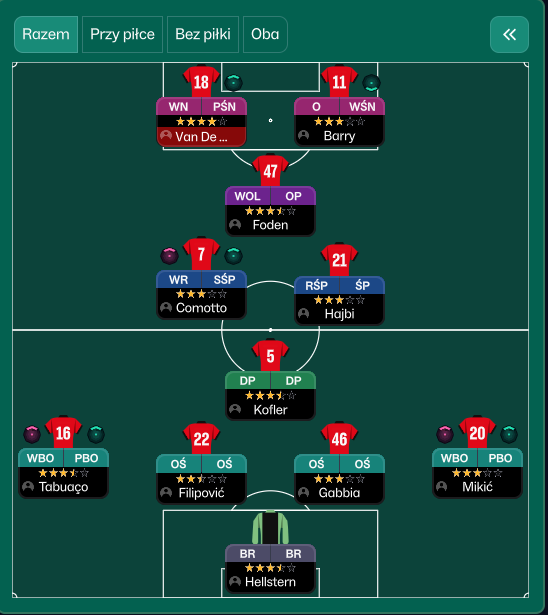
Formation:4-2-3-1 Wide
Team Fluidity:Flexible
In Possession
Shorter Passing
Pass Into Space
Play Out Of Defence
Low Crosses
Work Ball Into Box
Be More Expressive
Focus Play Through The Middle
Slightly Higher Tempo
Narrow
In Transition
Roll It Out
Distribute To Centre-Backs
Counter
Counter-Press
Out of Possession
Much Higher Defensive Line
High Press
Much More Often Prevent Short GK Distribution
Get Stuck In
Step Up More
Team Shape Without Ball
Shape:Compact
Description:The team shapes up in a compact formation when defending, making it difficult for opponents to penetrate.
Evidence:Much Higher Defensive Line + High Press
Team Shape With Ball
Shape:Fluid
Description:Players maintain fluid movement across the pitch, particularly utilizing inside wingers and the number 10 to create space.
Evidence:Two Inside Wingers + DLP Support
Phase Description
Attacking Play
The tactic emphasizes possession and short passing, allowing for fluid transitions into the final third.
Defensive Transition
Quickly counter-press after losing the ball to regain possession swiftly.
Main Focus
Maintaining possession while utilizing the width provided by inside wingers.
Key Strengths
Effective Wide Play
The inside wingers create width and allow for quick transitions into the final third.
Possession-Based Play
The tactics focus on short passing and working the ball into the box.
Defensive Resilience
Compact defensive structure supported by a high press can stifle opponent creativity.
Conflicting Directions
Defensive Vulnerabilities
A higher defensive line may leave the team vulnerable to counter-attacks.
Pressure Management
High press requires significant energy; overuse may lead to fatigue.
Narrow Width in Attack
Narrow width may restrict options and compact marking around the ball.
Tactical Suggestions
Adjust Defensive Line
Consider lowering the defensive line to mitigate counter-attack vulnerabilities.
Increase Team Width
Wider formations can stretch opposition defenses and create more space.
Optimize Pressing
Evaluate the pressing frequency based on match conditions to manage stamina.
Ask Questions About Your Lineup
Related Tactics
Guides for this formation
The tactical theory behind the 4-2-3-1 Wide: roles, instructions, and the trade-offs that decide whether the system holds up.
Player pairings
Midfield Pairs in 4-2-3-1 and 4-4-2
Double pivots and flat pairs in 4-2-3-1 and 4-4-2: when each pairing works, when it collapses, and the AMC unicorn that rescues both.
Read guide
Playing styles
Gegenpressing: A Full Guide
Klopp-style gegenpressing in FM, including squad profile, line-and-press pairing, sustainable workload, and the antipatterns to avoid.
Read guide