Uploaded Tactic
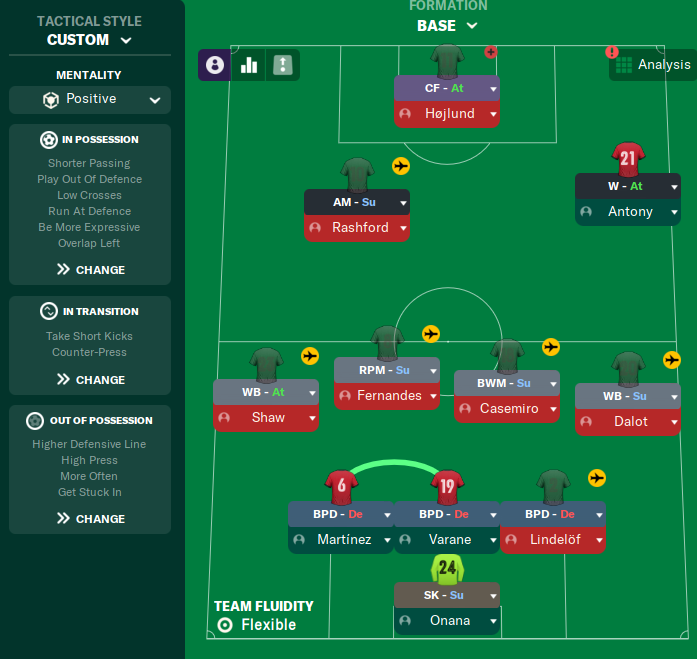
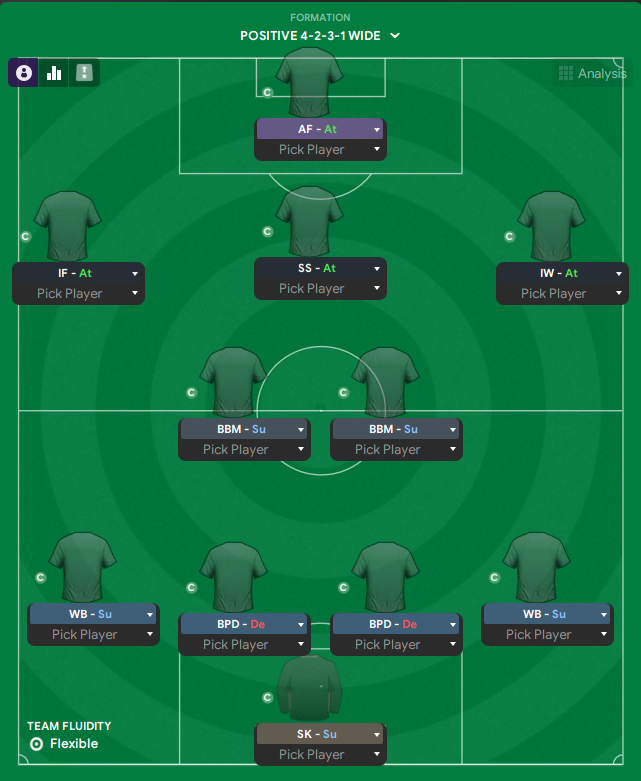
Formation & Style
Tactical Style:Custom
Mentality:Positive
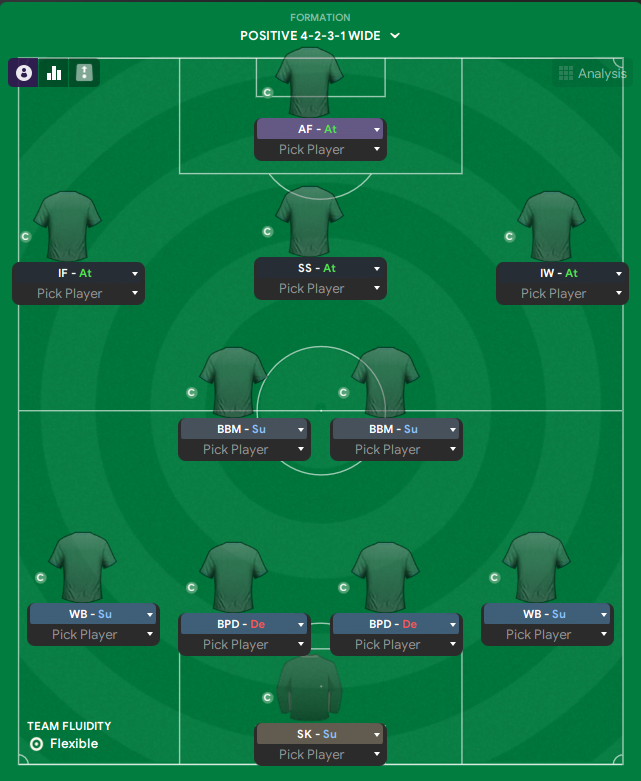
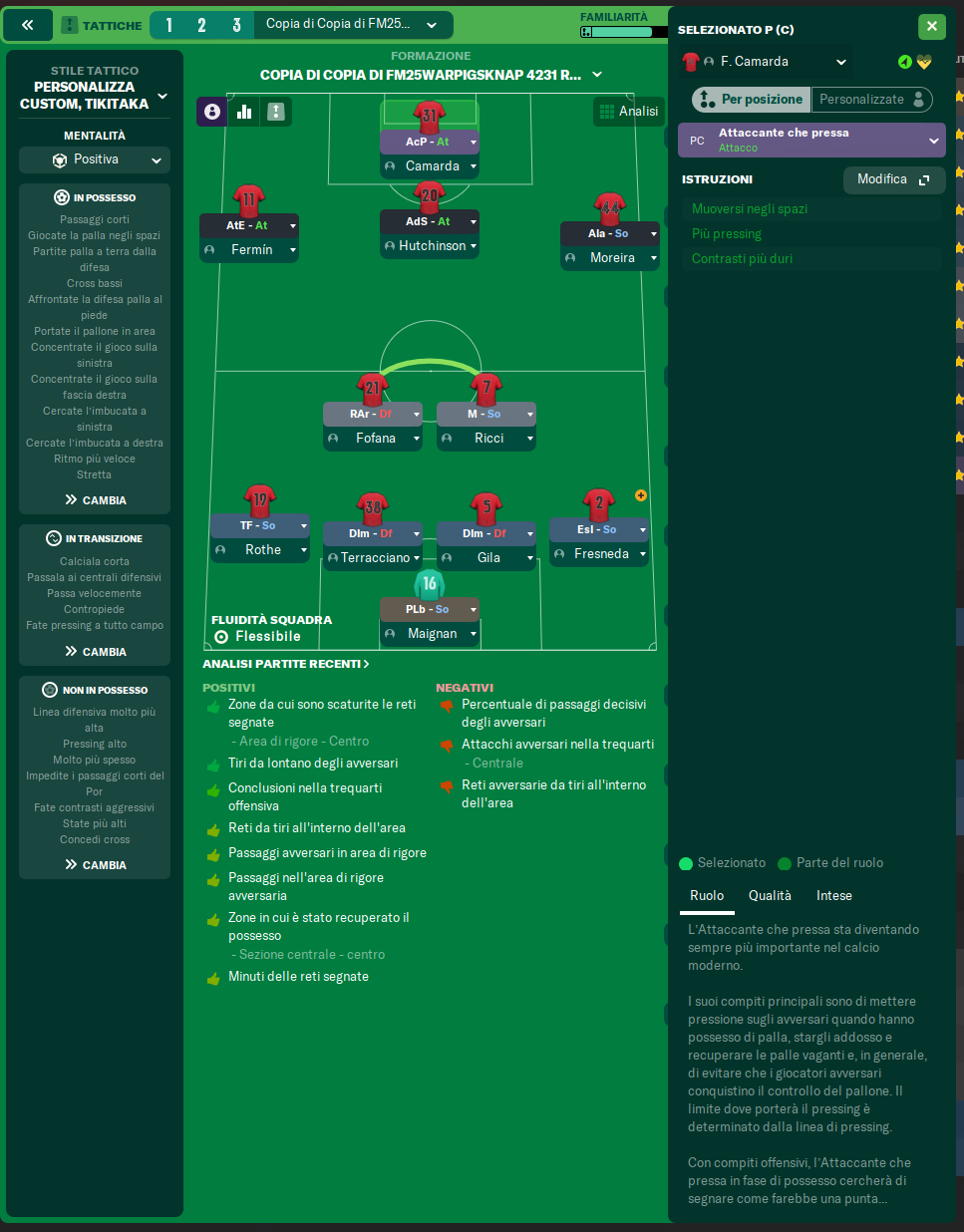
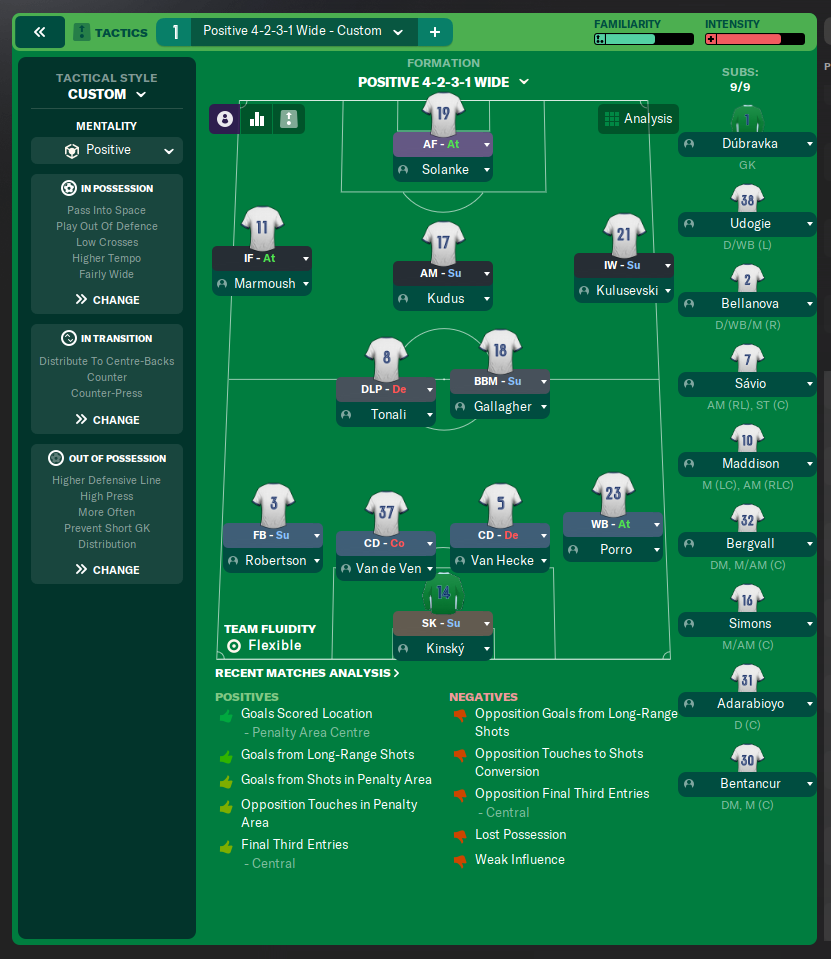
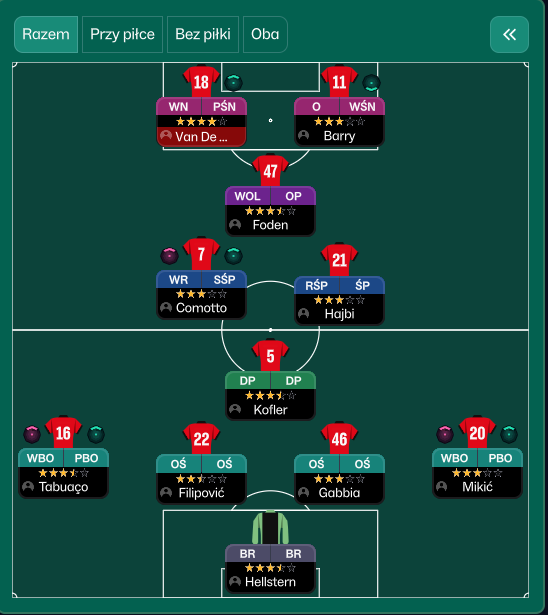
Formation:4-2-3-1 Wide
Team Fluidity:Flexible
In Possession
Shorter Passing
Play Out Of Defence
Low Crosses
Run At Defence
Be More Expressive
Overlap Left
In Transition
Take Short Kicks
Counter-Press
Out of Possession
Higher Defensive Line
High Press
More Often
Get Stuck In
Team Shape Without Ball
Shape:Compact with a High Line
Description:Maintains a higher defensive line to press opponents effectively, with compact positioning to limit gaps.
Evidence:Higher Defensive Line and High Press settings in out-of-possession approach.
Team Shape With Ball
Shape:Fluid with Width
Description:Employs width through wing-backs and wingers with support from midfielders for various attacking options.
Evidence:Overlap Left and the role of side wingers to stretch the opposition.
Phase Description
Attacking Play
Utilizes short passing and overlapping play on the left flank, with decisive runs into the box.
Defensive Transition
Focus on immediate counter-pressing to recover possession quickly.
Main Focus
Create width through wingers and joint support from wing-backs in attack.
Key Strengths
Dynamic Midfield Choices
The Roaming Playmaker (Fernandes) combined with the Ball-Winning Midfielder (Casemiro) provides both creativity and recovery.
Width in Attack
Utilizes wing-backs and wingers effectively to create goalscoring opportunities from the flanks.
Defensive Solidity
Ball-Playing Defenders support transitions while maintaining a strong defensive presence.
Conflicting Directions
Potential Vulnerability on the Flanks
High pressing could leave spaces on the wings if wing-backs are caught upfield.
Excessive Forward Commitment
Risk of being caught on counter-attacks due to aggressive forward positioning.
Midfield Overload Risk
With multiple attacking roles, midfield might become congested, limiting fluidity.
Tactical Suggestions
Adjust Wing-Back Duties
Consider changing one of the wing-backs to a more supportive role to retain structure better on counter.
Enhance Defensive Cover
Implement more cover for wing-backs during transitions to reduce counter-attack risk.
Strategic Use of Counter-Press
Use counter-press selectively based on match context to manage energy and positioning.
Ask Questions About Your Lineup
Related Tactics
Guides for this formation
The tactical theory behind the 4-2-3-1 Wide: roles, instructions, and the trade-offs that decide whether the system holds up.
Player pairings
Midfield Pairs in 4-2-3-1 and 4-4-2
Double pivots and flat pairs in 4-2-3-1 and 4-4-2: when each pairing works, when it collapses, and the AMC unicorn that rescues both.
Read guide
Playing styles
Gegenpressing: A Full Guide
Klopp-style gegenpressing in FM, including squad profile, line-and-press pairing, sustainable workload, and the antipatterns to avoid.
Read guide