Uploaded Tactic
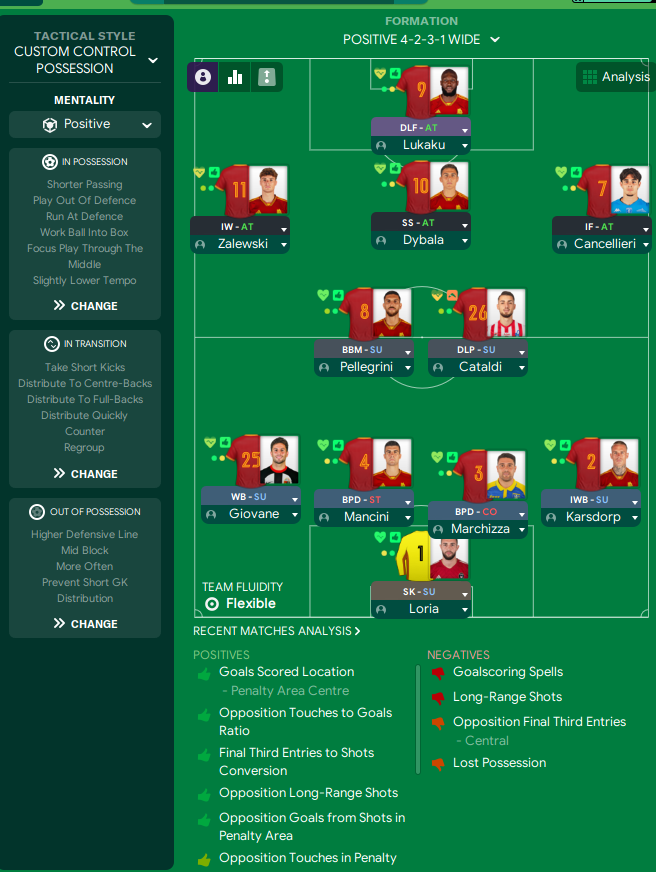
Formation & Style
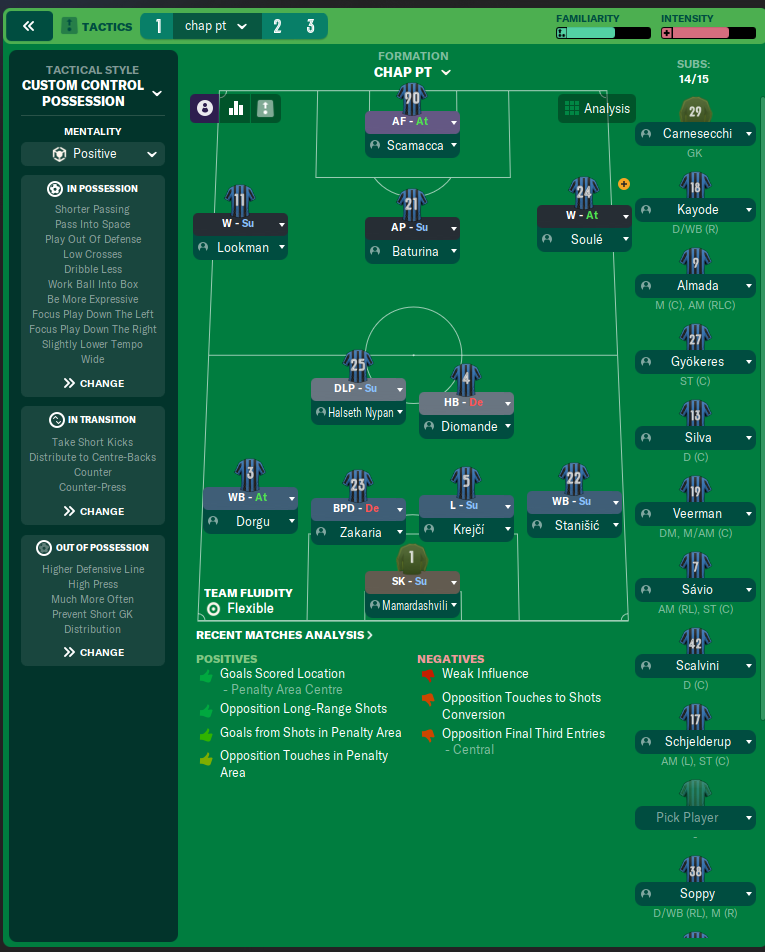
Tactical Style:Custom Control Possession
Mentality:Positive
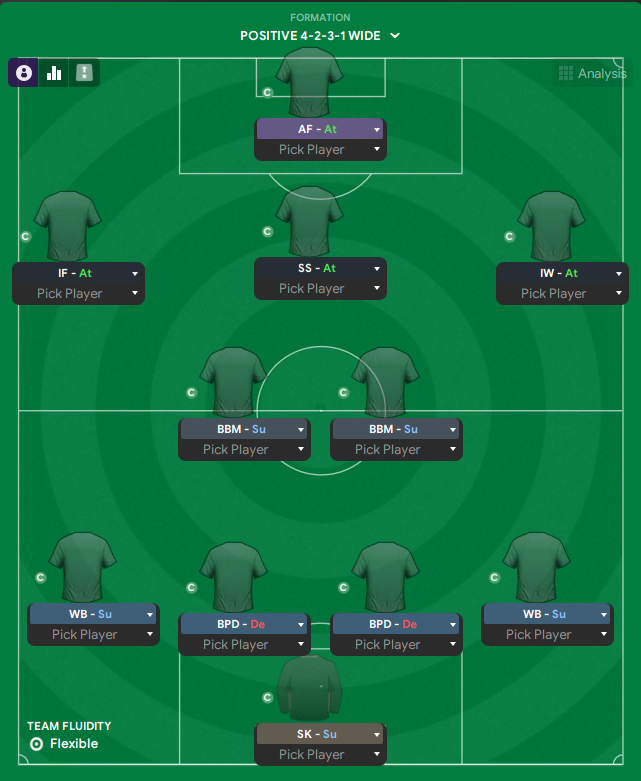
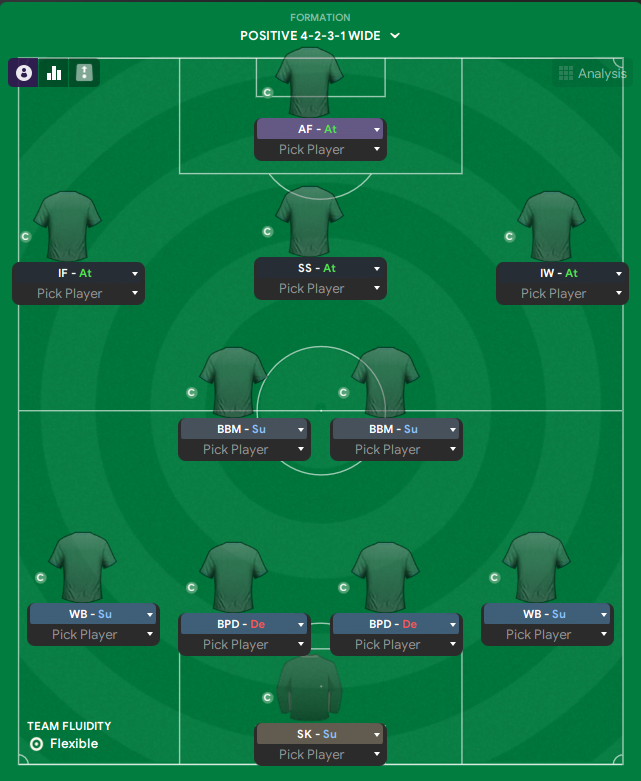
Formation:4-2-3-1 Wide
Team Fluidity:Flexible
In Possession
Shorter Passing
Play Out Of Defence
Work Ball Into Box
Focus Play Through The Middle
Slightly Lower Tempo
In Transition
Take Short Kicks
Distribute To Centre-Backs
Distribute To Full-Backs
Distribute Quickly
Regroup
Out of Possession
Higher Defensive Line
Mid Block
More Often Prevent Short GK Distribution
Team Shape Without Ball
Shape:Mid Block
Description:Defensive line positioned higher to compress space and intercept opposition build-up.
Evidence:Higher Defensive Line + Ball-Playing Defender at [2,2]
Team Shape With Ball
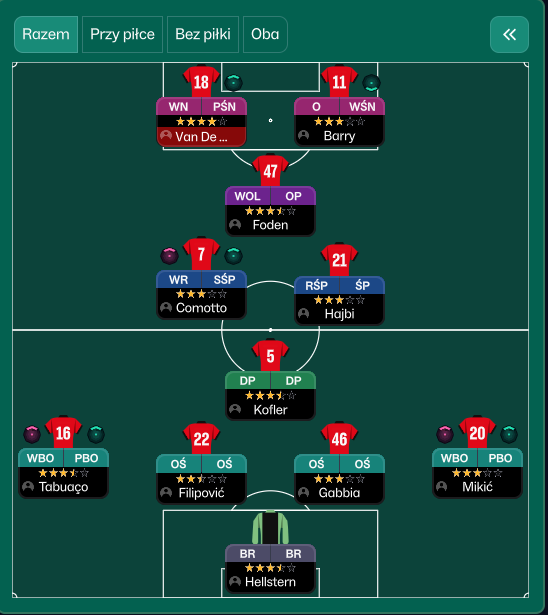
Shape:4-2-3-1
Description:Fluid attacking formation utilizing width and central penetration through decisive combination plays.
Evidence:Shadow Striker at [5,3] + Inside Forward at [5,5]
Phase Description
Attacking Play
Utilizes possession with shorter passing and patient build-up, focusing on creating central opportunities.
Defensive Transition
Quick regrouping to a mid-block shape, pressing to regain possession efficiently.
Main Focus
Exploit central areas while maintaining width through wing-backs.
Key Strengths
Central Penetration
Effective use of the central area for goal-scoring opportunities.
Transition Play
Quickly recovering possession and transitioning into counter-attacks.
Dynamic Attack
Strong attacking threats from multiple positions, keeping opponents guessing.
Conflicting Directions
High Press Risk
Overcommitting in defense leads to vulnerability in transition.
Long-Range Shot Vulnerability
Adopting a mid-block can expose the team to long-range shots.
Possession Loss
Increased possession loss during build-up due to lower tempo.
Tactical Suggestions
Adjust Defensive Line
Lower the defensive line to limit space behind and reduce vulnerability.
Increase Tempo
Raising the tempo could help in quick transitions and reduce lost possession.
Encourage Wider Play
Utilize the width of the pitch more effectively to stretch the opposition.
Ask Questions About Your Lineup
Related Tactics
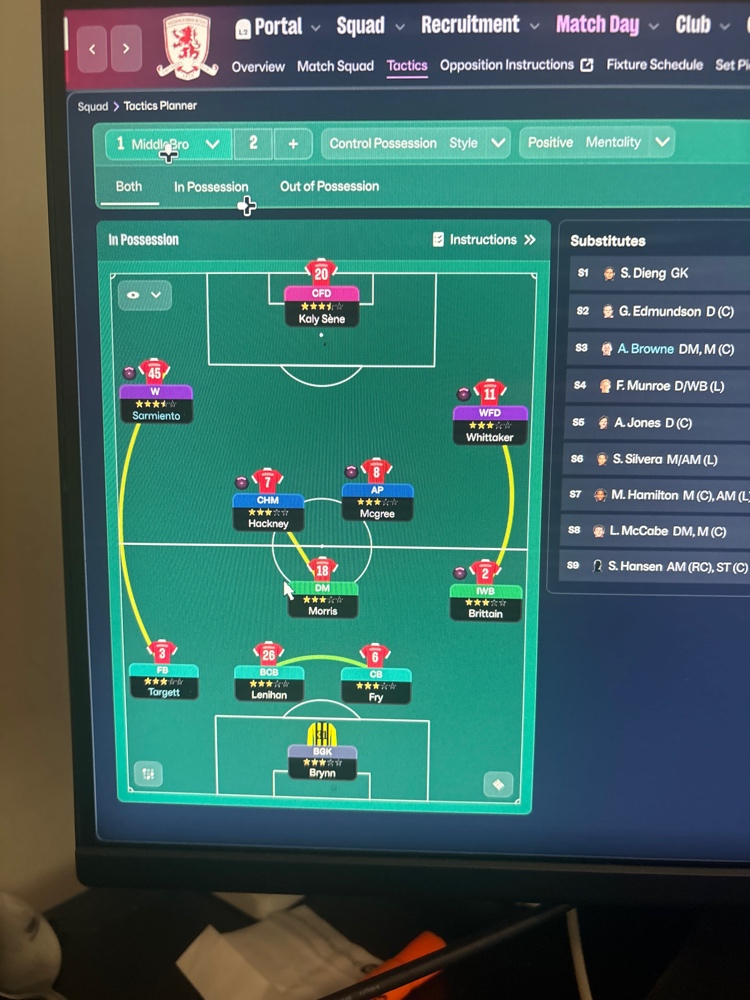
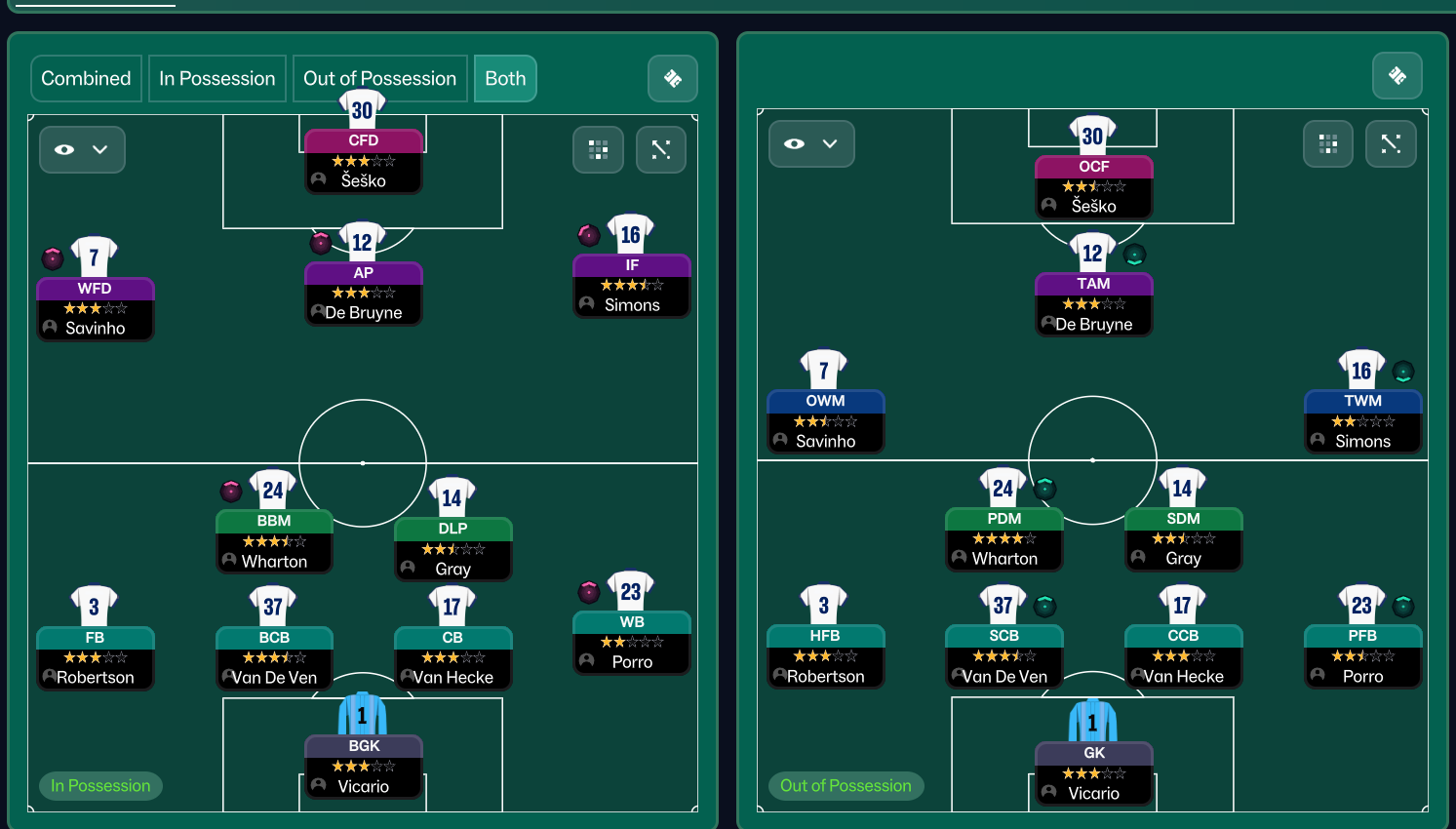
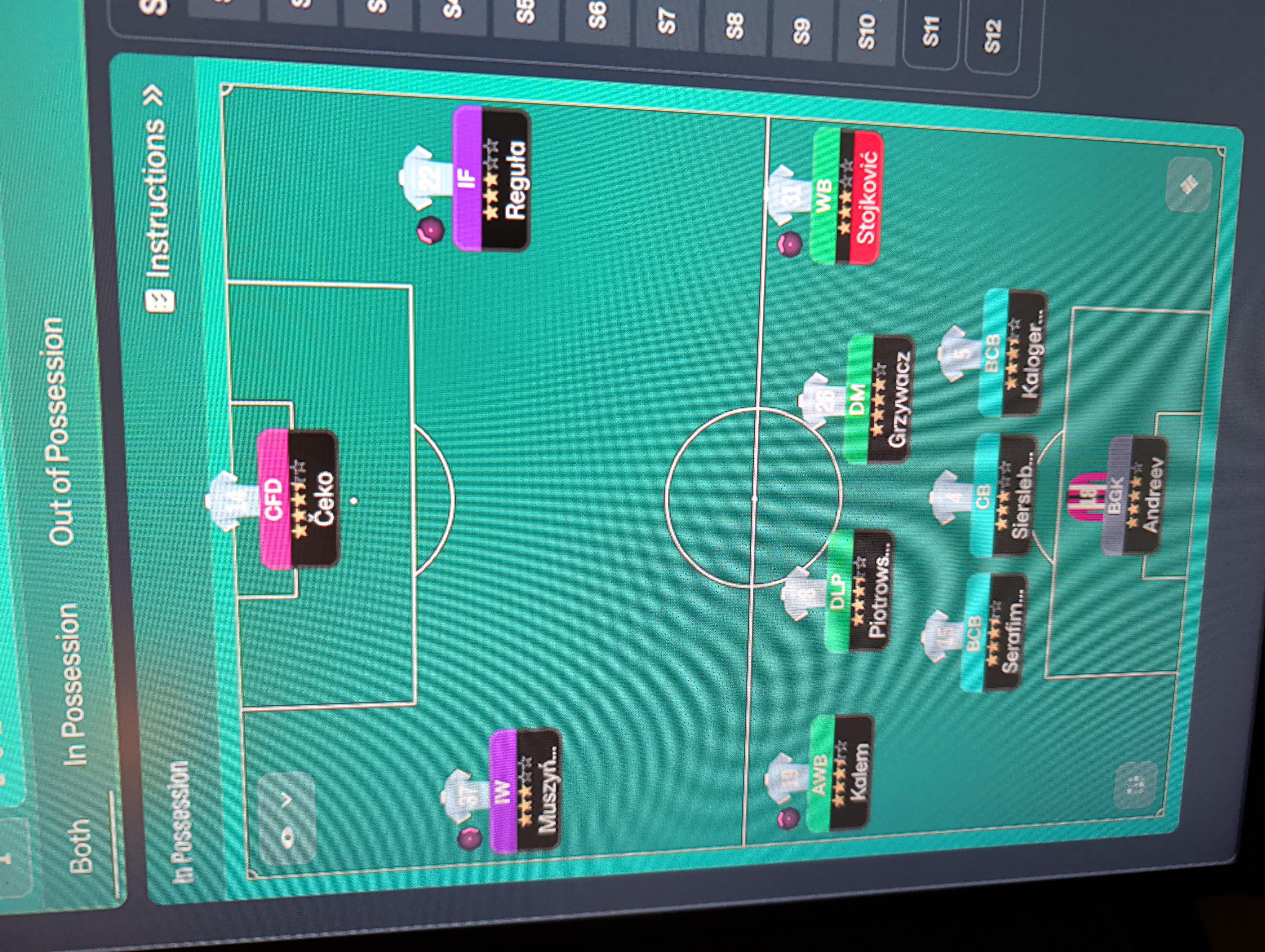
More Custom Control Possession tactics
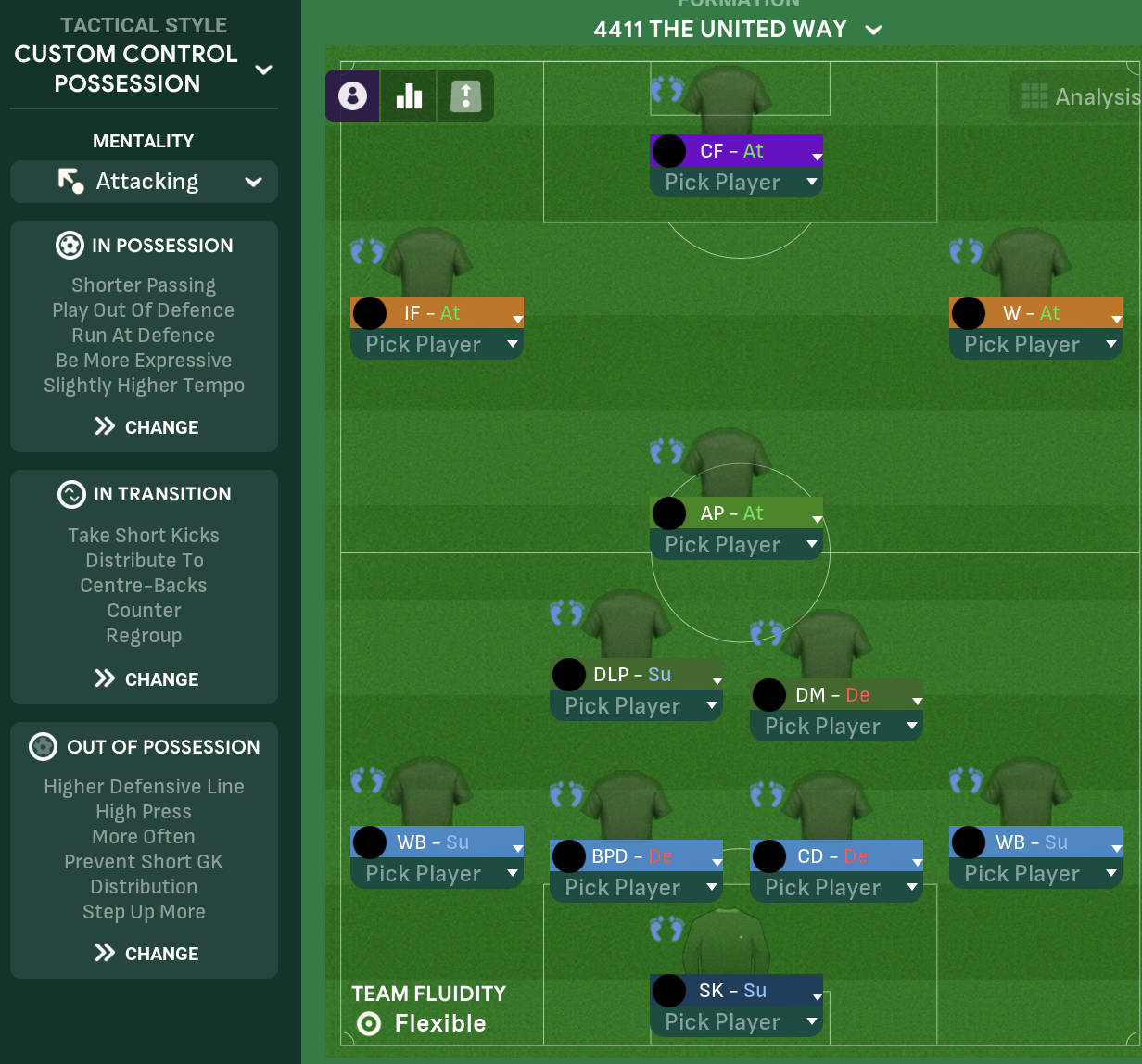
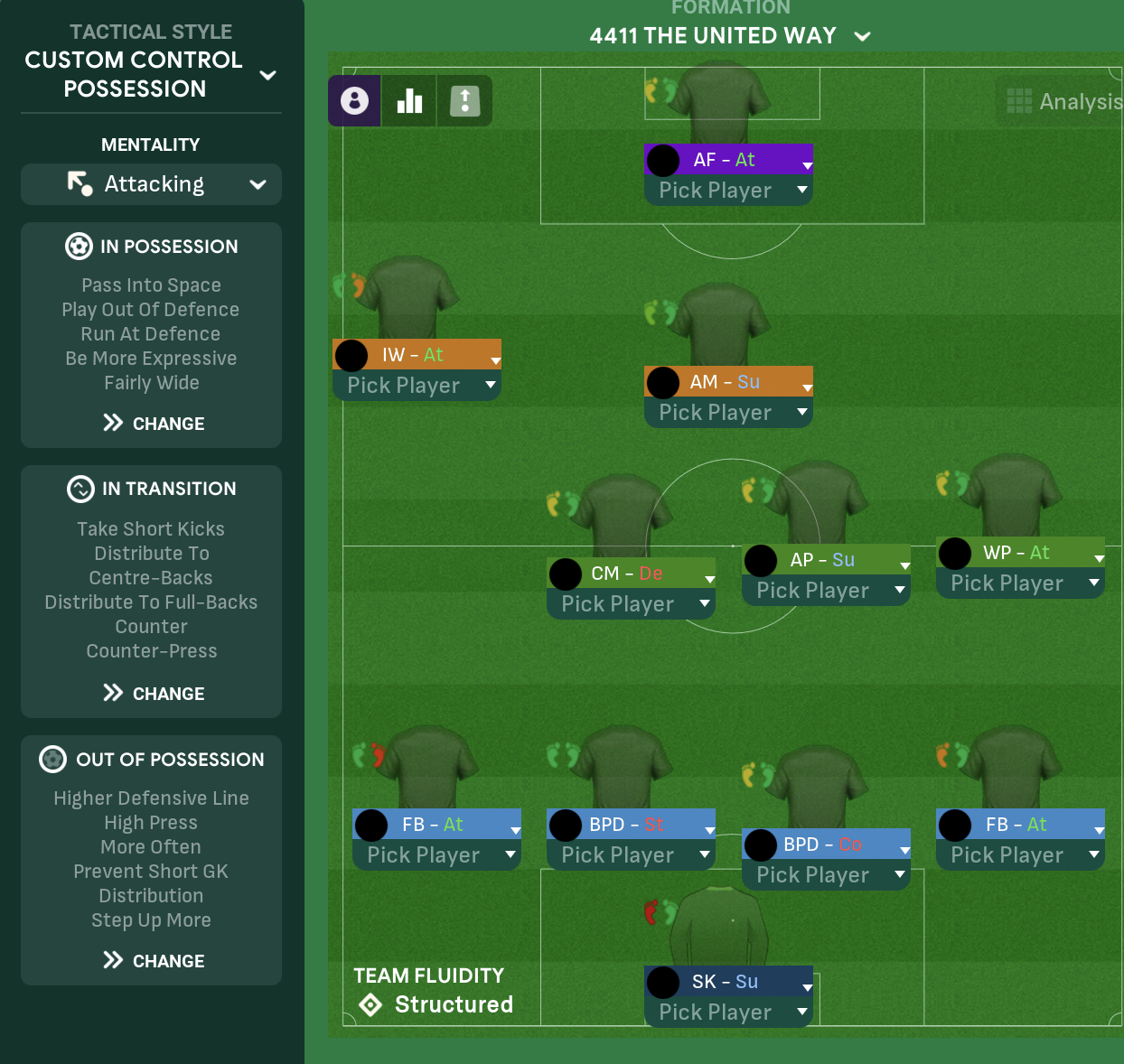
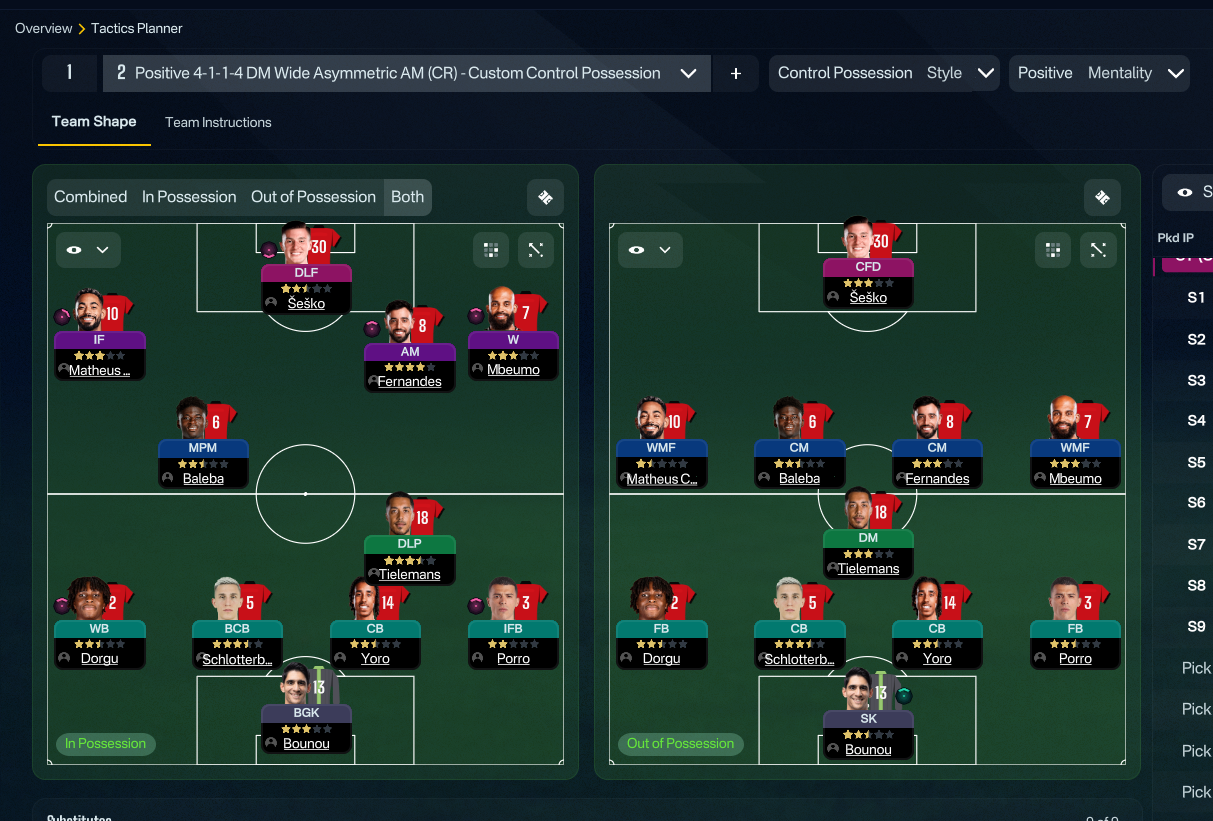
Guides for this formation
The tactical theory behind the 4-2-3-1 Wide: roles, instructions, and the trade-offs that decide whether the system holds up.
Player pairings
Midfield Pairs in 4-2-3-1 and 4-4-2
Double pivots and flat pairs in 4-2-3-1 and 4-4-2: when each pairing works, when it collapses, and the AMC unicorn that rescues both.
Read guide
Playing styles
Gegenpressing: A Full Guide
Klopp-style gegenpressing in FM, including squad profile, line-and-press pairing, sustainable workload, and the antipatterns to avoid.
Read guide