Uploaded Tactic
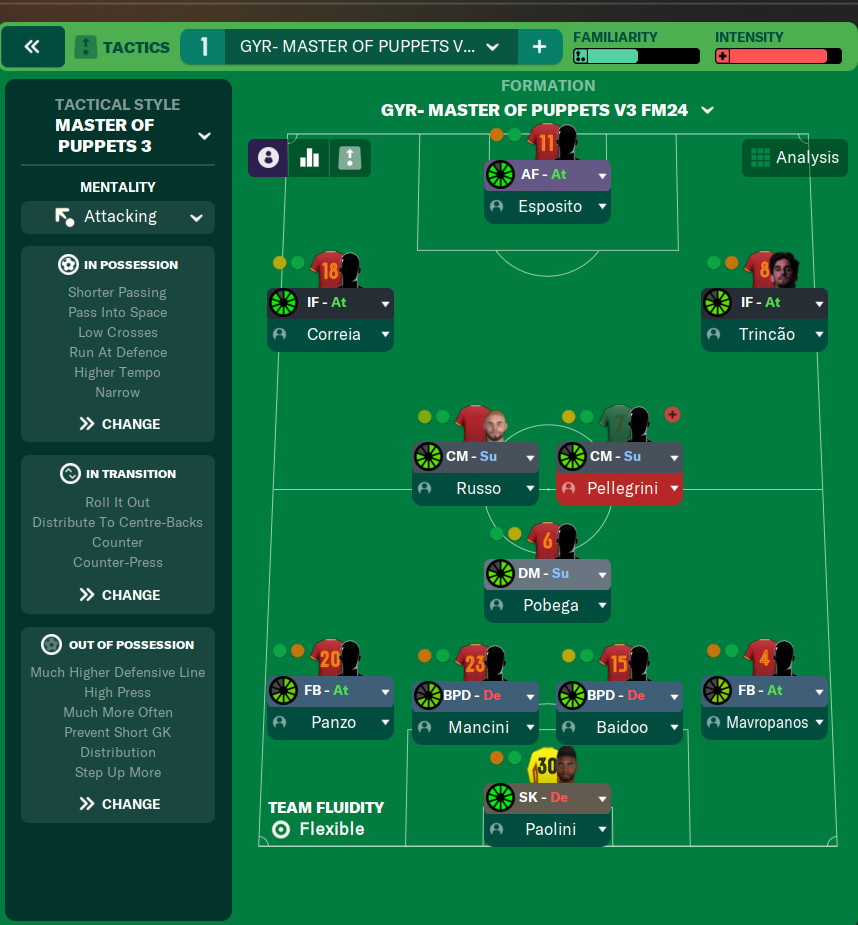
Formation & Style
Tactical Style:Master of Puppets
Mentality:Attacking
Formation:4-2-3-1 Wide
Team Fluidity:Flexible
In Possession
Shorter Passing
Pass Into Space
Low Crosses
Run At Defence
Higher Tempo
Narrow
In Transition
Roll It Out
Distribute To Centre-Backs
Counter
Counter-Press
Out of Possession
Much Higher Defensive Line
High Press
Much More Often
Prevent Short GK Distribution
Step Up More
Team Shape Without Ball
No team shape without ball data available
Team Shape With Ball
No team shape with ball data available
Key Strengths
Fluid Attack
The formation allows for a fluid attacking style with inside forwards and an advanced forward creating space and opportunities.
High Pressing Game
The tactical set-up encourages a high press which can lead to winning the ball back quickly in dangerous areas.
Dynamic Midfield
With a mix of support and defensive duties in the midfield, the team can adapt to both attacking and defensive phases effectively.
Counter-Pressing Ability
The counter-pressing tactic aims to regain possession quickly after losing the ball, maintaining pressure on the opposition.
Conflicting Directions
High Defensive Line vs. Counter-Attacking Teams
The high defensive line may expose the team to counter-attacks, especially against pacey opponents.
Narrow Attack vs. Wide Play
While narrow attacking play is emphasized, relying solely on this may limit the width provided by the full-backs.
Inside Forwards and Space
With two inside forwards, there could be congestion in the attacking third, making it harder to break down tightly knit defenses.
Defensive Duties in Midfield vs. Pressing
A defensive midfielder may limit the forward momentum needed to maintain a high press across the opposition's half.
Tactical Suggestions
Adjust Defensive Line
Consider lowering the defensive line against faster opponents to reduce vulnerability to counter-attacks.
Utilize Wide Play
Encourage full-backs to provide width and support attacking plays more robustly, complementing the narrow formations.
Roles in Midfield
Experiment with more advanced roles for midfielders to enhance attacking transitions and support the forwards.
Flexibility in Tactics
Plan to switch to a more defensive formation if holding a lead late in games to better manage the game.
Ask Questions About Your Lineup
Related Tactics

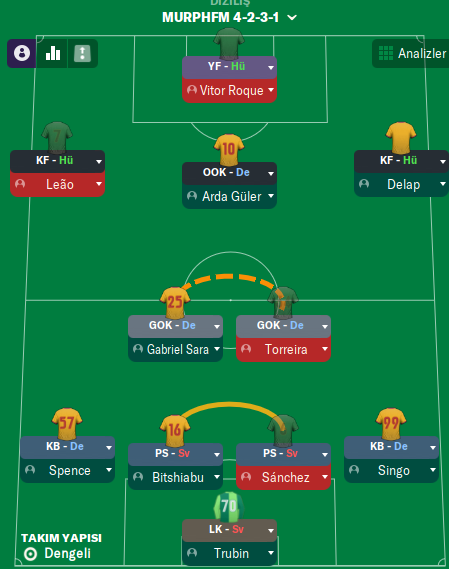
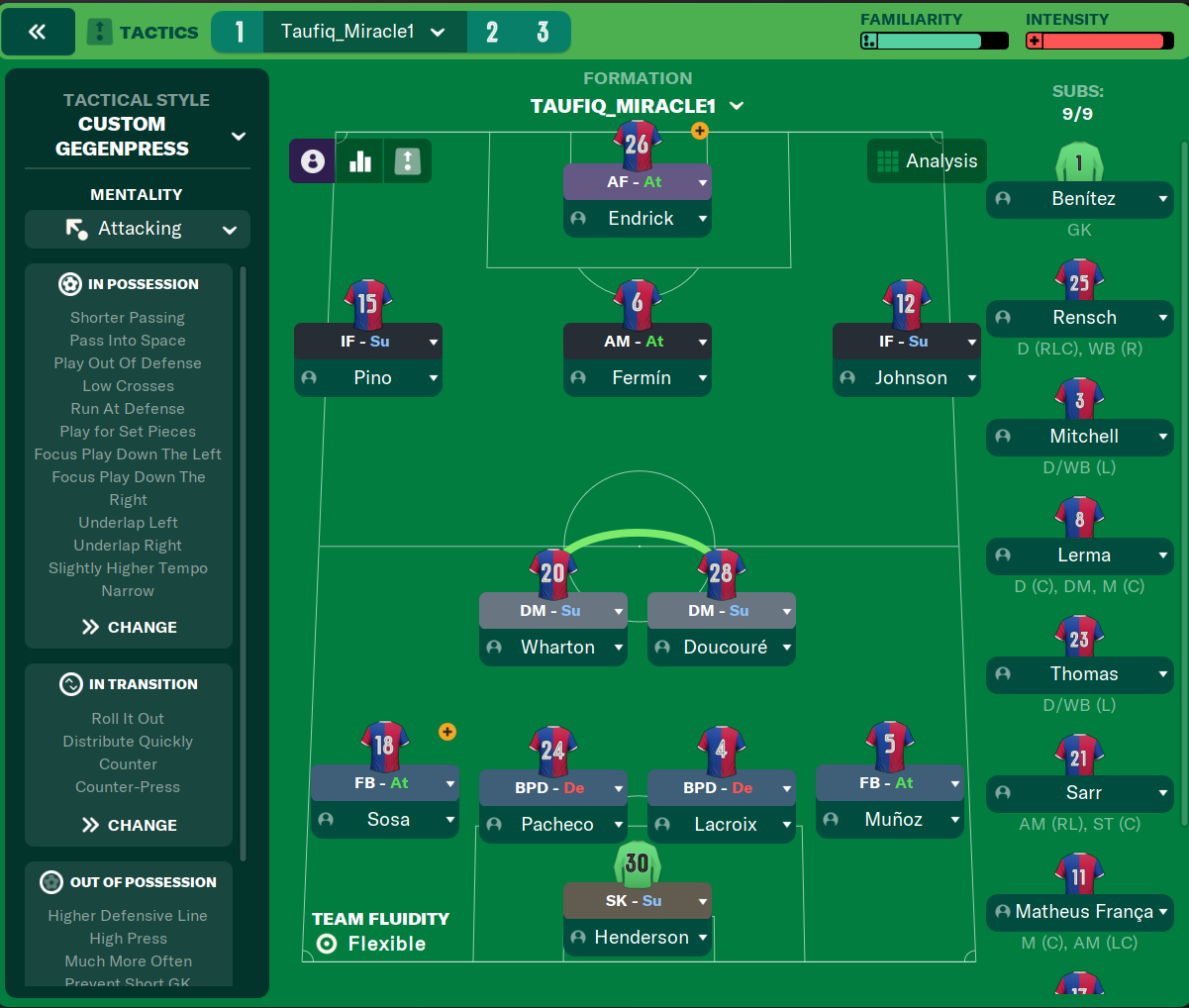
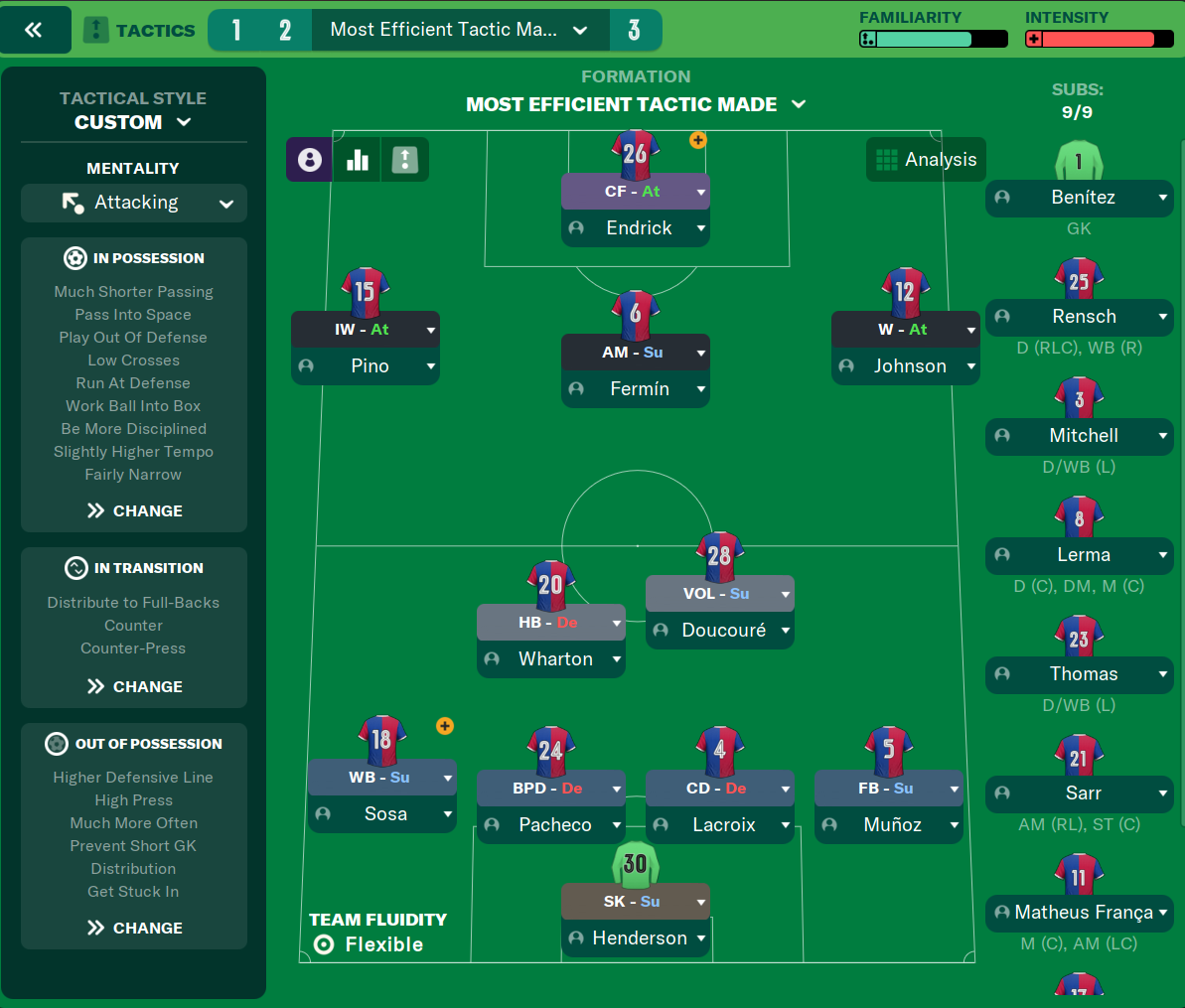
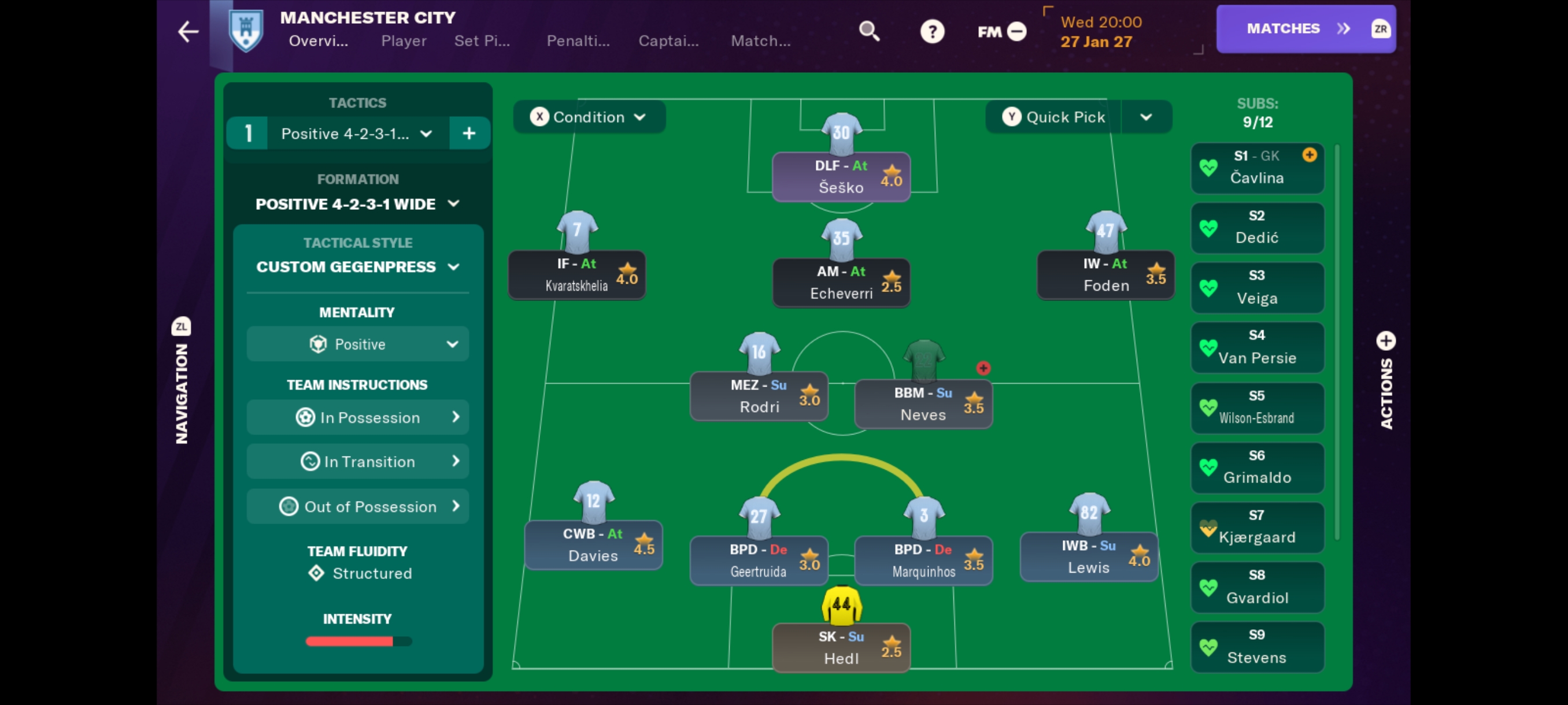
Guides for this formation
The tactical theory behind the 4-2-3-1 Wide: roles, instructions, and the trade-offs that decide whether the system holds up.
Player pairings
Midfield Pairs in 4-2-3-1 and 4-4-2
Double pivots and flat pairs in 4-2-3-1 and 4-4-2: when each pairing works, when it collapses, and the AMC unicorn that rescues both.
Read guide
Playing styles
Gegenpressing: A Full Guide
Klopp-style gegenpressing in FM, including squad profile, line-and-press pairing, sustainable workload, and the antipatterns to avoid.
Read guide