Uploaded Tactic
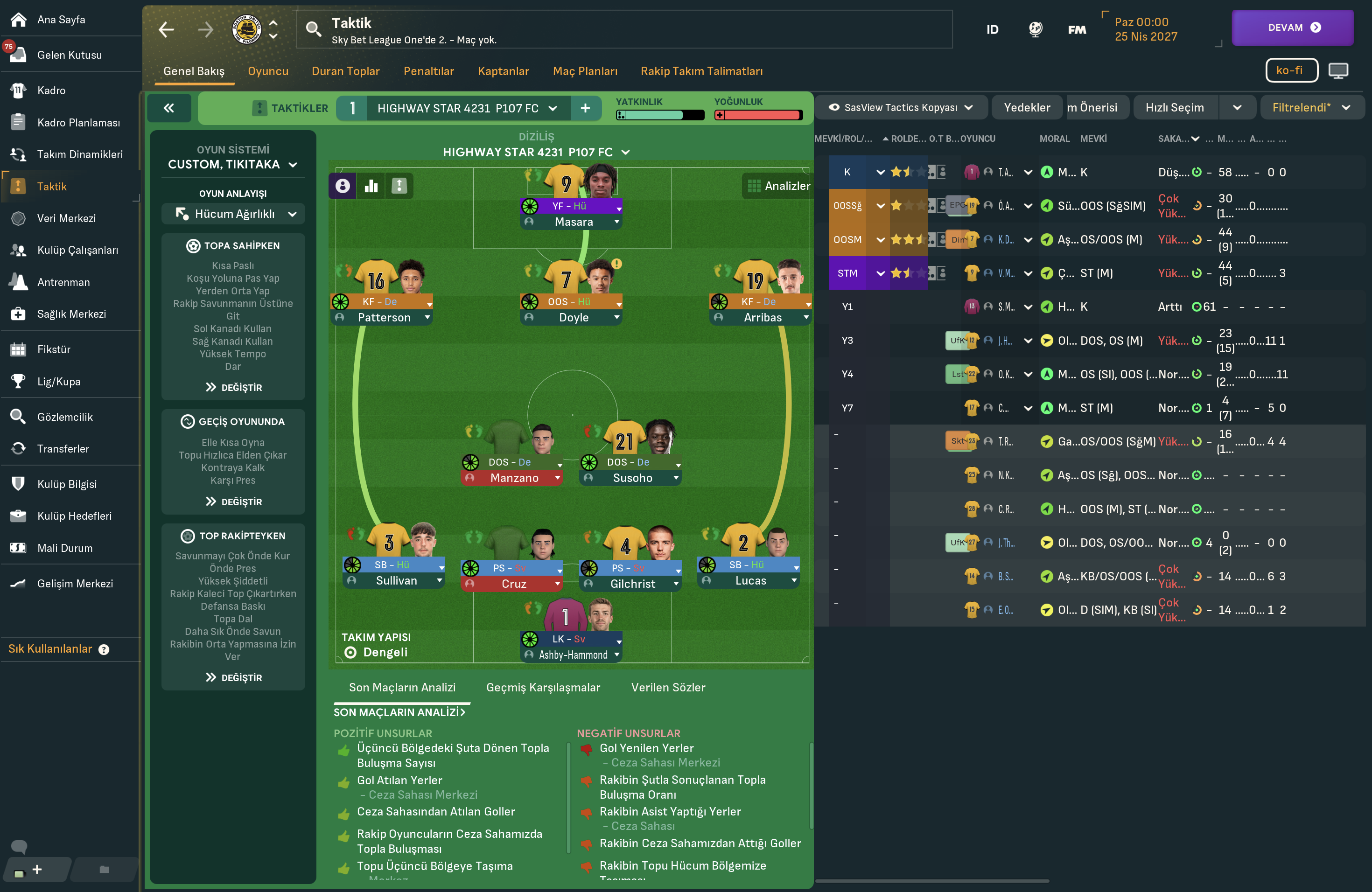
Formation & Style
Tactical Style:Custom Tactic
Mentality:Balanced
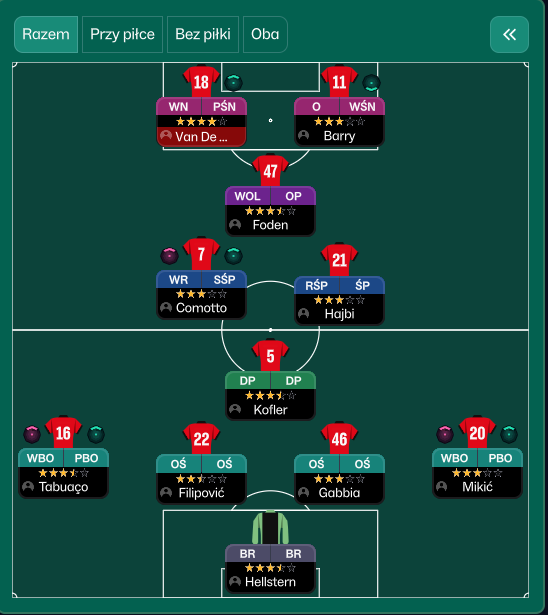
Formation:4-2-3-1 Wide
Team Fluidity:Balanced
In Possession
Short Passing
Focus Play Down The Right
Overlap on the Right
In Transition
Counter-Press
Counter
Out of Possession
Higher Defensive Line
More Urgent Pressing
Team Shape Without Ball
Shape:4-2
Description:Structured defensive shape with a midfield shield.
Evidence:4 defenders and 2 defensive midfielders provide solid cover.
Team Shape With Ball
Shape:4-3
Description:Utilizes wide players effectively and an attacking midfielder for creativity.
Evidence:Attack formed by 3 attacking roles supported by wing-backs.
Phase Description
Attacking Play
Utilizes width effectively with support from wing-backs and inside forwards cutting in for goal-scoring opportunities.
Defensive Transition
Quick transition to counter-press to regain possession rapidly after losing the ball.
Main Focus
Creating chances through the right side and utilizing overlaps from wing-backs.
Key Strengths
Wide Play Utilization
Effective use of wide areas to stretch opponents.
Dynamic Attacking Play
Versatile attacking options with inside forwards and a pressing forward.
Ball Retention
Maintains possession effectively through playmaking roles.
Conflicting Directions
Defensive Vulnerability on Counters
Quick transitions can leave defensive gaps.
Overreliance on Right Wing
Focus on right could limit attacking dimensions.
Midfield Congestion
Double pivot may become static against high press.
Tactical Suggestions
Consider tweaking player duties
Adjusting the Segundo Volante to an attacking duty could add more pressure offensively.
Implement varied pressing triggers
Using player instructions to set pressing triggers may improve defensive solidity.
Explore central attacking options
Adding a more creative role in midfield could diversify play.
Ask Questions About Your Lineup
Related Tactics
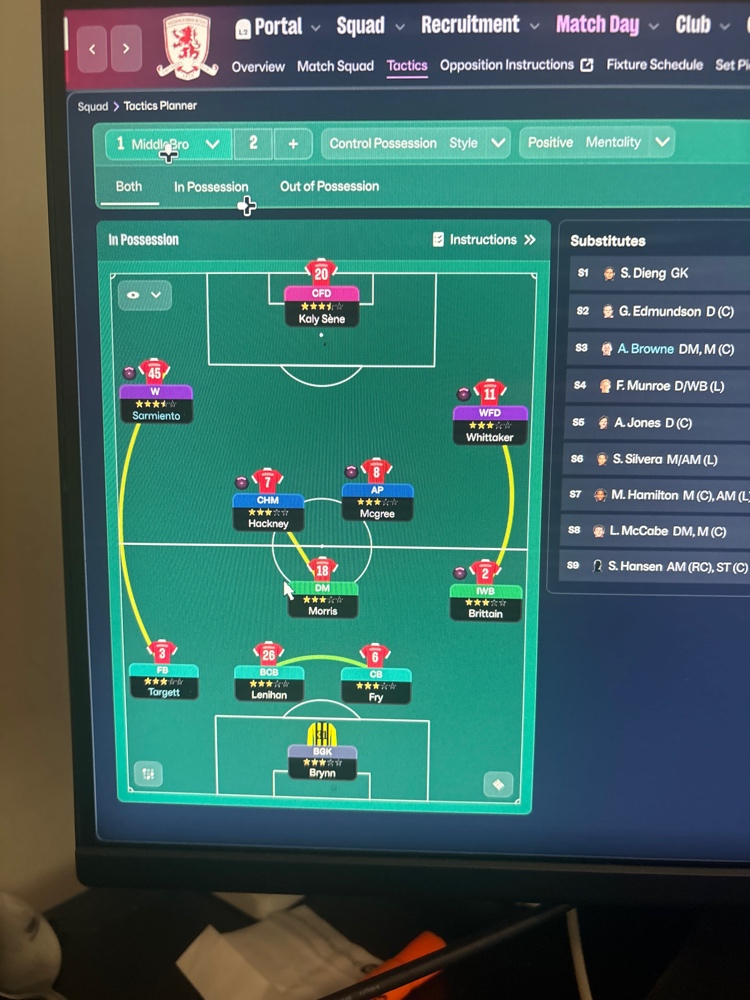
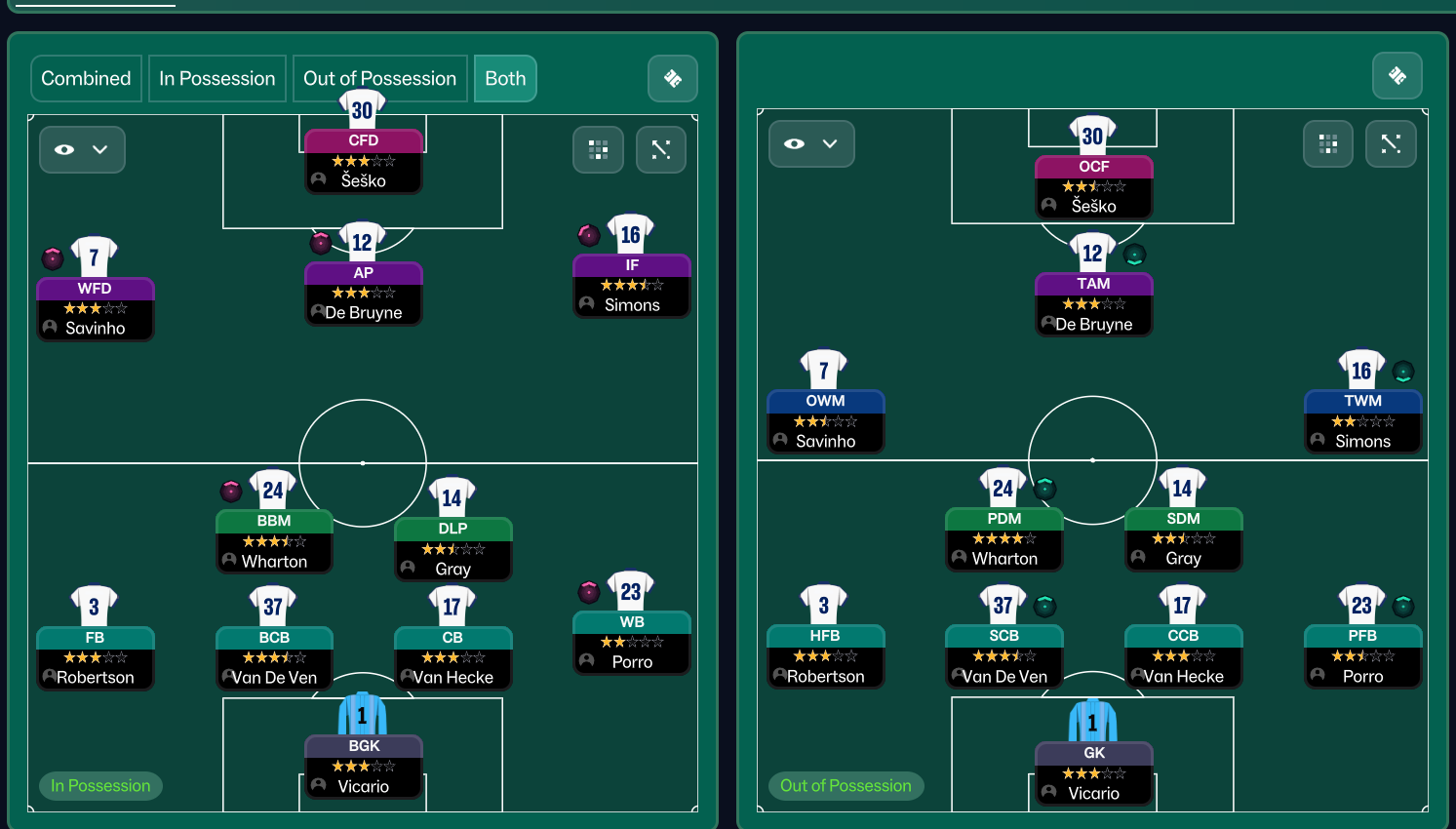
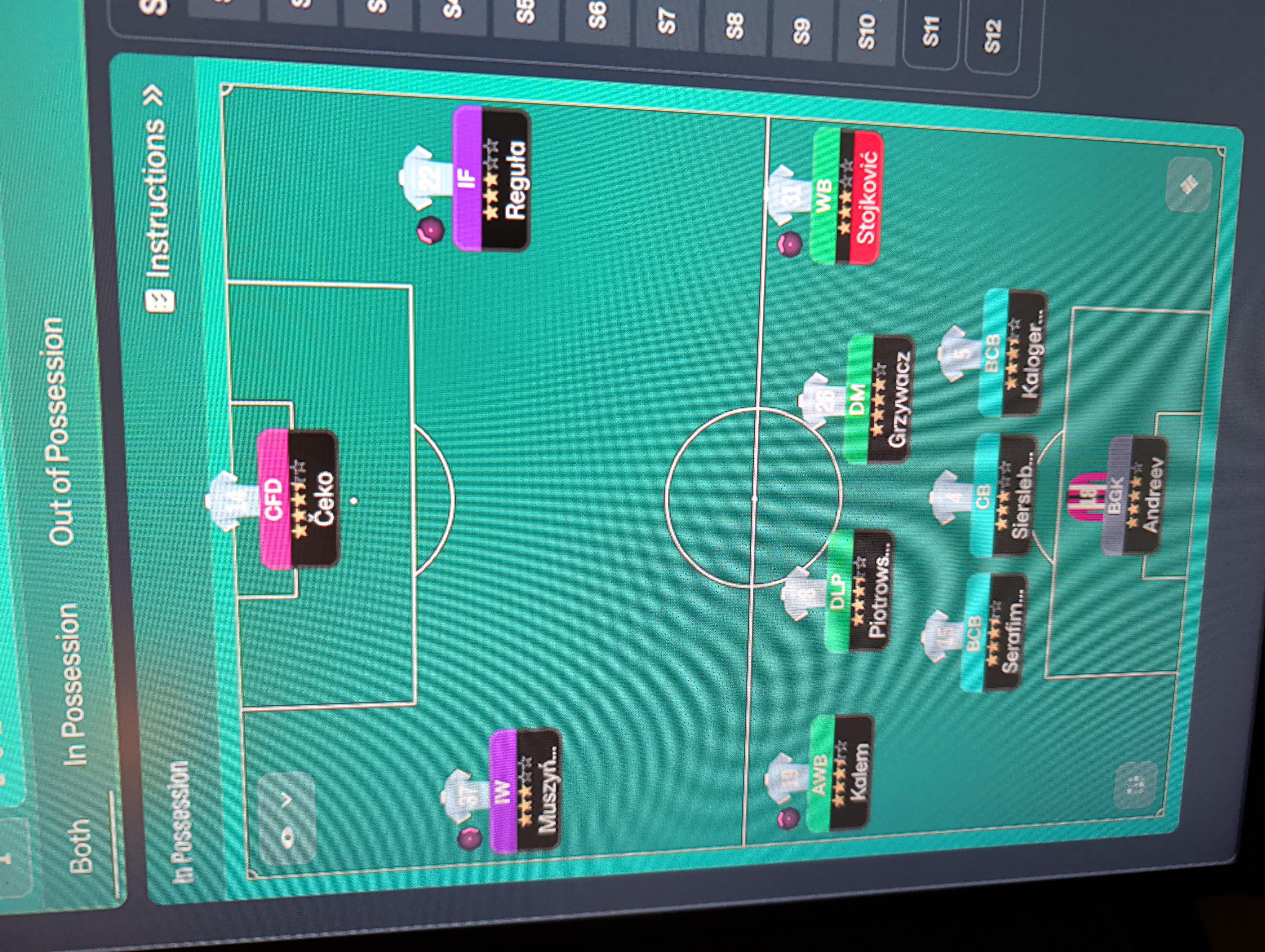
Guides for this formation
The tactical theory behind the 4-2-3-1 Wide: roles, instructions, and the trade-offs that decide whether the system holds up.
Player pairings
Midfield Pairs in 4-2-3-1 and 4-4-2
Double pivots and flat pairs in 4-2-3-1 and 4-4-2: when each pairing works, when it collapses, and the AMC unicorn that rescues both.
Read guide
Playing styles
Gegenpressing: A Full Guide
Klopp-style gegenpressing in FM, including squad profile, line-and-press pairing, sustainable workload, and the antipatterns to avoid.
Read guide