Uploaded Tactic
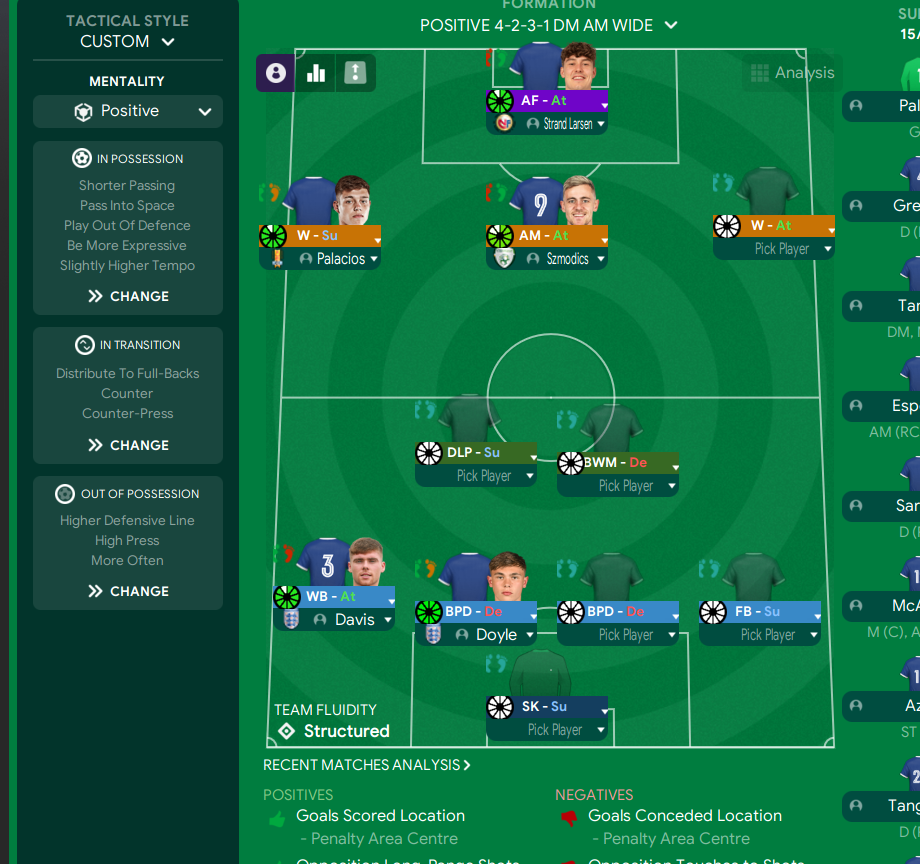
Formation & Style
Tactical Style:Custom
Mentality:Positive
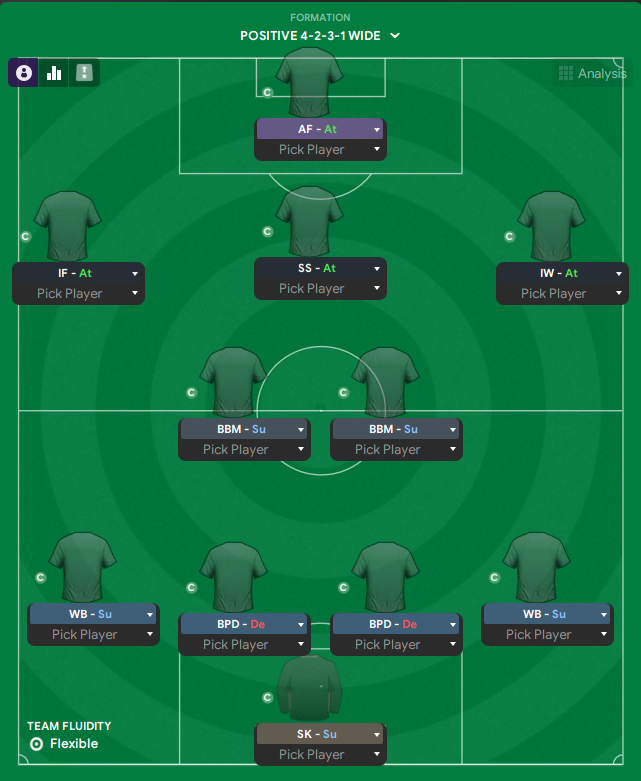
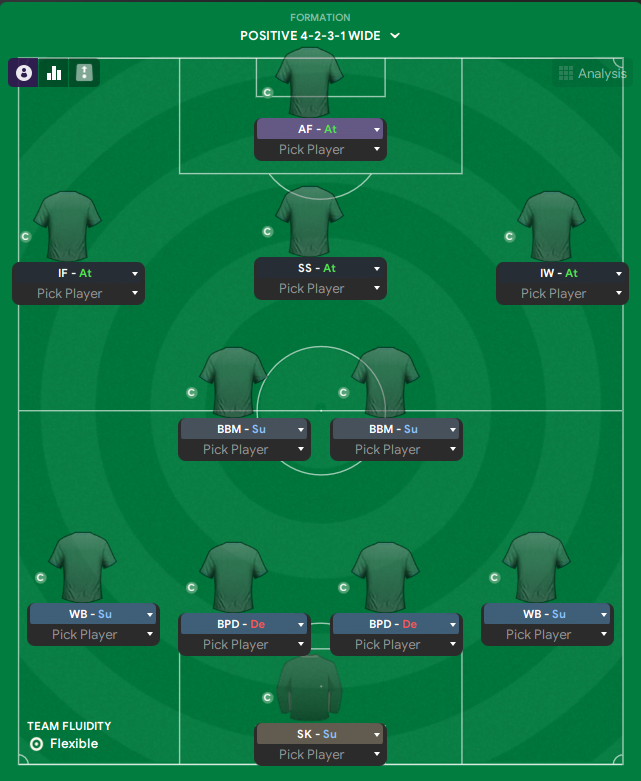
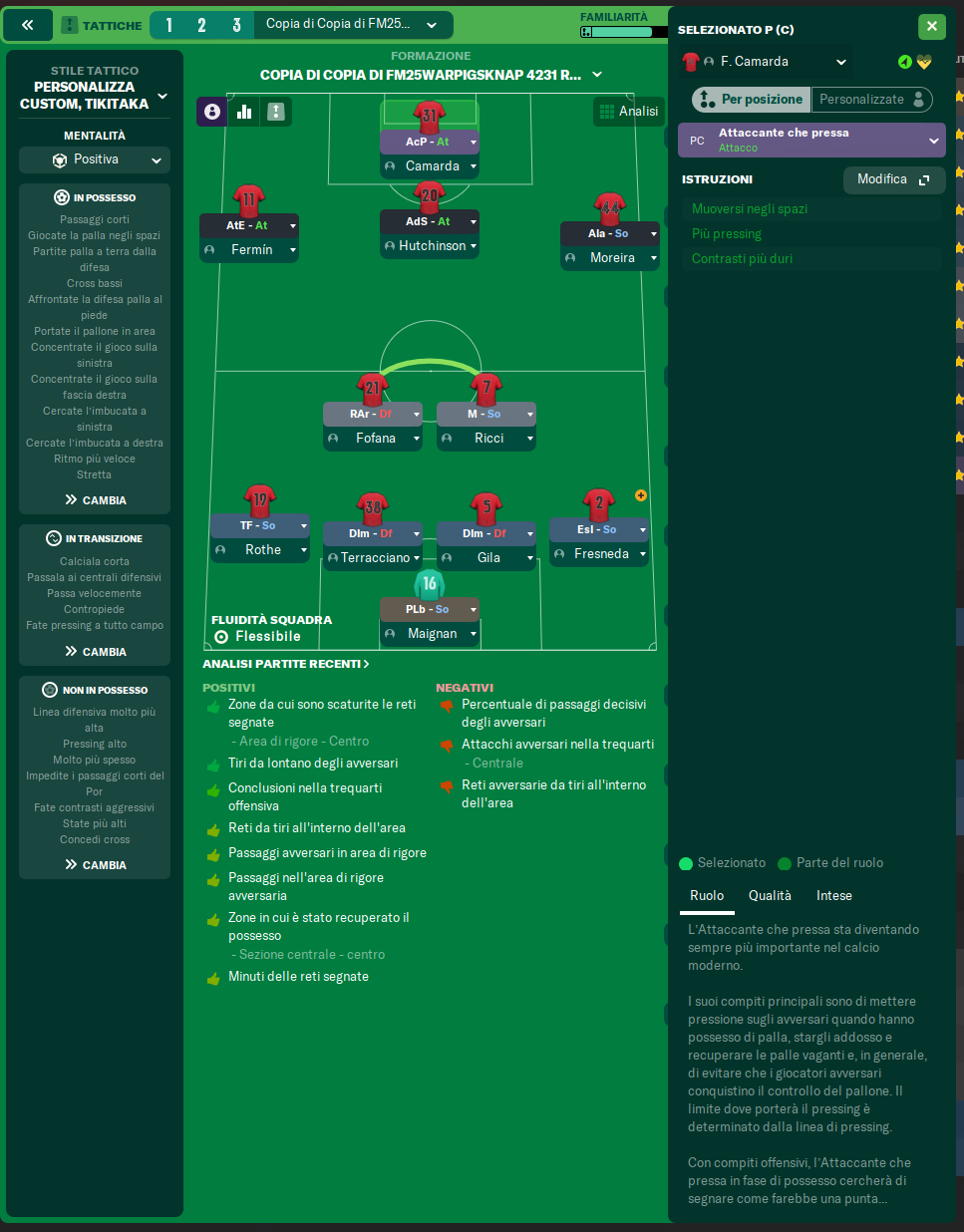
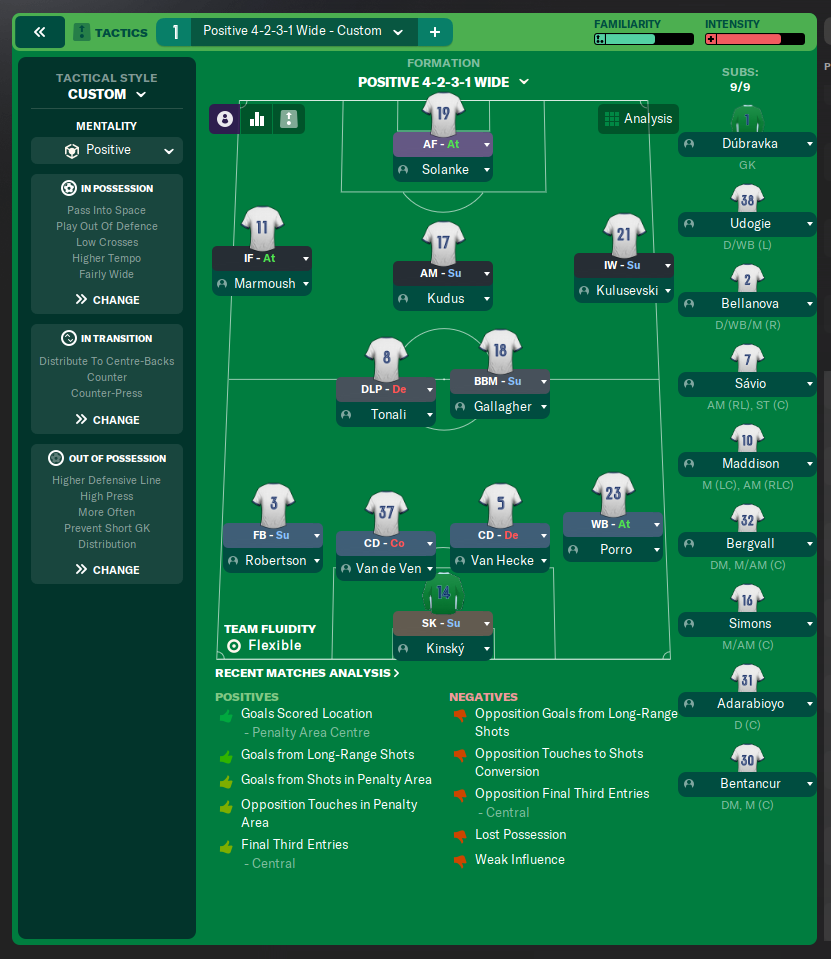
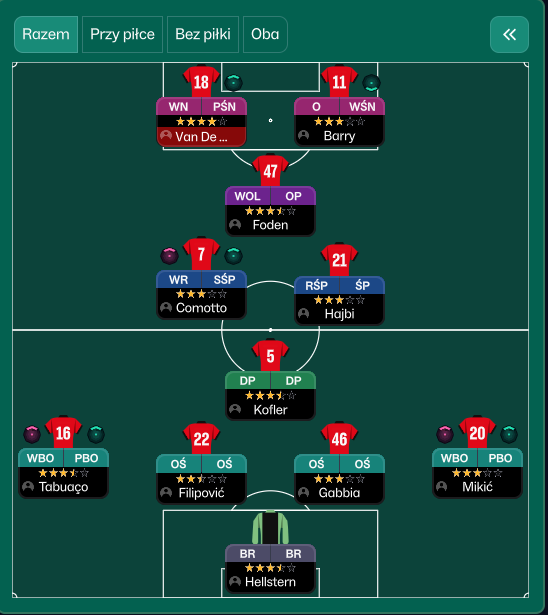
Formation:4-2-3-1 Wide
Team Fluidity:Structured
In Possession
Shorter Passing
Pass Into Space
Play Out Of Defence
Be More Expressive
Slightly Higher Tempo
In Transition
Distribute To Full-Backs
Counter
Counter-Press
Out of Possession
Higher Defensive Line
High Press
More Often
Team Shape Without Ball
Shape:4-2
Description:Compact and organized with a high defensive line to compress space against opponents.
Evidence:BPD-D at [2,2] and [2,4] provide defensive solidity.
Team Shape With Ball
Shape:4-3-1
Description:Utilizes width from the wingers and attacking midfielders to stretch defenses and create space for the striker.
Evidence:AF-A at [6,3] with W-A at [5,1] and AM-A at [5,2] enhance attacking options.
Phase Description
Attacking Play
The team focuses on building from the back with a structured passing style and using width effectively.
Defensive Transition
Quick to regain possession through counter-pressing and the high defensive line, forcing errors from opponents.
Main Focus
Creating scoring opportunities through width and quick transitions while maintaining ball possession.
Key Strengths
Ball Possession and Control
The tactical setup promotes ball control and dictates game pace.
Attacking Depth
The variety in attacking roles creates multiple threats.
Defensive Resilience
A strong two-man defensive midfield shield provides coverage.
Conflicting Directions
Possession vs. Pressing
Higher defensive line may lead to vulnerabilities if pressing doesn't succeed.
Width vs. Central Play
Excessive width could isolate central players.
Counter-Press Effectiveness
If counter-press fails, the team is susceptible to counter-attacks.
Tactical Suggestions
Adjust Defensive Line
Consider lowering the defensive line to mitigate counter-attack risks.
Utilize More Overlapping Runs
Encourage full-backs to overlap wingers to create overloads.
Optimize Attacking Midfielder's Role
Evaluate the role of the Attacking Midfielder for specific match scenarios.
Ask Questions About Your Lineup
Related Tactics
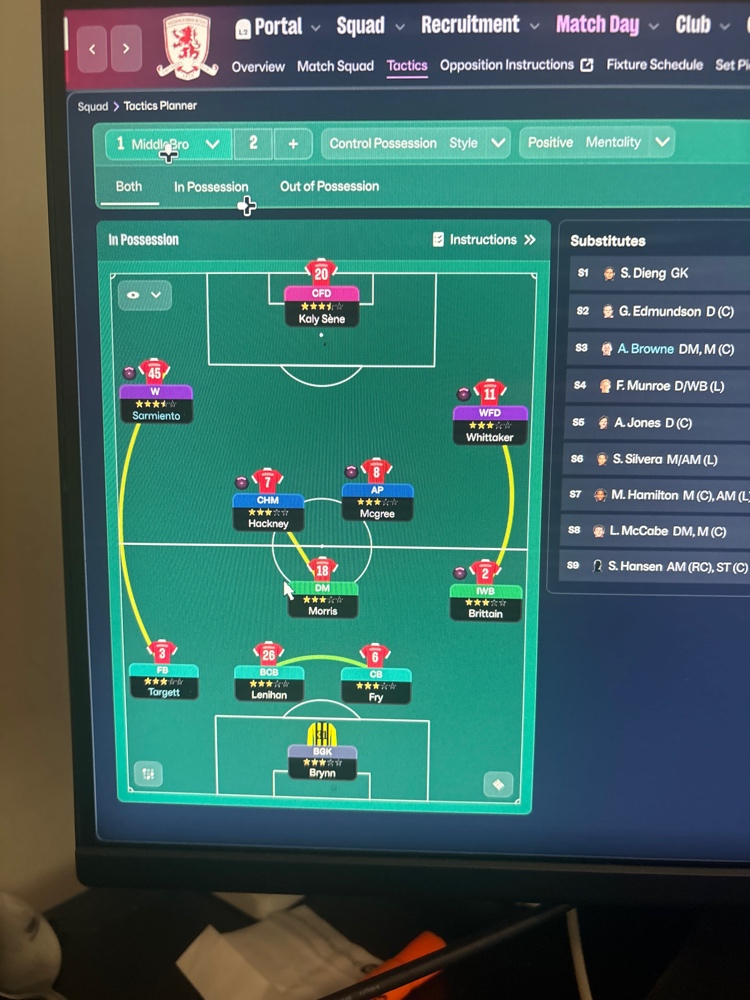
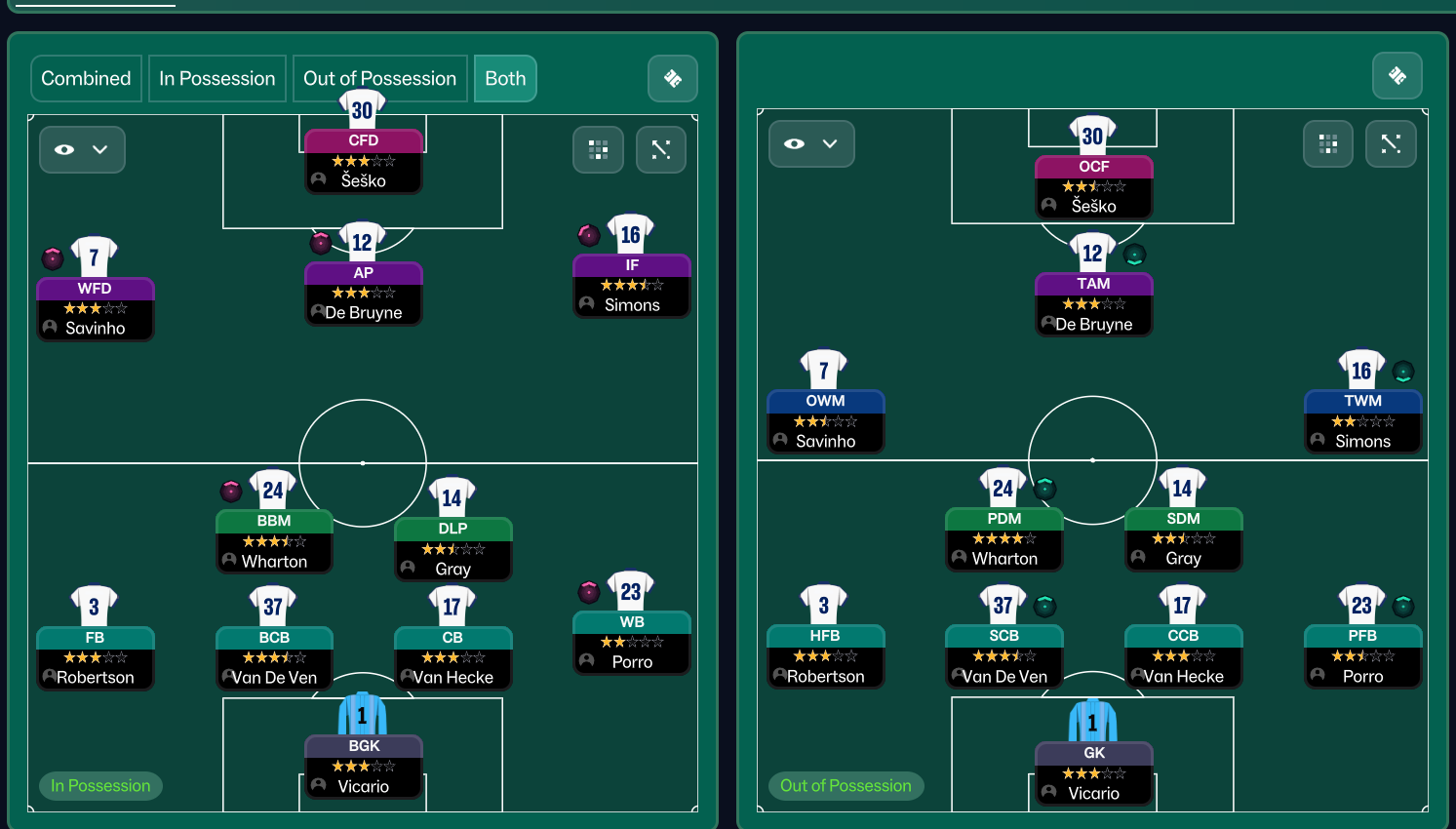
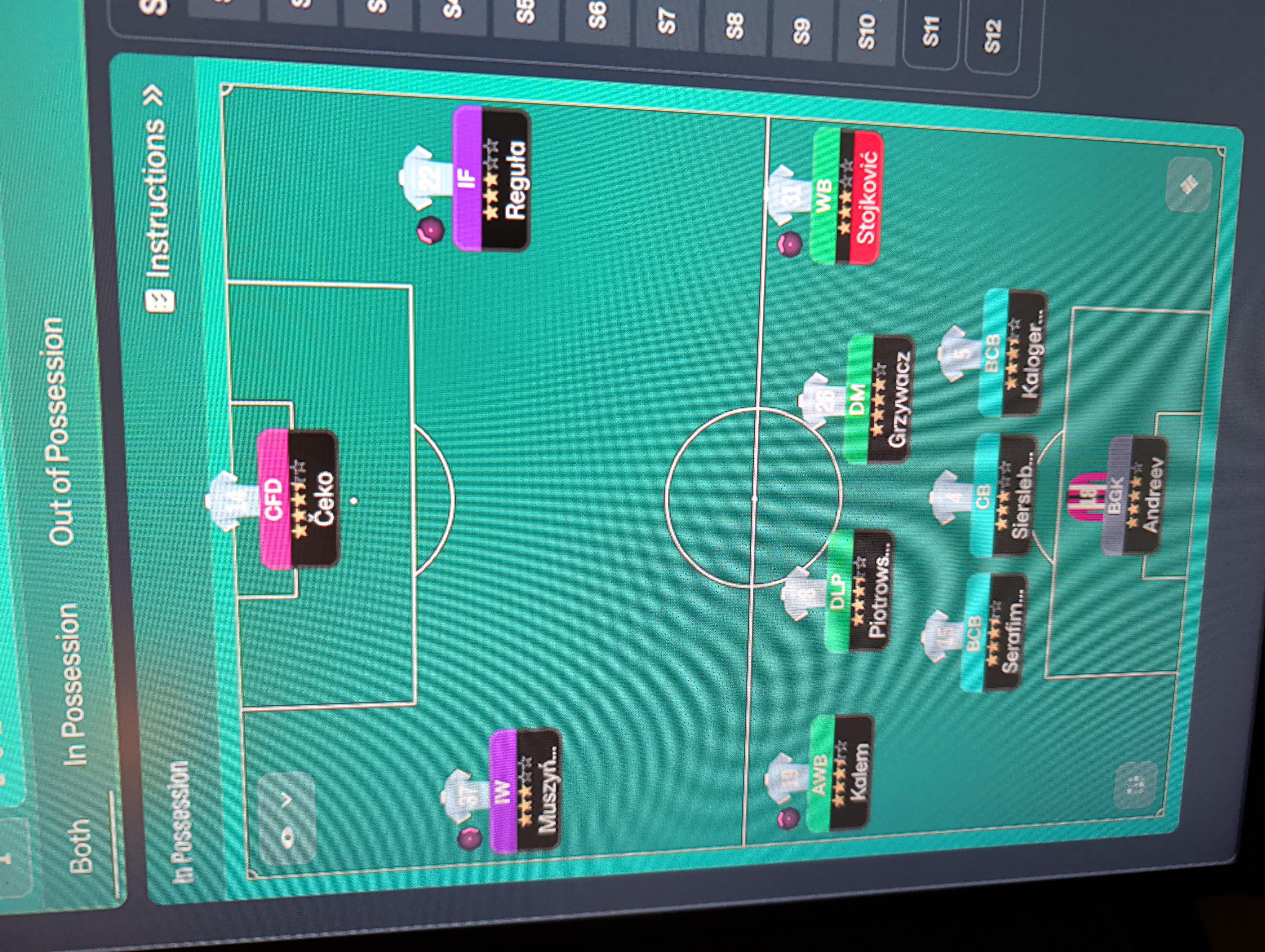
Guides for this formation
The tactical theory behind the 4-2-3-1 Wide: roles, instructions, and the trade-offs that decide whether the system holds up.
Player pairings
Midfield Pairs in 4-2-3-1 and 4-4-2
Double pivots and flat pairs in 4-2-3-1 and 4-4-2: when each pairing works, when it collapses, and the AMC unicorn that rescues both.
Read guide
Playing styles
Gegenpressing: A Full Guide
Klopp-style gegenpressing in FM, including squad profile, line-and-press pairing, sustainable workload, and the antipatterns to avoid.
Read guide