Uploaded Tactic
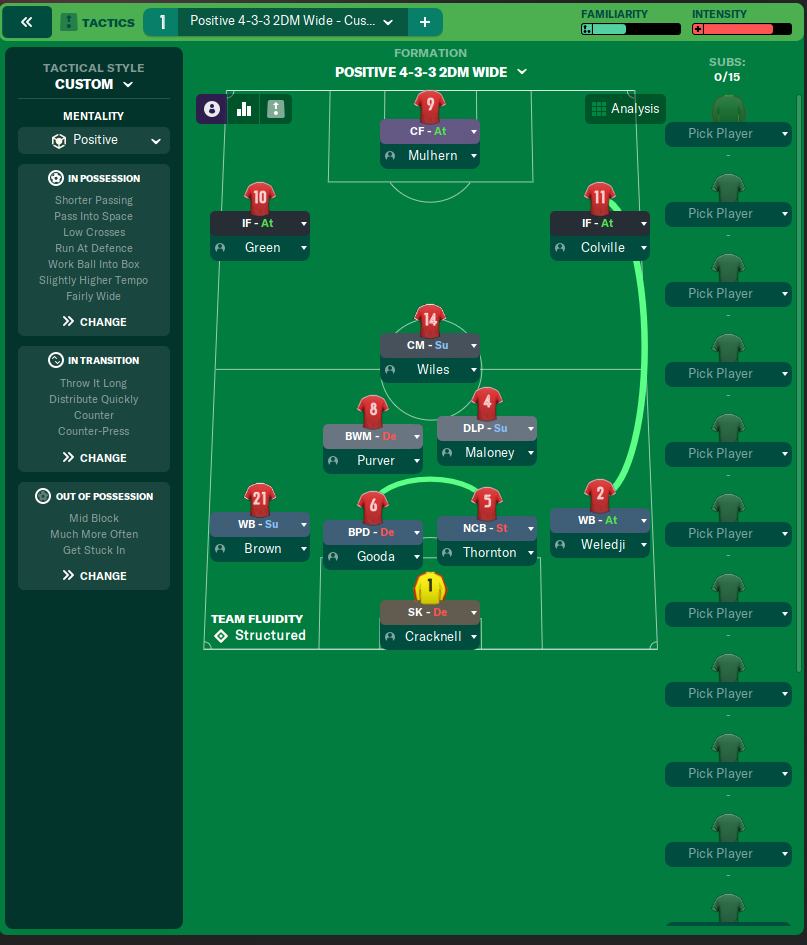
Formation & Style
Tactical Style:Custom
Mentality:Positive
Formation:4-3-3 2DM Wide
Team Fluidity:Structured
In Possession
Shorter Passing
Pass Into Space
Run At Defence
Work Ball Into Box
Slightly Higher Tempo
In Transition
Throw In Long
Counter
Counter-Press
Out of Possession
Mid Block
Much More Often Prevent Short GK Distribution
Get Stuck In
Team Shape Without Ball
Shape:Mid Block
Description:Compactness maintained between midfield and defensive lines to cut off passing lanes.
Evidence:Utilization of BWM-D at [3,2] engaging opposition midfielders while keeping a structured shape.
Team Shape With Ball
Shape:Wide Play
Description:Utilization of wide players allows for stretching the defence, opening space in central areas.
Evidence:With IF-A at [6,2] and [6,4], creates opportunities for overlaps from WB-S at [2,1] and [2,5].
Phase Description
Attacking Play
Focuses on building through midfield with short passing and direct runs to exploit defensive gaps.
Defensive Transition
Quick counter-press to regain possession immediately after losing the ball.
Main Focus
Create overloads on flanks and exploit space behind the defence.
Key Strengths
Fluid Attacking Transitions
The combination of attacking players and midfield dynamics allows for quick transitions into attack.
Defensive Solidity
The configuration of a BPD and NCB forms a robust defensive foundation.
Wide Overloads
The use of WB roles stretches the opposition, creating spaces for midfield dynamism.
Conflicting Directions
Counter-Press Effectiveness
More emphasis on defensive solidity might reduce pressing efficiency.
Attacking Fluidity
Over-reliance on wide players might lead to congestion when the attack is centrally focused.
Tempo vs Passing Style
Higher tempo with shorter passing could create chaotic play without sufficient support.
Tactical Suggestions
Increase Defensive Depth
Adding a more defensive midfielder can strengthen central areas defensively.
Diversify Attack Patterns
Utilizing more through balls can exploit narrow defensive setups.
Enhance Full-Back Support
Encourage WB roles to provide overlaps more frequently to sustain attacking threats.
Ask Questions About Your Lineup
Related Tactics
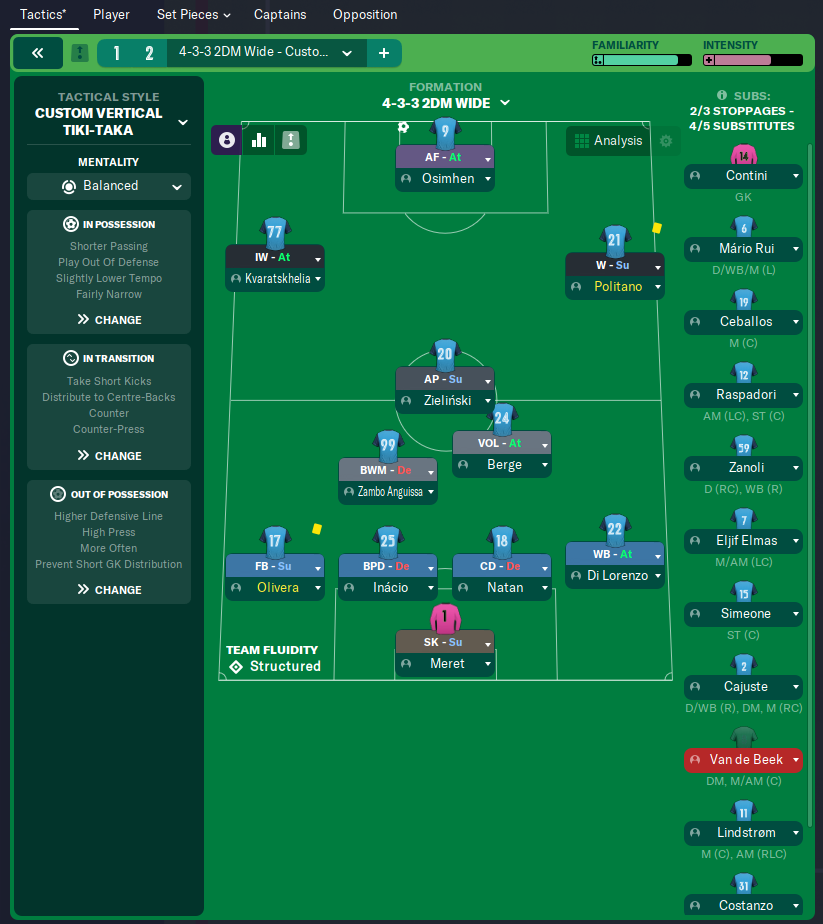
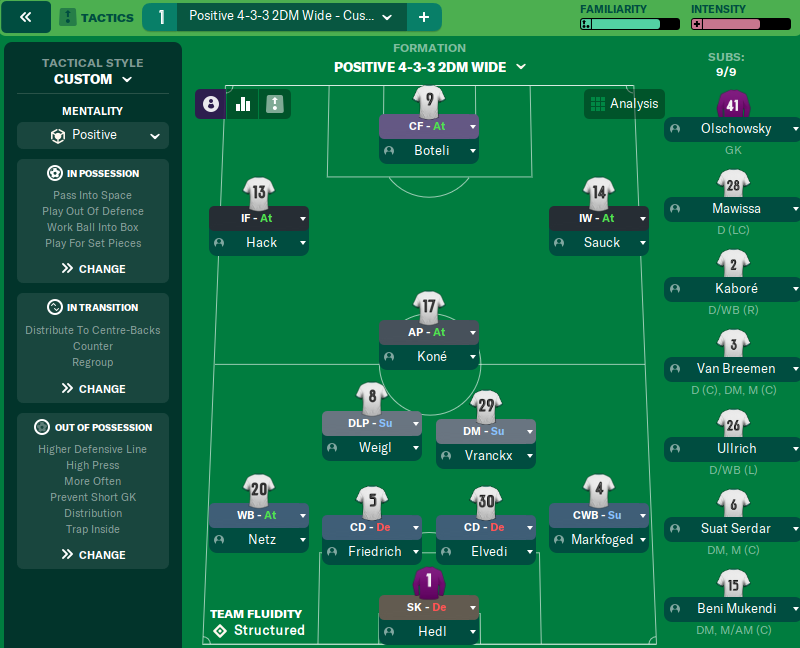
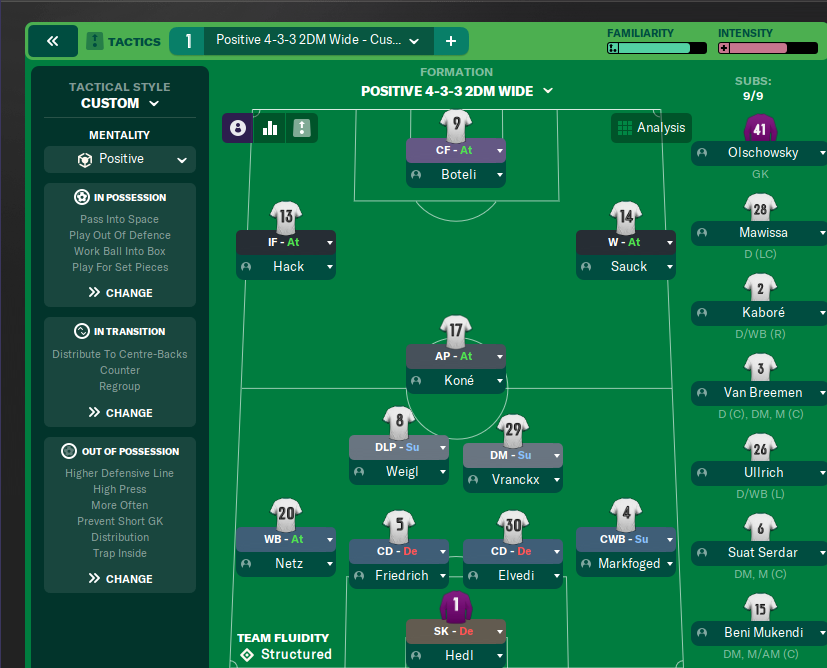
Guides for this formation
The tactical theory behind the 4-3-3 2DM Wide: roles, instructions, and the trade-offs that decide whether the system holds up.
Foundations
Understanding the 4-3-3 Formation
Master the classic 4-3-3: player roles, tactical variations, and the trade-offs that decide whether it sings or stalls.
Read guide
Player pairings
Midfield Trios
Holder, runner, creator: the role distribution rule for three-man midfields, the AMC variants, and the antipatterns that break them.
Read guide
Playing styles
Gegenpressing: A Full Guide
Klopp-style gegenpressing in FM, including squad profile, line-and-press pairing, sustainable workload, and the antipatterns to avoid.
Read guide