Uploaded Tactic
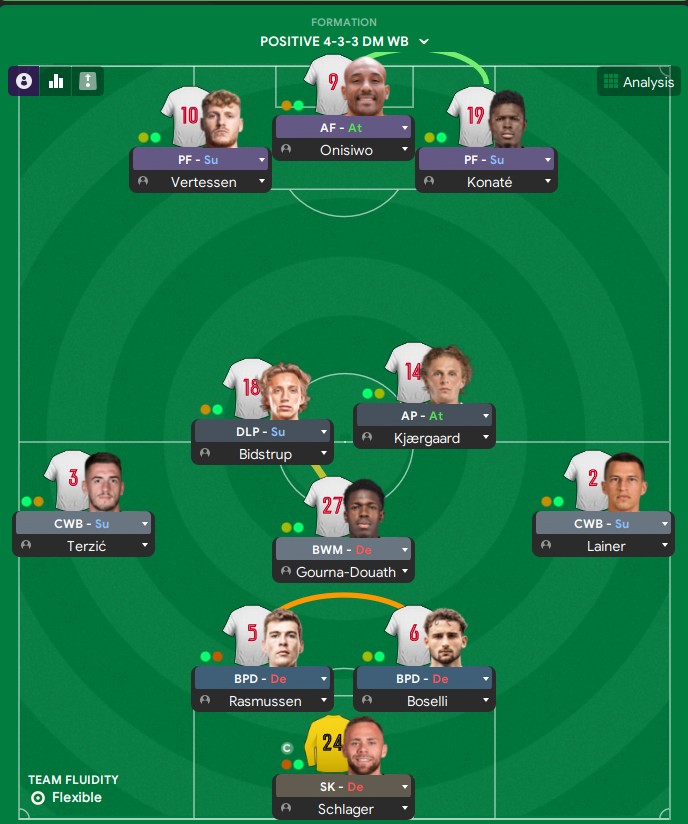
Formation & Style
Tactical Style:Positive
Mentality:Positive
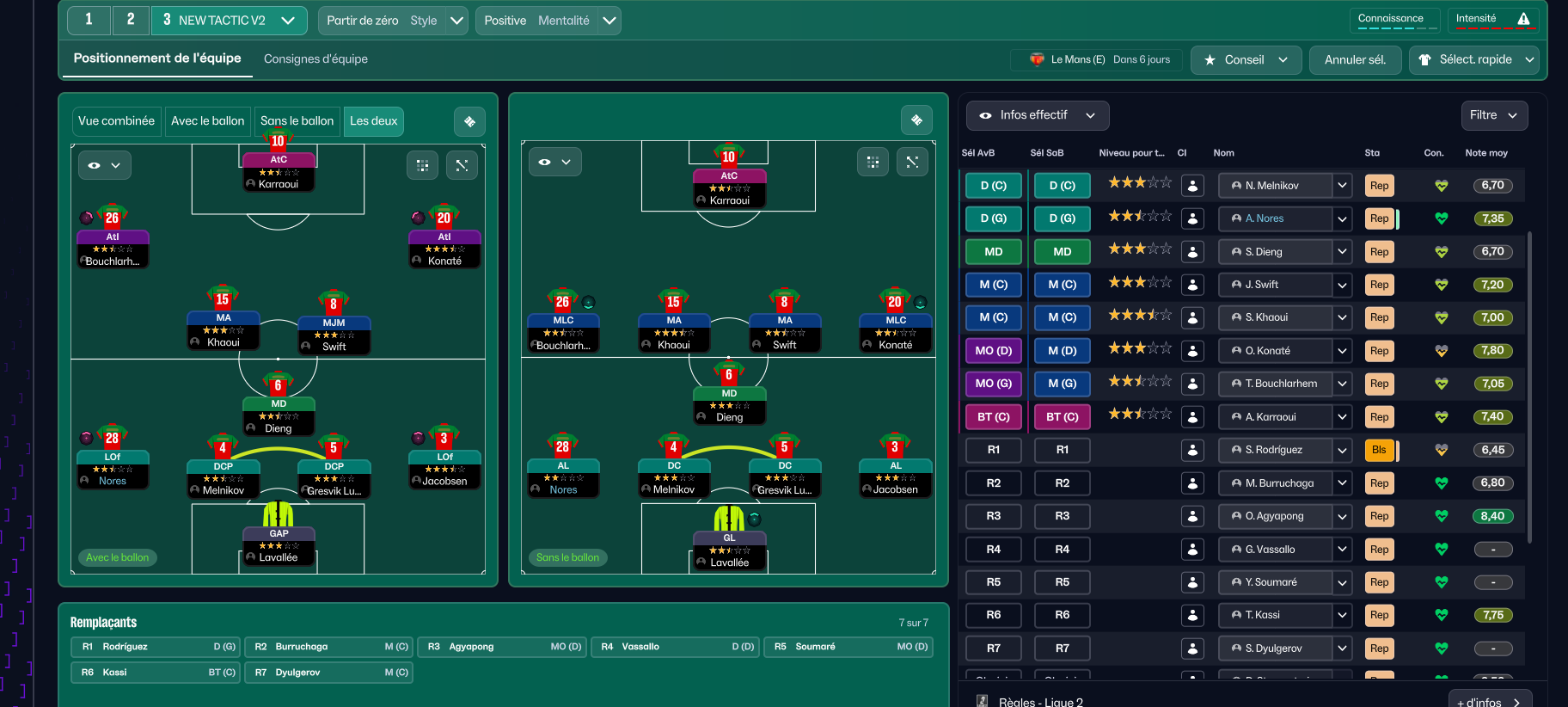
Formation:4-3-3 DM WB
Team Fluidity:Flexible
In Possession
Play Out From The Back
Work The Ball Into The Box
Focus Play Down The Flanks
In Transition
Counter-Press
Counter
Out of Possession
Higher Defensive Line
More Urgent Pressing
Team Shape Without Ball
Shape:Balanced
Description:Defensive line sits high to apply pressure, with a BWM screening the backline.
Evidence:BWM-D at [3,3] provides cover for the defenders.
Team Shape With Ball
Shape:Wide
Description:Use of wing-backs and inside forwards maximizes width while maintaining a central threat.
Evidence:CWB-S at [2,1] and [2,5] stretch the opponent's defense.
Phase Description
Attacking Play
Utilizes wing-backs to provide width and inside forwards to cut in, creating multiple attacking options.
Defensive Transition
Presses quickly to regain possession, focusing on winning the ball in advanced areas.
Main Focus
Possession-based buildup with fluid movement in the final third.
Key Strengths
Ball Progression
With BPDs and DLP, the team is effective at moving the ball from defense to attack.
Attacking Variety
The combination of inside forwards and an advanced forward creates unpredictability.
Defensive Solidity
A strong defensive structure with a BWM and two BPDs providing stability.
Conflicting Directions
Overcommitment in Attack
Risk of leaving spaces in defense if wing-backs advance too far.
Midfield Overload
With two DLPs, there may be a conflict in roles causing confusion.
Transition Vulnerability
High press may leave counterattack vulnerabilities.
Tactical Suggestions
Adjust Wing-Back Duties
Consider switching one of the wing-backs to a more defensive duty to solidify the defense.
Enhance Central Pressure
Incorporate a more aggressive pressing strategy in midfield to regain possession higher up the pitch.
Maintain Depth in Central Midfield
Ensure at least one midfielder maintains defensive cover during attacks.
Ask Questions About Your Lineup
Related Tactics
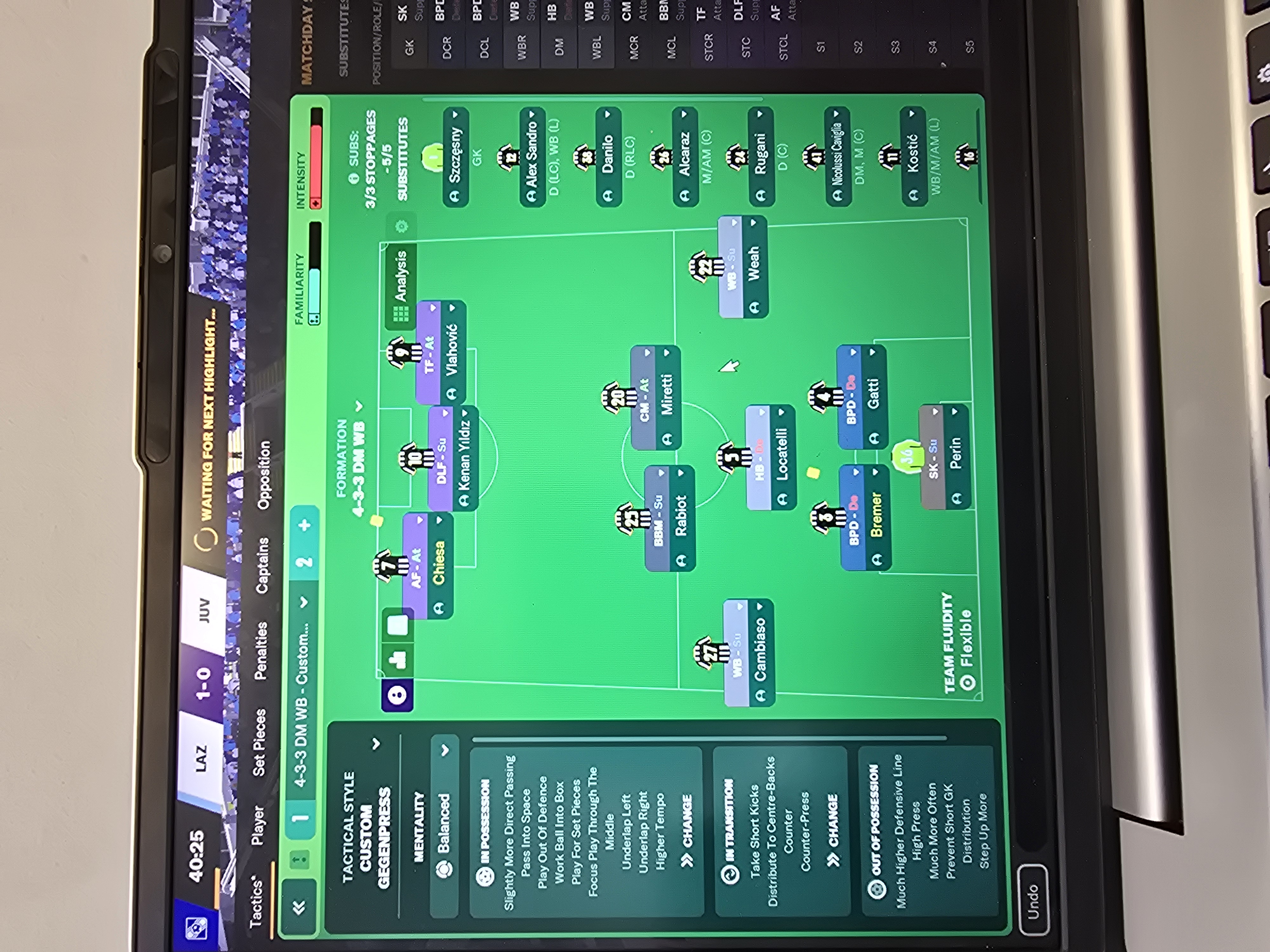
More Positive tactics
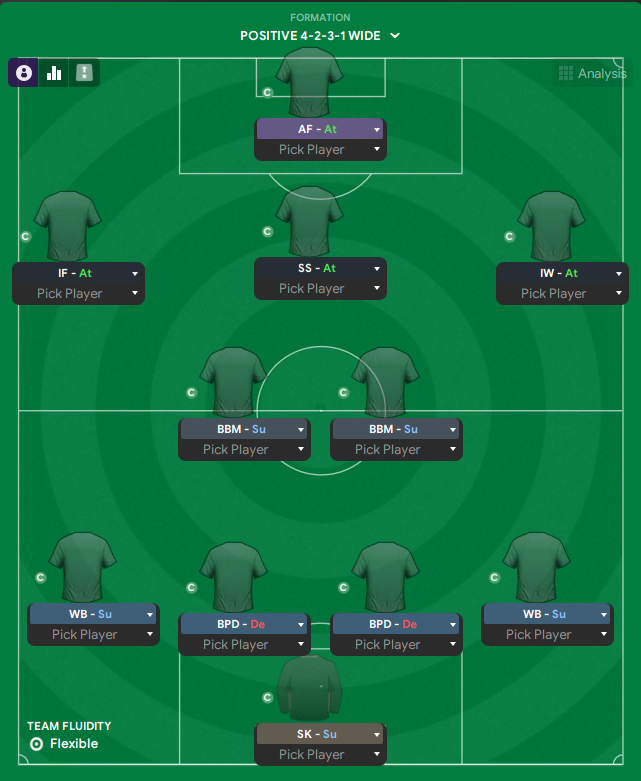
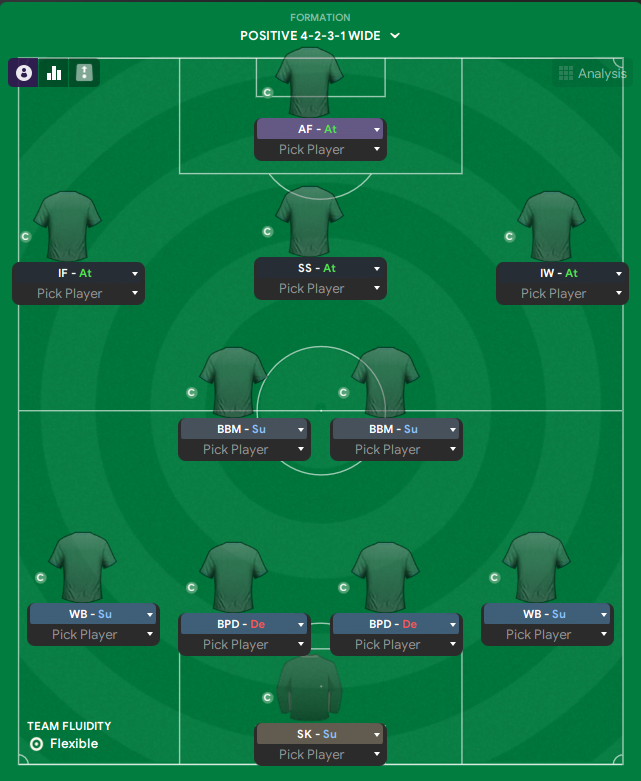
Guides for this formation
The tactical theory behind the 4-3-3 DM WB: roles, instructions, and the trade-offs that decide whether the system holds up.
Foundations
Understanding the 4-3-3 Formation
Master the classic 4-3-3: player roles, tactical variations, and the trade-offs that decide whether it sings or stalls.
Read guide
Player pairings
Midfield Trios
Holder, runner, creator: the role distribution rule for three-man midfields, the AMC variants, and the antipatterns that break them.
Read guide
Playing styles
Gegenpressing: A Full Guide
Klopp-style gegenpressing in FM, including squad profile, line-and-press pairing, sustainable workload, and the antipatterns to avoid.
Read guide