Uploaded Tactic
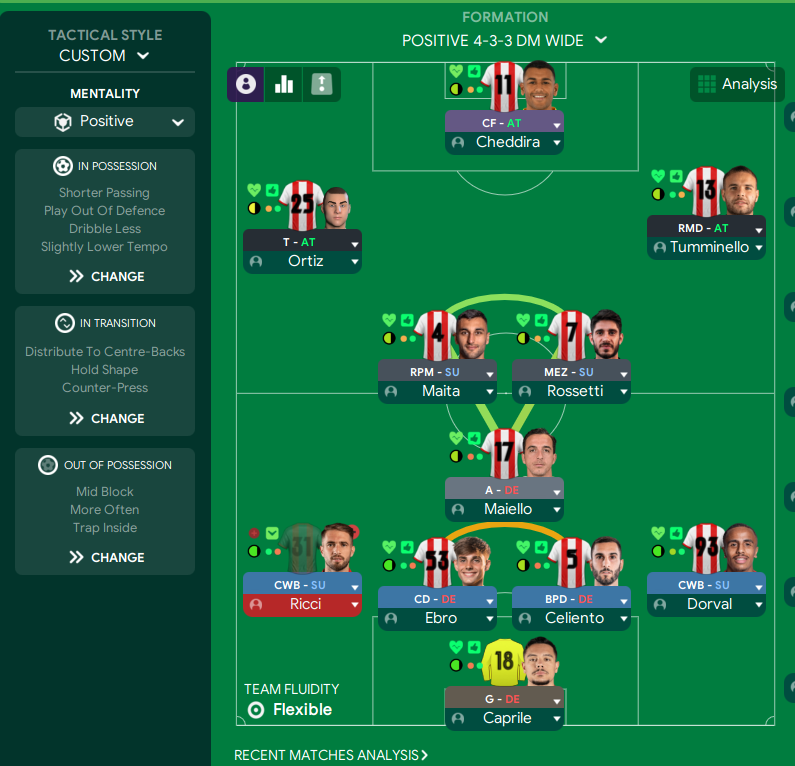
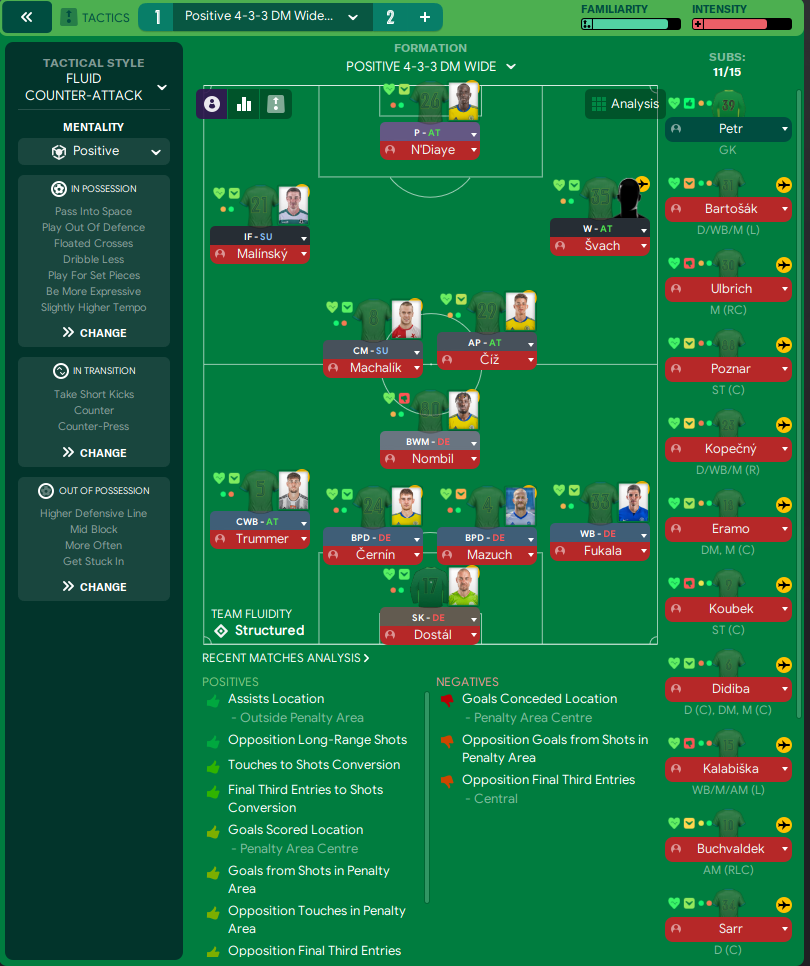
Formation & Style
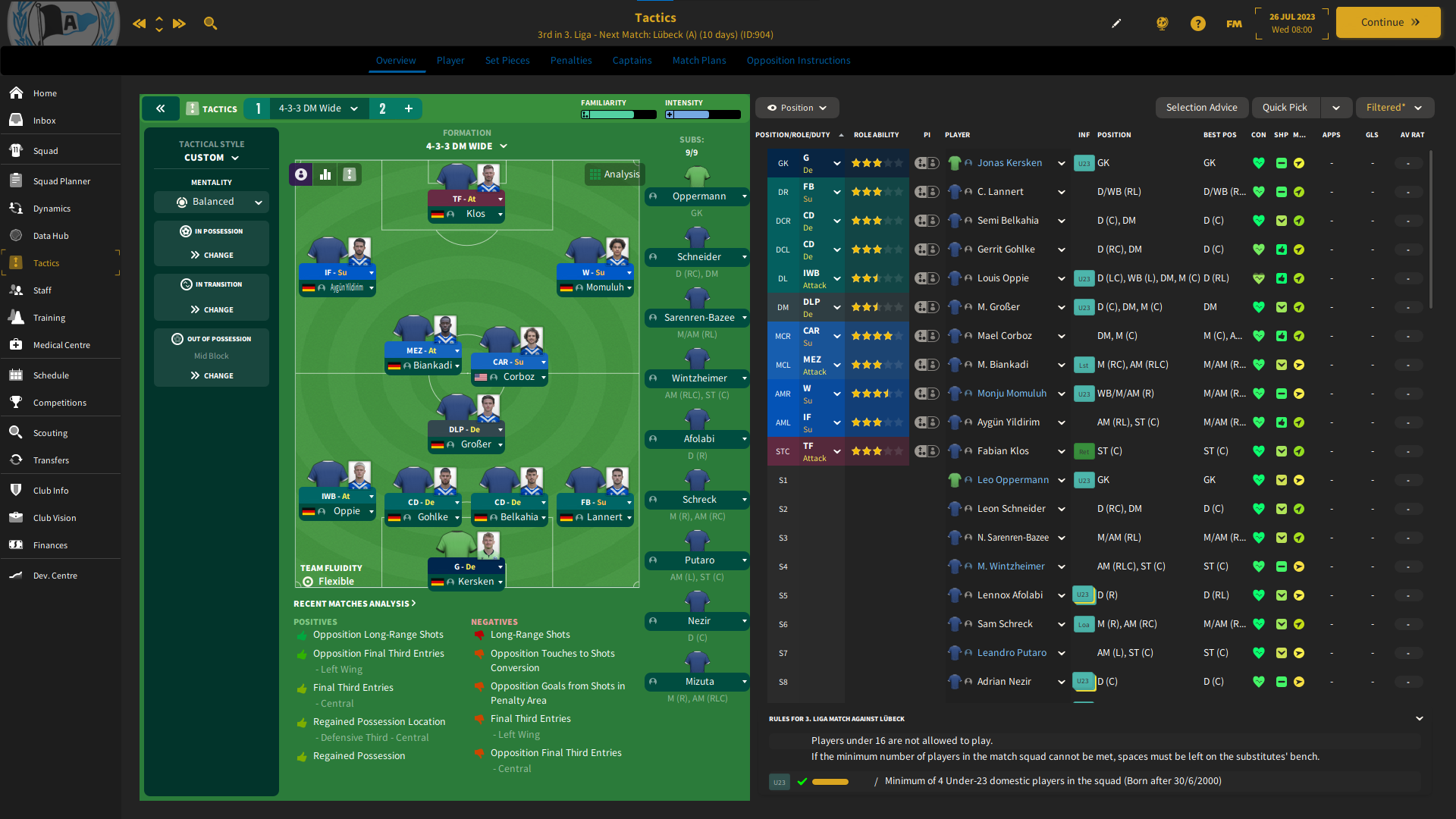
Tactical Style:Custom
Mentality:Positive
Formation:4-3-3 DM Wide
Team Fluidity:Flexible
In Possession
Shorter Passing
Play Out Of Defence
Dribble Less
Slightly Lower Tempo
In Transition
Distribute To Centre-Backs
Hold Shape
Counter-Press
Out of Possession
Mid Block
More Often
Trap Inside
Team Shape Without Ball
No team shape without ball data available
Team Shape With Ball
No team shape with ball data available
Key Strengths
Attacking Width
The 4-3-3 DM Wide formation utilizes the flanks effectively, allowing the wingers to stretch the opposition while creating space for central players.
Midfield Control
The combination of an Attacking Midfielder and a Box-to-Box Midfielder helps maintain numbers in the midfield, facilitating ball retention and transitions.
Defensive Solidity
The presence of an Anchor Man and two central defenders provides a solid defensive base, making it hard for opponents to penetrate centrally.
Flexible Tactical Approach
With a positive mentality and flexible fluidity, the tactic adapts well to various game situations, allowing for both defensive stability and attacking ambition.
Conflicting Directions
Wingers vs. Central Play
While the wingers provide width, the attacking midfield role may crowd the center, leading to potential confusion on attacking lanes.
Positive Mentality vs. Defensive Instructions
The positive mentality may conflict with a strong mid block and counter-press that could leave the team exposed during transitions.
Tempo vs. Possession Style
A slightly lower tempo may not align with a short passing approach, potentially leading to loss of rhythm in build-up play.
Player Duty Overlaps
The roles of Advanced Forward and Wingers might overlap, leading to positional congestion and limiting the effectiveness of individual players.
Tactical Suggestions
Use Inside Forwards
Consider changing wingers to inside forwards to exploit space in the channels and create more goal-scoring opportunities.
Adjust Mentality
If defensive concerns arise, switching to a more balanced mentality could help mitigate risks during transitions.
Encourage More Forward Runs
Encourage the two central midfielders to make forward runs to support the attacking play, increasing the number of players in the box.
Alternate Full-Back Roles
Consider one full-back playing as a wing-back on attack to increase width and offer more crossing opportunities.
Ask Questions About Your Lineup
Related Tactics
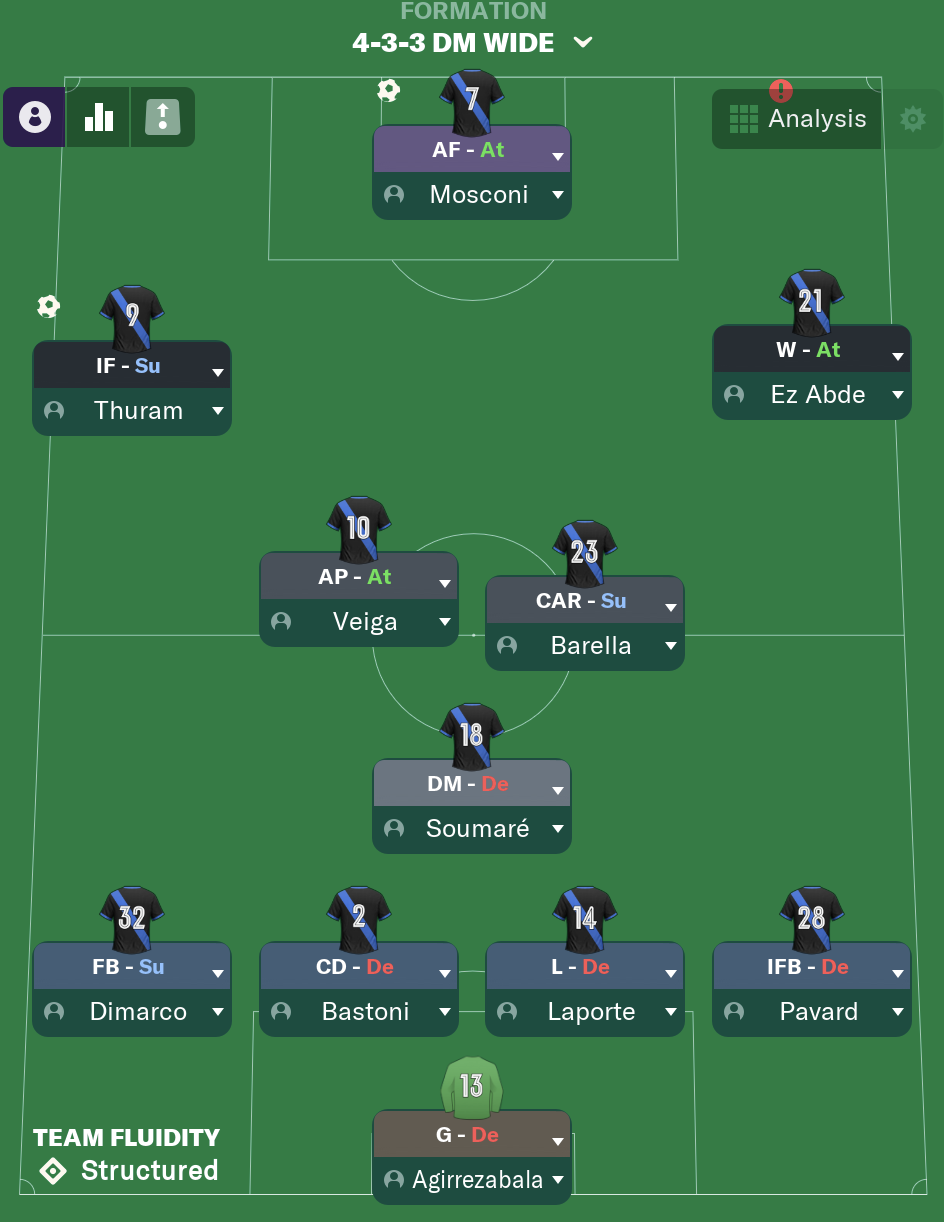
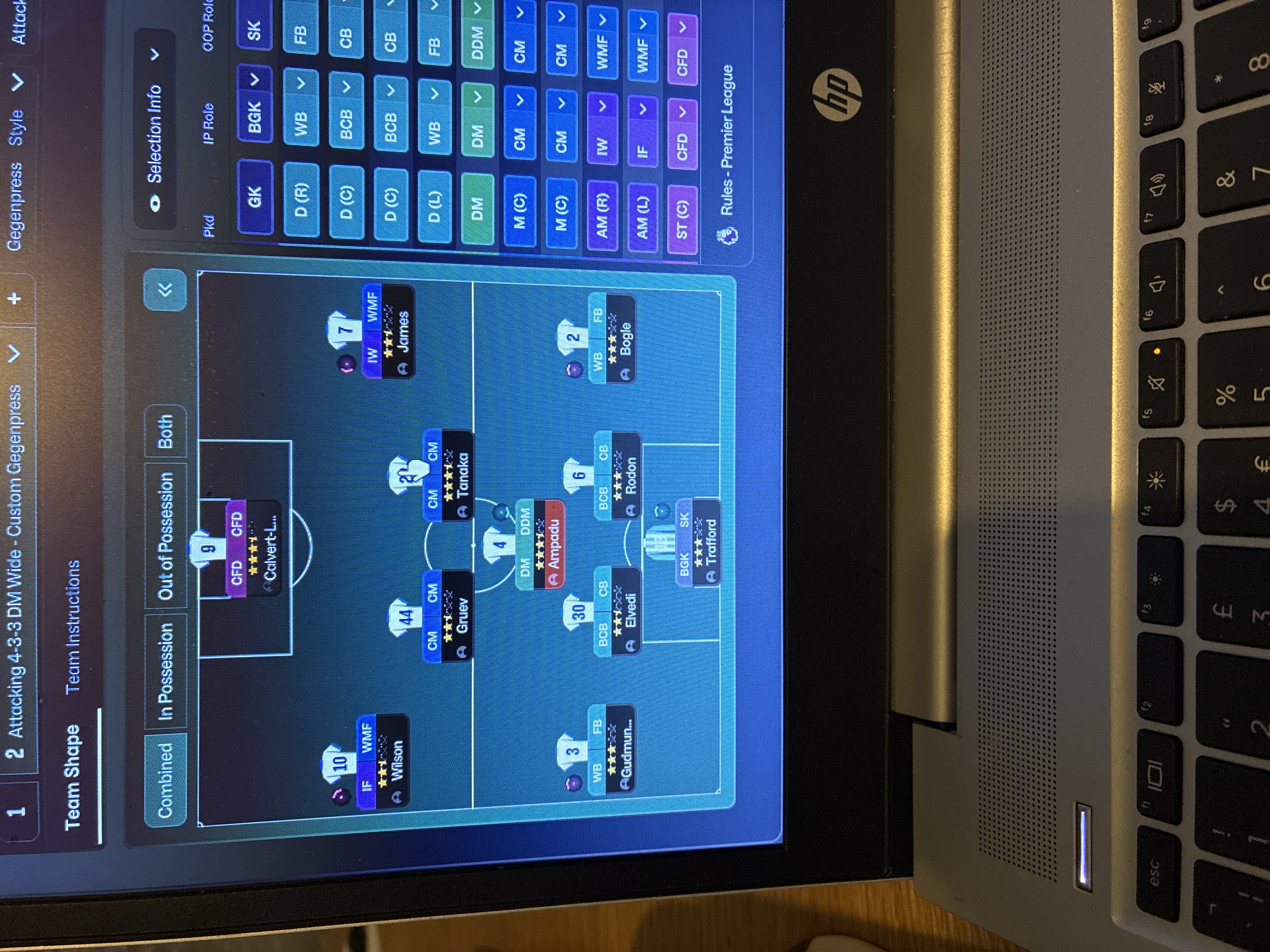
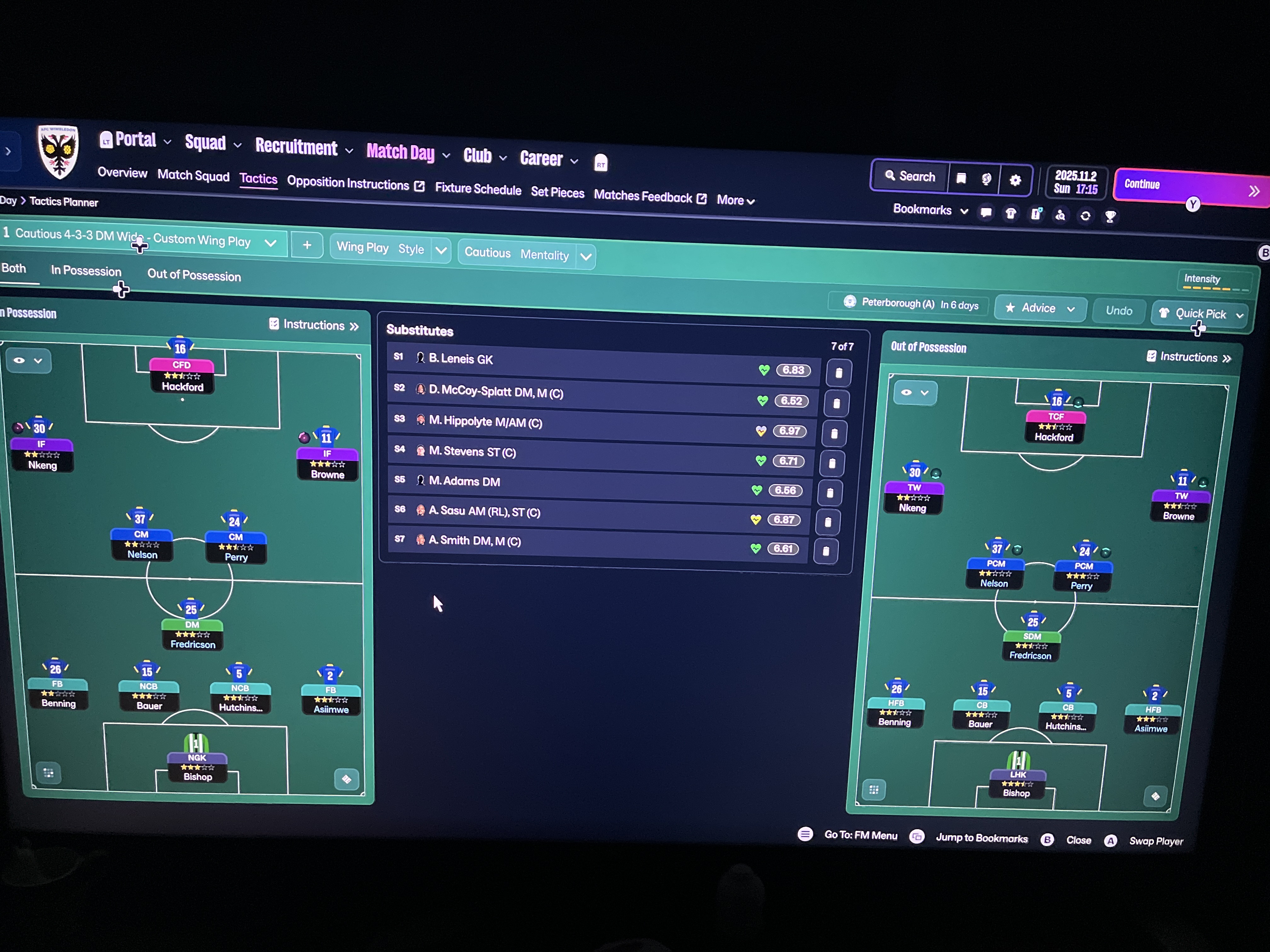
Guides for this formation
The tactical theory behind the 4-3-3 DM Wide: roles, instructions, and the trade-offs that decide whether the system holds up.
Foundations
Understanding the 4-3-3 Formation
Master the classic 4-3-3: player roles, tactical variations, and the trade-offs that decide whether it sings or stalls.
Read guide
Player pairings
Midfield Trios
Holder, runner, creator: the role distribution rule for three-man midfields, the AMC variants, and the antipatterns that break them.
Read guide
Playing styles
Gegenpressing: A Full Guide
Klopp-style gegenpressing in FM, including squad profile, line-and-press pairing, sustainable workload, and the antipatterns to avoid.
Read guide