Uploaded Tactic
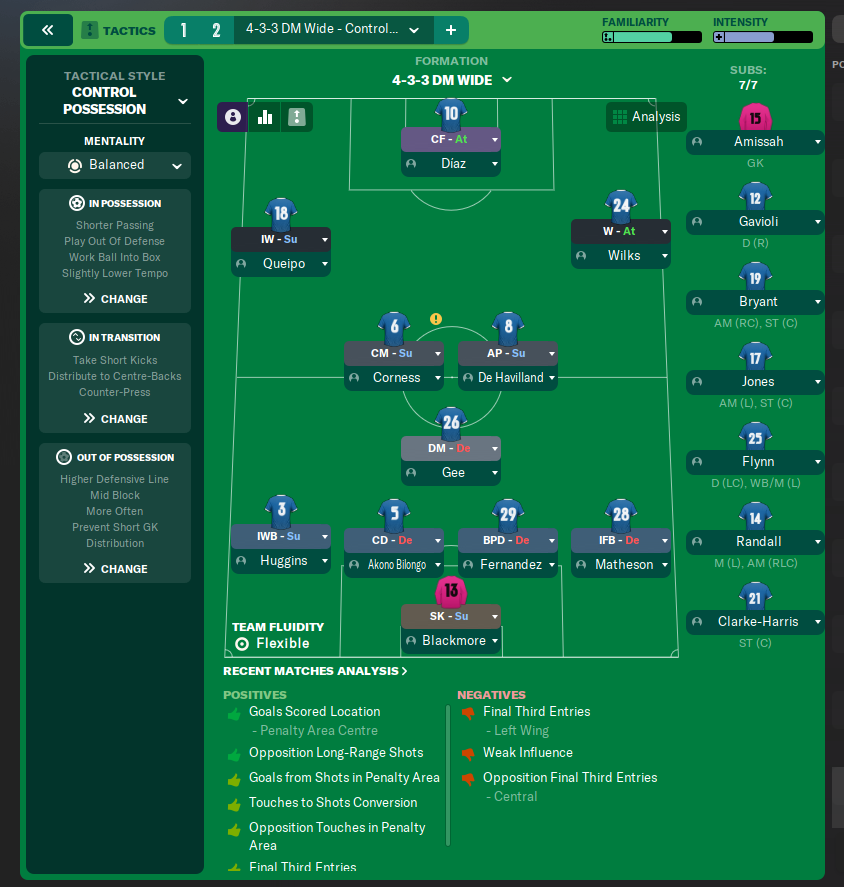
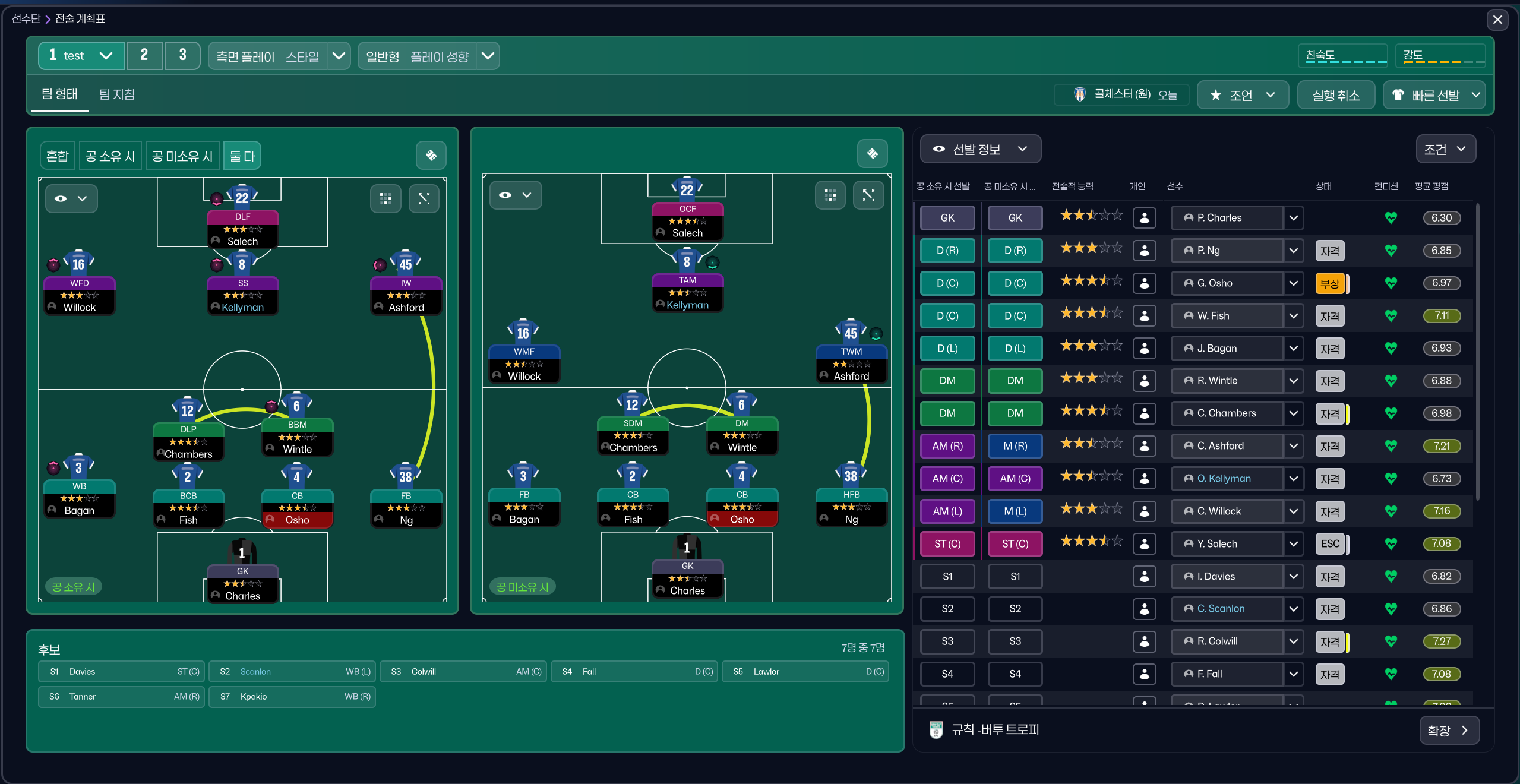
Formation & Style
Tactical Style:Control Possession
Mentality:Balanced
Formation:4-3-3 DM Wide
Team Fluidity:Flexible
In Possession
Shorter Passing
Play Out Of Defense
Work Ball Into Box
Slightly Lower Tempo
In Transition
Take Short Kicks
Distribute to Centre-Backs
Counter-Press
Out of Possession
Higher Defensive Line
Mid Block
Prevent Short GK Distribution
Team Shape Without Ball
Shape:4-1-4-1
Description:The front players press while the midfield and defence maintain compactness.
Evidence:DM (Gee) at [3,3] provides cover to a high defensive line.
Team Shape With Ball
Shape:4-3-3
Description:Utilizes width effectively, allowing wide players (Queipo and Wilks) to create space for the central forward (Diaz).
Evidence:FW (Diaz) at [6,3] supported by IW (Queipo) at [5,1] and W (Wilks) at [5,5].
Phase Description
Attacking Play
Focus on maintaining possession with shorter passes, working the ball into the box for high-quality opportunities.
Defensive Transition
Utilizing a counter-press to quickly regain possession upon losing the ball.
Main Focus
Control the midfield and dictate the tempo of the game.
Key Strengths
Possession Retention
The tactical style encourages short passing and controlled build-up play.
Versatile Attack
Ability to switch between direct and possession-based play, utilizing the full width of the pitch.
Defensive Stability
A well-organized defensive unit with a supportive DM to protect the backline.
Conflicting Directions
Final Third Ineffectiveness
The tactic is struggling with entries into the final third, especially on the left wing.
Central Overload
The formation may become congested in the center which can hinder progression.
Wing Dependency
Dependence on wing play can lead to predictability and defensive vulnerabilities.
Tactical Suggestions
Broaden Attack Width
Encourage more wide play to draw defenders and create space in central areas.
Enhance Left Wing Play
Focus on increasing effectiveness on the left through strategic adjustments.
Incorporate Counter-Attack
Introduce more direct play during transitions for quick goals.
Ask Questions About Your Lineup
Related Tactics
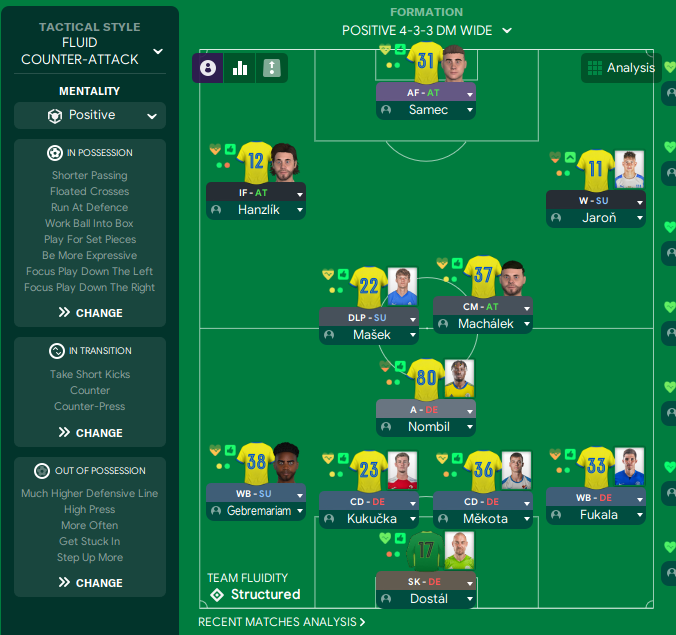
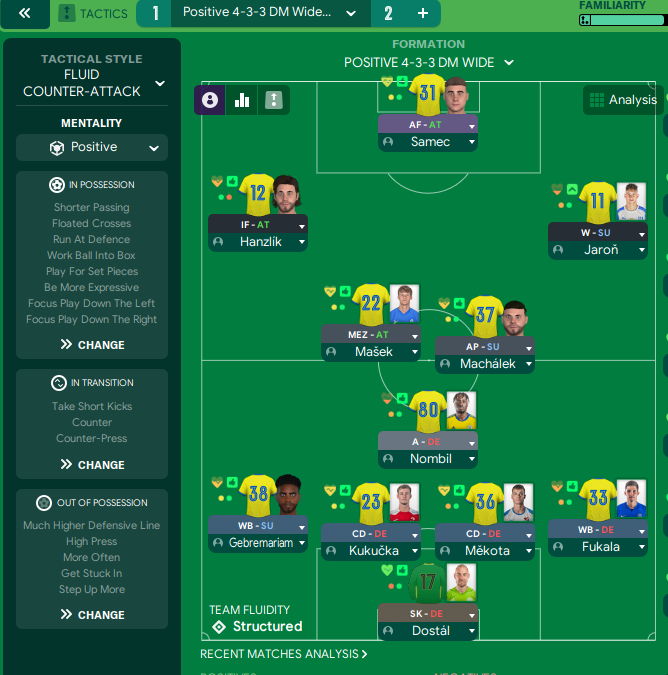
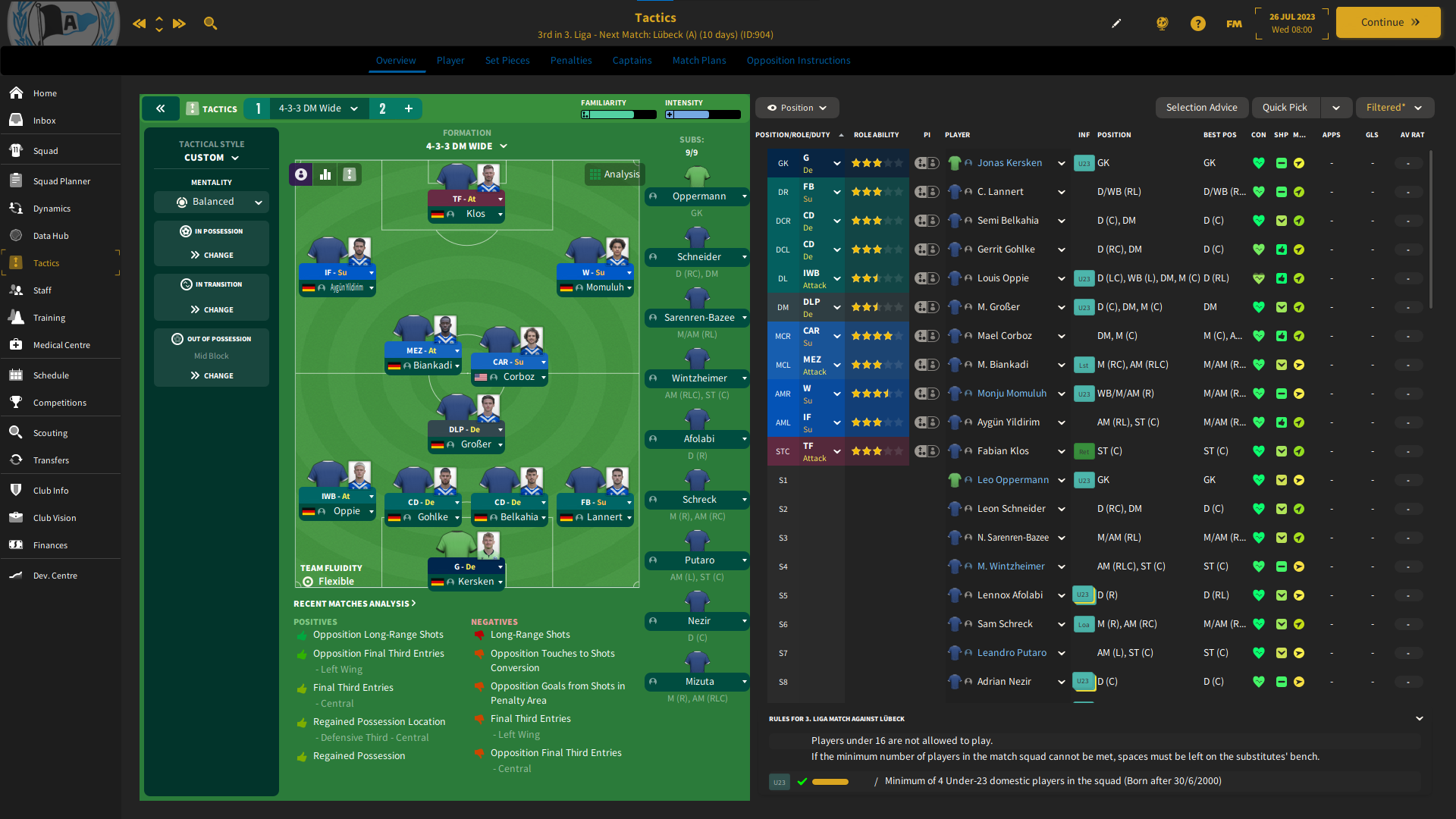
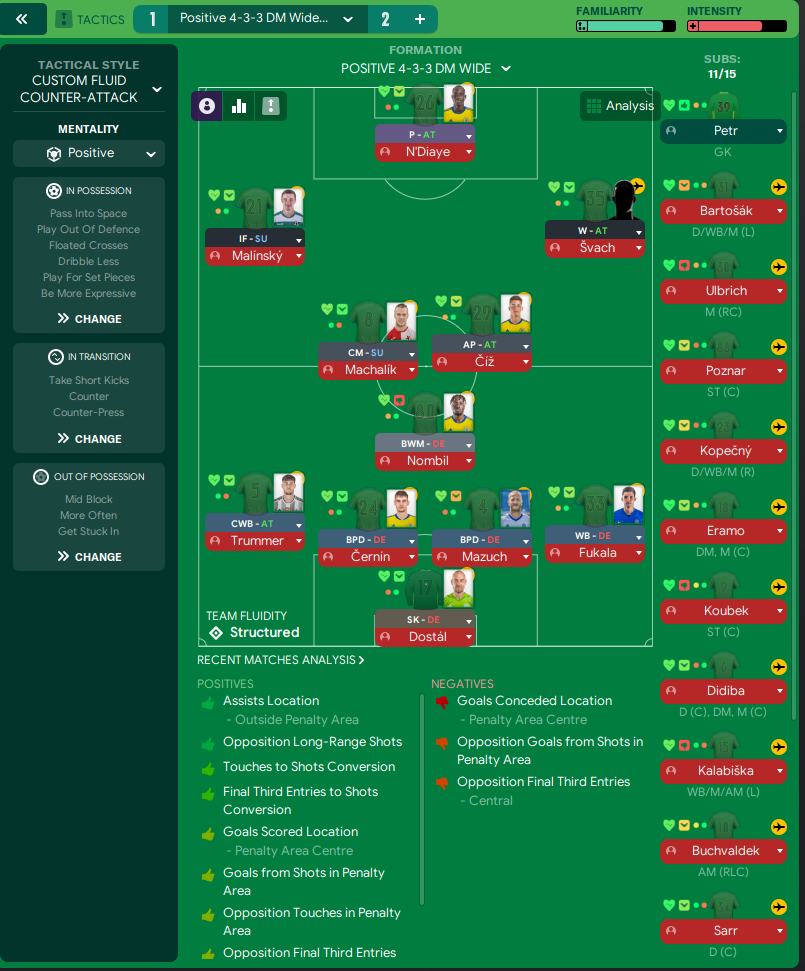
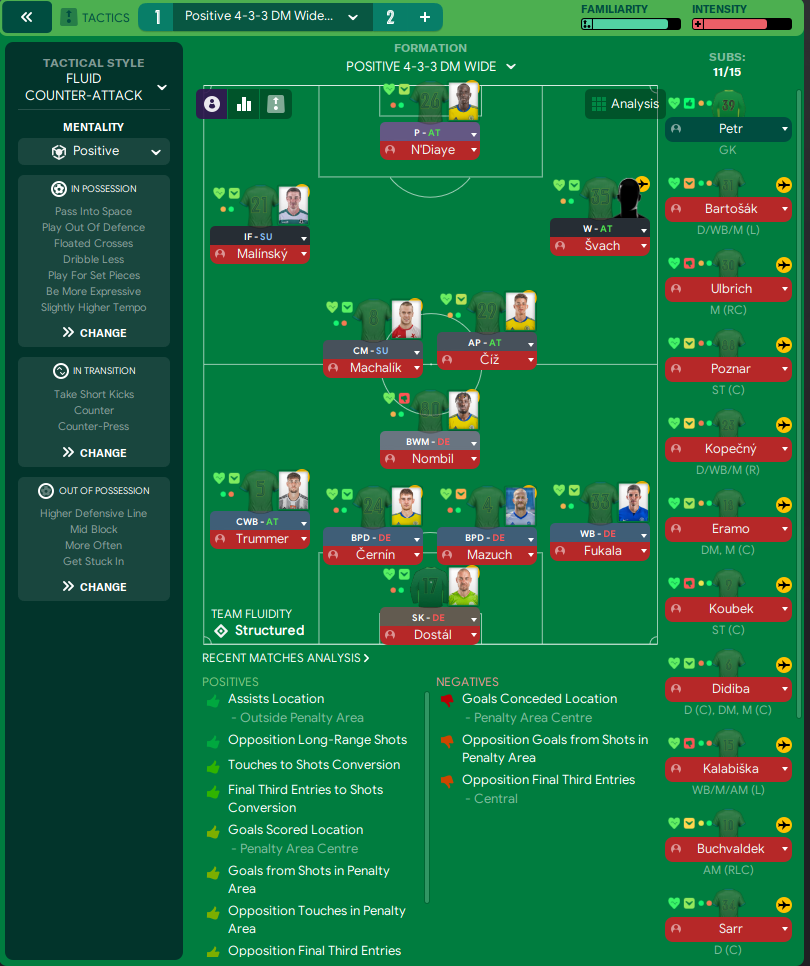
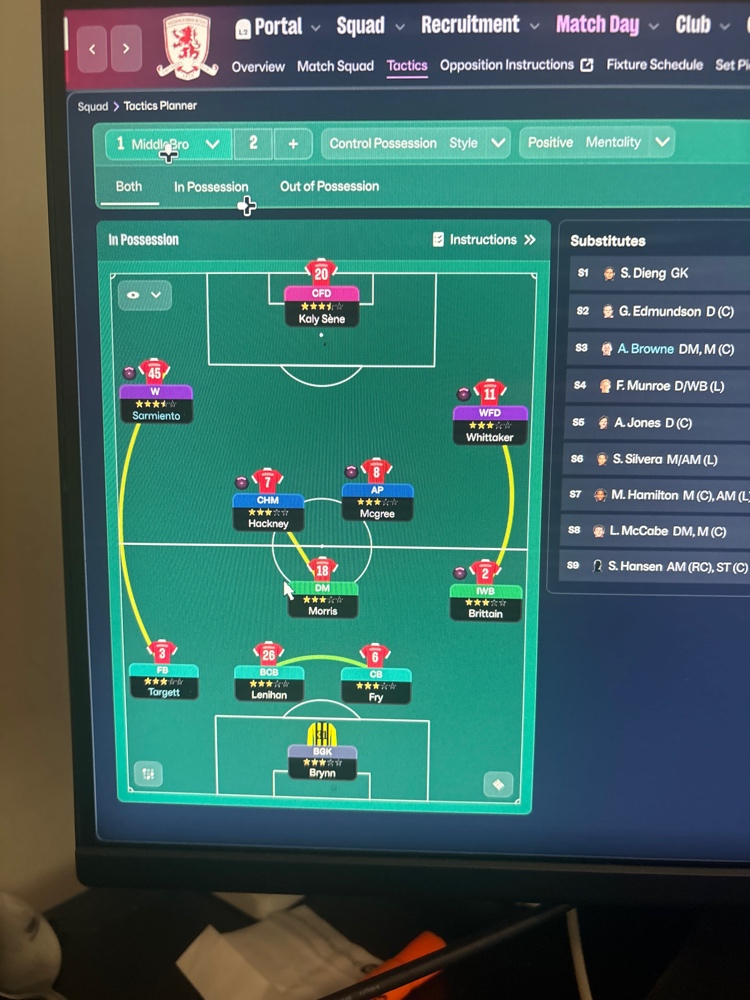
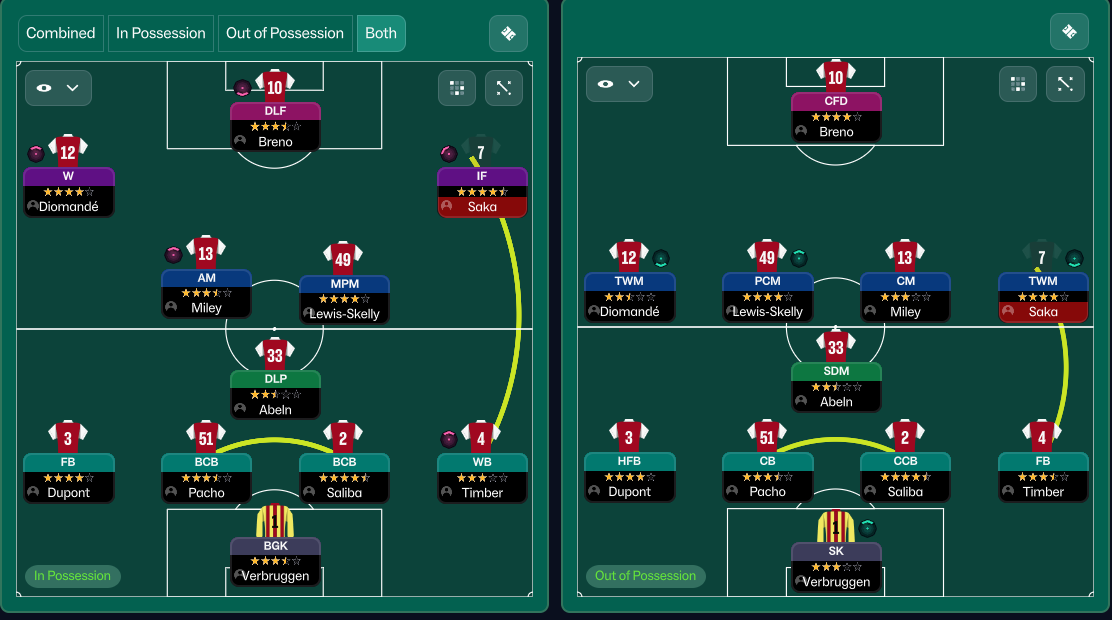
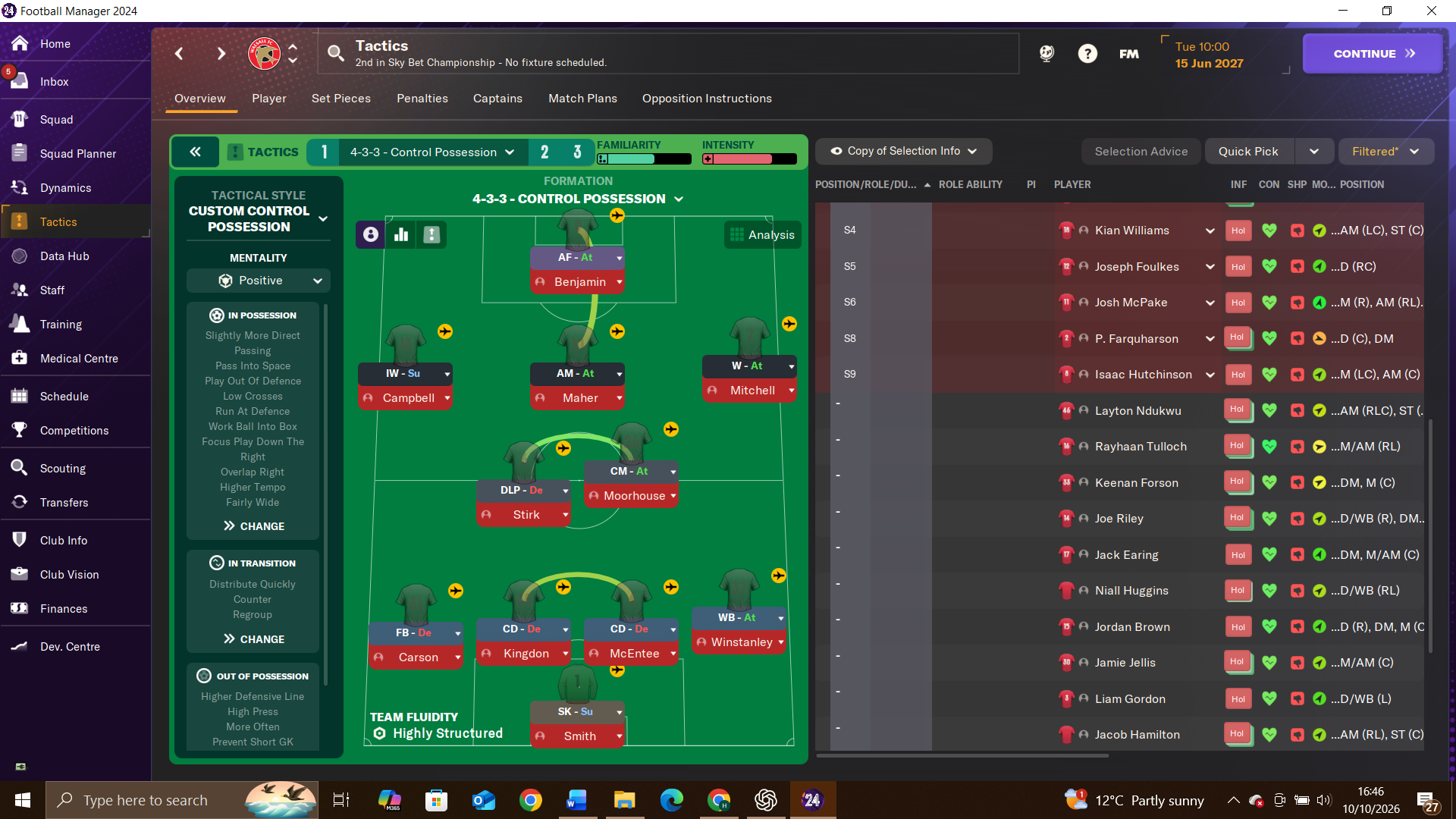
More Control Possession tactics
Guides for this formation
The tactical theory behind the 4-3-3 DM Wide: roles, instructions, and the trade-offs that decide whether the system holds up.
Foundations
Understanding the 4-3-3 Formation
Master the classic 4-3-3: player roles, tactical variations, and the trade-offs that decide whether it sings or stalls.
Read guide
Player pairings
Midfield Trios
Holder, runner, creator: the role distribution rule for three-man midfields, the AMC variants, and the antipatterns that break them.
Read guide
Playing styles
Gegenpressing: A Full Guide
Klopp-style gegenpressing in FM, including squad profile, line-and-press pairing, sustainable workload, and the antipatterns to avoid.
Read guide