Uploaded Tactic
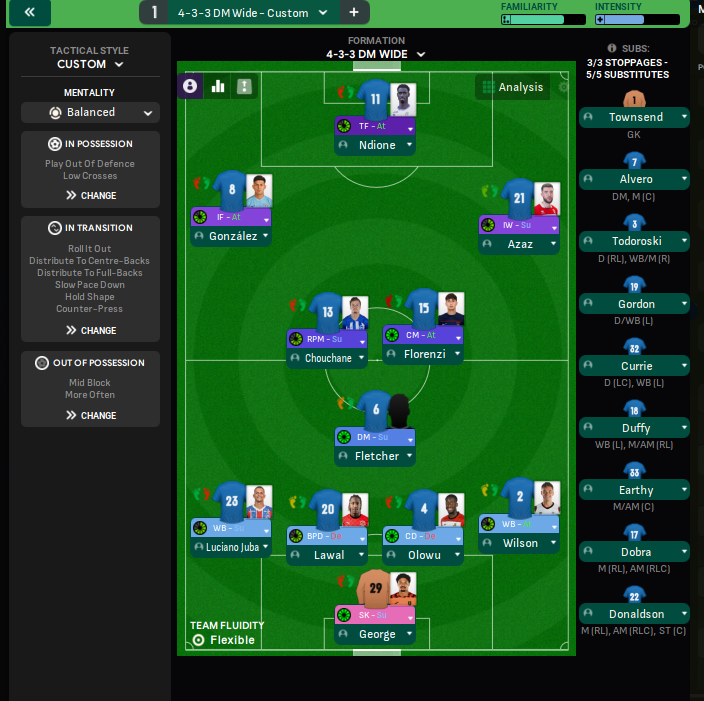
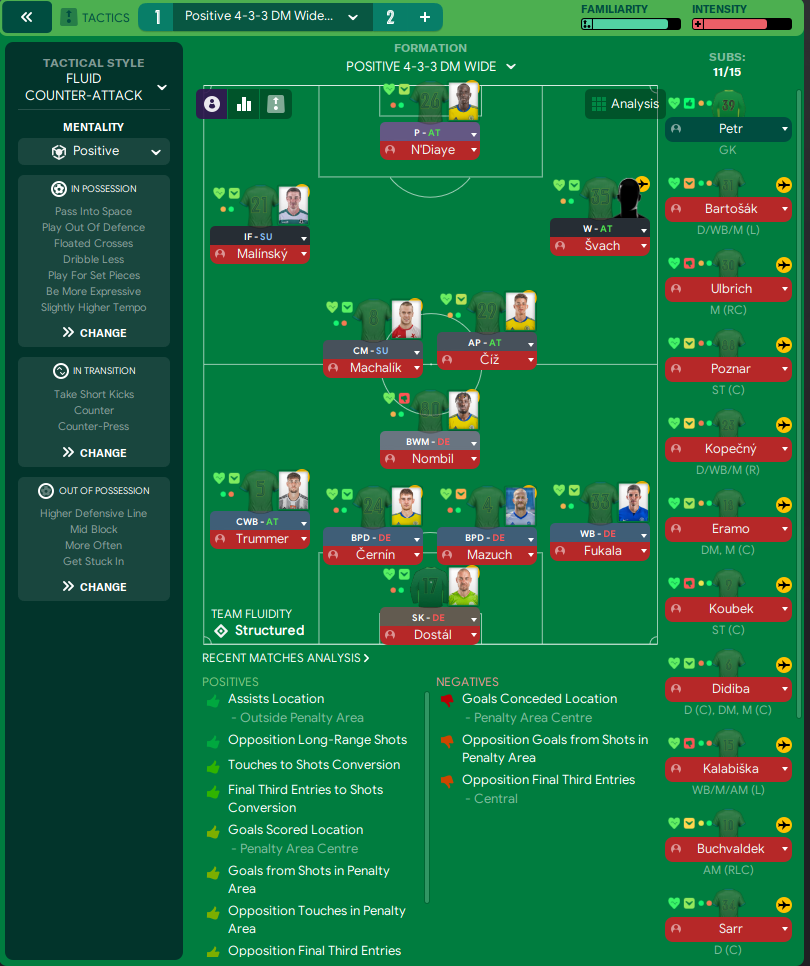
Formation & Style
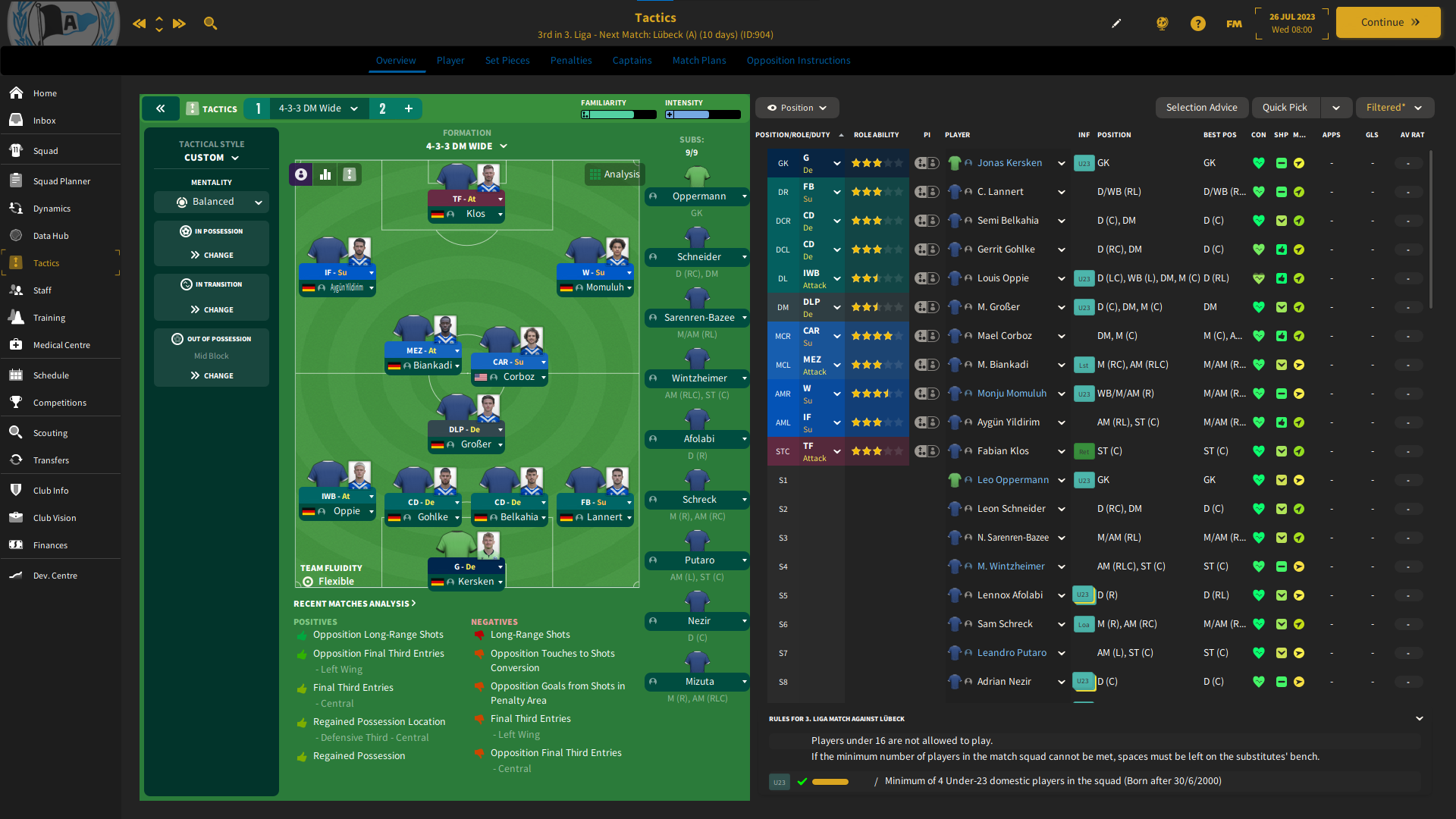
Tactical Style:Custom
Mentality:Balanced
Formation:4-3-3 DM Wide
Team Fluidity:Flexible
In Possession
Play Out Of Defence
Low Crosses
In Transition
Roll It Out
Distribute To Centre-Backs
Distribute To Full-Backs
Slow Pace Down
Hold Shape
Counter-Press
Out of Possession
Mid Block
More Often
Team Shape Without Ball
Shape:Mid Block
Description:Structured defensive setup limiting opposition space in midfield.
Evidence:Mid Block + More Often instruction suggests proactive engagement.
Team Shape With Ball
Shape:Wide Formation
Description:Wide attacks facilitated by wing-backs and forwards to stretch opposition.
Evidence:Inverted Winger and Inside Forward roles enhance width.
Phase Description
Attacking Play
Utilizing width from the wing-backs and forwards for crossing and movement into the box.
Defensive Transition
Prioritize organization and regaining possession through counter-press.
Main Focus
Creating overloads on the flanks to exploit defensive weaknesses.
Key Strengths
Fluid Midfield Control
Three midfielders capable of fluid transitions aid ball retention and link-up play.
Versatile Attack
The combination of an Inside Forward and Inverted Winger provides varied attacking threats.
Strong Defensive Structure
The presence of a Defensive Midfielder and three decent CBs bolsters defensive solidity.
Conflicting Directions
Inconsistent Counter-Pressing
Counter-Pressing may conflict with the Mid Block strategy, risking gaps when counter-press fails.
Potential Overlapping Wing-Backs
Aggressive attacking wing-backs might leave spaces behind when opponents counter.
Overloading One Side
Focusing on one side could make the team predictable and vulnerable to counterattacks.
Tactical Suggestions
Adjust Mid Block Height
Consider adjusting the height of the mid block to balance pressing need and defensive organization.
Midfield Duty Adjustment
Evaluate changing the Roaming Playmaker's duty to Attack to provide more forward thrust.
Increase Width in Defending
Encourage wing-backs to stay wider in defense to cover flanks, preventing overloads.
Ask Questions About Your Lineup
Related Tactics
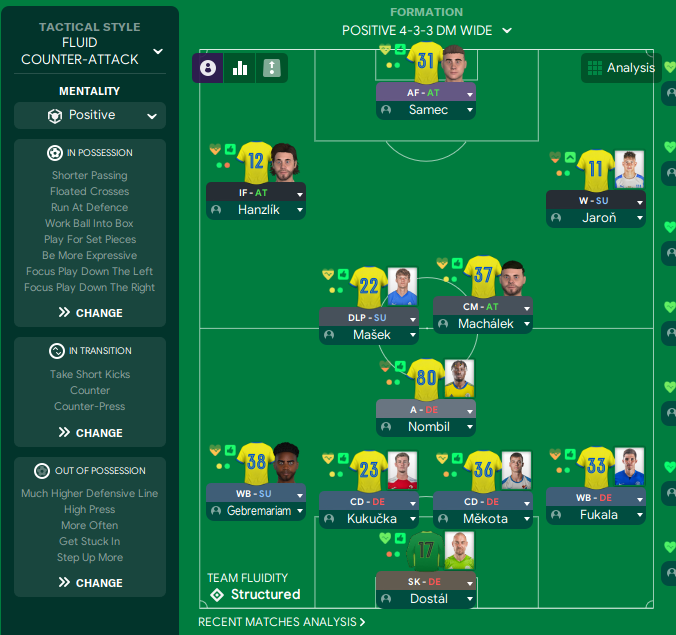
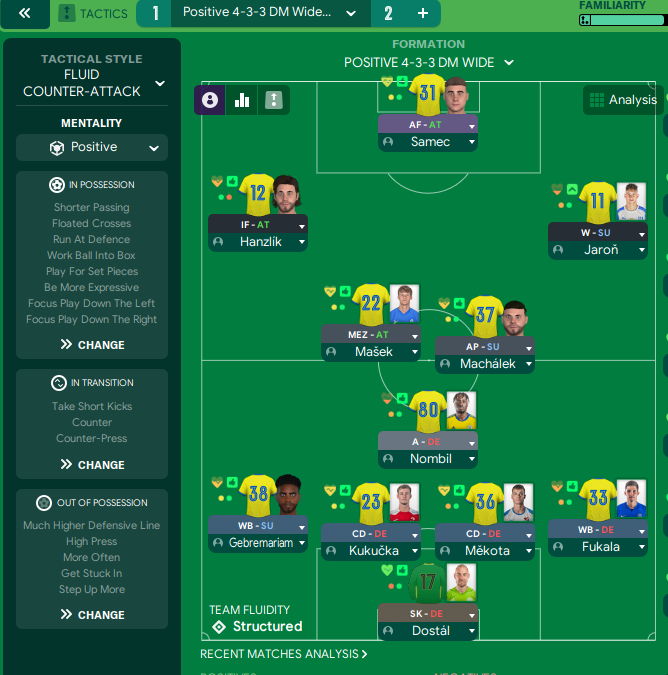
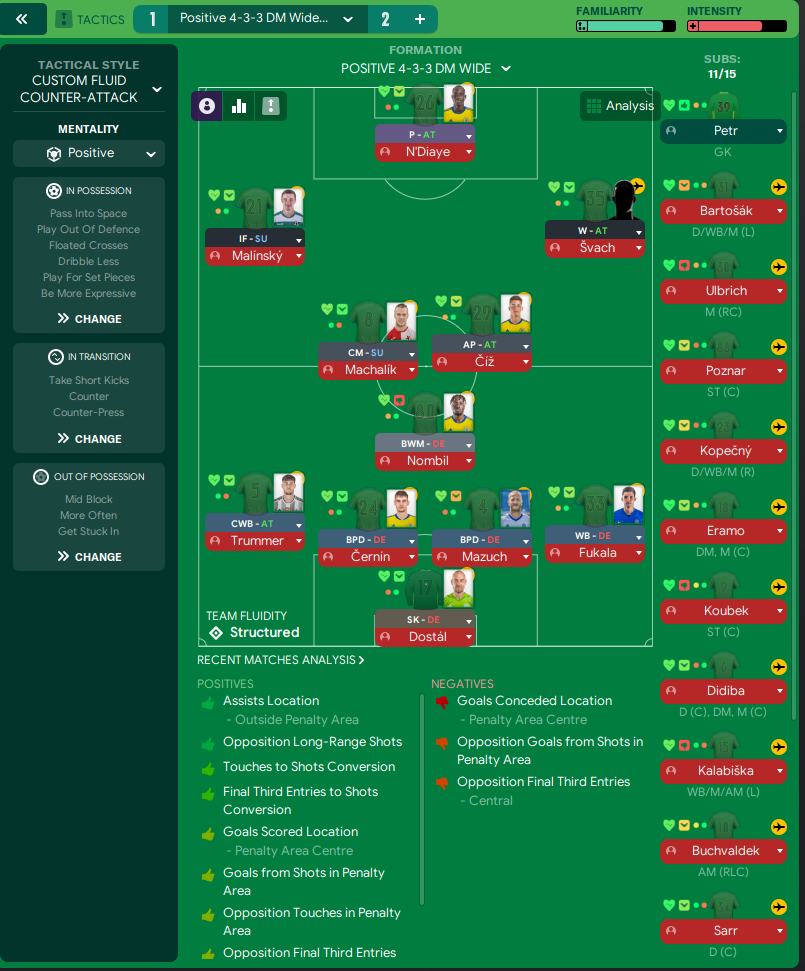
Guides for this formation
The tactical theory behind the 4-3-3 DM Wide: roles, instructions, and the trade-offs that decide whether the system holds up.
Foundations
Understanding the 4-3-3 Formation
Master the classic 4-3-3: player roles, tactical variations, and the trade-offs that decide whether it sings or stalls.
Read guide
Player pairings
Midfield Trios
Holder, runner, creator: the role distribution rule for three-man midfields, the AMC variants, and the antipatterns that break them.
Read guide
Playing styles
Gegenpressing: A Full Guide
Klopp-style gegenpressing in FM, including squad profile, line-and-press pairing, sustainable workload, and the antipatterns to avoid.
Read guide