Uploaded Tactic
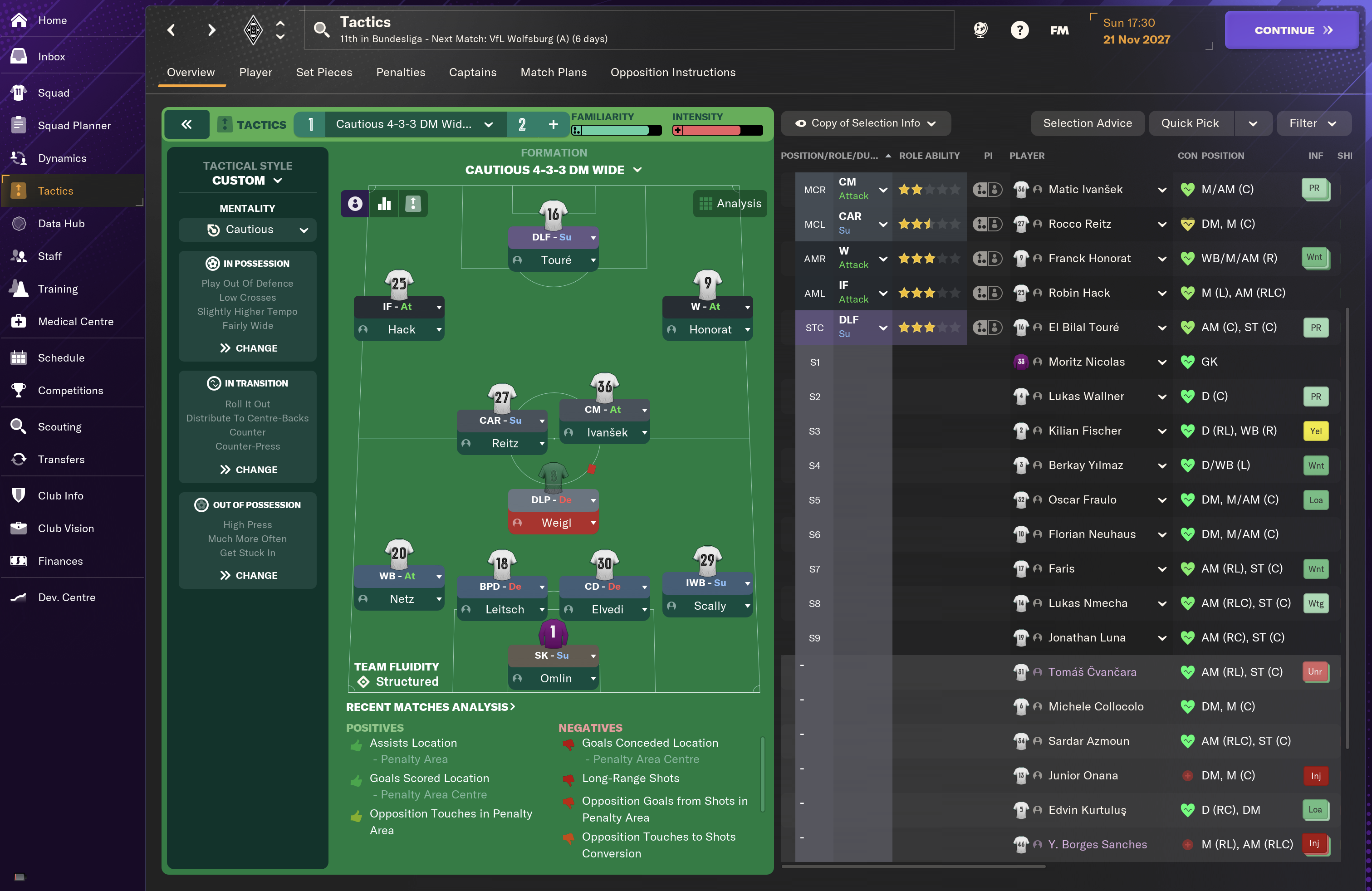
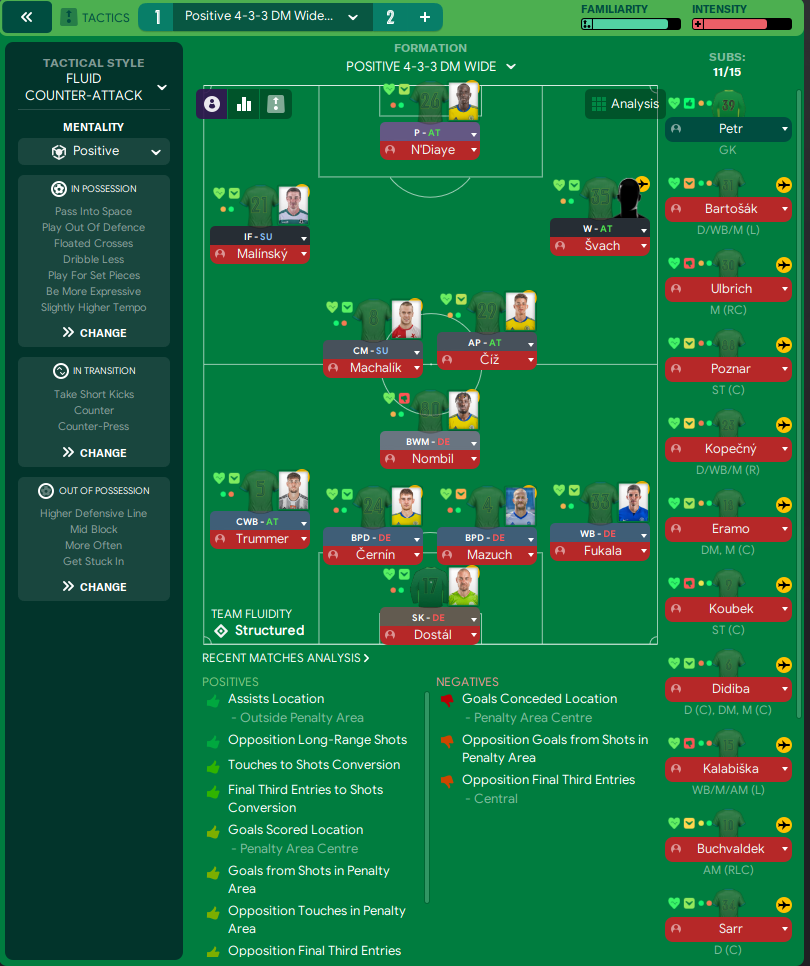
Formation & Style
Tactical Style:Custom
Mentality:Cautious
Formation:4-3-3 DM Wide
Team Fluidity:Structured
In Possession
Play Out Of Defence
Low Crosses
Slightly Higher Tempo
Fairly Wide
In Transition
Roll It Out
Distribute To Centre-Backs
Counter
Counter-Press
Out of Possession
High Press
Much More Often Prevent Short GK Distribution
Get Stuck In
Team Shape Without Ball
Shape:4-1-4-1
Description:Compact shape, minimizing central space and encouraging wide play from opponents.
Evidence:4 defenders + 1 sitting DM (Weigl) to shield backline.
Team Shape With Ball
Shape:4-3-3
Description:Utilizes width to stretch defense and promotes passing lanes through the center.
Evidence:Winger (Hack) and Inside Forward (Touré) providing width while CM (Ivanšek) pushes forward.
Phase Description
Attacking Play
Focus on building play from the back, using wide players to stretch opposition and create space.
Defensive Transition
Quick recovery and pressing high to regain possession, particularly after losing the ball in the enemy half.
Main Focus
Control midfield to dictate tempo and create goal-scoring opportunities.
Key Strengths
Wide Play
The use of wingers and wing-backs creates space and opportunities to cross.
Midfield Control
Possession is maintained through a well-structured midfield with good passing options.
Defensive Stability
Strong defense formed by a back four supported by a dedicated DM.
Conflicting Directions
High Press Risk
High pressing could leave defense exposed if opponents bypass initial press.
Counter-Press Vulnerability
Counter-pressing too aggressively can lead to gaps in the midfield.
Over-reliance on Width
Heavy reliance on wide play can limit options when facing compact defenses.
Tactical Suggestions
Reduce Defensive Vulnerability
Implement a more conservative pressing strategy to limit space behind defenders.
Dynamic Midfield Movement
Encourage CM (Ivanšek) to provide more forward runs to stretch defenses and link up with strikers.
Adjust Team Width
Adapt width based on the opponent's formation; reduce on compact setups to better exploit central spaces.
Ask Questions About Your Lineup
Related Tactics
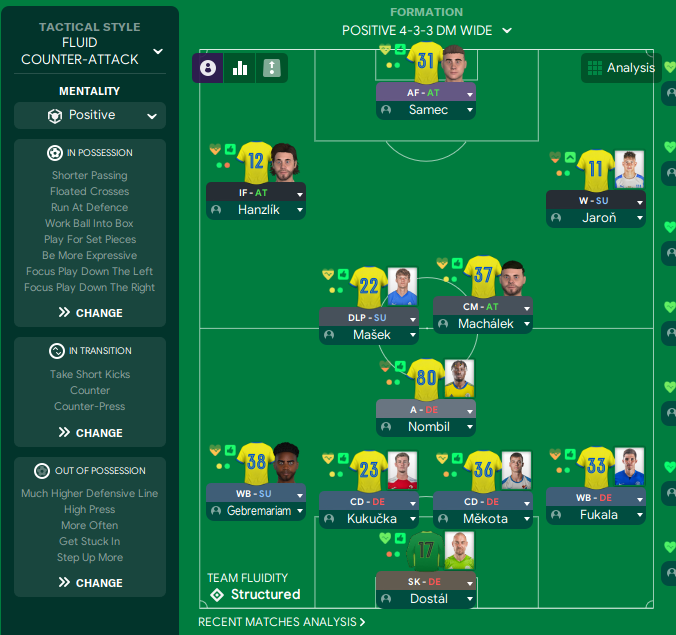
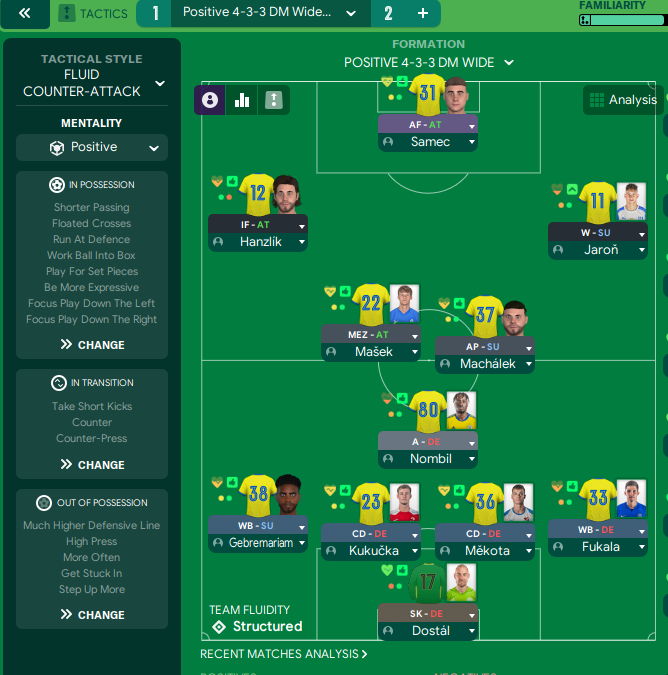
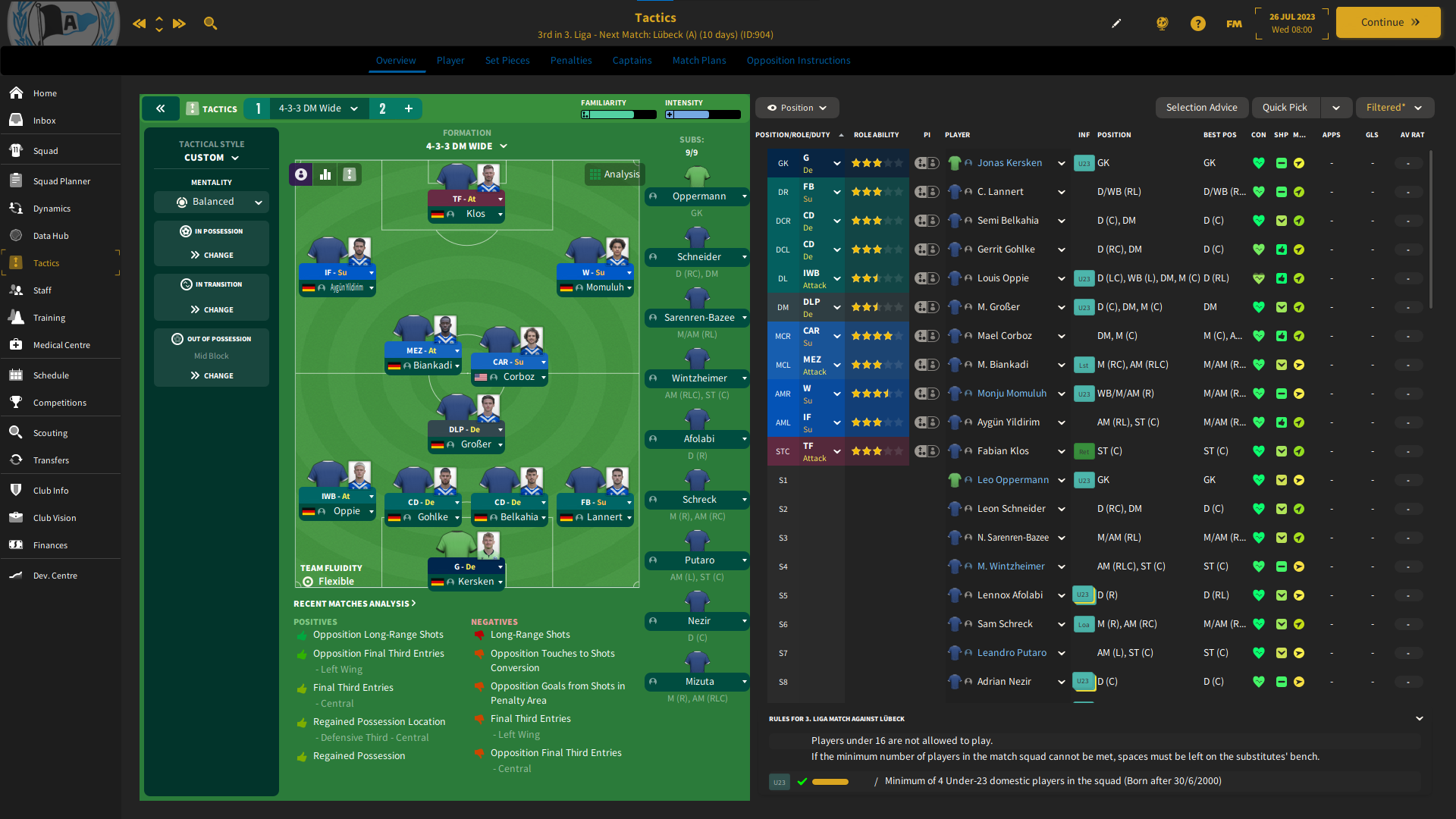
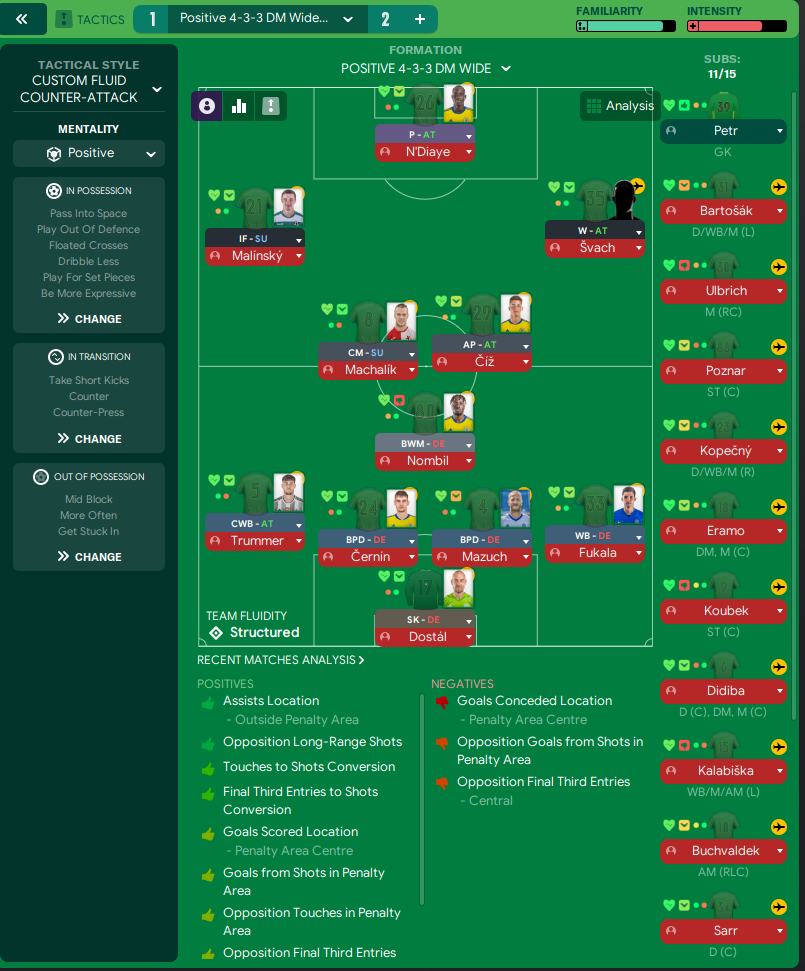
Guides for this formation
The tactical theory behind the 4-3-3 DM Wide: roles, instructions, and the trade-offs that decide whether the system holds up.
Foundations
Understanding the 4-3-3 Formation
Master the classic 4-3-3: player roles, tactical variations, and the trade-offs that decide whether it sings or stalls.
Read guide
Player pairings
Midfield Trios
Holder, runner, creator: the role distribution rule for three-man midfields, the AMC variants, and the antipatterns that break them.
Read guide
Playing styles
Gegenpressing: A Full Guide
Klopp-style gegenpressing in FM, including squad profile, line-and-press pairing, sustainable workload, and the antipatterns to avoid.
Read guide