Uploaded Tactic
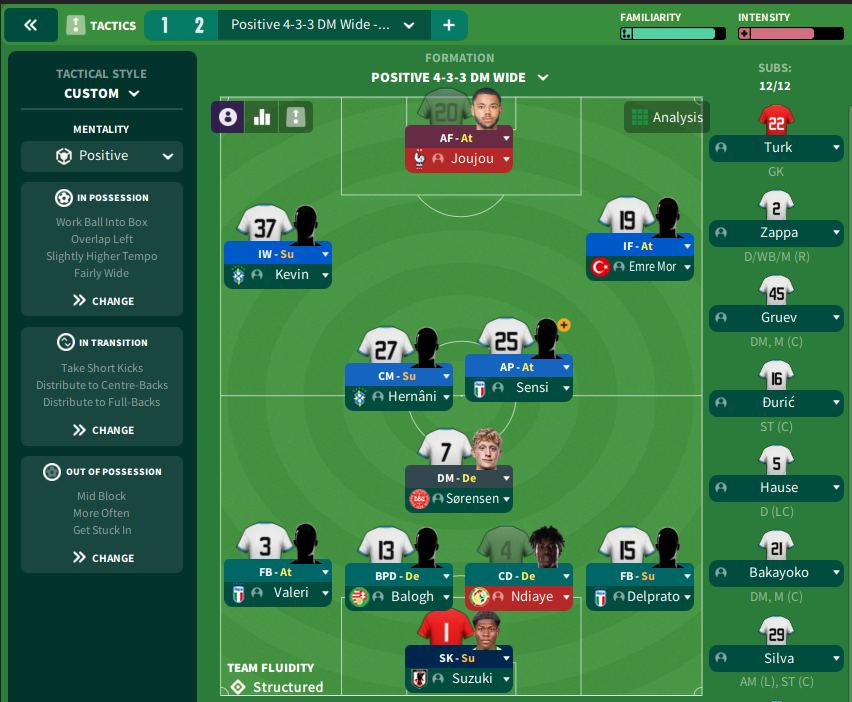
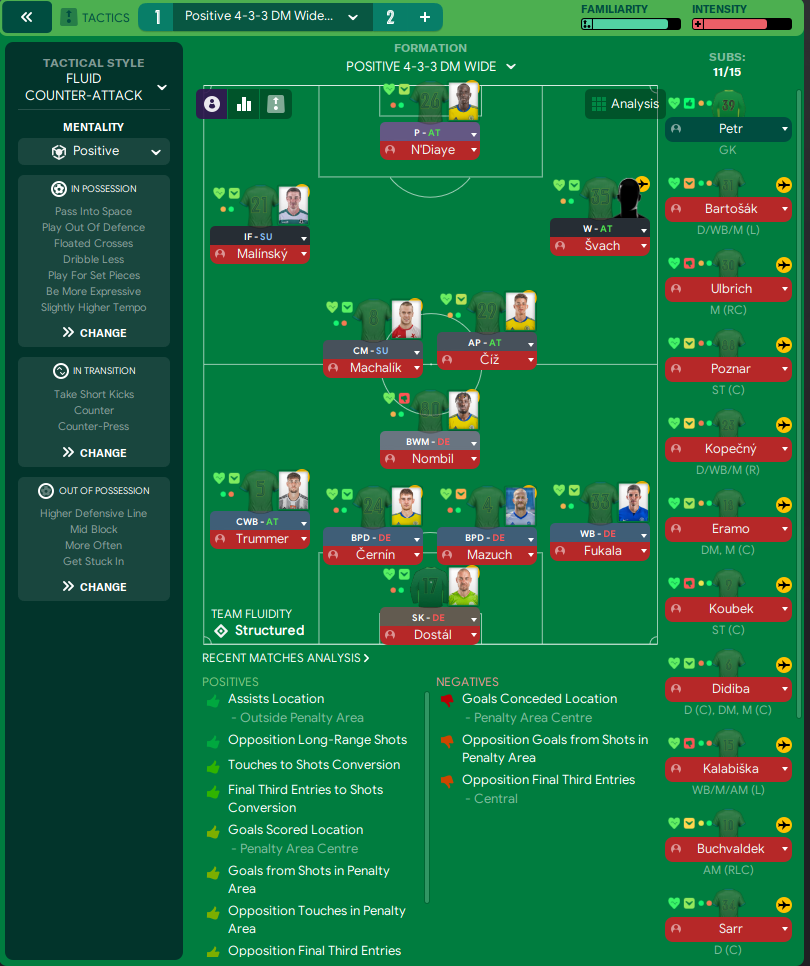
Formation & Style
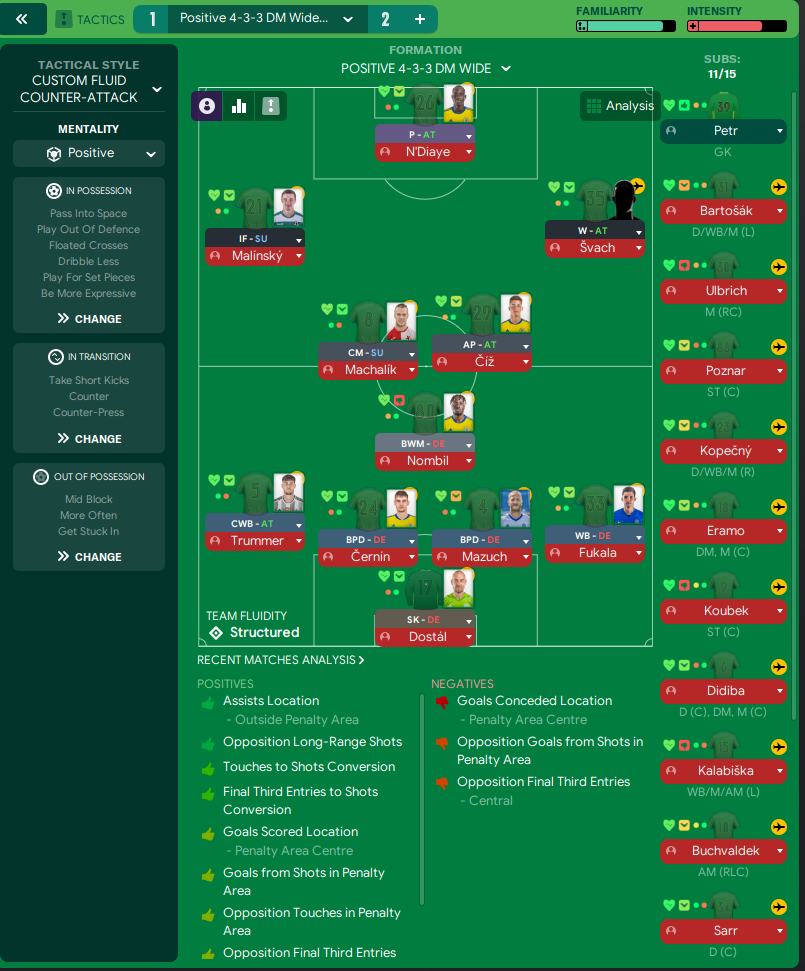
Tactical Style:Custom
Mentality:Positive
Formation:4-3-3 DM Wide
Team Fluidity:Structured
In Possession
Work Ball Into Box
Overlap Left
Slightly Higher Tempo
Fairly Wide
In Transition
Take Short Kicks
Distribute to Centre-Backs
Distribute to Full-Backs
Out of Possession
Mid Block
More Often Get Stuck In
Team Shape Without Ball
Shape:4-1-4-1
Description:Compact defensive shape with a double pivot providing protection and allowing for a quick transition to offensive play.
Evidence:DM at [3,3] (Sørensen) and a solid back four.
Team Shape With Ball
Shape:4-3-3
Description:Employs width effectively with both full-backs pushing high, an Advanced Playmaker linking play, and Inside Forwards aiming to exploit spaces.
Evidence:IF at [5,2] (Emre Mor) and IW at [5,1] (Kevin) providing width and depth.
Phase Description
Attacking Play
Focus on patient build-up through the defensive midfield and wide areas, aiming to create high-quality chances in the box.
Defensive Transition
Quick shift to a mid-block upon losing possession, with an emphasis on regaining the ball through tactical fouling.
Main Focus
Utilizing the wings to stretch the opposition while ensuring central overloads in attacking phases.
Key Strengths
Fluid Attack
The combination of Inside Forwards and an Advanced Forward gives multiple avenues for attack.
Central Playmaker
The Advanced Playmaker (Sensi) can effectively bridge play between midfield and attack.
Solid Defensive Structure
With a Defensive Midfielder and a solid back four, the team is well-equipped to handle counter-attacks.
Conflicting Directions
Overlapping Full-Backs
The overlap left instruction may limit the effectiveness of the right flank players.
Defensive Transition Vulnerability
Mid-block may struggle against quick transitions if not coordinated properly.
Insufficient Width on the Right
The Inside Winger on the left provides a strong flank, but lacks balance on the right where the players might be more compact.
Tactical Suggestions
Consider Balanced Wingers
Utilizing a more balanced approach on both flanks may create more dynamic attacks.
Higher Defensive Line
Elevating the defensive line can compress the play and help win the ball higher up the pitch.
Adjust Time Wasting
If leading, consider incorporating time-wasting tactics to control the game tempo.
Ask Questions About Your Lineup
Related Tactics
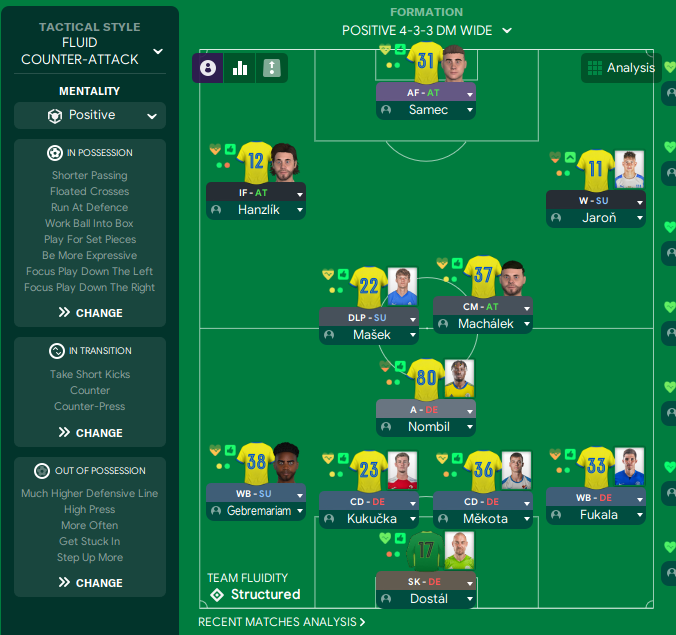
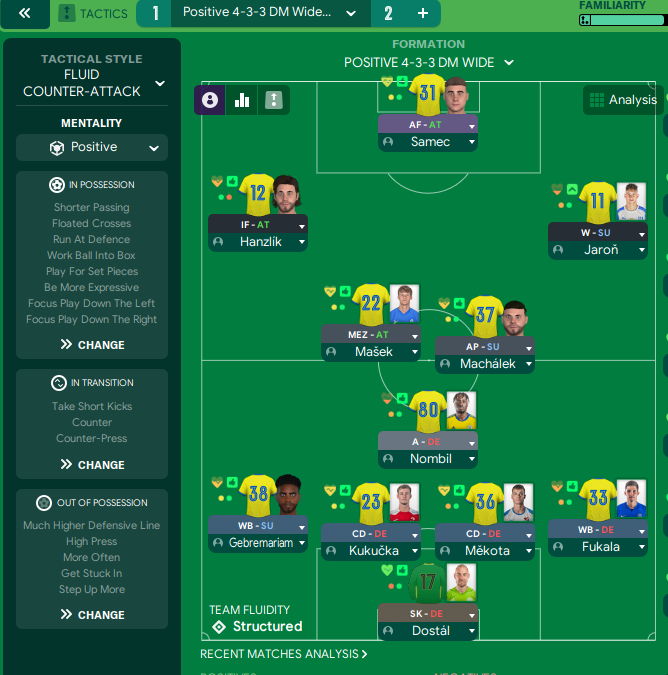
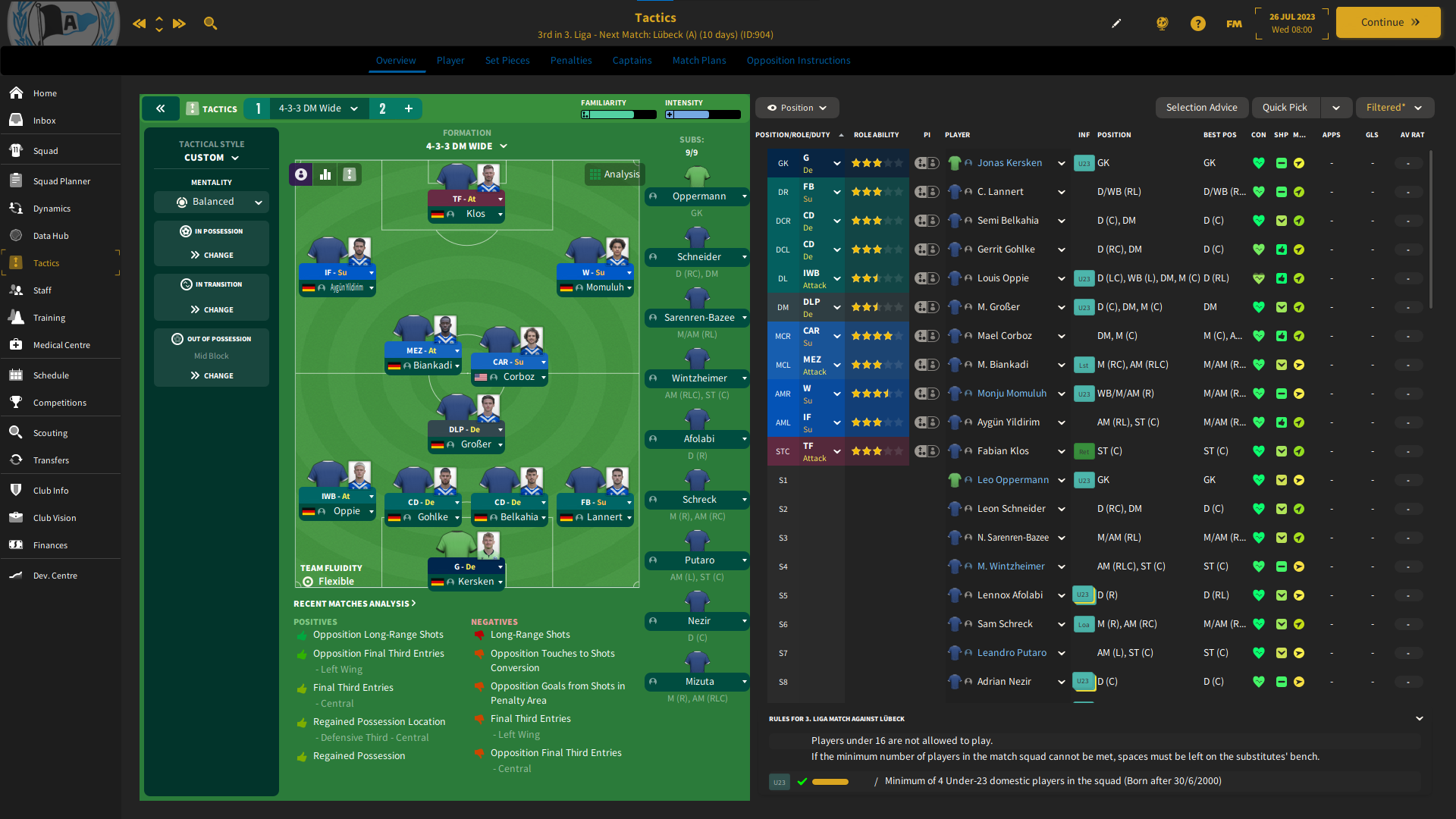
Guides for this formation
The tactical theory behind the 4-3-3 DM Wide: roles, instructions, and the trade-offs that decide whether the system holds up.
Foundations
Understanding the 4-3-3 Formation
Master the classic 4-3-3: player roles, tactical variations, and the trade-offs that decide whether it sings or stalls.
Read guide
Player pairings
Midfield Trios
Holder, runner, creator: the role distribution rule for three-man midfields, the AMC variants, and the antipatterns that break them.
Read guide
Playing styles
Gegenpressing: A Full Guide
Klopp-style gegenpressing in FM, including squad profile, line-and-press pairing, sustainable workload, and the antipatterns to avoid.
Read guide