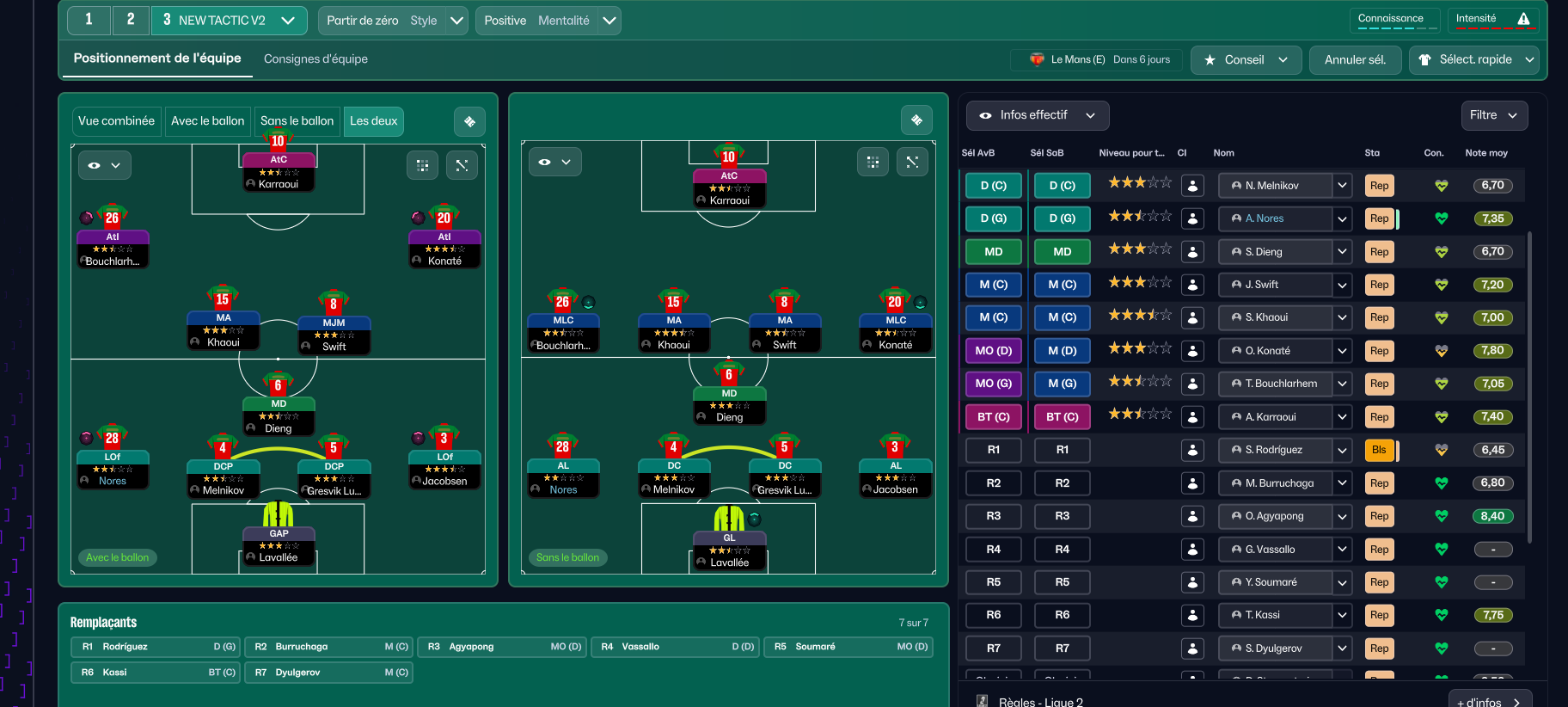
Uploaded Tactic
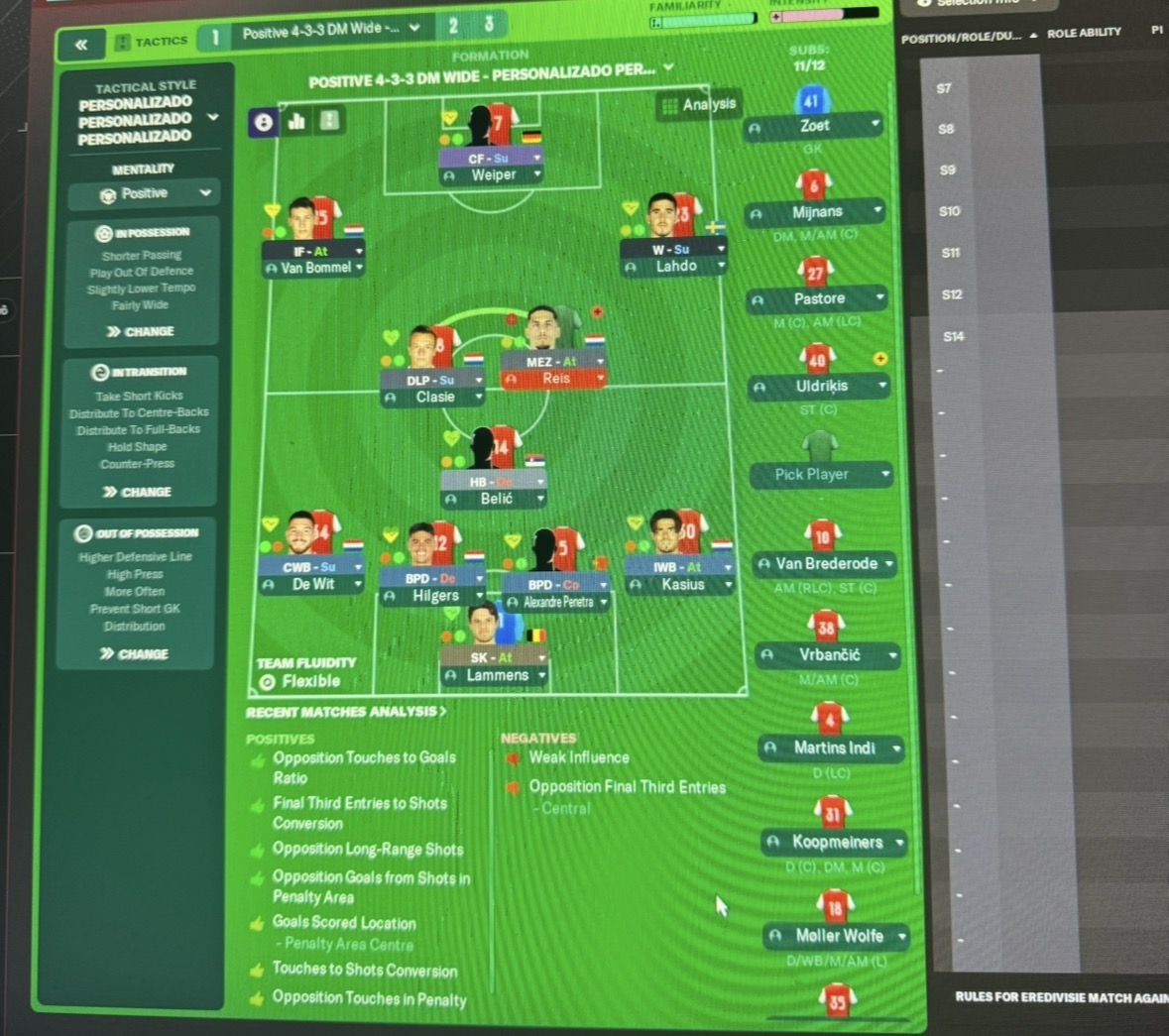
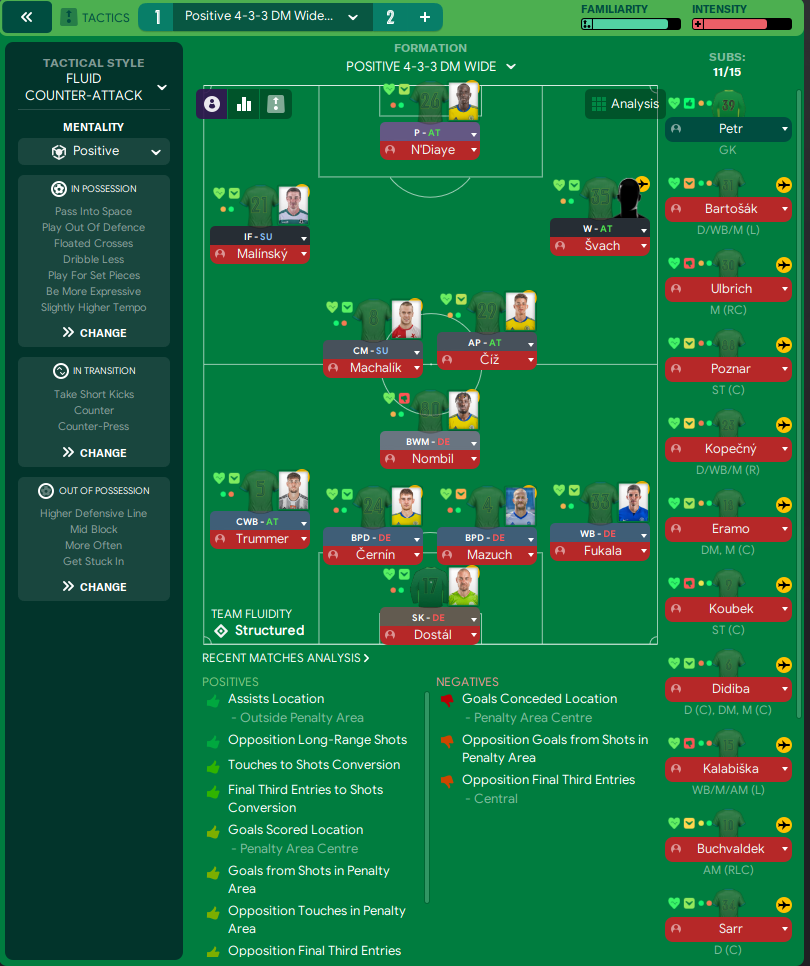
Formation & Style
Tactical Style:Positive
Mentality:Positive
Formation:4-3-3 DM Wide
Team Fluidity:Flexible
In Possession
Shorter Passing
Slightly Lower Tempo
Fairly Wide
In Transition
Take Short Kicks
Distribute To Centre-Backs
Distribute To Full-Backs
Hold Shape
Out of Possession
Higher Defensive Line
High Press
More Often Prevent Short GK Distribution
Team Shape Without Ball
Shape:High Line
Description:The defensive line pushes high up the pitch, supported by a proactive midfield.
Evidence:Higher Defensive Line with High Press.
Team Shape With Ball
Shape:Fluid Forward Line
Description:The front three interchange positions, maintaining width and depth to stretch the opposition's defence.
Evidence:Inside Forward and Winger provide width while Advanced Forward centralizes attacking contributions.
Phase Description
Attacking Play
Focuses on building play patiently from the back to create opportunities through interplay in midfield, aided by width from the wide players.
Defensive Transition
Quick to collapse into a compact shape to cut out central passing lanes.
Main Focus
Utilizing width and fast transition to exploit defensive weaknesses.
Key Strengths
Fluid Attack
The fluid movement of the front three causes defensive mismatches.
Ball Play from Defense
Ball-Playing Defenders facilitate a strong buildup from the back.
Versatile Midfield Trio
The combination of roles provides both defensive cover and attacking support.
Conflicting Directions
High Defensive Line with Low Press
A high line coupled with a low press can create vulnerabilities at the back.
Short Passing with Wide Play
Short passing can be hindered if wide players don't track back effectively.
Hold Shape vs. Fluid Play
Emphasizing shape in transition may counteract the planned fluidity in attack.
Tactical Suggestions
Adjust Defensive Responsibilities
Consider the addition of a more aggressive pressing forward to enhance the transition.
Increased Width in Attack
Consider shifting the Winger to an Advanced Winger role to stretch the opposition wider.
Reassess Full-Back Duties
Fine-tune Wing-Backs' roles to either focus more on attack or defense, based on opposition strengths.
Ask Questions About Your Lineup
Related Tactics
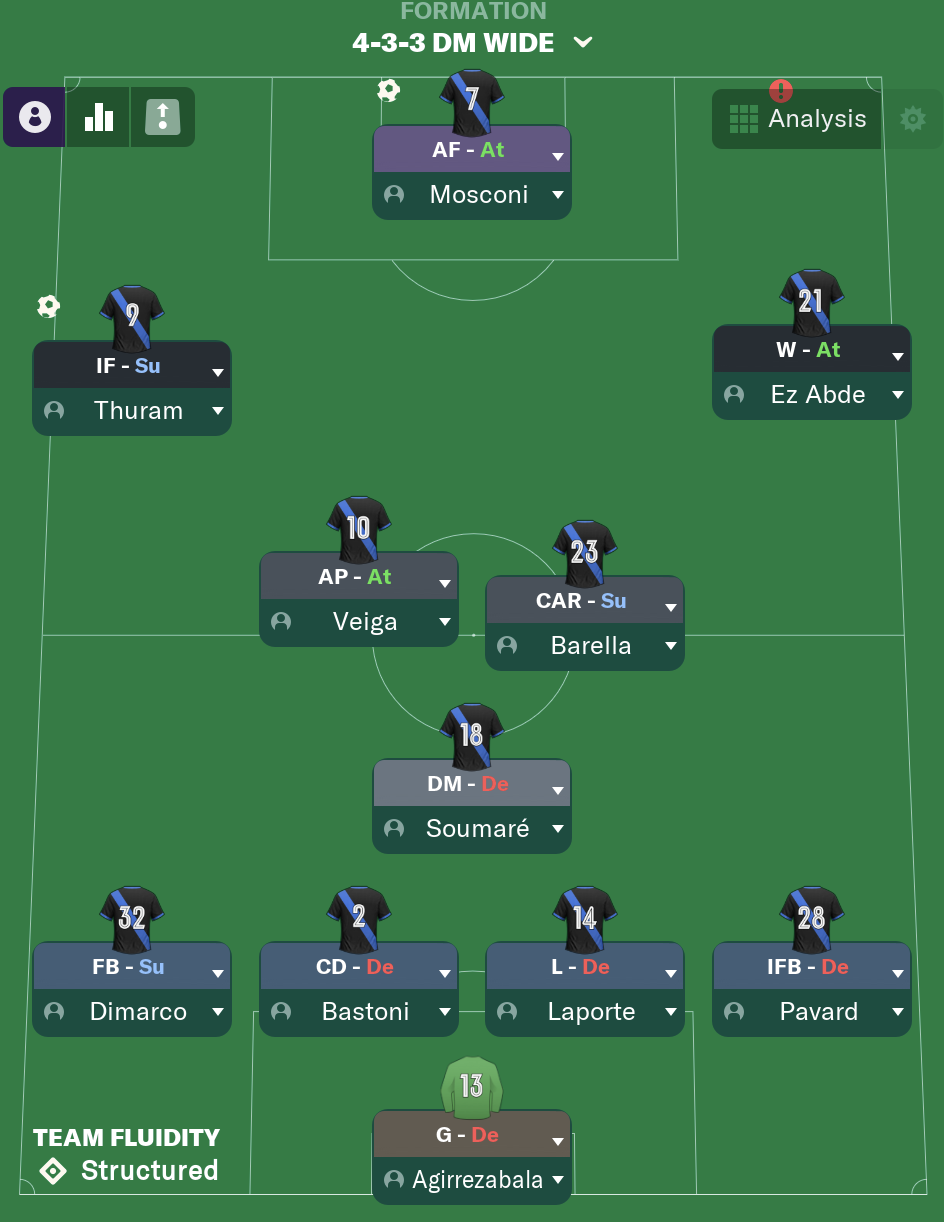
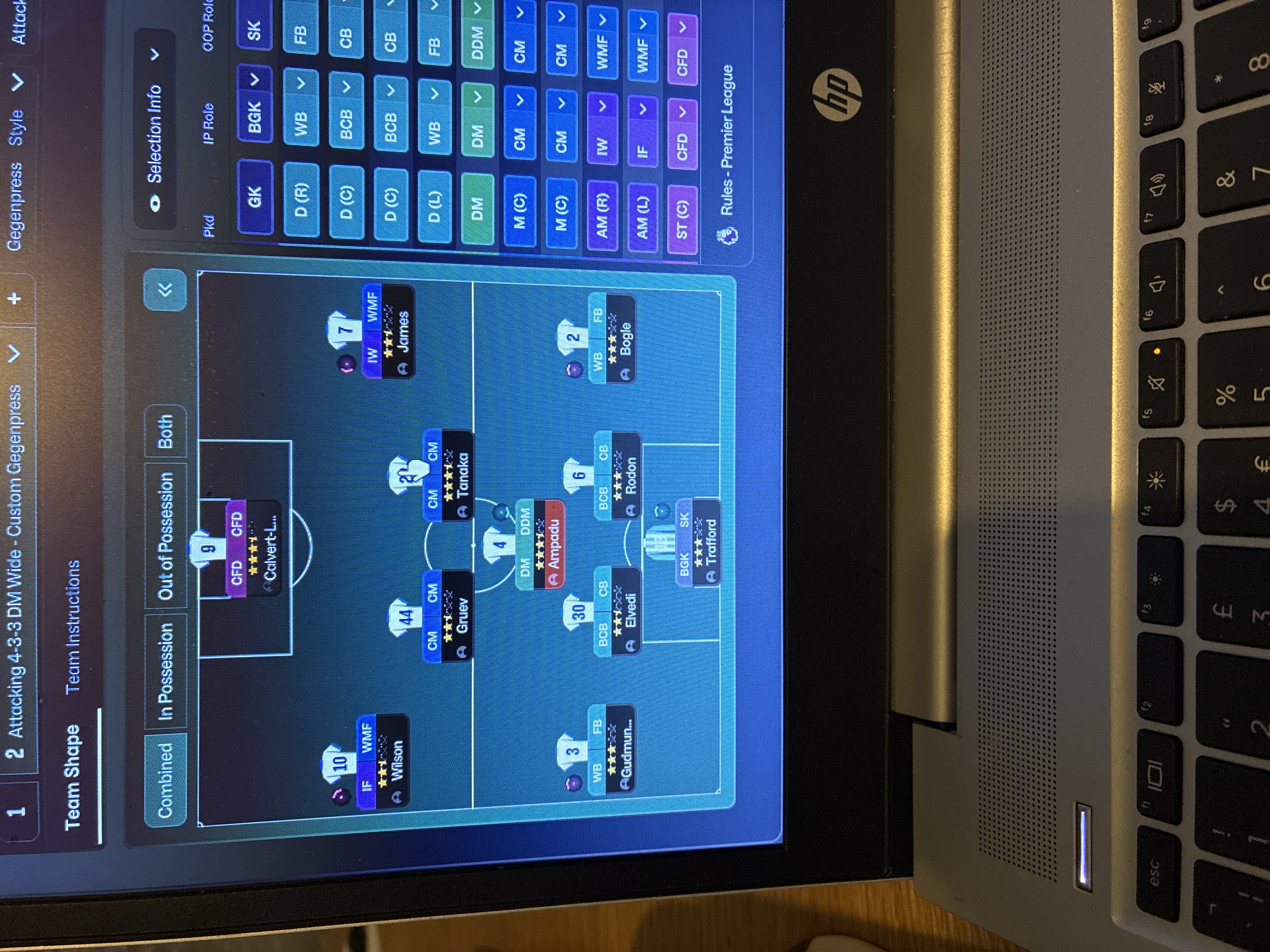
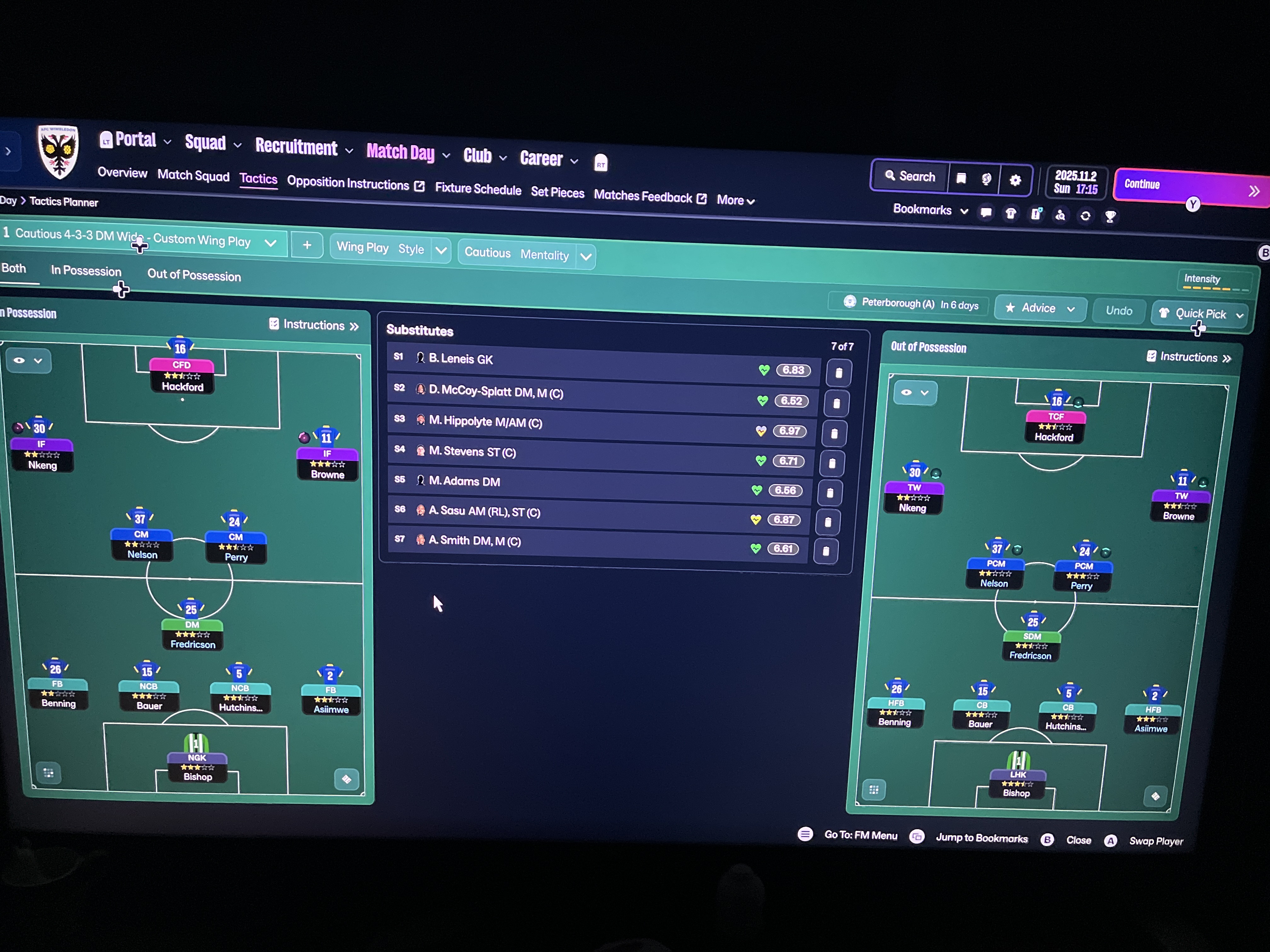
More Positive tactics
Guides for this formation
The tactical theory behind the 4-3-3 DM Wide: roles, instructions, and the trade-offs that decide whether the system holds up.
Foundations
Understanding the 4-3-3 Formation
Master the classic 4-3-3: player roles, tactical variations, and the trade-offs that decide whether it sings or stalls.
Read guide
Player pairings
Midfield Trios
Holder, runner, creator: the role distribution rule for three-man midfields, the AMC variants, and the antipatterns that break them.
Read guide
Playing styles
Gegenpressing: A Full Guide
Klopp-style gegenpressing in FM, including squad profile, line-and-press pairing, sustainable workload, and the antipatterns to avoid.
Read guide