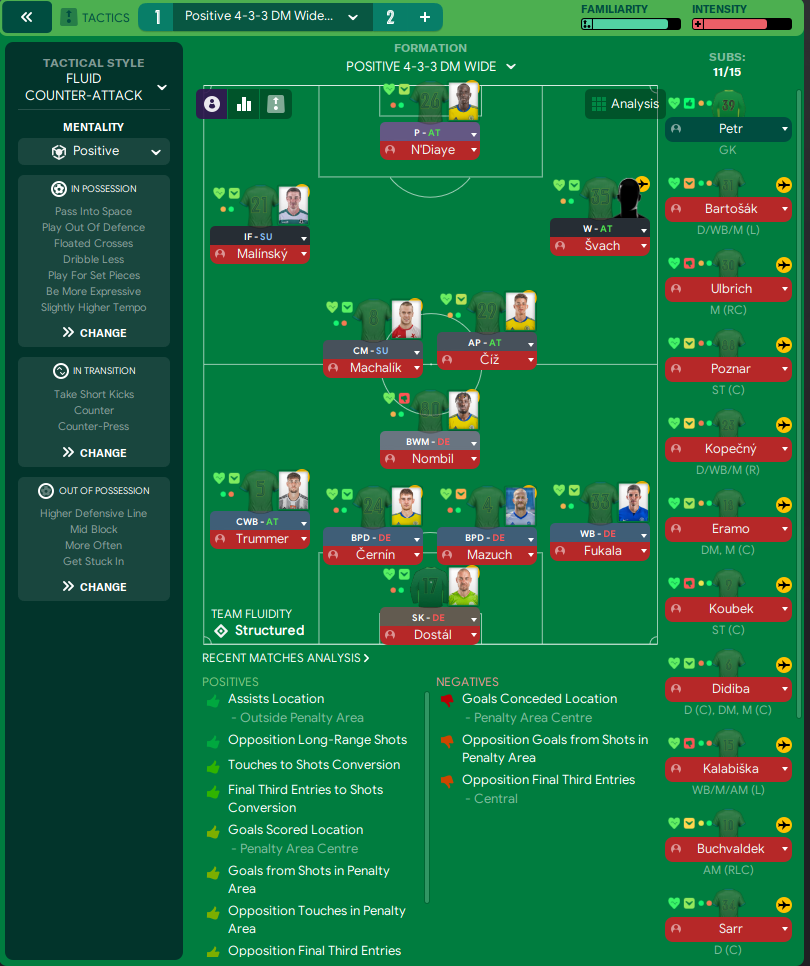
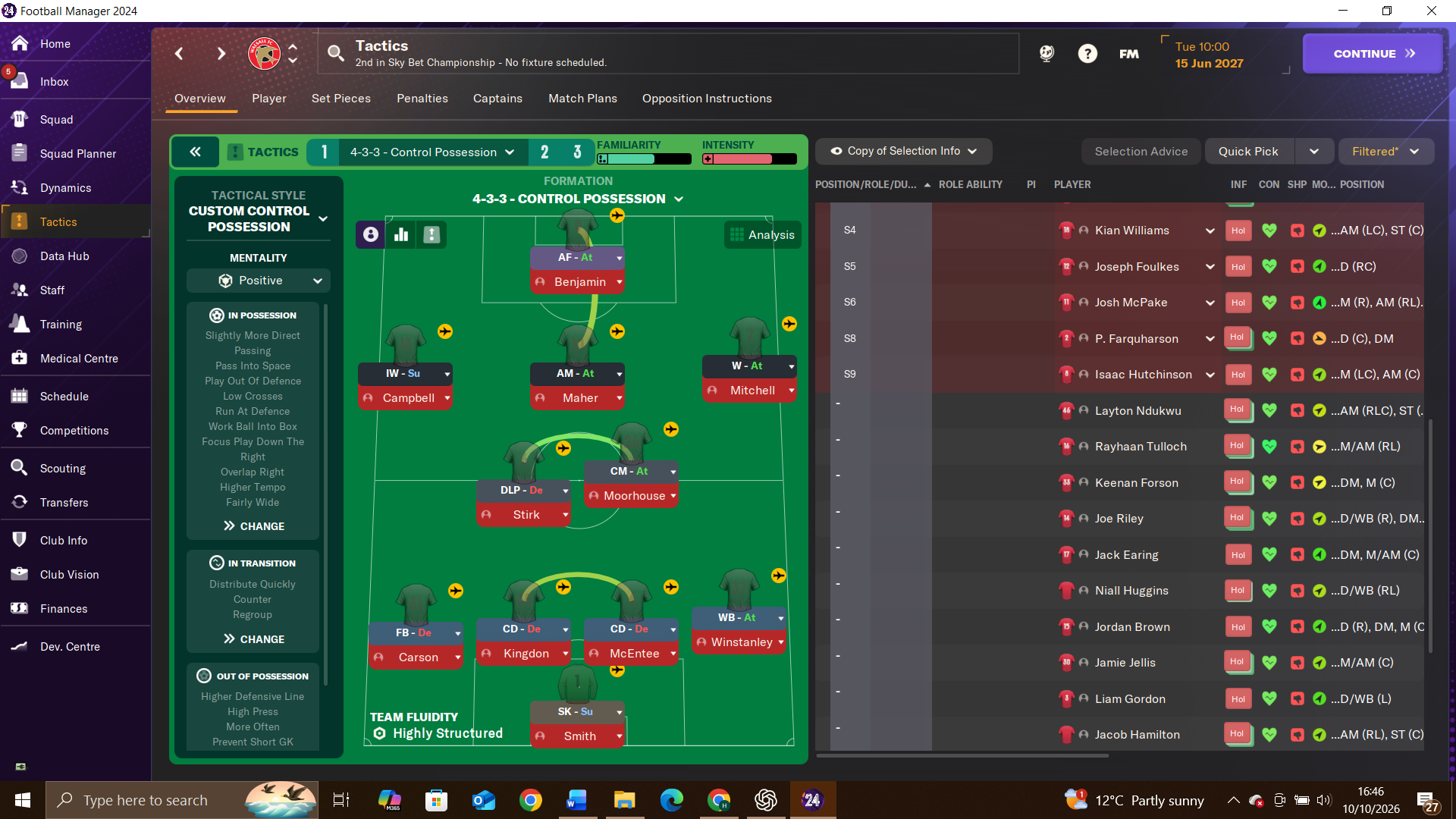
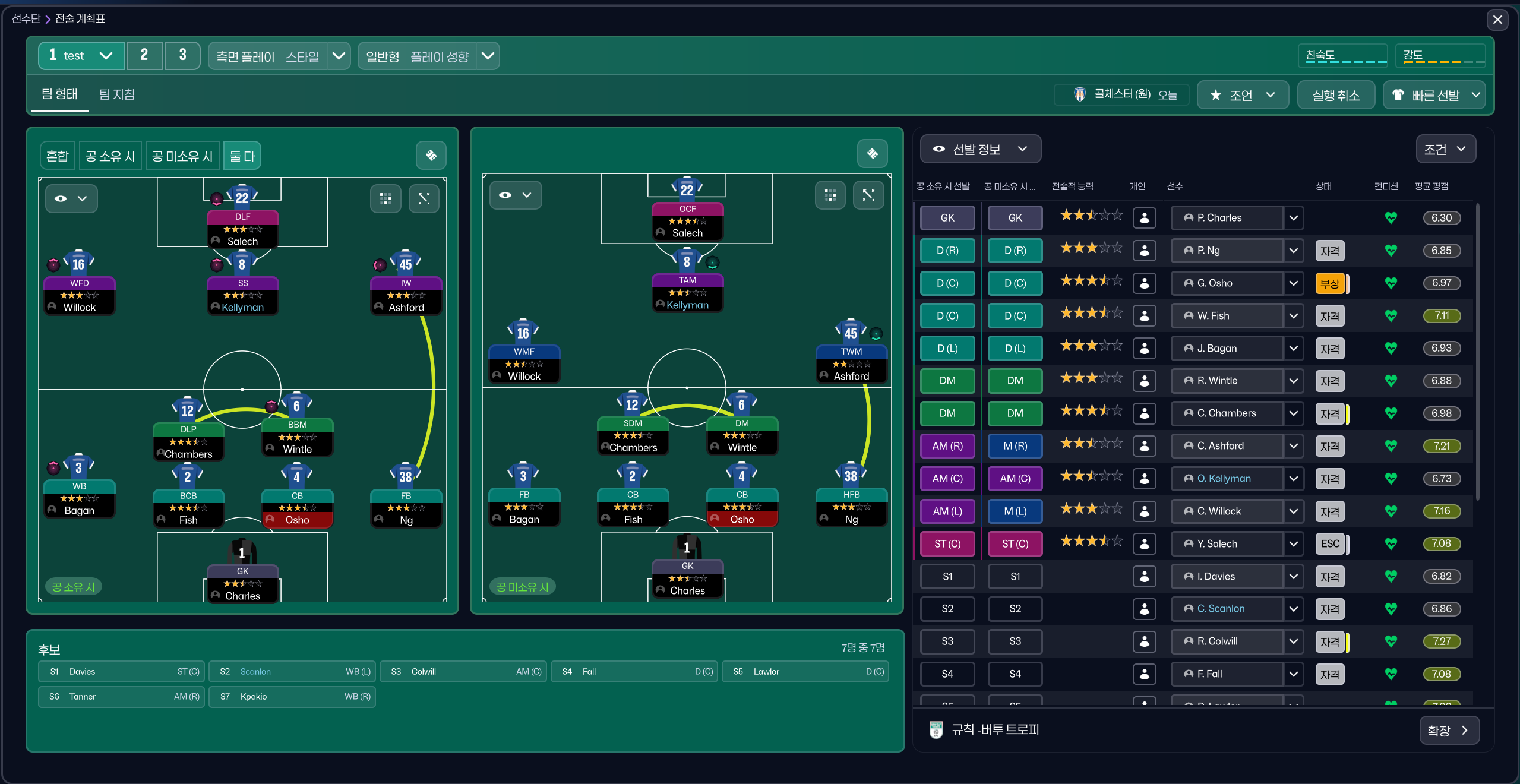
Uploaded Tactic
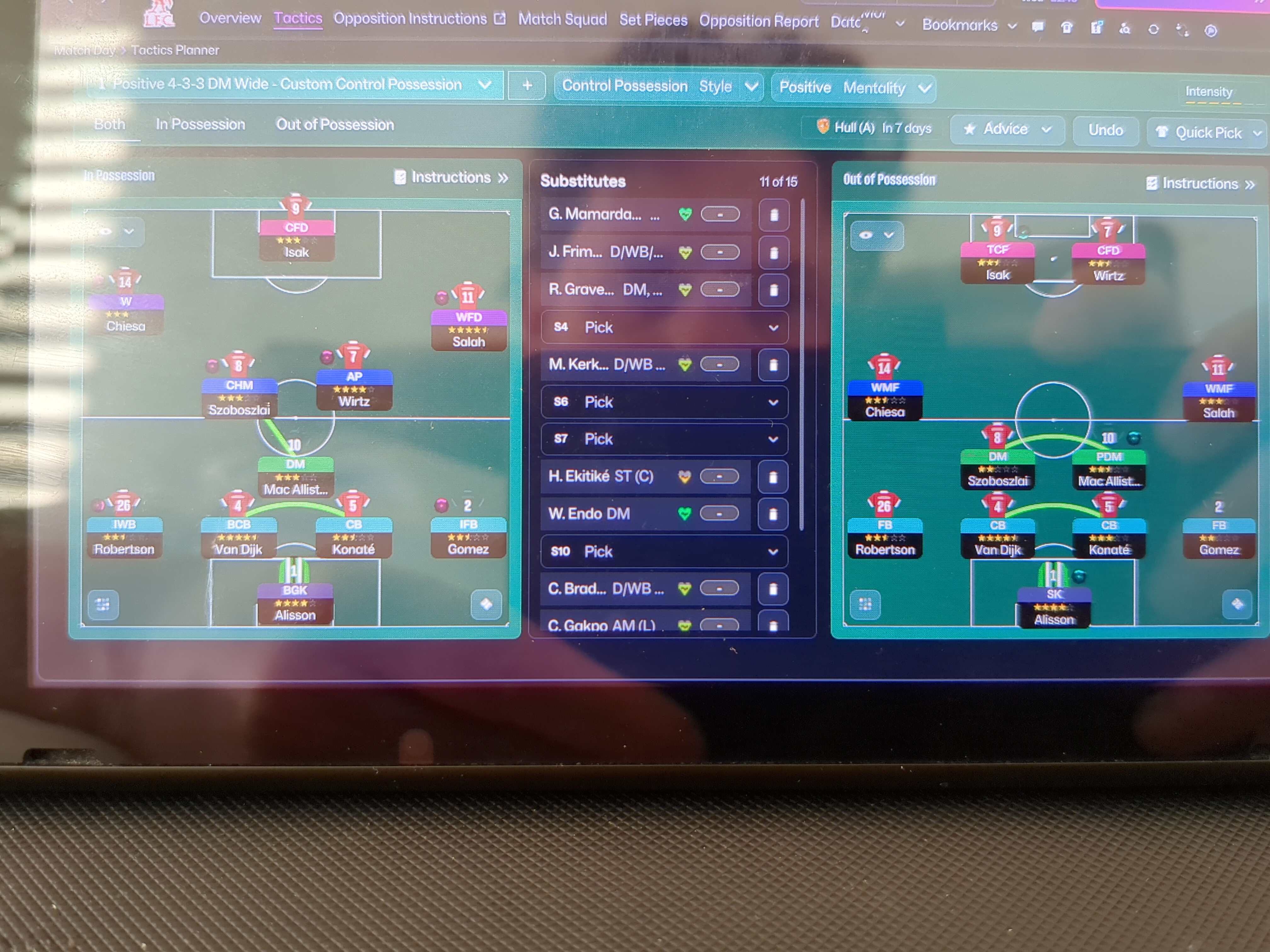
Formation & Style
Tactical Style:Control Possession
Mentality:Positive
Formation:4-3-3 DM Wide
Team Fluidity:Structured
In Possession
Create overlaps on the wings with IWB and WM
Utilize a high possession game to work through midfield
In Transition
Counter-press immediately to regain possession
Counter-attack quickly when possession is won
Out of Possession
High defensive line to compress space
Urgent pressing to limit opposition time on the ball
Team Shape Without Ball
Shape:4-1-4-1
Description:Defensive solidity with a midfield shield provided by the DM.
Evidence:DM at [3,3] combined with two central midfielders in front.
Team Shape With Ball
Shape:4-3-3
Description:Wide attacking shape with wingers stretching the play and a central figure up front.
Evidence:CF at [6,3] supported by WFs at [5,2] and [5,4].
Phase Description
Attacking Play
Focus on short passes and maintaining possession while moving the ball through the thirds.
Defensive Transition
Quickly transitions from attack to defense with an emphasis on regaining possession through pressing.
Main Focus
Dominating possession and controlling the game through midfield.
Key Strengths
Fluid Midfield Play
Ability to transition effectively from defense to attack through a strong central presence.
Wide Play
Wingers can exploit space and provide width, stretching the opposing defense.
Regained Possession
High pressing and counter-pressing allow for quick recovery of the ball.
Conflicting Directions
Defensive Overcommitment
High pressing may lead to gaps in defense if the midfield is bypassed.
Dependence on Width
Excessive reliance on wingers may make the team predictable.
Slow Build-Up
Possession style may slow down momentum, leading to loss of tempo against deep defenses.
Tactical Suggestions
Consider Counter-Attacking Strategy
If faced with highly organized defenses, adopting counter-attacking measures may be beneficial.
Adjust Defensive Line Height
Reducing the height of the defensive line may prevent vulnerabilities against pacey attackers.
Encourage Overlaps
Allowing overlap runs from wing-backs could create additional wide threats.
Ask Questions About Your Lineup
Related Tactics
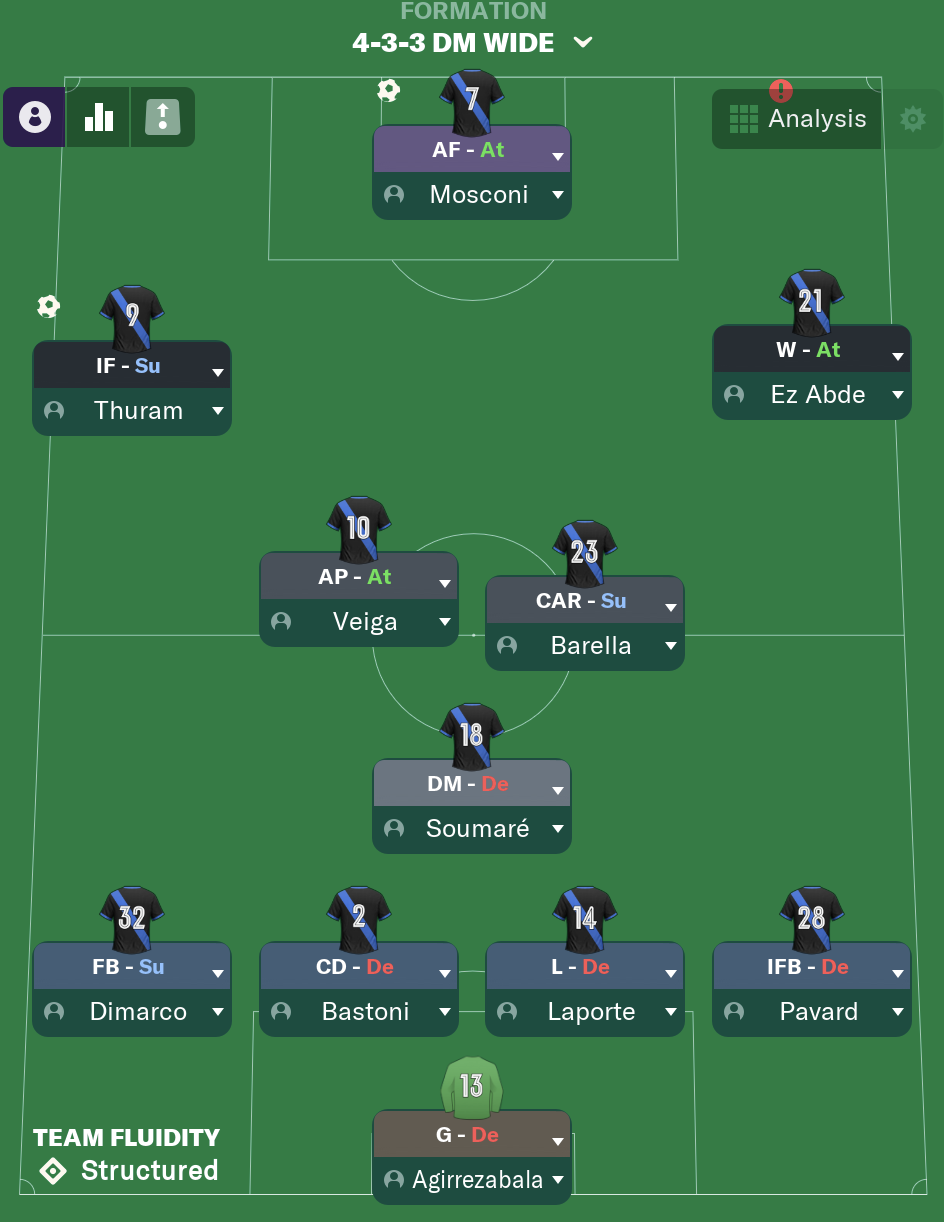
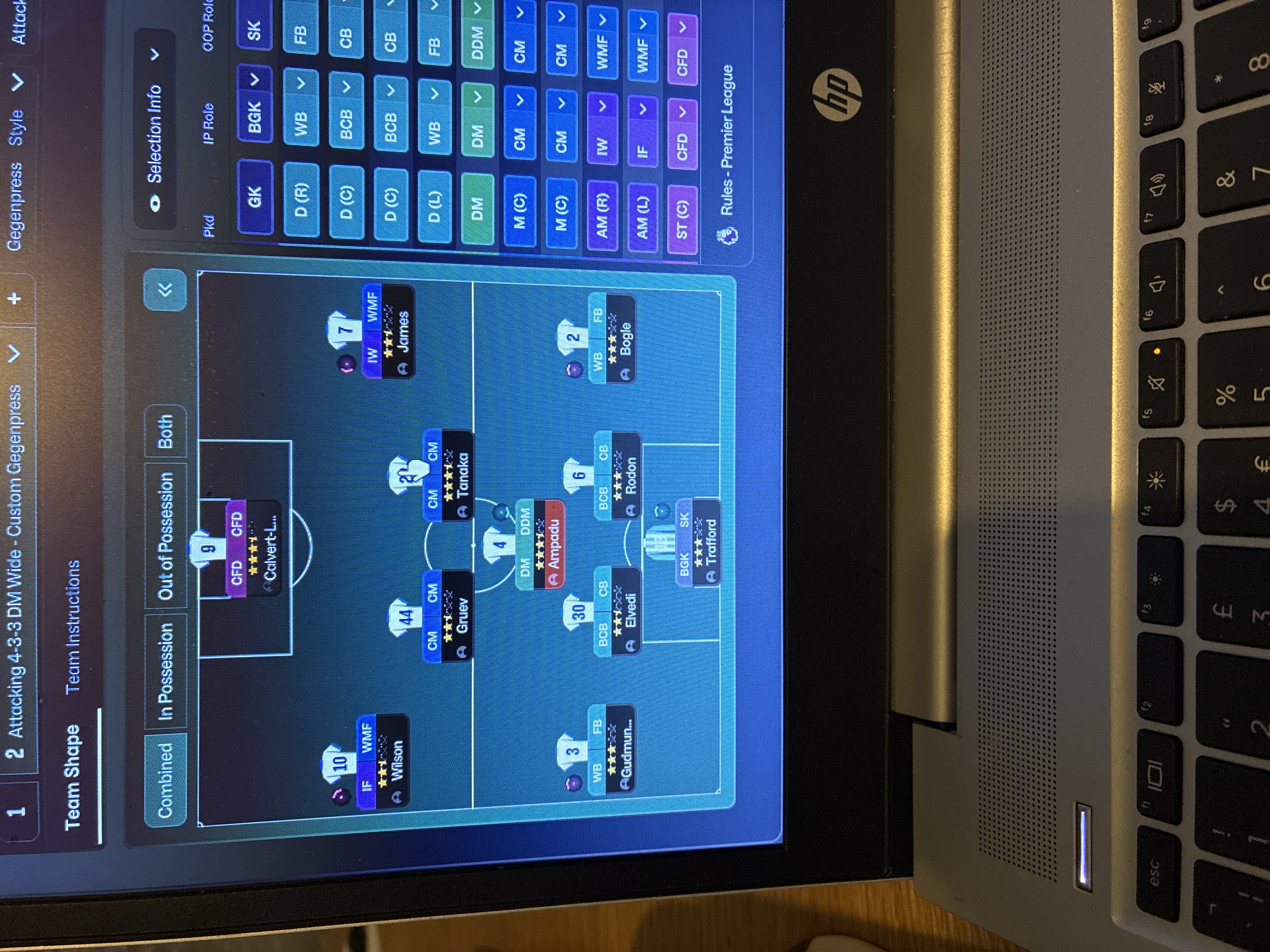
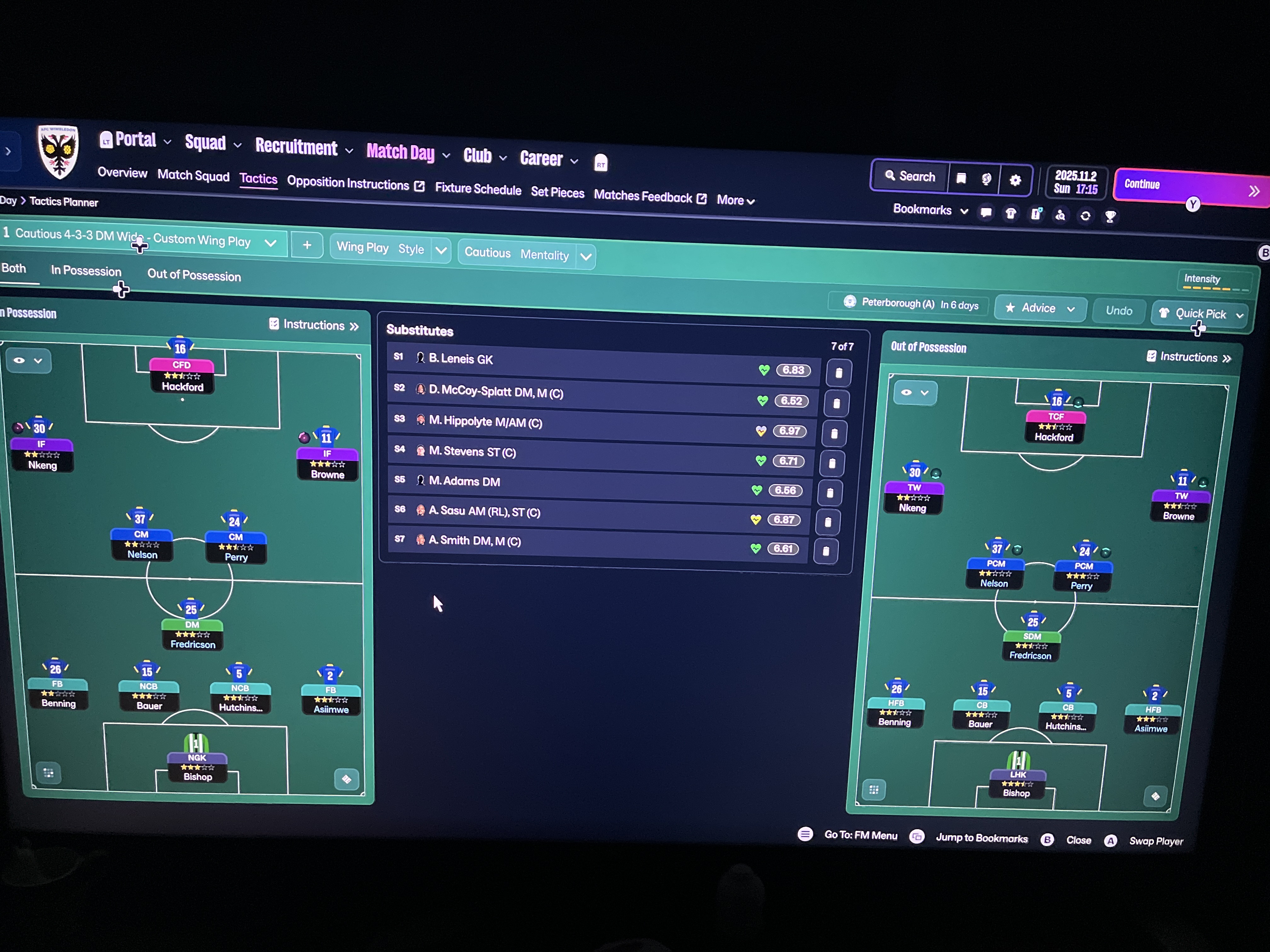
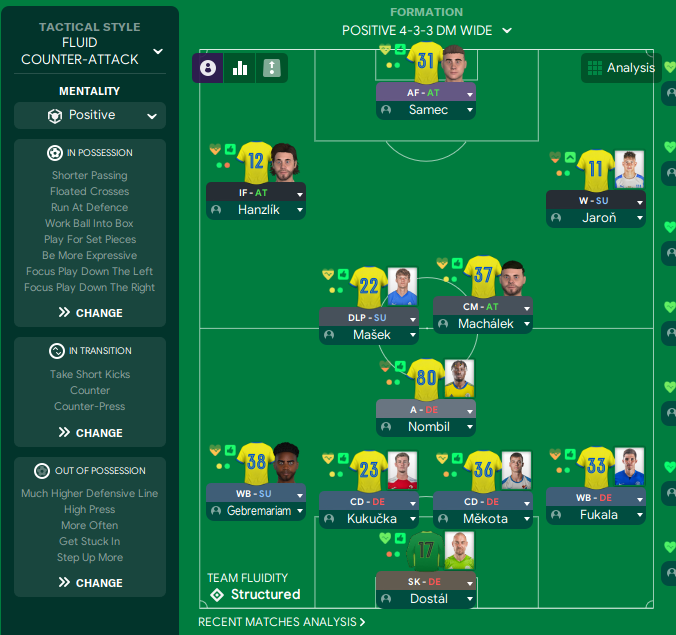
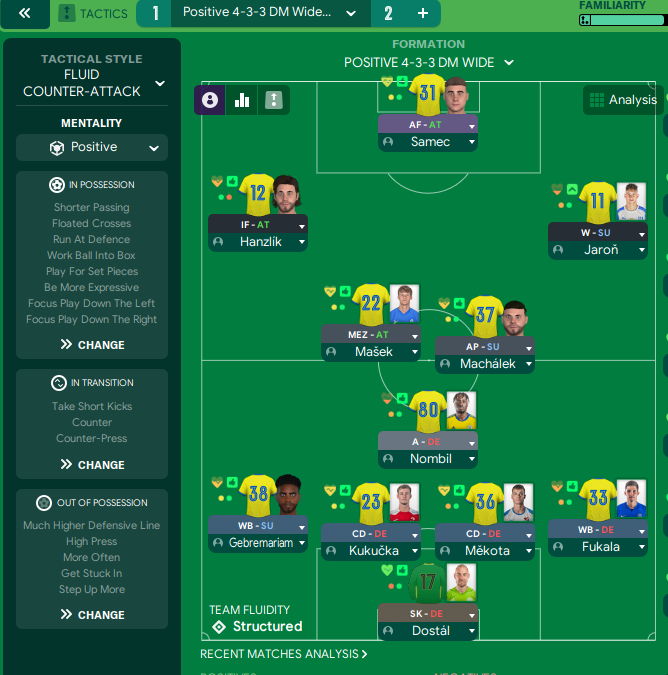
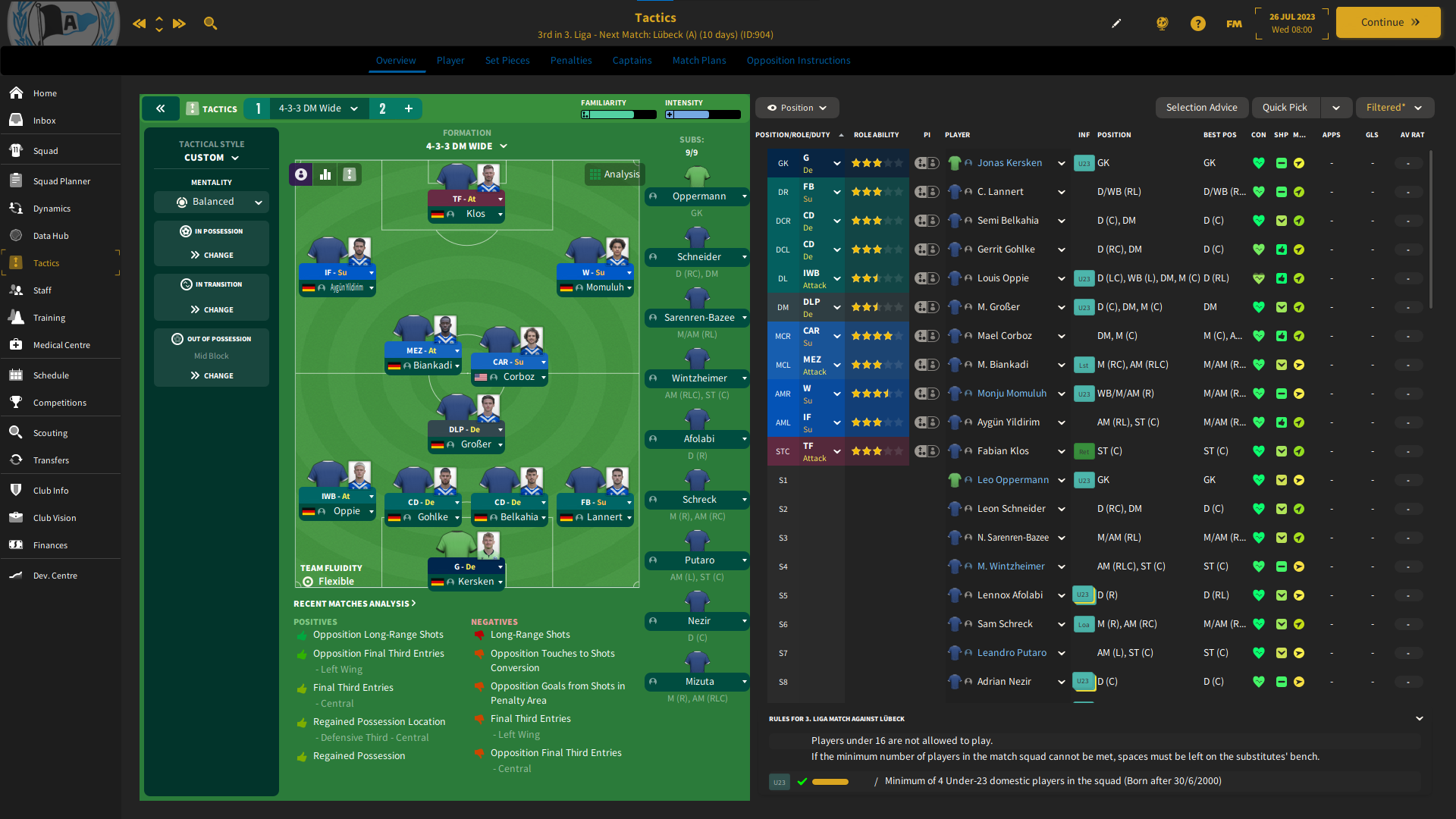
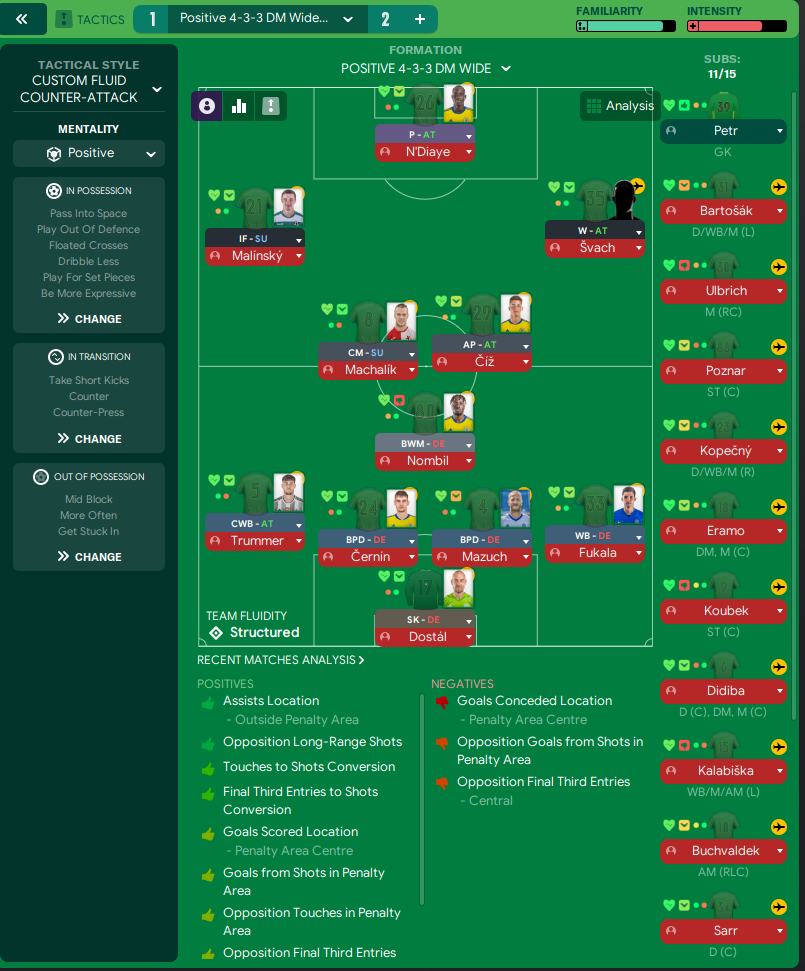
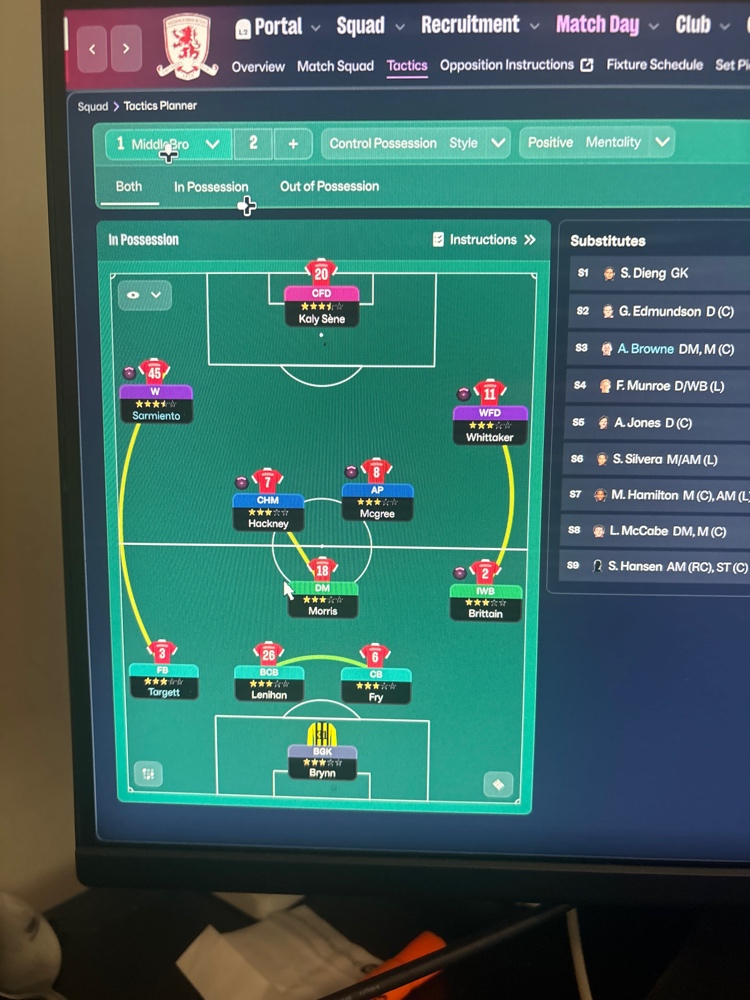
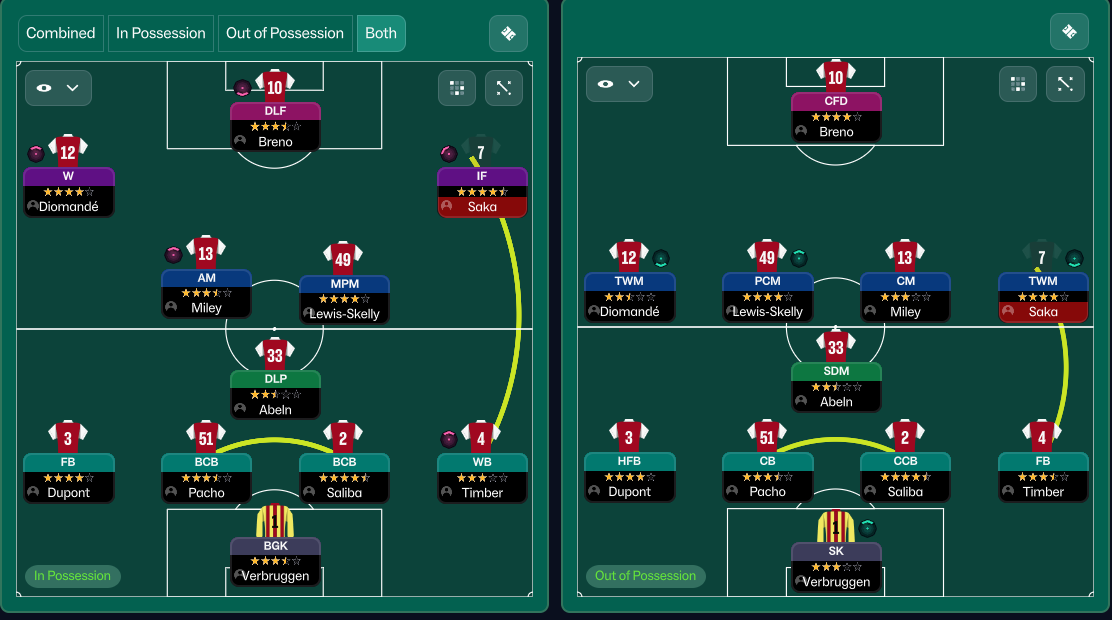
More Control Possession tactics
Guides for this formation
The tactical theory behind the 4-3-3 DM Wide: roles, instructions, and the trade-offs that decide whether the system holds up.
Foundations
Understanding the 4-3-3 Formation
Master the classic 4-3-3: player roles, tactical variations, and the trade-offs that decide whether it sings or stalls.
Read guide
Player pairings
Midfield Trios
Holder, runner, creator: the role distribution rule for three-man midfields, the AMC variants, and the antipatterns that break them.
Read guide
Playing styles
Gegenpressing: A Full Guide
Klopp-style gegenpressing in FM, including squad profile, line-and-press pairing, sustainable workload, and the antipatterns to avoid.
Read guide