Uploaded Tactic
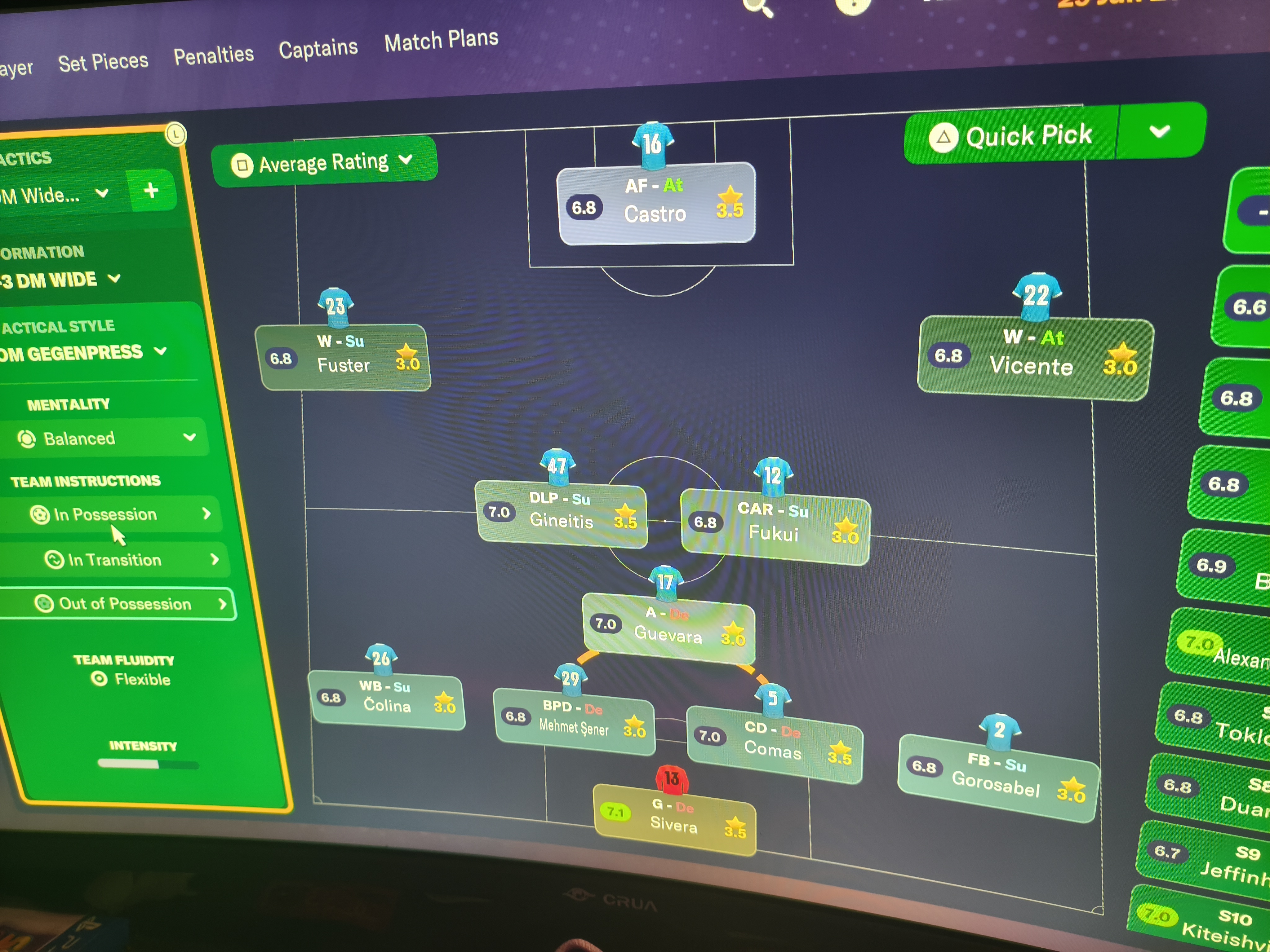
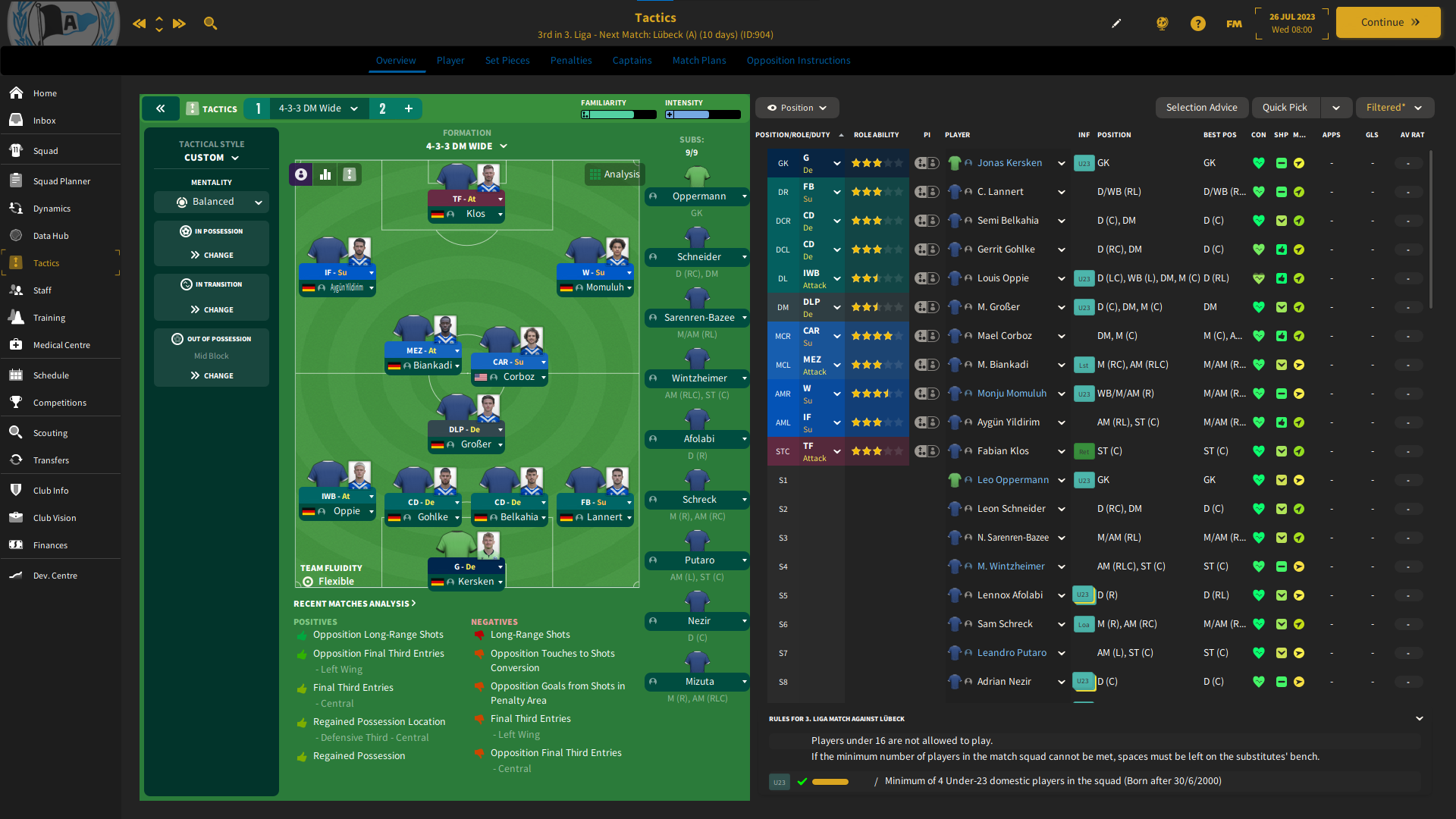
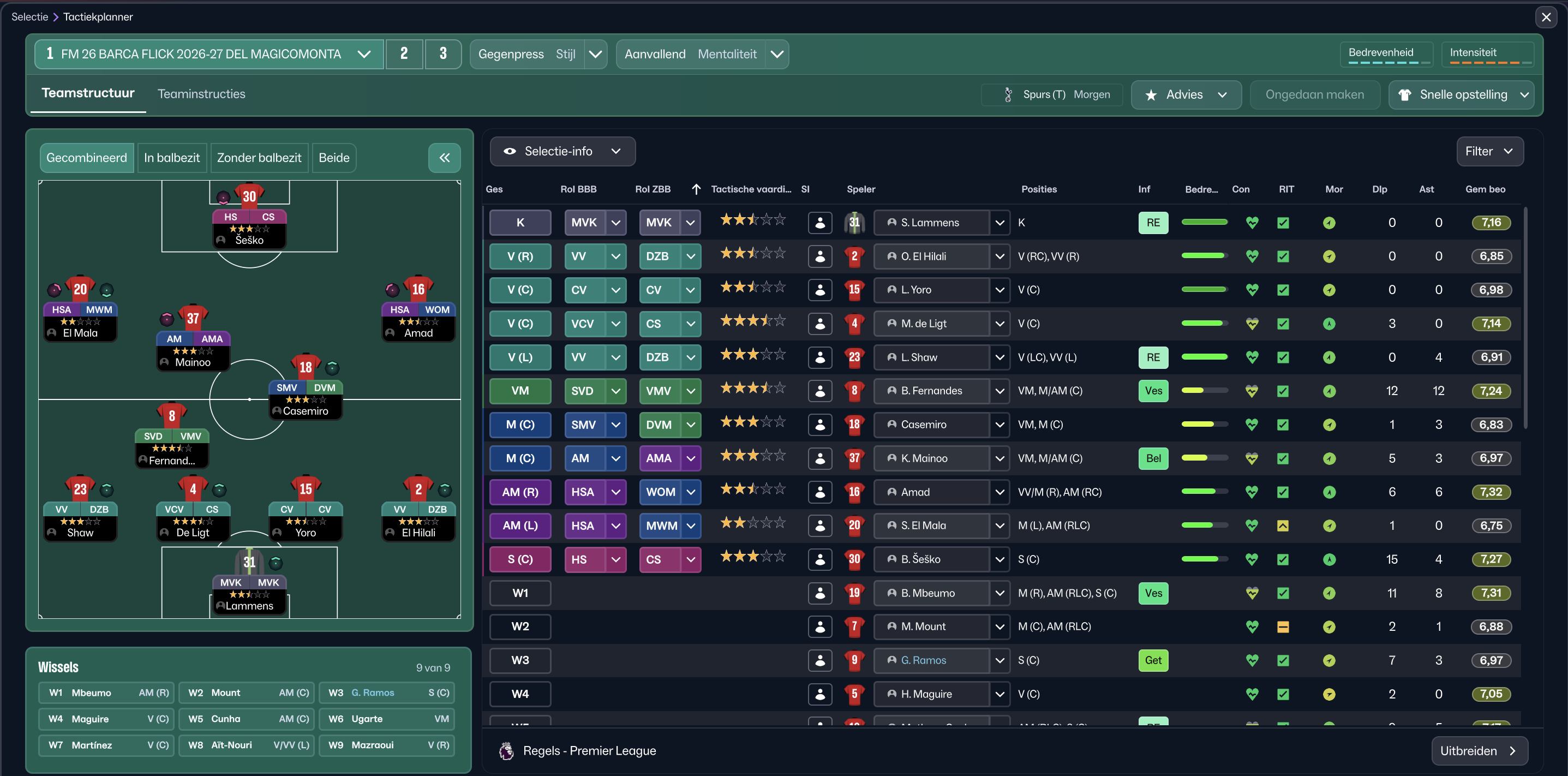
Formation & Style
Tactical Style:Gegenpress
Mentality:Balanced
Formation:4-3-3 DM Wide
Team Fluidity:Flexible
In Possession
Play Out of Defence
Focus Play Down the Wings
In Transition
Counter Press
Counter
Out of Possession
Higher Defensive Line
Higher Line of Engagement
Prevent Short GK Distribution
Team Shape Without Ball
Shape:4-3-3
Description:A compact shape when defending, with the option to quickly press opponents.
Evidence:4 defenders with 3 midfielders supporting pressing efforts.
Team Shape With Ball
Shape:4-3-3
Description:Width is created through wingers, allowing for overlaps and combinations in the final third.
Evidence:Wingers (W-At, W-Su) and central attacking roles stretch the opponent's defense.
Phase Description
Attacking Play
Utilizes width via wingers to stretch the opposition and create space for attacking midfielders.
Defensive Transition
Quickly transitions to pressuring opponents, aiming for immediate reclaim of possession.
Main Focus
To maintain high intensity and fluidity, particularly in wide areas.
Key Strengths
Strong Transitions
The system allows for quick counter-attacks after regaining possession.
Wide Play
Utilizing wide players creates space and lanes for attacking movements.
Flexible Midfield
Midfield roles provide adaptability between defensive and offensive duties.
Conflicting Directions
Defensive Vulnerability
High defensive line may expose back four to counter-attacks.
Loss of Width
Potential for narrowness if wingers do not provide width.
Dependence on Pressing
Relying on Gegenpress could exhaust players if not managed.
Tactical Suggestions
Increase Depth in Defence
Consider adding depth to the defensive roles or a ball-winning midfielder.
Utilize Central Playmakers
Encourage the DLP to play more incisive passes to wingers or AF.
Monitor Fatigue Levels
With high pressing, substitute players to maintain performance.
Ask Questions About Your Lineup
Related Tactics
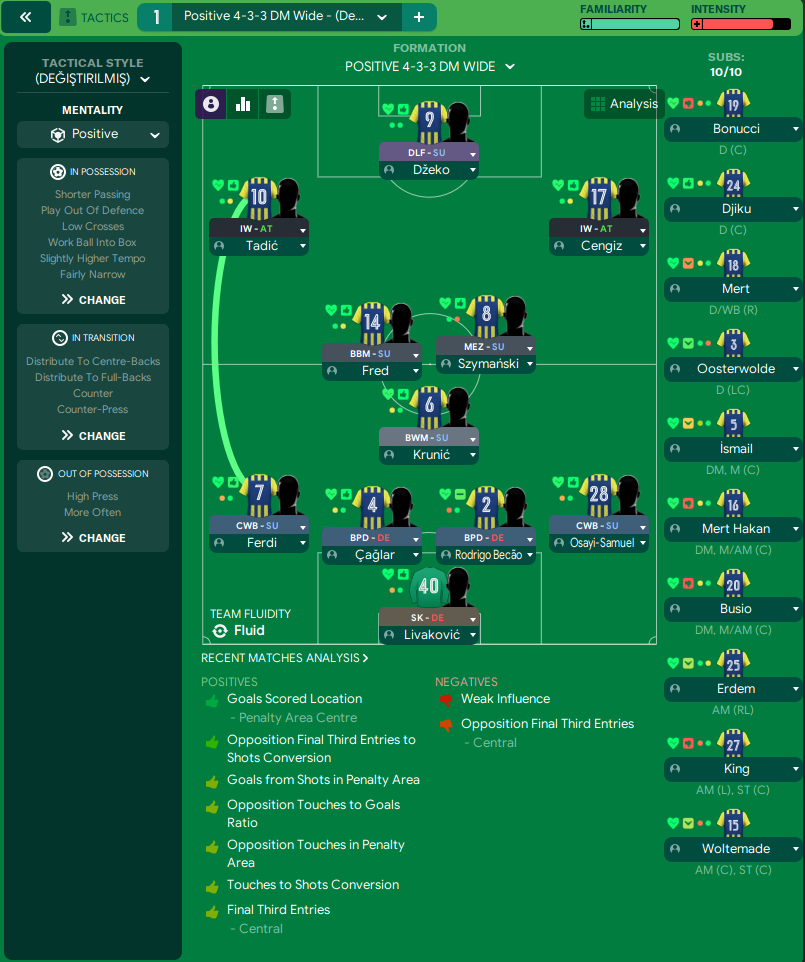
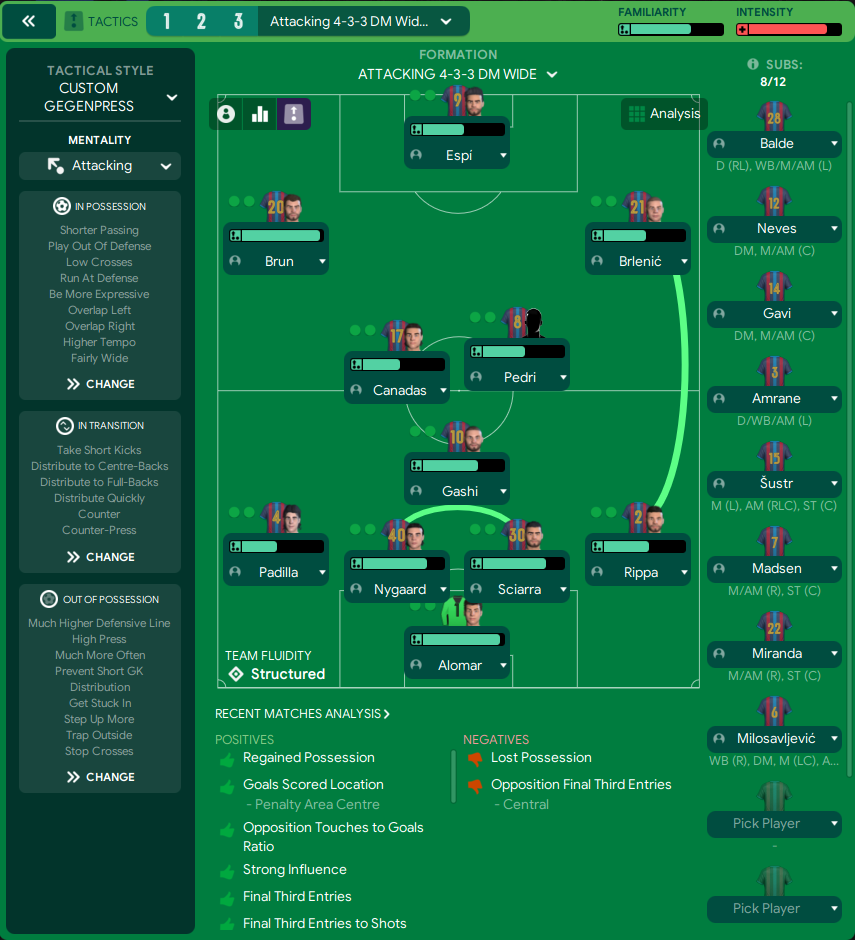
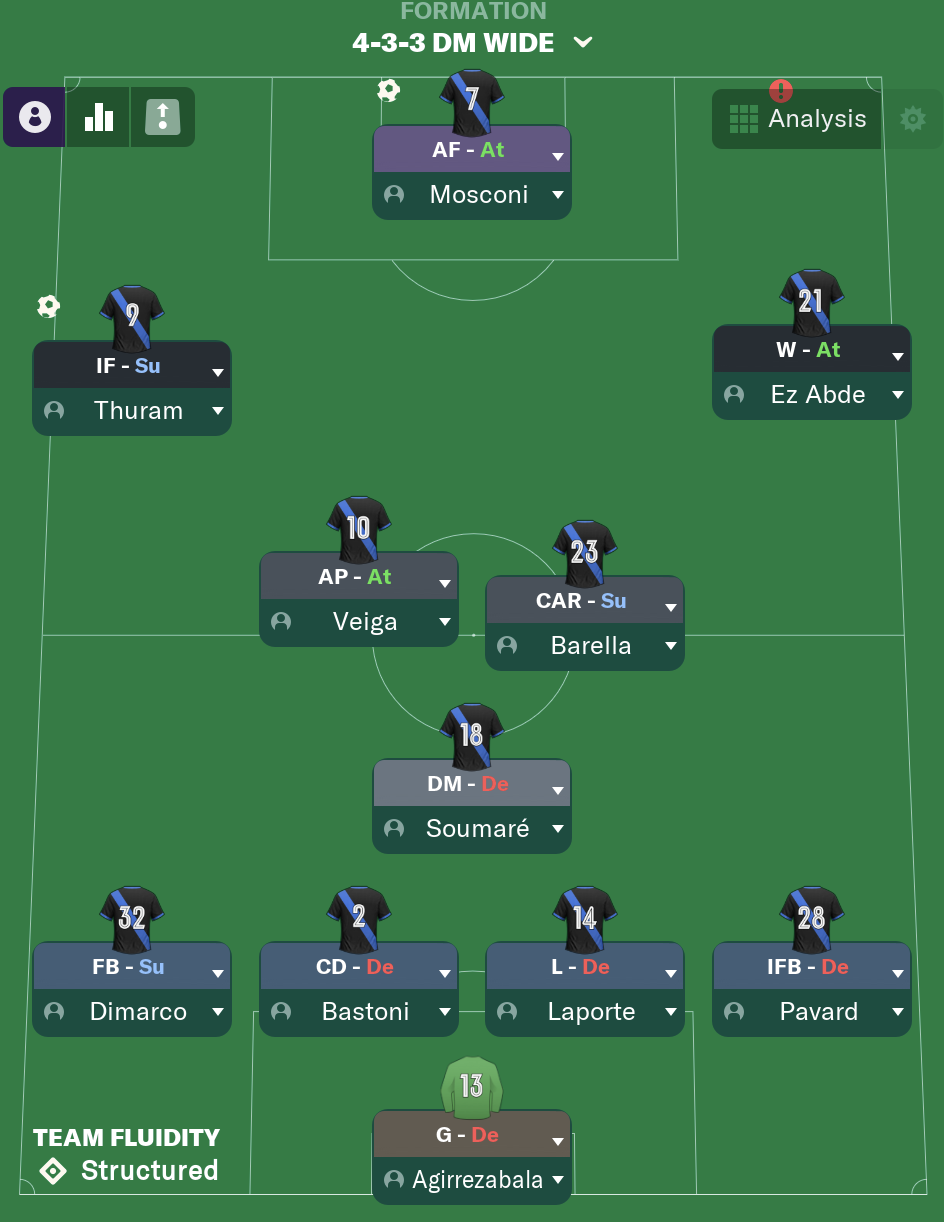
More Gegenpress tactics
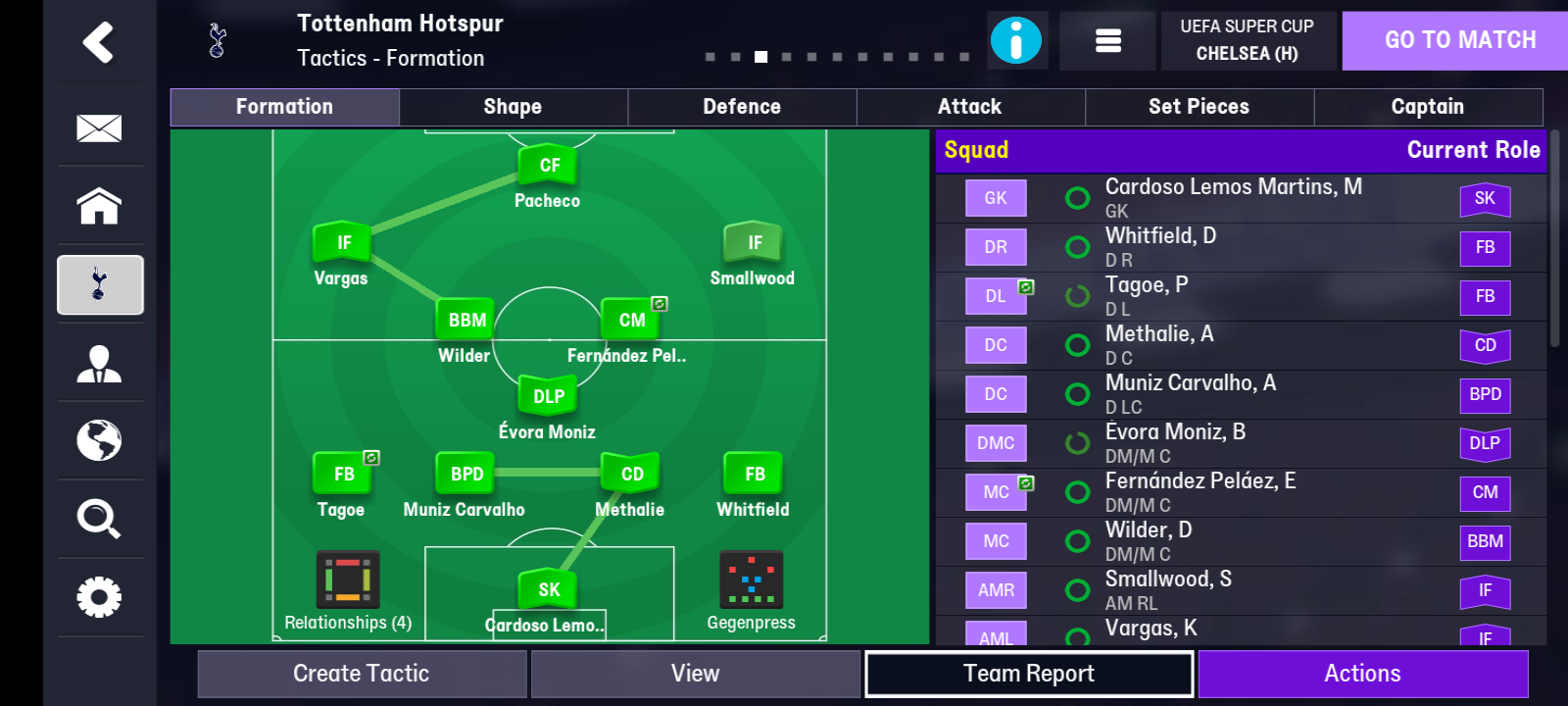
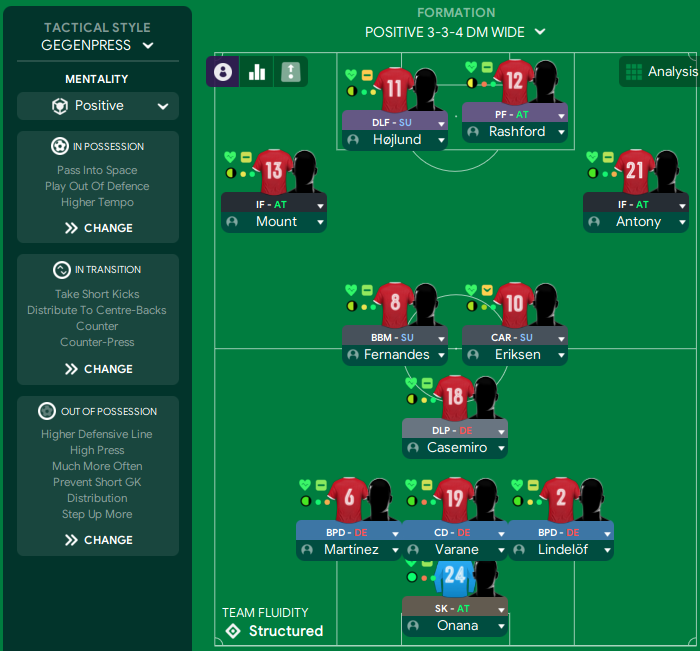
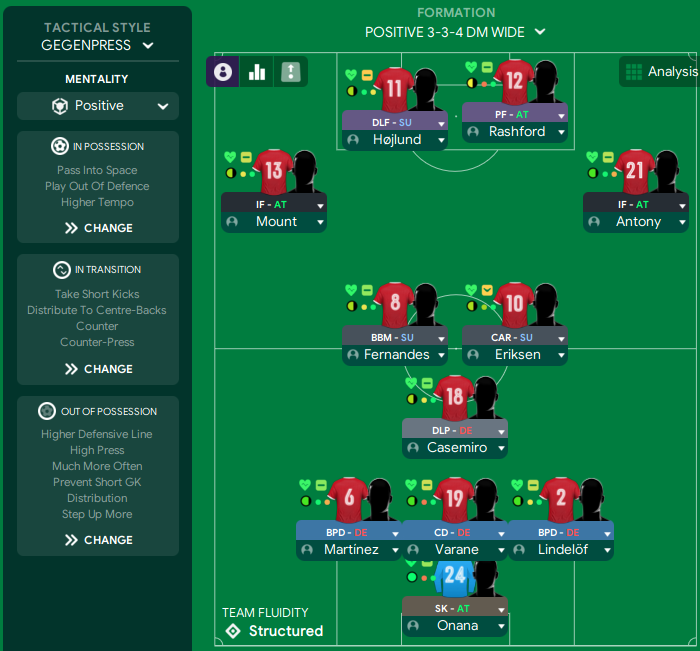
Guides for this formation
The tactical theory behind the 4-3-3 DM Wide: roles, instructions, and the trade-offs that decide whether the system holds up.
Foundations
Understanding the 4-3-3 Formation
Master the classic 4-3-3: player roles, tactical variations, and the trade-offs that decide whether it sings or stalls.
Read guide
Player pairings
Midfield Trios
Holder, runner, creator: the role distribution rule for three-man midfields, the AMC variants, and the antipatterns that break them.
Read guide
Playing styles
Gegenpressing: A Full Guide
Klopp-style gegenpressing in FM, including squad profile, line-and-press pairing, sustainable workload, and the antipatterns to avoid.
Read guide