Uploaded Tactic
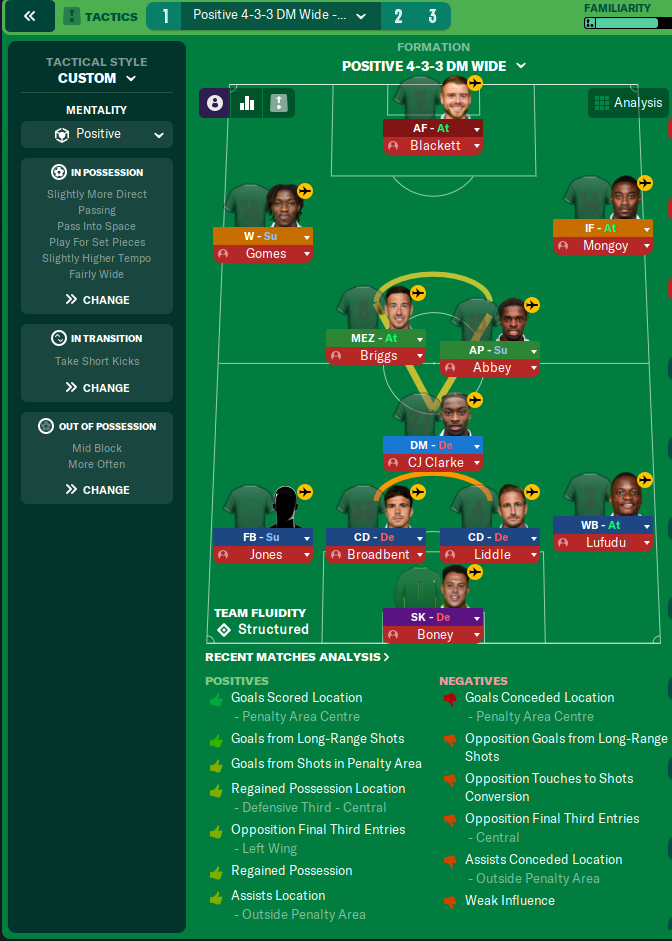
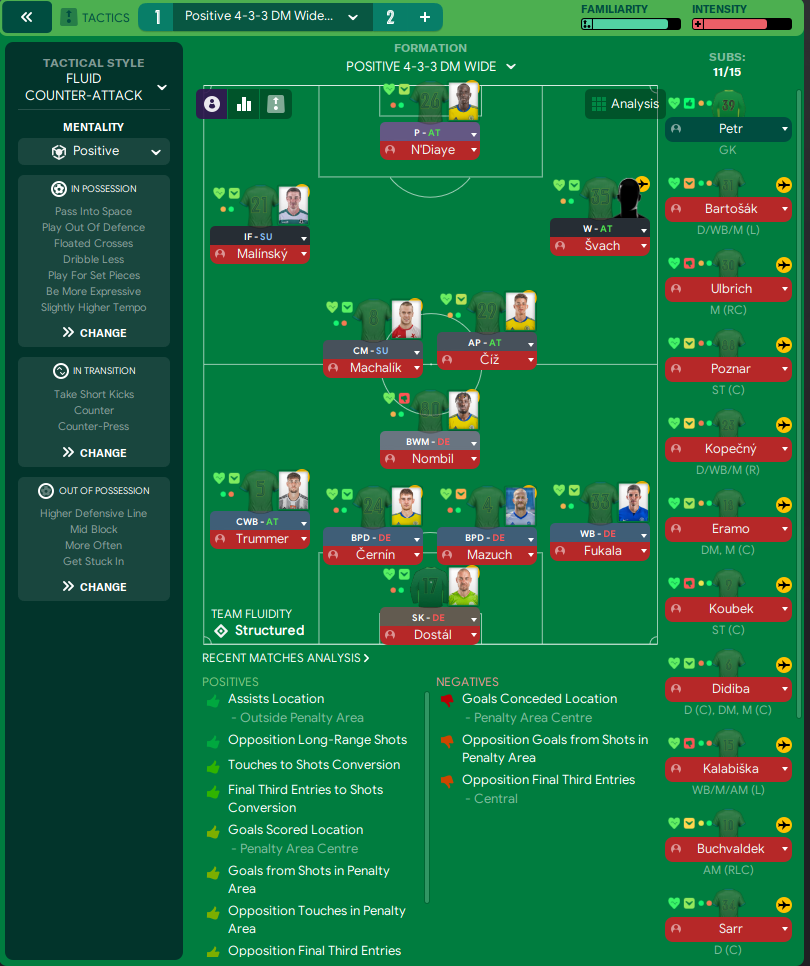
Formation & Style
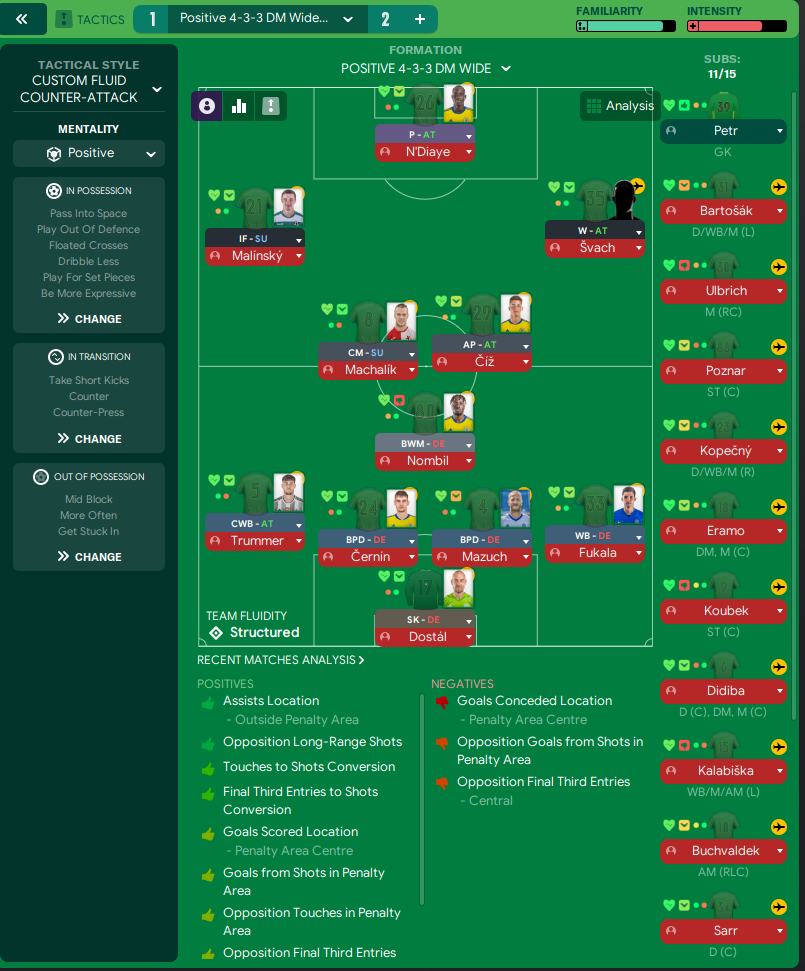
Tactical Style:Custom
Mentality:Positive
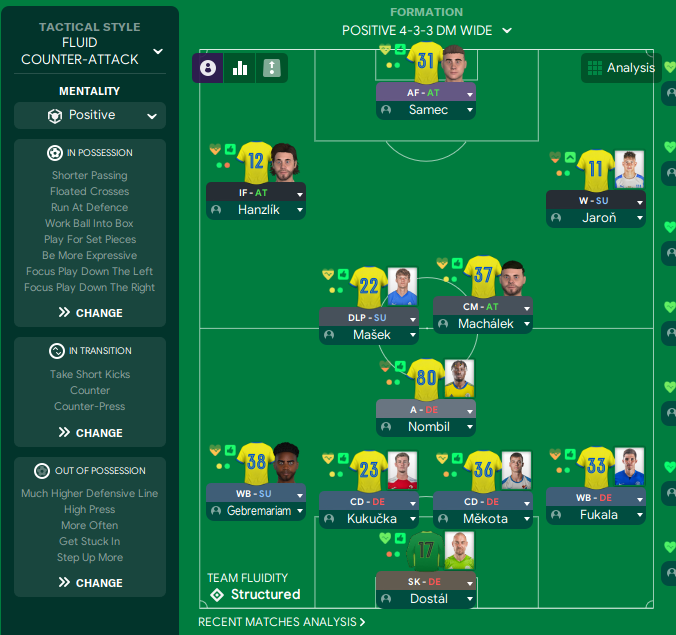
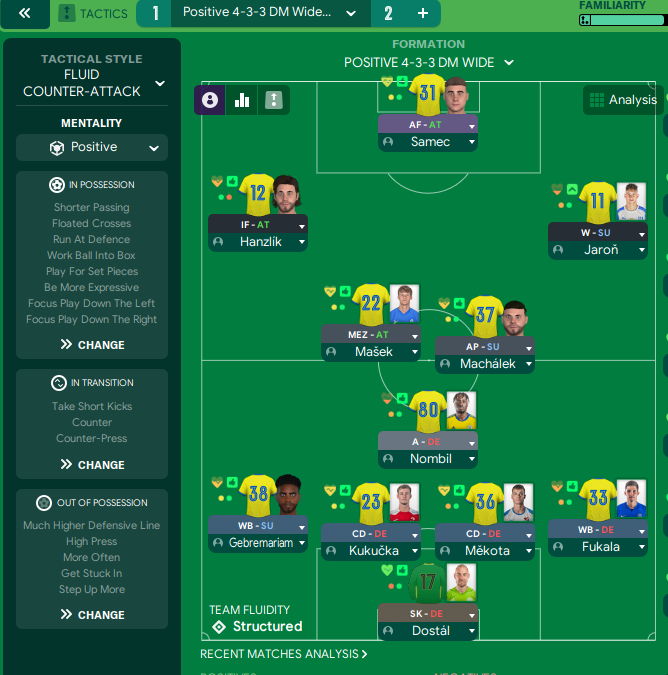
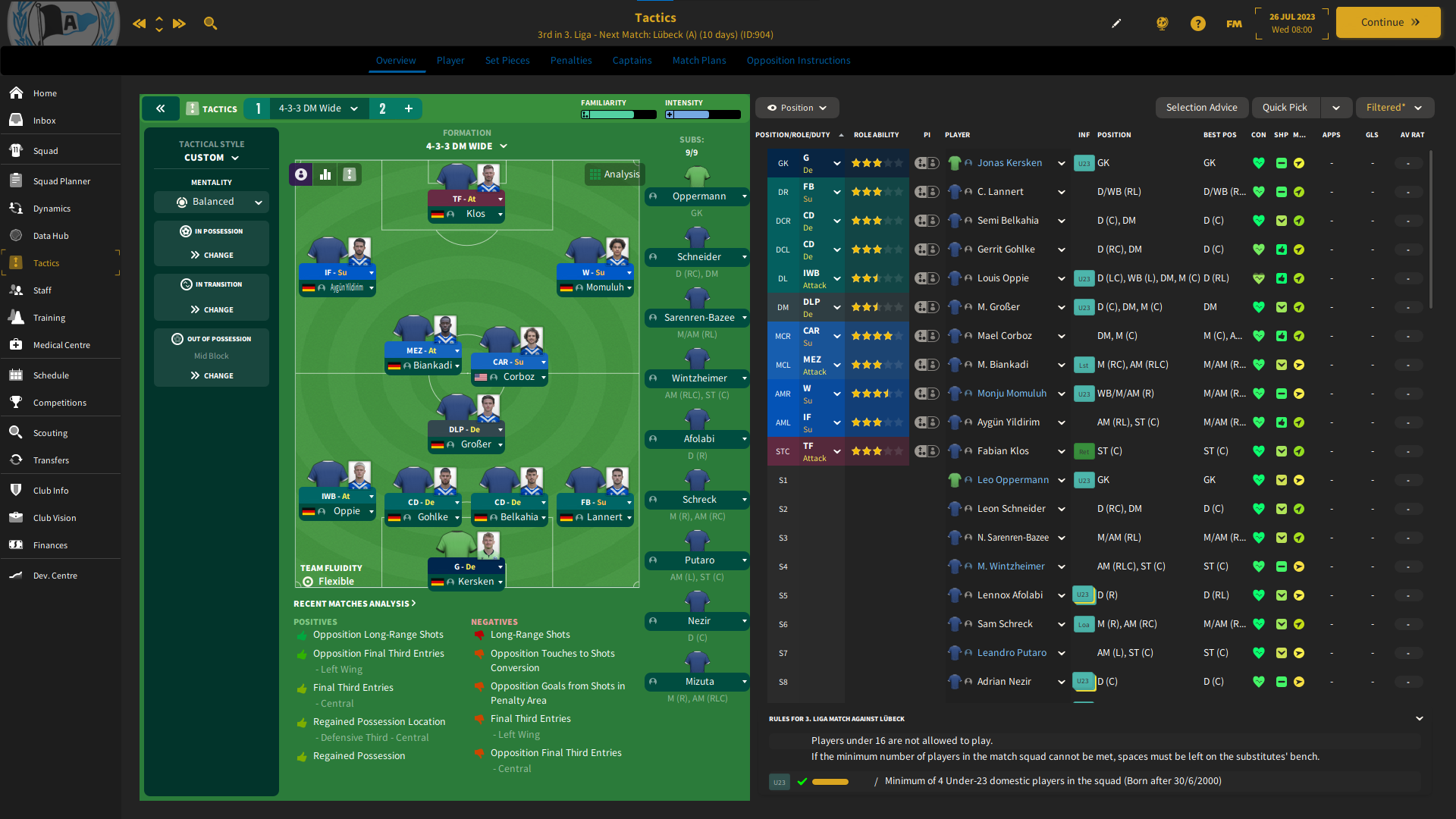
Formation:4-3-3 DM Wide
Team Fluidity:Structured
In Possession
Slightly More Direct Passing
Pass Into Space
Play For Set Pieces
Slightly Higher Tempo
Fairly Wide
In Transition
Take Short Kicks
Out of Possession
Mid Block
More Often
Team Shape Without Ball
Shape:Mid Block
Description:Compact shape allowing for quick recoveries to regain possession.
Evidence:DM-D at [3,3] with 'Mid Block' and 'More Often'.
Team Shape With Ball
Shape:Fluid With Width
Description:Wide play is complemented by central attacking options to stretch the opposition.
Evidence:W-Su at [6,1] and IF-A at [6,2] providing width and depth.
Phase Description
Attacking Play
Utilizing the wing play effectively while combining through the middle offers diverse attacking routes.
Defensive Transition
Quick recovery to a mid-block formation, seeking to cut off space in key areas.
Main Focus
Combining width and central play to penetrate opposition defenses.
Key Strengths
Effective Wing Play
Utilizing wingers and wing-backs to stretch the play creates gaps in opposition defenses.
Balanced Midfield
The composition of Mezzala and Advanced Playmaker offers fluidity and creativity in midfield.
Dynamic Forward Line
The advanced forward creates space for others, boosting offensive potential.
Conflicting Directions
Vulnerabilities on Counter
The high tempo may expose defensive transitions if possession is lost abruptly.
Over-reliance on Width
With significant wide play, central options may be underutilized, limiting threats.
Defensive Exposure
Aggressive wing-backs can leave central defenders vulnerable against quick transitions.
Tactical Suggestions
Adjust Defensive Duties
Consider changing wing-back role to support during critical match phases to better balance.
Incorporate a Second DM
Adding a second defensive midfielder could mitigate the impact of opposition counters.
Focus on Central Penetration
Encourage more central passes to stretch defenses and exploit through balls.
Ask Questions About Your Lineup
Related Tactics
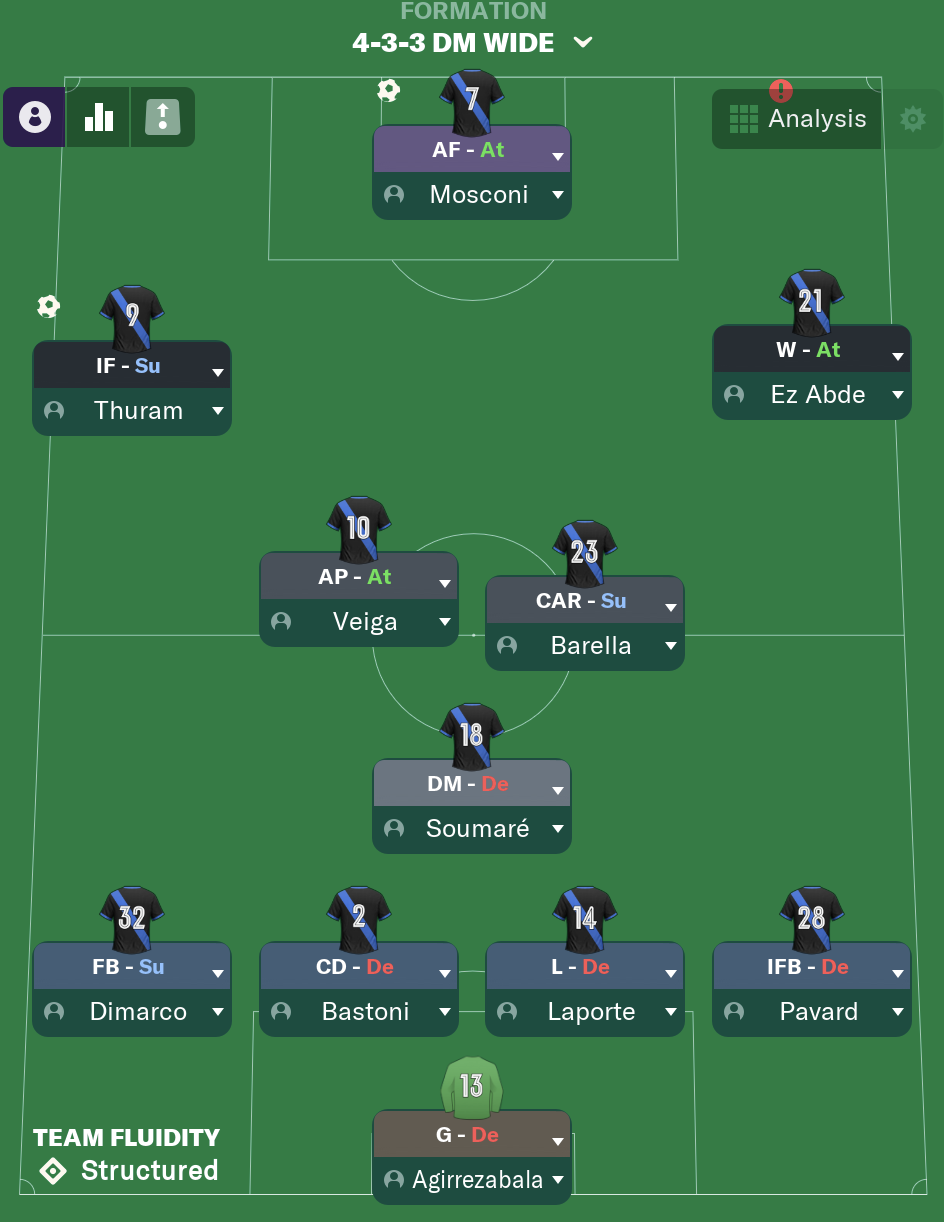
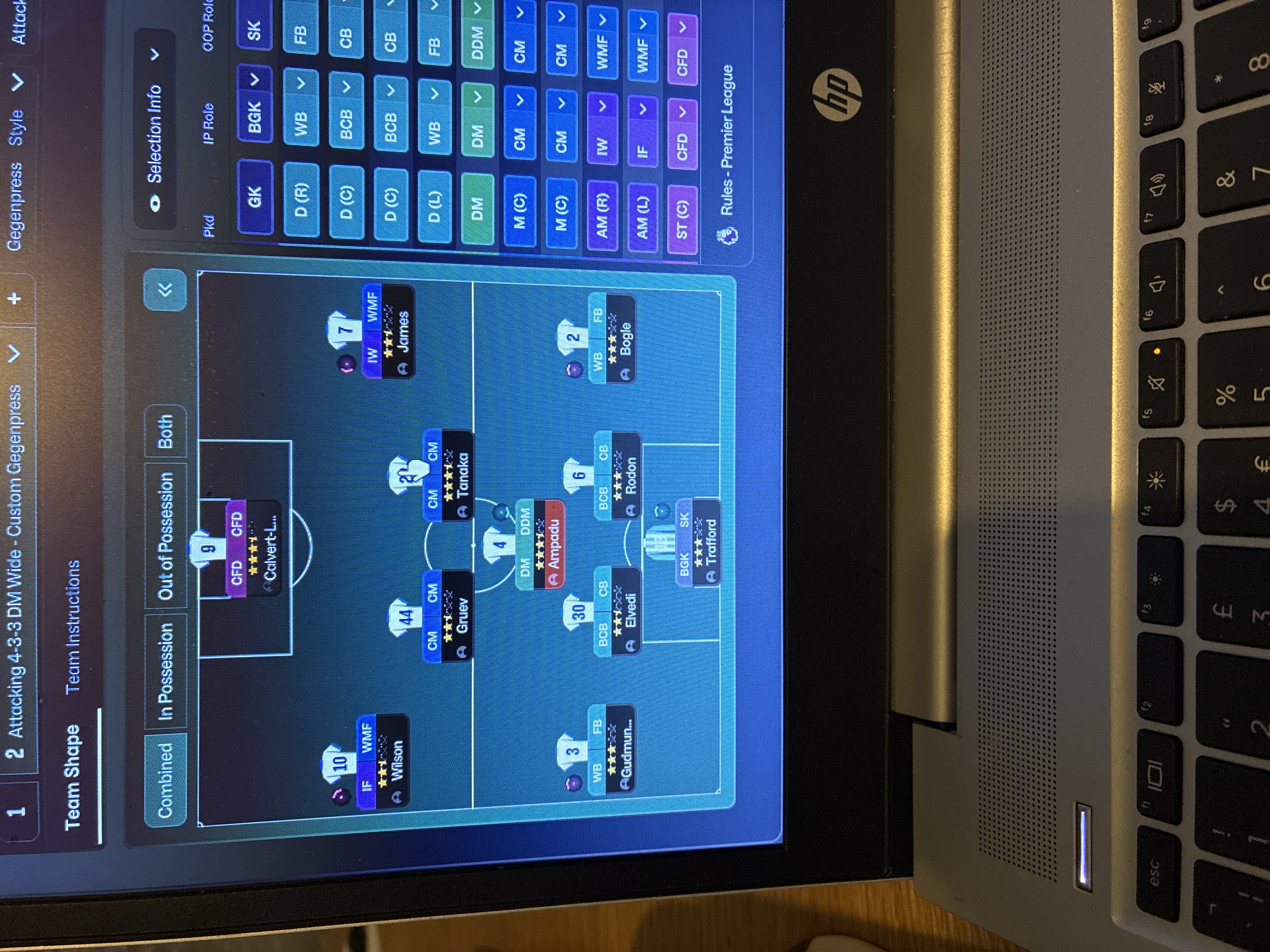
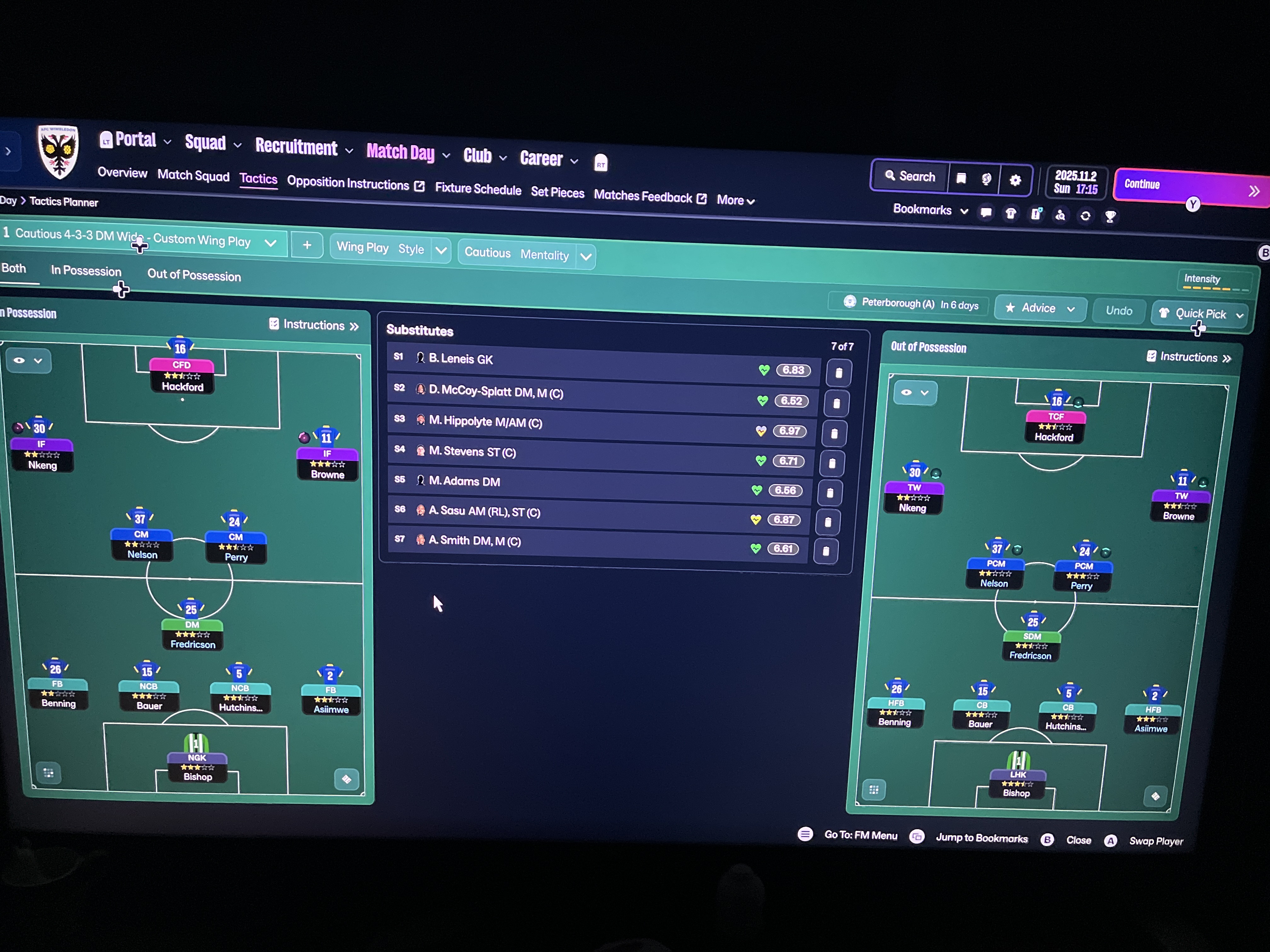
Guides for this formation
The tactical theory behind the 4-3-3 DM Wide: roles, instructions, and the trade-offs that decide whether the system holds up.
Foundations
Understanding the 4-3-3 Formation
Master the classic 4-3-3: player roles, tactical variations, and the trade-offs that decide whether it sings or stalls.
Read guide
Player pairings
Midfield Trios
Holder, runner, creator: the role distribution rule for three-man midfields, the AMC variants, and the antipatterns that break them.
Read guide
Playing styles
Gegenpressing: A Full Guide
Klopp-style gegenpressing in FM, including squad profile, line-and-press pairing, sustainable workload, and the antipatterns to avoid.
Read guide