Uploaded Tactic
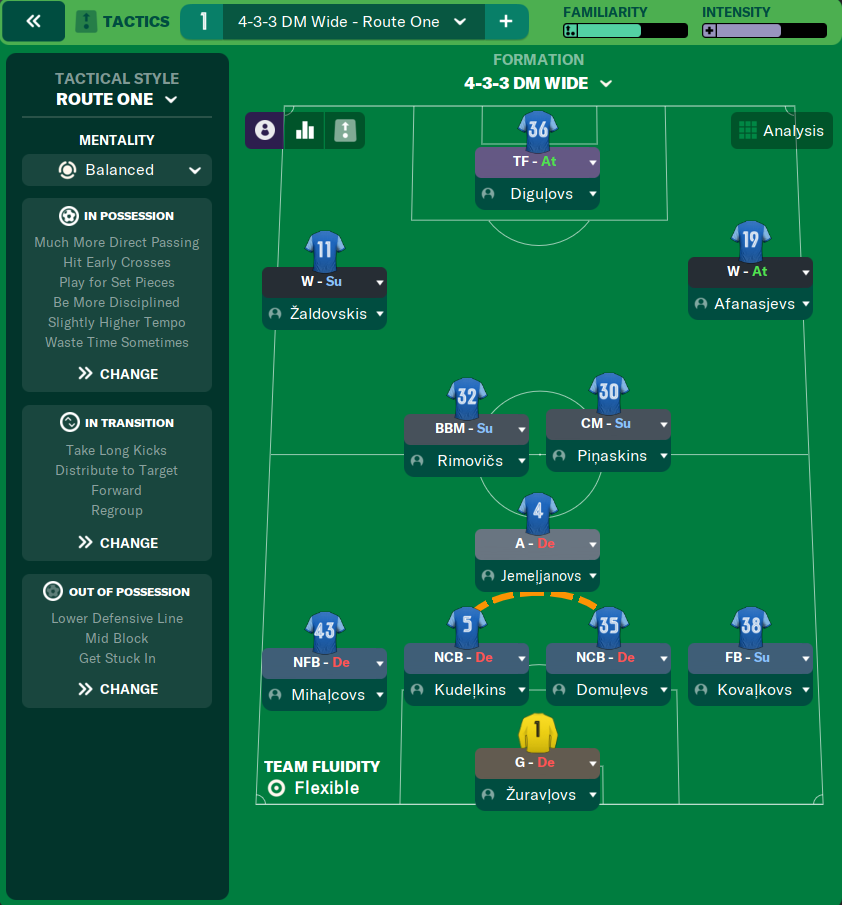
Formation & Style
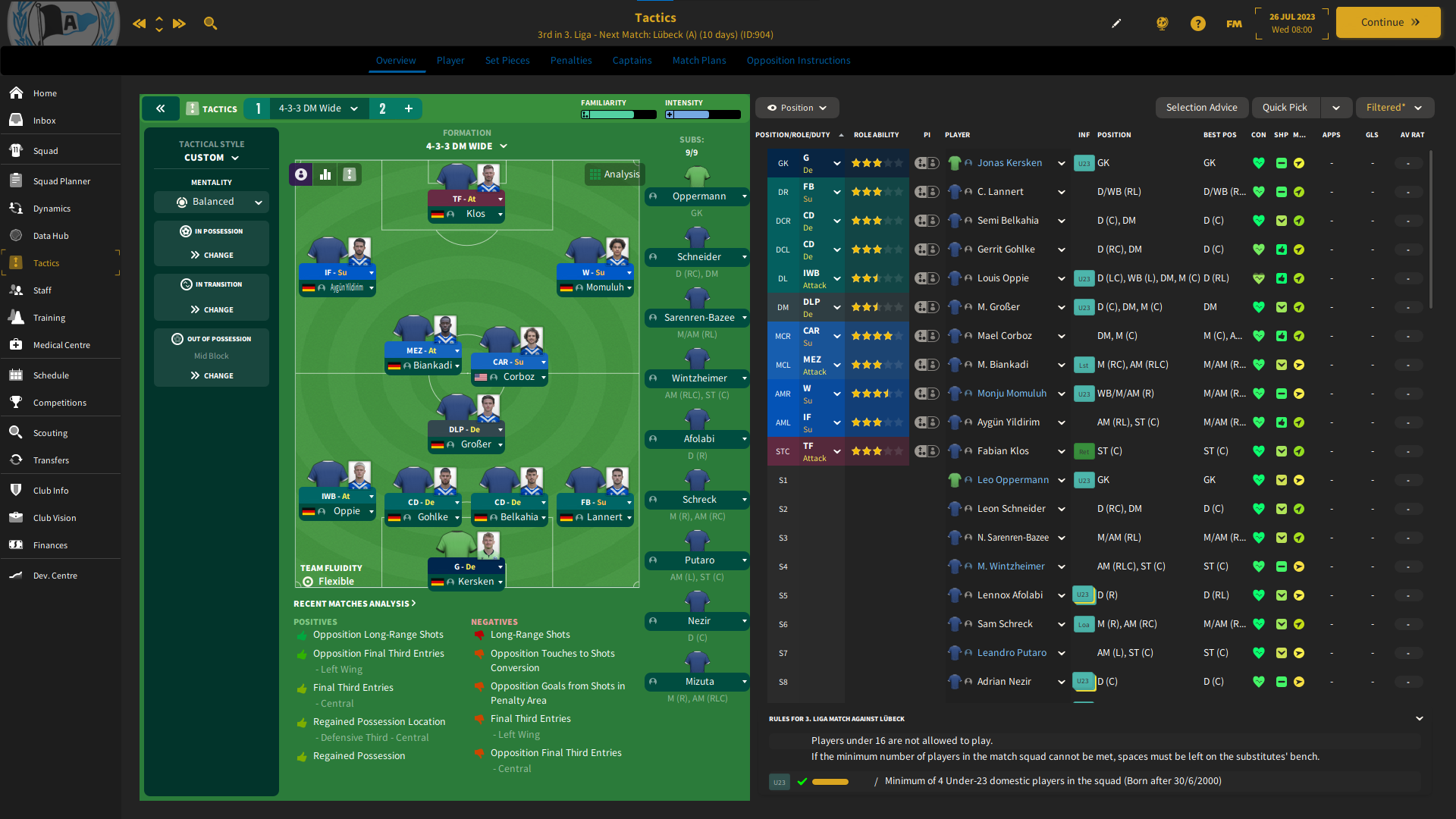
Tactical Style:Route One
Mentality:Balanced
Formation:4-3-3 DM Wide
Team Fluidity:Flexible
In Possession
Much More Direct Passing
Hit Early Crosses
Play For Set Pieces
Be More Disciplined
Slightly Higher Tempo
Waste Time Sometimes
In Transition
Take Long Kicks
Distribute to Target Forward
Regroup
Out of Possession
Lower Defensive Line
Mid Block
Get Stuck In
Team Shape Without Ball
Shape:4-1-4-1
Description:Compact midfield and defensive shape, focusing on blocking central spaces and pressing from the midline.
Evidence:NFB at [2,1] and FB at [2,5] provide width, with NCBs at [2,2] and [2,3] ensuring solidity.
Team Shape With Ball
Shape:4-3-3
Description:Prominent width with both wingers providing support to the target forward and an overlapping full-back.
Evidence:W at [5,1] and W at [5,5] stretch opposition, while TF at [6,3] serves as the focal point.
Phase Description
Attacking Play
Focus on direct gameplay aiming to bypass midfield quickly, utilizing the width of the pitch.
Defensive Transition
Immediate regrouping to reset into a defensive mid block, preparing for counter situations.
Main Focus
Exploit aerial advantage and set-piece opportunities while maintaining disciplined positioning.
Key Strengths
Direct Play
The setup emphasizes direct passing and quick transitions, making it difficult for opponents to organize.
Wing Play
Utilizing wingers effectively to stretch and exploit the opposition's defensive width.
Defensive Stability
A compact formation with disciplined roles gives the team a robust defensive structure.
Conflicting Directions
Set Piece Vulnerability
With a focus on direct play, there could be a lack of size and structure during opposing set pieces.
Limited Midfield Control
The direct style may sacrifice midfield possession, leading to vulnerability in transitions.
Risk of Counterattack
The aggressive pressing combined with a higher defensive line risks leaving gaps for counters.
Tactical Suggestions
Increase Defensive Width
Implementing wider full-backs may provide additional support in both attack and defense.
Encourage More Box Entries
Target Forward and wingers should frequently enter the box to capitalize on crossing opportunities.
Maintain Defensive Compression
Ensure the midfield stays compact to control central areas despite wide play.
Ask Questions About Your Lineup
Related Tactics
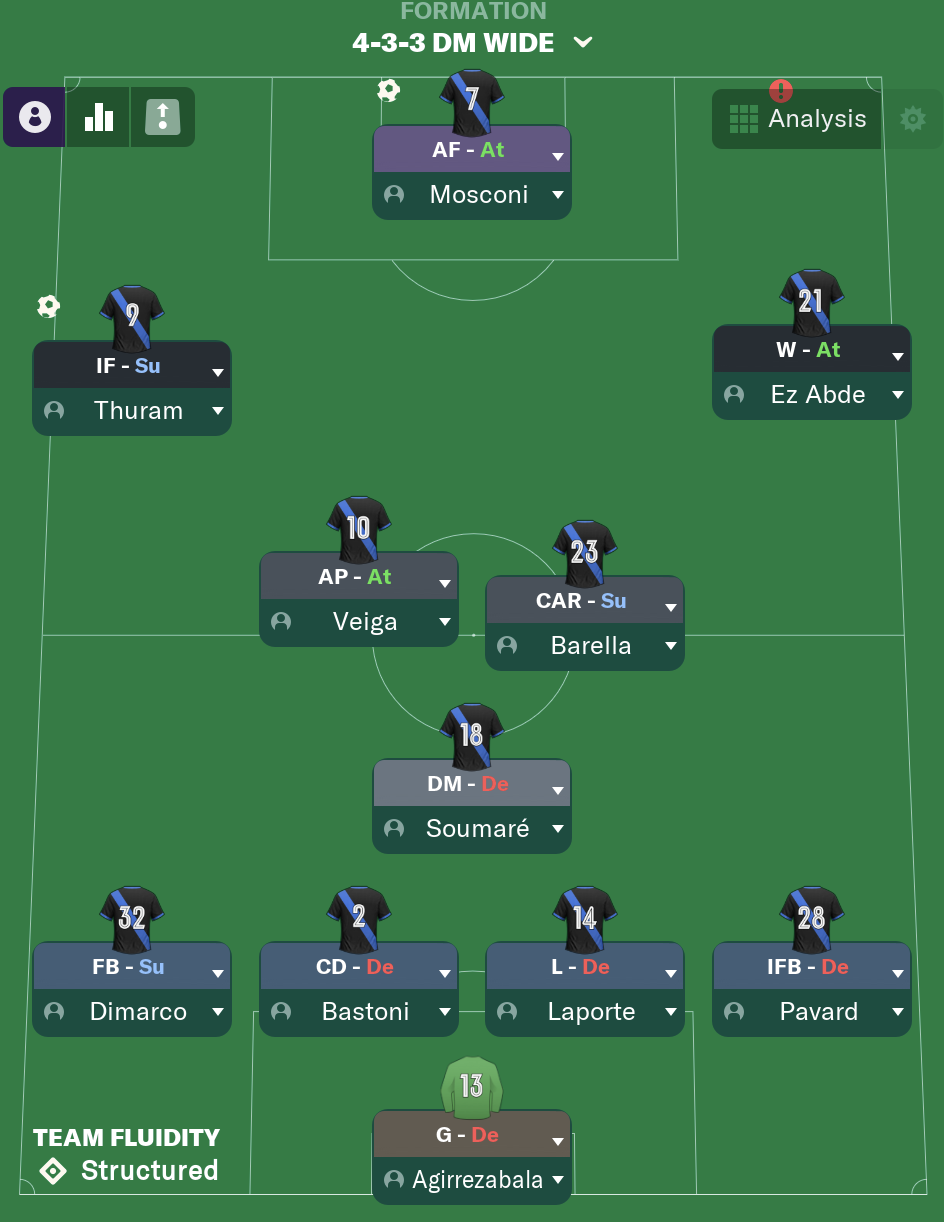
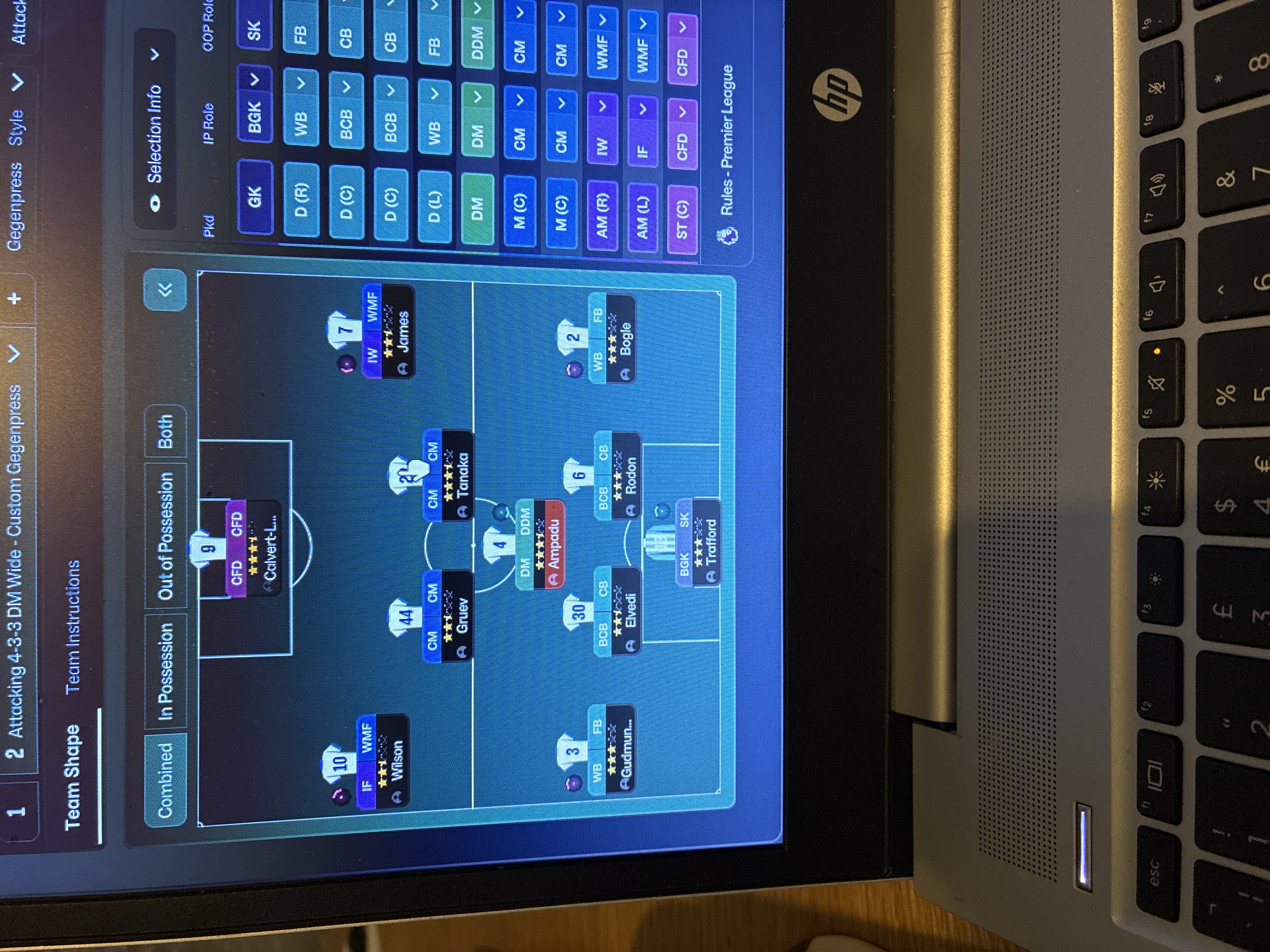
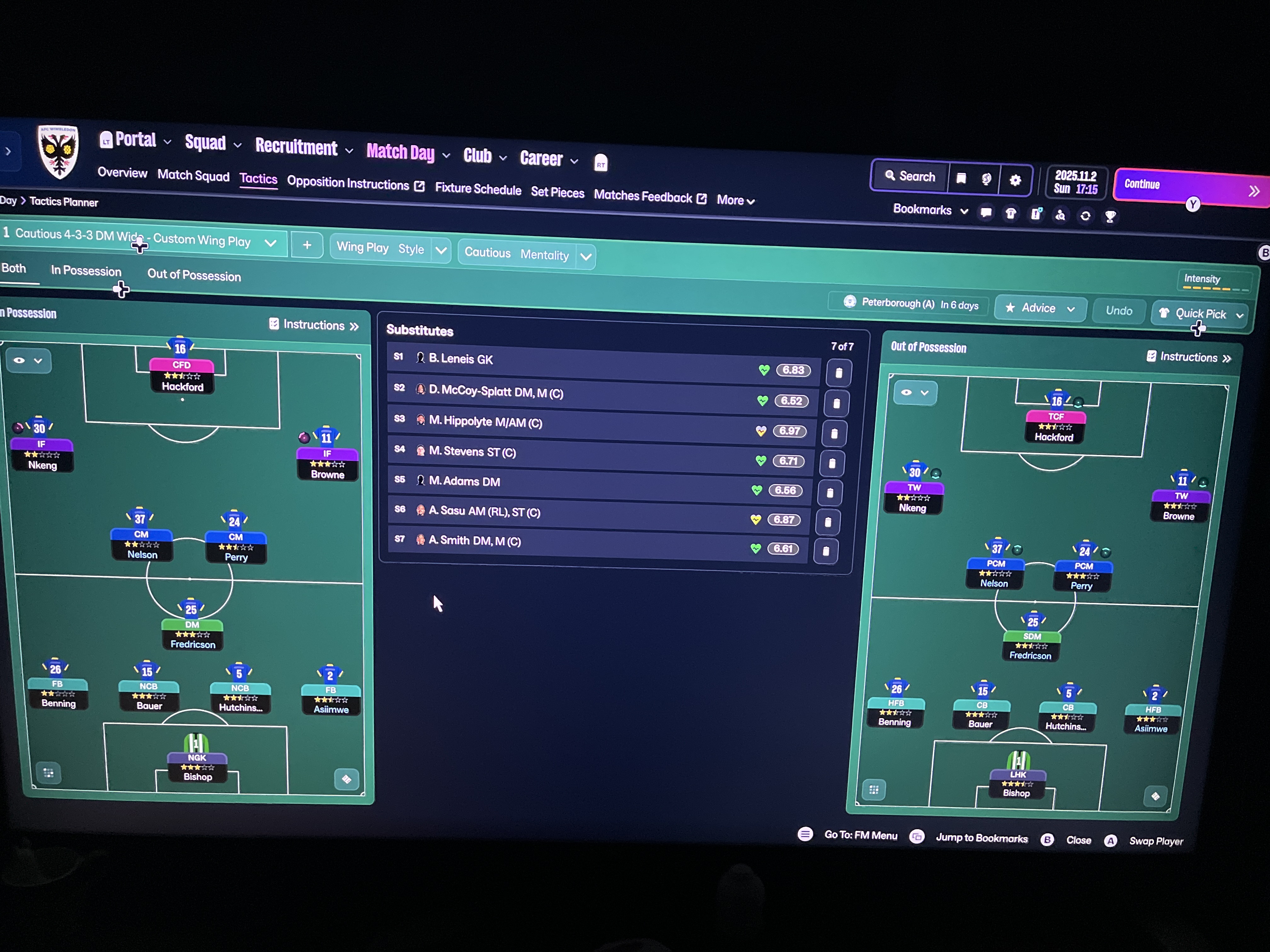
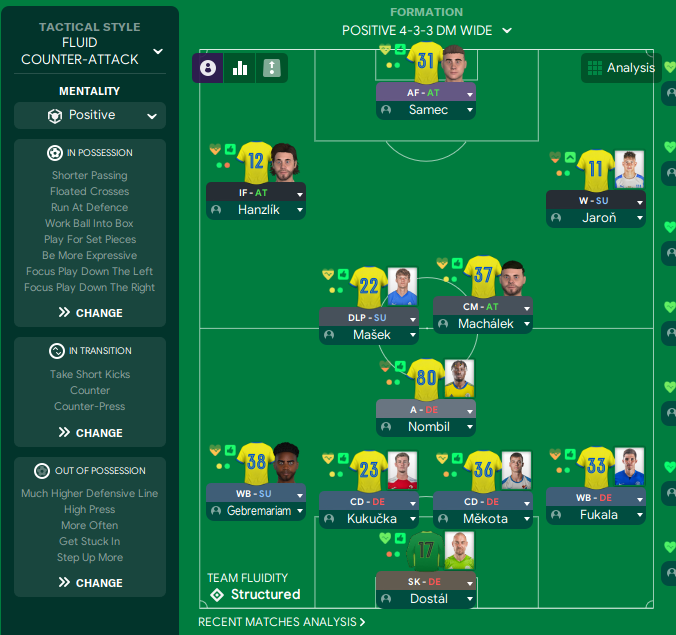
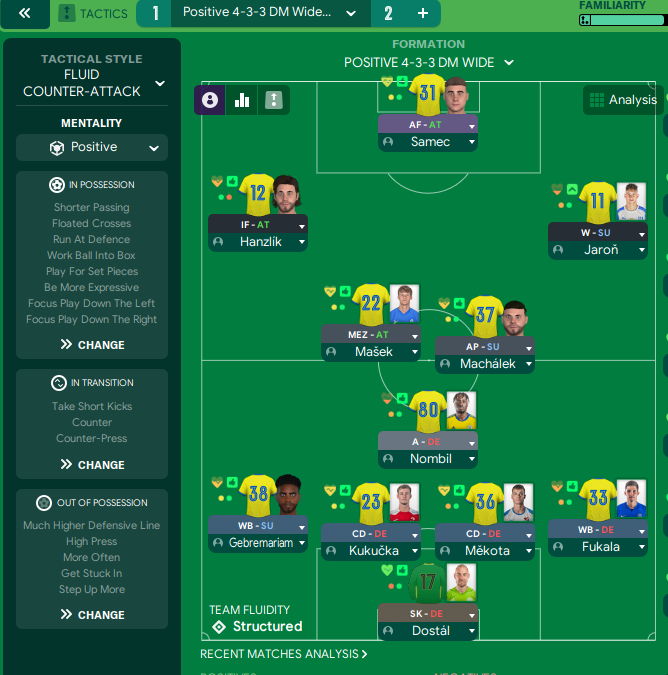
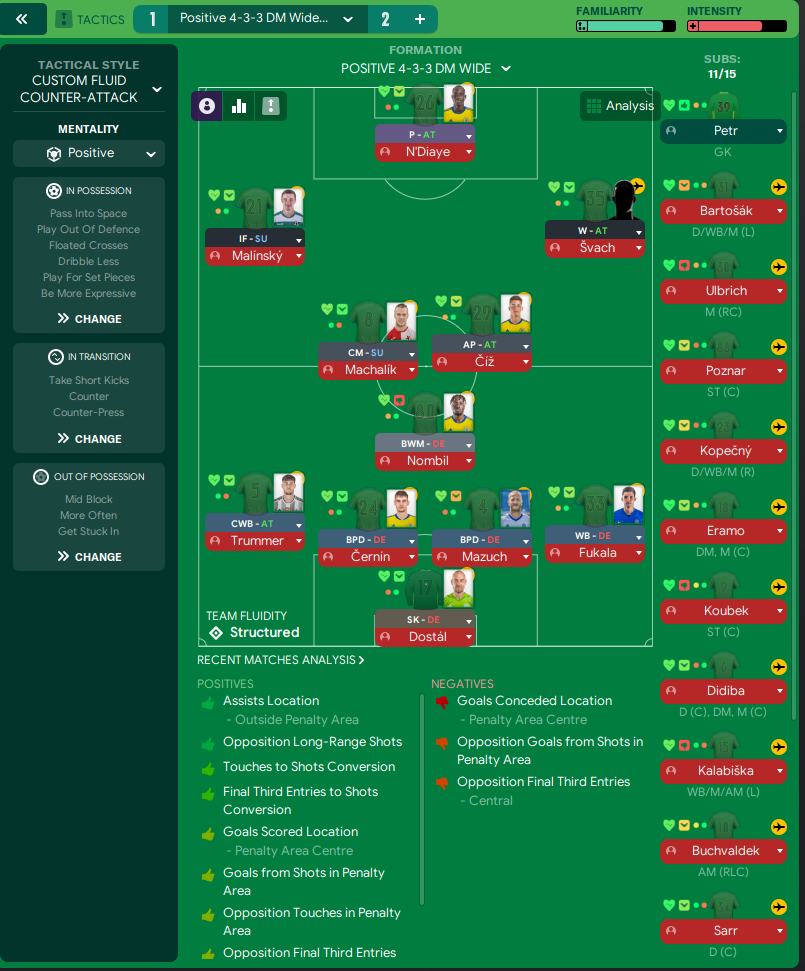
More Route One tactics
Guides for this formation
The tactical theory behind the 4-3-3 DM Wide: roles, instructions, and the trade-offs that decide whether the system holds up.
Foundations
Understanding the 4-3-3 Formation
Master the classic 4-3-3: player roles, tactical variations, and the trade-offs that decide whether it sings or stalls.
Read guide
Player pairings
Midfield Trios
Holder, runner, creator: the role distribution rule for three-man midfields, the AMC variants, and the antipatterns that break them.
Read guide
Playing styles
Gegenpressing: A Full Guide
Klopp-style gegenpressing in FM, including squad profile, line-and-press pairing, sustainable workload, and the antipatterns to avoid.
Read guide