Uploaded Tactic
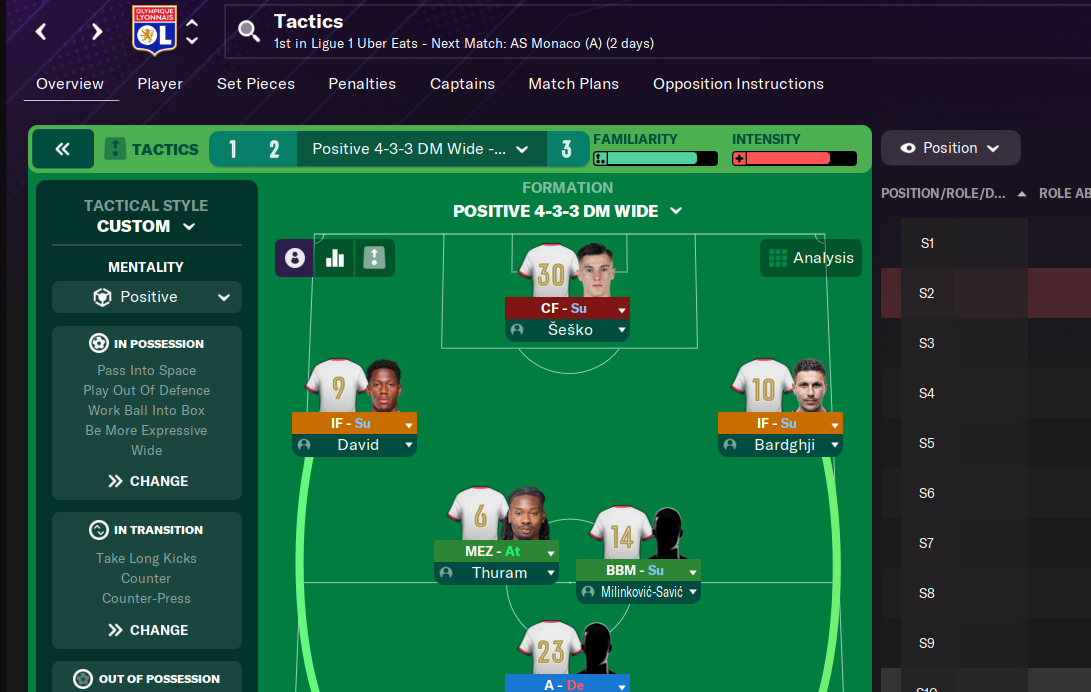
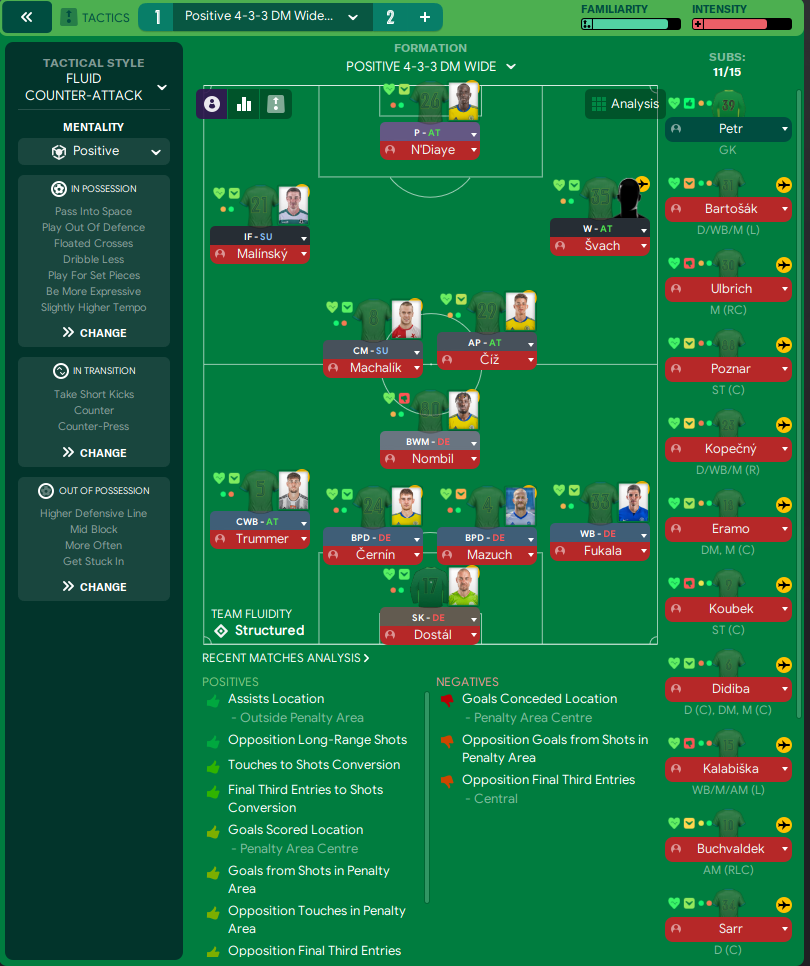
Formation & Style
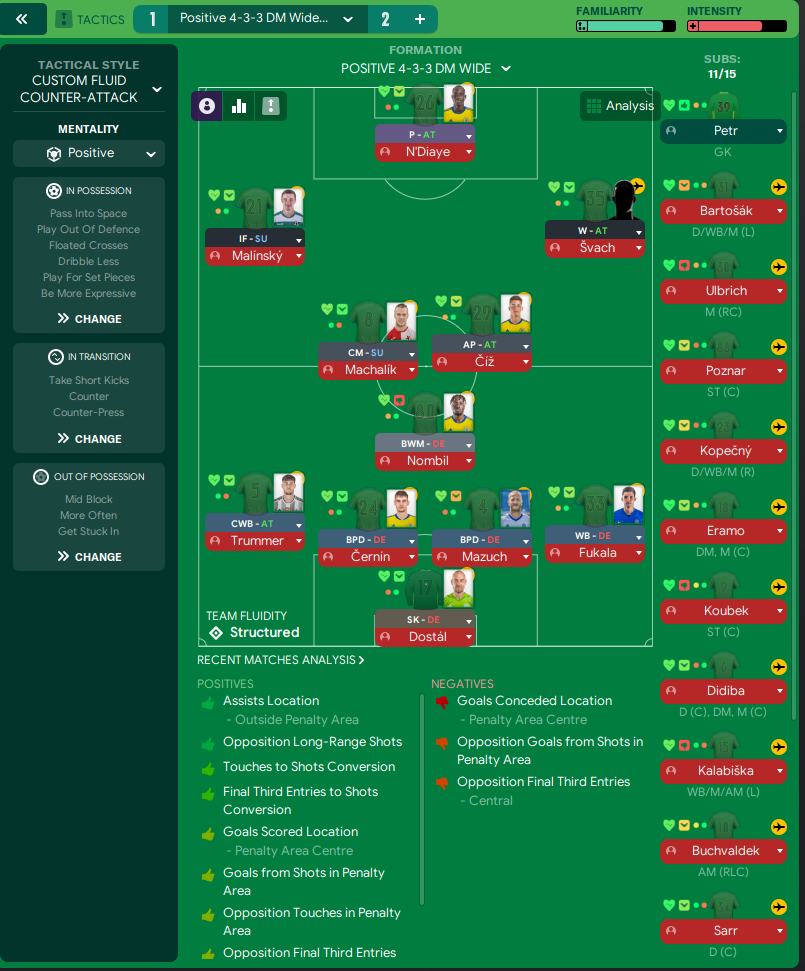
Tactical Style:Custom
Mentality:Positive
Formation:4-3-3 DM Wide
Team Fluidity:Structured
In Possession
Pass Into Space
Play Out Of Defence
Work Ball Into Box
Be More Expressive
Wide
In Transition
Take Long Kicks
Counter
Counter-Press
Out of Possession
Defensive Line:Higher
Line of Engagement:Higher
Pressing Intensity:More Urgent
Offside Trap:Yes
Team Shape Without Ball
Shape:Unknown
Description:Defensive structure is unclear due to lack of visible defensive duties.
Evidence:null
Team Shape With Ball
Shape:Wide with Central Presence
Description:Wide players create space for central forwards and midfielders to exploit, aiming for link-up play.
Evidence:IF-S at [6,1], [6,5] support CF-S at [6,3].
Phase Description
Attacking Play
Focus on exploiting the width with inside forwards cutting in and the full-backs providing support and overlaps.
Defensive Transition
Quick transitioning to defend with high pressing during counter-press situations.
Main Focus
Utilizing wide areas and combination play to create scoring opportunities.
Key Strengths
Wide Play
Utilizing wide players gives depth to attacking play and stretches opposition defenses.
Midfield Versatility
The combination of a Ball-Winning Midfielder and a Mezzala creates dynamic movement and ball recovery.
Counter-Attacking Threat
Quick transitions when winning the ball back can exploit opposition vulnerabilities.
Conflicting Directions
Over-Reliance on Width
Potential predictability in attacking play if the width is overly emphasized without central options.
Defensive Fragility
Possible gaps in defense if full-backs push forward without adequate cover.
Balance Issues
The midfield mix of attacking and supporting roles might lead to a lack of defensive cover.
Tactical Suggestions
Clarify Defensive Roles
Define duties for defenders to solidify the back line and prevent counter-attacks.
Central Support on Attack
Encourage central midfielders to join the attack more actively, ensuring options are provided.
Tactical Flexibility
Switch to a more fluid formation or roles in-game to adapt to the opponent's strategy.
Ask Questions About Your Lineup
Related Tactics
Guides for this formation
The tactical theory behind the 4-3-3 DM Wide: roles, instructions, and the trade-offs that decide whether the system holds up.
Foundations
Understanding the 4-3-3 Formation
Master the classic 4-3-3: player roles, tactical variations, and the trade-offs that decide whether it sings or stalls.
Read guide
Player pairings
Midfield Trios
Holder, runner, creator: the role distribution rule for three-man midfields, the AMC variants, and the antipatterns that break them.
Read guide
Playing styles
Gegenpressing: A Full Guide
Klopp-style gegenpressing in FM, including squad profile, line-and-press pairing, sustainable workload, and the antipatterns to avoid.
Read guide