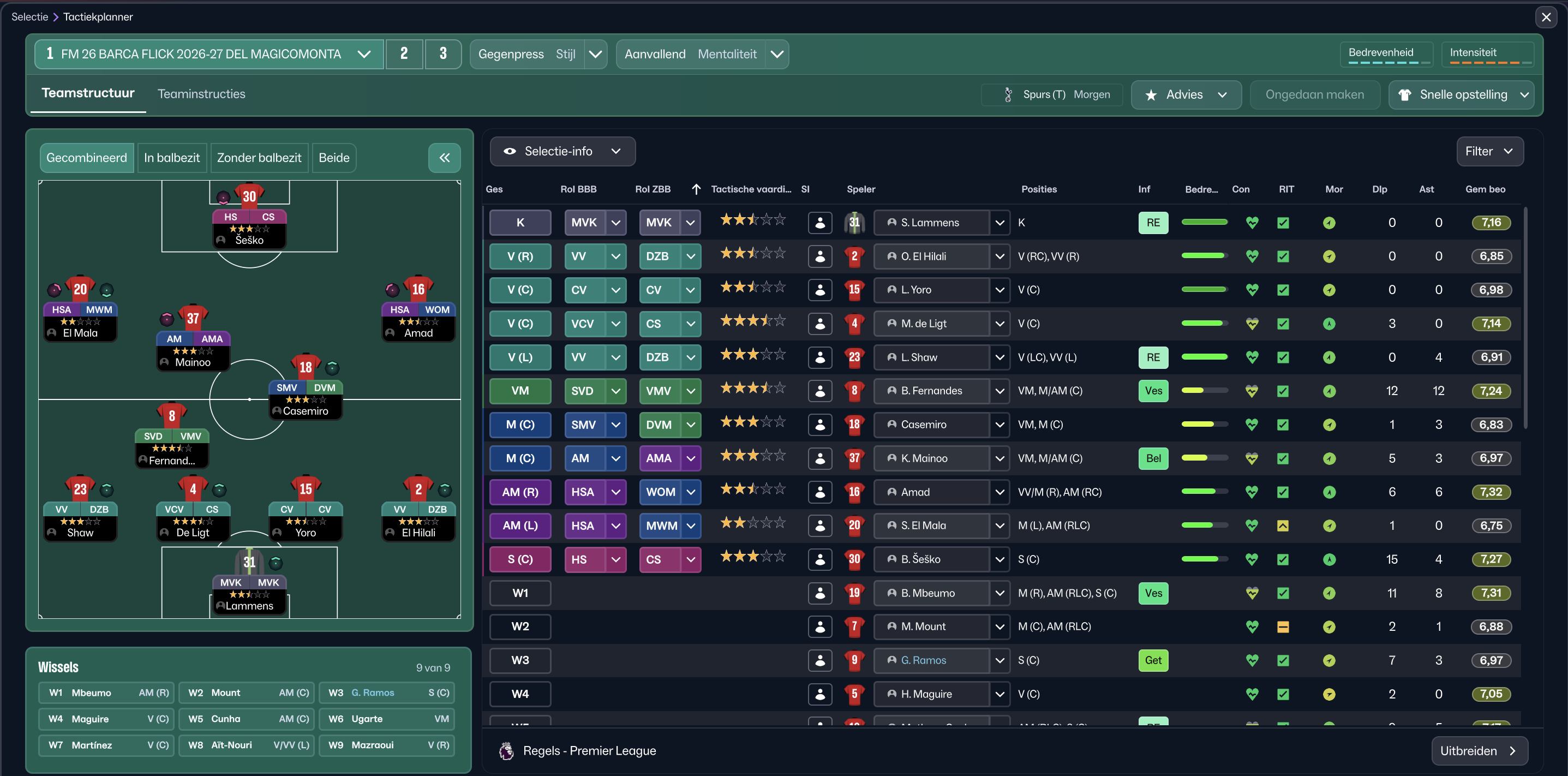
Uploaded Tactic
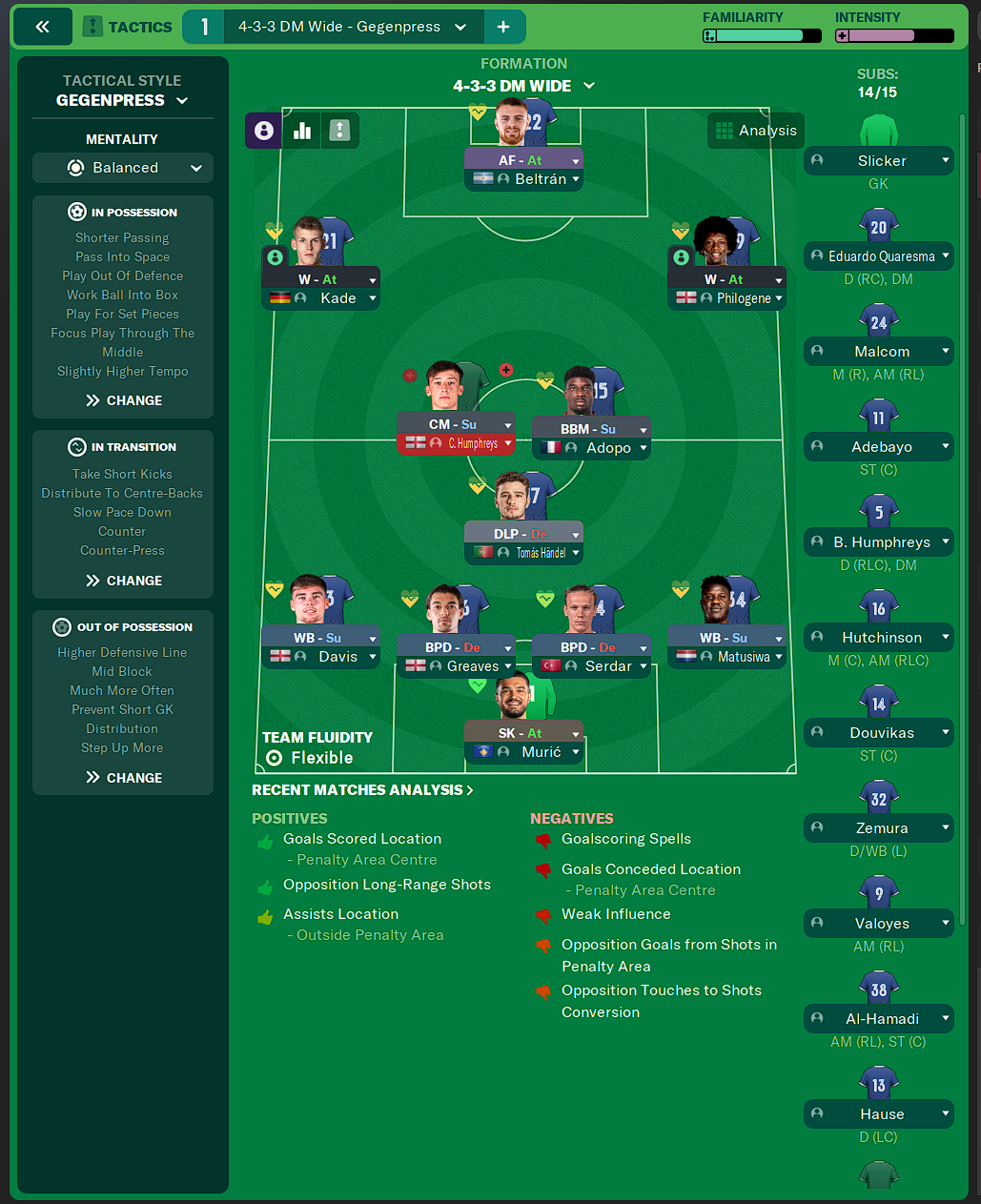
Formation & Style
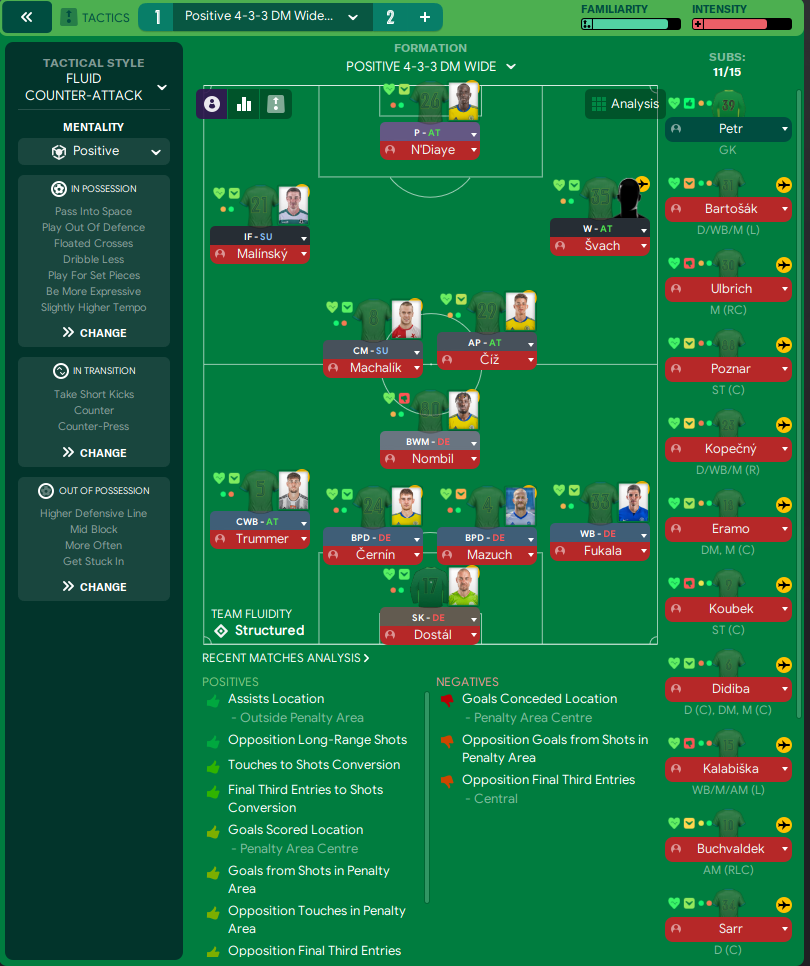
Tactical Style:Gegenpress
Mentality:Balanced
Formation:4-3-3 DM Wide
Team Fluidity:Flexible
In Possession
Shorter Passing
Play Out Of Defence
Work Ball Into Box
Play For Set Pieces
Focus Play Through The Middle
Slightly Higher Tempo
In Transition
Take Short Kicks
Distribute To Centre-Backs
Slow Pace Down
Counter
Counter-Press
Out of Possession
Higher Defensive Line
Mid Block
Much More Often Prevent Short GK Distribution
Step Up More
Team Shape Without Ball
Shape:3-2
Description:The team maintains a higher defensive line with two defensive midfielders supporting three central defenders.
Evidence:BPD-D at [2,2] and [2,4] along with DM-S at [3,3] and Support duties of WB-S at [2,1] and [2,5].
Team Shape With Ball
Shape:3-2-2-1
Description:The formation allows for wide play through the wingers, while the central midfielder and two wing-backs provide additional support.
Evidence:W-A at [5,1] and [5,5], AF-A at [6,3], and CM-S at [4,3] ensure a balanced attack.
Phase Description
Attacking Play
The team looks to play through the middle while maintaining width through the wingers, focusing on quick transitions and creating goal-scoring opportunities from set pieces.
Defensive Transition
Upon losing possession, the team aims to quickly regain control via counter-pressing, led by midfielders who are instructed to step up.
Main Focus
Primarily aims to create a high-pressing environment to recover the ball quickly and transition into attacks efficiently.
Key Strengths
Effective Transition Play
The setup supports quick transitions from defence to attack, maximizing counter-pressing.
Diverse Attacking Options
Wingers and an advanced striker offer multiple routes to goal.
Ball Recovery
The team is structured to quickly regain possession in advanced areas.
Conflicting Directions
Vulnerability in Central Defence
With a higher line, the central defence may be exposed against fast counter-attacks.
Overdependence on Wing Play
Heavy reliance on wingers may limit central penetration during tight matches.
Risk of Goals Conceded from Set Pieces
Central defenders may struggle against physical teams during set pieces.
Tactical Suggestions
Consider Strengthening Central Defence
Introduce a more robust defensive player to cope with counter-attacks.
Enhance Midfield Creativity
Utilize a more attack-minded midfielder to improve central penetration.
Adjust Defensive Block
Experiment with a slightly lower defensive line against faster opposing forwards.
Ask Questions About Your Lineup
Related Tactics
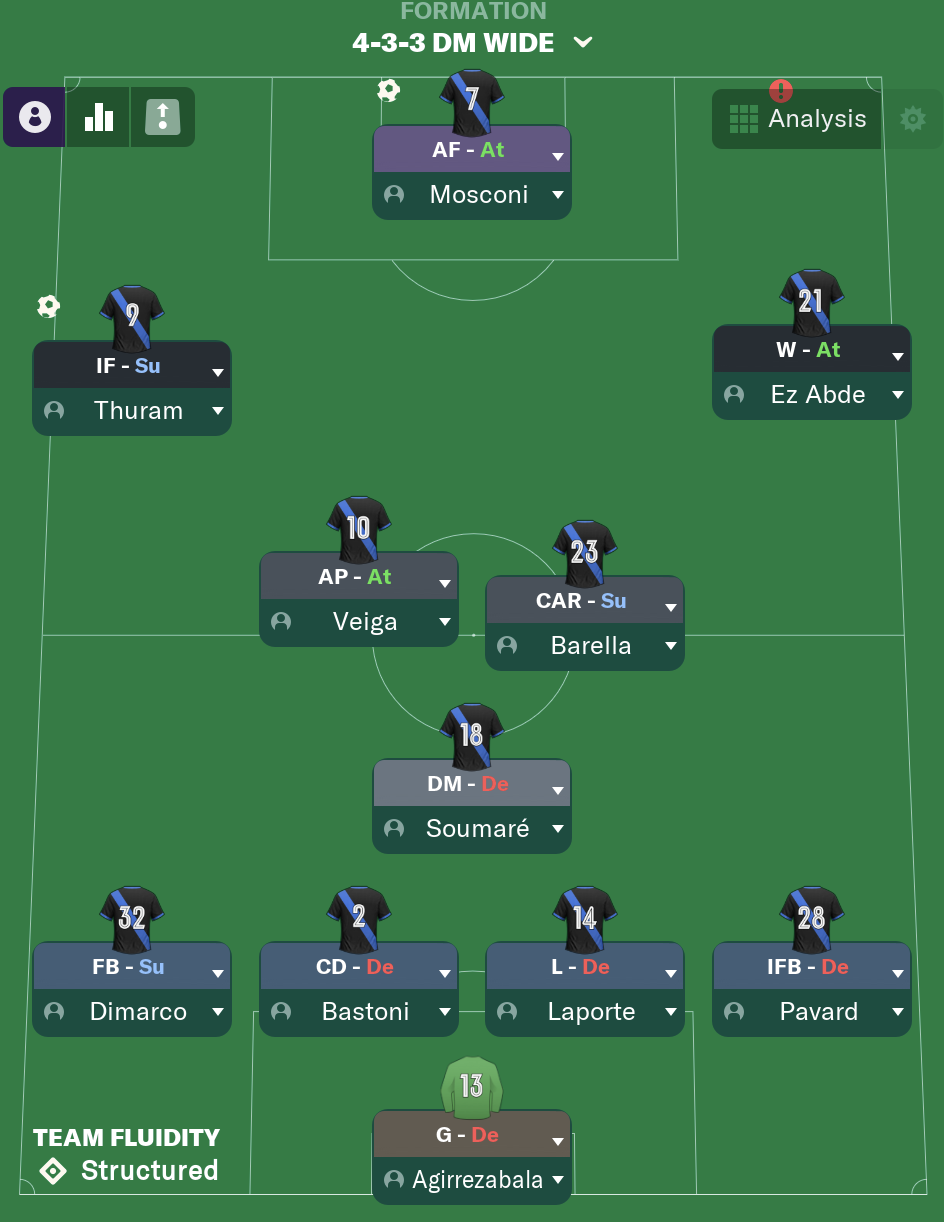
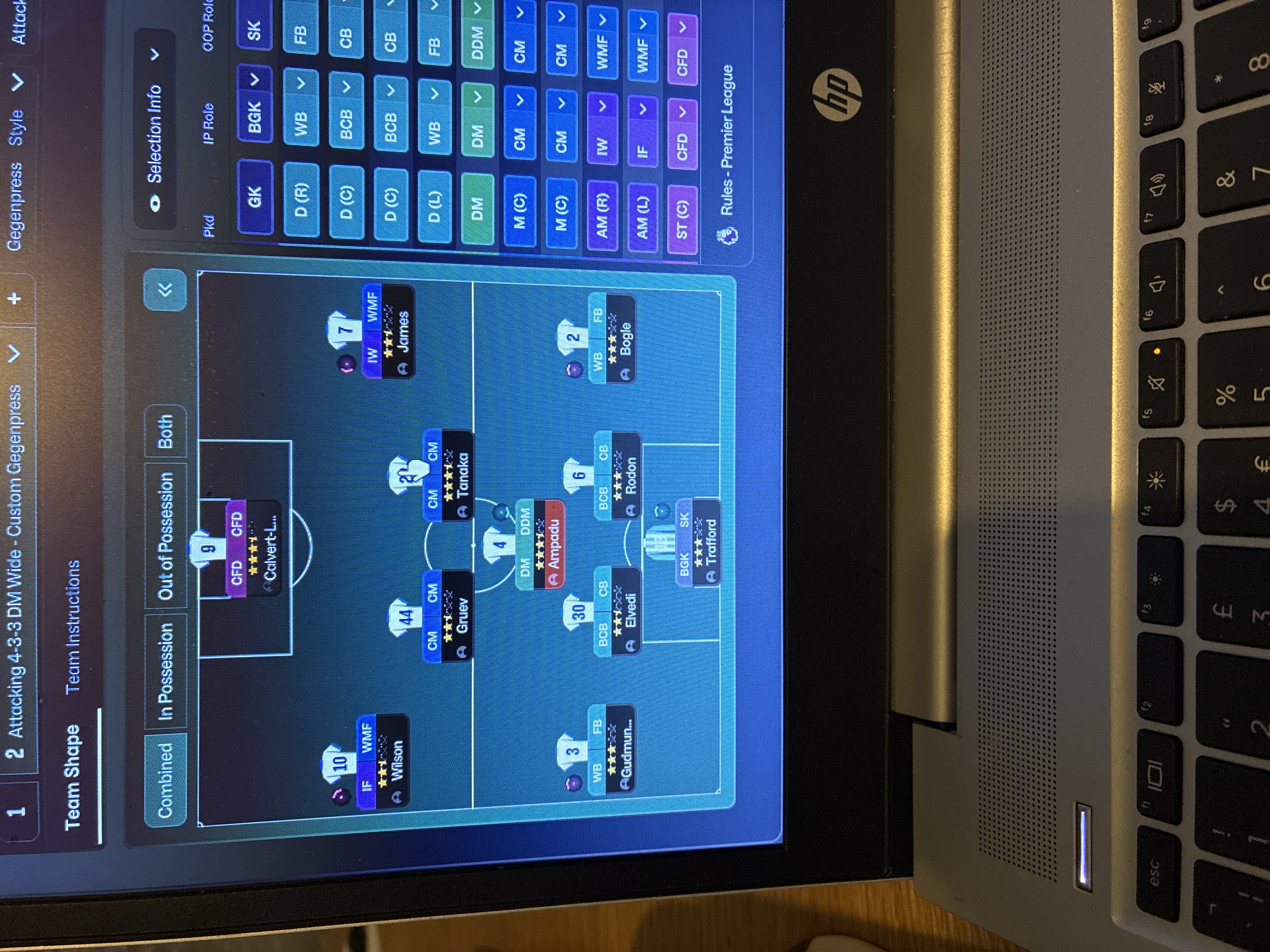
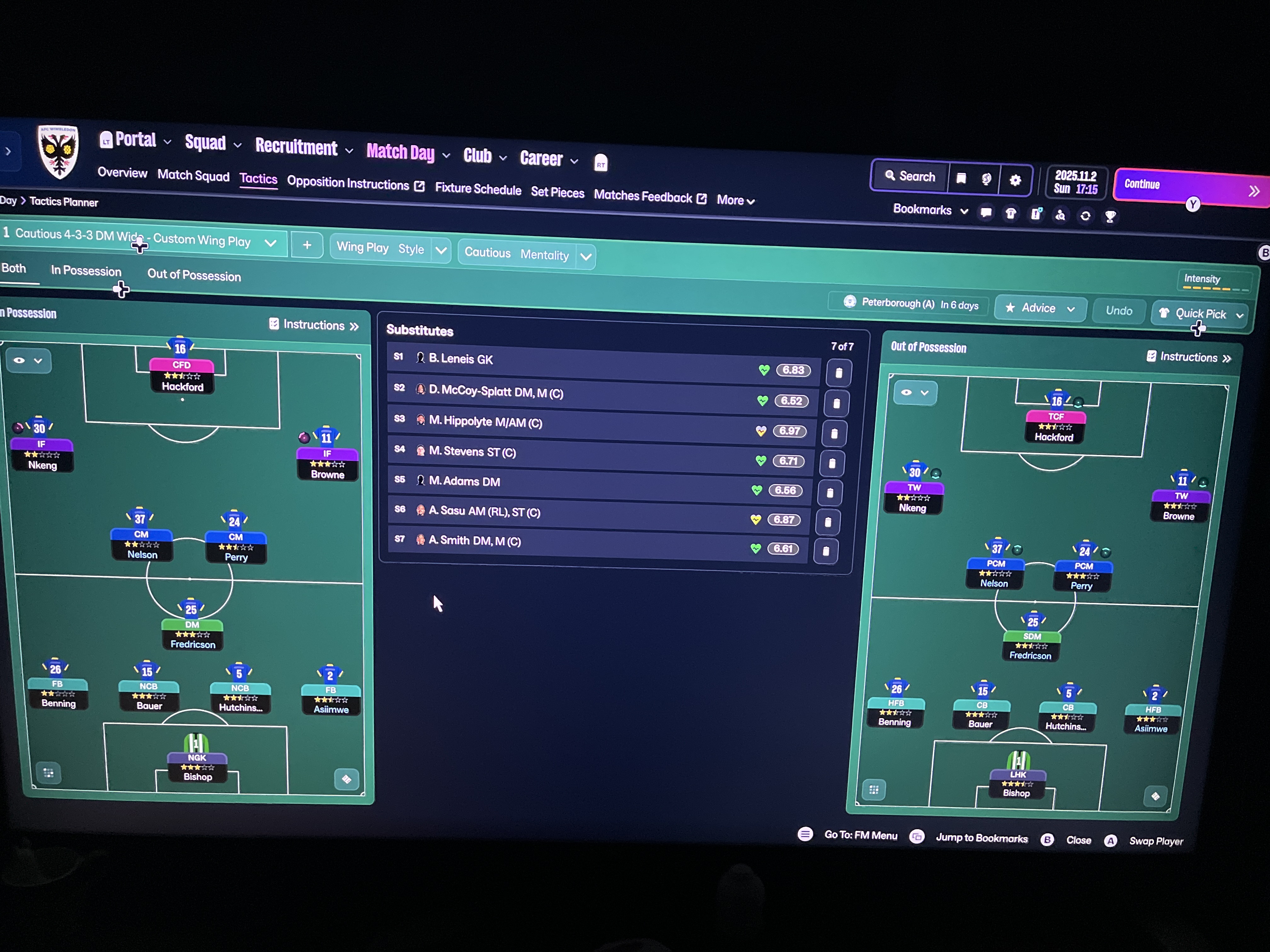
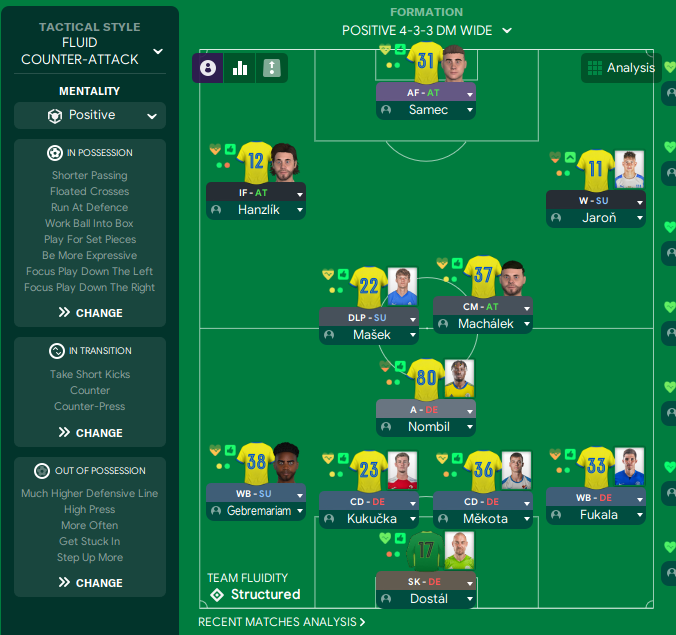
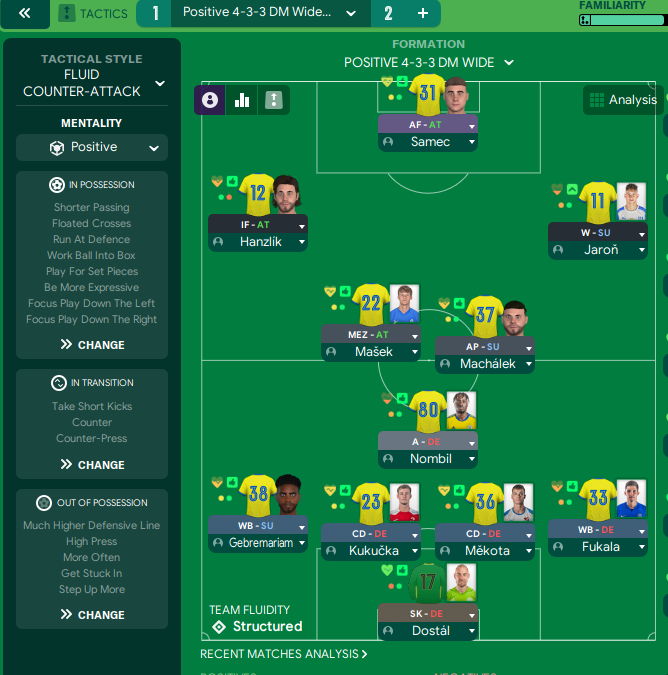
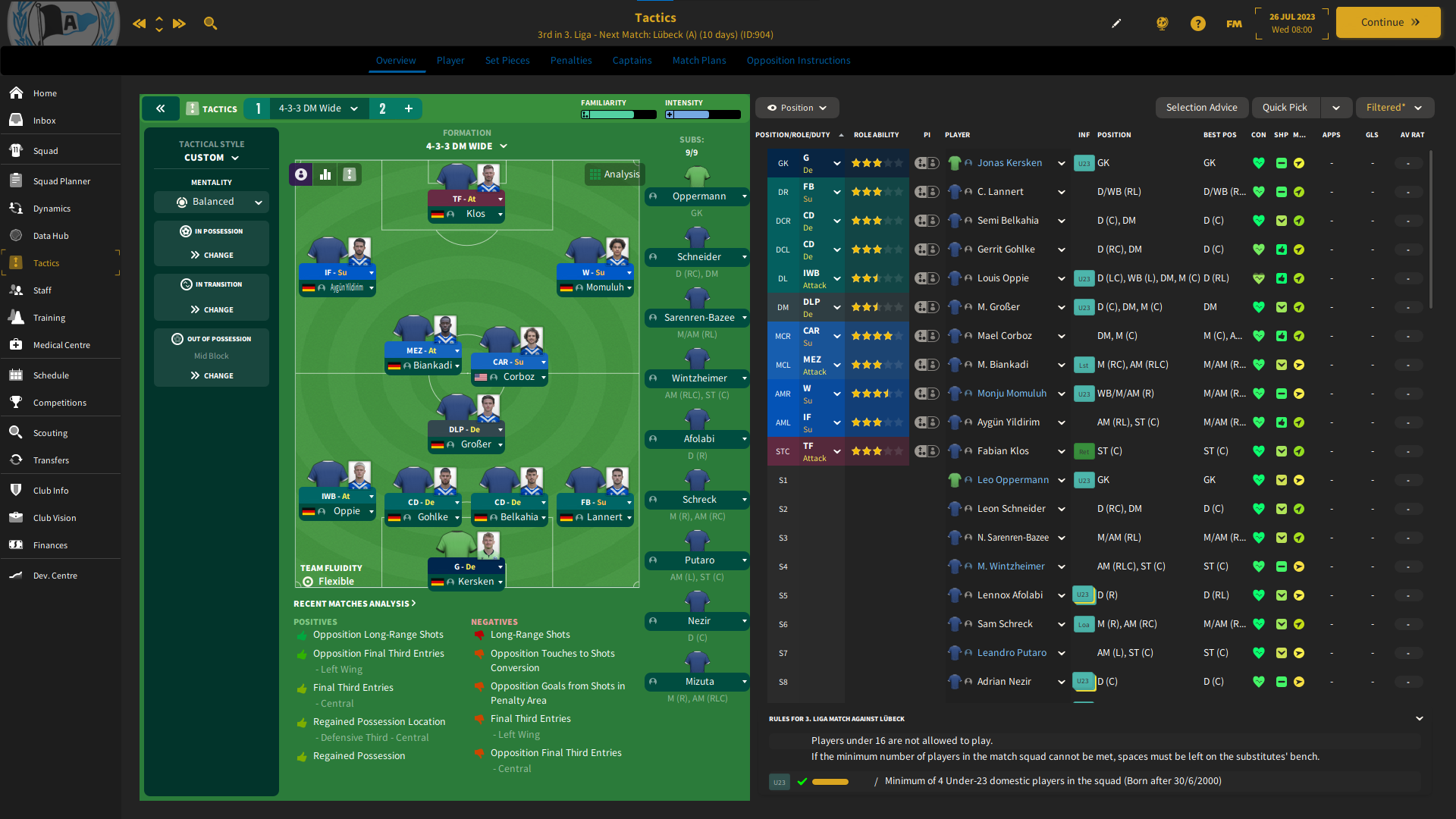
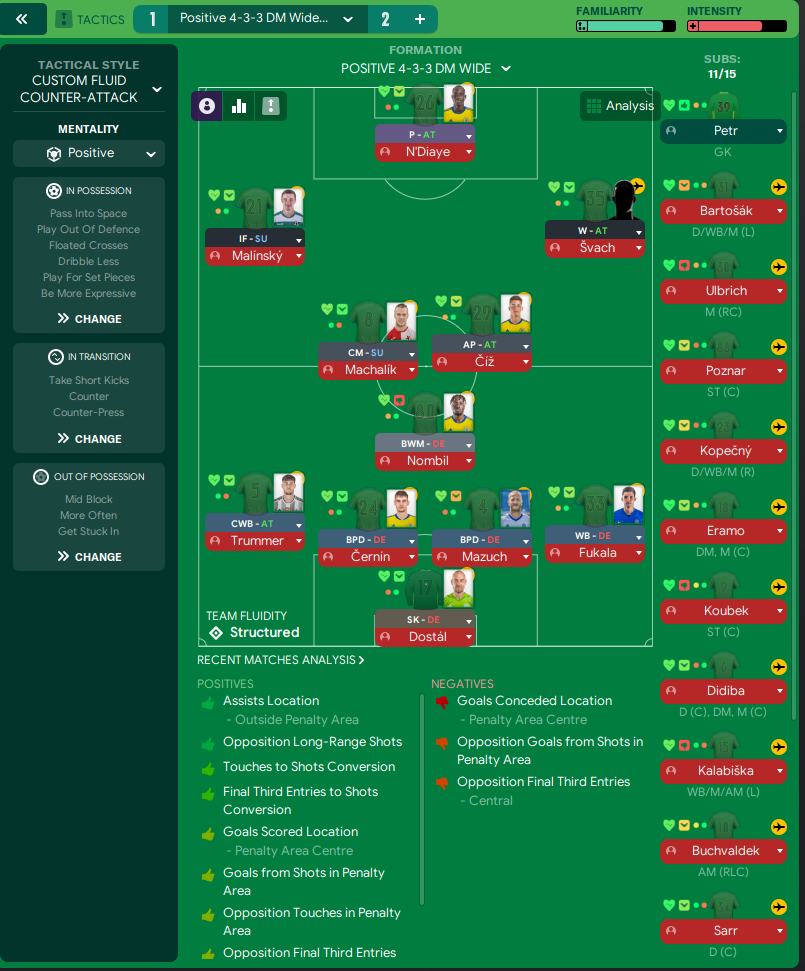
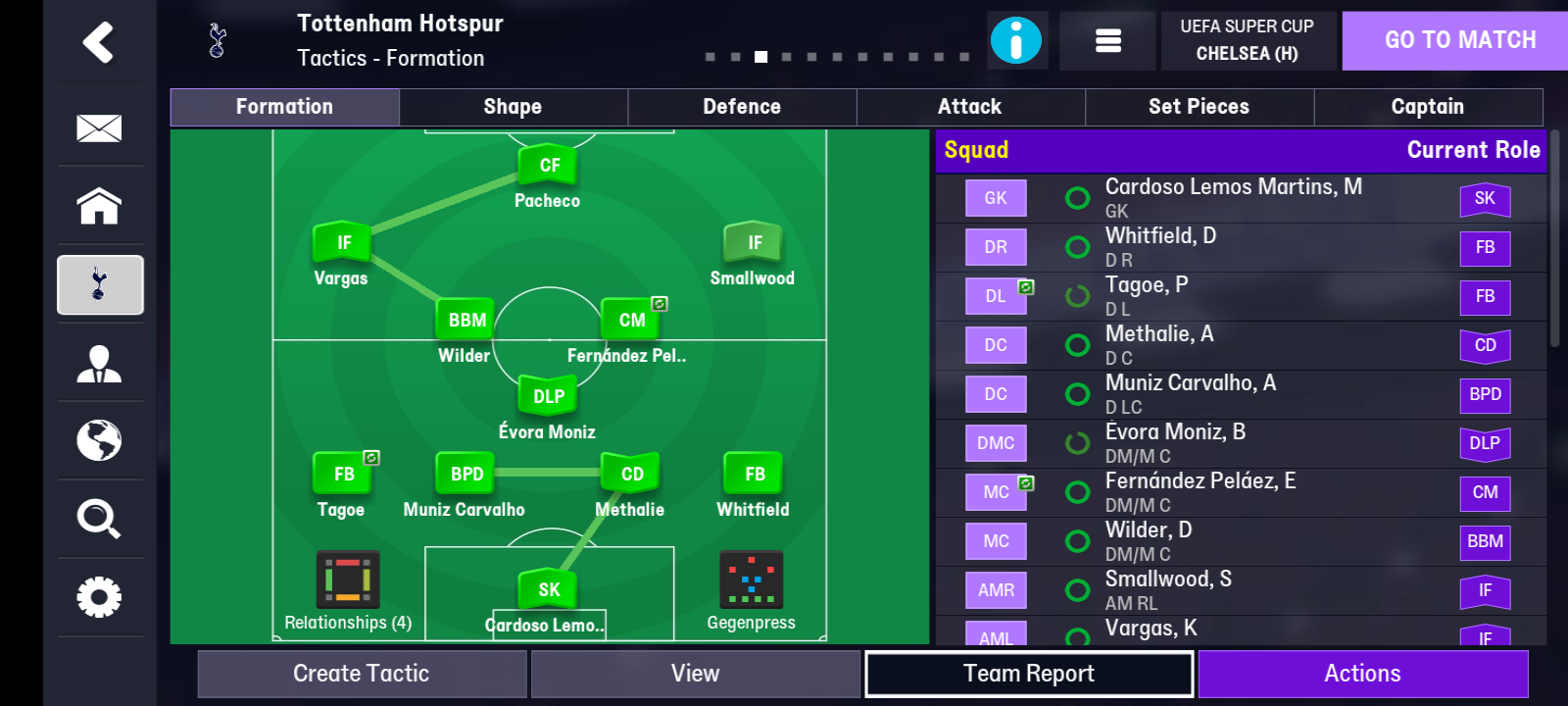
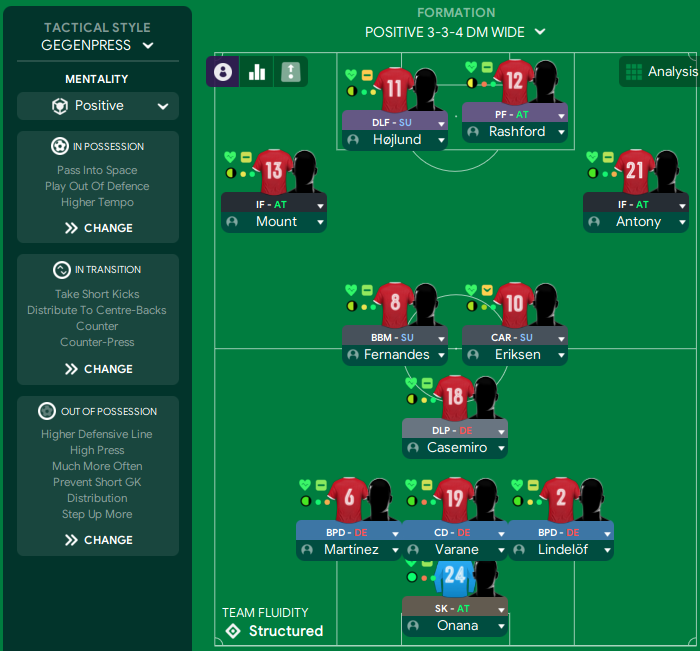
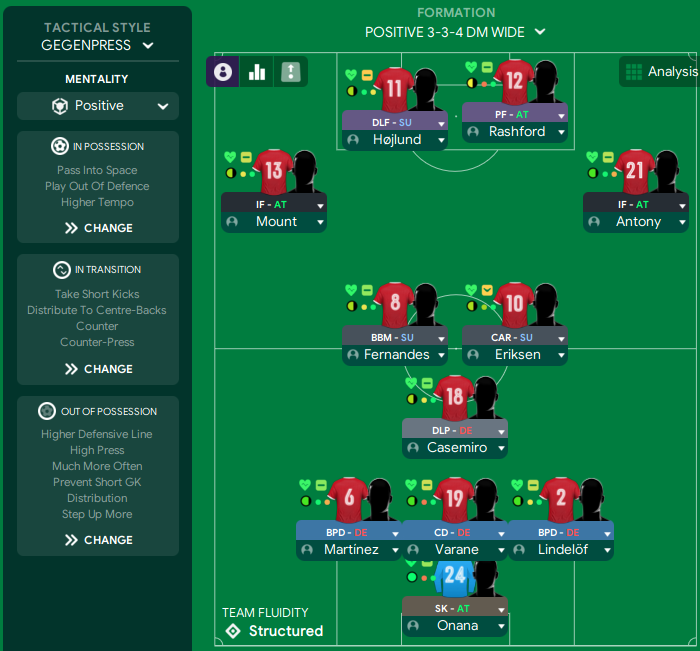
More Gegenpress tactics
Guides for this formation
The tactical theory behind the 4-3-3 DM Wide: roles, instructions, and the trade-offs that decide whether the system holds up.
Foundations
Understanding the 4-3-3 Formation
Master the classic 4-3-3: player roles, tactical variations, and the trade-offs that decide whether it sings or stalls.
Read guide
Player pairings
Midfield Trios
Holder, runner, creator: the role distribution rule for three-man midfields, the AMC variants, and the antipatterns that break them.
Read guide
Playing styles
Gegenpressing: A Full Guide
Klopp-style gegenpressing in FM, including squad profile, line-and-press pairing, sustainable workload, and the antipatterns to avoid.
Read guide