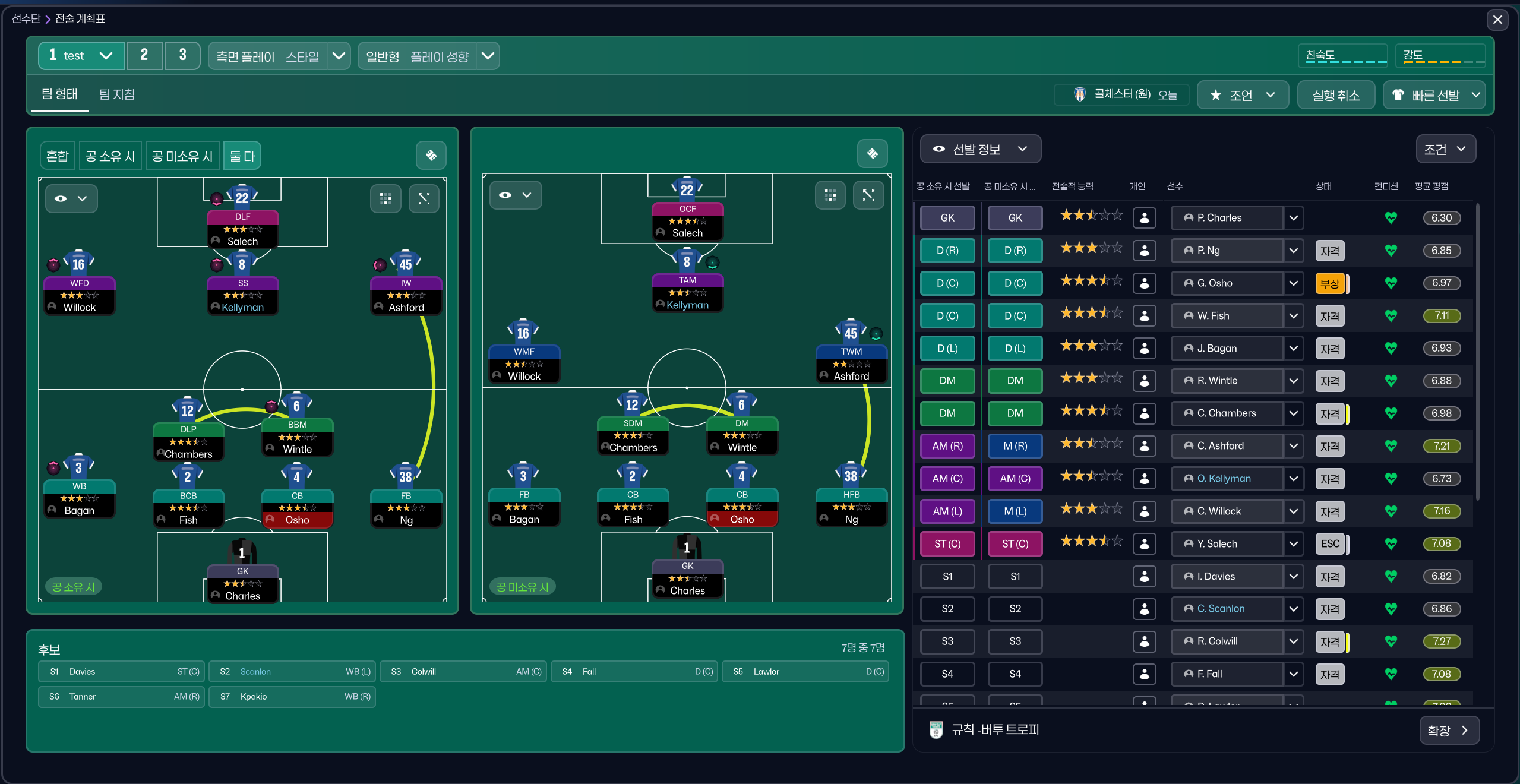
Uploaded Tactic
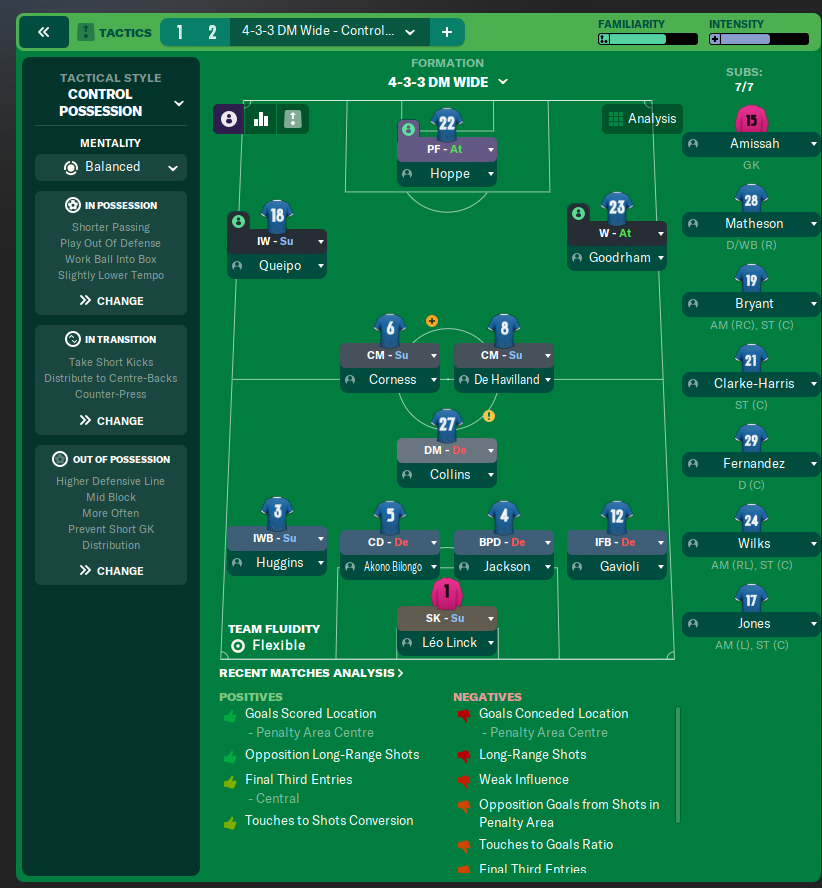
Formation & Style
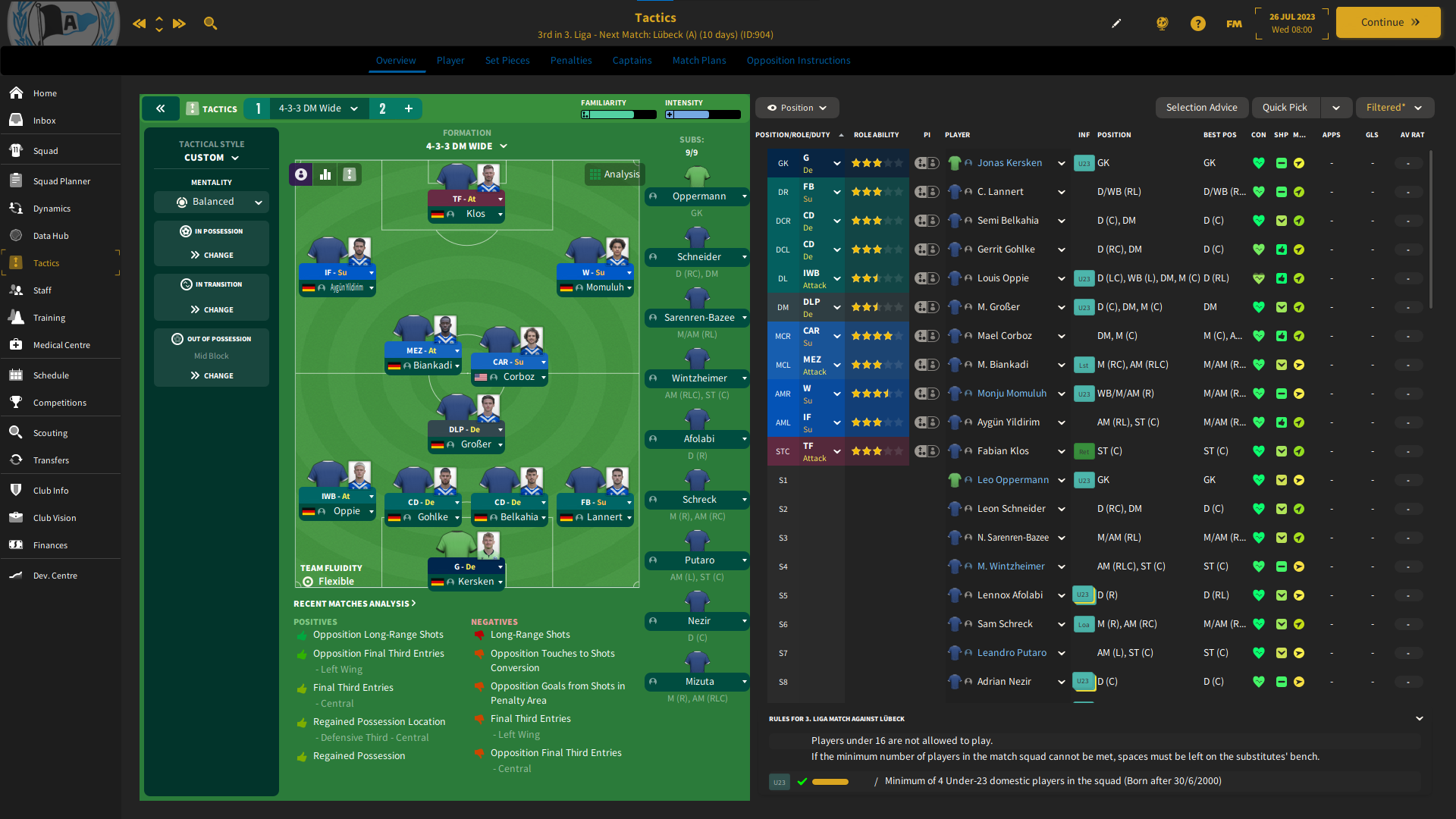
Tactical Style:Control Possession
Mentality:Balanced
Formation:4-3-3 DM Wide
Team Fluidity:Flexible
In Possession
Shorter Passing
Play Out Of Defense
Work Ball Into Box
Slightly Lower Tempo
In Transition
Take Short Kicks
Distribute to Centre-Backs
Counter-Press
Out of Possession
Higher Defensive Line
Mid Block
More Often Prevent Short GK Distribution
Team Shape Without Ball
Shape:4-1-4-1
Description:Compact formation depending on a midfield shield provided by the defensive midfielder.
Evidence:DM in a central position ([3,3]) gives extra coverage to the defence.
Team Shape With Ball
Shape:4-3-3
Description:Utilizes width through wingers while the inside forward and pressing forward operate centrally.
Evidence:Winger and inside forward support the attack, with the pressing forward acting as the focal point.
Phase Description
Attacking Play
Focus on short, purposeful passes to maintain ball possession and create goal-scoring opportunities through patient build-up play.
Defensive Transition
Quickly regain possession through coordinated pressing, targeting opposition players or areas where they are weak.
Main Focus
Control the tempo of the game while retaining solid defensive structure.
Key Strengths
Effective Midfield Control
Strong presence in midfield with three focused on support, allowing for ball retention and distribution.
Wide Play Threat
Utilization of width through a winger and an inside forward stretching the opposition defence.
Solid Defensive Foundation
Defensive midfielder shields the backline, allowing the full-backs to join attacks effectively.
Conflicting Directions
Long-Range Shooting Vulnerability
Higher defensive line may expose the team to long-range shots if not organized properly.
Concession of Goals from Set Pieces
Potential for conceding from corners or free-kicks if defensive discipline is lacking.
Dependence on Attacking Width
Excessive reliance on the wing play without sufficient central penetration may limit offensive effectiveness.
Tactical Suggestions
Increase Central Penetration
Encourage central midfielders to make more forward runs to support the attack.
Adjust Defensive Line
Consider a slightly lower defensive line to mitigate long-range shooting threats.
Enhance Player Roles Synchronization
Encourage better coordination between the inside forward and the pressing forward for combined actions.
Ask Questions About Your Lineup
Related Tactics
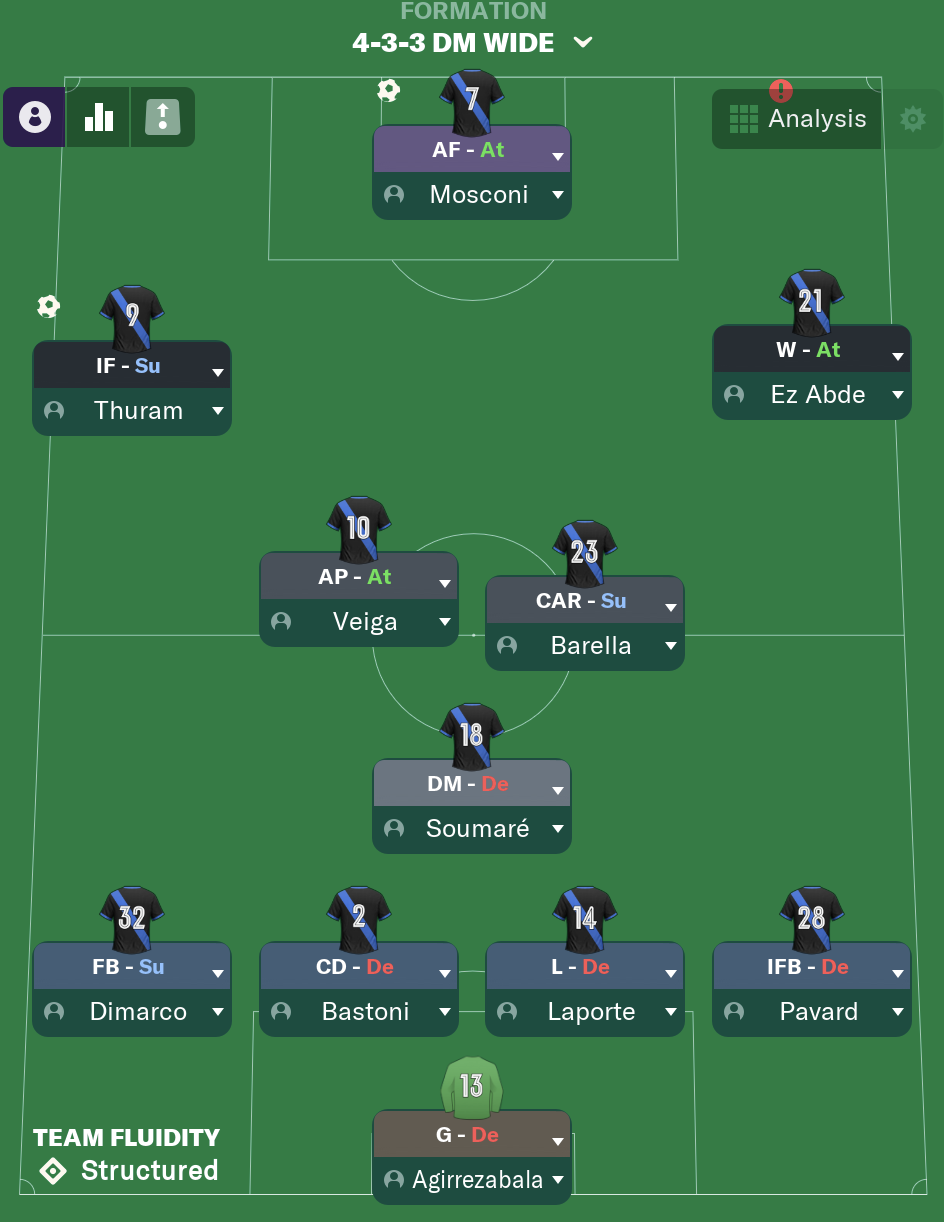
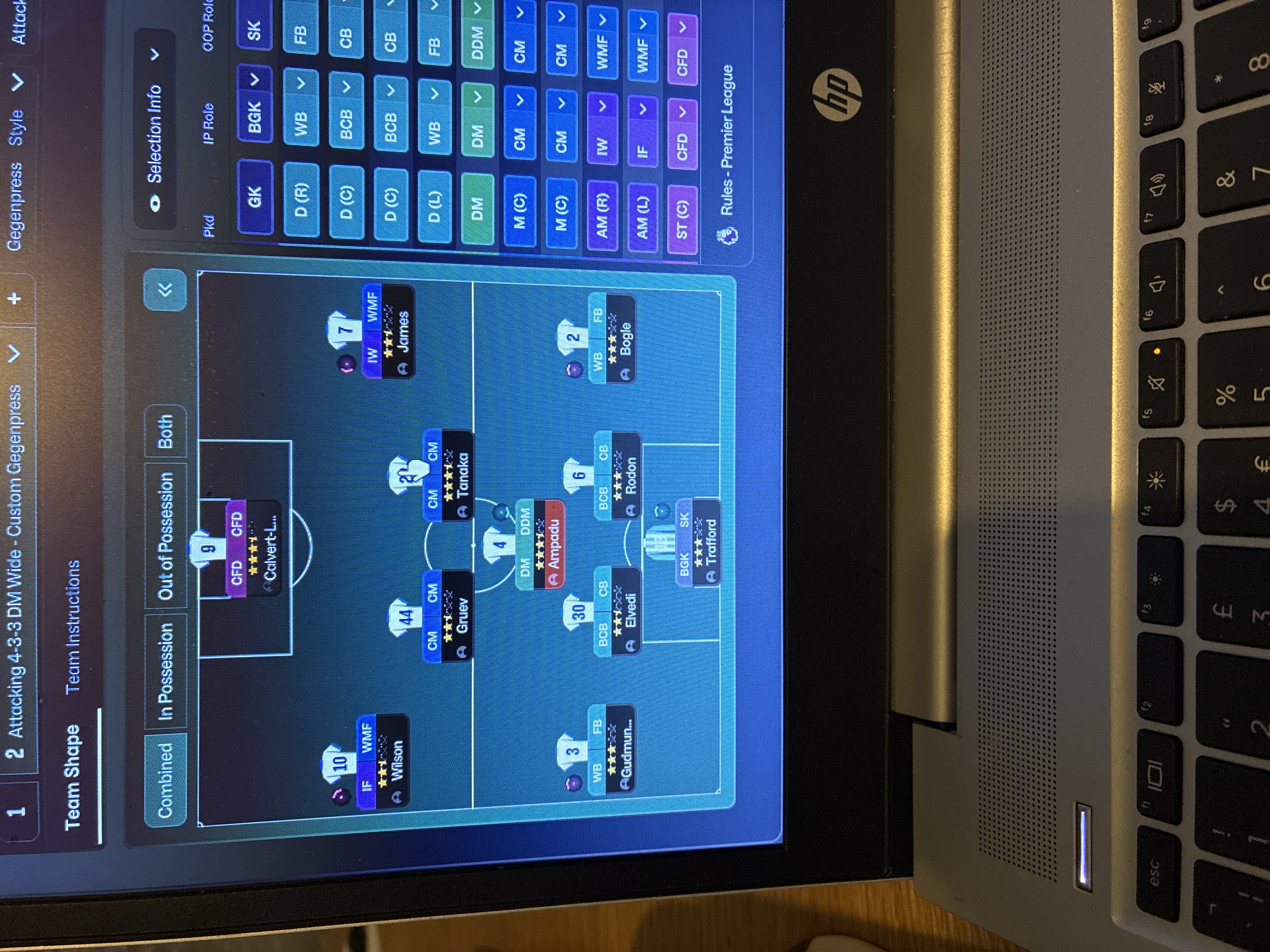
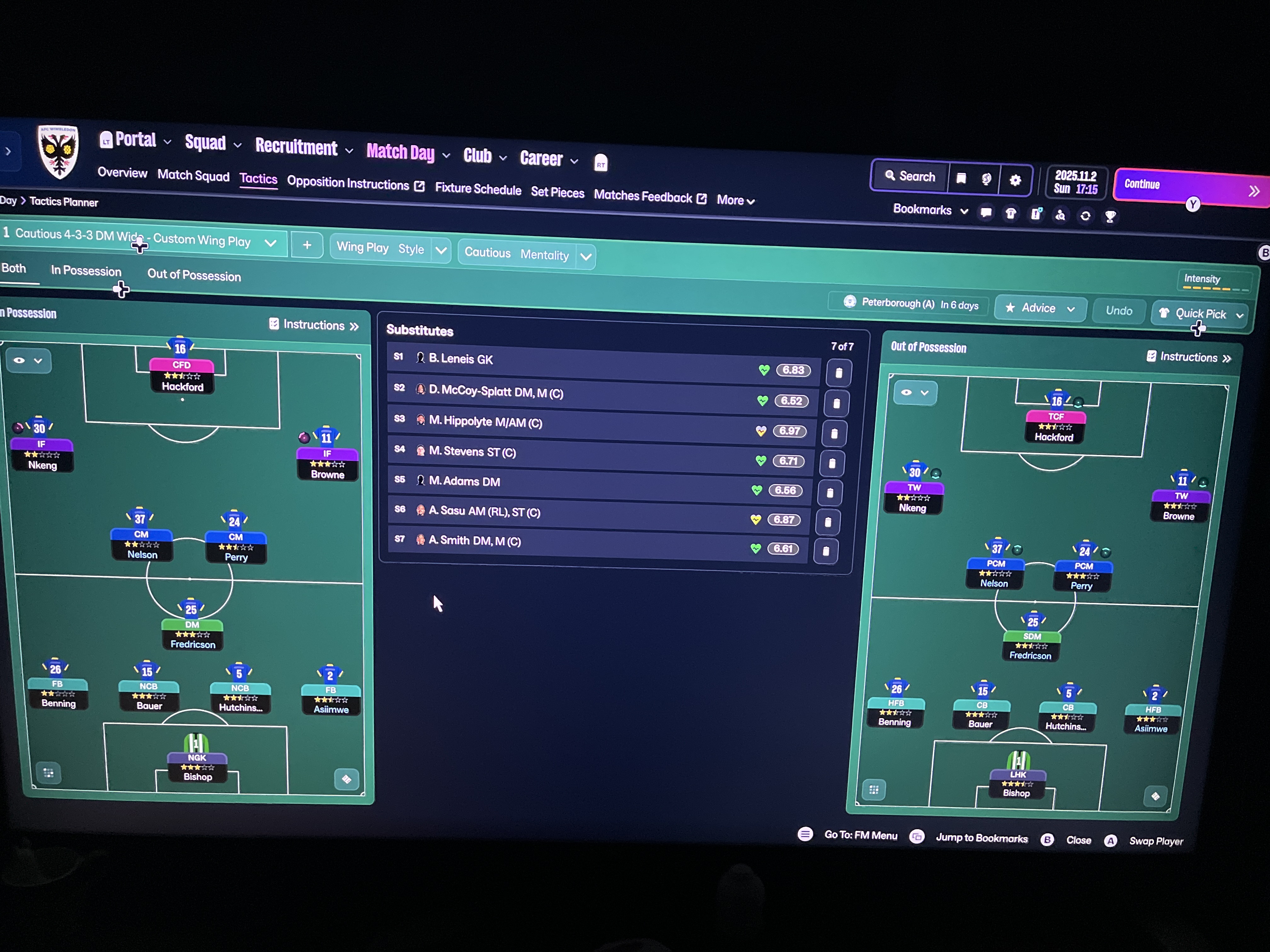
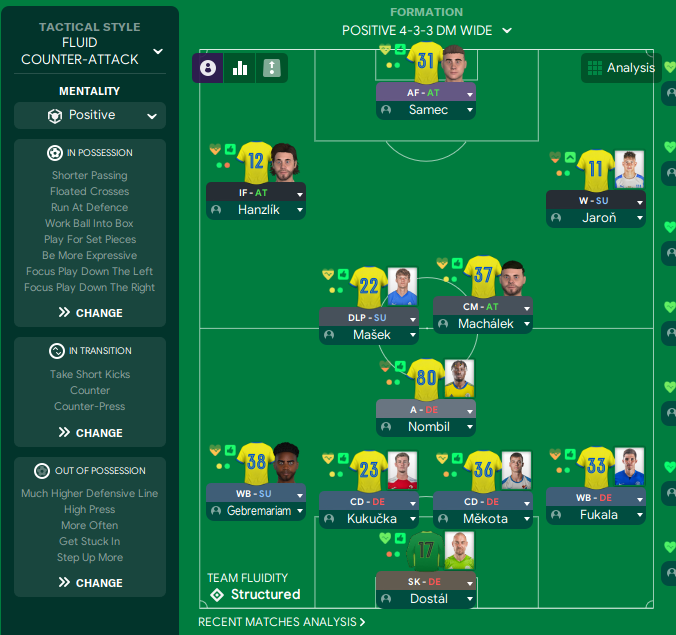
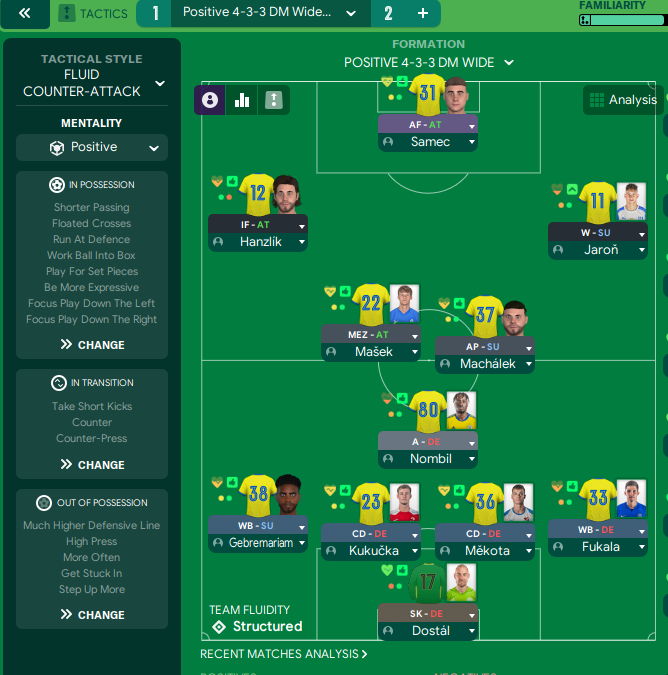
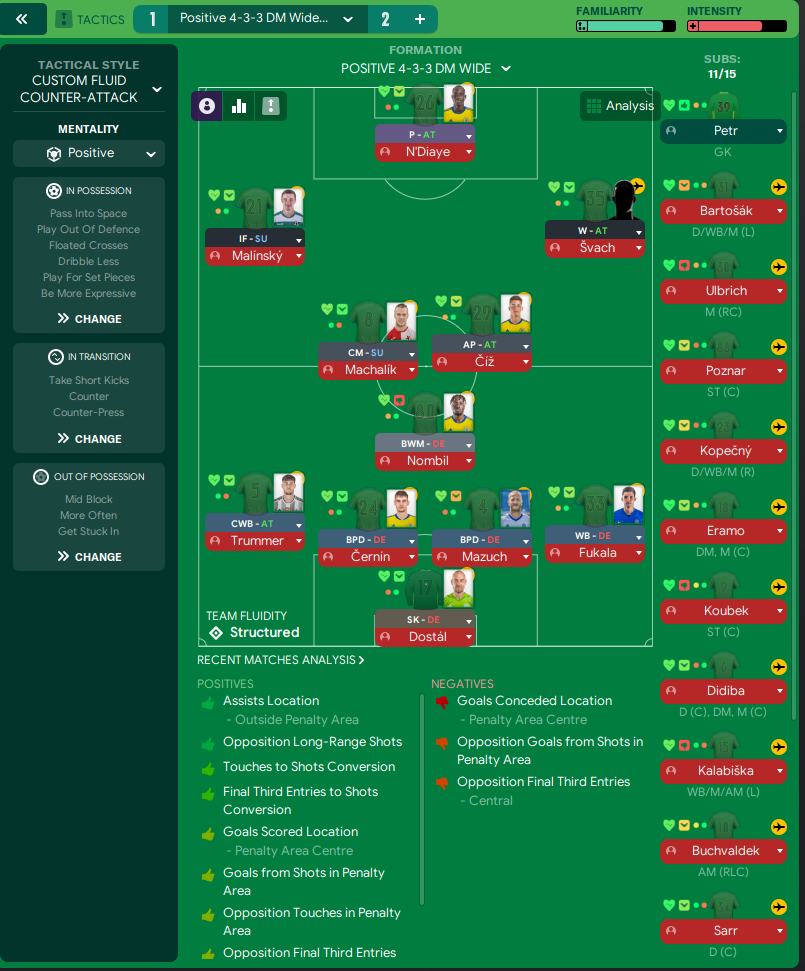
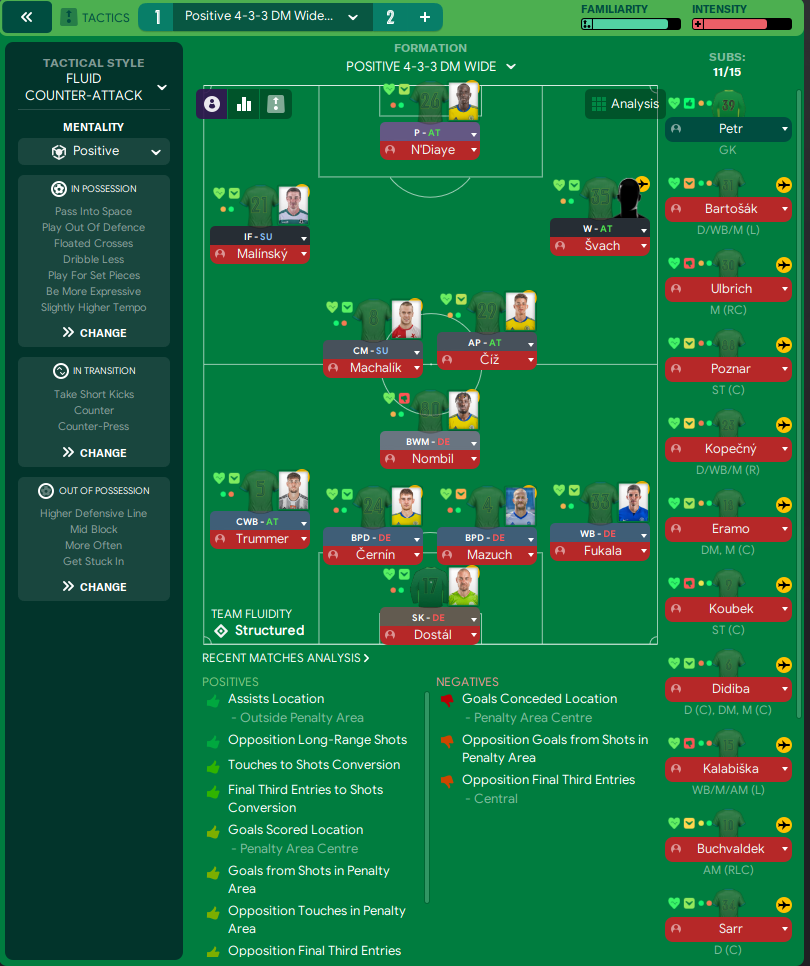
More Control Possession tactics
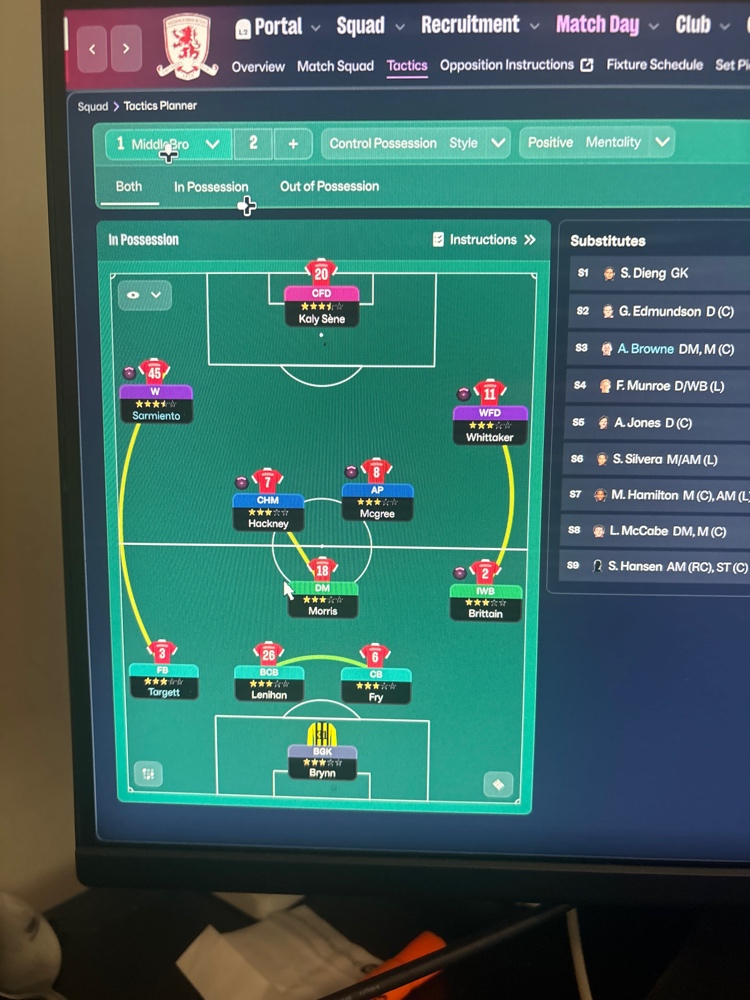
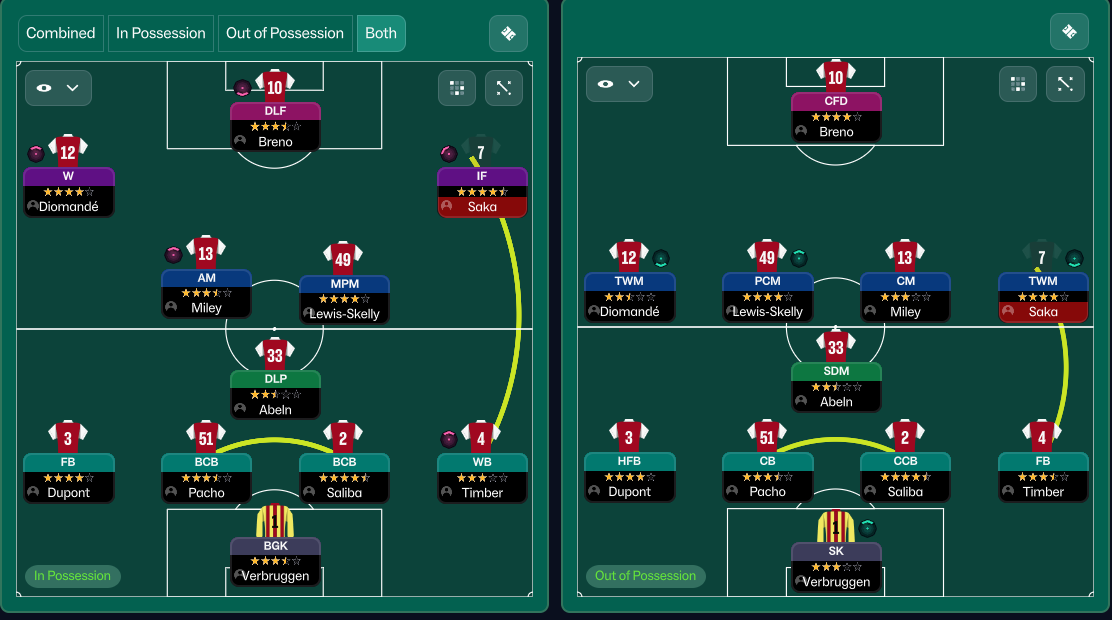
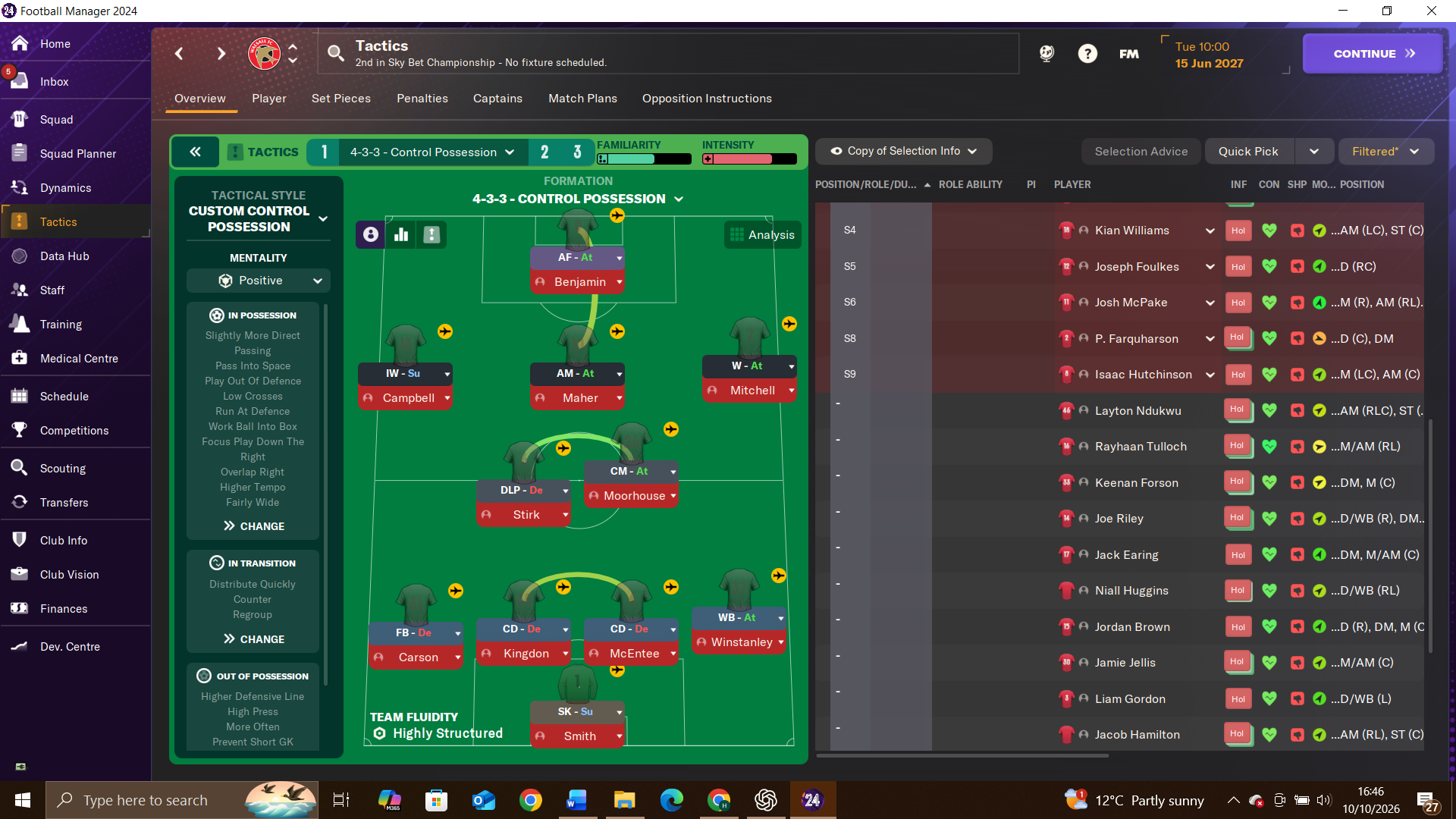
Guides for this formation
The tactical theory behind the 4-3-3 DM Wide: roles, instructions, and the trade-offs that decide whether the system holds up.
Foundations
Understanding the 4-3-3 Formation
Master the classic 4-3-3: player roles, tactical variations, and the trade-offs that decide whether it sings or stalls.
Read guide
Player pairings
Midfield Trios
Holder, runner, creator: the role distribution rule for three-man midfields, the AMC variants, and the antipatterns that break them.
Read guide
Playing styles
Gegenpressing: A Full Guide
Klopp-style gegenpressing in FM, including squad profile, line-and-press pairing, sustainable workload, and the antipatterns to avoid.
Read guide