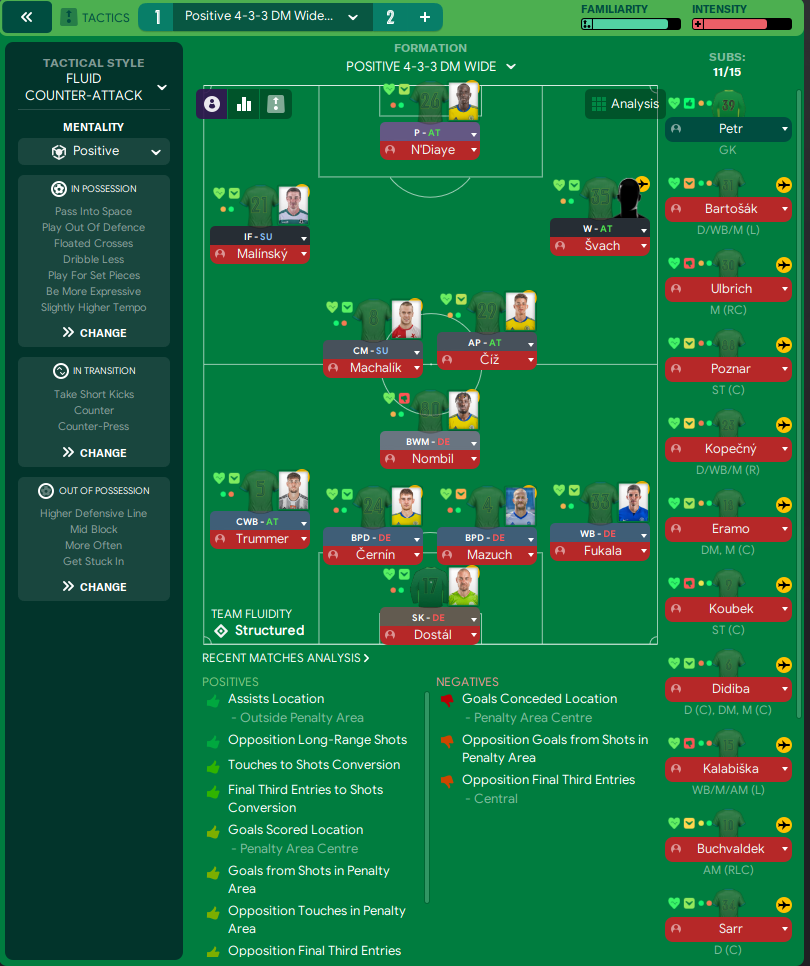
Uploaded Tactic
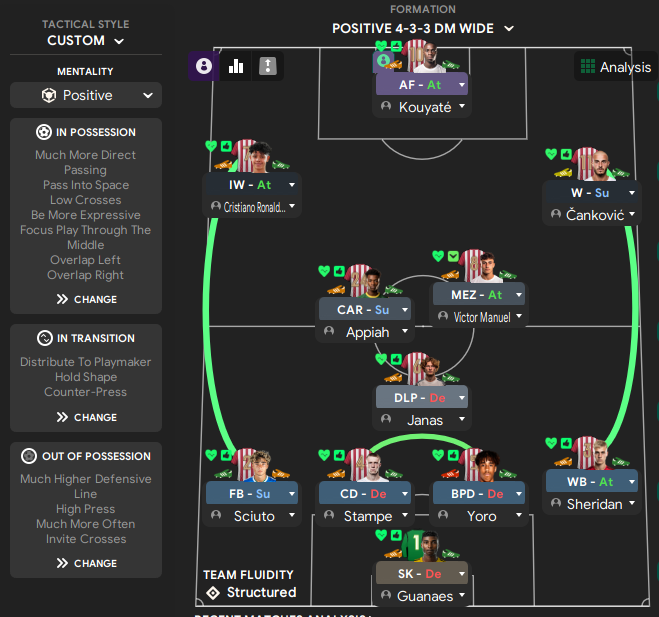
Formation & Style
Tactical Style:Custom
Mentality:Positive
Formation:4-3-3 DM Wide
Team Fluidity:Structured
In Possession
Much More Direct Passing
Pass Into Space
Low Crosses
Be More Expressive
Focus Play Through The Middle
Overlap Left
Overlap Right
In Transition
Distribute To Playmaker
Hold Shape
Counter-Press
Out of Possession
Much Higher Defensive Line
High Press
More Often Invite Press
Team Shape Without Ball
Shape:4-3-3
Description:A compact defensive setup with a high line, supported by the team pressing aggressively.
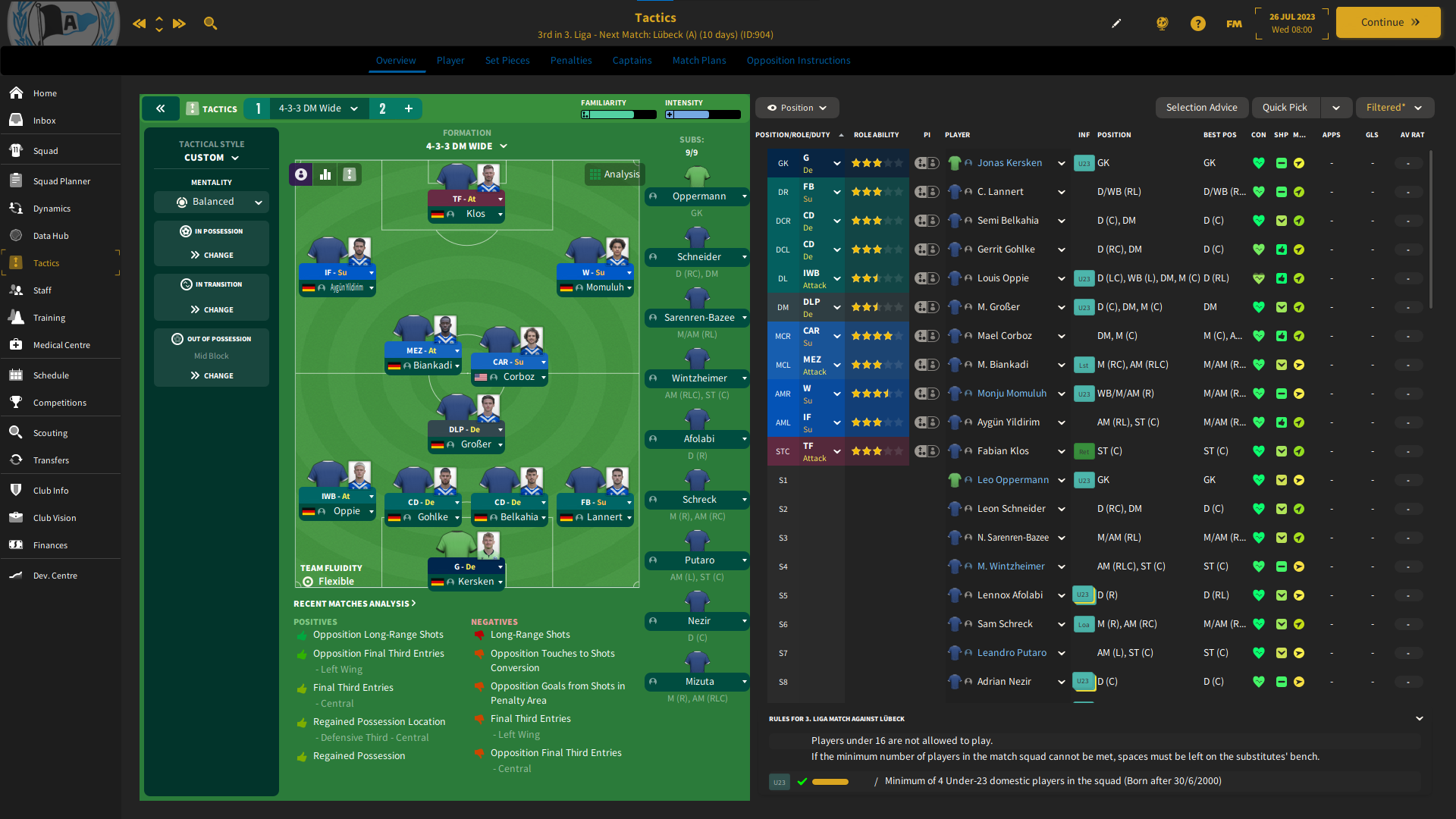
Evidence:Defensive structure with FB-Su at [2,1] and [2,5], CD-De at [2,3], BPD-De at [2,4], and higher defensive line.
Team Shape With Ball
Shape:4-3-3 Wide
Description:Utilizes the width provided by the wingers and wing-back to stretch the opposition.
Evidence:With IW-A at [6,1] and W-Su at [6,5], coupled with an AF-A at [6,3], creating dynamic attacking play.
Phase Description
Attacking Play
The team plays direct football with a focus on quick transitions and exploiting space in wide areas.
Defensive Transition
Players are instructed to counter-press immediately after losing possession, creating pressure on the opponent.
Main Focus
To maintain a balance between a solid defensive shape and quick attacking plays via overlaps and direct passes.
Key Strengths
Width and Overlaps
The presence of wing-backs and inside wingers allows the team to stretch the pitch and create overloads.
Quick Transition Play
The team’s ability to transition quickly into attack helps catch opponents off guard.
Midfield Versatility
Different roles in midfield create varied options for both defensive support and attacking runs.
Conflicting Directions
Overlapping with Central Play
While overlaps are encouraged, an emphasis on central play may limit wing presence.
High Line Vulnerability
Playing a high defensive line may expose the team to quick counter-attacks.
Pressing Needs Balance
A strong press might leave gaps in the midfield if not properly supported.
Tactical Suggestions
Adjust Defensive Line
Consider lowering the defensive line to reduce exposure to counter-attacks.
Support from Midfield
Utilize the Carrilero more defensively to maintain balance when pressing.
Enhanced Width with Wing Play
Encourage the wing players and wing-backs to provide more width, possibly switching MEZ role for a more central attacking player.
Ask Questions About Your Lineup
Related Tactics
Guides for this formation
The tactical theory behind the 4-3-3 DM Wide: roles, instructions, and the trade-offs that decide whether the system holds up.
Foundations
Understanding the 4-3-3 Formation
Master the classic 4-3-3: player roles, tactical variations, and the trade-offs that decide whether it sings or stalls.
Read guide
Player pairings
Midfield Trios
Holder, runner, creator: the role distribution rule for three-man midfields, the AMC variants, and the antipatterns that break them.
Read guide
Playing styles
Gegenpressing: A Full Guide
Klopp-style gegenpressing in FM, including squad profile, line-and-press pairing, sustainable workload, and the antipatterns to avoid.
Read guide