Uploaded Tactic
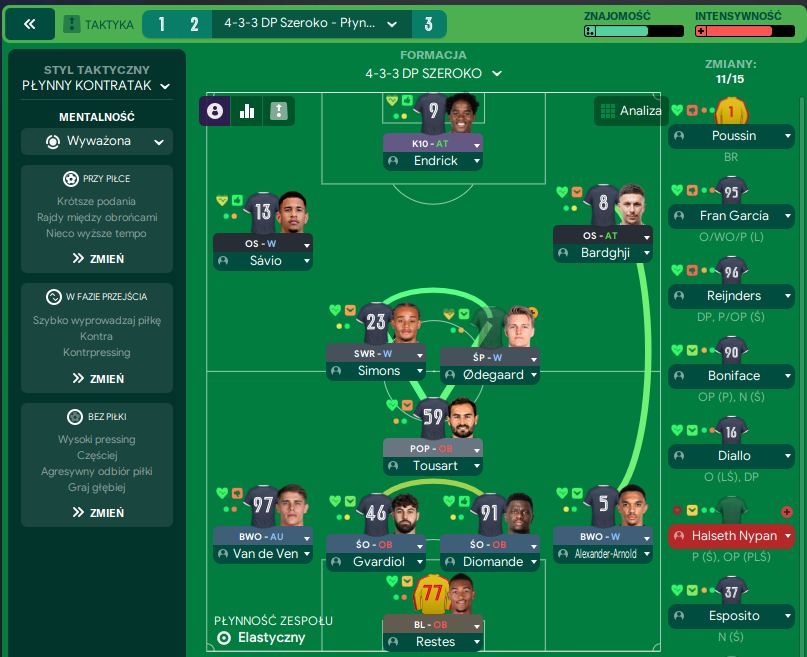
Formation & Style
Tactical Style:Counter-Press
Mentality:Balanced
Formation:4-3-3 DP Szeroko
Team Fluidity:Elastic
In Possession
Shorter Passing
Runs via the Channels
Slightly Higher Tempo
In Transition
Quickly Transition from Defense to Offense
Counter
Counter-Pressing
Out of Possession
High Pressing
More Urgent
Win the Ball Back Aggressively
Play Deeper
Team Shape Without Ball
No team shape without ball data available
Team Shape With Ball
No team shape with ball data available
Key Strengths
Dynamic Attacking Play
Utilizes fast wing play and inside forwards to exploit defensive weaknesses.
Counter-Pressing Ability
Quickly regains possession after losing the ball, disrupting opponent’s play.
Midfield Control
Balanced midfield with a deep-lying playmaker supports both defense and attack.
Solid Defensive Organization
A well-structured back line, with ball-playing defenders able to initiate attacks.
Conflicting Directions
Pressing vs. Counter-Attack
High pressing may leave defense exposed during counter-attacks if not executed properly.
Short Passing with Quick Transitions
Short passing can slow down counter-attacks; more direct passing during transitions may be needed.
Pace vs. Possession
Inside forwards require pace, but a balanced approach may slow down their effectiveness.
Wing Play vs. Central Play
Excessive reliance on wing play might miss opportunities to exploit central areas.
Tactical Suggestions
Adjust Tempo in Transitions
Consider increasing tempo during transitions to utilize counter-attacking potential.
Balance High Pressing with Defensive Shape
Ensure defensive players maintain shape to avoid being easily countered.
Use of Ball Playing Defenders
Encourage ball-playing defenders to step forward and initiate attacks for greater fluidity.
Consider Alternative Wing Roles
Experiment with wingers or more traditional forwards to create unpredictability.
Ask Questions About Your Lineup
Related Tactics
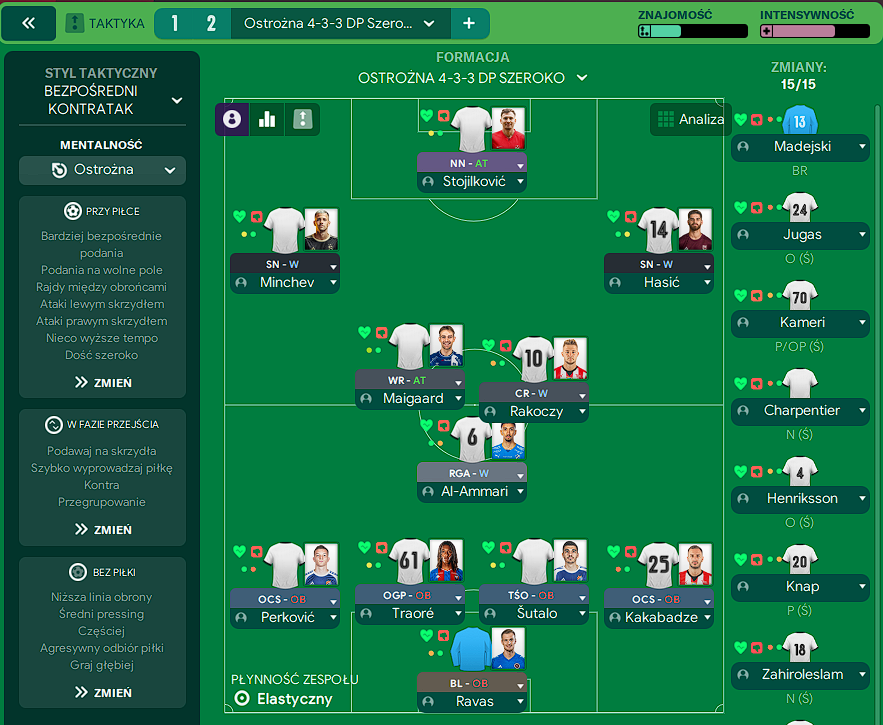
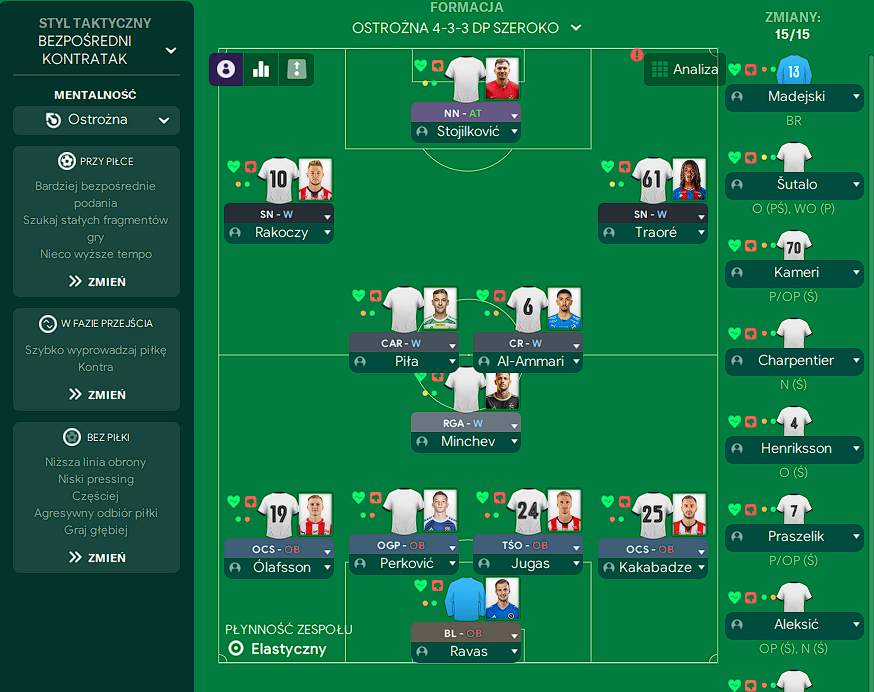
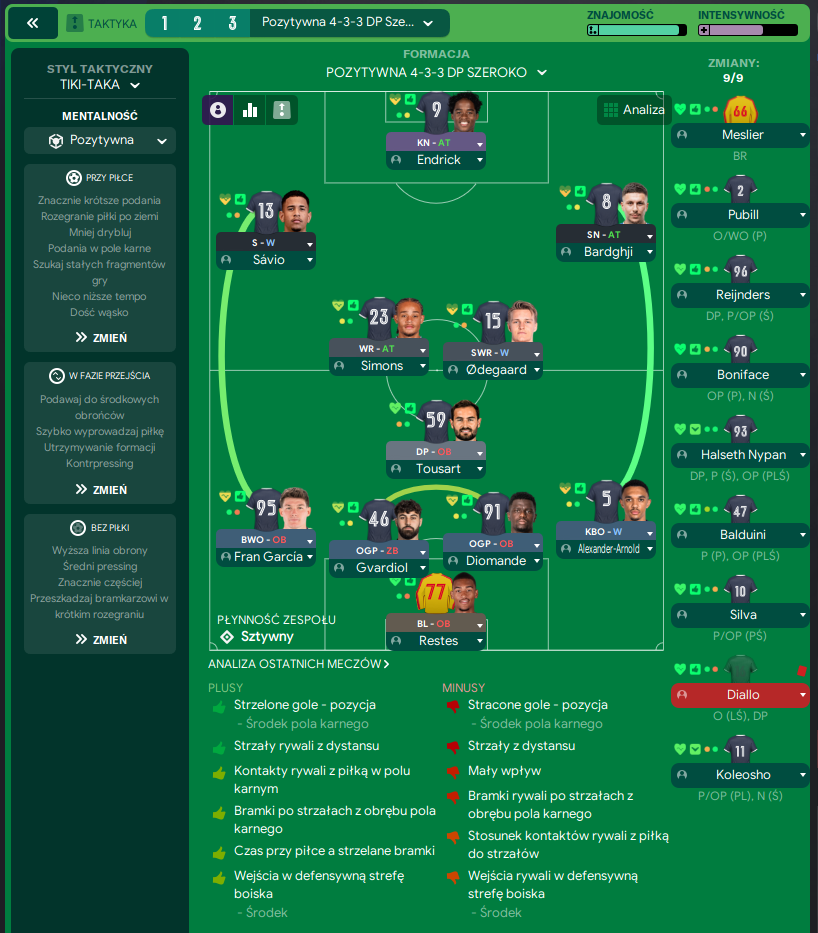
Guides for this formation
The tactical theory behind the 4-3-3 DP Szeroko: roles, instructions, and the trade-offs that decide whether the system holds up.
Foundations
Understanding the 4-3-3 Formation
Master the classic 4-3-3: player roles, tactical variations, and the trade-offs that decide whether it sings or stalls.
Read guide
Player pairings
Midfield Trios
Holder, runner, creator: the role distribution rule for three-man midfields, the AMC variants, and the antipatterns that break them.
Read guide
Playing styles
Gegenpressing: A Full Guide
Klopp-style gegenpressing in FM, including squad profile, line-and-press pairing, sustainable workload, and the antipatterns to avoid.
Read guide