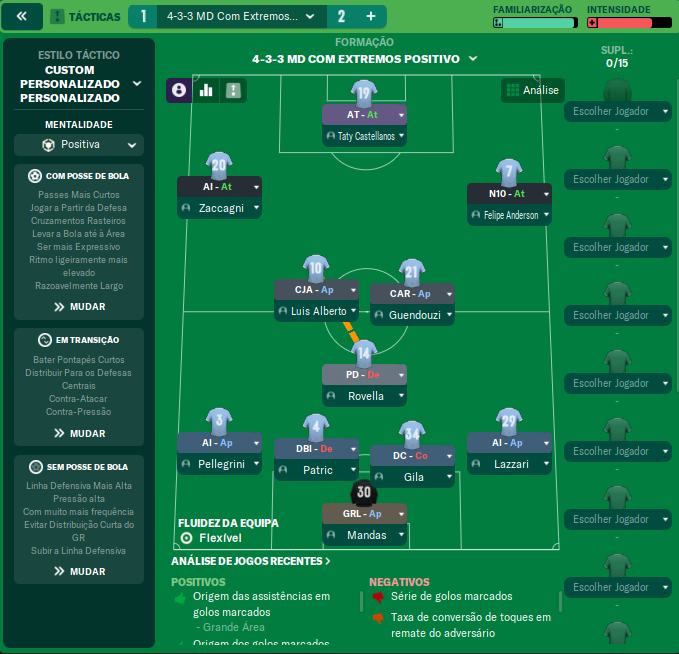
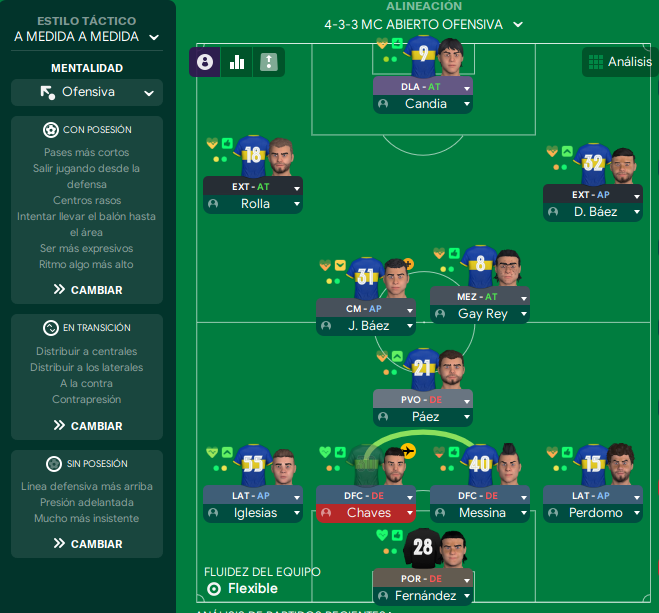
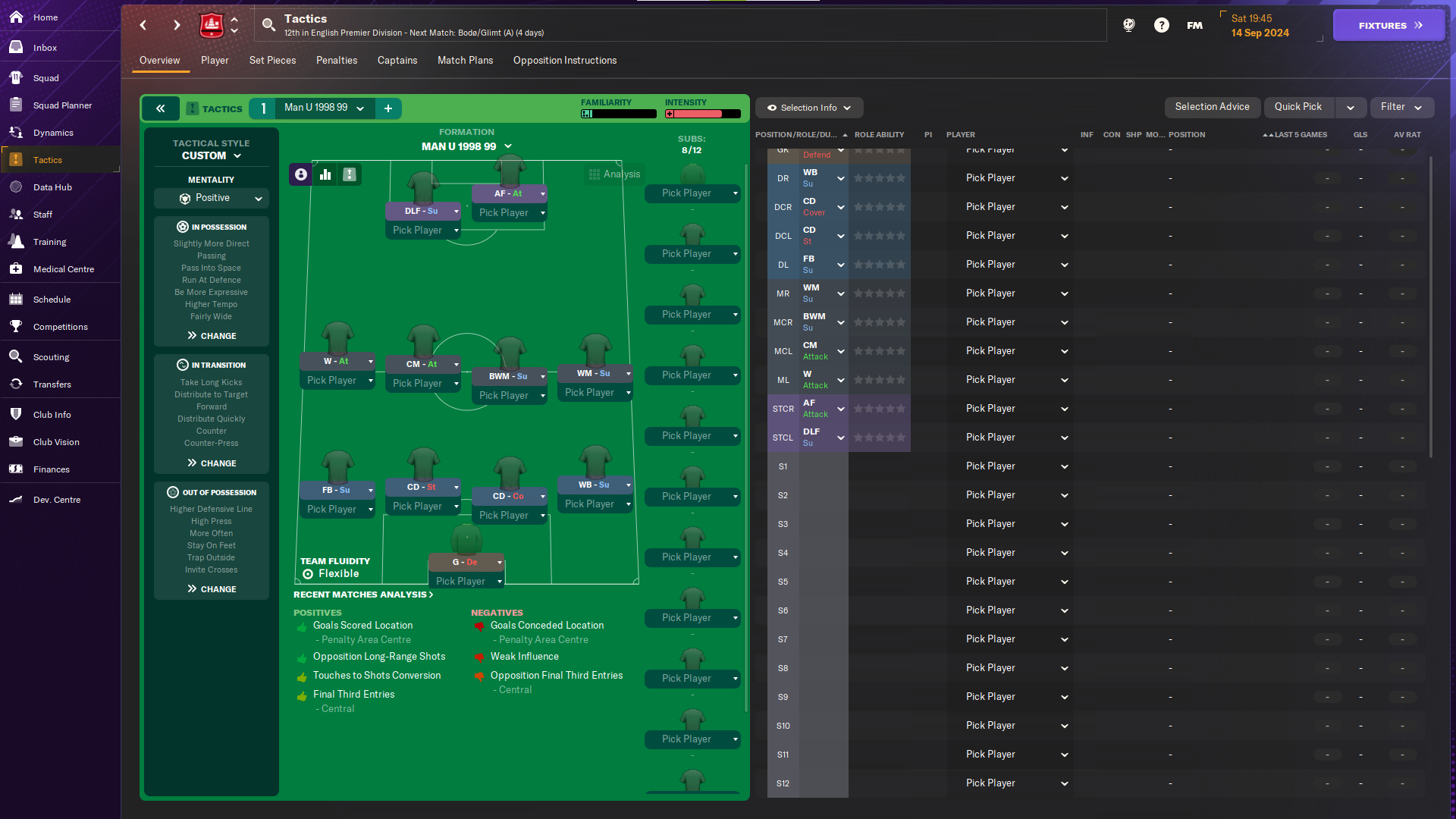
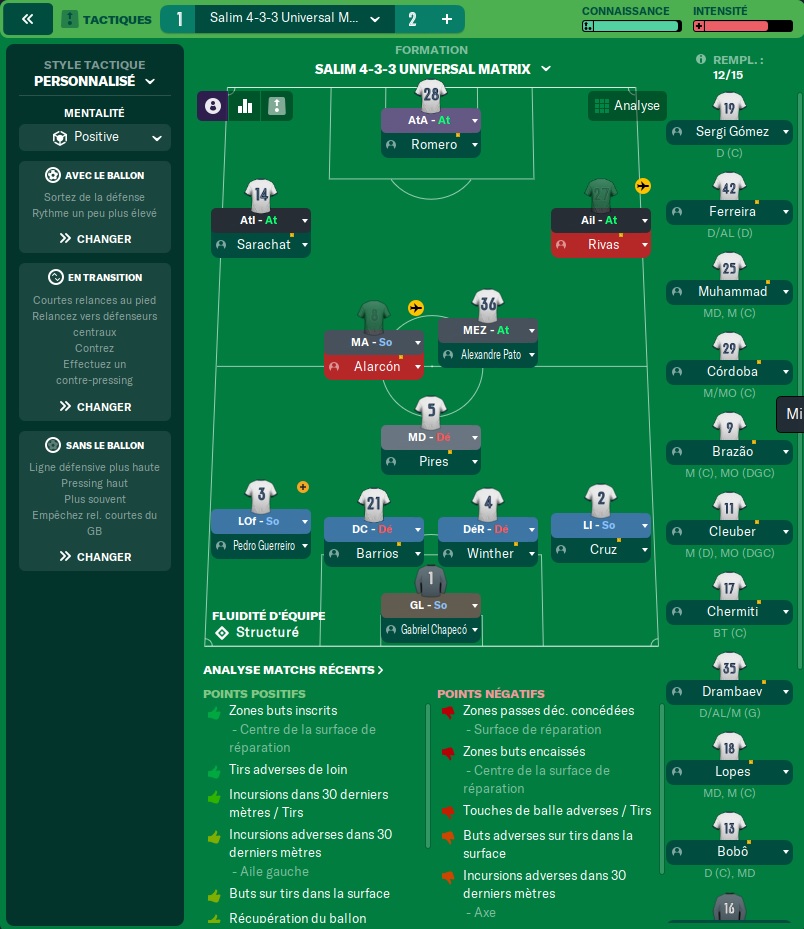
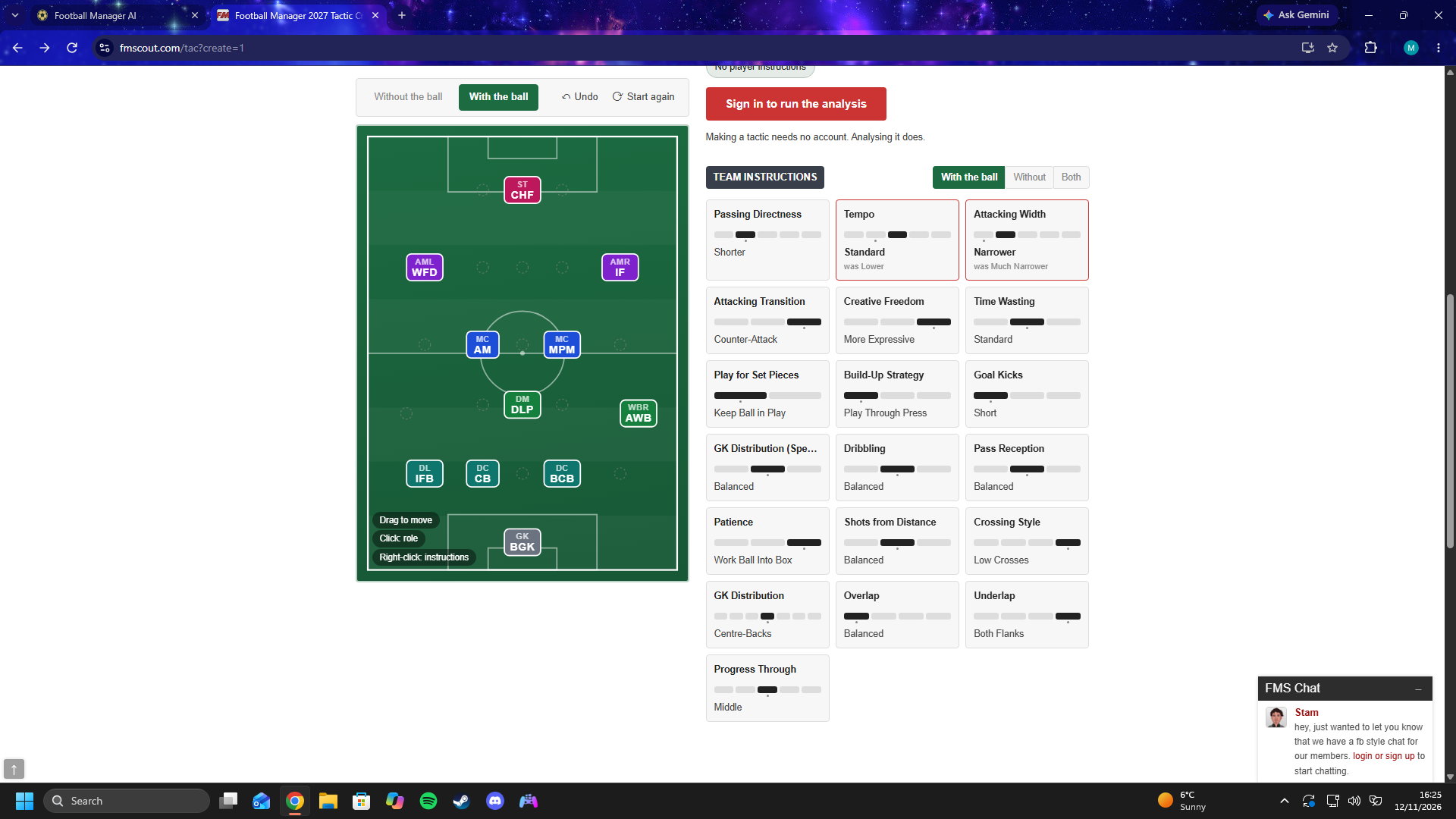
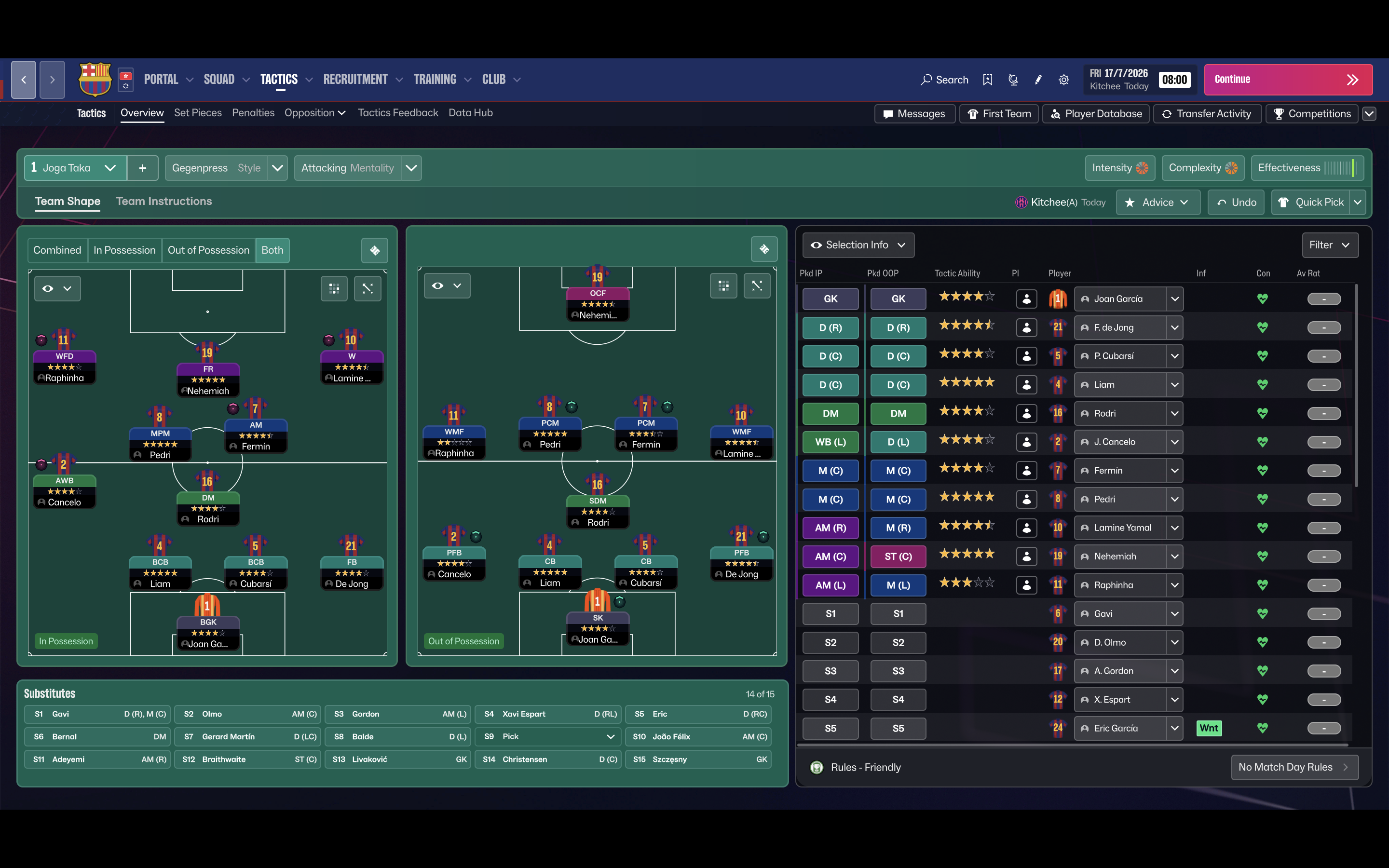
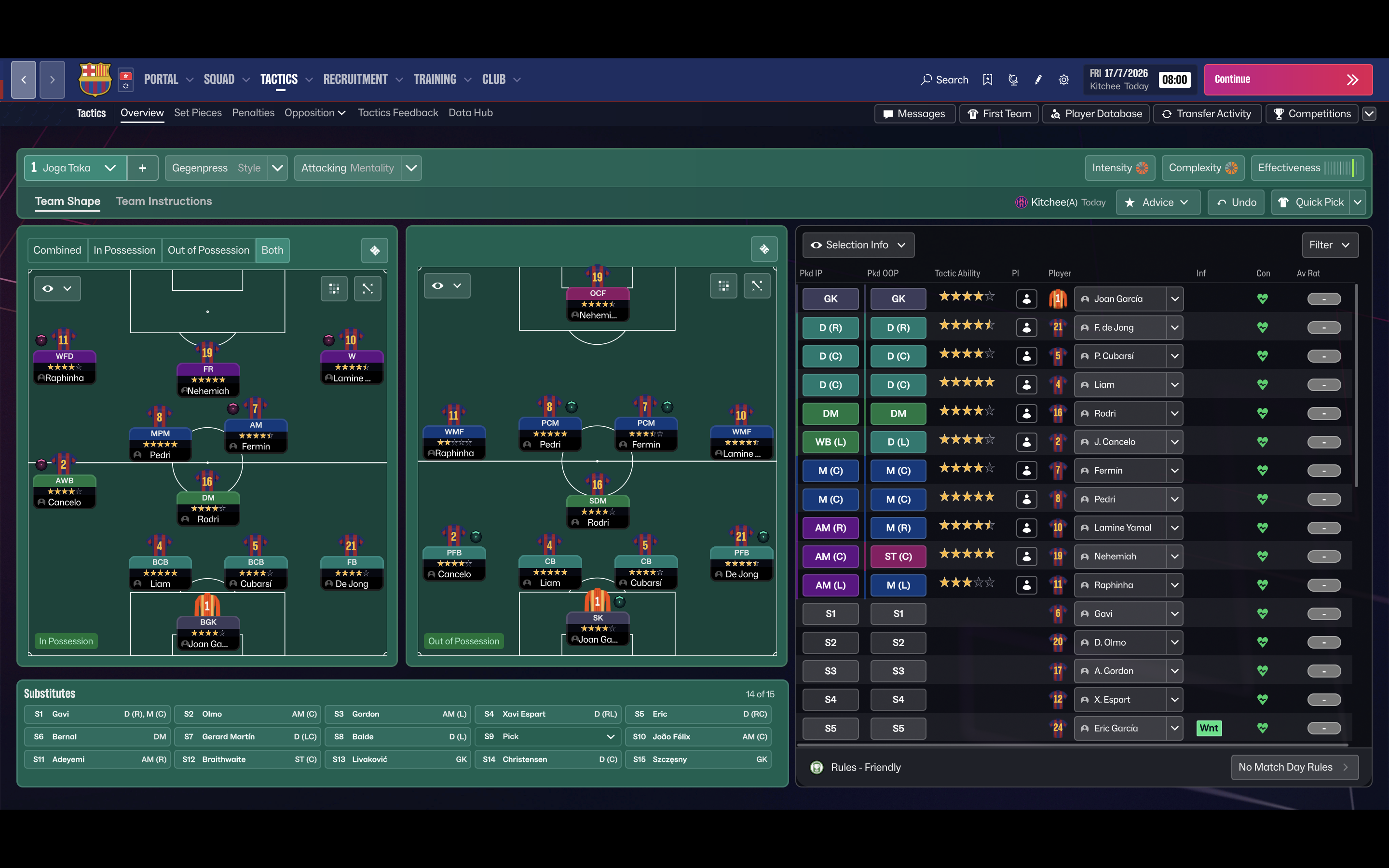
4-3-3
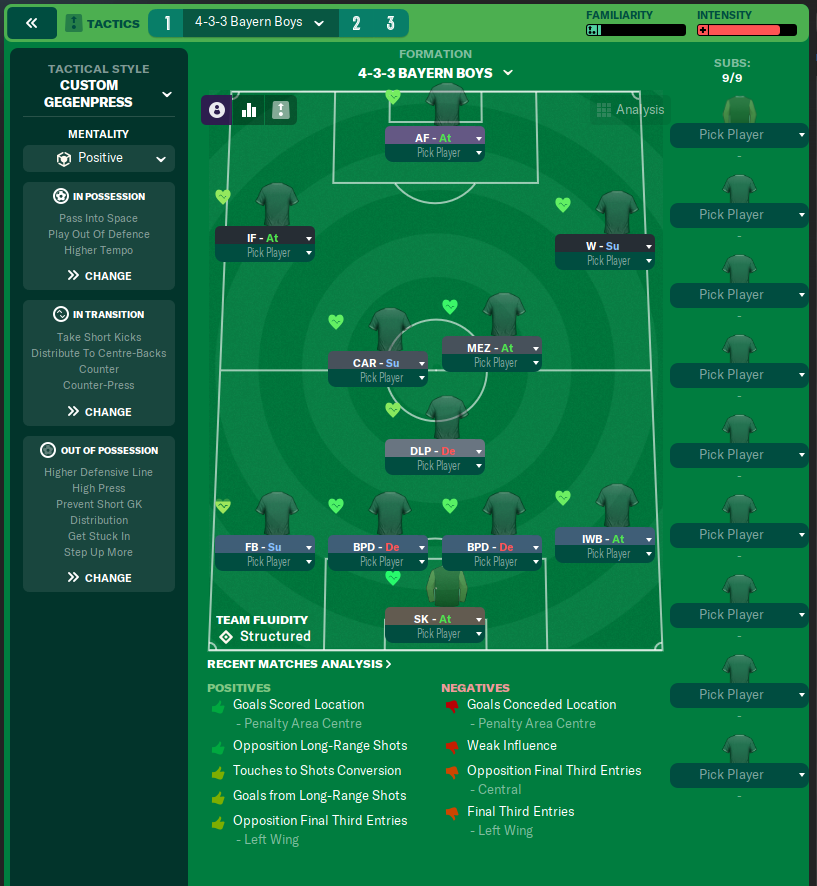
The Gegenpress style enables the team to quickly regain possession after losing the ball, pressuring opponents in their half.
Loading tactical analysis...
Gegenpress
Positive
4-3-3
Structured
Pass Into Space
Play Out Of Defence
Higher Tempo
Distribute To Centre-Backs
Counter
Counter-Press
Higher Defensive Line
High Press
Prevent Short GK Distribution
Get Stuck In
Step Up More
AF
Advanced Forward
Attack
IF
Inside Forward
Attack
W
Winger
Support
CAR
Carrying Playmaker
Support
MEZ
Mezzala
Attack
DLP
Deep-Lying Playmaker
Defend
FB
Full-Back
Support
BPD
Ball-Playing Defender
Defend
IWB
Inverted Wing-Back
Attack
SK
Sweeper Keeper
Attack
The Gegenpress style enables the team to quickly regain possession after losing the ball, pressuring opponents in their half.
The combination of inside forwards and wingers provides width and depth, allowing for varied attacking options.
The use of a W and inside forward may lead to over-reliance on wide areas, potentially neglecting central positioning.
A higher defensive line may expose the team to counter-attacks, particularly when pressing aggressively.
How can we improve our effectiveness in the final third?
Is our current pressing system leading to vulnerabilities defensively?
Are our wide players creating enough scoring opportunities?
Should we consider alternative formations to balance attack and defense?
How can we maximize the impact of our midfielders in transition?
Are our full-backs contributing effectively to offensive phases?
The tactical theory behind the 4-3-3: roles, instructions, and the trade-offs that decide whether the system holds up.
Klopp-style gegenpressing in FM, including squad profile, line-and-press pairing, sustainable workload, and the antipatterns to avoid.
Why circulation density and zonal occupation aren't the same thing in FM, and the half-space occupation rule that decides build-up.
Pass map, average position, xG, possession by zone: what each tablet panel tells you in FM and the tactical change it should trigger.