Uploaded Tactic
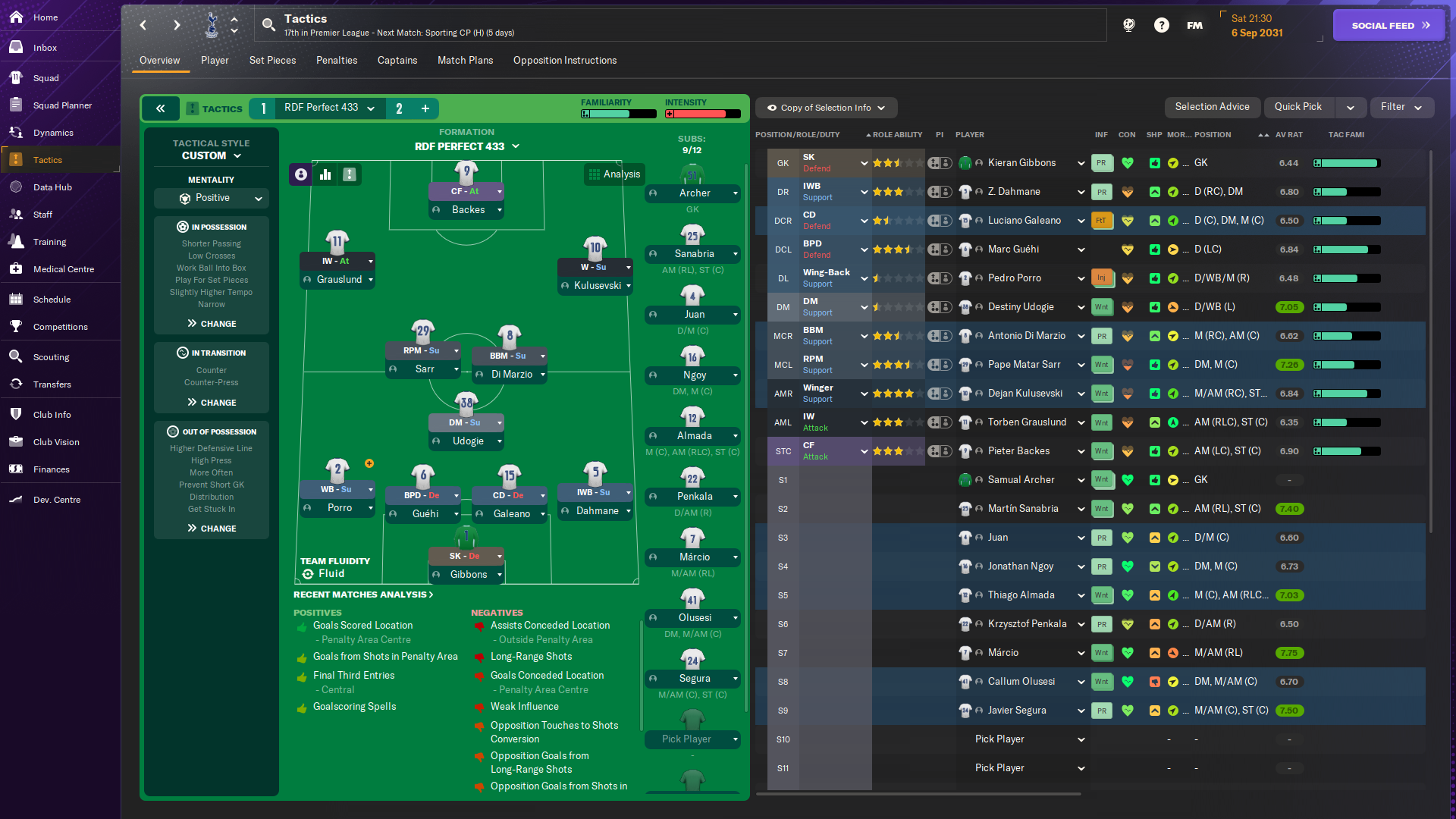
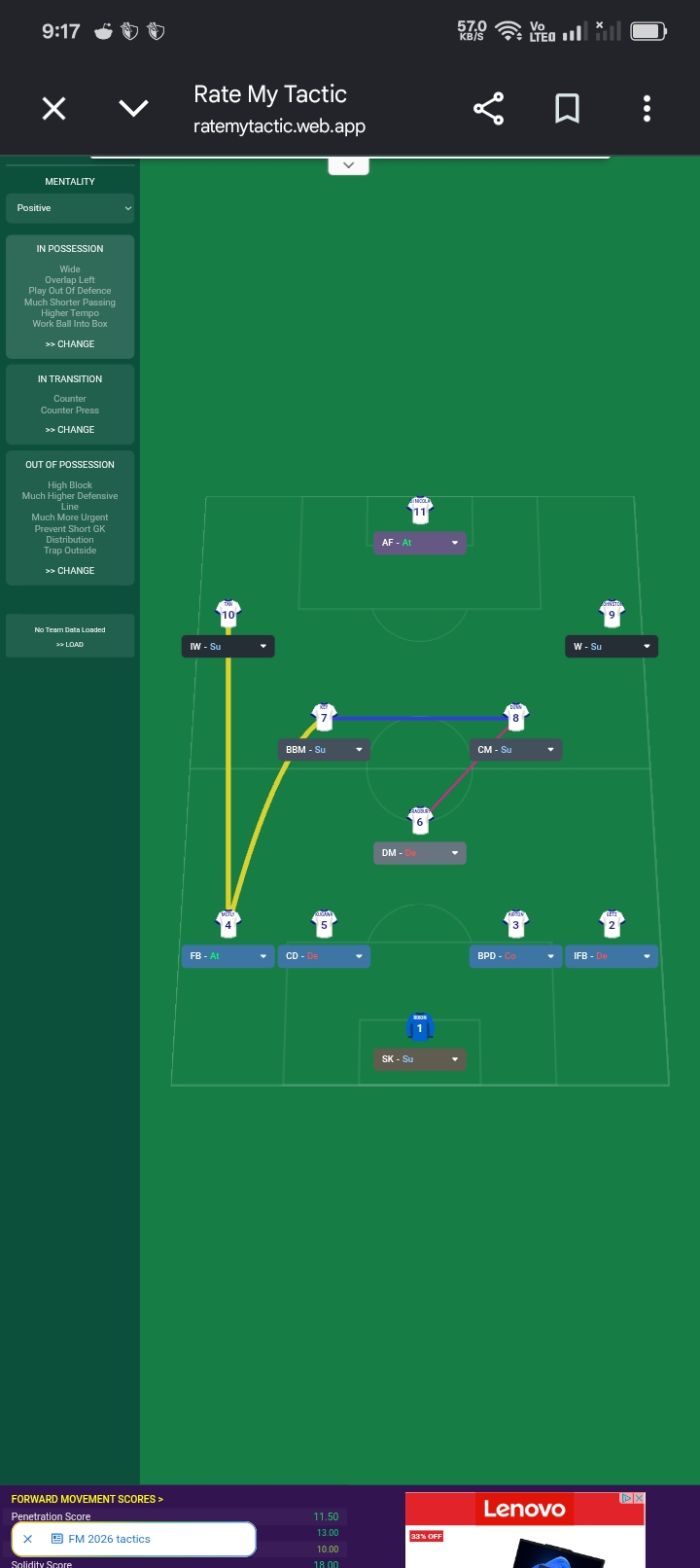
Formation & Style
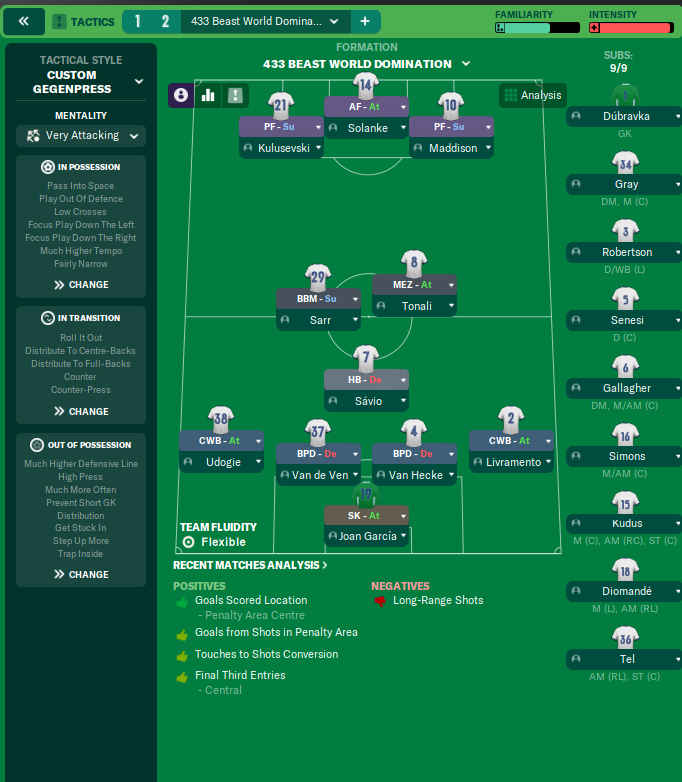
Tactical Style:Custom
Mentality:Fluid
Formation:4-3-3
Team Fluidity:Fluid
In Possession
Shorter Passing
Low Crosses
Work Ball Into Box
Play For Set Pieces
Slightly Higher Tempo
Narrow
In Transition
Counter
Counter-Press
Out of Possession
Higher Defensive Line
High Press
More Often Prevent Short GK Distribution
Get Stuck In
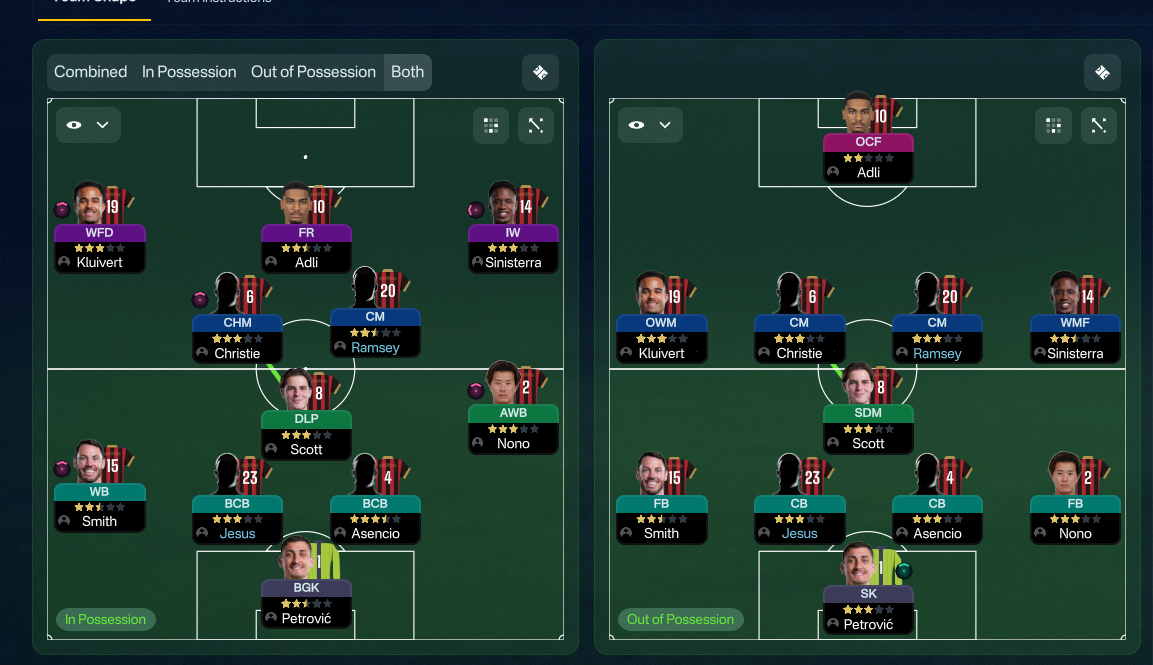
Team Shape Without Ball
Shape:4-1-4-1
Description:A compact defensive setup with 4 defenders, a DM, and 4 midfielders offering cover.
Evidence:Higher Defensive Line and High Press engage opponents higher up the pitch.
Team Shape With Ball
Shape:4-3-3
Description:Using width provided by wingers and fluid movement from the midfield to create space.
Evidence:Wingers cutting inside while the ball is moved through the midfield.
Phase Description
Attacking Play
The team aims for a possession-based approach, utilizing short passes to maintain control while working the ball into the box.
Defensive Transition
Counter-pressing tactics are used to regain possession quickly, emphasizing the importance of closing down opponents.
Main Focus
To create goal-scoring opportunities through structured passing and utilizing width from the wingers.
Key Strengths
Possession Control
The emphasis on shorter passing and working the ball into the box allows for controlled possession.
Defensive Solidity
The combination of a higher defensive line and a DM provides a solid defensive structure.
Dynamic Attack
The mix of support and attacking duties in the forward line creates multiple goal-scoring avenues.
Conflicting Directions
High Defensive Line with Counter-Press
While a high defensive line is effective, it may leave space for opponents during quick transitions.
Pressing Style
High Press may lead to fatigue, affecting players' ability to maintain intensity throughout the match.
Fluid Tactical Identity
The current Fluid team shape may confuse players with defined roles during transitions.
Tactical Suggestions
Balance the Pressing
Consider a more calculated pressing strategy to minimize defensive gaps during transitions.
Rotate Forward Roles
Introduce role rotation in the attacking positions to create unpredictability.
Reinforce Central Midfield
Adding another central midfielder may provide better support for defensive and attacking transitions.
Ask Questions About Your Lineup
Related Tactics
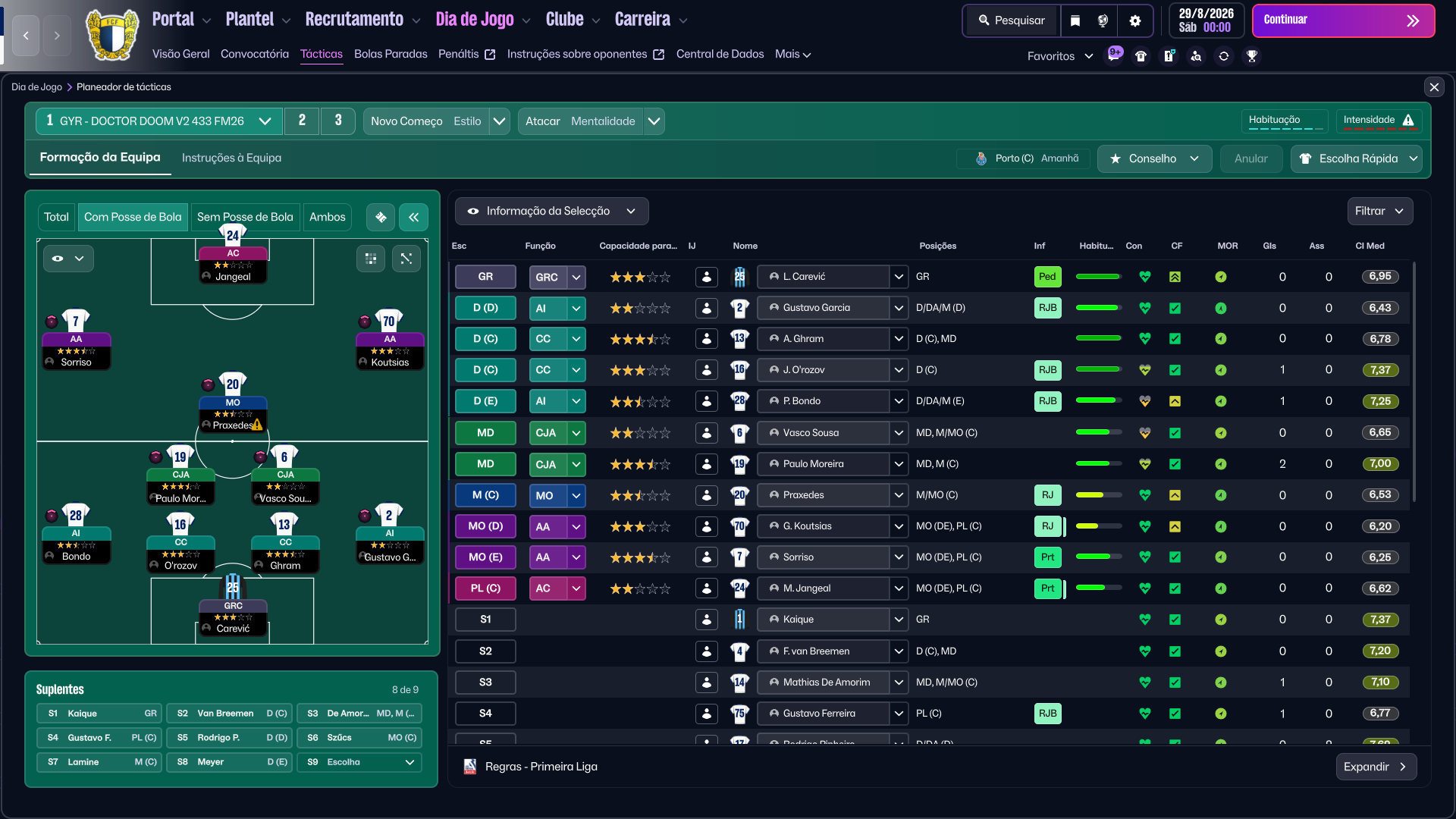
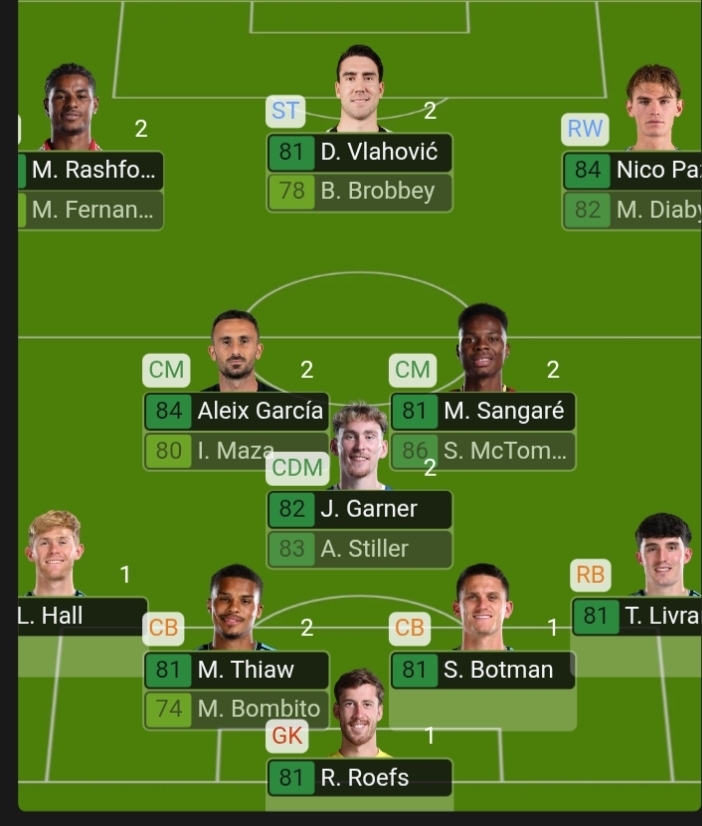
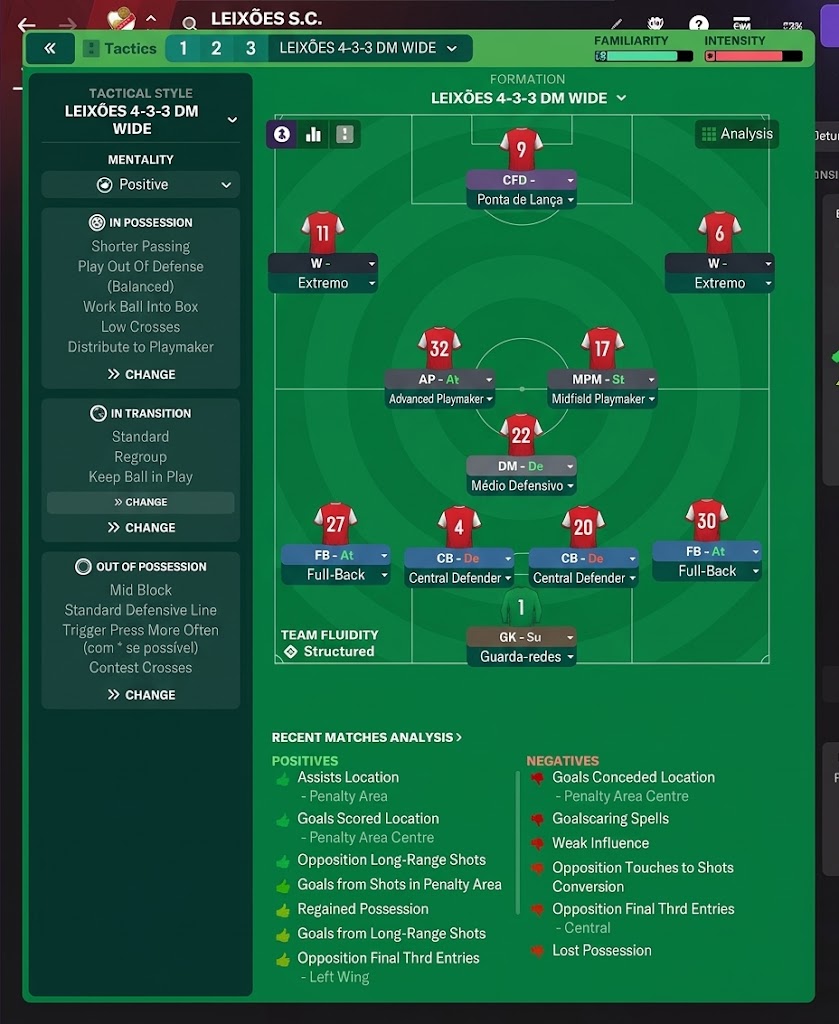
Guides for this formation
The tactical theory behind the 4-3-3: roles, instructions, and the trade-offs that decide whether the system holds up.
Foundations
Understanding the 4-3-3 Formation
Master the classic 4-3-3: player roles, tactical variations, and the trade-offs that decide whether it sings or stalls.
Read guide
Player pairings
Midfield Trios
Holder, runner, creator: the role distribution rule for three-man midfields, the AMC variants, and the antipatterns that break them.
Read guide
Playing styles
Gegenpressing: A Full Guide
Klopp-style gegenpressing in FM, including squad profile, line-and-press pairing, sustainable workload, and the antipatterns to avoid.
Read guide