Uploaded Tactic
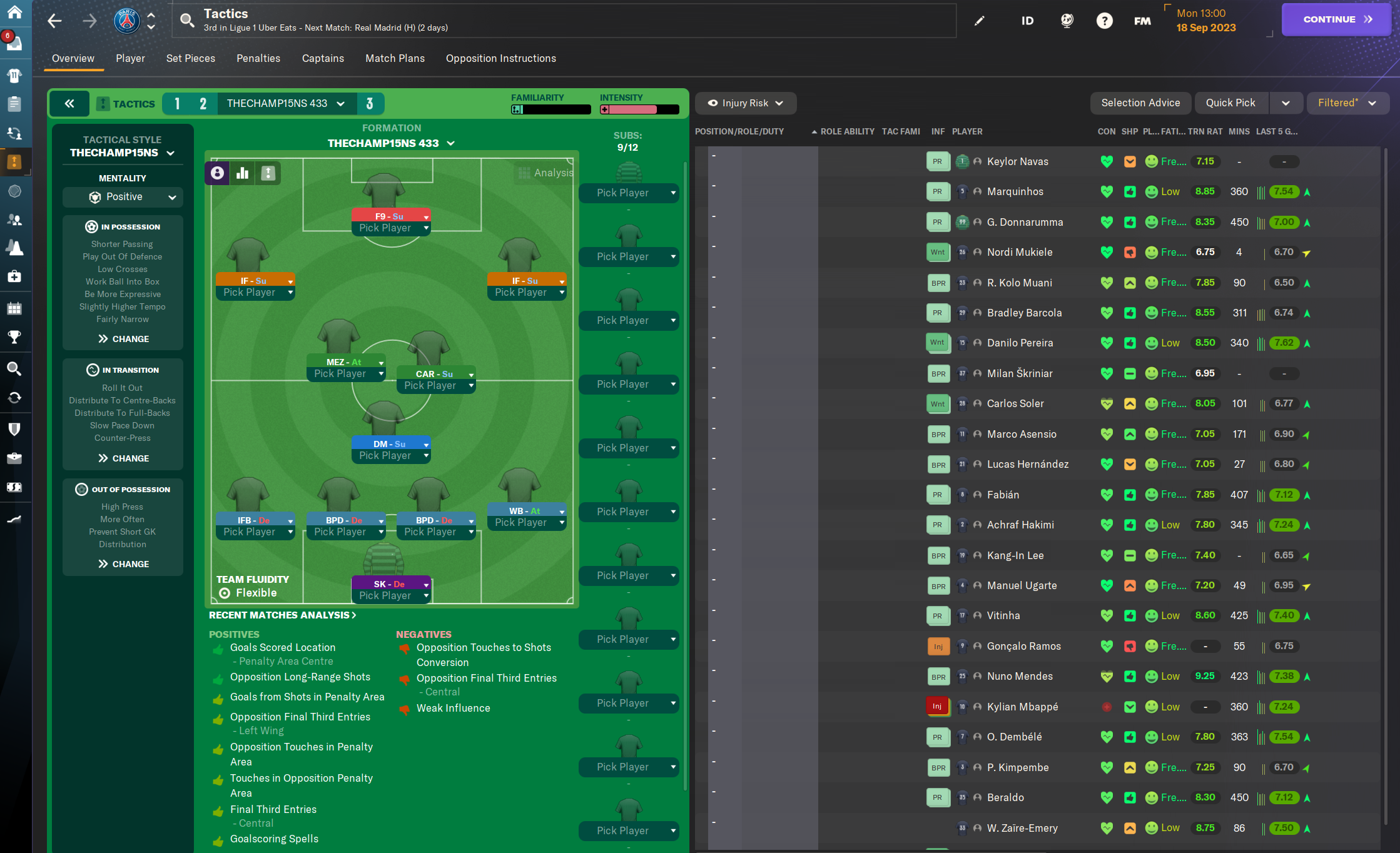
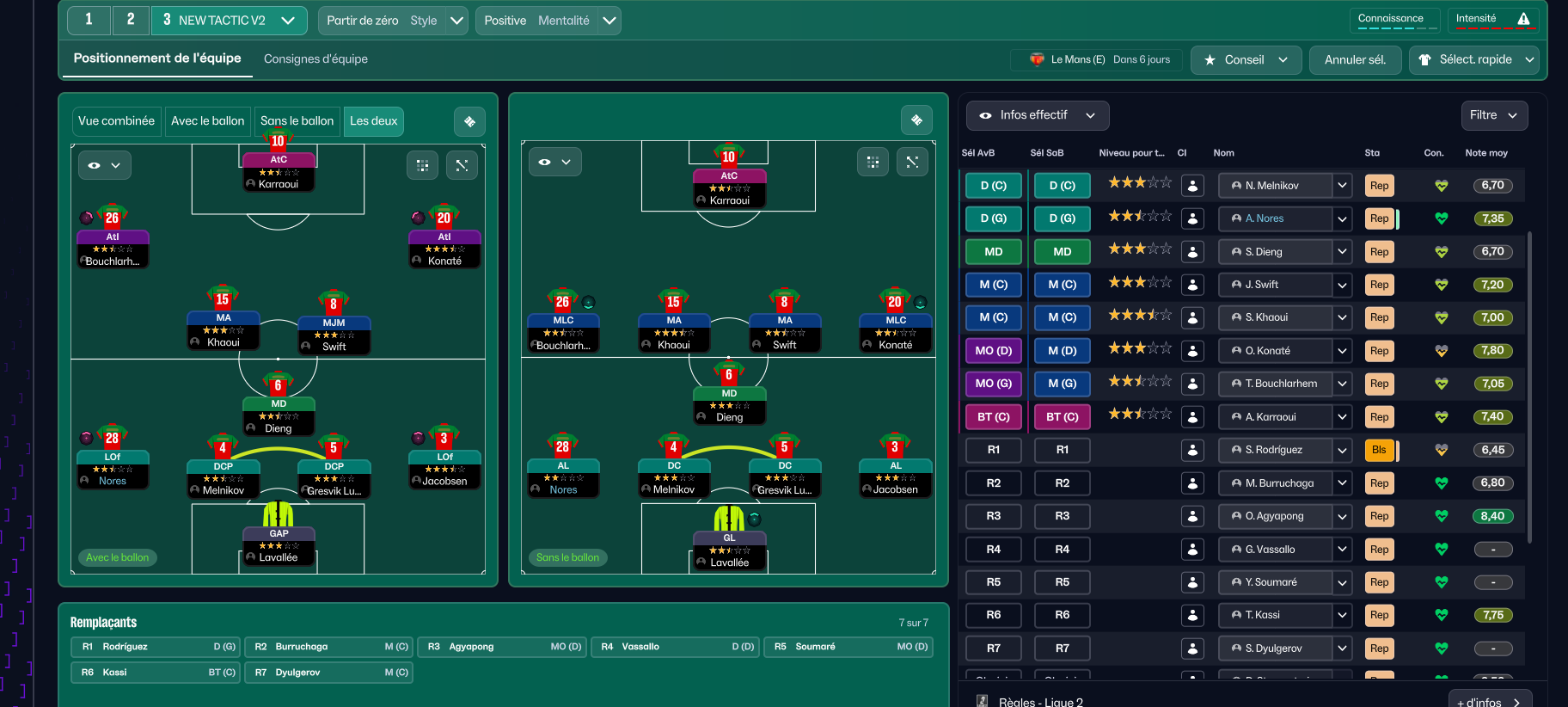
Formation & Style
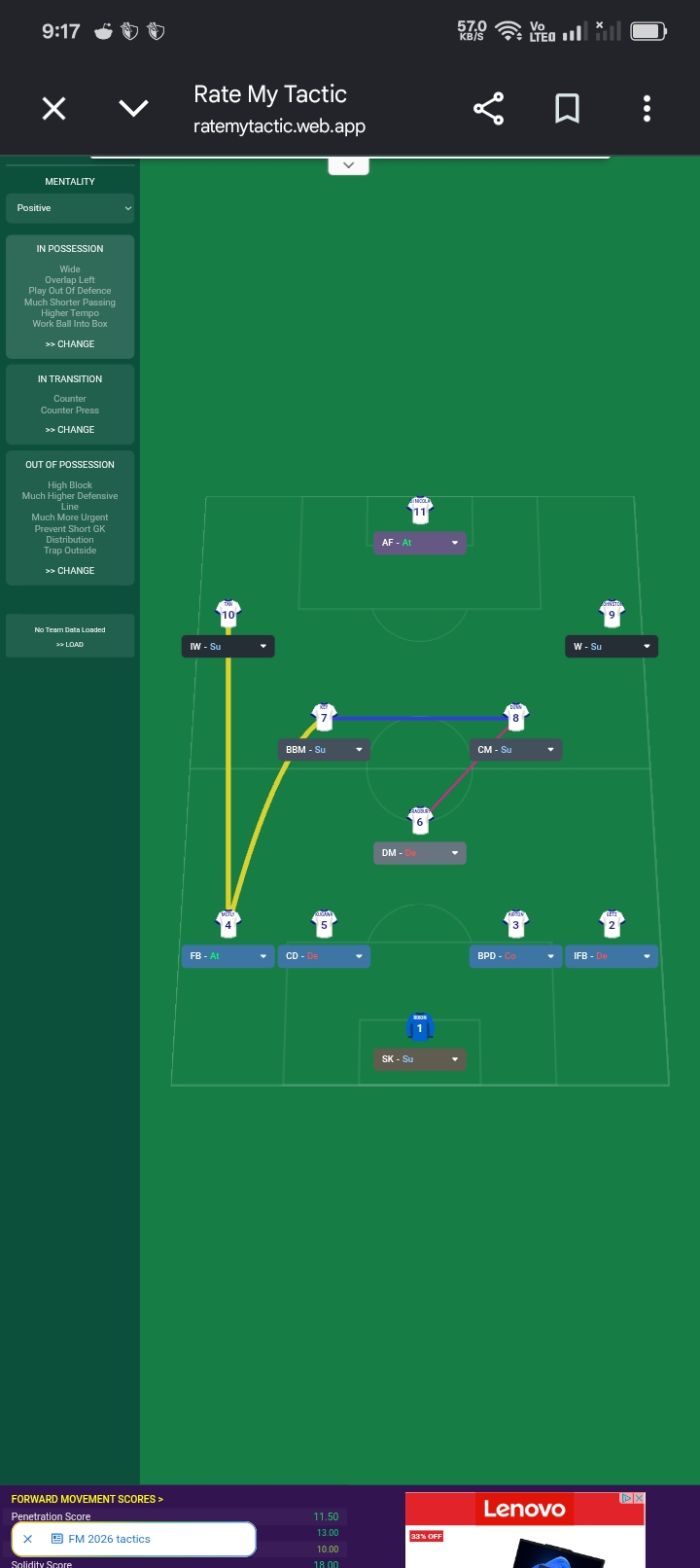
Tactical Style:Positive
Mentality:Positive
Formation:4-3-3
Team Fluidity:Flexible
In Possession
Shorter Passing
Play Out Of Defence
Low Crosses
Work Ball Into Box
Be More Expressive
Slightly Higher Tempo
Fairly Narrow
In Transition
Roll It Out
Distribute To Centre-Backs
Distribute To Full-Backs
Slow Pace Down
Counter-Press
Out of Possession
High Press
Prevent Short GK Distribution
Team Shape Without Ball
Shape:High Press
Description:The team looks to press high when out of possession, with the front three applying pressure on defenders.
Evidence:Use of 'High Press' and 'Prevent Short GK Distribution' emphasizes aggressive defensive strategy.
Team Shape With Ball
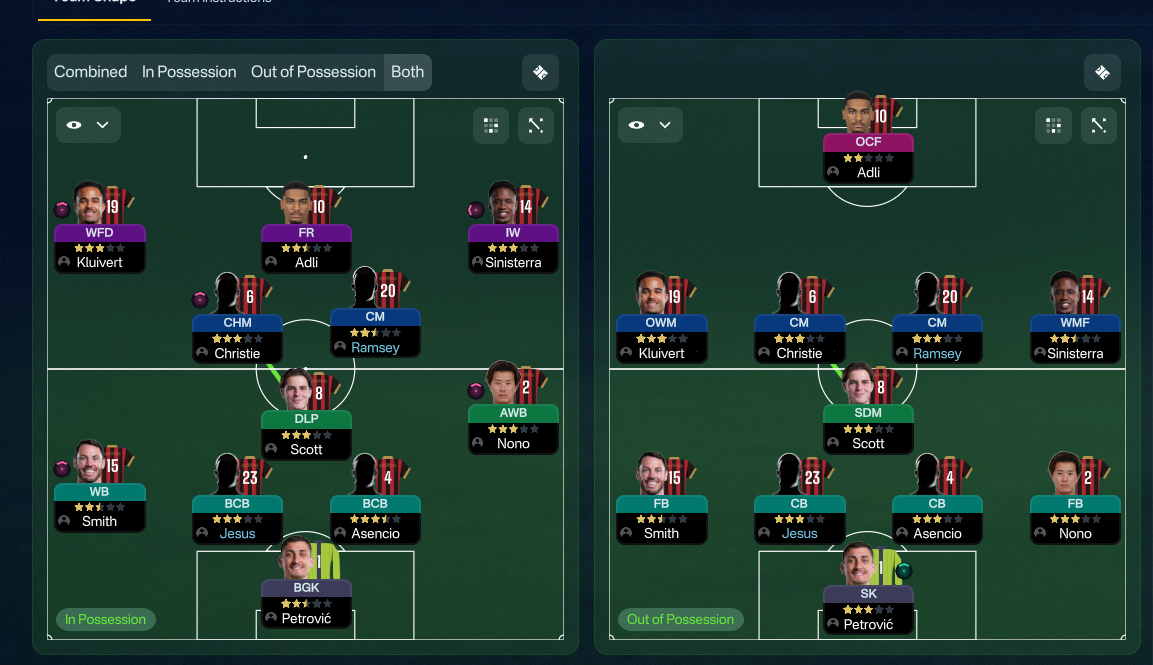
Shape:Fluid 4-3-3
Description:The formation allows for width through the wing-backs and inside forwards while maintaining a strong central presence.
Evidence:In possession instructions favor short passing and working the ball into the box.
Phase Description
Attacking Play
Aiming to play short passes and retain possession while creating scoring opportunities through fluid movement.
Defensive Transition
Focus on regaining possession quickly with a counter-press to disrupt the opponent's play.
Main Focus
Control of midfield and quick transitions to exploit spaces.
Key Strengths
Strong Midfield Control
The use of a DM and two midfielders allows for both defensive solidity and attacking support.
Dynamic Attack Options
Having a F9 and two inside forwards adds unpredictability to forward movements.
Effective Pressing Strategy
High pressing approach creates immediate pressure on ball recoveries.
Conflicting Directions
Possession-Based Play vs. High Press
While the team focuses on retaining possession, the high press may lead to turnovers if players are caught out of position.
Narrow Formation Constraints
A narrow approach can limit width, making it harder to exploit wide areas if wing-backs aren't effective.
Fluidity vs. Responsibilities
Fluid tactics may hinder players from fulfilling specific defensive or offensive roles effectively.
Tactical Suggestions
Increase Width in Attack
Consider widening the attack to take advantage of complementary runs from wing-backs.
Adjust Defensive Roles
Revising the duties of central defenders to BPD-A can enhance ball distribution.
Enhance Full-Back Support
Instructing the wing-backs to join attacks more frequently can stretch opposition defenses.
Ask Questions About Your Lineup
Related Tactics
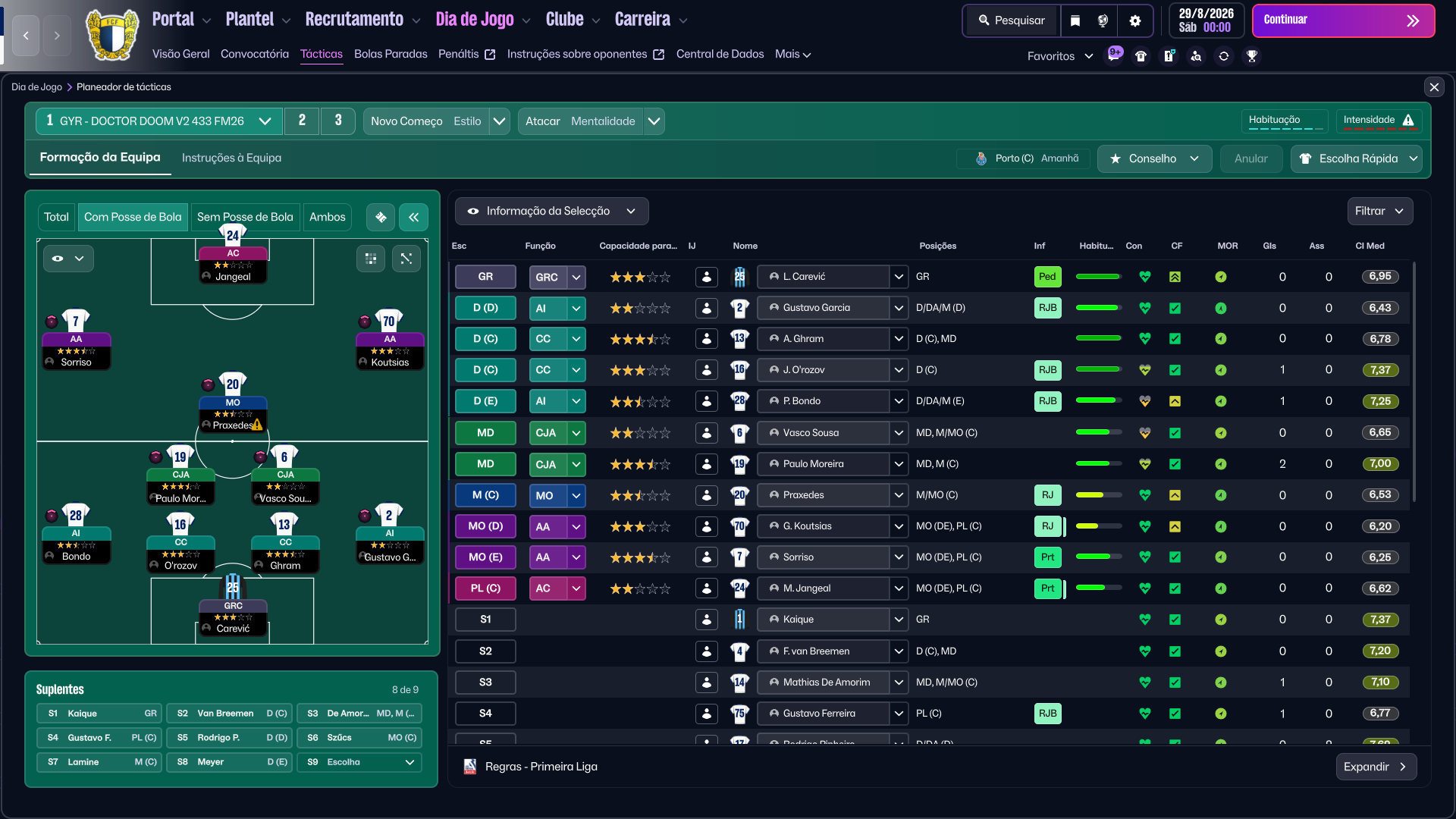
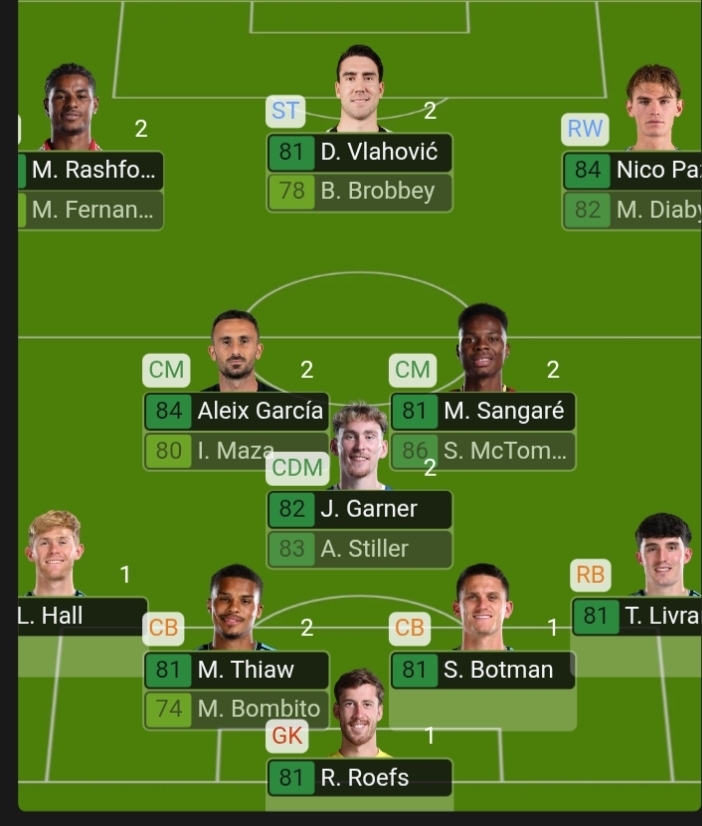
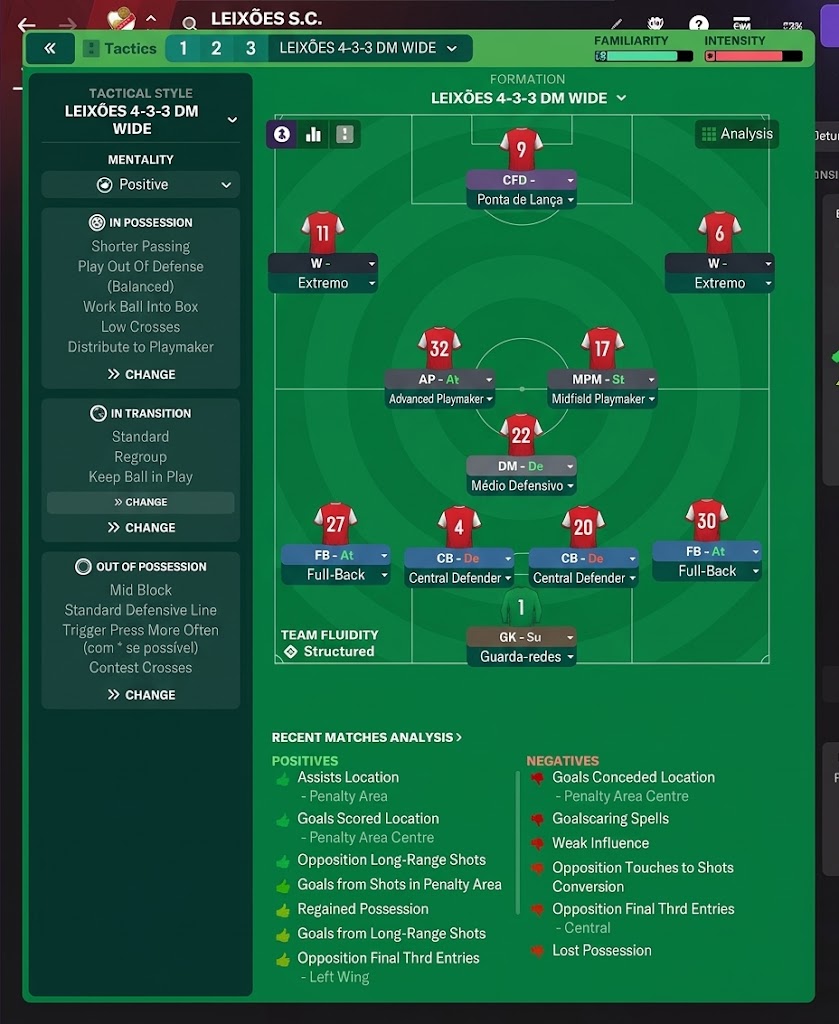
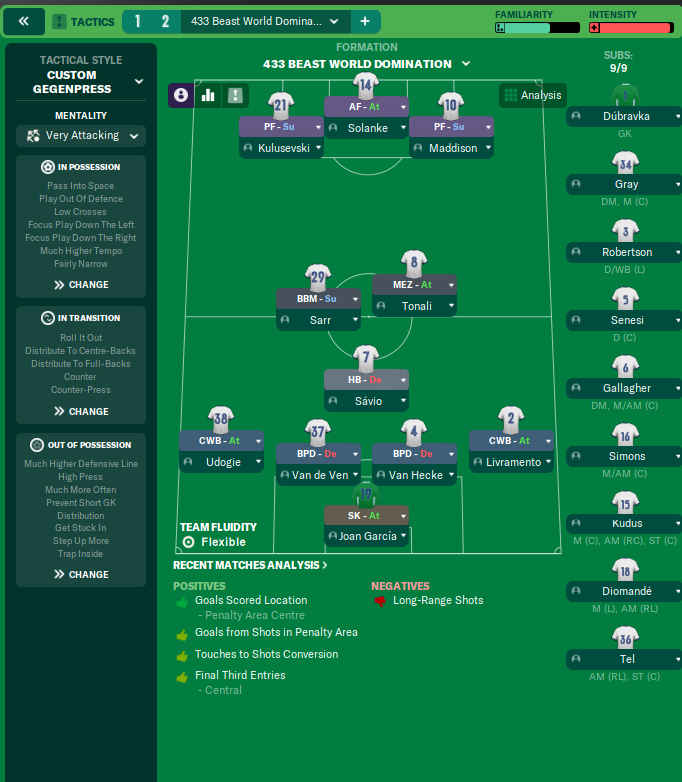
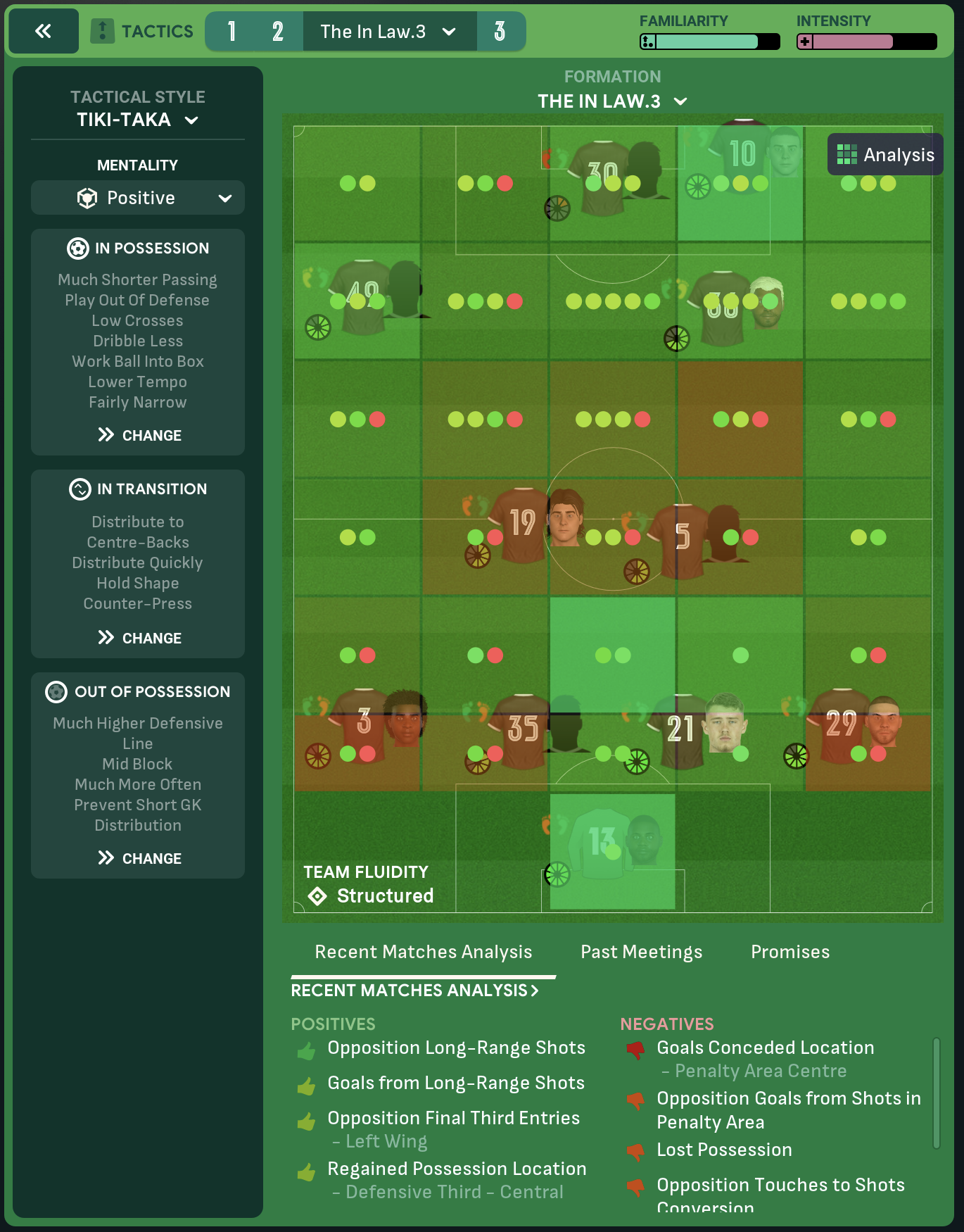
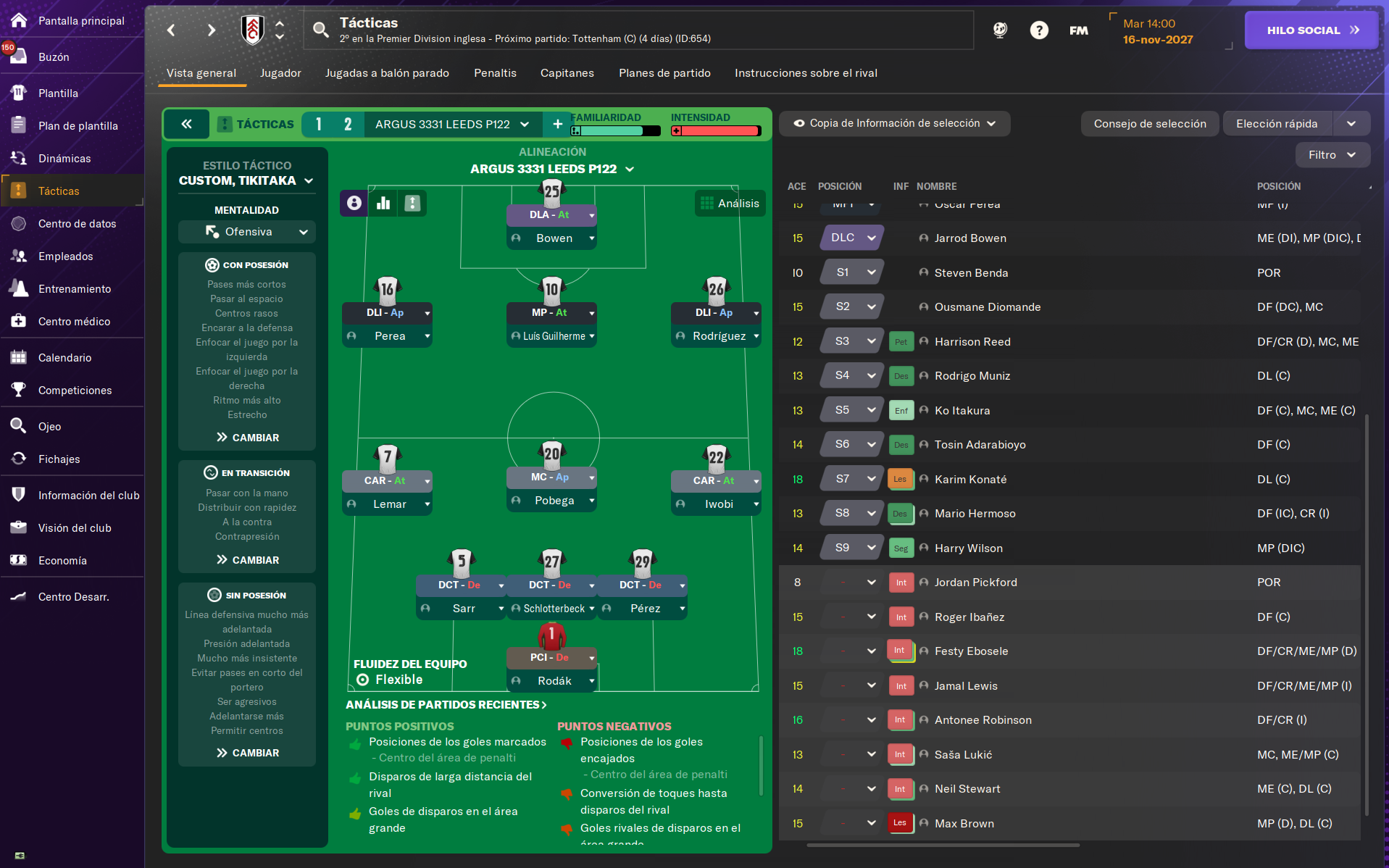
More Positive tactics
Guides for this formation
The tactical theory behind the 4-3-3: roles, instructions, and the trade-offs that decide whether the system holds up.
Foundations
Understanding the 4-3-3 Formation
Master the classic 4-3-3: player roles, tactical variations, and the trade-offs that decide whether it sings or stalls.
Read guide
Player pairings
Midfield Trios
Holder, runner, creator: the role distribution rule for three-man midfields, the AMC variants, and the antipatterns that break them.
Read guide
Playing styles
Gegenpressing: A Full Guide
Klopp-style gegenpressing in FM, including squad profile, line-and-press pairing, sustainable workload, and the antipatterns to avoid.
Read guide