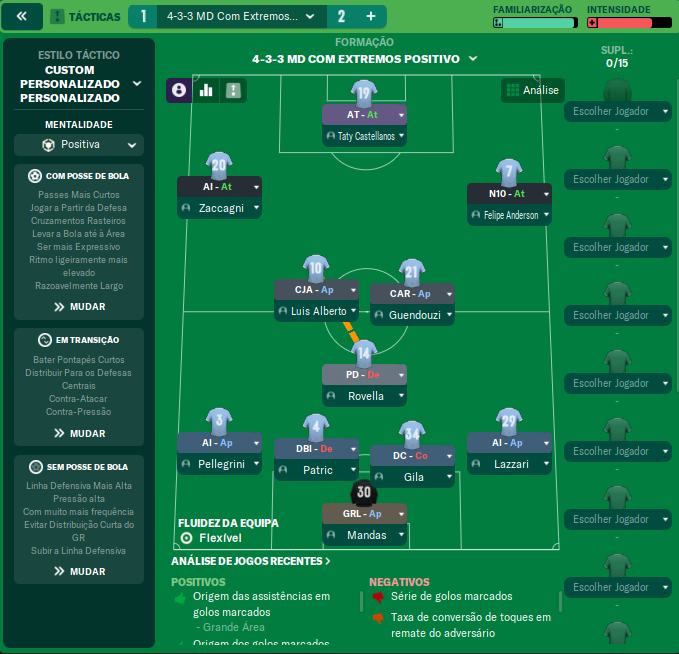
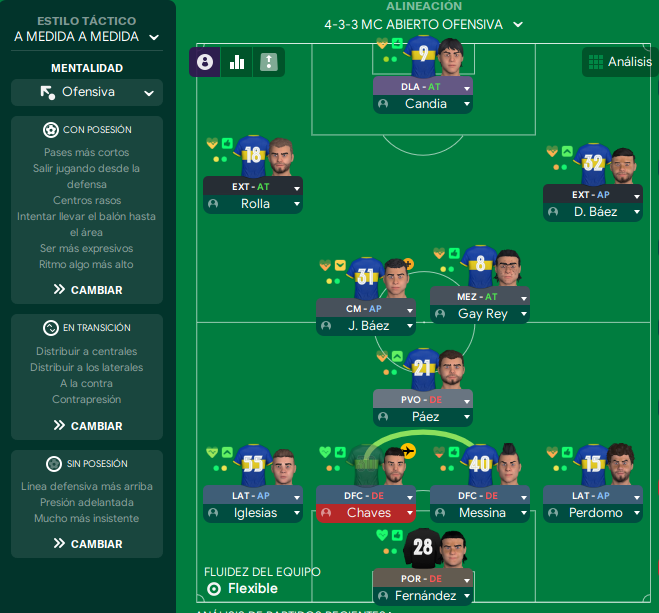
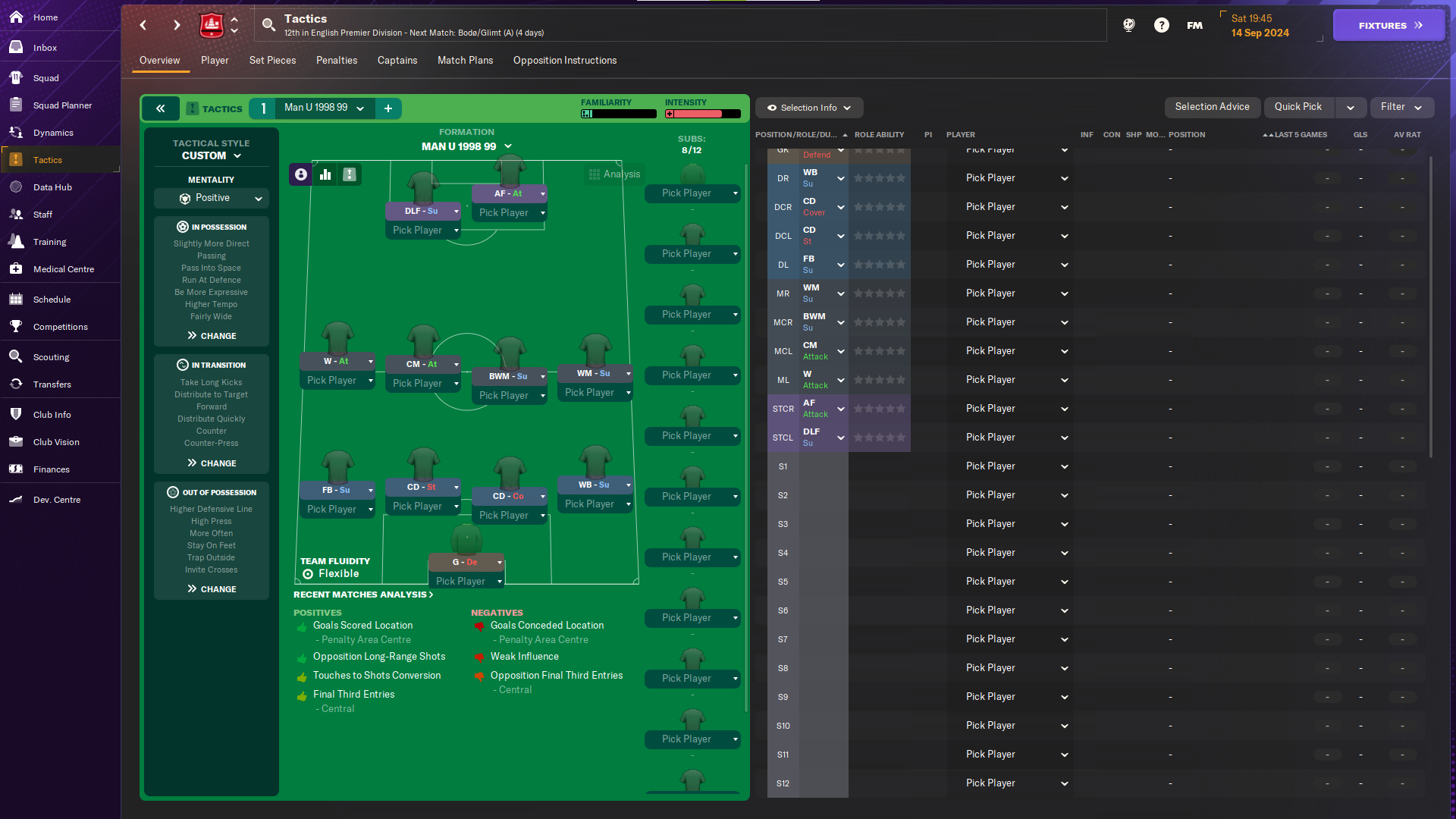
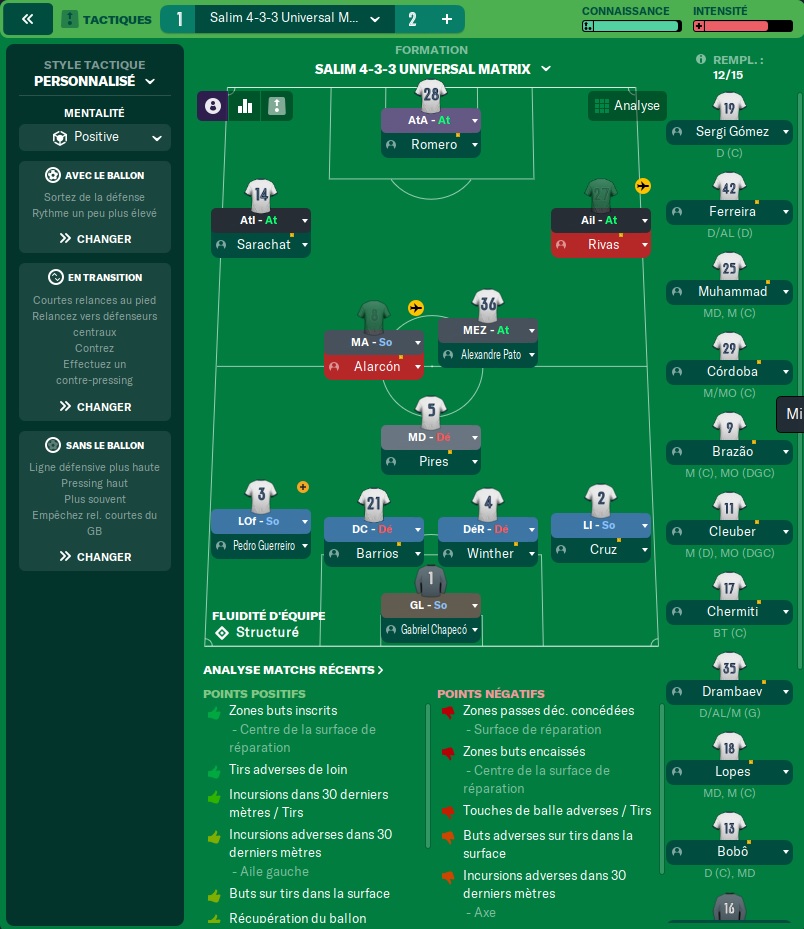
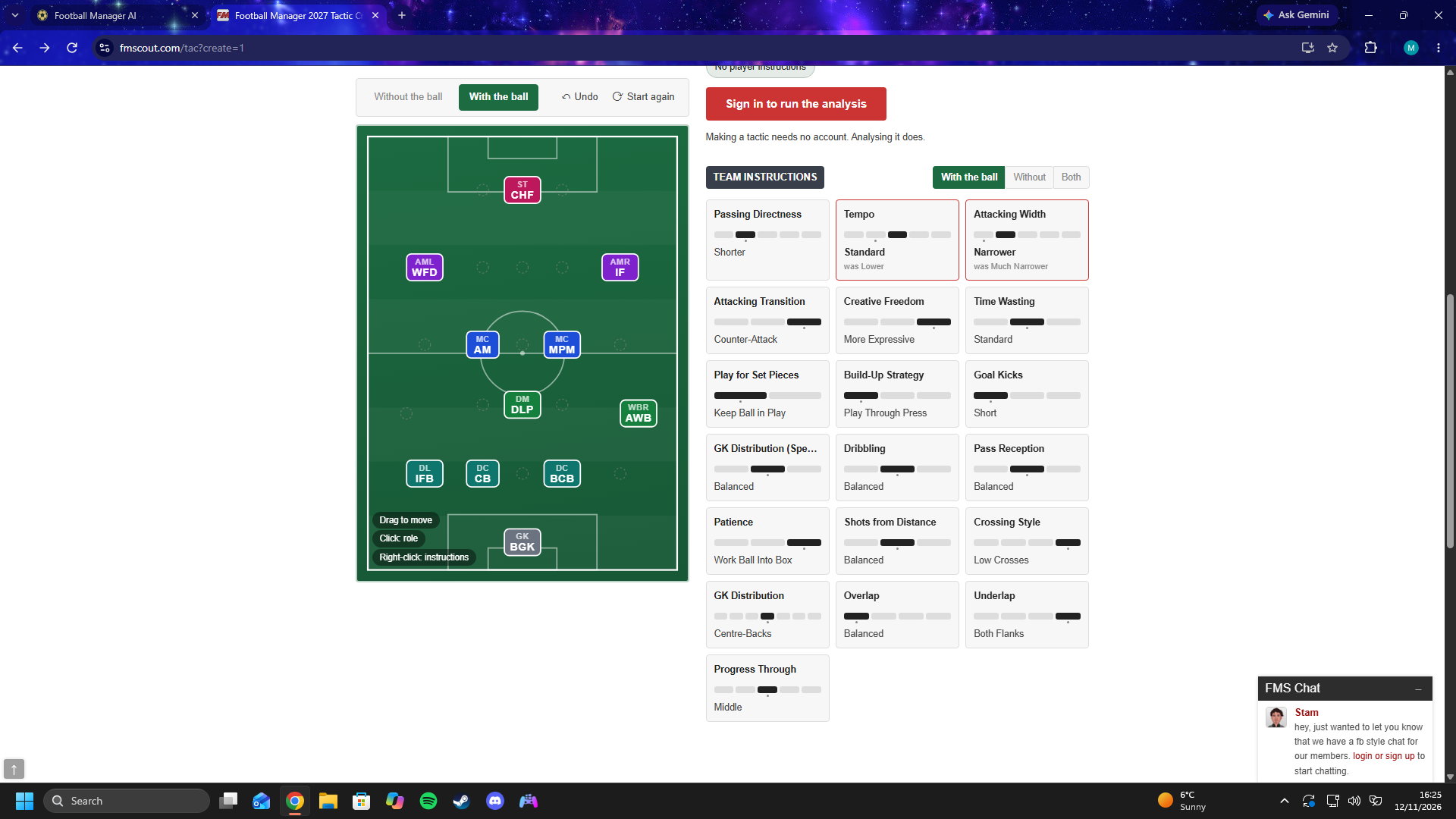
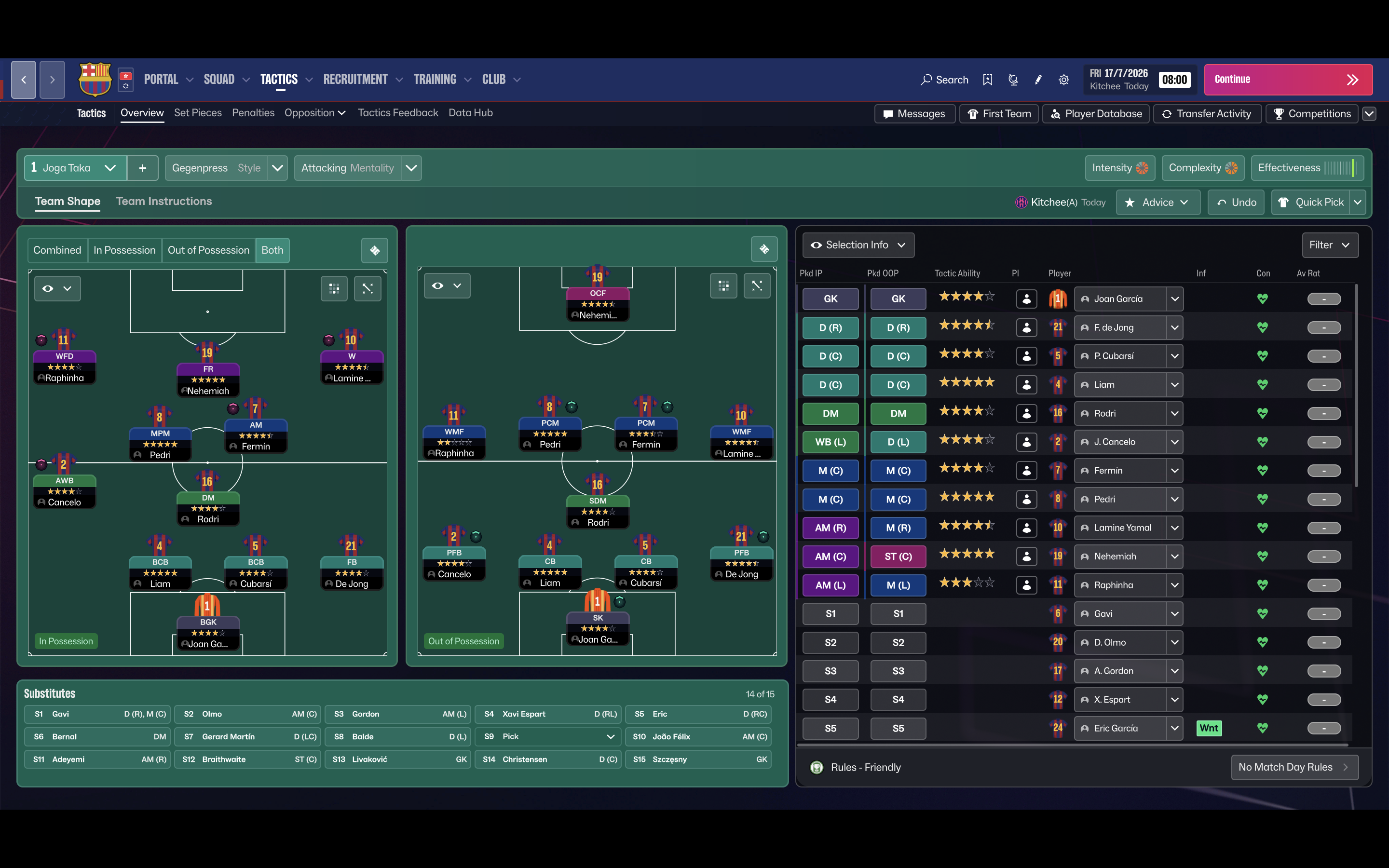
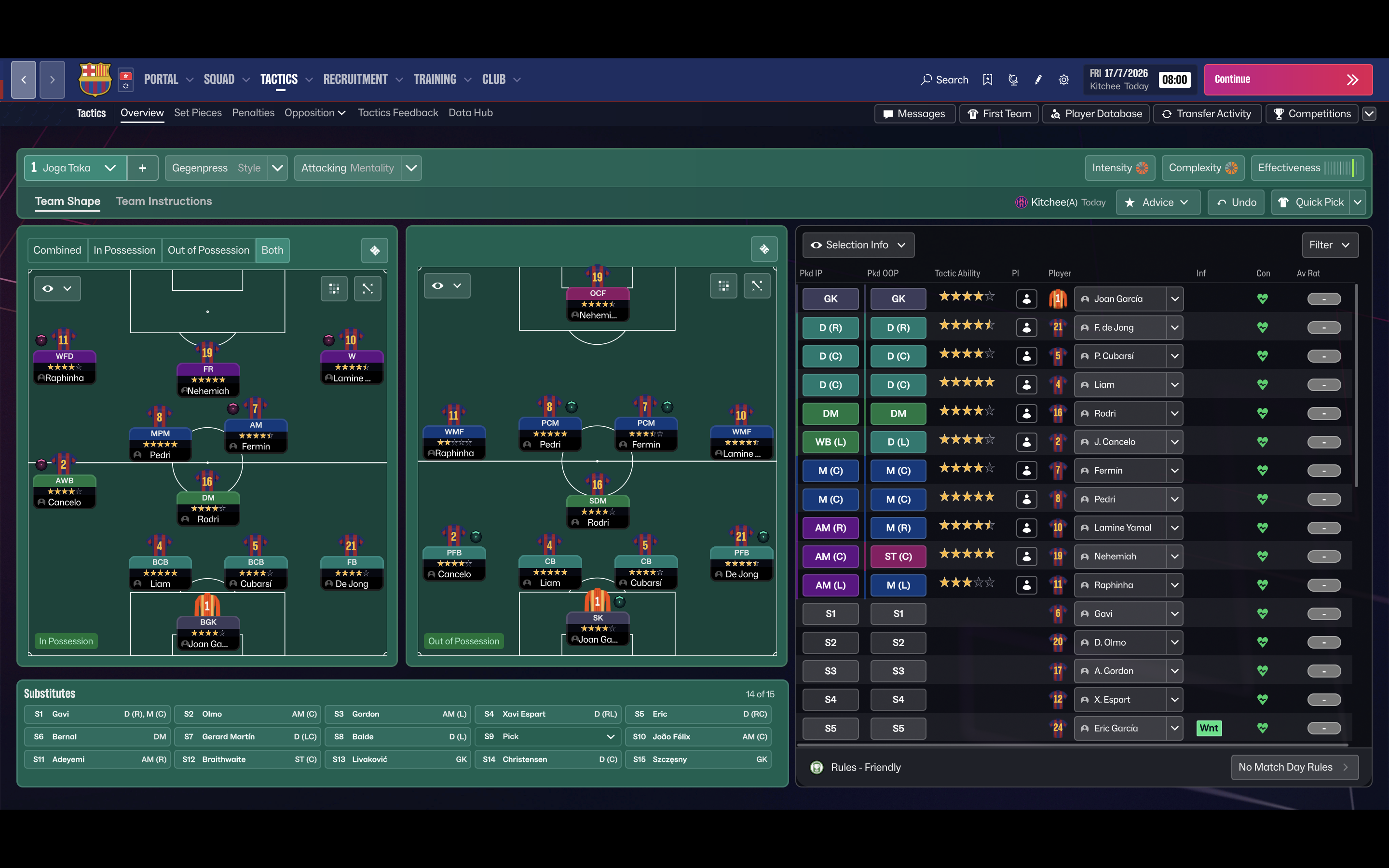
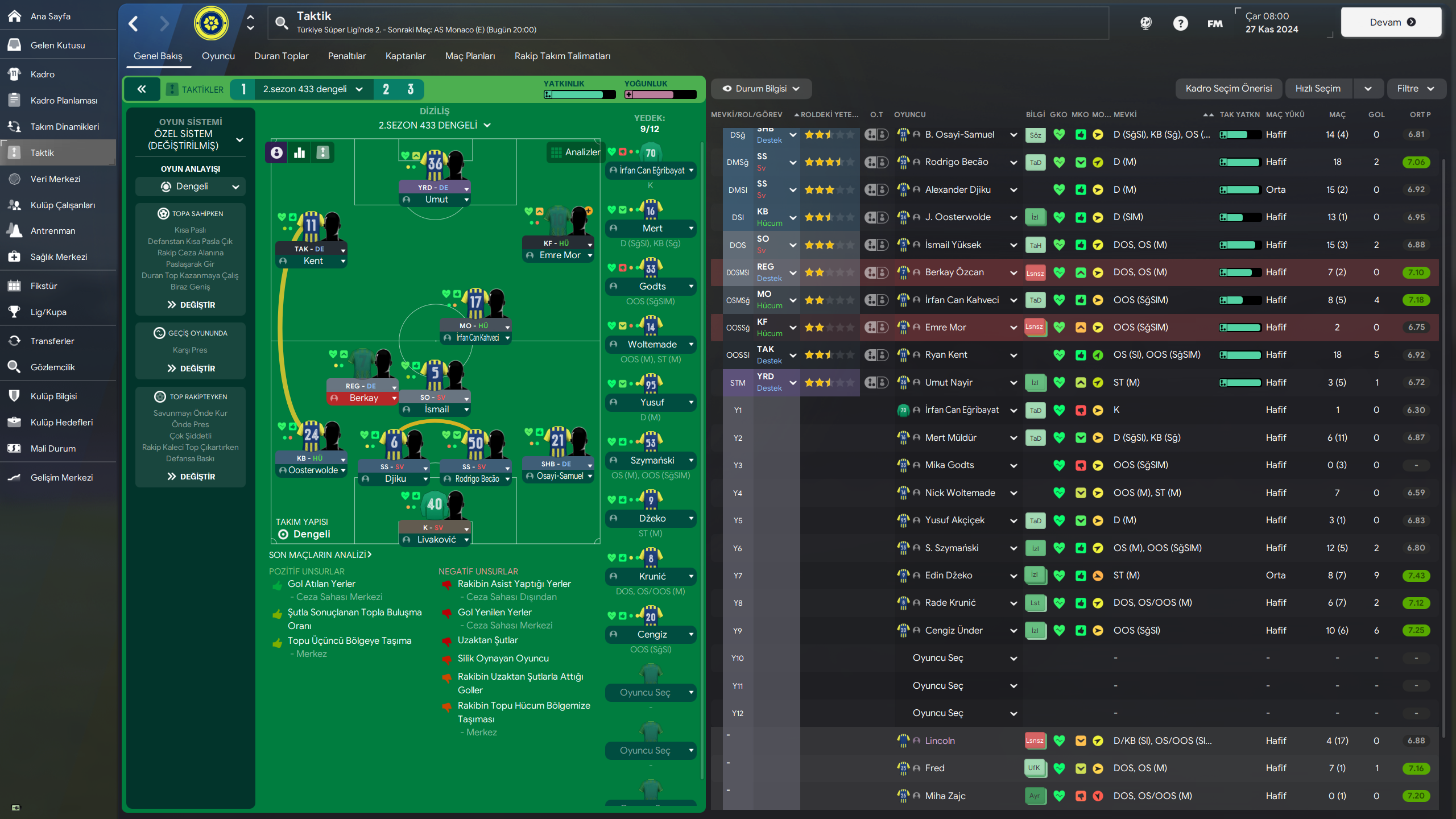
4-3-3
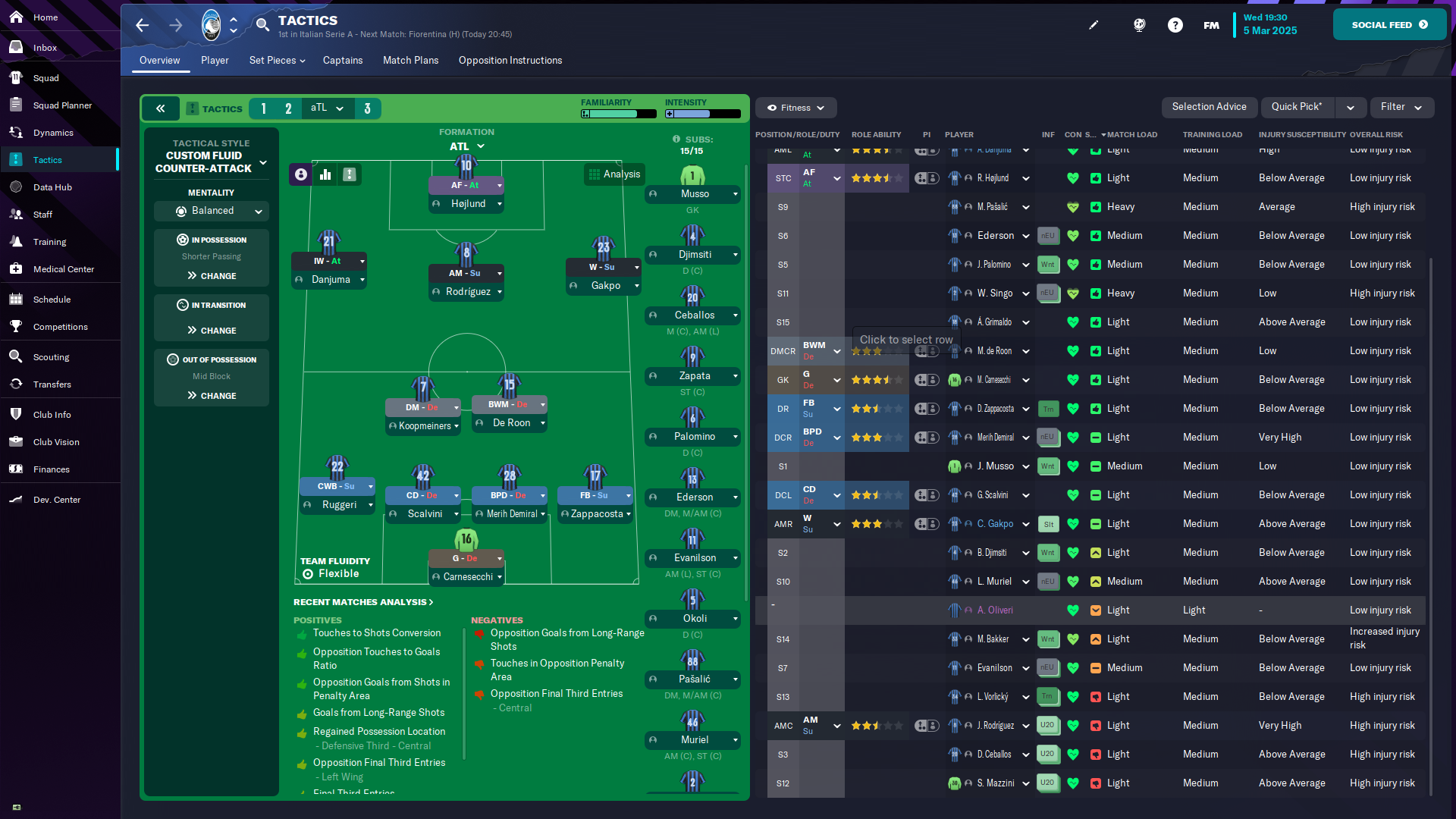
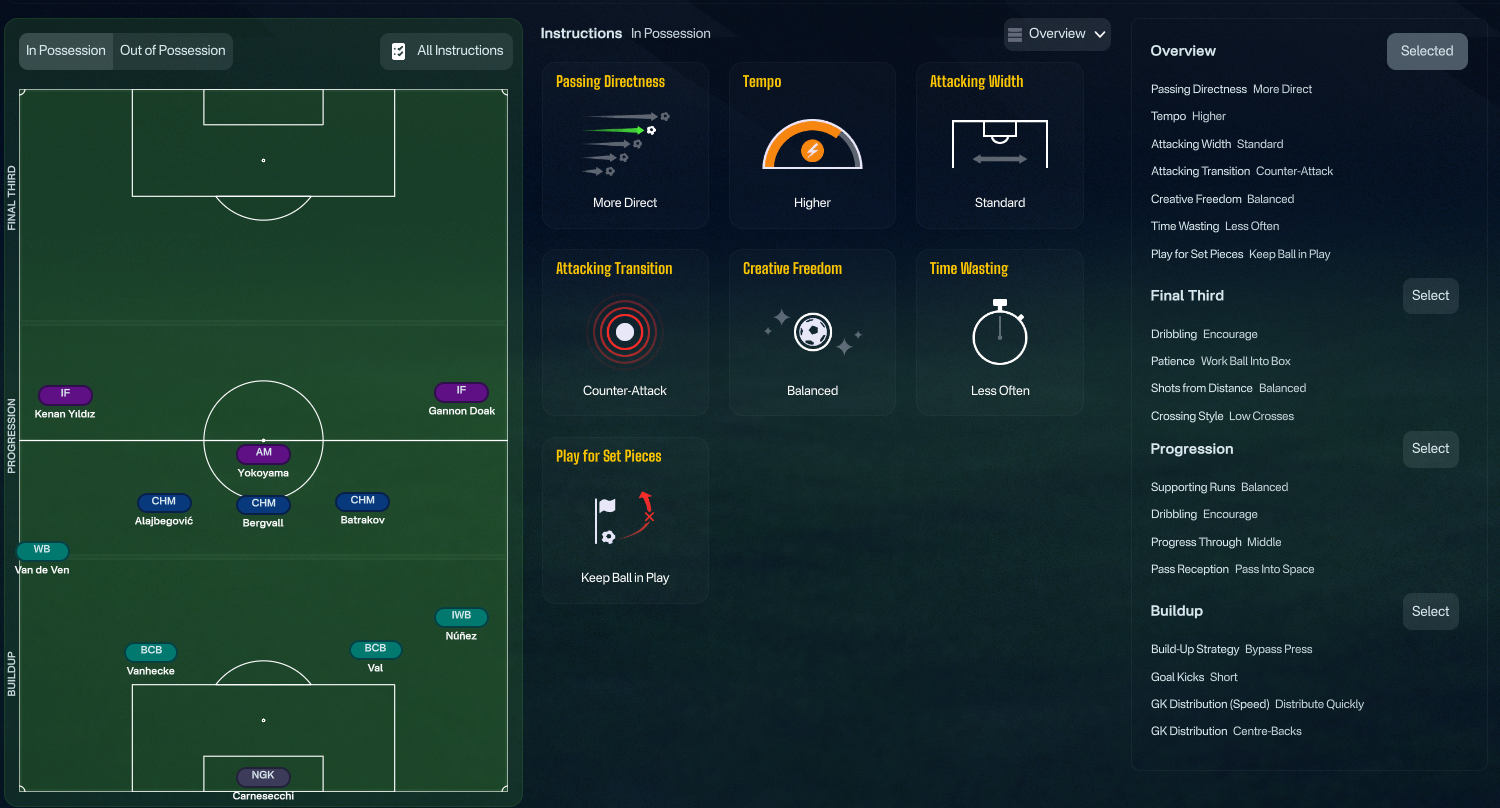
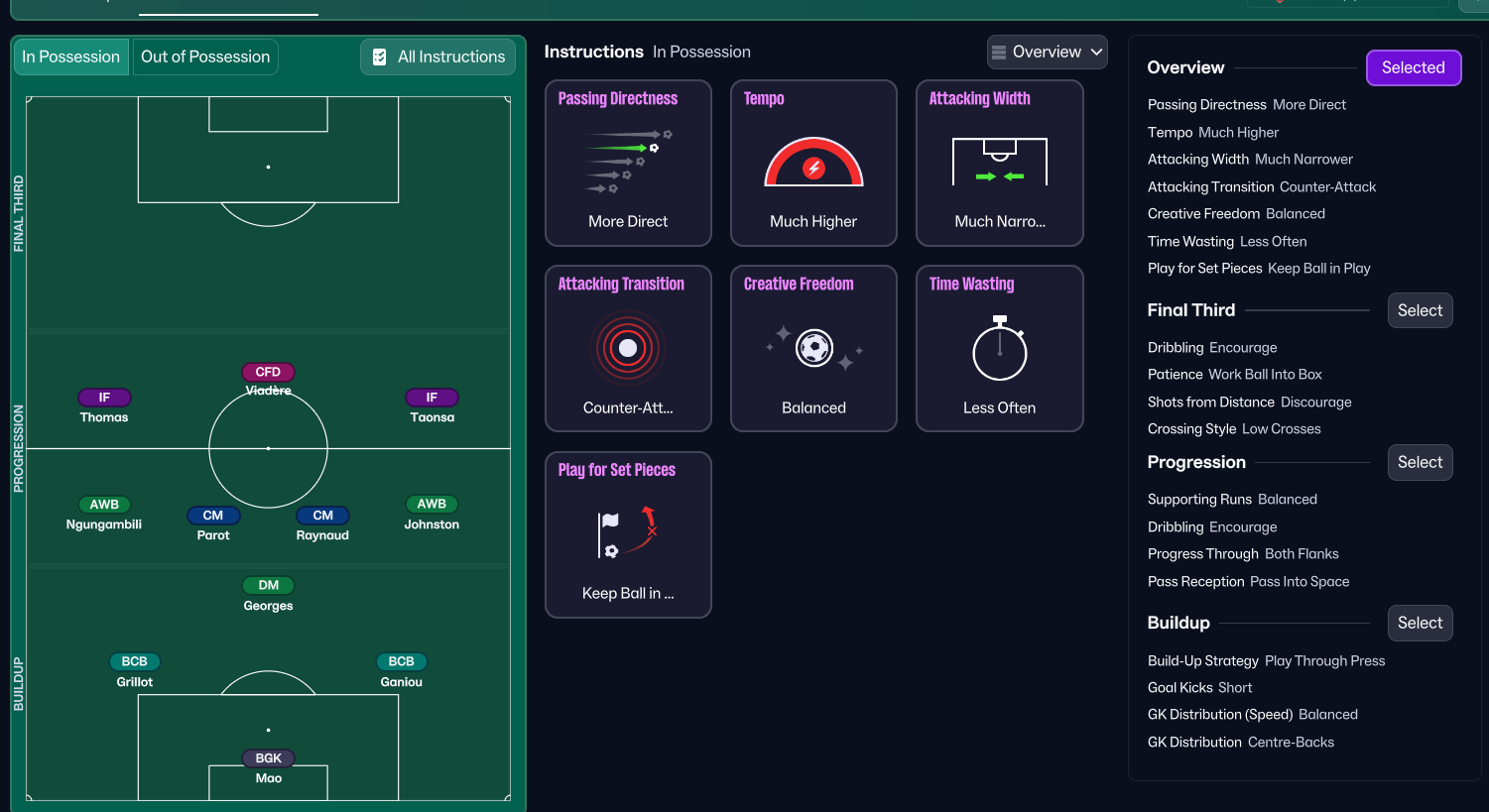
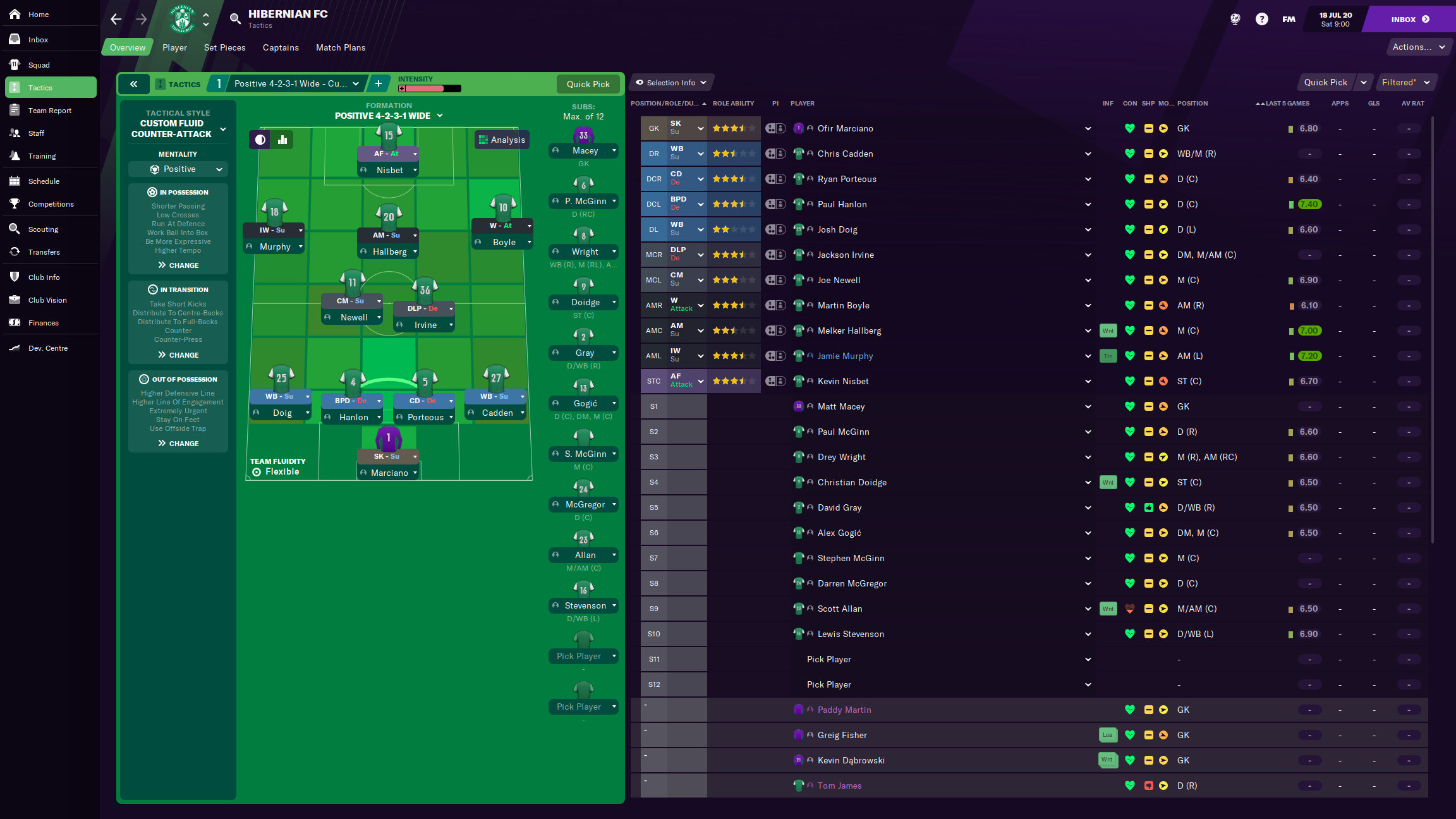
The tactic utilizes quick counter-attacks, allowing the team to exploit defensive gaps immediately after regaining possession.
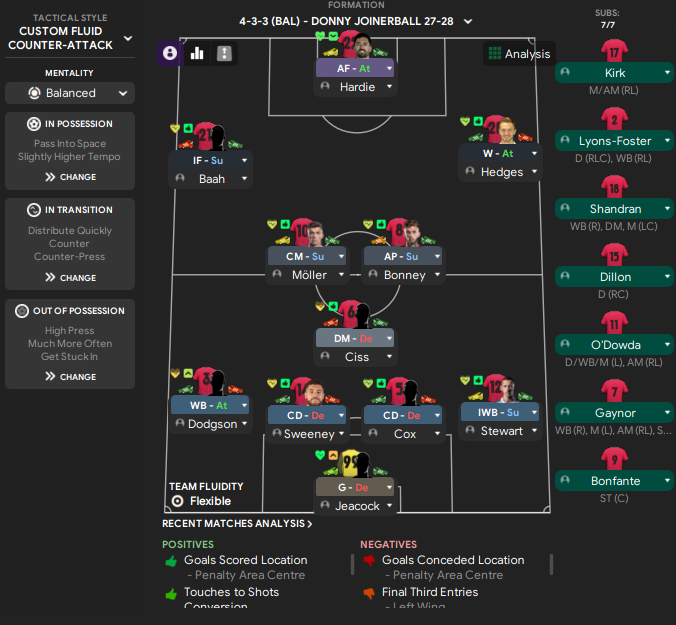
Loading tactical analysis...
Counter-Attack
Balanced
4-3-3
Flexible
Pass Into Space
Slightly Higher Tempo
Distribute Quickly
Counter
Counter-Press
High Press
Much More Often
Get Stuck In
ST
Advanced Forward
Attack
IF
Inside Forward
Support
W
Winger
Attack
CM
Central Midfielder
Support
AP
Advanced Playmaker
Support
DM
Deep-Lying Playmaker
Defend
WB
Wing Back
Attack
CD
Central Defender
Defend
IWB
Inverted Wing Back
Support
The tactic utilizes quick counter-attacks, allowing the team to exploit defensive gaps immediately after regaining possession.
With an Advanced Forward, Inside Forward, and Winger, the attacking front is capable of varying their attacks from multiple angles.
While both tactics are aggressive, a high press may lead to players being out of position when trying to counter-press, causing potential gaps.
The roles of Advanced Forward and Inside Forward might not always complement each other if they occupy similar spaces, leading to a lack of coordination.
How often does my team regain possession in the opponent's half?
Are my midfielders providing enough defensive cover?
Is the attacking trio effectively creating chances together?
How well do my wing backs contribute to both attack and defense?
Are we conceding more goals from wide areas or from central positions?
How does my team perform in transition against high-pressing opponents?
The tactical theory behind the 4-3-3: roles, instructions, and the trade-offs that decide whether the system holds up.
Master the classic 4-3-3: player roles, tactical variations, and the trade-offs that decide whether it sings or stalls.
Holder, runner, creator: the role distribution rule for three-man midfields, the AMC variants, and the antipatterns that break them.
How Mentality, Duty, and Role interact in FM, why duty trumps mentality every time, and the role-on-top-of-duty composition rules.