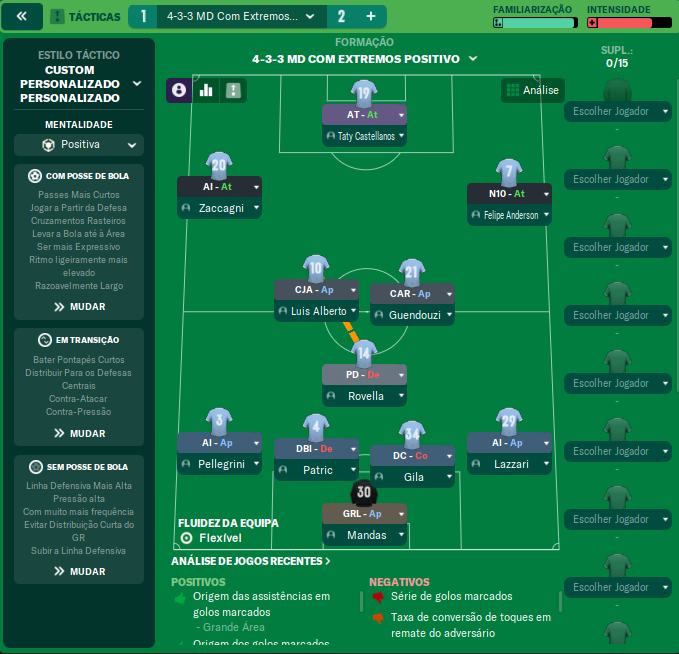
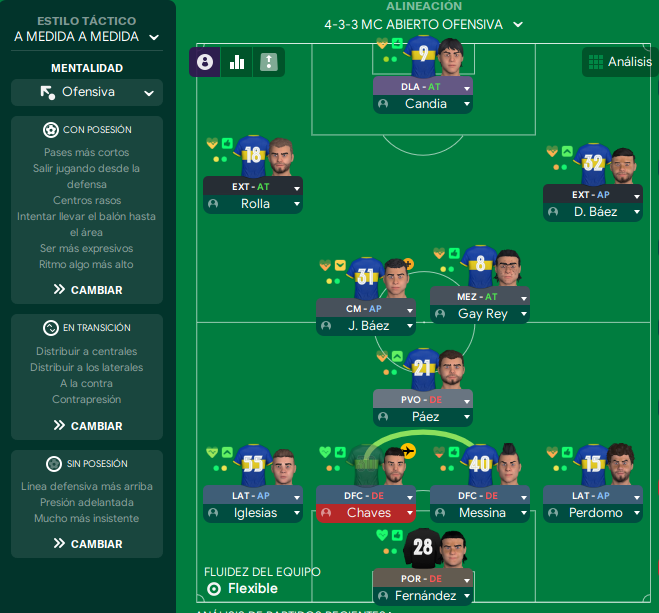
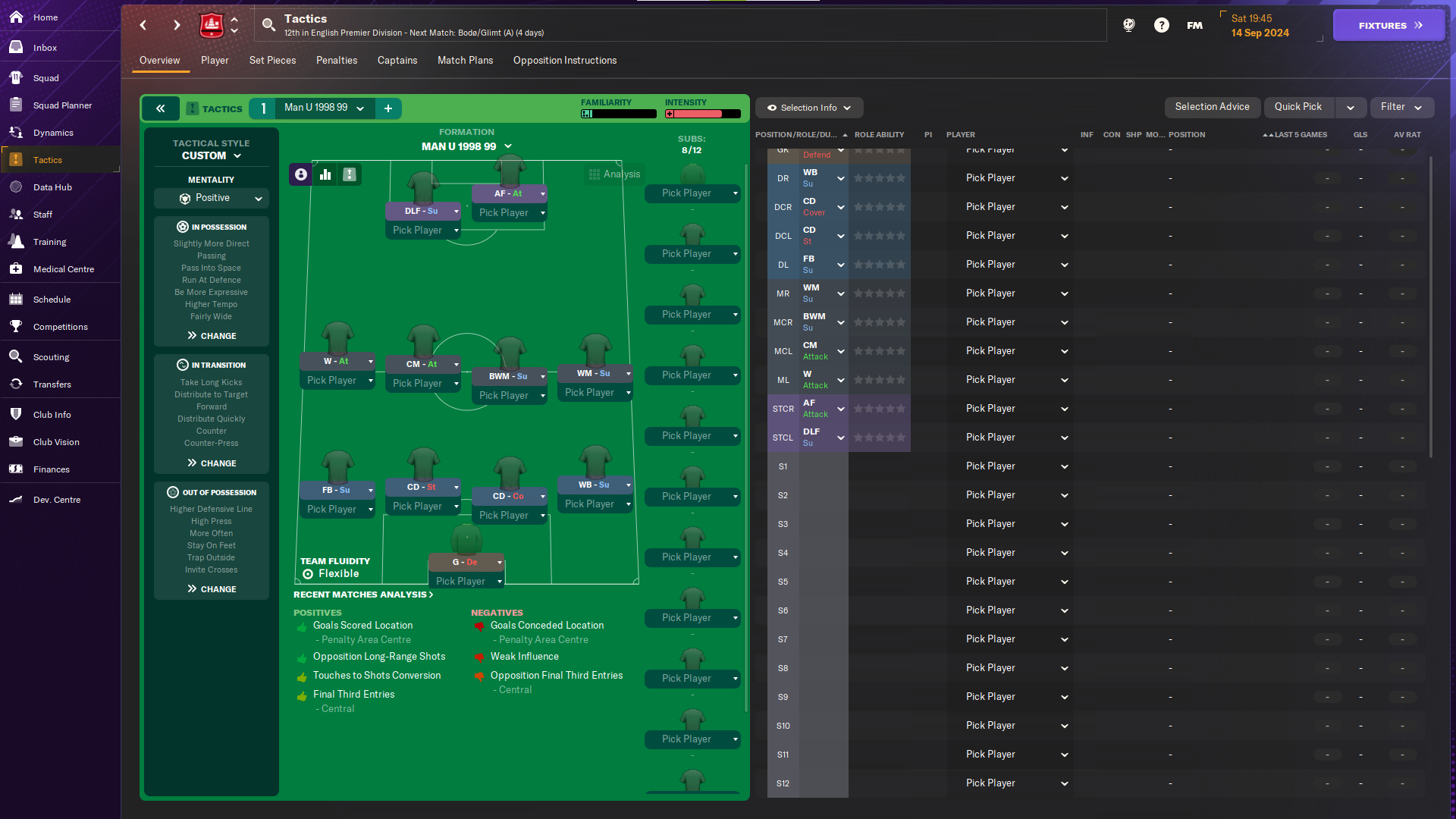
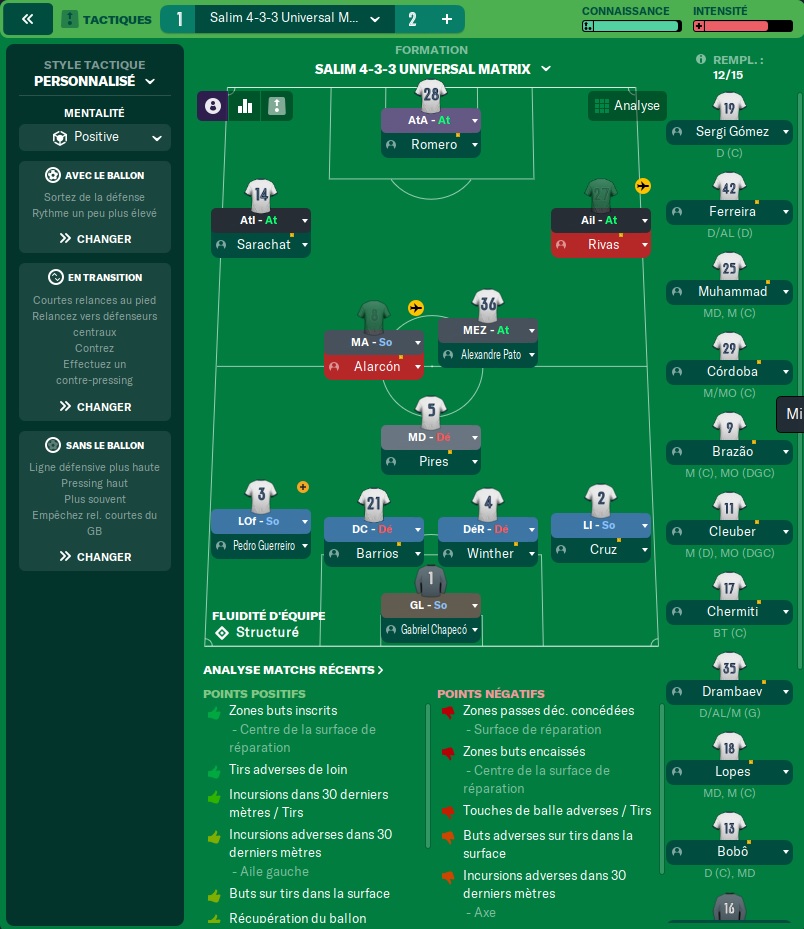
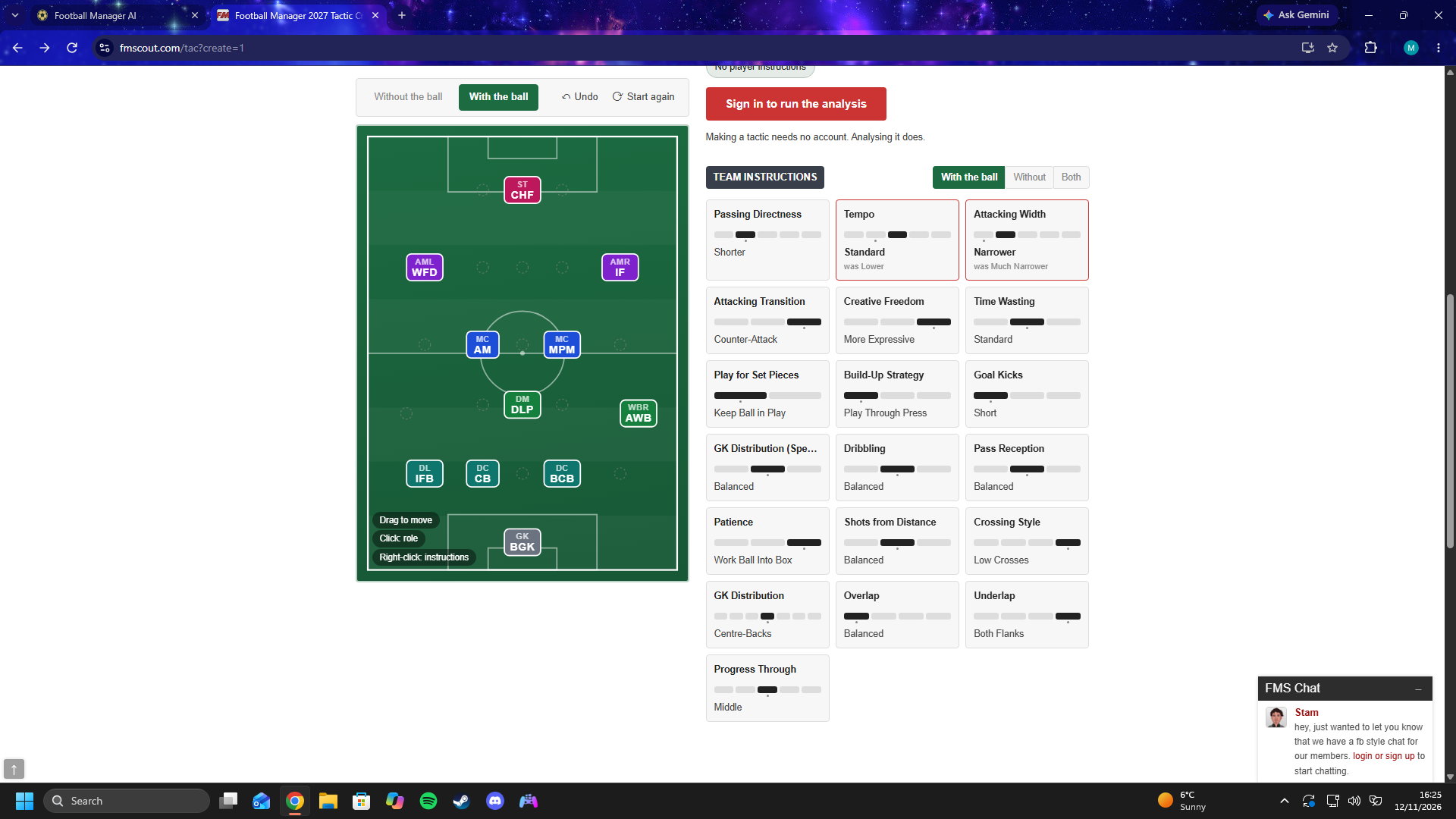
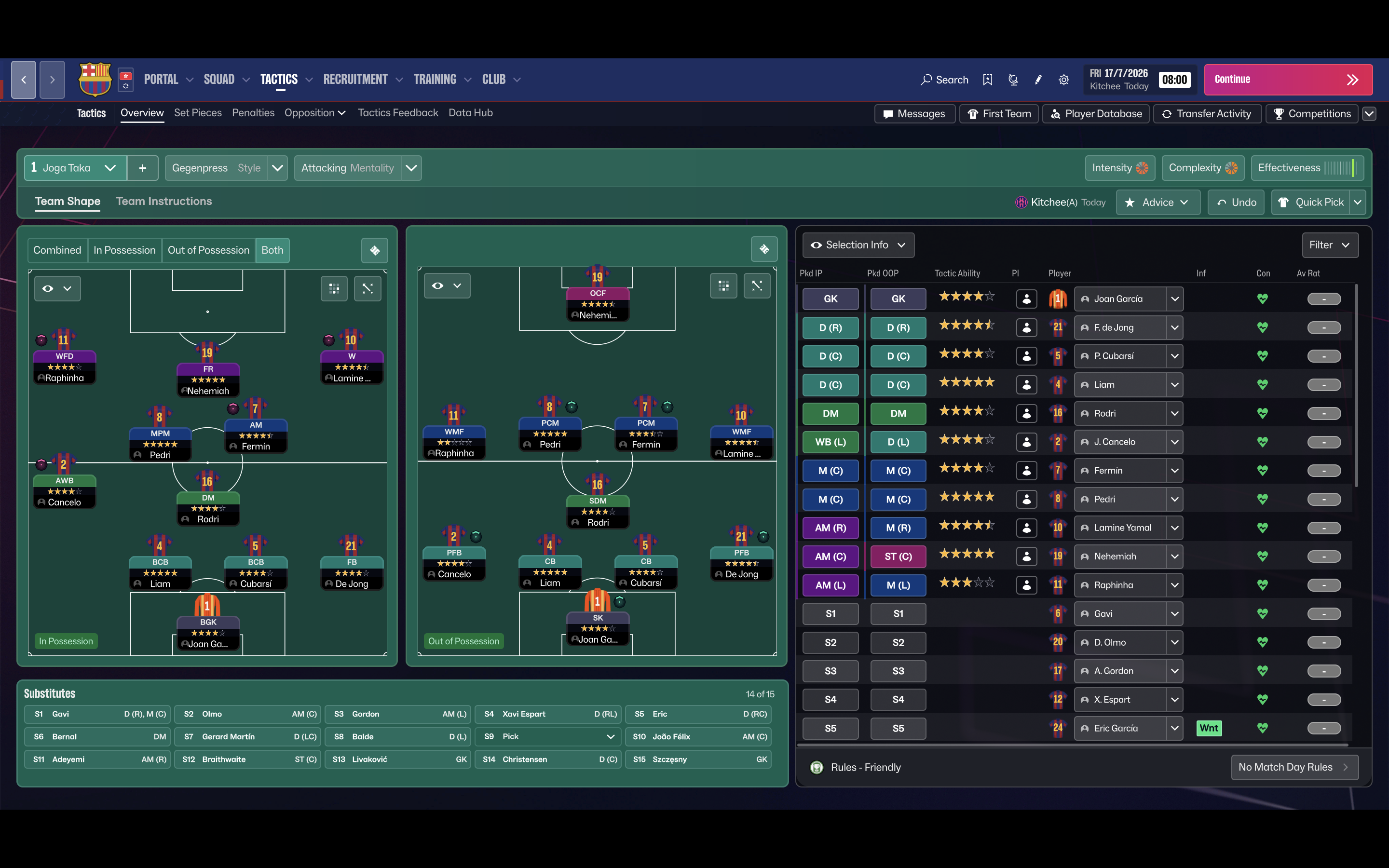
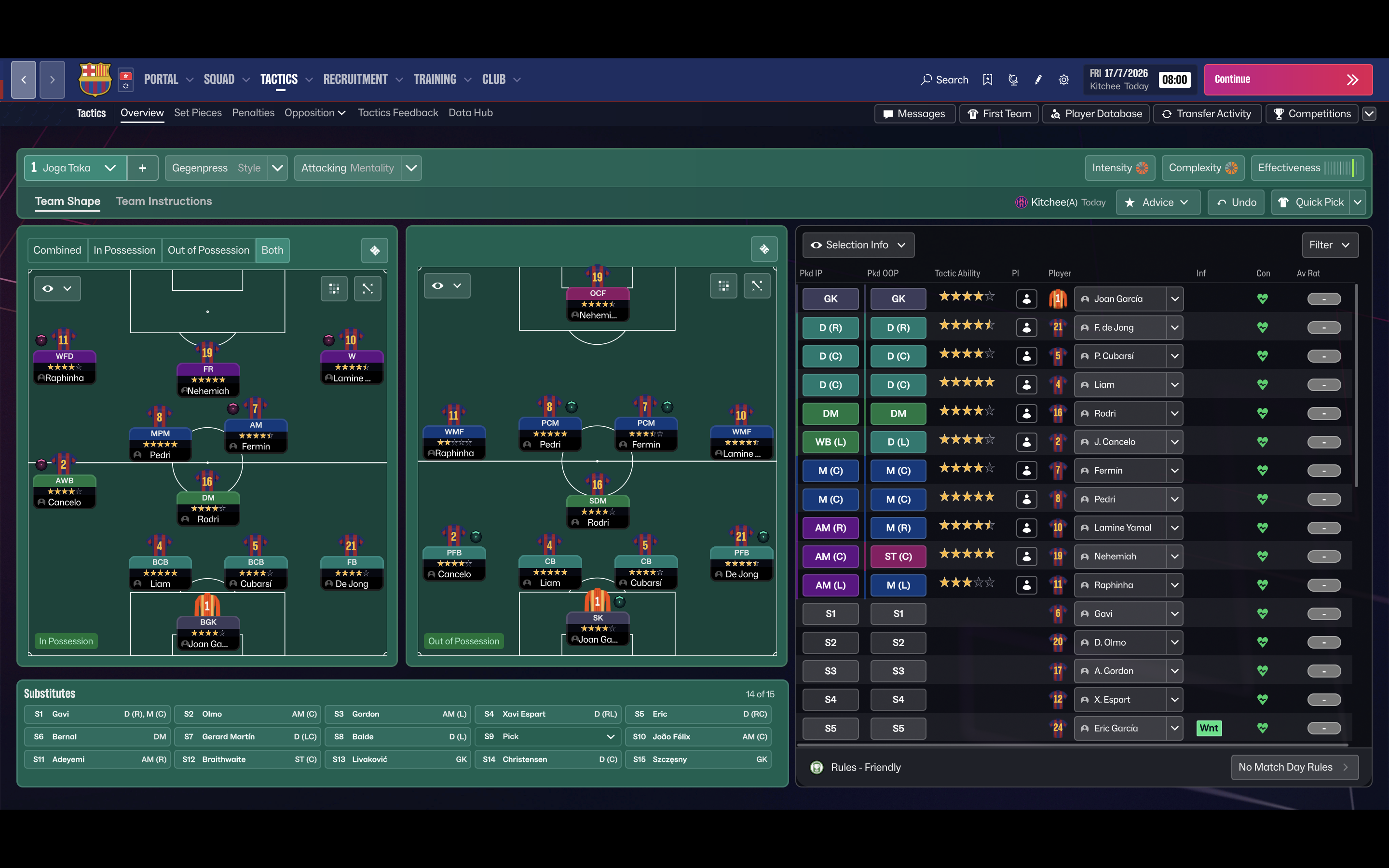
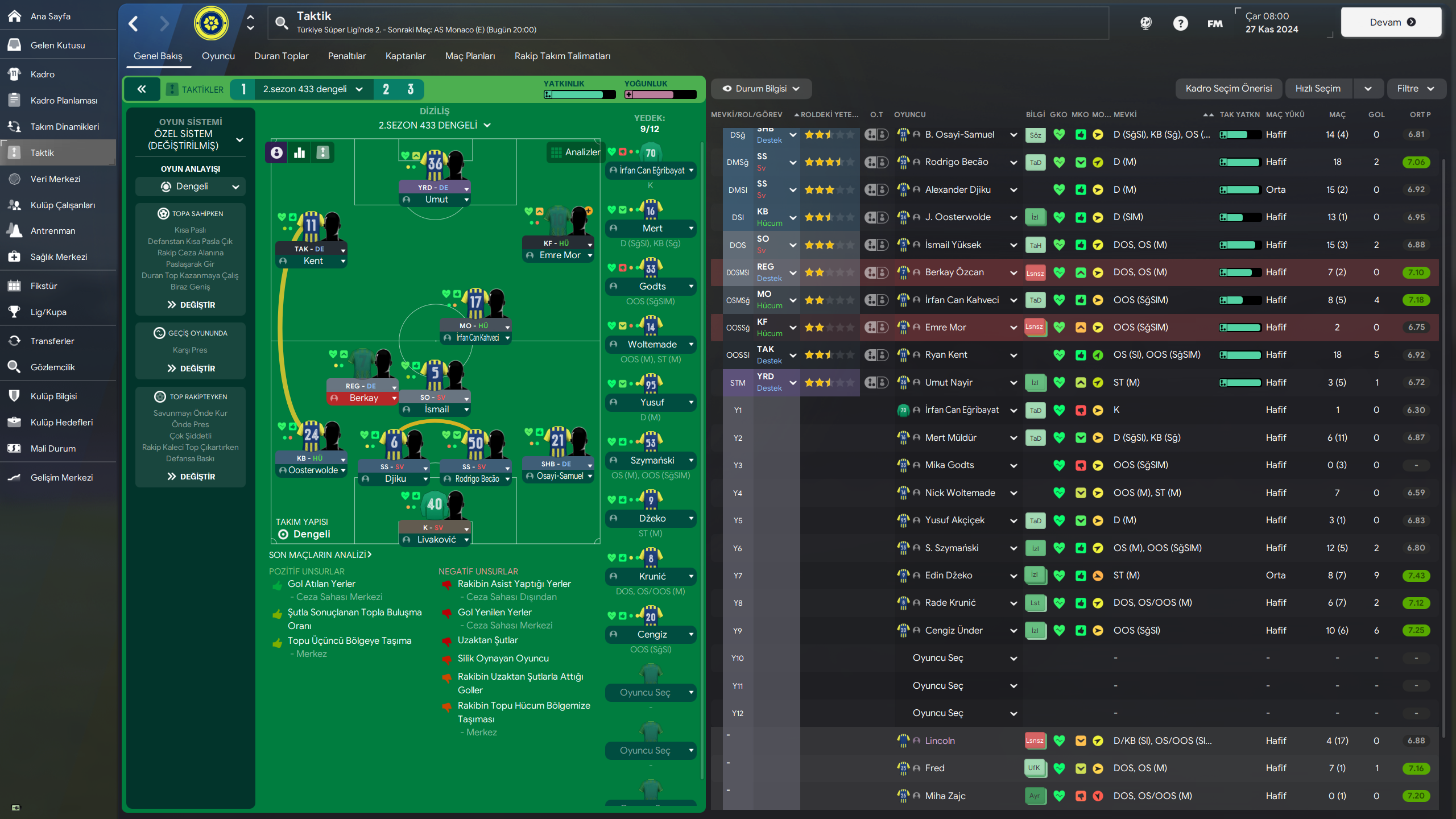
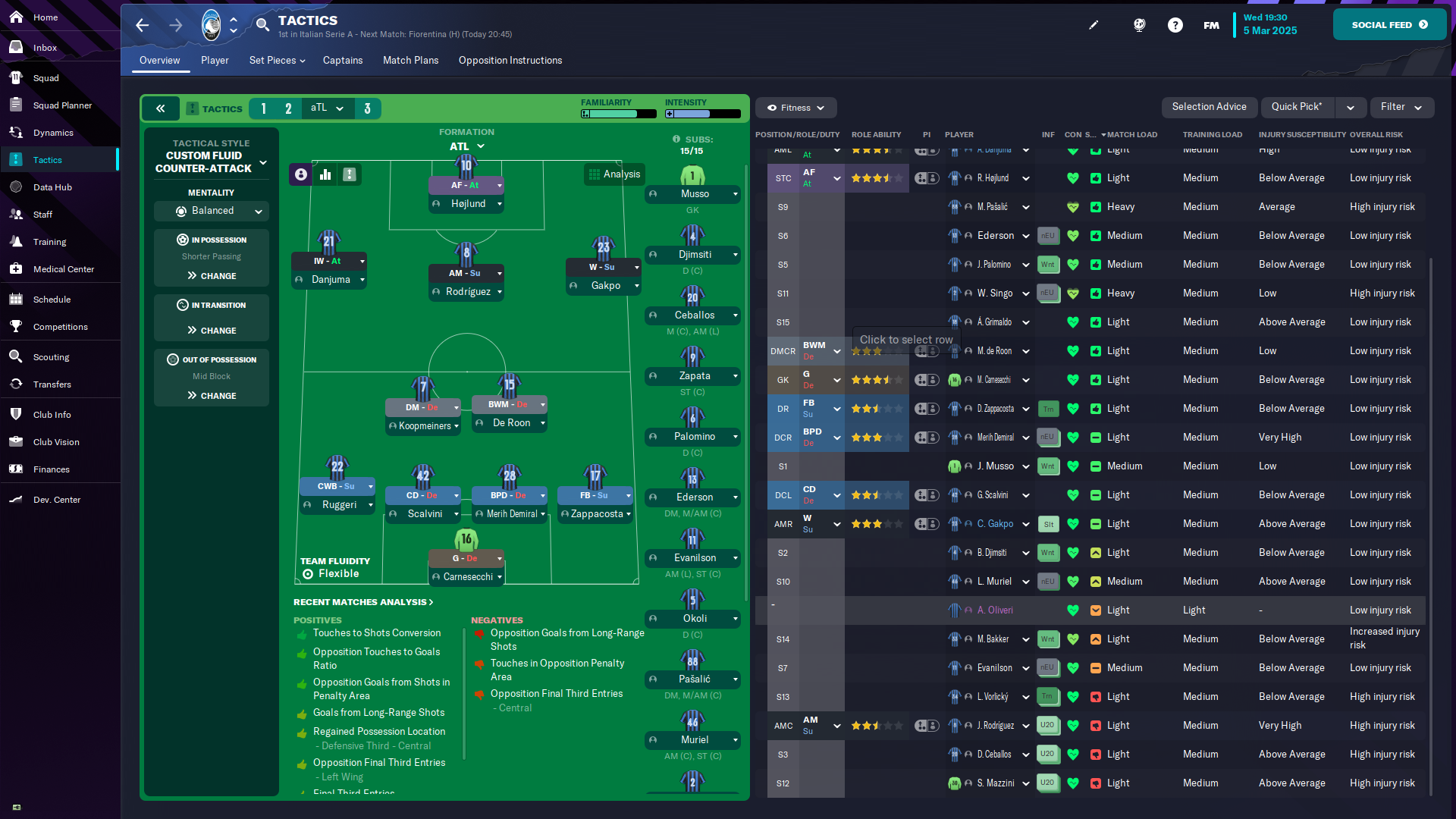
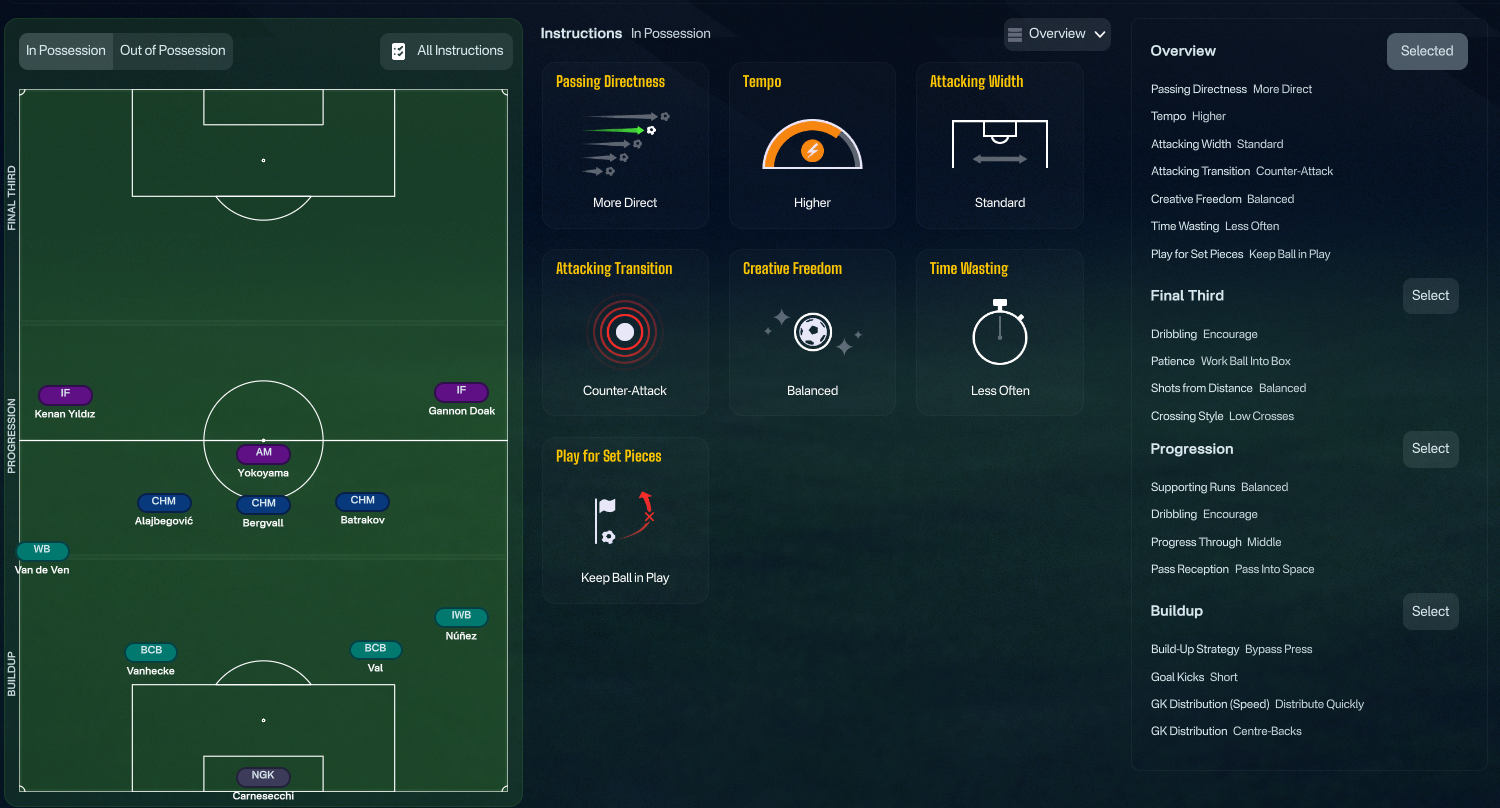
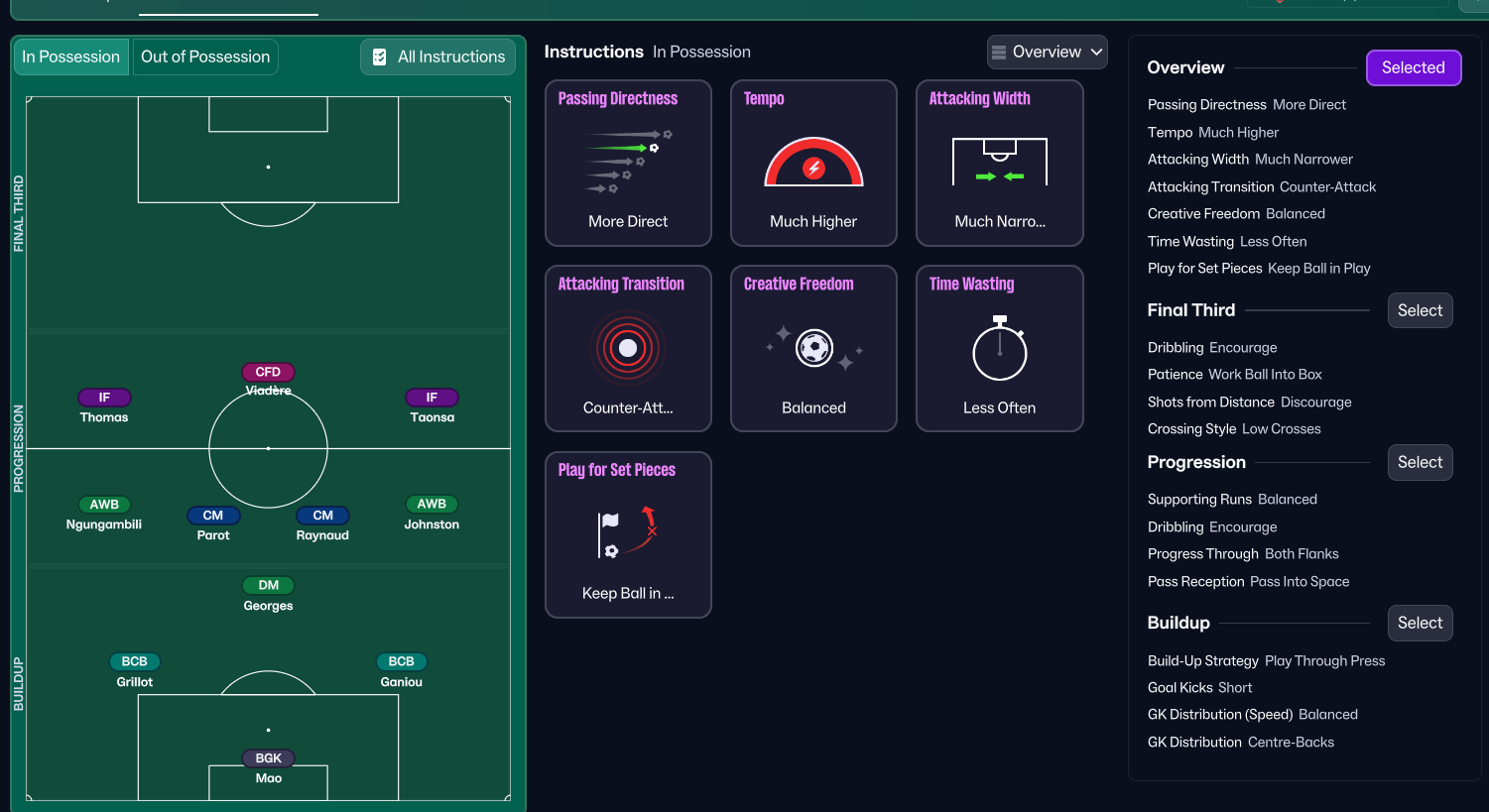
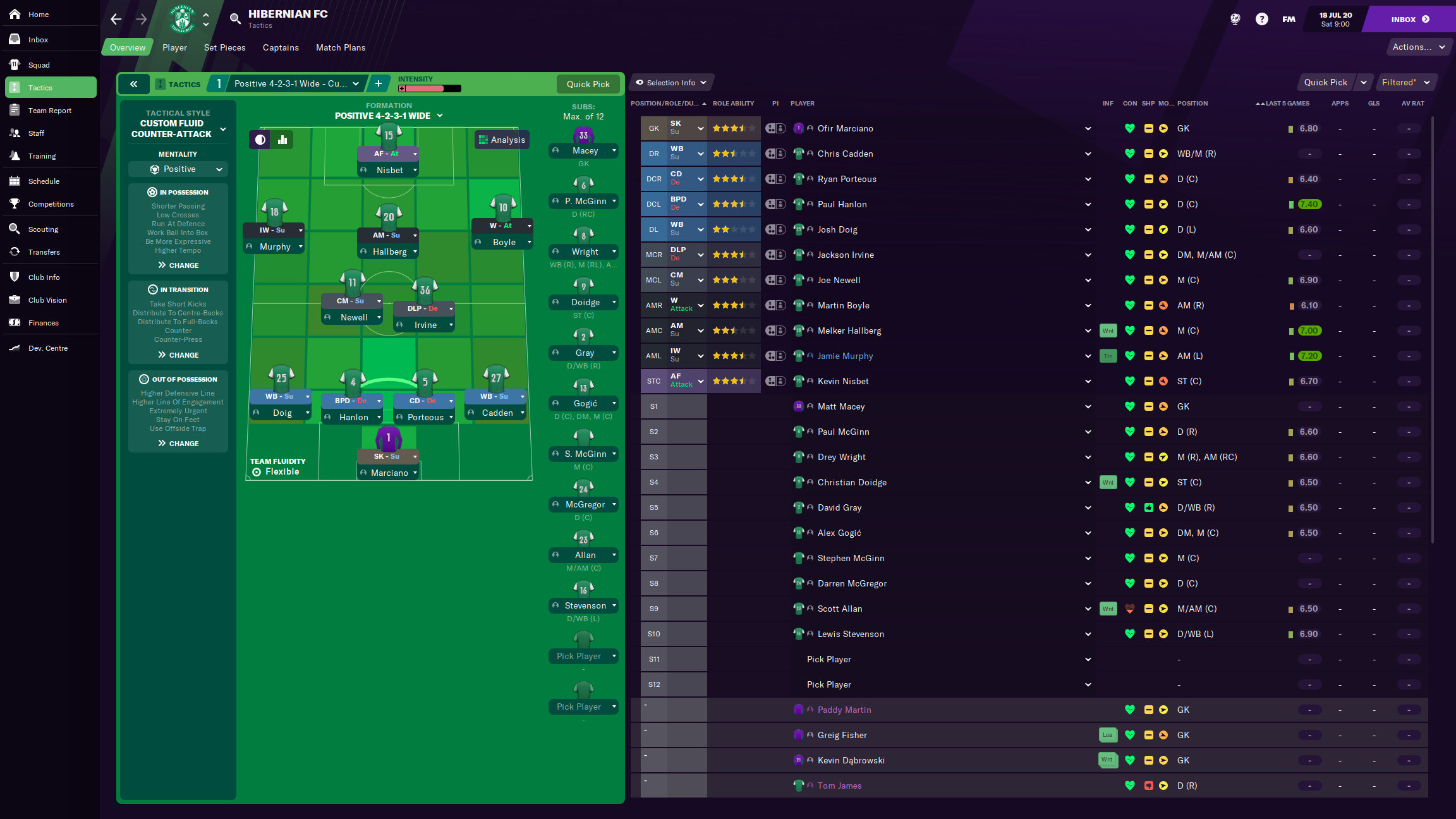
4-3-3
The combination of fast players in attacking roles allows for quick transitions from defense to attack, exploiting opposition vulnerabilities.
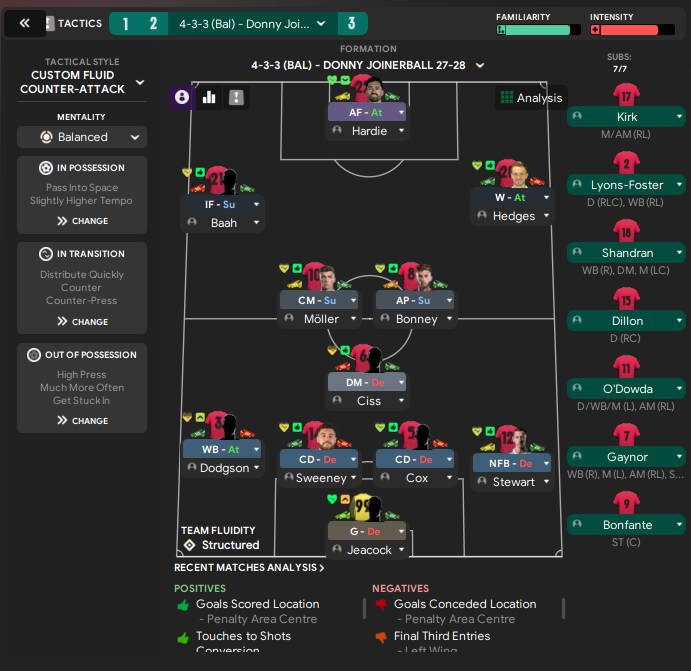
Loading tactical analysis...
Counter-Attack
Balanced
4-3-3
Structured
Pass Into Space
Slightly Higher Tempo
Distribute Quickly
Counter
Counter-Press
High Press
Much More Often
Get Stuck In
AF
Advanced Forward
Attack
IF
Inside Forward
Support
W
Winger
Attack
CM
Central Midfield
Support
AP
Advanced Playmaker
Support
DM
Defensive Midfielder
Defend
WB
Wing Back
Attack
CD
Central Defender
Defend
NFB
No-Nonsense Fullback
Defend
GK
Goalkeeper
Defend
The combination of fast players in attacking roles allows for quick transitions from defense to attack, exploiting opposition vulnerabilities.
The presence of an Advanced Playmaker and a Central Midfielder working together supports creativity and ball progression through the midfield.
Team fluidity is set to 'Structured', which can limit the effectiveness of the high press overall, potentially leading to inconsistency.
A slightly higher tempo may lead to rushed decisions, conflicting with the structured approach that favors calculated play.
How can we enhance our transition speed from defense to attack?
Are there adjustments we can make to maximize the effectiveness of the high press?
How can player roles be optimized to utilize our attacking strengths more effectively?
What tactical tweaks can improve our defensive solidity while maintaining an attacking threat?
Should we adjust our team mentality based on opponent strengths?
How can rotations in midfield improve our control during matches?
The tactical theory behind the 4-3-3: roles, instructions, and the trade-offs that decide whether the system holds up.
Master the classic 4-3-3: player roles, tactical variations, and the trade-offs that decide whether it sings or stalls.
Holder, runner, creator: the role distribution rule for three-man midfields, the AMC variants, and the antipatterns that break them.
The five seconds after losing the ball decide most matches. Counter-press, drop-and-recover, and how to know which one you should be doing.