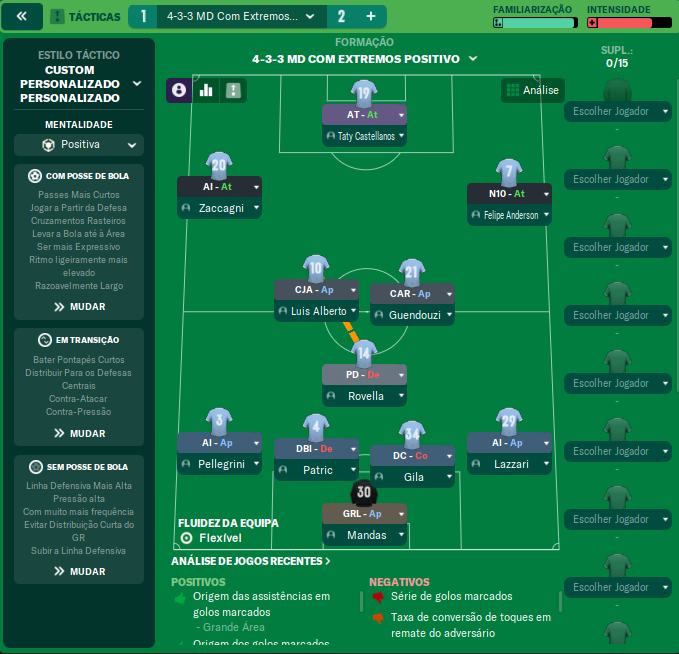
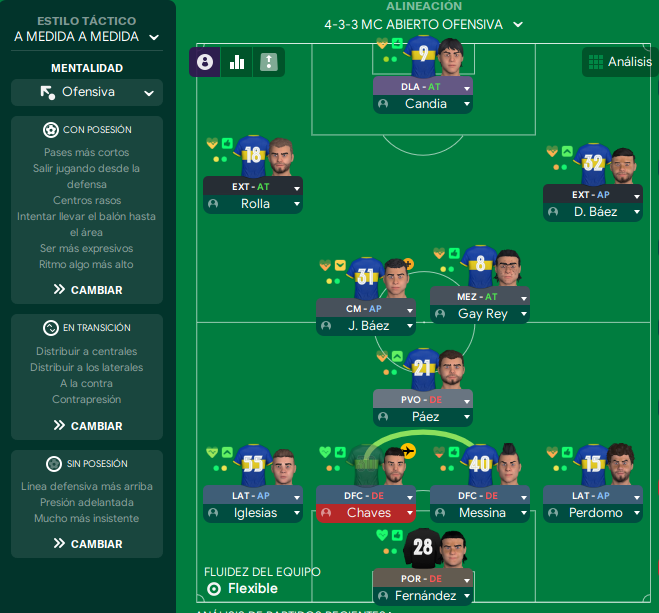
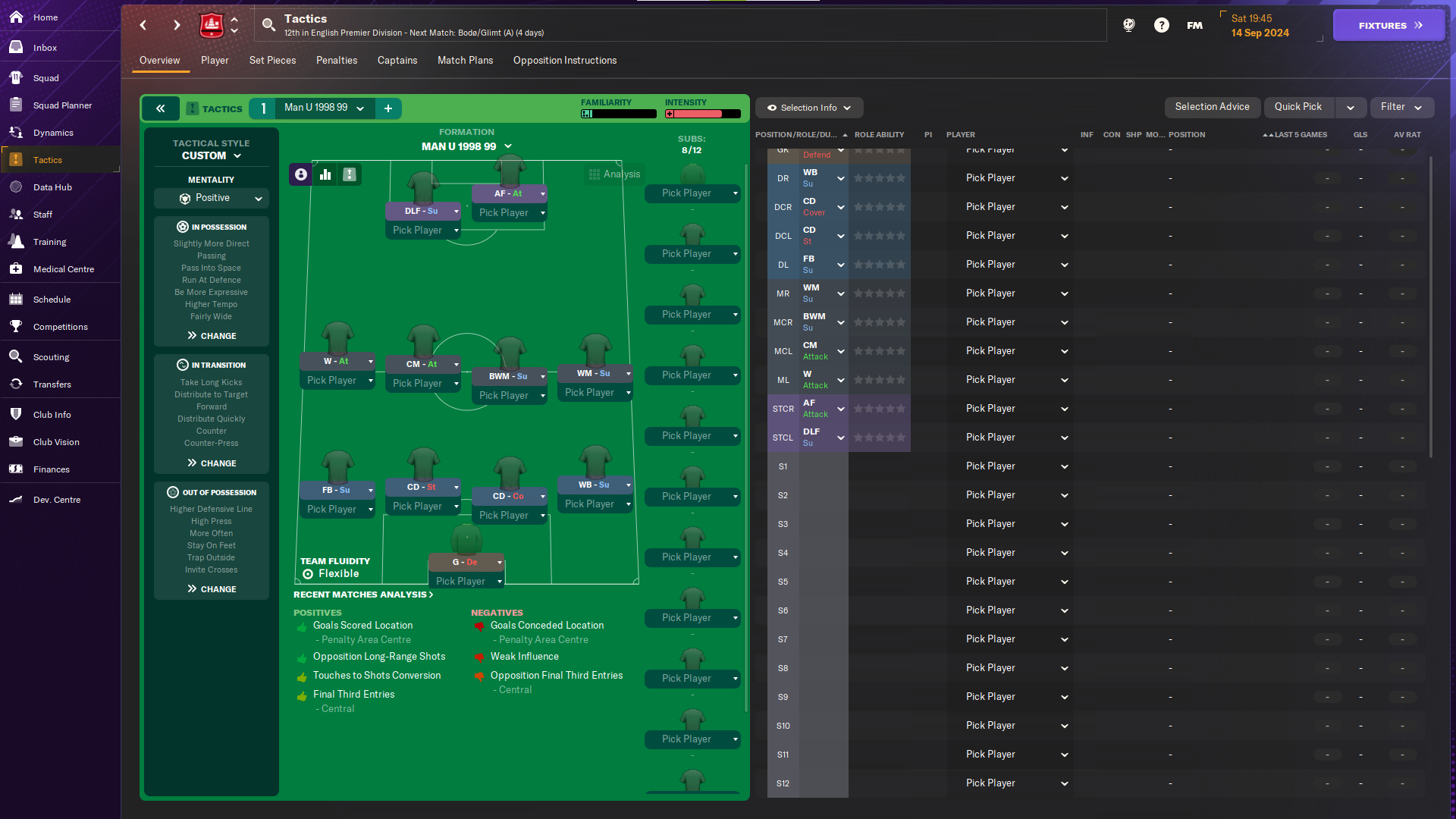
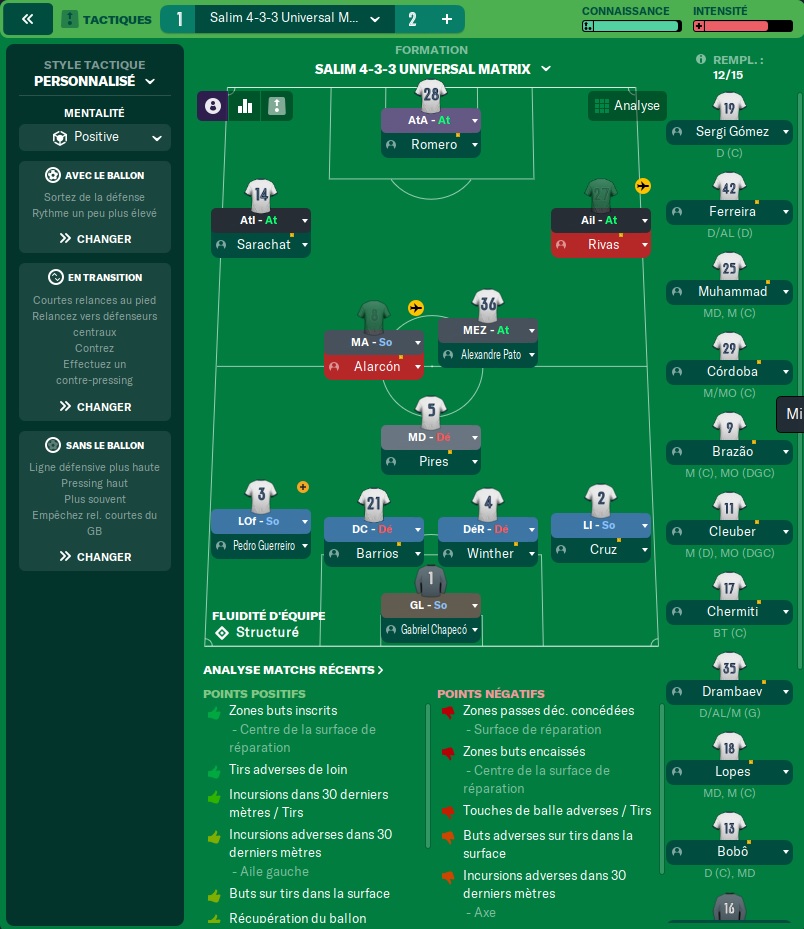
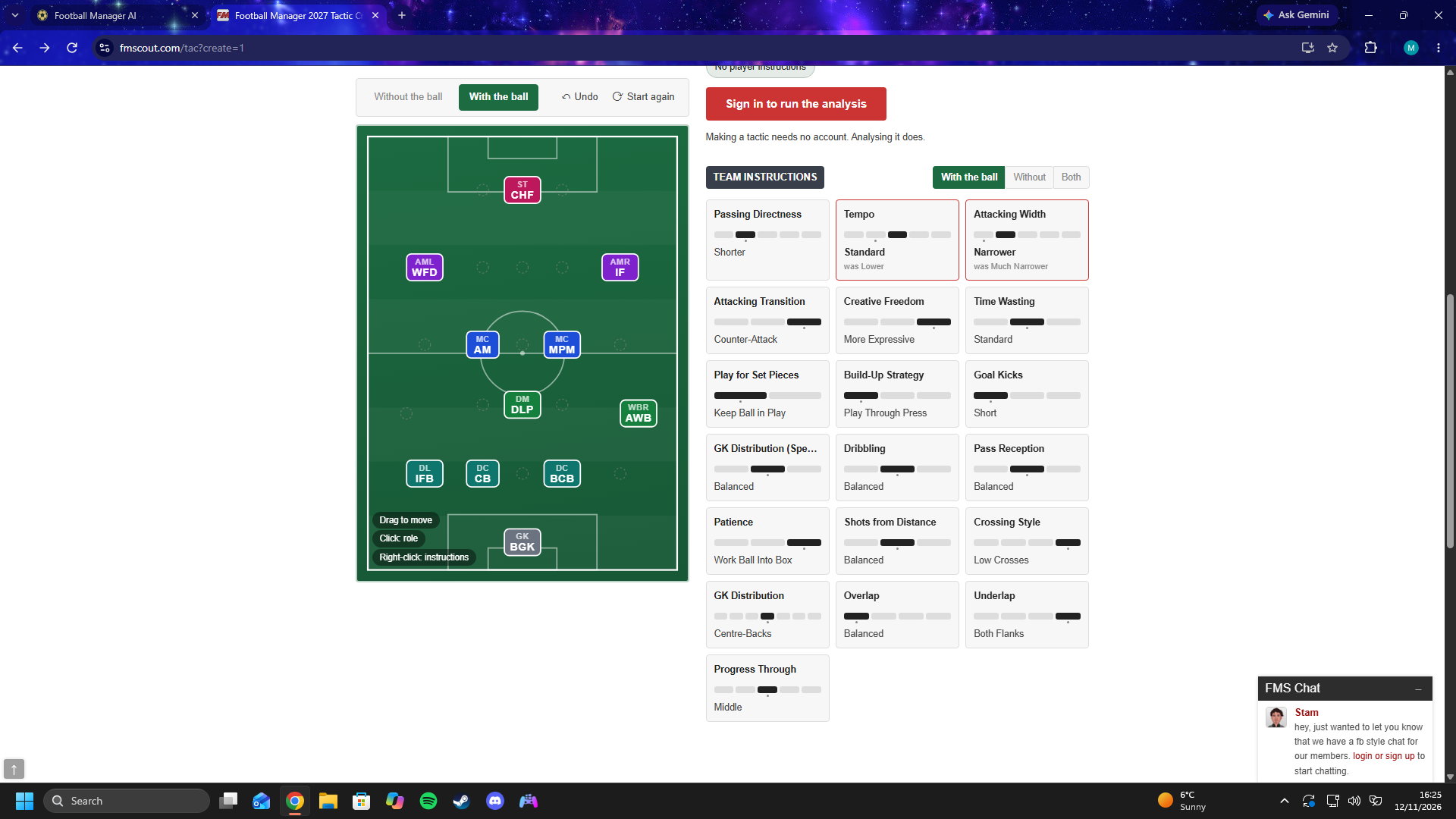
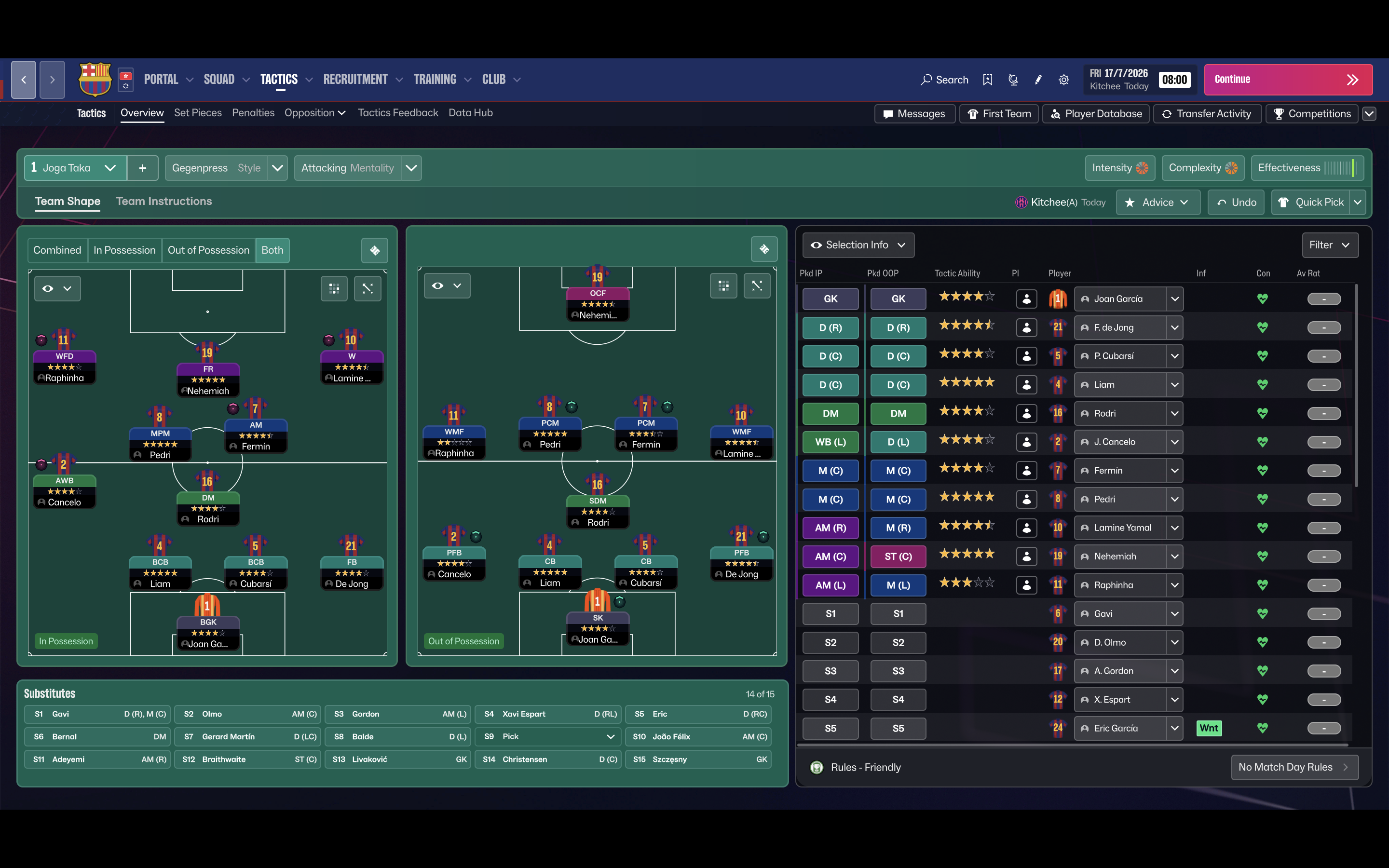
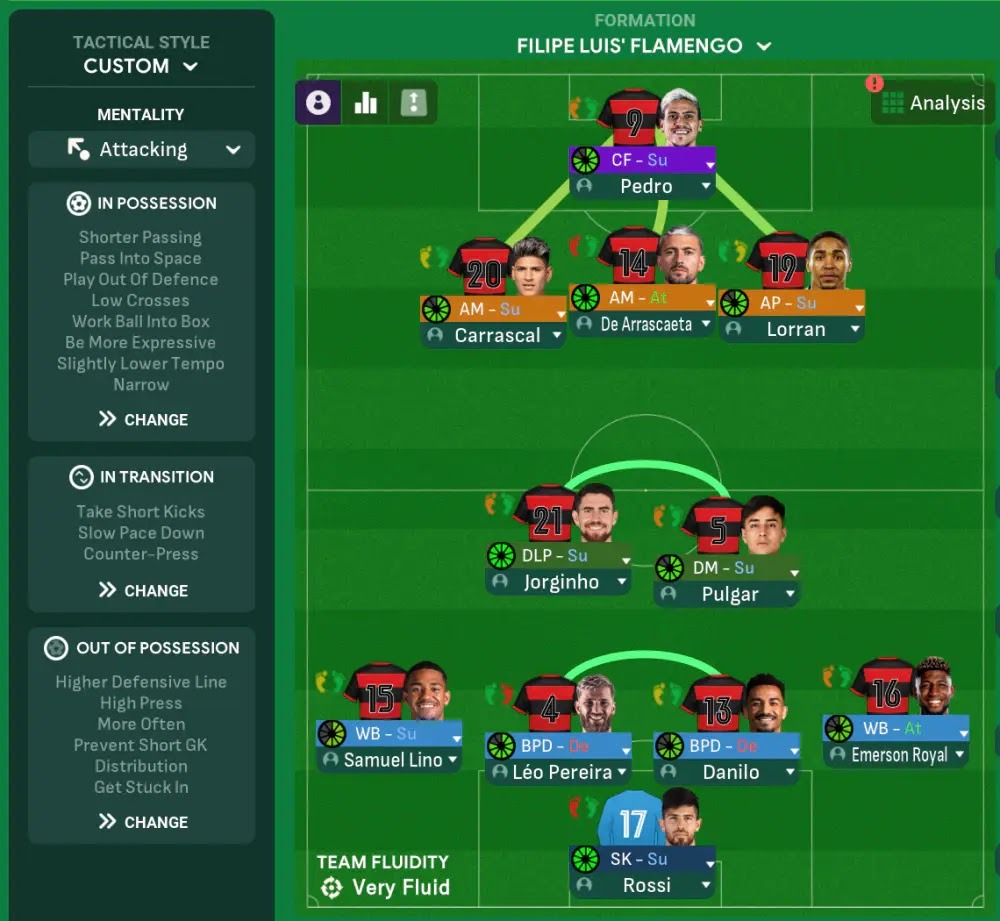
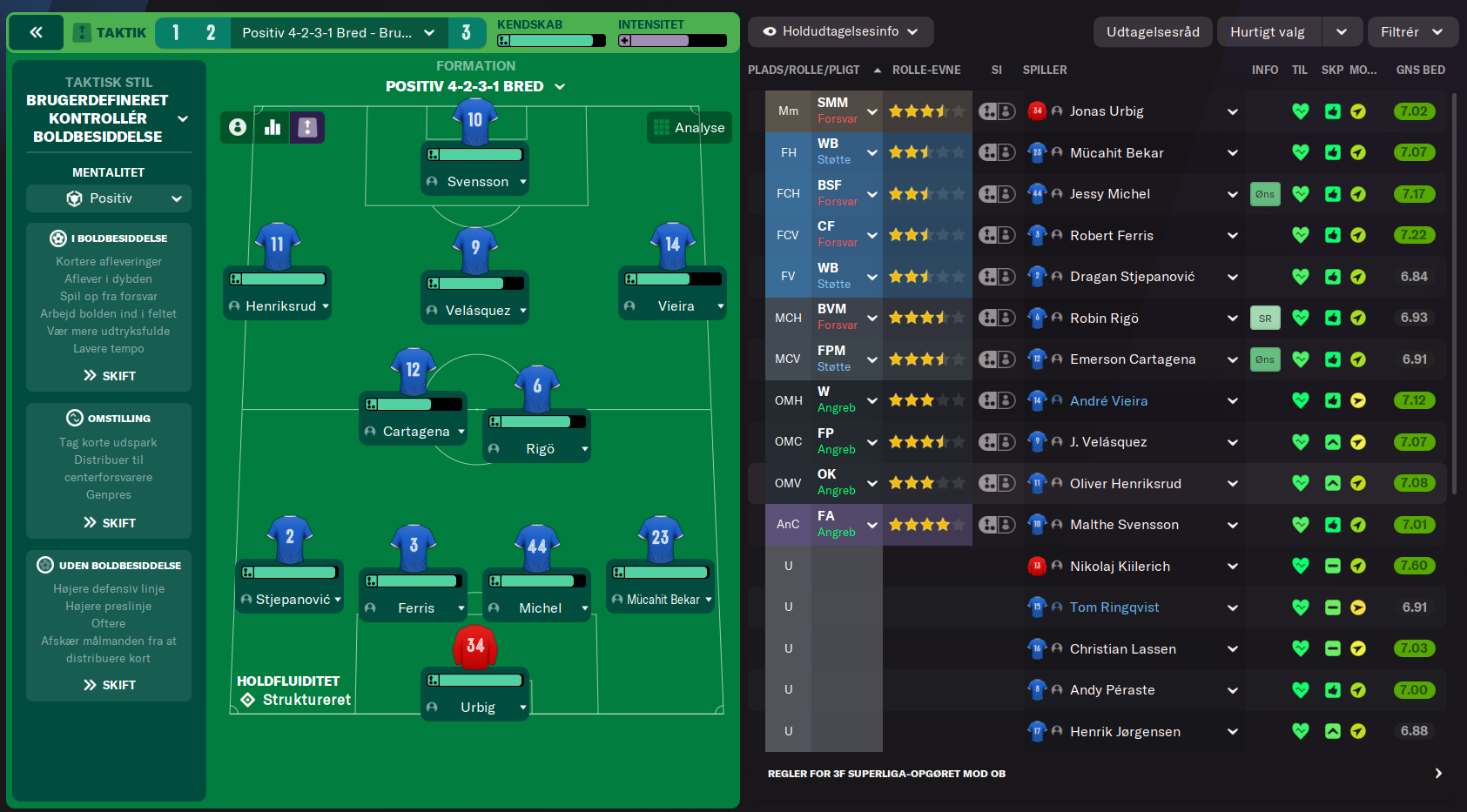
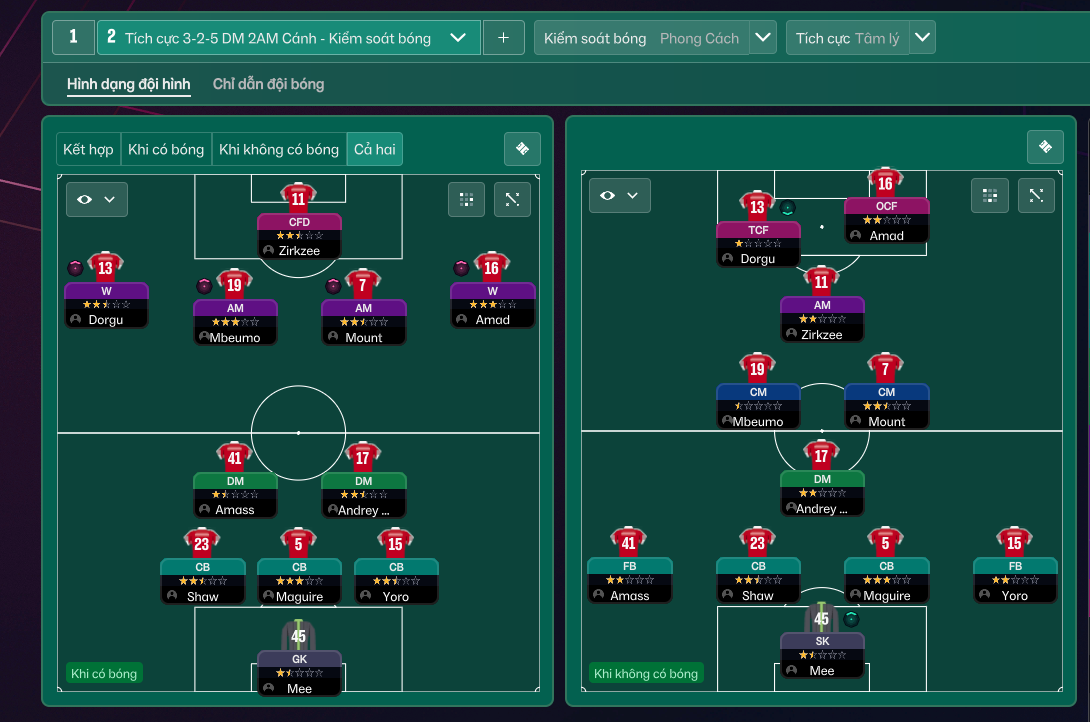
4-3-3
The use of an advanced playmaker in central midfield can help maintain possession and create goal-scoring opportunities.
Loading tactical analysis...
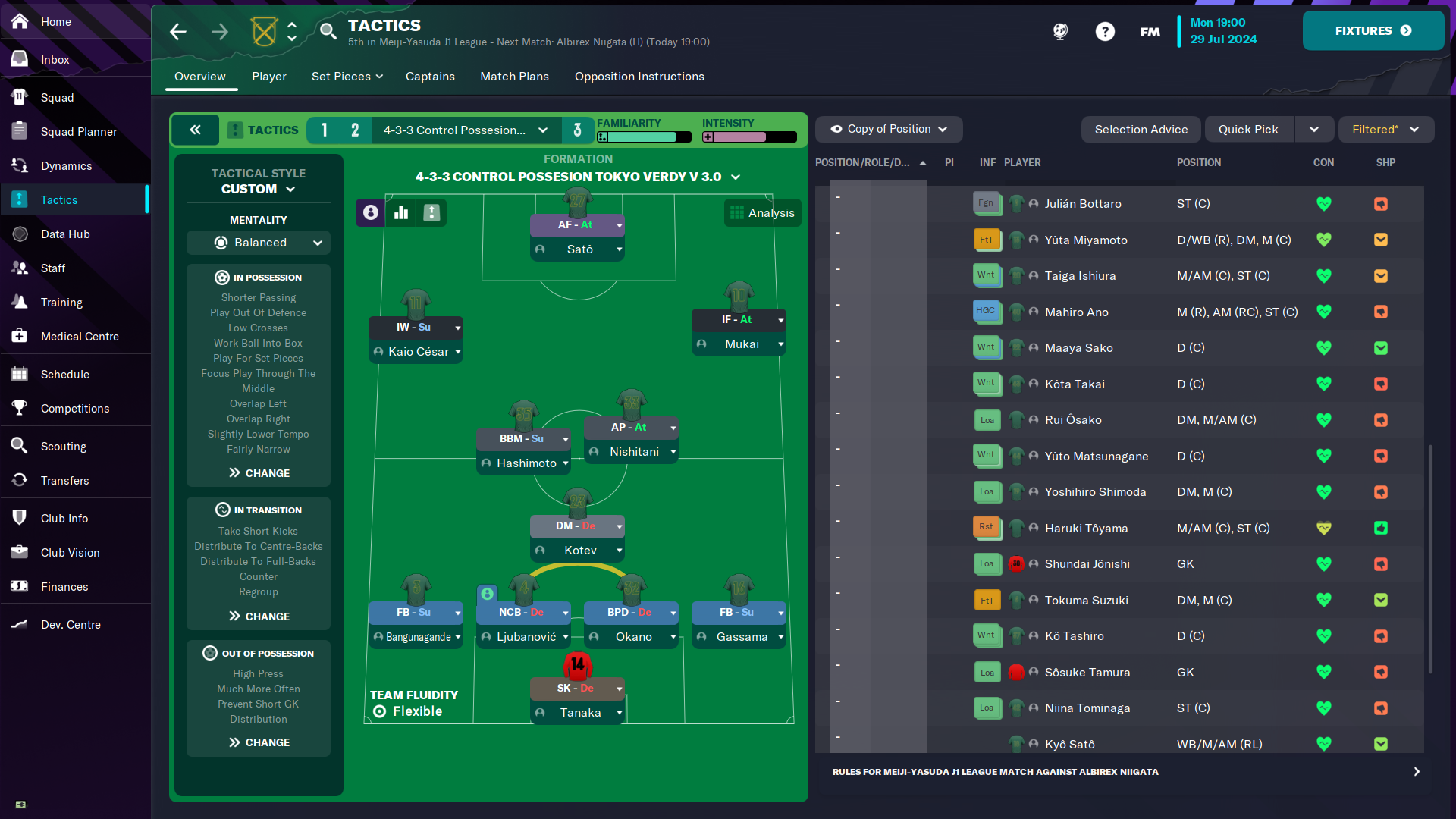
Control Possession
Balanced
4-3-3
Flexible
Shorter Passing
Play Out Of Defence
Work Ball Into Box
Focus Play Through The Middle
Overlap Left
Overlap Right
Take Short Kicks
Distribute To Centre-Backs
Distribute To Full-Backs
Counter
Regroup
High Press
Much More Often
Prevent Short GK Distribution
ST
Advanced Forward
Attack
RW
Inside Forward
Attack
LW
Inside Forward
Attack
CM
Box To Box Midfielder
Support
CM
Advanced Playmaker
Attack
DM
Deep Lying Playmaker
Defend
CB
No-Nonsense Centre-Back
Defend
CB
Ball Playing Defender
Defend
FB
Full-Back
Support
FB
Full-Back
Support
GK
Sweeper Keeper
Defend
The use of an advanced playmaker in central midfield can help maintain possession and create goal-scoring opportunities.
Two inside forwards combined with overlapping full-backs provide an attacking threat from wide areas while still maintaining a central presence.
While a high press is effective for regaining possession, the more conservative possession style may lead to positional issues when pressing.
A slightly lower tempo contradicts the high press approach, potentially leading to inconsistent transitions.
How can we enhance our pressing strategy to align with the possession style?
Are the inside forwards effectively creating space for midfielders?
Would a change in full-back duties provide better width?
How can we better utilize the advanced playmaker in high-pressure situations?
Are we maintaining optimal shape during transitional phases?
What adjustments should we make when facing teams that counter quickly?
The tactical theory behind the 4-3-3: roles, instructions, and the trade-offs that decide whether the system holds up.
Why circulation density and zonal occupation aren't the same thing in FM, and the half-space occupation rule that decides build-up.
Build the patient, control-the-tempo style without watching your opponents counter through the gaps you leave behind.
How Mentality, Duty, and Role interact in FM, why duty trumps mentality every time, and the role-on-top-of-duty composition rules.