Uploaded Tactic
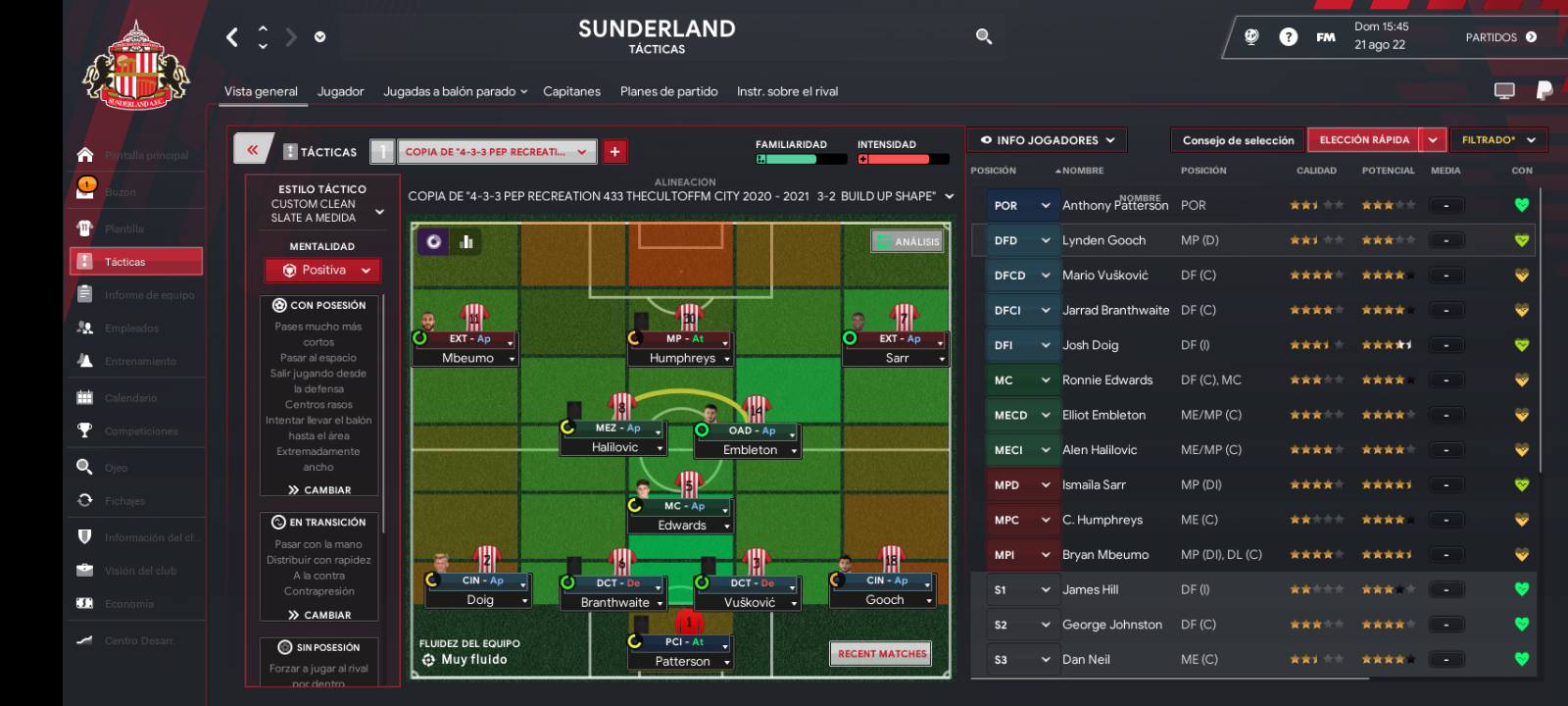
Formation & Style
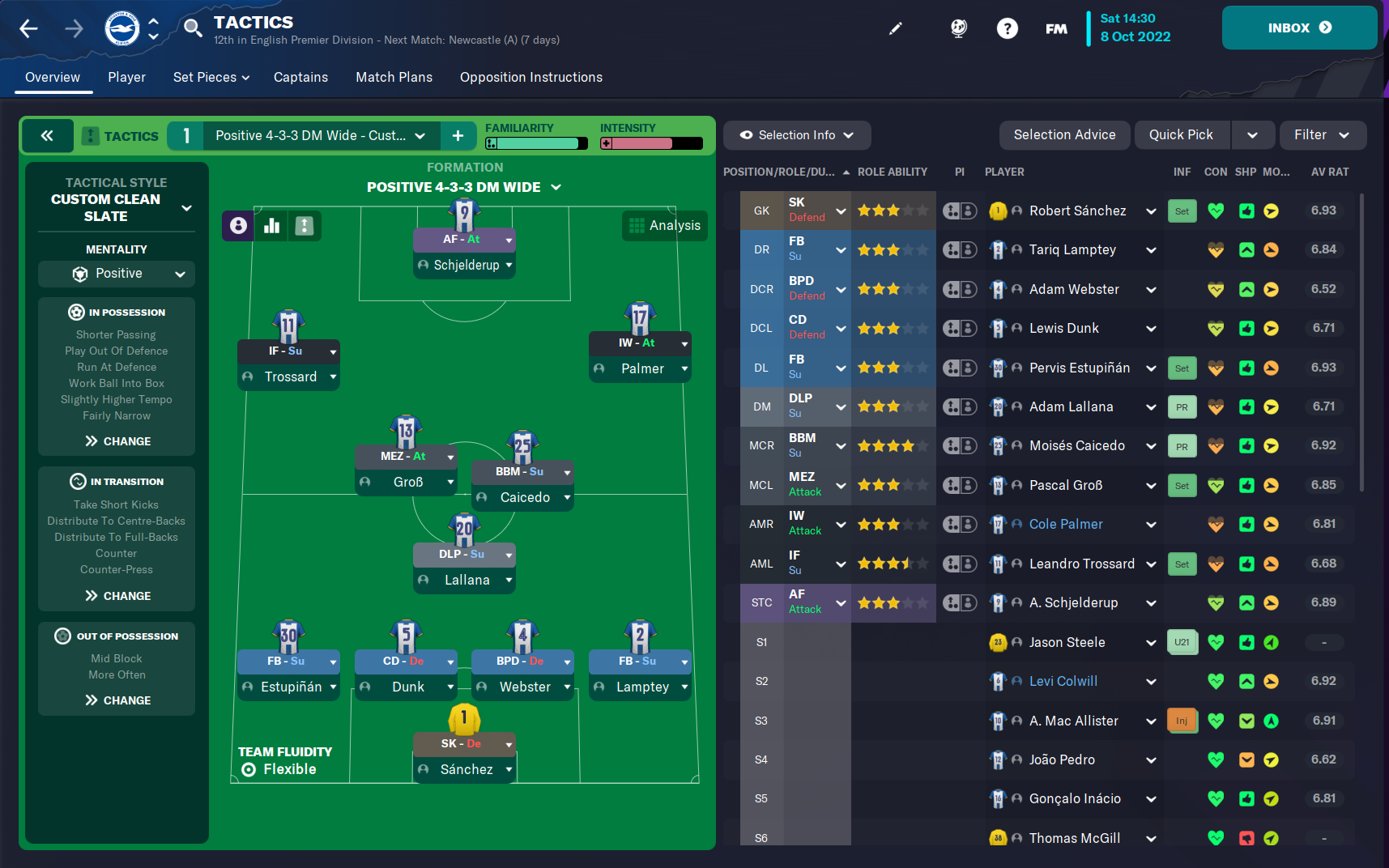
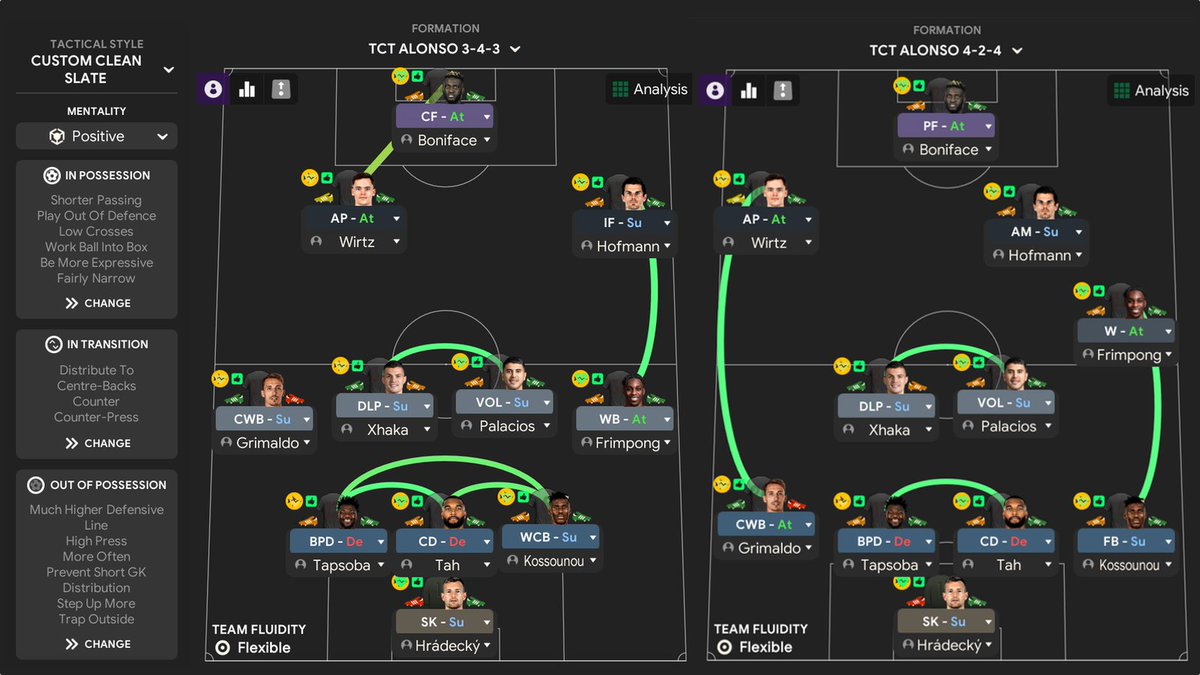
Tactical Style:Custom Clean Slate
Mentality:Positive
Formation:4-3-3
Team Fluidity:Very Fluid
In Possession
Shorter Passing
Pass Into Space
Play Out Of Defence
Cross More Often
Attempt Through Balls
In Transition
Calm Distribution
Distribute Quickly
Counter-Press
Out of Possession
Higher Defensive Line
Higher Defensive Width
Team Shape Without Ball
Shape:4-3-3
Description:A compact shape that maintains defensive solidity while preventing spaces between lines.
Evidence:Four defenders and a structured DM protect the backline, reducing opponent penetration.
Team Shape With Ball
Shape:4-3-3
Description:Wingers stretching the play, complemented by an advanced midfield providing depth in attack.
Evidence:Inside forwards and advanced playmaker enhance attacking fluidity with direct runs.
Phase Description
Attacking Play
Focuses on creating scoring opportunities from the flanks and transitioning quickly into attack through short passes.
Defensive Transition
Utilizes a counter-press strategy to regain possession swiftly after losing the ball.
Main Focus
Maximizing offensive potential through width from the full-backs and support from midfield.
Key Strengths
Attacking Width
The use of full-backs and inside forwards provides ample width, stretching the opponent's defense.
Midfield Versatility
A blend of roles in midfield allows for varying attacking threats and ball retention.
Pressing Game
Counter-pressing ensures a quick transition back to attacking after loss of possession.
Conflicting Directions
Defensive Vulnerability on Flanks
With attacking full-backs, the team risks exposure on the flanks, especially against counter-attacks.
Midfield Density
Too many attacking midfield roles might cause congestion and reduce fluidity.
High Line Risk
Higher defensive line creates space for quick counter-attacks from opposing forwards.
Tactical Suggestions
Adjust Full-Back Duties
Consider reducing one full-back to a Defensive duty to enhance defensive stability.
Fluid Midfield Configuration
Reassess the distribution of midfield roles to ensure balance between attack and defense.
Defensive Line Height
Evaluate lowering the defensive line to reduce vulnerability to counter-attacks.
Ask Questions About Your Lineup
Related Tactics
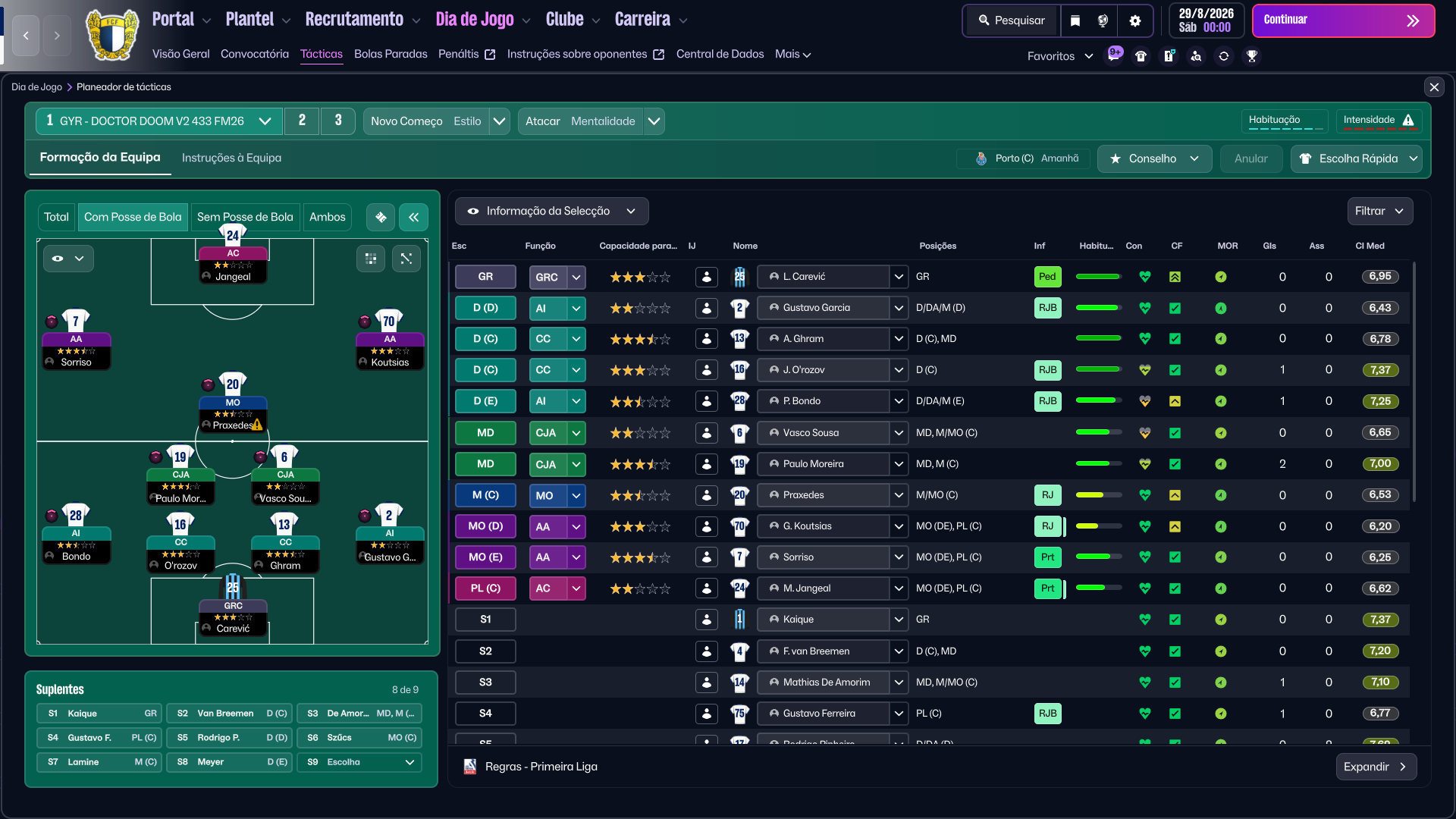
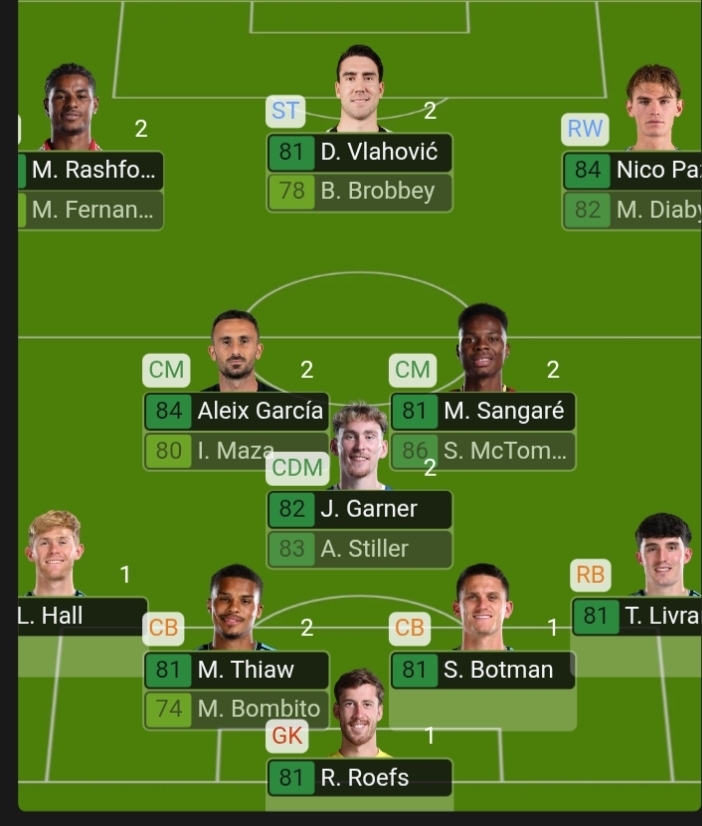
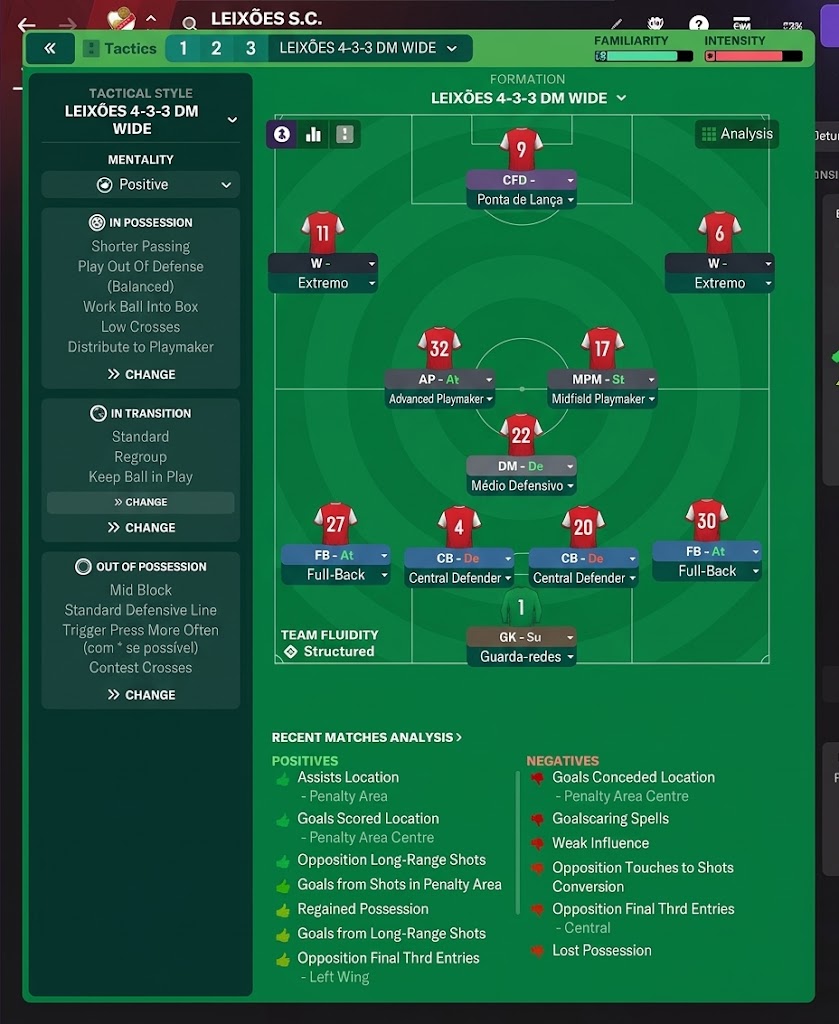
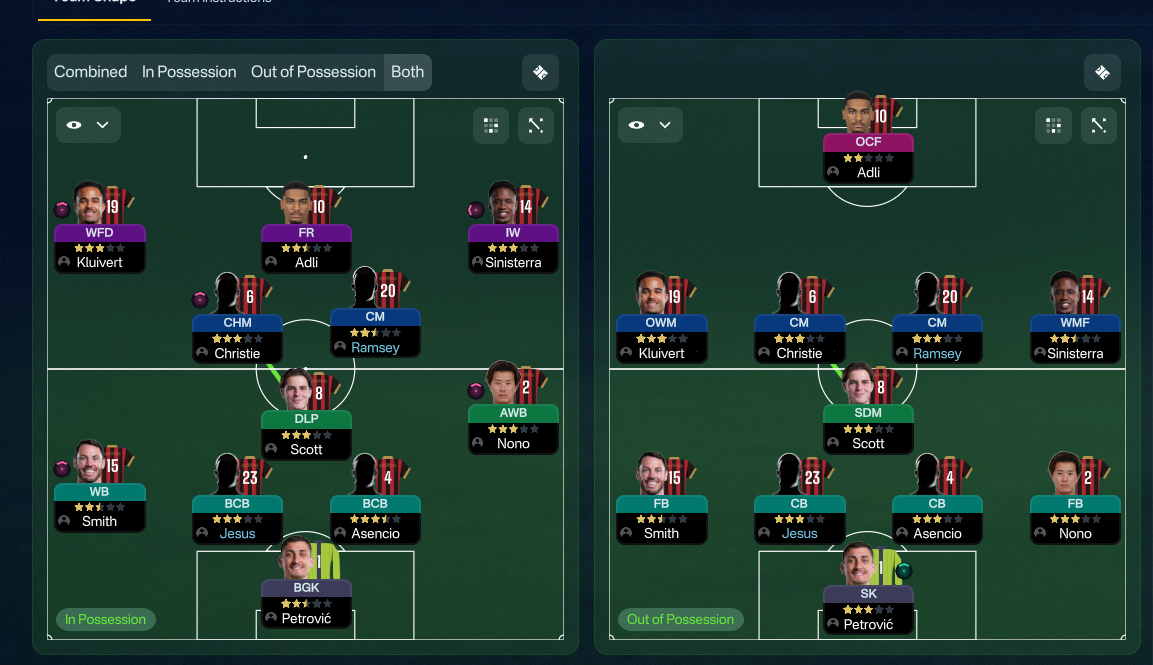
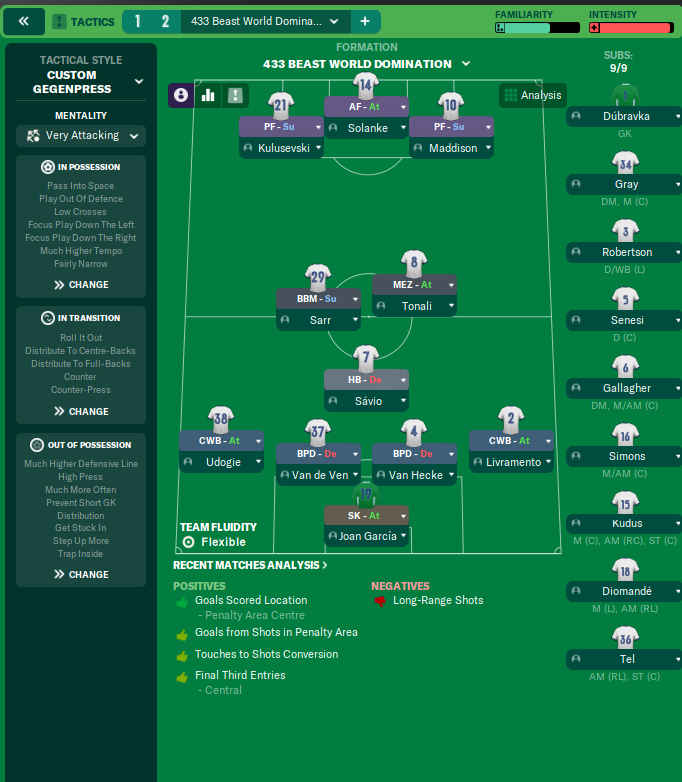
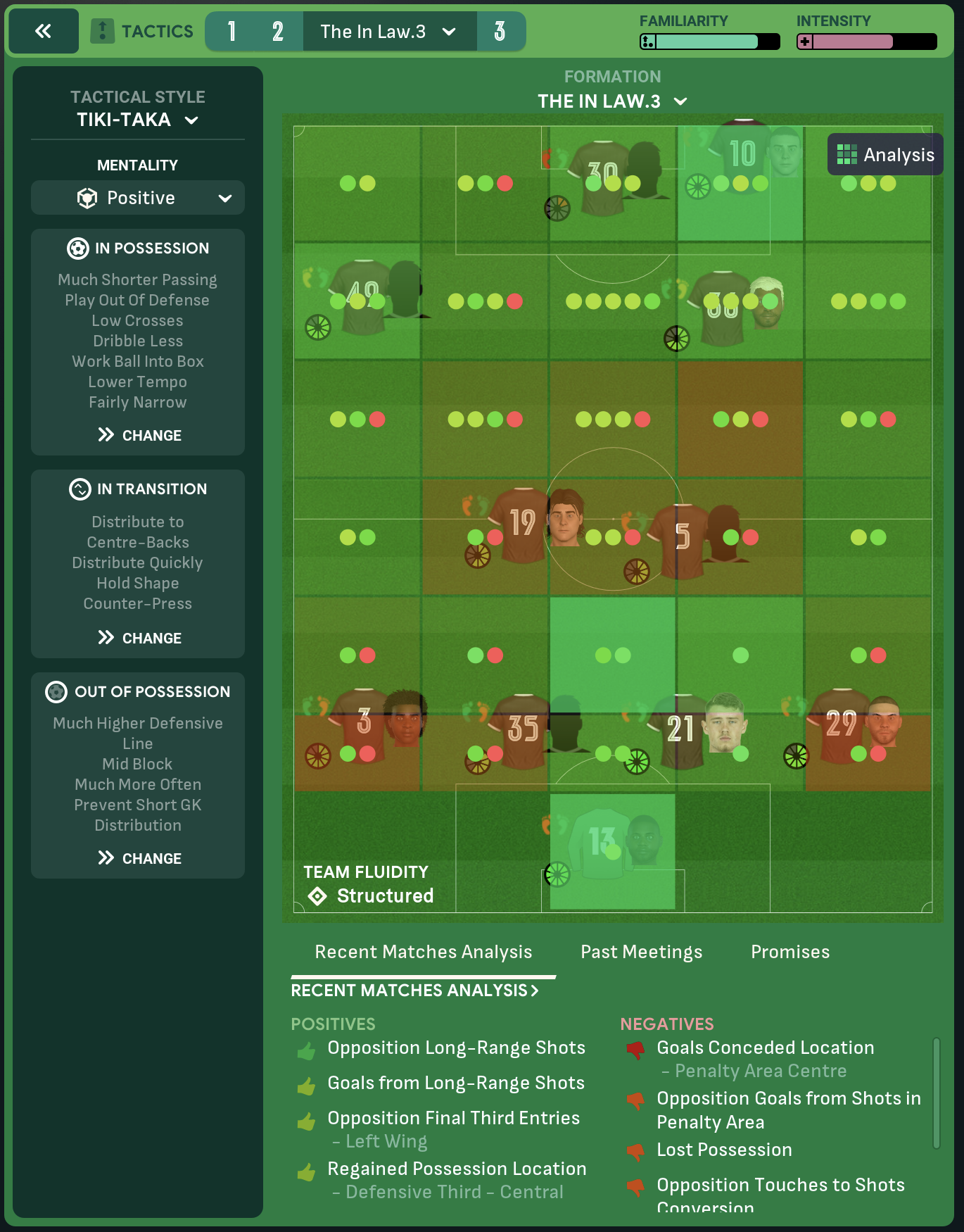
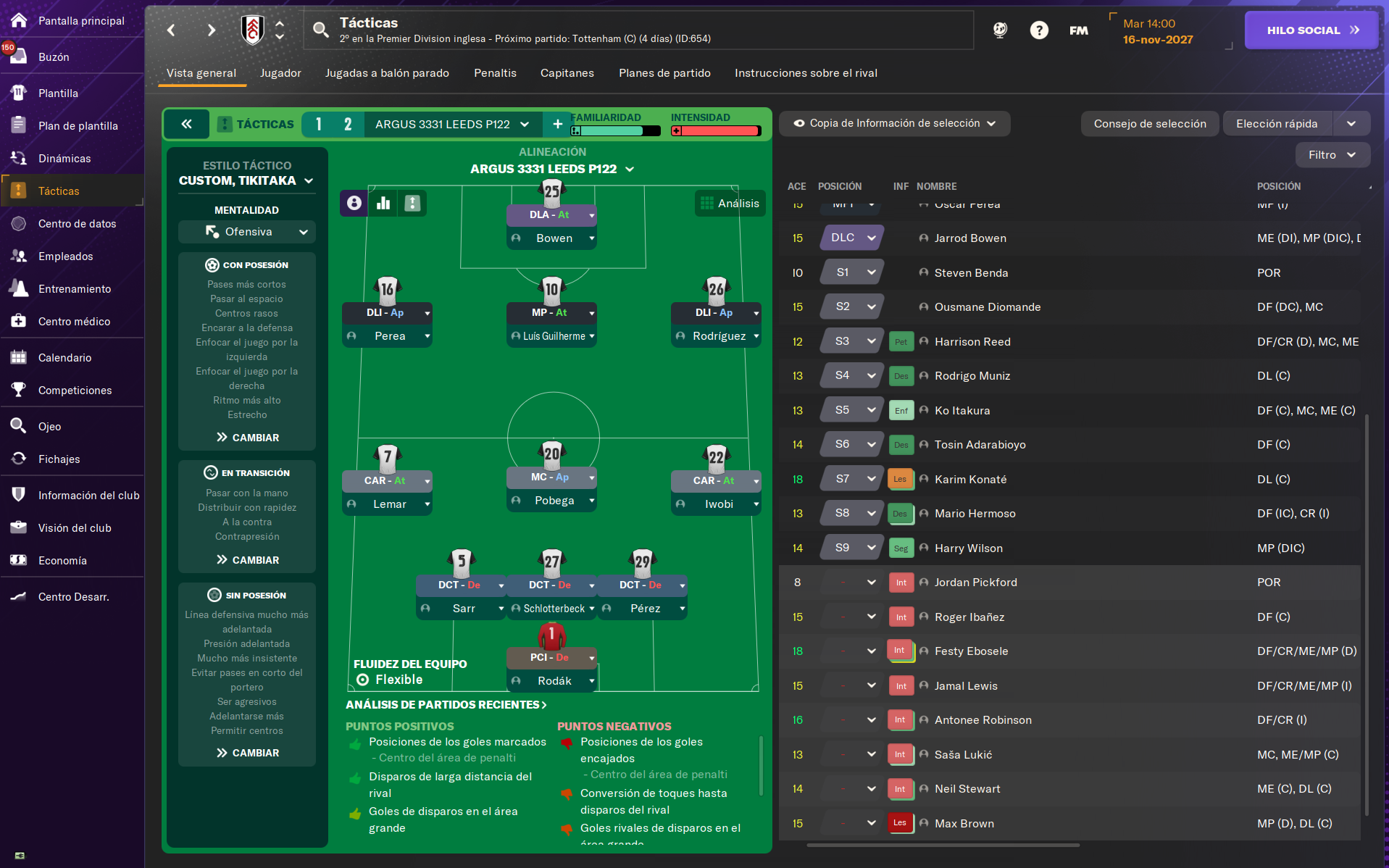
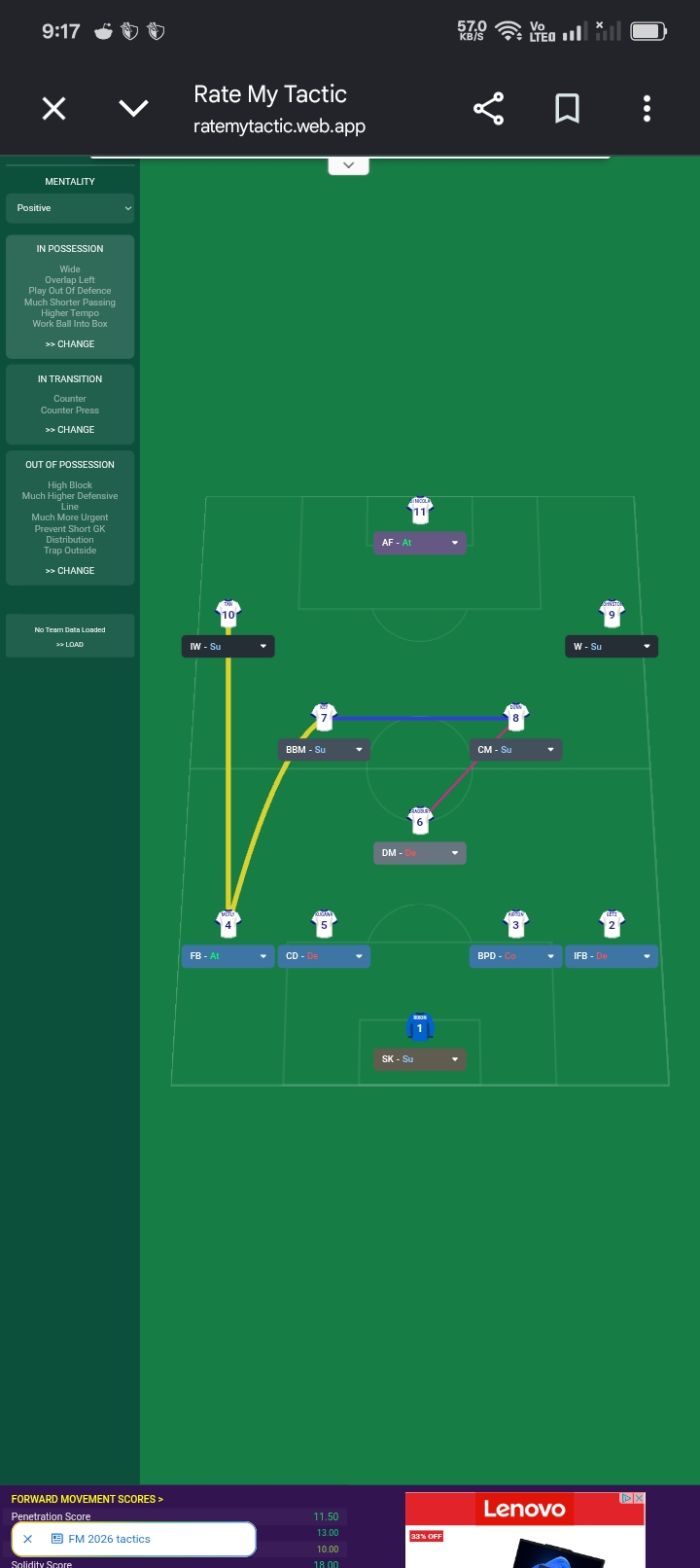
More Custom Clean Slate tactics
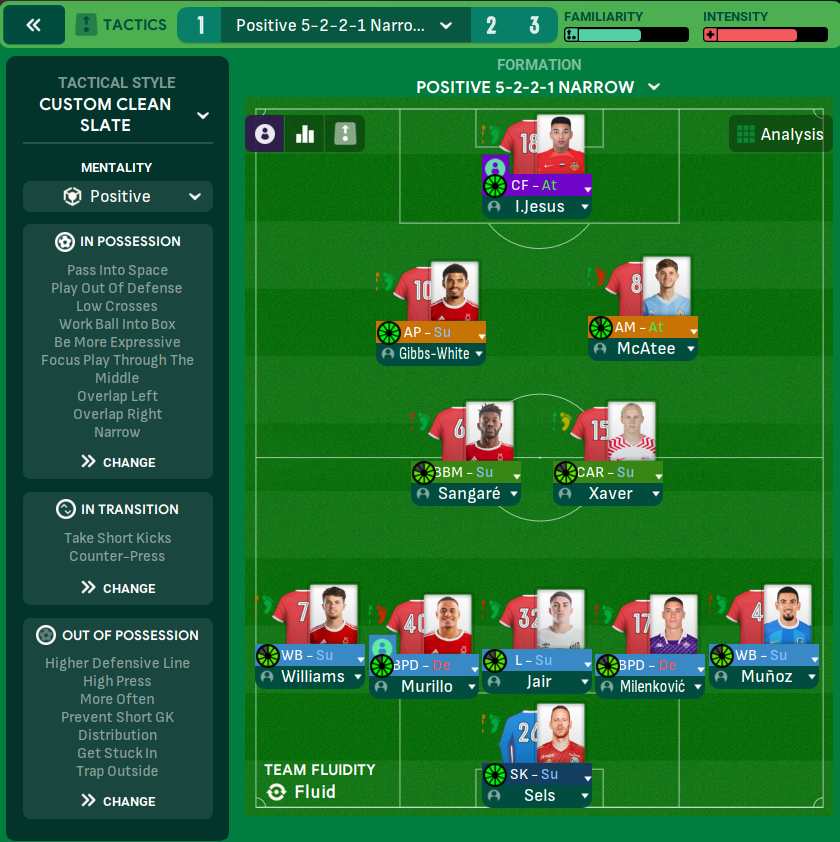
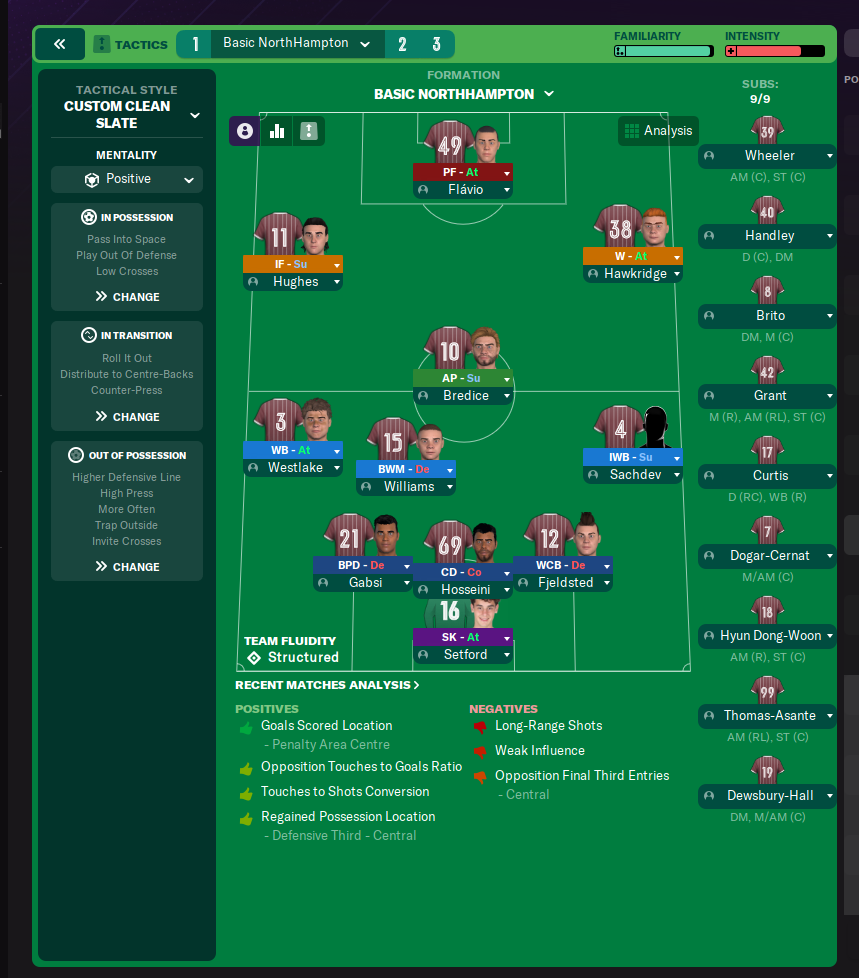
Guides for this formation
The tactical theory behind the 4-3-3: roles, instructions, and the trade-offs that decide whether the system holds up.
Foundations
Understanding the 4-3-3 Formation
Master the classic 4-3-3: player roles, tactical variations, and the trade-offs that decide whether it sings or stalls.
Read guide
Player pairings
Midfield Trios
Holder, runner, creator: the role distribution rule for three-man midfields, the AMC variants, and the antipatterns that break them.
Read guide
Playing styles
Gegenpressing: A Full Guide
Klopp-style gegenpressing in FM, including squad profile, line-and-press pairing, sustainable workload, and the antipatterns to avoid.
Read guide