Uploaded Tactic
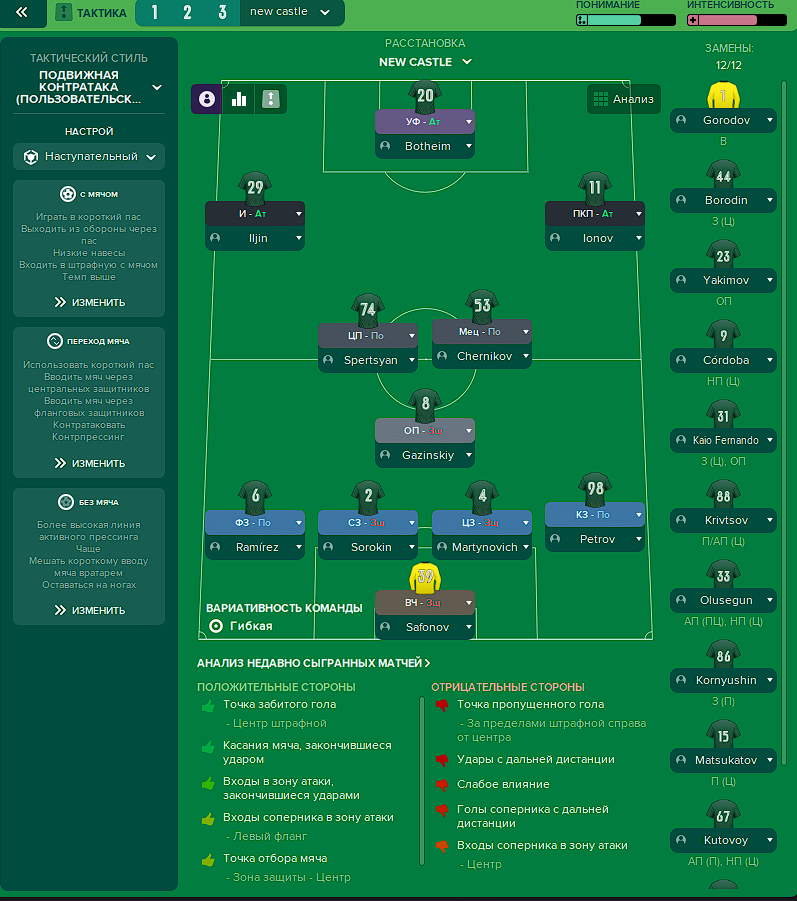
Formation & Style
Tactical Style:Counter-Attacking
Mentality:Attacking
Formation:4-3-3
Team Fluidity:Fluid
In Possession
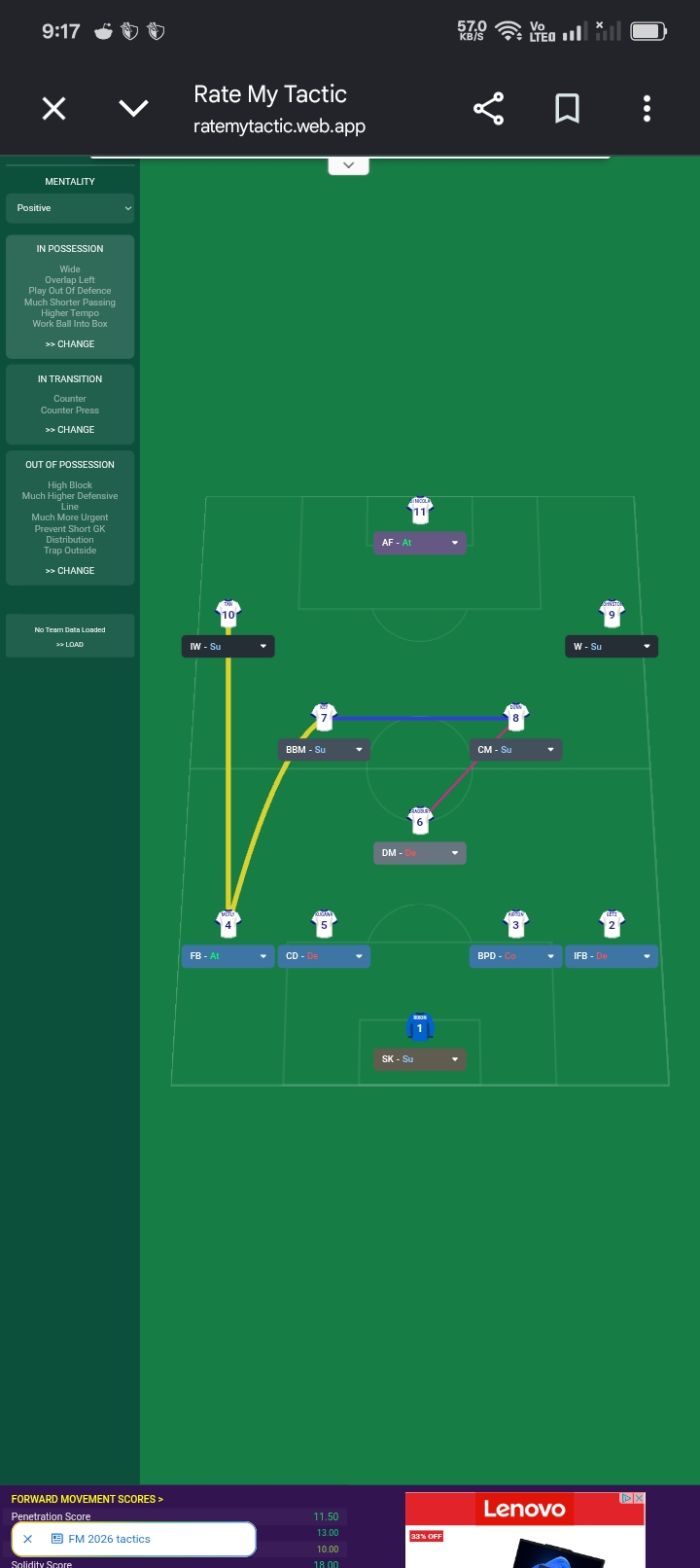
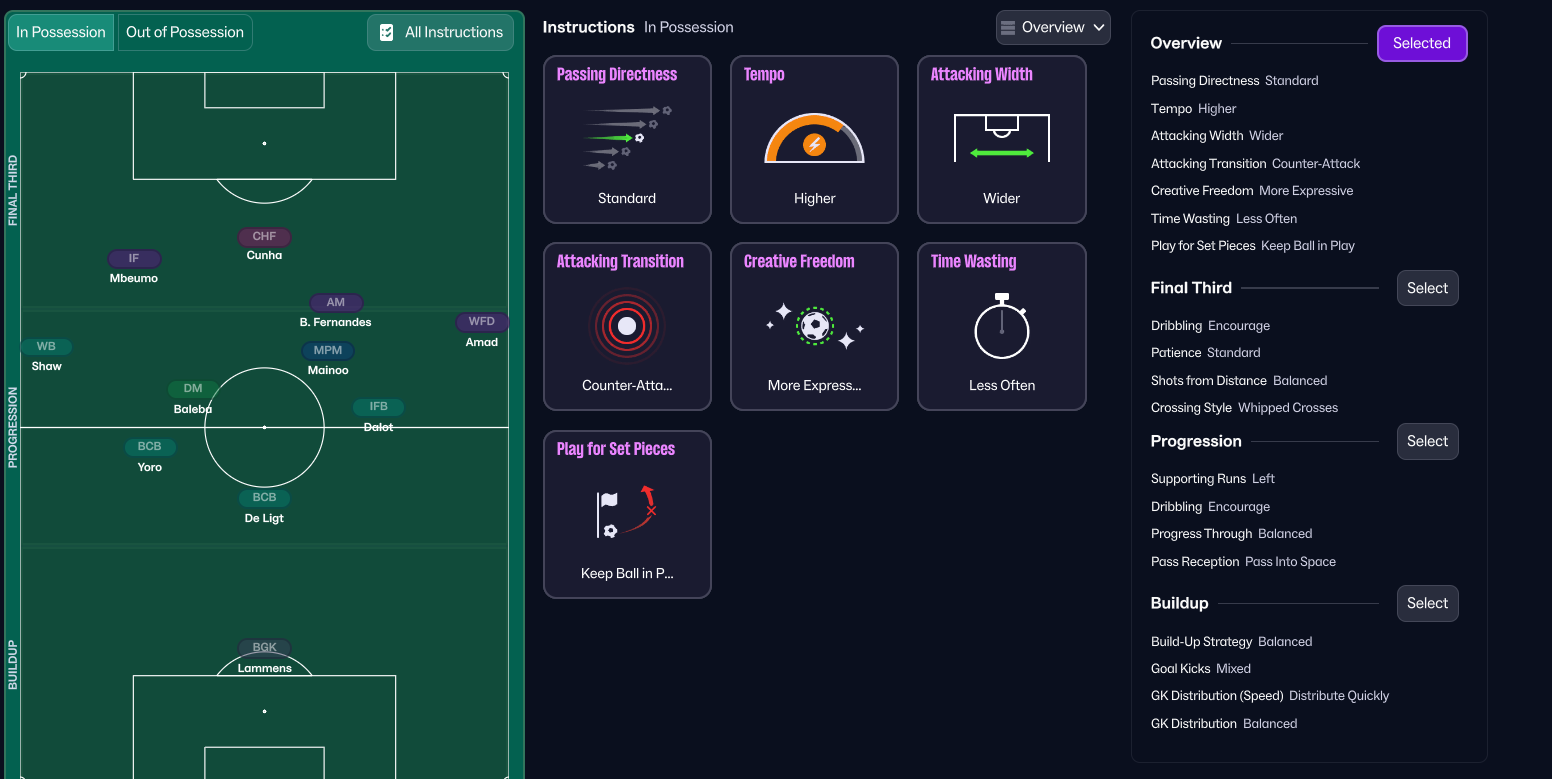
Play out of defence
Short passing
Overlap left
In Transition
Counter-press
Counter
Out of Possession
Higher defensive line
More aggressive pressing
Team Shape Without Ball
Shape:4-1-4-1
Description:The defensive line is compact with a lone defensive midfielder providing cover.
Evidence:DM (Gazinskiy) at [3,3] aids in intercepting passes.
Team Shape With Ball
Shape:4-3-3
Description:Wide attacking play with inside forwards cutting in and a central striker making runs.
Evidence:IF (Ilin) and (Botheim) at [5,2] and [5,4] respectively looking to create goal opportunities.
Phase Description
Attacking Play
The team utilizes quick transitions and focuses on exploiting the flanks during counter-attacks.
Defensive Transition
Quickly shifts to a compact formation to thwart opposition attacks.
Main Focus
Utilizing the pace of the wide forwards and the creativity from the advanced playmaker.
Key Strengths
Effective Counter-Attacks
Utilizing fast players in wide areas allows for quick transitions.
Compact Defensive Setup
Defenders are positioned centrally, ready to close down opposition quickly.
Midfield Creativity
Integrated roles among midfielders provide a balance of defensive coverage and attacking flair.
Conflicting Directions
High Defensive Line Risks
A higher defensive line may expose the team to through balls behind the defenders.
Dependence on Wing Play
Over-reliance on wide spaces can make the team predictable if opposition cuts off passing lanes.
Vulnerability to Set-Piece Situations
Lack of height in defence presents challenges during set-pieces.
Tactical Suggestions
Adjust Defensive Line Height
Consider lowering the defensive line to reduce vulnerability to counter-attacks.
Introduce More Movement in Midfield
Ensure midfielders have clear instructions to rotate positions to maintain fluidity.
Explore Central Attacking Options
Develop alternate strategies to create central goal-scoring opportunities.
Ask Questions About Your Lineup
Related Tactics
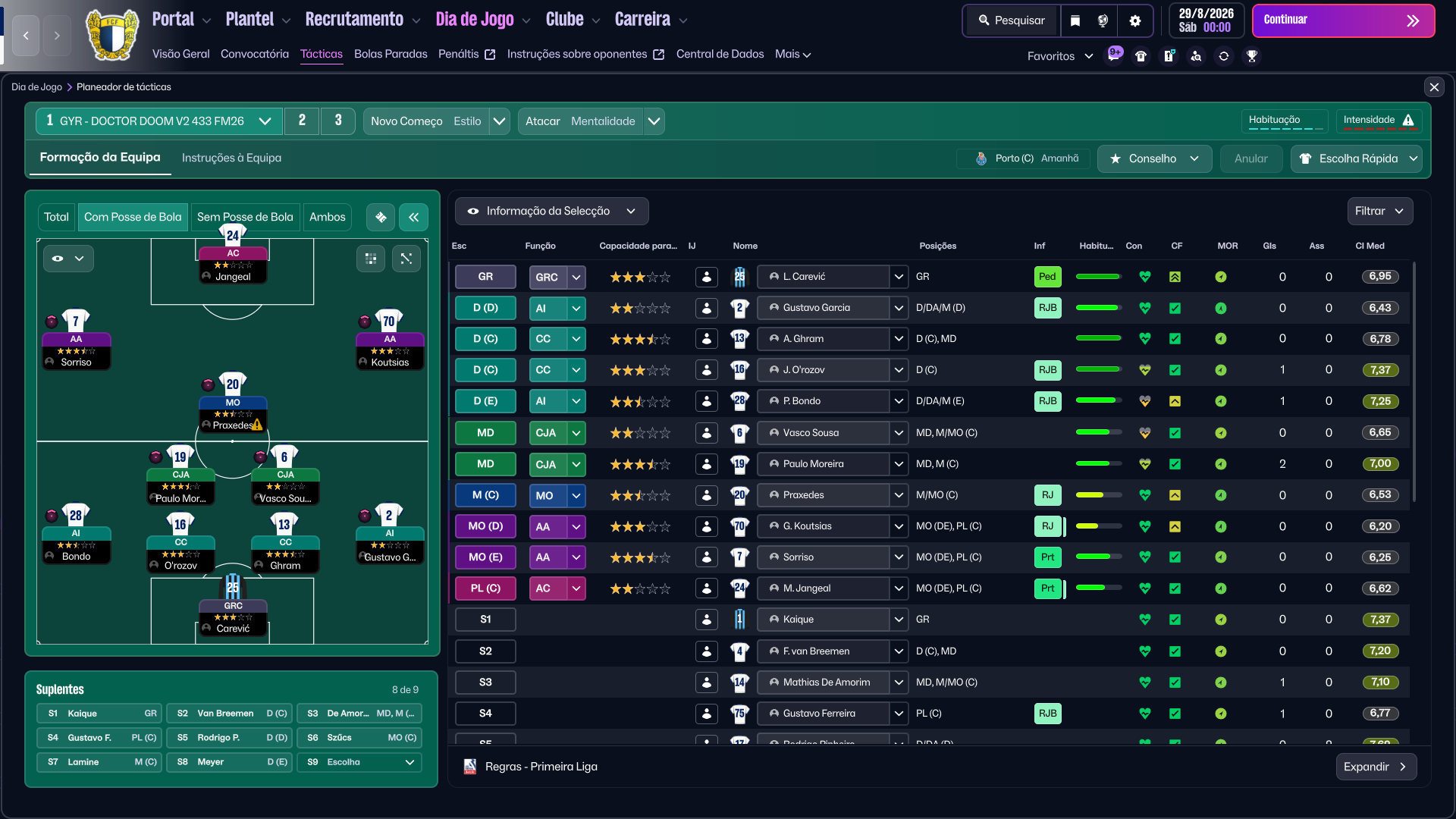
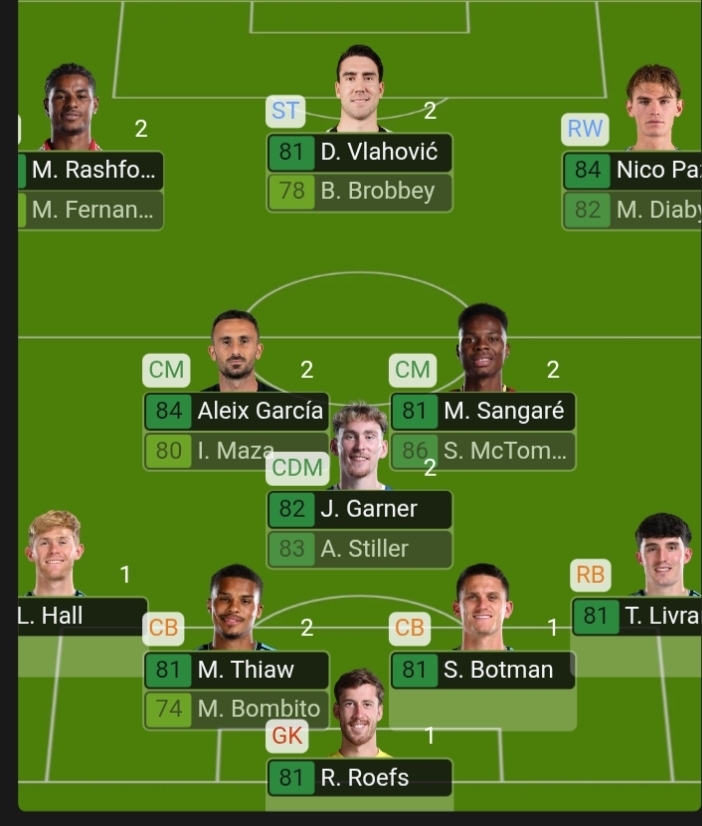
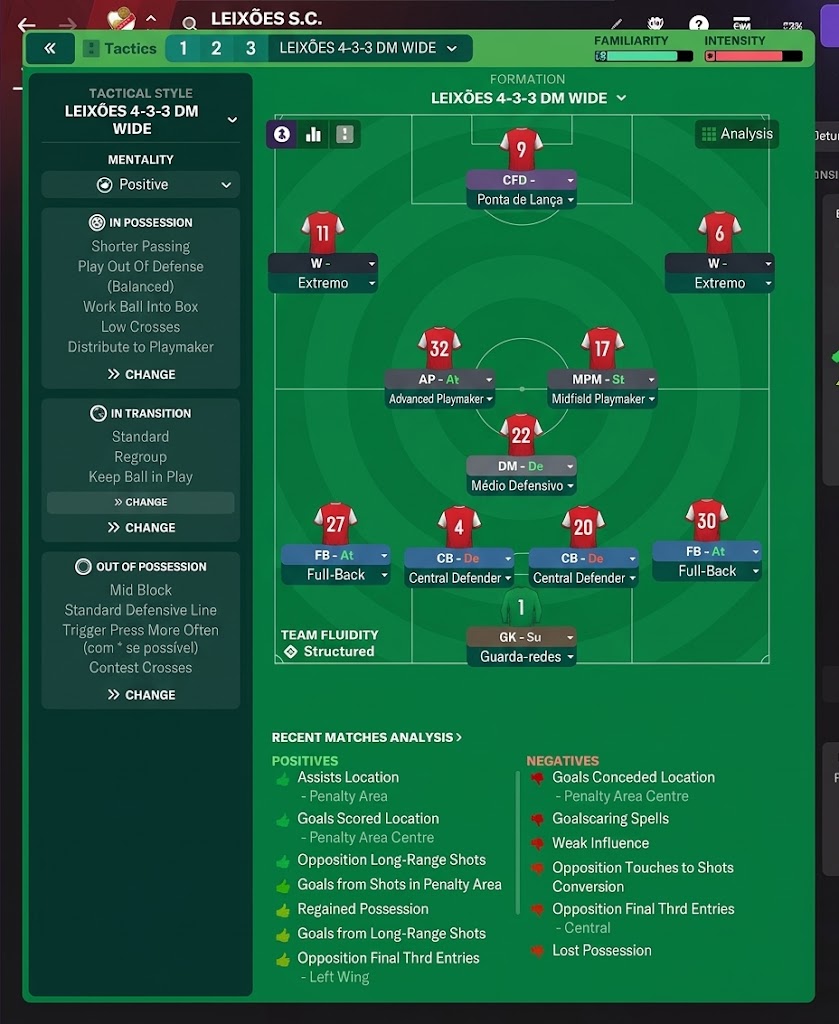
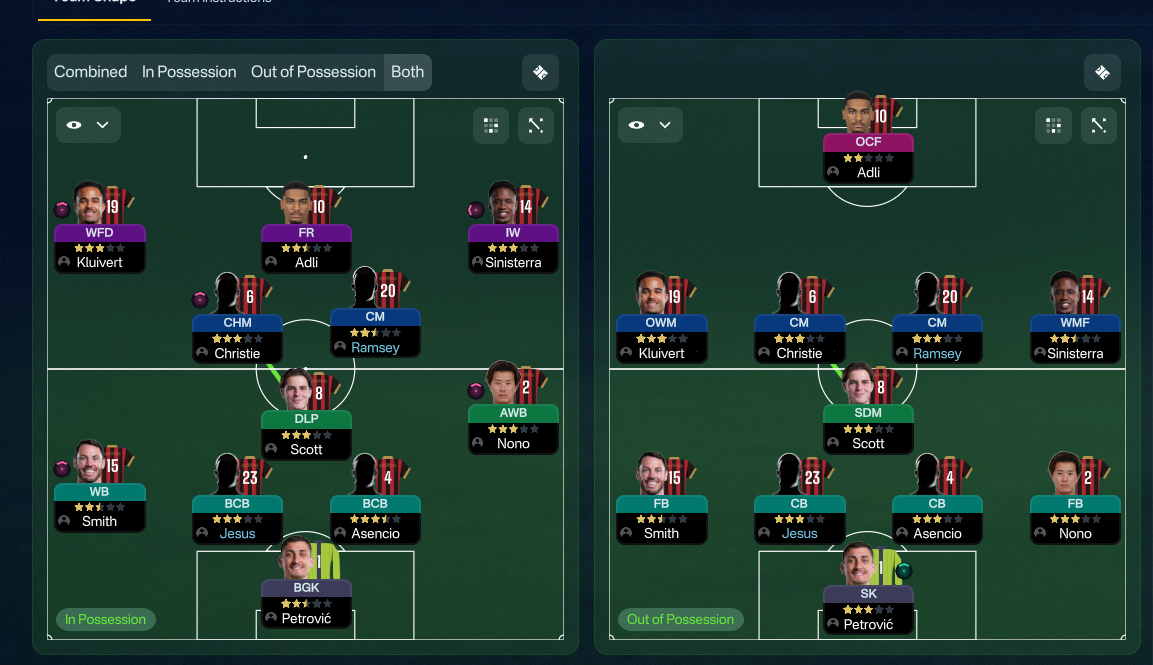
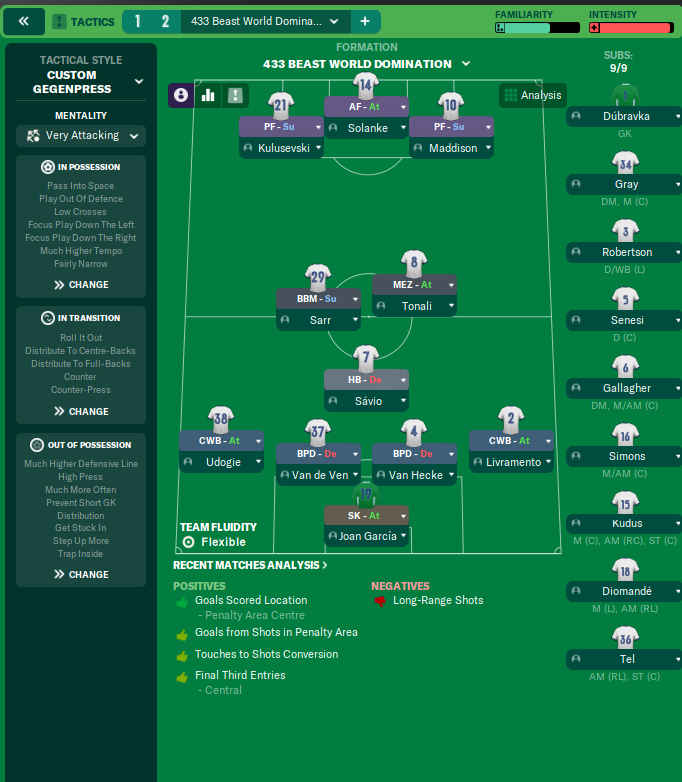
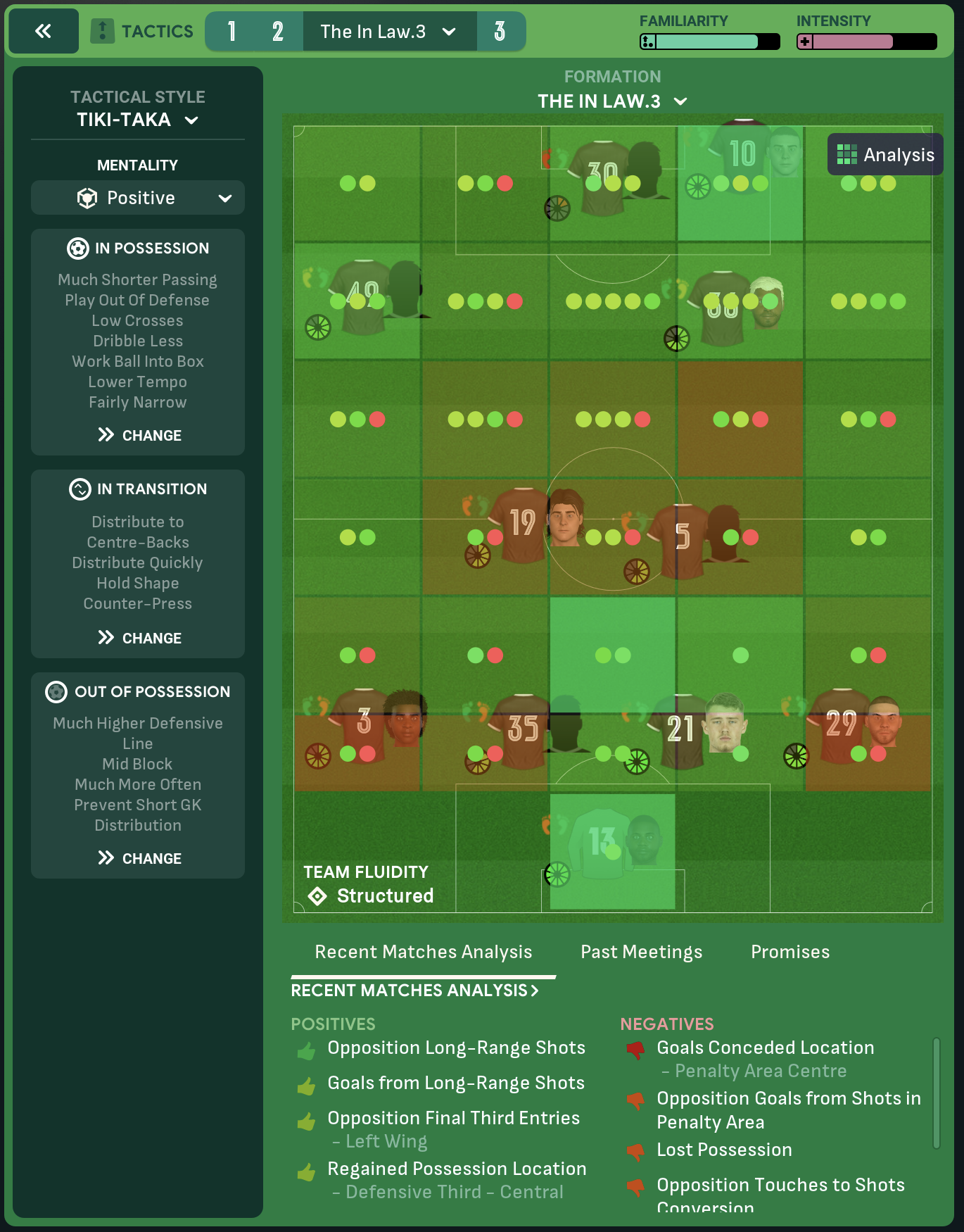
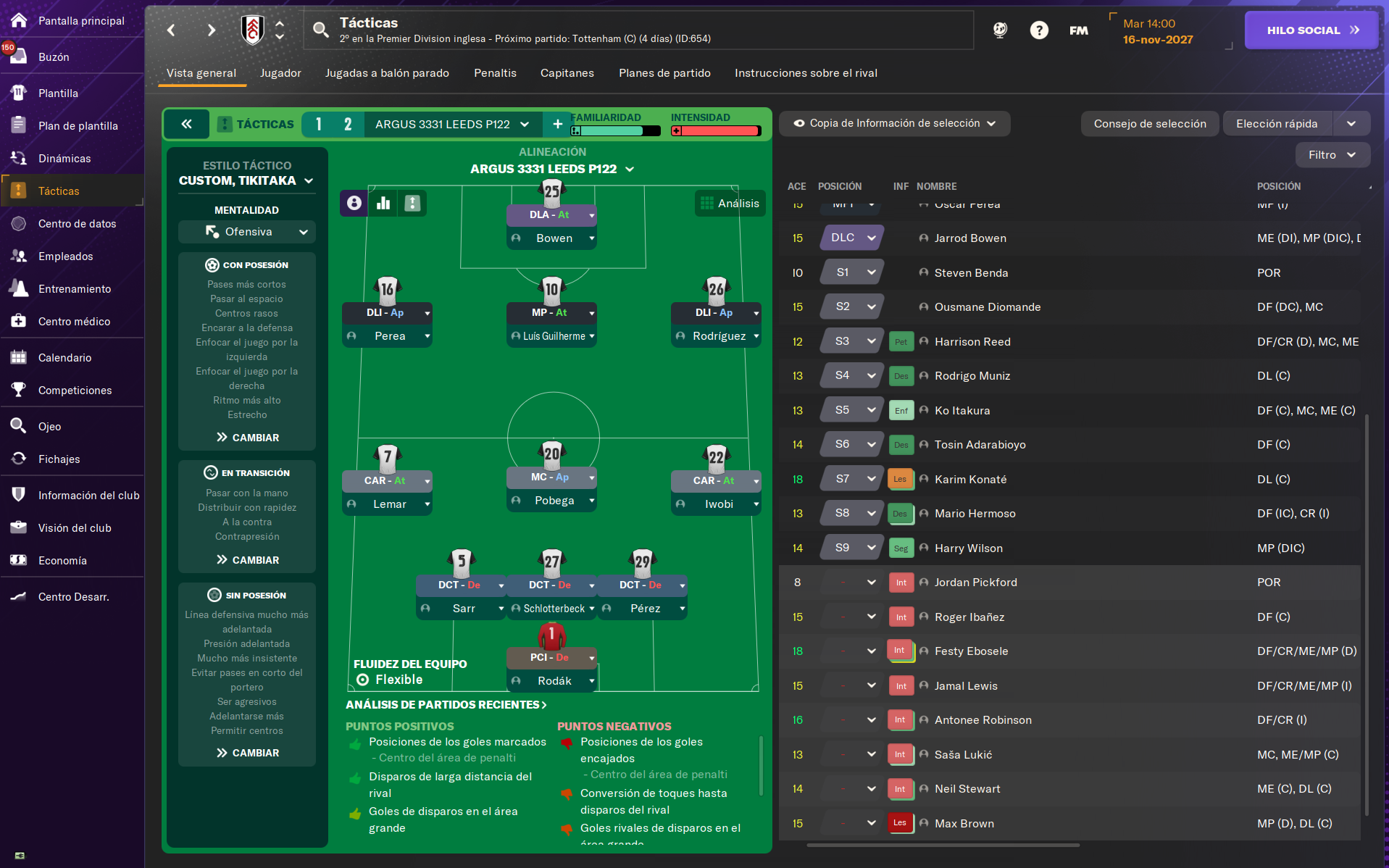
More Counter-Attacking tactics

Guides for this formation
The tactical theory behind the 4-3-3: roles, instructions, and the trade-offs that decide whether the system holds up.
Foundations
Understanding the 4-3-3 Formation
Master the classic 4-3-3: player roles, tactical variations, and the trade-offs that decide whether it sings or stalls.
Read guide
Player pairings
Midfield Trios
Holder, runner, creator: the role distribution rule for three-man midfields, the AMC variants, and the antipatterns that break them.
Read guide
Playing styles
Gegenpressing: A Full Guide
Klopp-style gegenpressing in FM, including squad profile, line-and-press pairing, sustainable workload, and the antipatterns to avoid.
Read guide