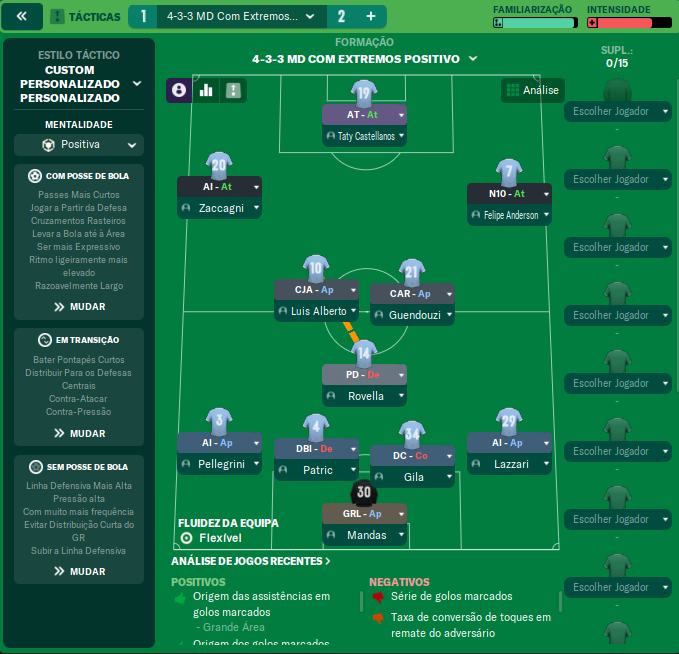
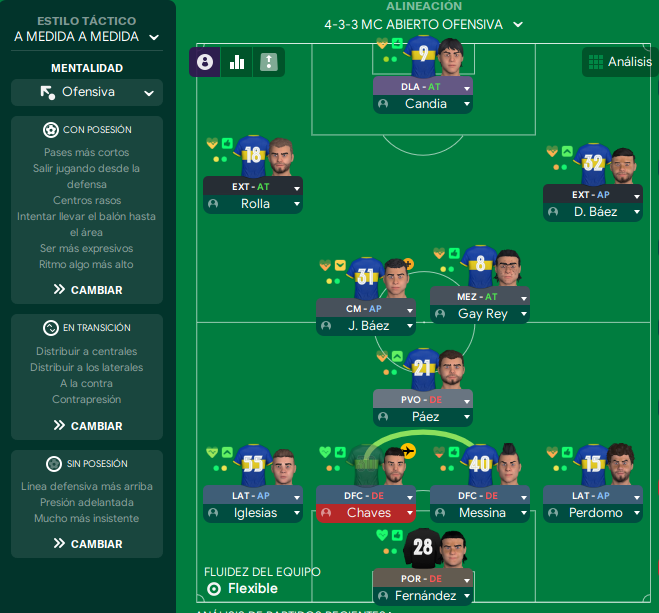
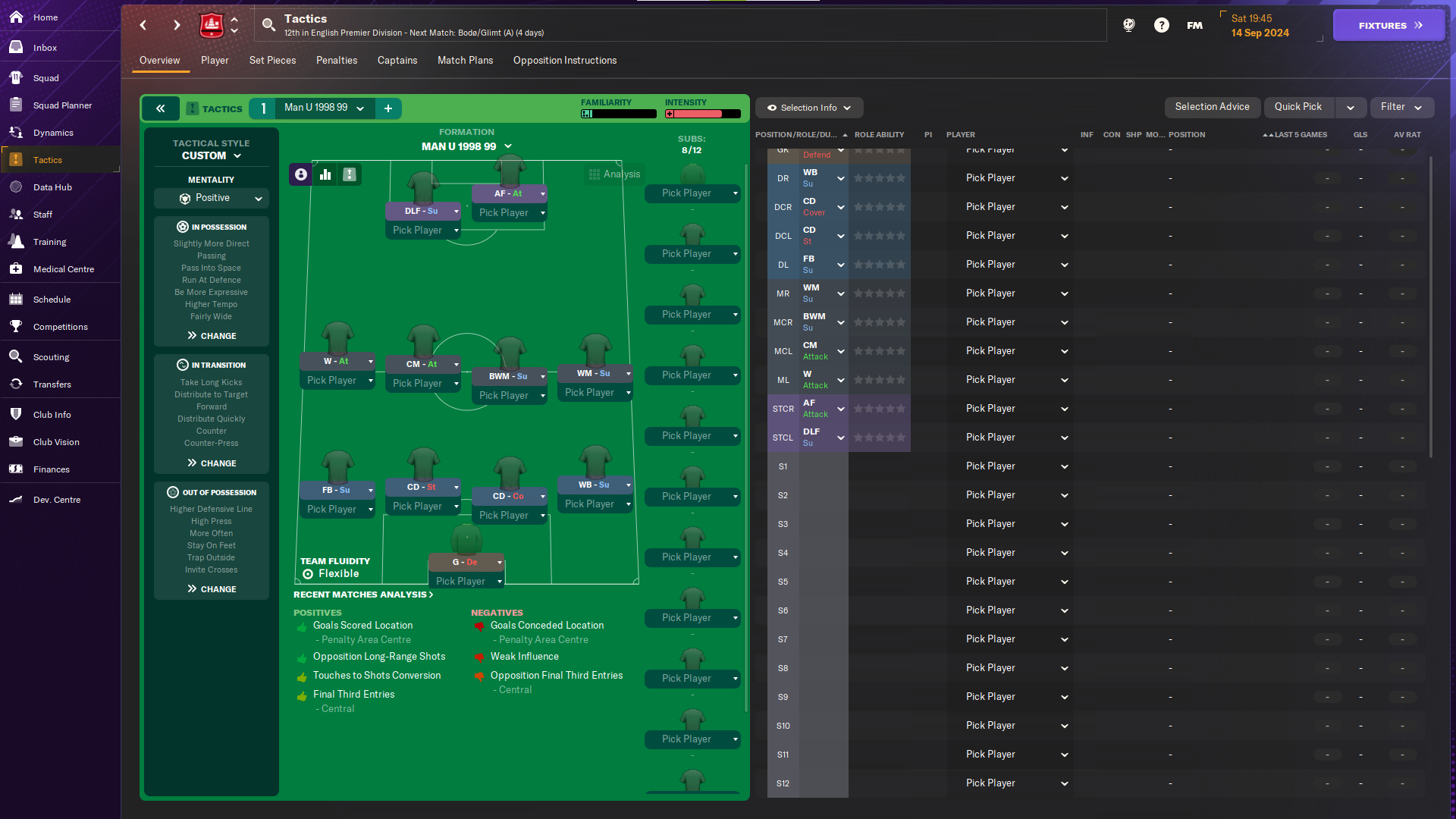
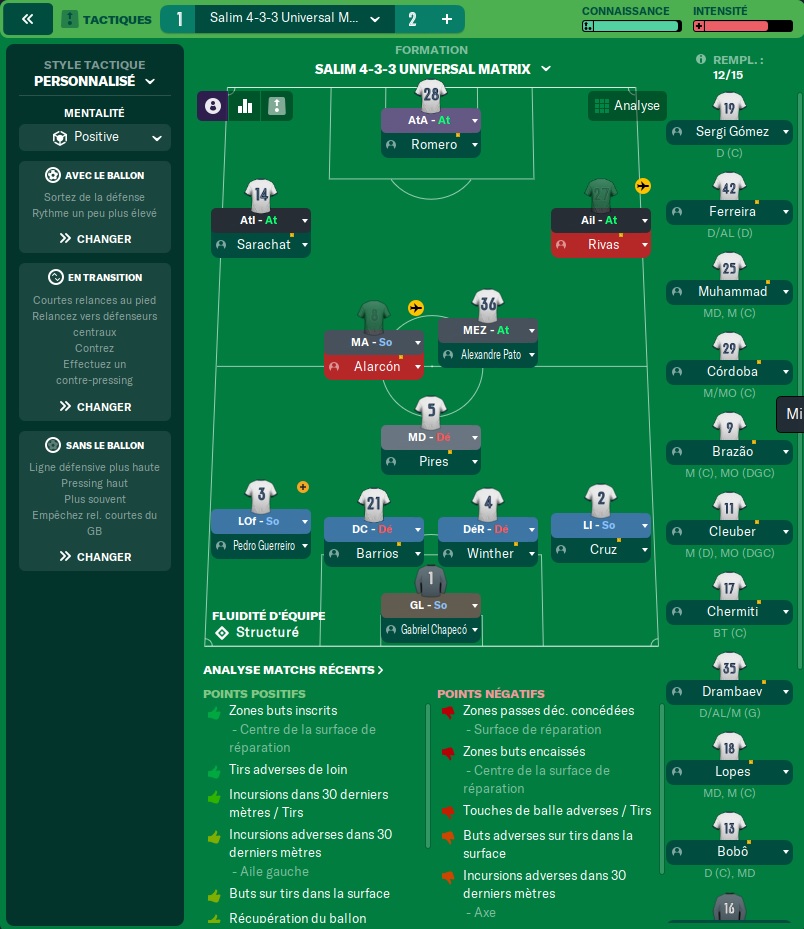
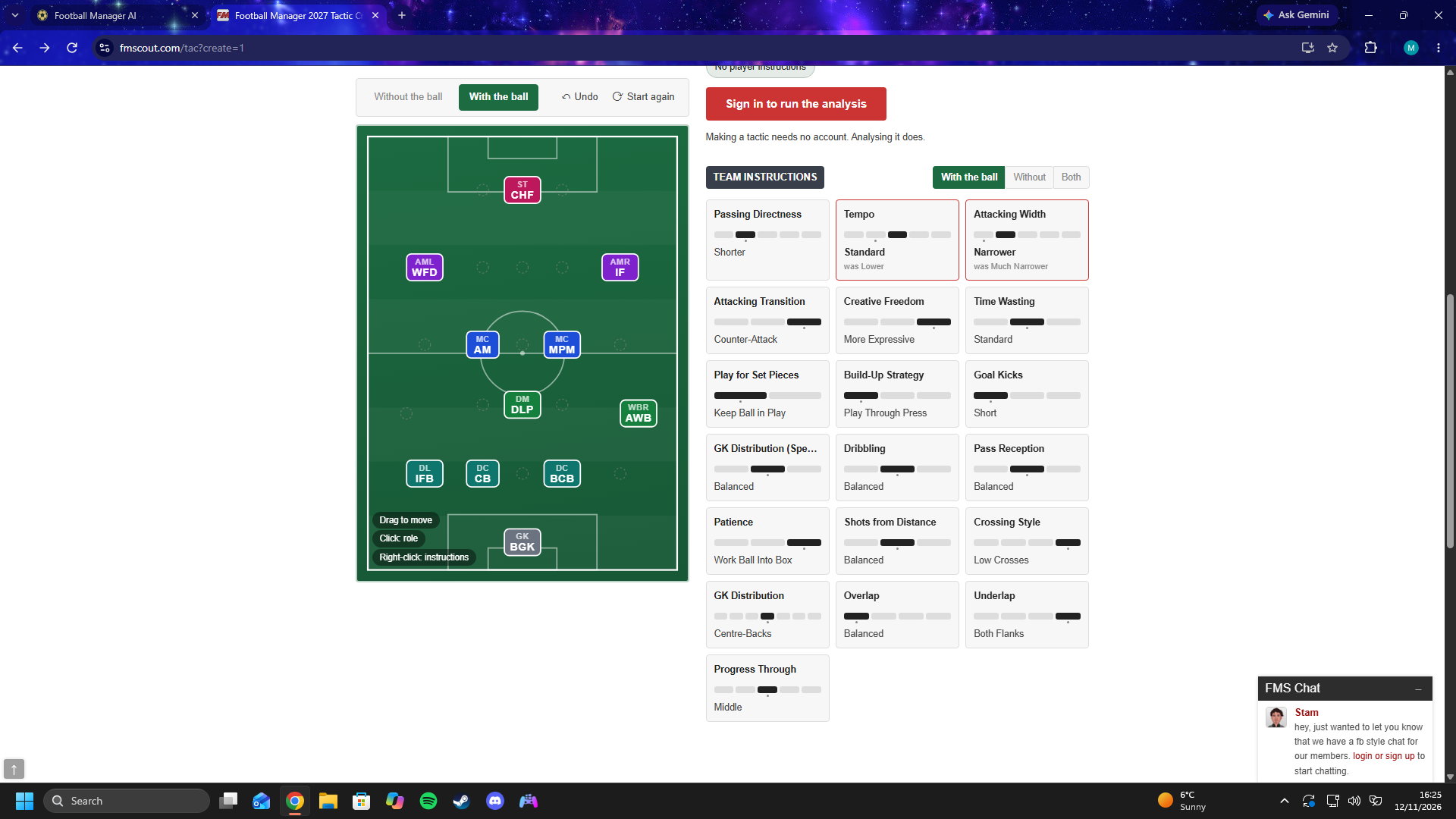
4-3-3
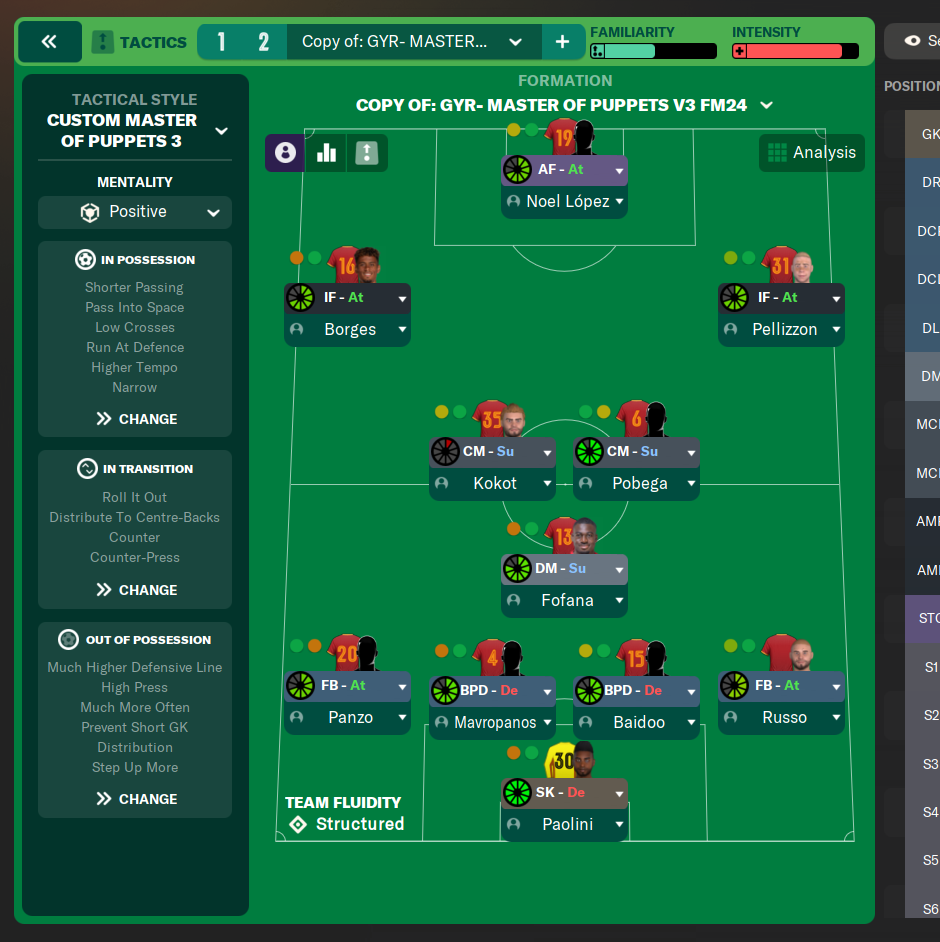
With Inside Forwards and an Advanced Forward, the tactic allows for fluid movement and multiple attacking options.
Loading tactical analysis...
Custom Master of Puppets
Positive
4-3-3
Structured
Shorter Passing
Pass Into Space
Low Crosses
Run At Defence
Higher Tempo
Narrow
Roll It Out
Distribute To Centre-Backs
Counter
Counter-Press
Much Higher Defensive Line
High Press
Much More Urgent
Prevent Short GK Distribution
Step Up More
ST
Advanced Forward
Attack
IF
Inside Forward
Attack
CM
Central Midfielder
Support
DM
Deep Lying Playmaker
Support
FB
Full-Back
Attack
BPD
Ball Playing Defender
Defend
With Inside Forwards and an Advanced Forward, the tactic allows for fluid movement and multiple attacking options.
The high press forces opponents into mistakes, creating opportunities to win the ball in advanced positions.
A much higher defensive line may leave gaps for quick, agile attackers to exploit, especially considering the high pressing style.
Full-Backs on attack might get caught out of position, leading to vulnerability on counter-attacks.
How does the team cope with fast counter-attacks?
Are the Full-Backs contributing enough defensively?
Is the midfield able to transition quickly enough to support the attack?
What are the key weaknesses in the current pressing strategy?
How often does the team successfully regain possession in the attacking third?
Are there particular opponents that exploit the high defensive line effectively?
The tactical theory behind the 4-3-3: roles, instructions, and the trade-offs that decide whether the system holds up.
Klopp-style gegenpressing in FM, including squad profile, line-and-press pairing, sustainable workload, and the antipatterns to avoid.
Why circulation density and zonal occupation aren't the same thing in FM, and the half-space occupation rule that decides build-up.
Protect a 1-0, chase a 1-0, hold a draw away. How to manage game state in FM through duties and roles, not by lurching to Defensive.