Uploaded Tactic
Formation & Style
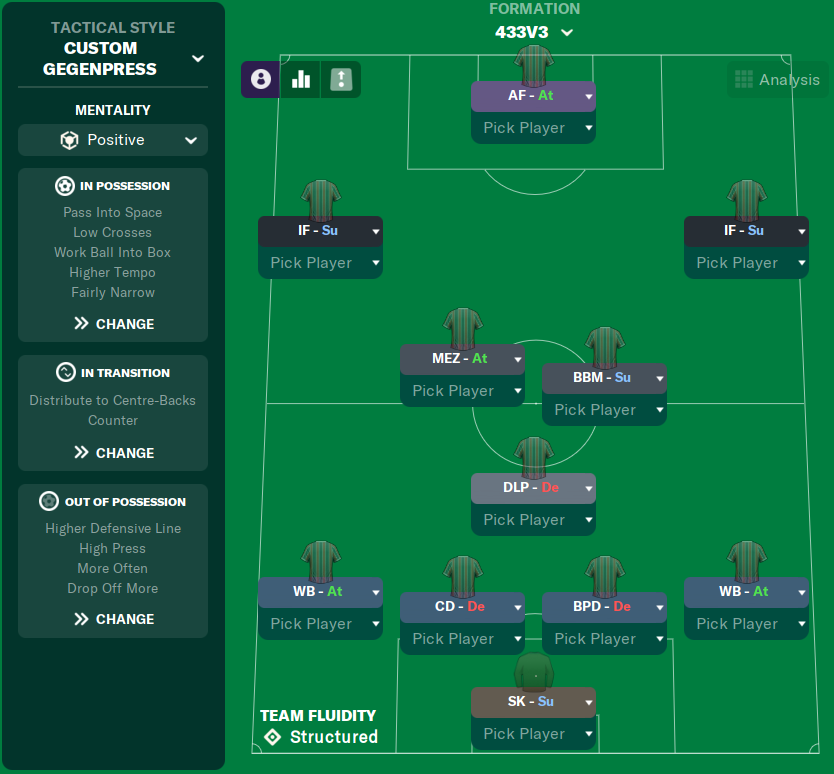
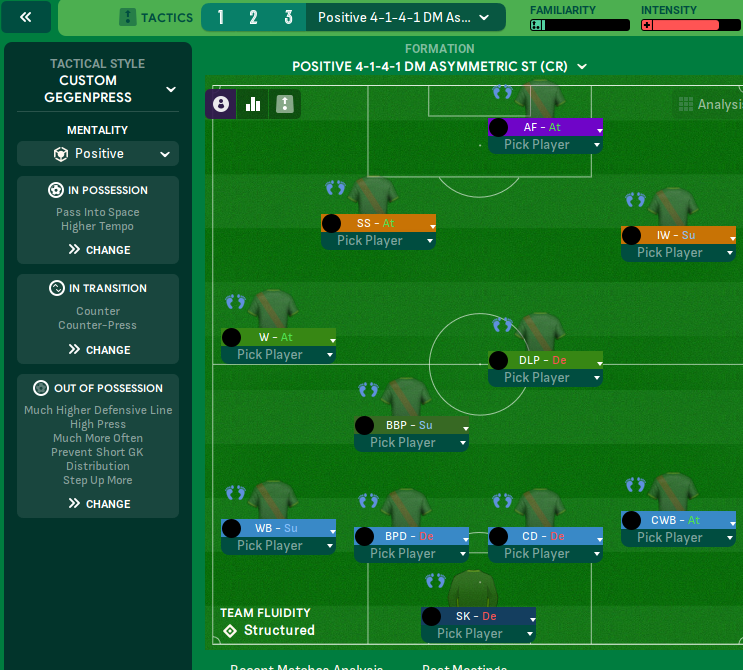
Tactical Style:Custom Gegenpress
Mentality:Positive
Formation:4-3-3
Team Fluidity:Structured
In Possession
Pass Into Space
Low Crosses
Work Ball Into Box
Higher Tempo
Fairly Narrow
In Transition
Distribute to Centre-Backs
Counter
Out of Possession
Higher Defensive Line
High Press
More Often
Drop Off More
Team Shape Without Ball
Shape:4-3-3
Description:Compact shape with the defensive line holding a higher line to engage the opposition quickly.
Evidence:Higher Defensive Line with High Press implementation via DLP-De at [3,3] and CD-De at [2,2].
Team Shape With Ball
Shape:4-3-3
Description:Width is provided through the wing-backs while the midfielders support attacking plays, making quick runs into the box.
Evidence:Wing-Backs at [2,1] and [2,5] pushing high while the Mezzala at [4,3] supports the Advanced Forward at [6,3].
Phase Description
Attacking Play
Quick ball distribution to exploit space with a focus on passing into space and utilizing width from wing-backs.
Defensive Transition
Quickly regrouping and pressing the opposition, focusing on recovering possession immediately after losing the ball.
Main Focus
Creating goal-scoring opportunities through quick transitions and exploiting gaps in the opponent's defensive structure.
Key Strengths
Dynamic Attacking Play
Utilizing inside forwards creates a multi-directional threat.
Versatile Midfield
The mix of roles allows for both stability and creativity during transitions.
High Pressing Nature
The team is set to immediately recover possession after losing the ball.
Conflicting Directions
Defensive Vulnerability
Setting a high defensive line can expose the backline to pacey attackers.
Over-reliance on Wing Play
Heavy focus on wing-backs may leave central areas sparse.
Risk of Overloading
Dynamic movements can lead to imbalances if players do not track back correctly.
Tactical Suggestions
Consider Adjusting Defensive Line
Lowering the defensive line can help mitigate vulnerability against fast attackers and reduce space behind.
Moderate Wing-Back Involvement
Ensuring they don’t overcommit on the attack could balance defensive responsibilities.
Introduce a Central Playmaker
Adding a more creative influence in a central role could enhance build-up play.
Ask Questions About Your Lineup
Related Tactics
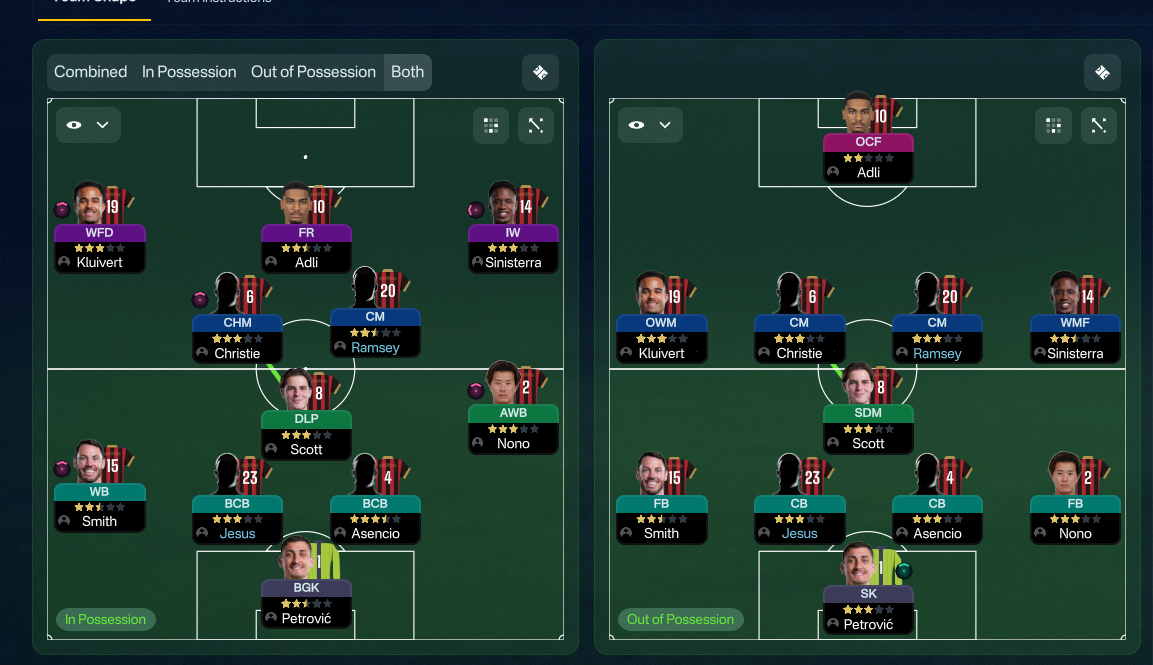
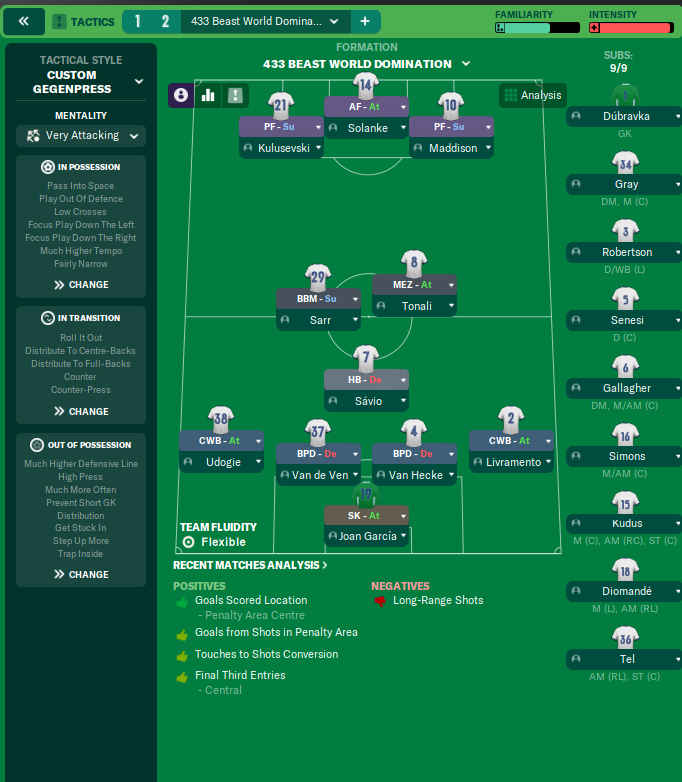
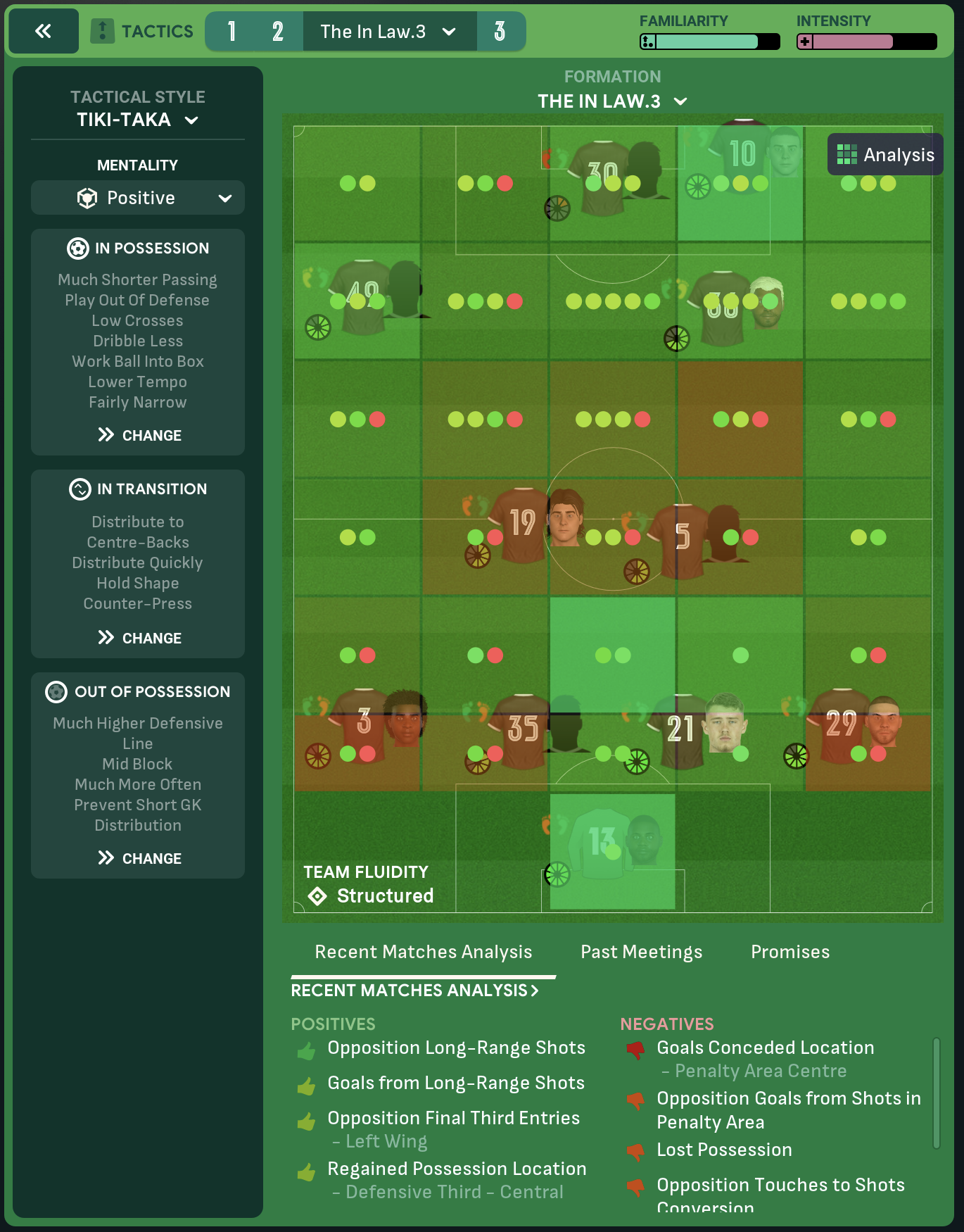
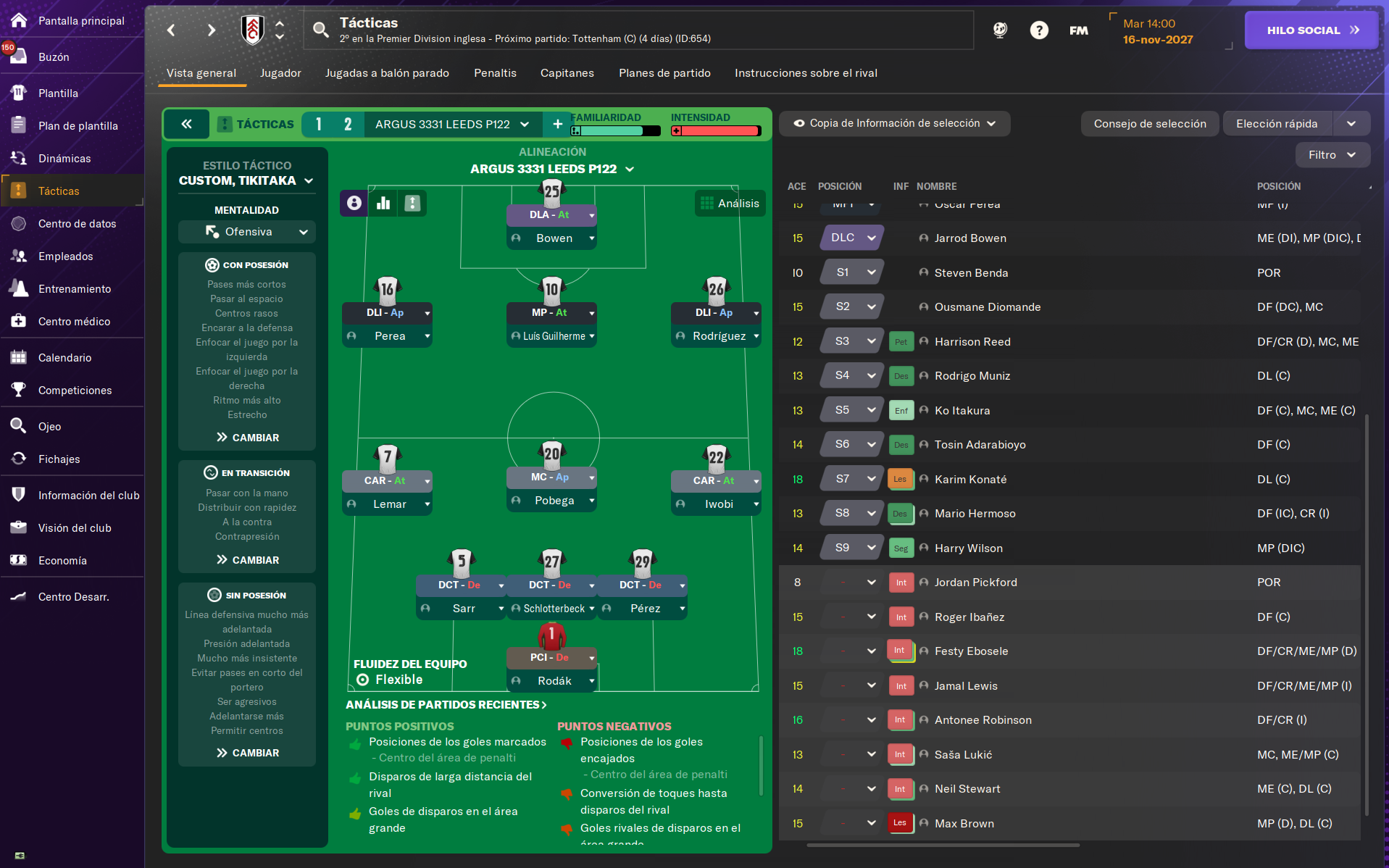
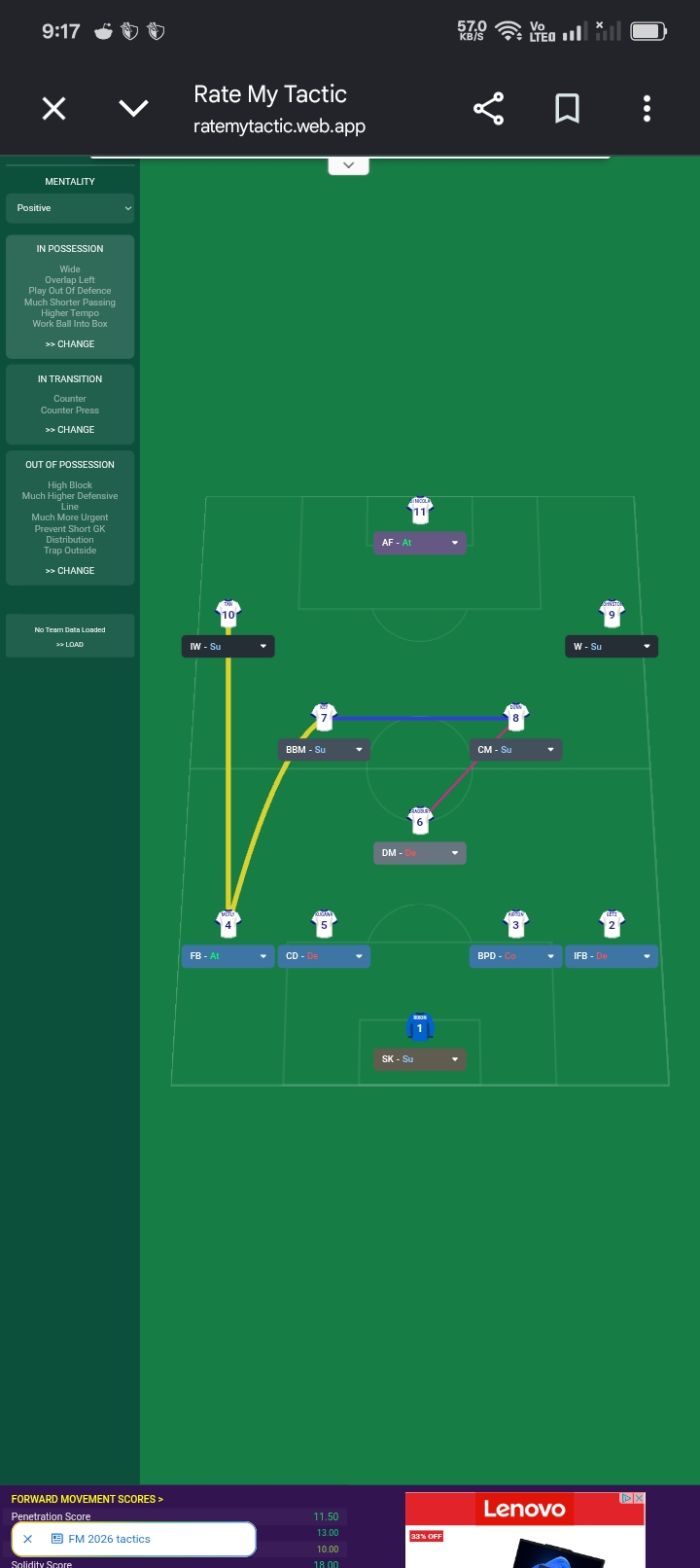
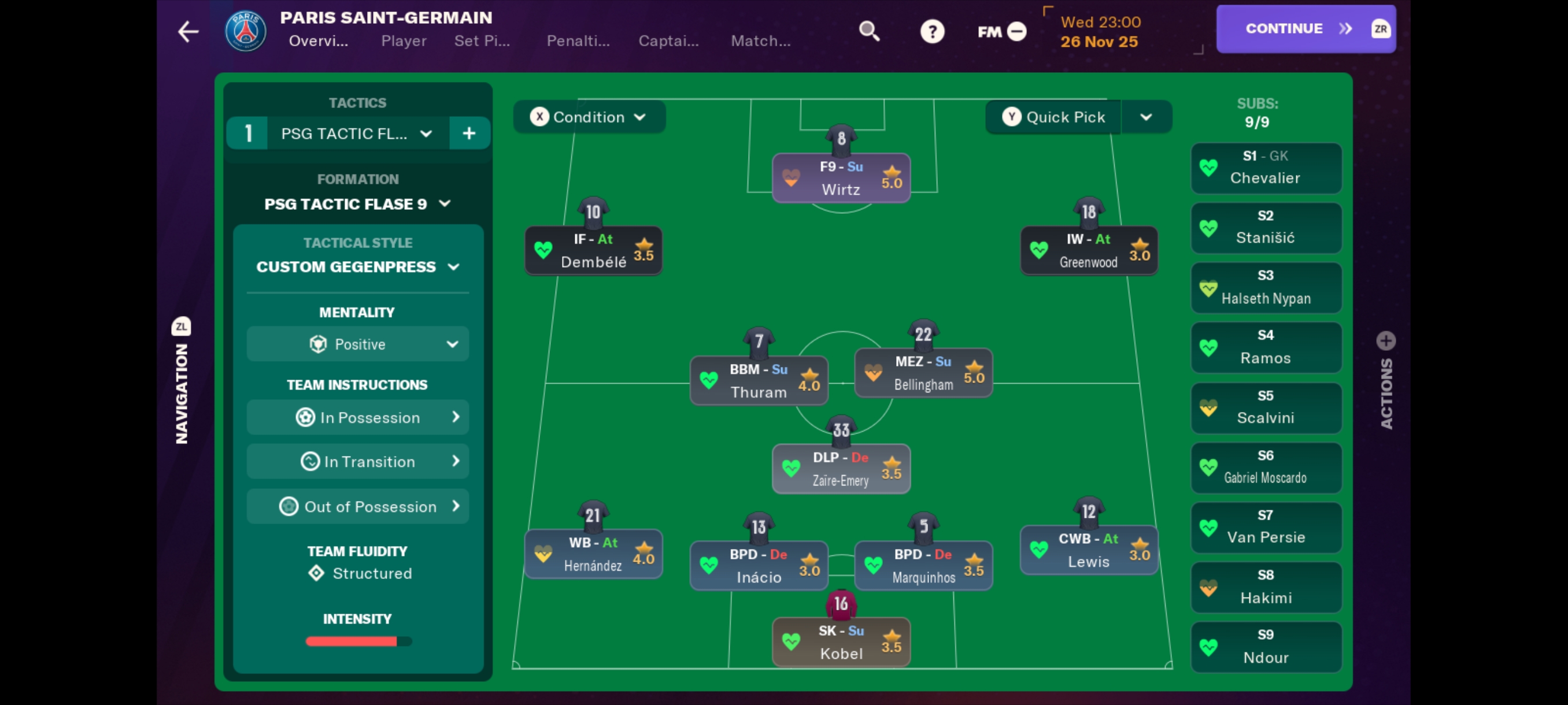
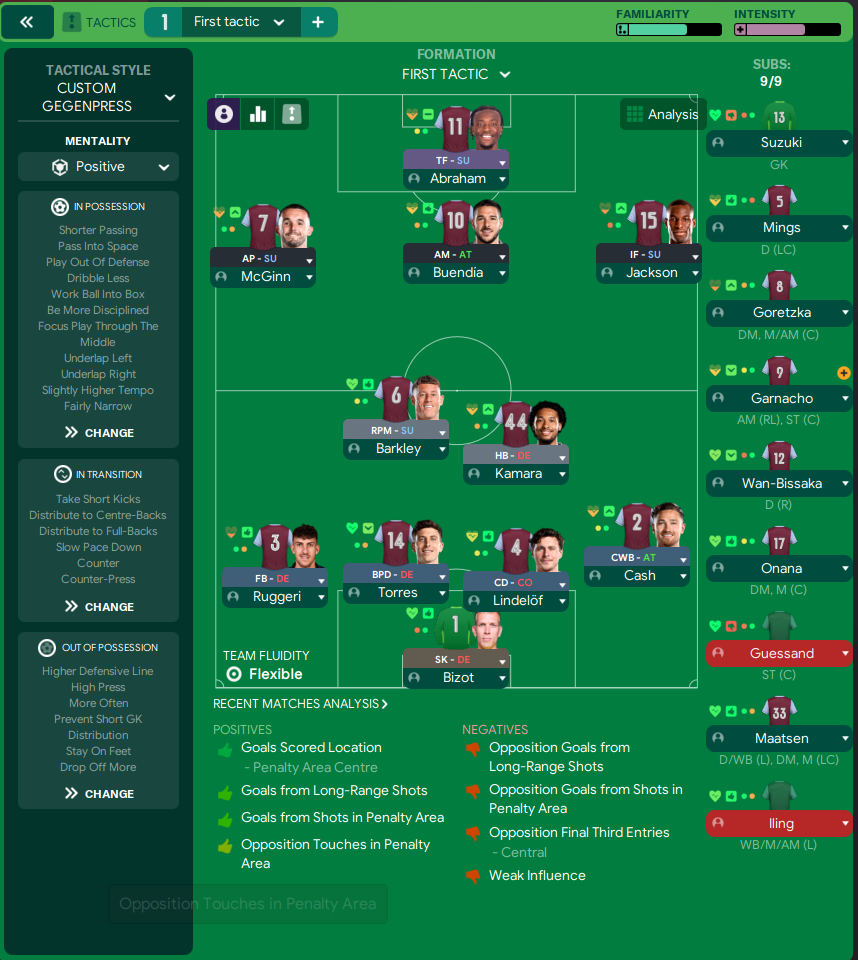
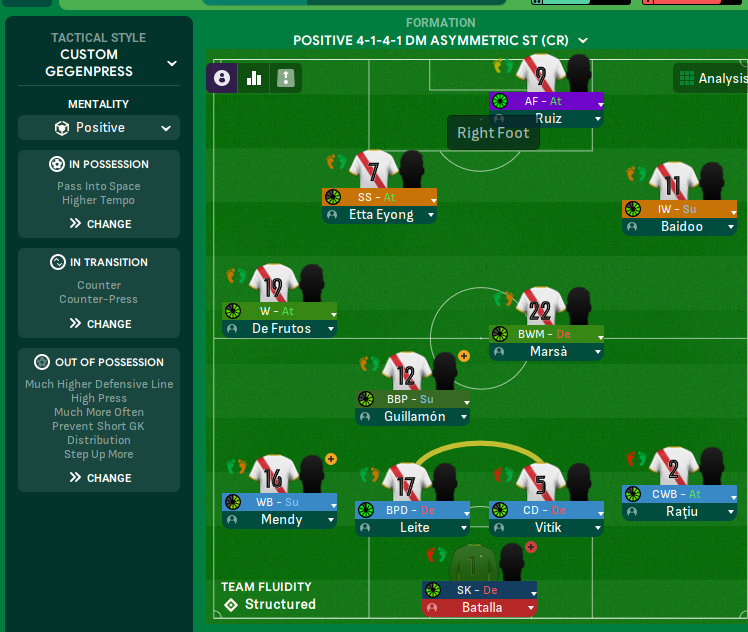
More Custom Gegenpress tactics
Guides for this formation
The tactical theory behind the 4-3-3: roles, instructions, and the trade-offs that decide whether the system holds up.
Foundations
Understanding the 4-3-3 Formation
Master the classic 4-3-3: player roles, tactical variations, and the trade-offs that decide whether it sings or stalls.
Read guide
Player pairings
Midfield Trios
Holder, runner, creator: the role distribution rule for three-man midfields, the AMC variants, and the antipatterns that break them.
Read guide
Playing styles
Gegenpressing: A Full Guide
Klopp-style gegenpressing in FM, including squad profile, line-and-press pairing, sustainable workload, and the antipatterns to avoid.
Read guide