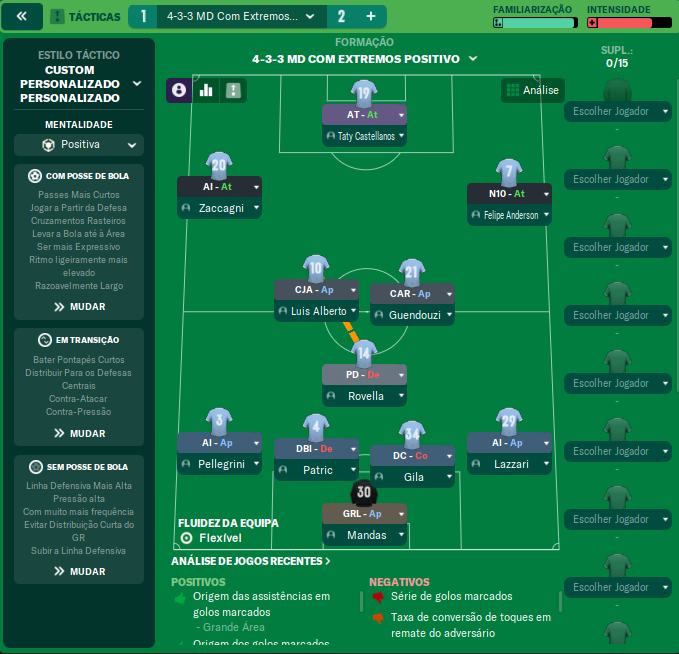
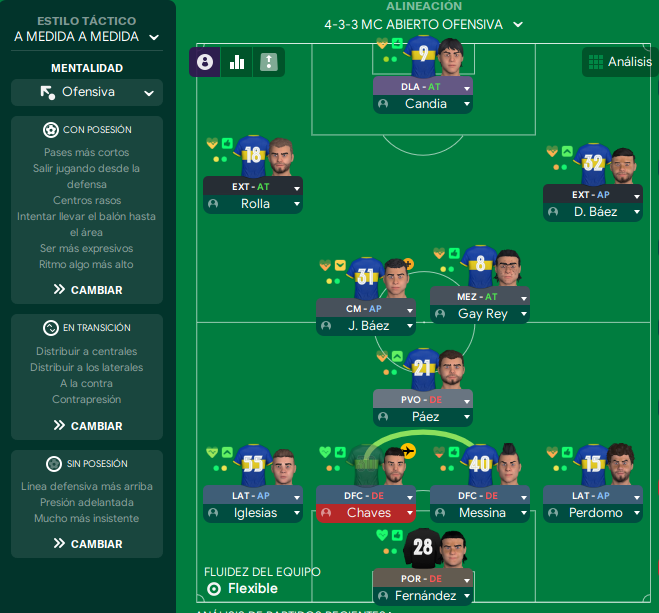
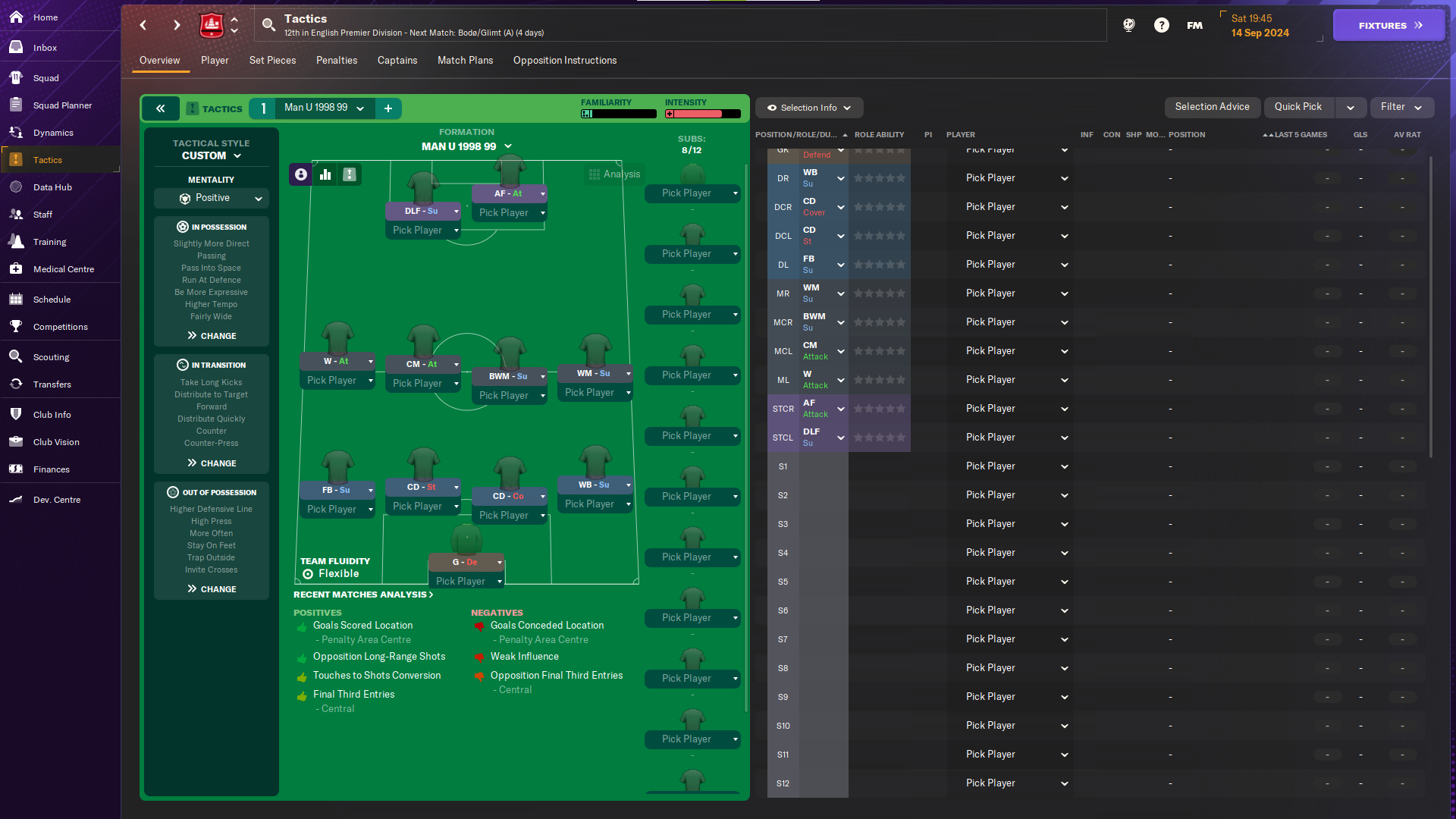
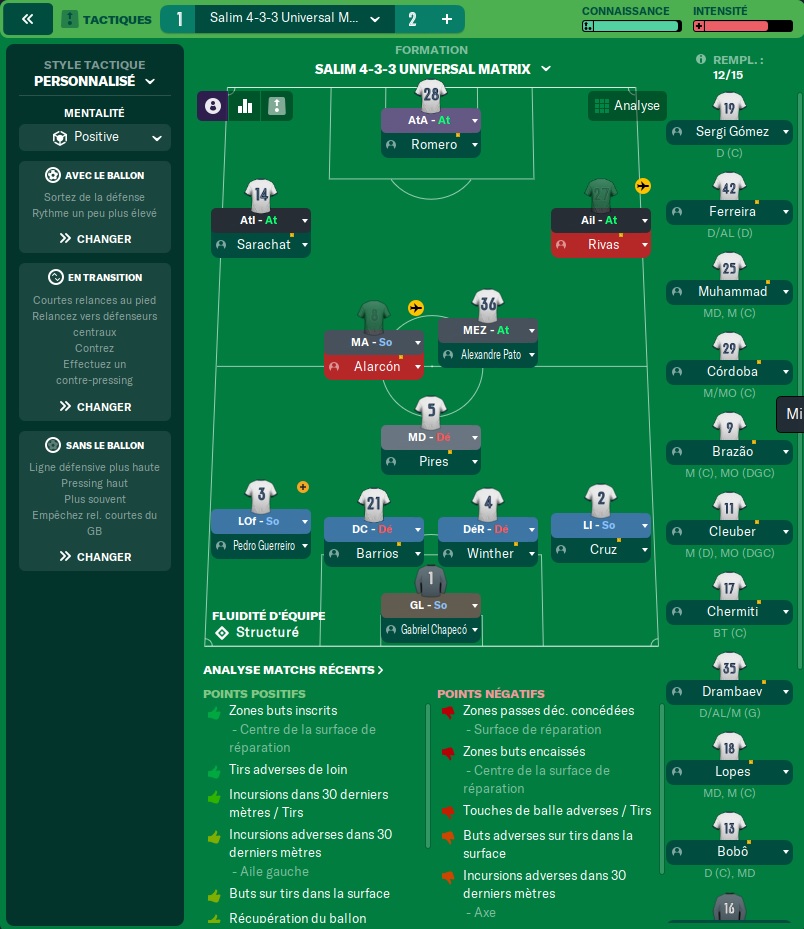
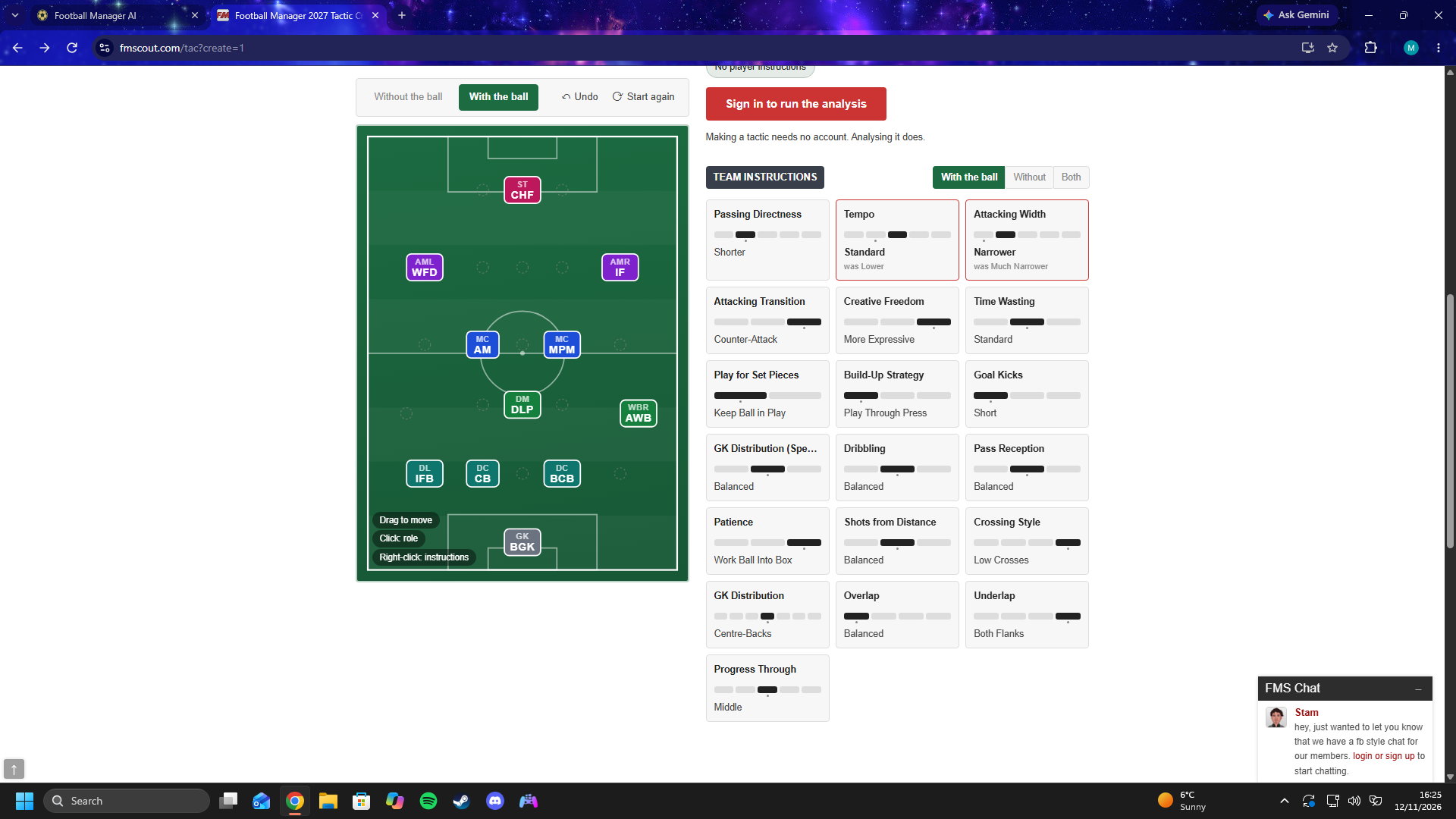
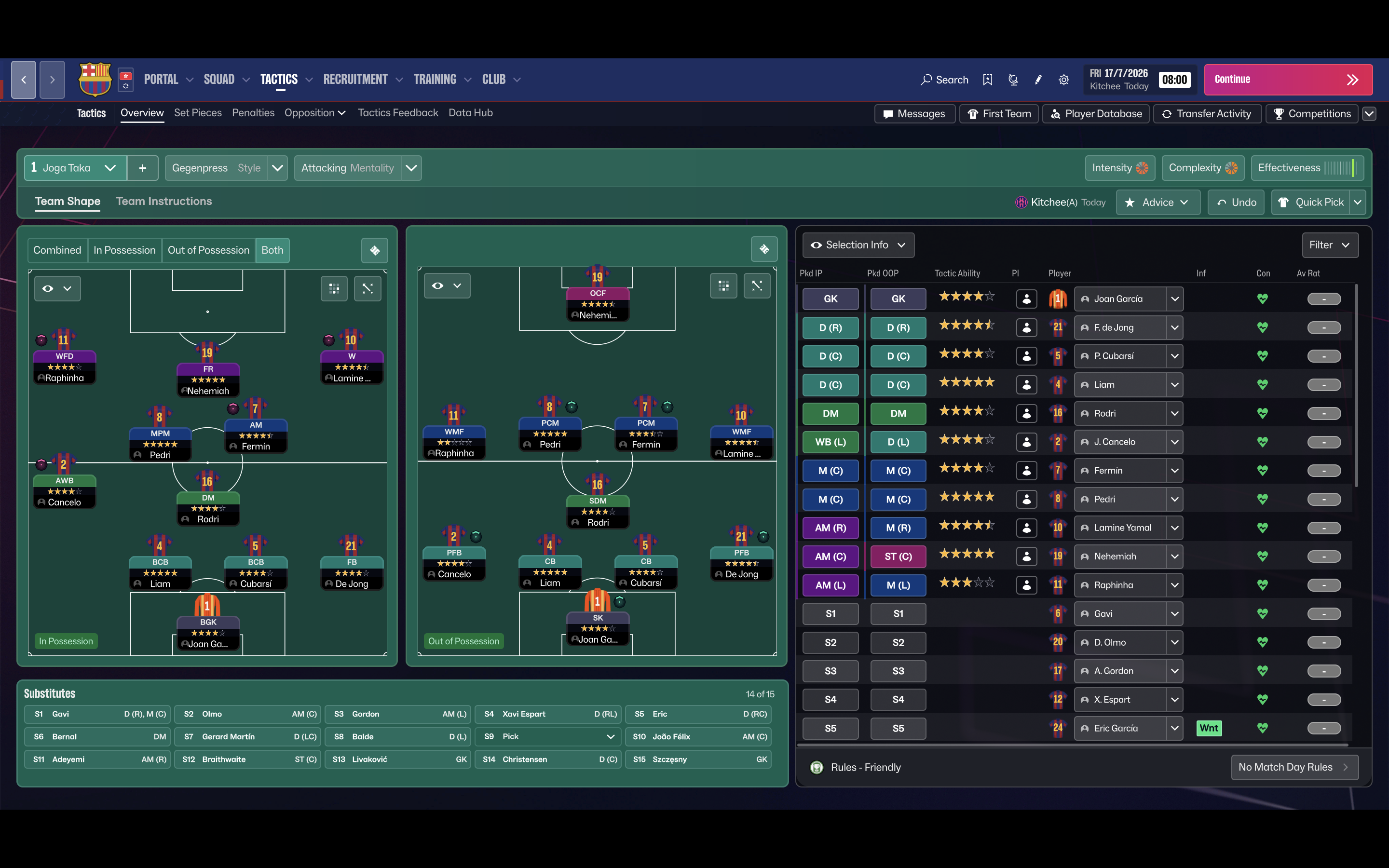
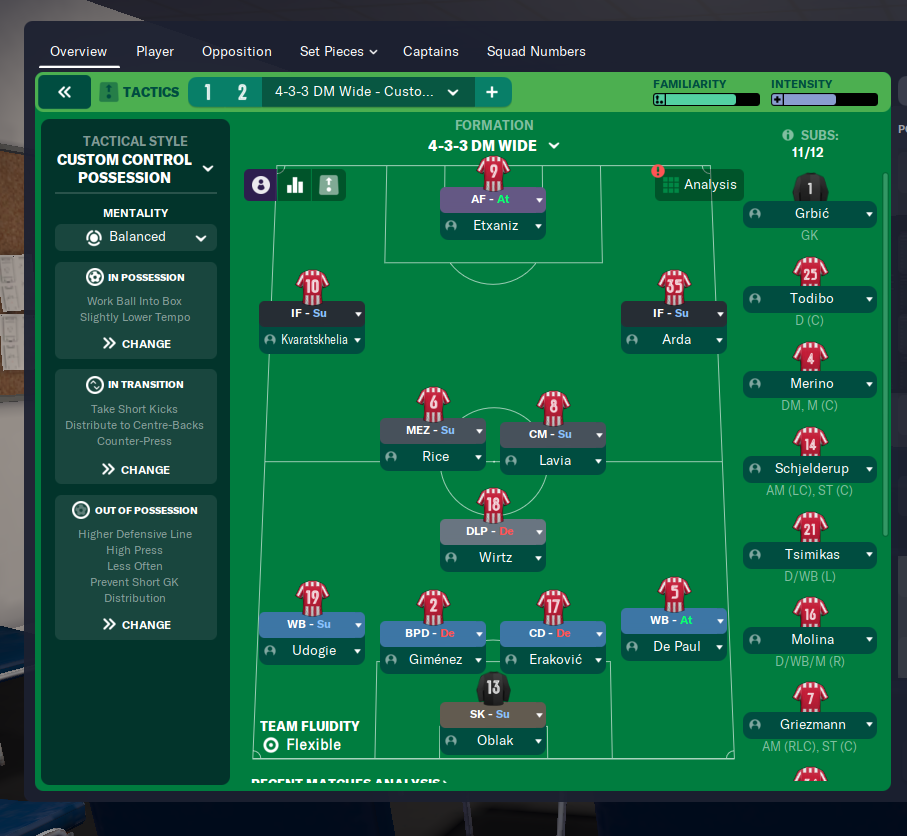
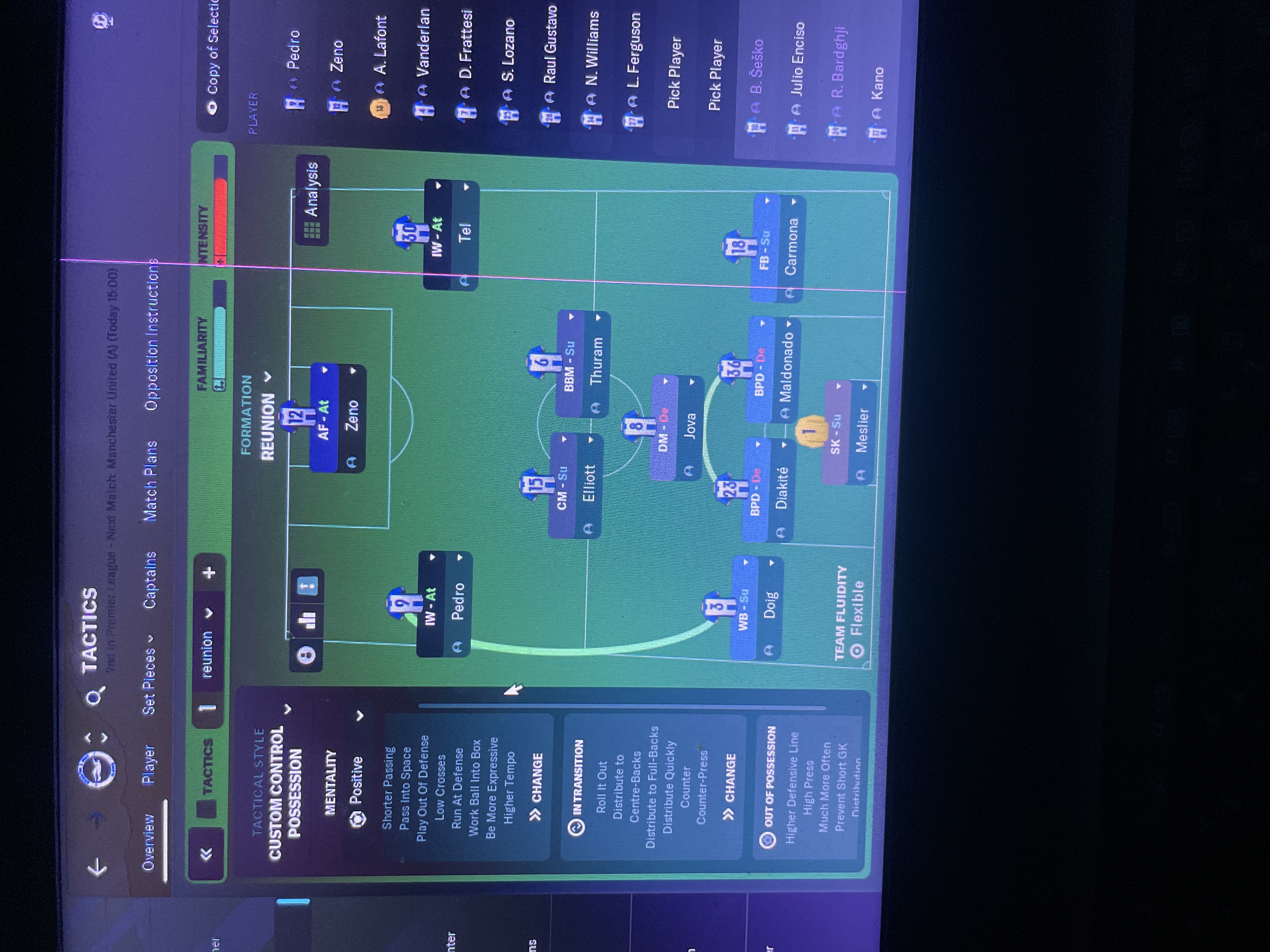
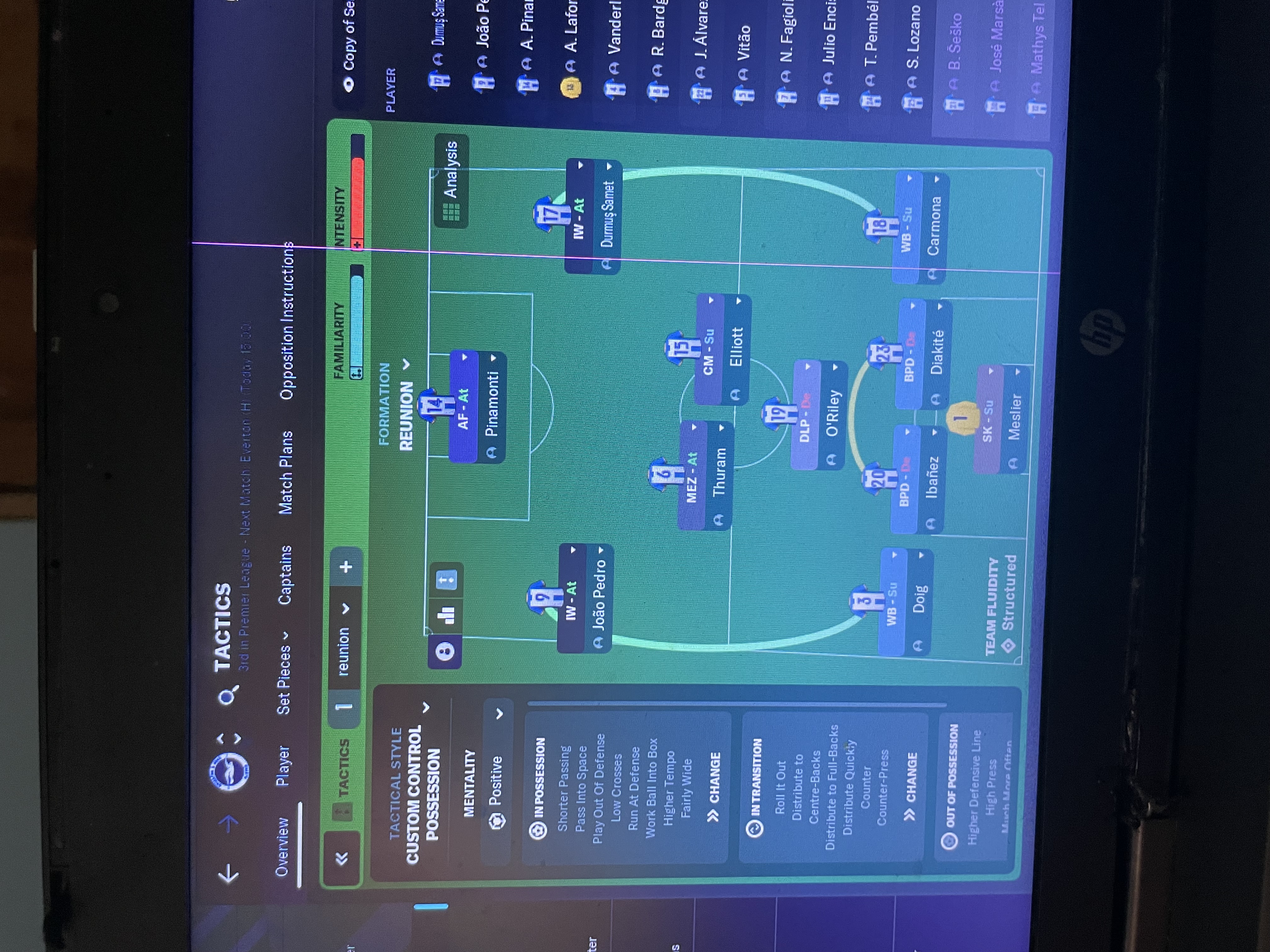
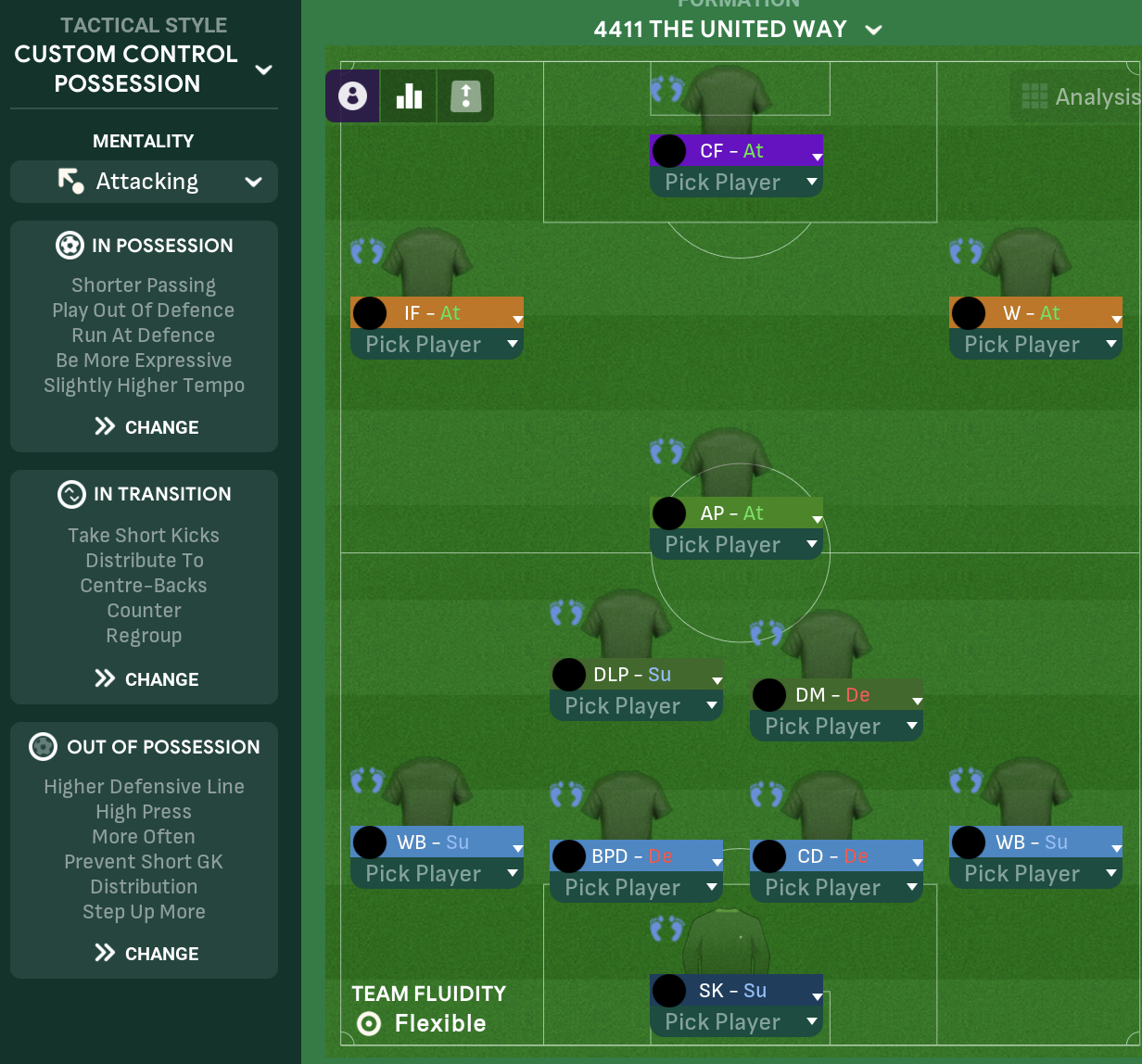
4-3-3
The tactic encourages scoring from central areas, maximizing goal opportunities in the penalty box.
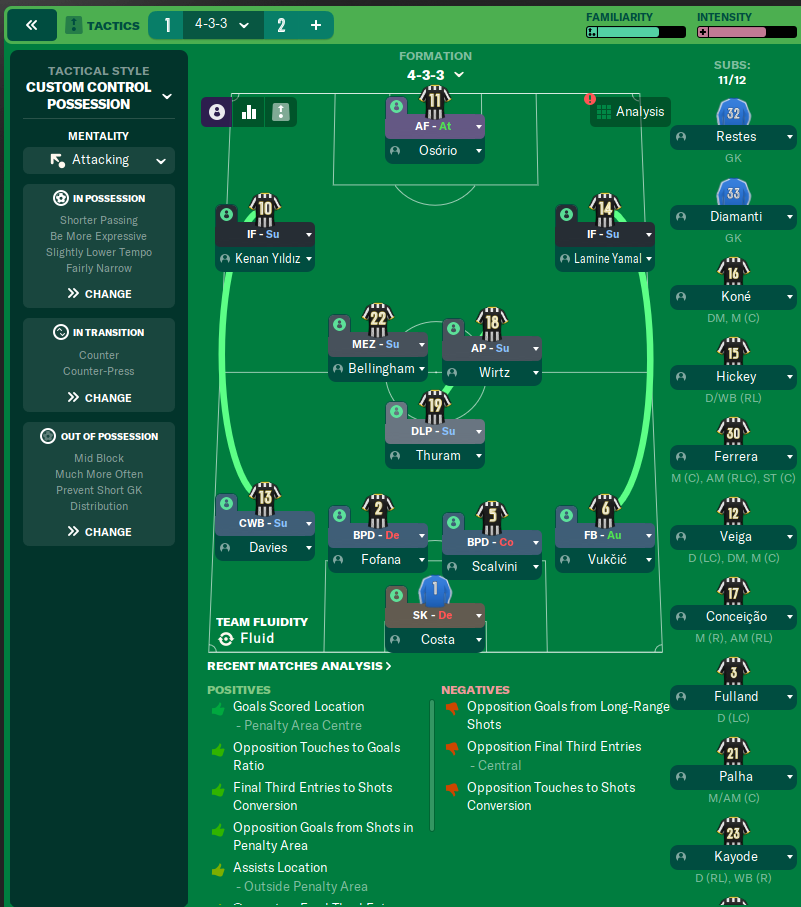
Loading tactical analysis...
Custom Control Possession
Attacking
4-3-3
Fluid
Shorter Passing
Be More Expressive
Slightly Lower Tempo
Fairly Narrow
Counter
Counter-Press
Mid Block
Much More Often Prevent Short GK Distribution
AF
Advanced Forward
Attack
IF
Inside Forward
Support
DLP
Deep-Lying Playmaker
Support
BPD
Ball Playing Defender
Defend
BPD
Ball Playing Defender
Cover
CWB
Complete Wing Back
Support
FB
Full Back
Attack
The tactic encourages scoring from central areas, maximizing goal opportunities in the penalty box.
The team maintains a favorable ratio of touches leading to goal-scoring opportunities, offering consistent attacking options.
The mid block may struggle against highly dynamic or quick-transition teams, leading to gaps in defense.
While focused on counter-pressing, if the team loses possession quickly, it can lead to defensive vulnerabilities, especially against counter-attacks.
How can we protect against quick counter-attacks from the opposition?
Is the attacking tempo optimal for our current player capabilities?
Should we focus more on wing play to leverage our attacking strengths?
How do we better utilize our midfielders' creativity in tight situations?
What adjustments can we make to our formation during high-press encounters?
Are there specific players that can be rotated to maintain squad energy throughout the season?
The tactical theory behind the 4-3-3: roles, instructions, and the trade-offs that decide whether the system holds up.
Master the classic 4-3-3: player roles, tactical variations, and the trade-offs that decide whether it sings or stalls.
Holder, runner, creator: the role distribution rule for three-man midfields, the AMC variants, and the antipatterns that break them.
How Mentality, Duty, and Role interact in FM, why duty trumps mentality every time, and the role-on-top-of-duty composition rules.