Uploaded Tactic
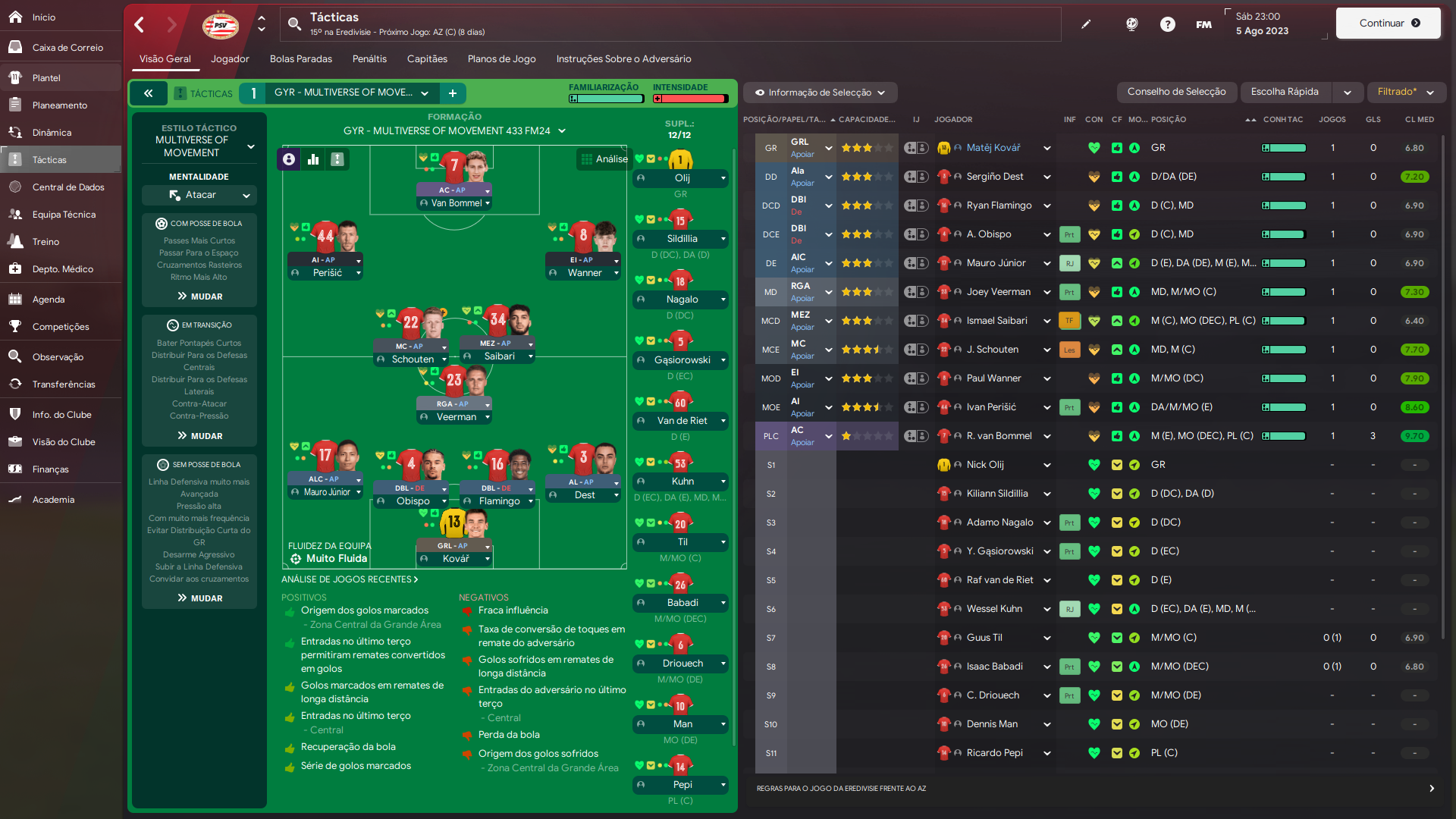
Formation & Style
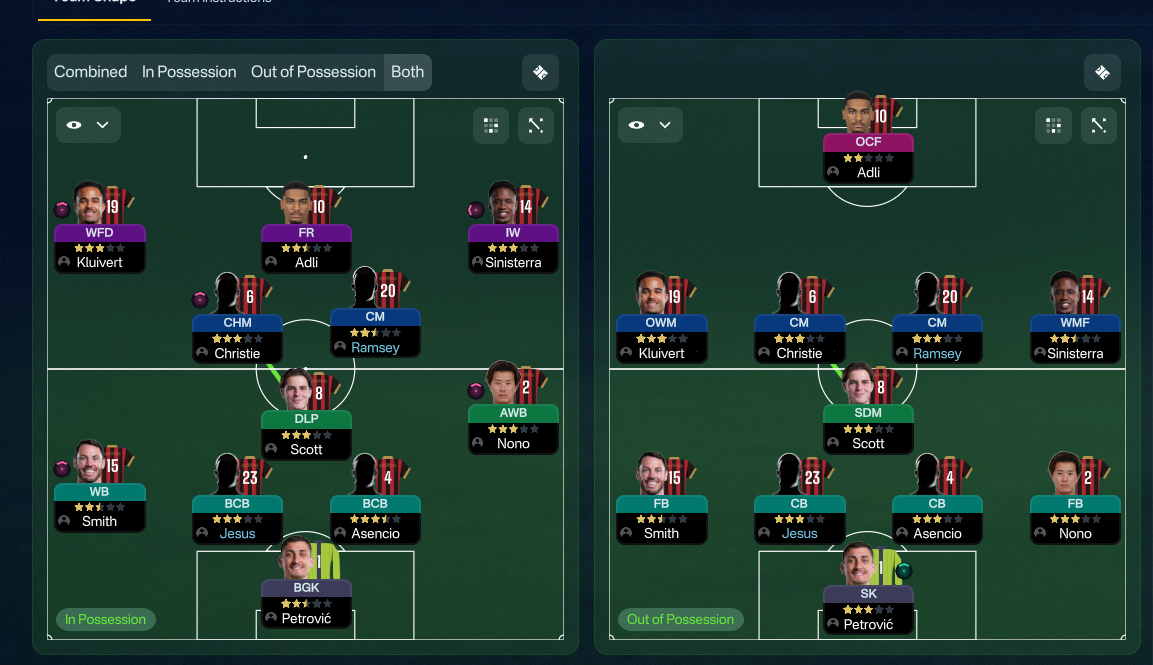
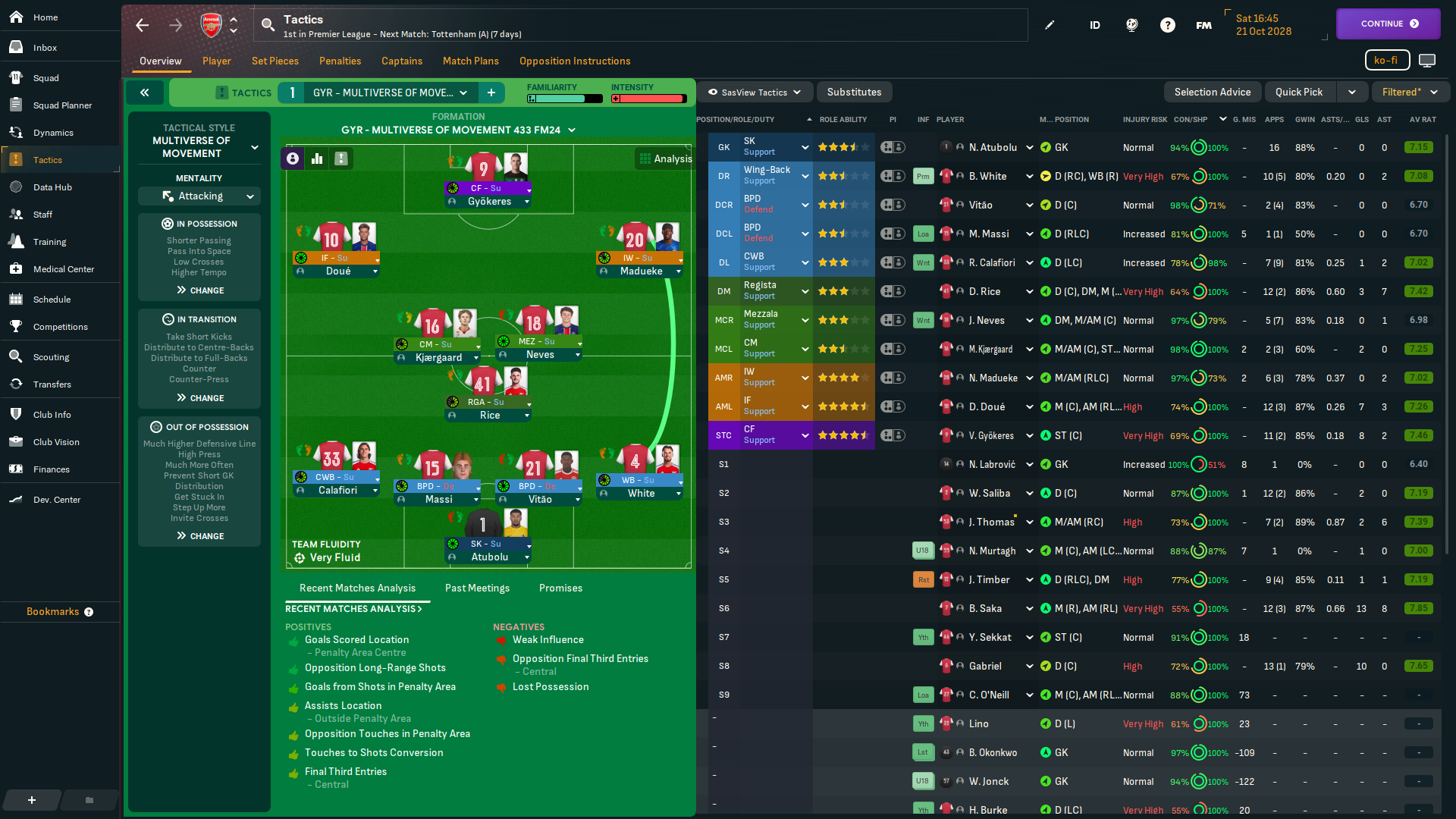
Tactical Style:Multiverse of Movement
Mentality:Attacking
Formation:4-3-3
Team Fluidity:Very Fluid
In Possession
Shorter Passing
Pass Into Space
Working Ball Into Box
Higher Tempo
In Transition
Counter-Press
Distribute To Full-Backs
Counter
Out of Possession
Higher Defensive Line
More Urgent Pressing
Prevent Short GK Distribution
Team Shape Without Ball
Shape:Compact
Description:The team maintains a compact shape to limit opposition access in central areas.
Evidence:Higher Defensive Line setup encourages this structure.
Team Shape With Ball
Shape:Fluid and Wide
Description:Attacking players spread wide and create overloads in key areas.
Evidence:Utilization of Inside Forwards and Wing-Backs for width.
Phase Description
Attacking Play
Utilizing width through wing-backs and creative midfielders to create goal-scoring opportunities.
Defensive Transition
Quick transition to pressing following lost possession.
Main Focus
Maintaining control through fluid passing and exploiting gaps in opponent's defenses.
Key Strengths
Dynamic Midfield
A combination of a Deep-Lying Playmaker, Mezzala, and Roaming Playmaker allows for creativity.
Width in Attack
Wing-backs provide width, stretching the opponent's defense and allowing space for attacks.
High Pressing Intensity
Team commands pressing style to regain possession quickly.
Conflicting Directions
Lack of Defensive Stability
High line and aggressive pressing might leave defense exposed. Opponents could exploit through balls.
Dependency on Wing-Backs
Reliance on wing-backs for width can backfire if they are pinned back.
Inconsistent Finishing
Attackers must maintain high conversion rates, as team does not have many players in the box.
Tactical Suggestions
Adjust Defensive Line
Consider lowering the defensive line to reduce vulnerability to counters.
Reassess Wing-Back Roles
Consider mixing roles between Defensive and Attacking duties to maintain balance.
Improve Transition Drills
Focus on training pressing and transition phases to regain possession efficiently.
Ask Questions About Your Lineup
Related Tactics
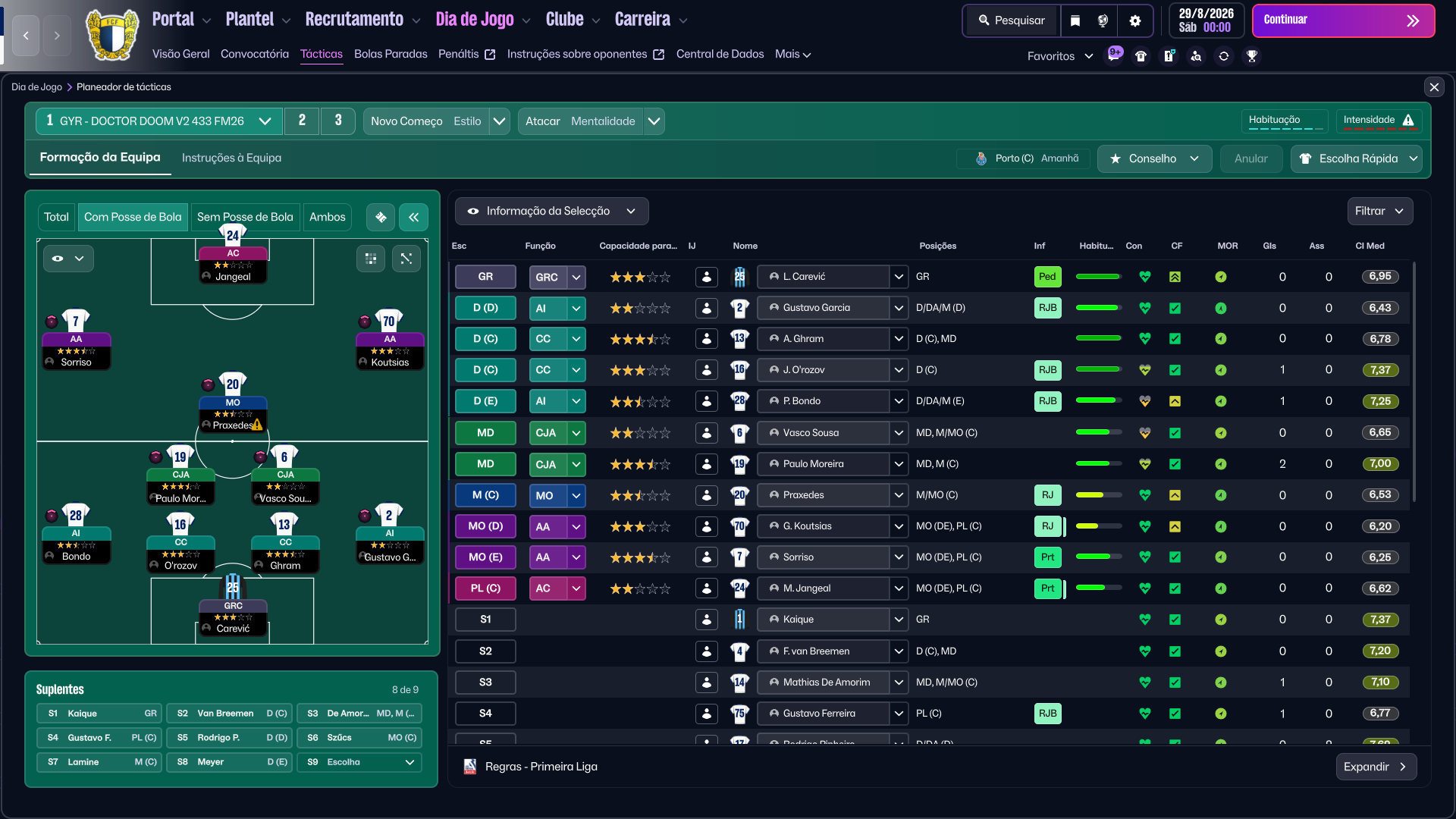
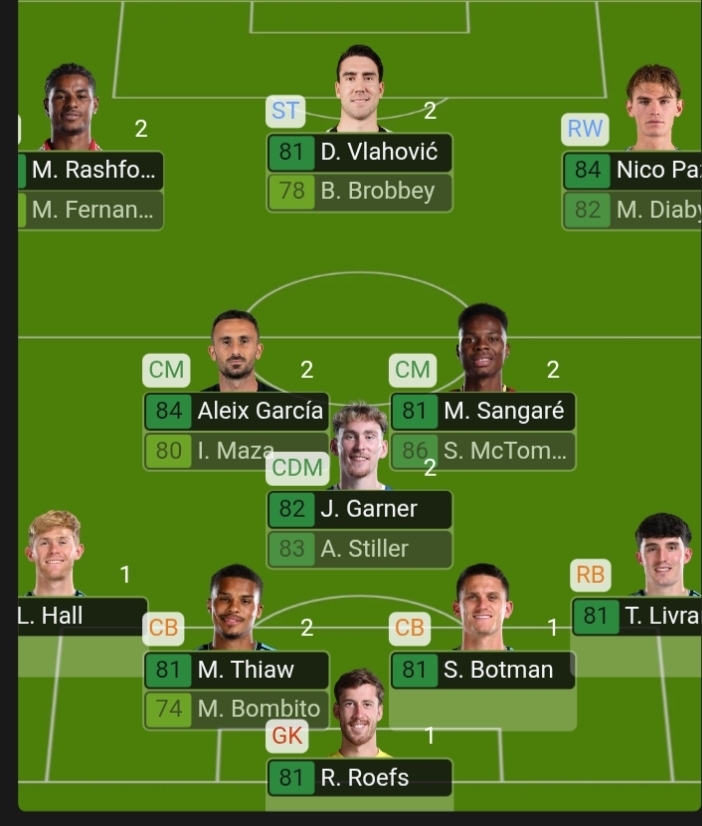
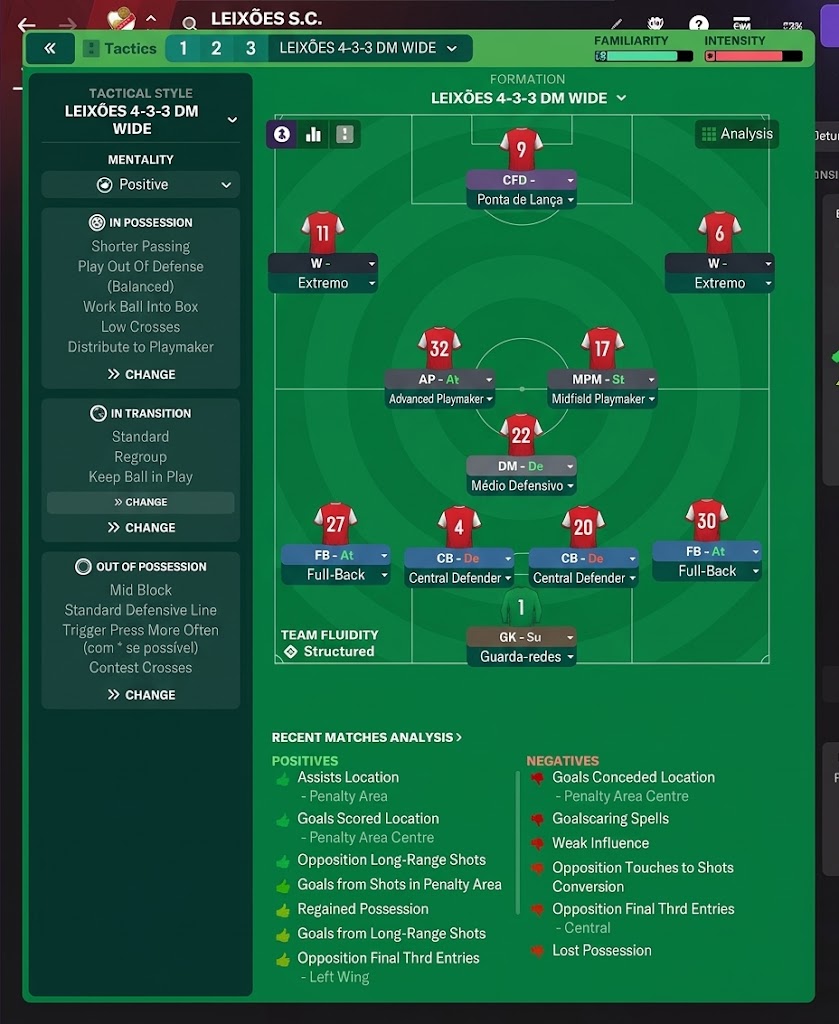
More Multiverse of Movement tactics
Guides for this formation
The tactical theory behind the 4-3-3: roles, instructions, and the trade-offs that decide whether the system holds up.
Foundations
Understanding the 4-3-3 Formation
Master the classic 4-3-3: player roles, tactical variations, and the trade-offs that decide whether it sings or stalls.
Read guide
Player pairings
Midfield Trios
Holder, runner, creator: the role distribution rule for three-man midfields, the AMC variants, and the antipatterns that break them.
Read guide
Playing styles
Gegenpressing: A Full Guide
Klopp-style gegenpressing in FM, including squad profile, line-and-press pairing, sustainable workload, and the antipatterns to avoid.
Read guide