Formation & Style
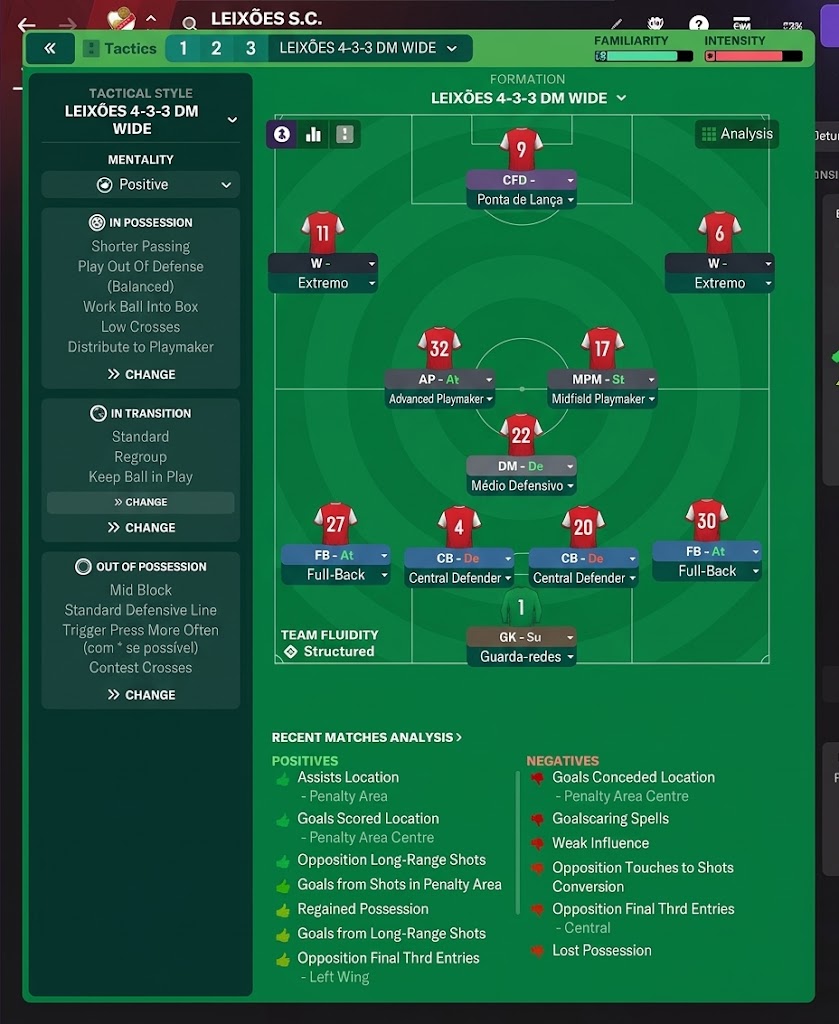
Tactical Style:Custom
Mentality:Positive
Formation:4-3-3
Team Fluidity:Structured
In Possession
Much More Direct Passing
Play Out Of Defence
Hit Early Crosses
Be More Expressive
Fairly Wide
In Transition
Distribute Over Opposition Defence
Distribute Quickly
Counter
Counter-Press
Out of Possession
Mid Block
Much More Often
Prevent Short GK Distribution
Step Up More
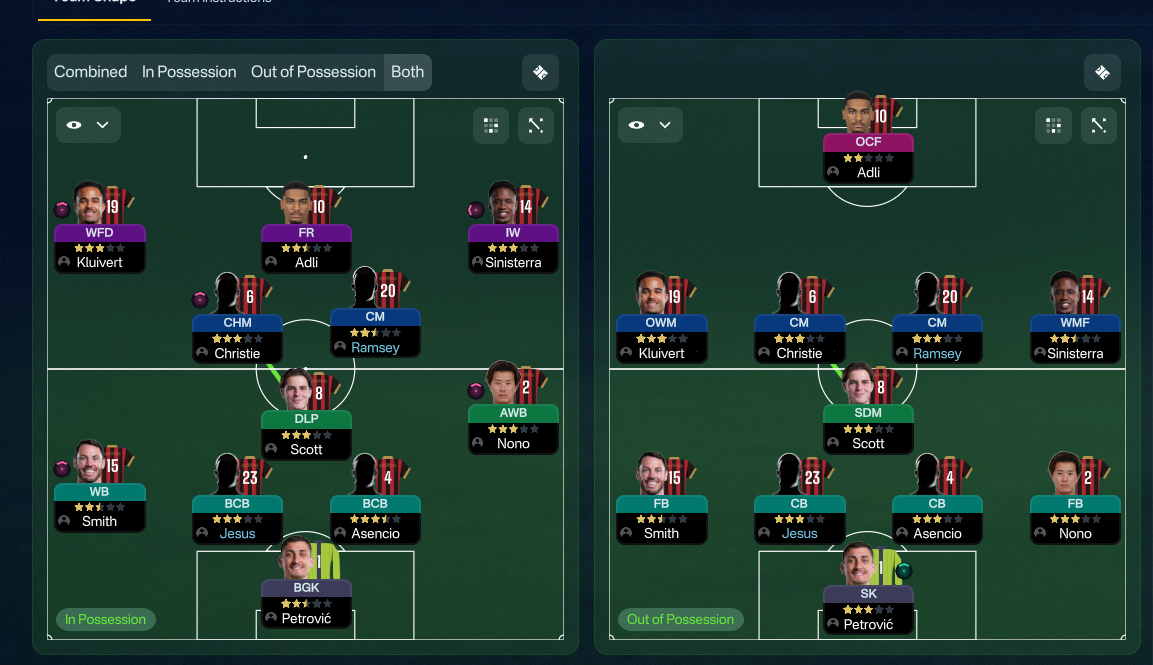
Team Shape Without Ball
No team shape without ball data available
Team Shape With Ball
No team shape with ball data available
Key Strengths
Direct Attack
The tactic's direct passing and early crosses can catch defenses off guard, creating quick scoring opportunities.
Vertical Compactness
Structured team fluidity ensures balanced and organized transitions, maintaining shape during quick counters.
Counter-Press Efficiency
The counter-press strategy helps regain possession quickly, especially in a positive mindset.
Fast Transitions
Quick distribution from the goalkeeper and transition strategies facilitate fast attacks after gaining possession.
Conflicting Directions
High Pressing Opponents
Teams that press aggressively might exploit spaces vacated by advanced wing-backs and midfielders.
Compact Defenses
Direct play and early crosses may falter against teams that sit deep and defend compactly.
Tactical Suggestions
Defensive Midfielder Addition
Consider adding a defensive midfielder to provide extra cover for the defense.
Role Variety in Attack
Introduce varied attacking roles to diversify offensive threat and avoid predictability.
Ask Questions About Your Lineup
Related Tactics
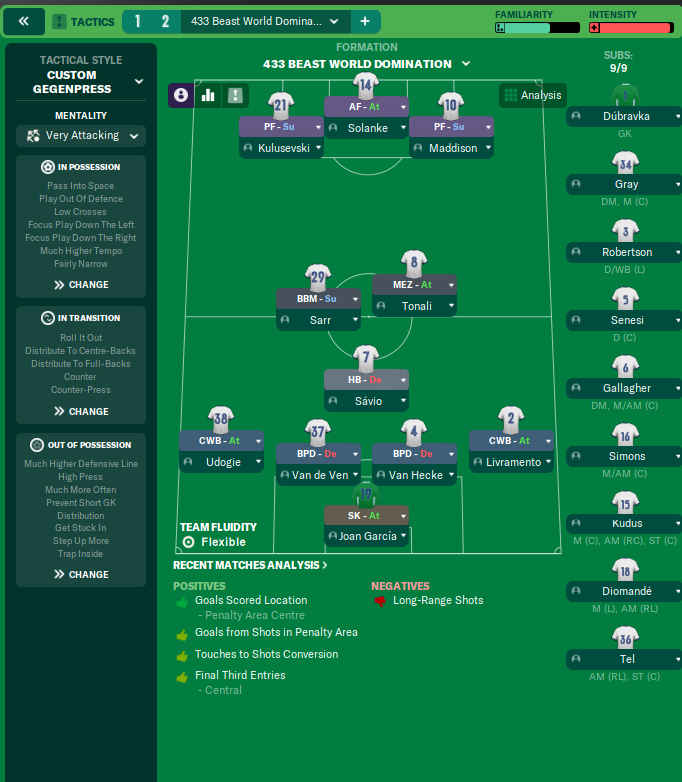
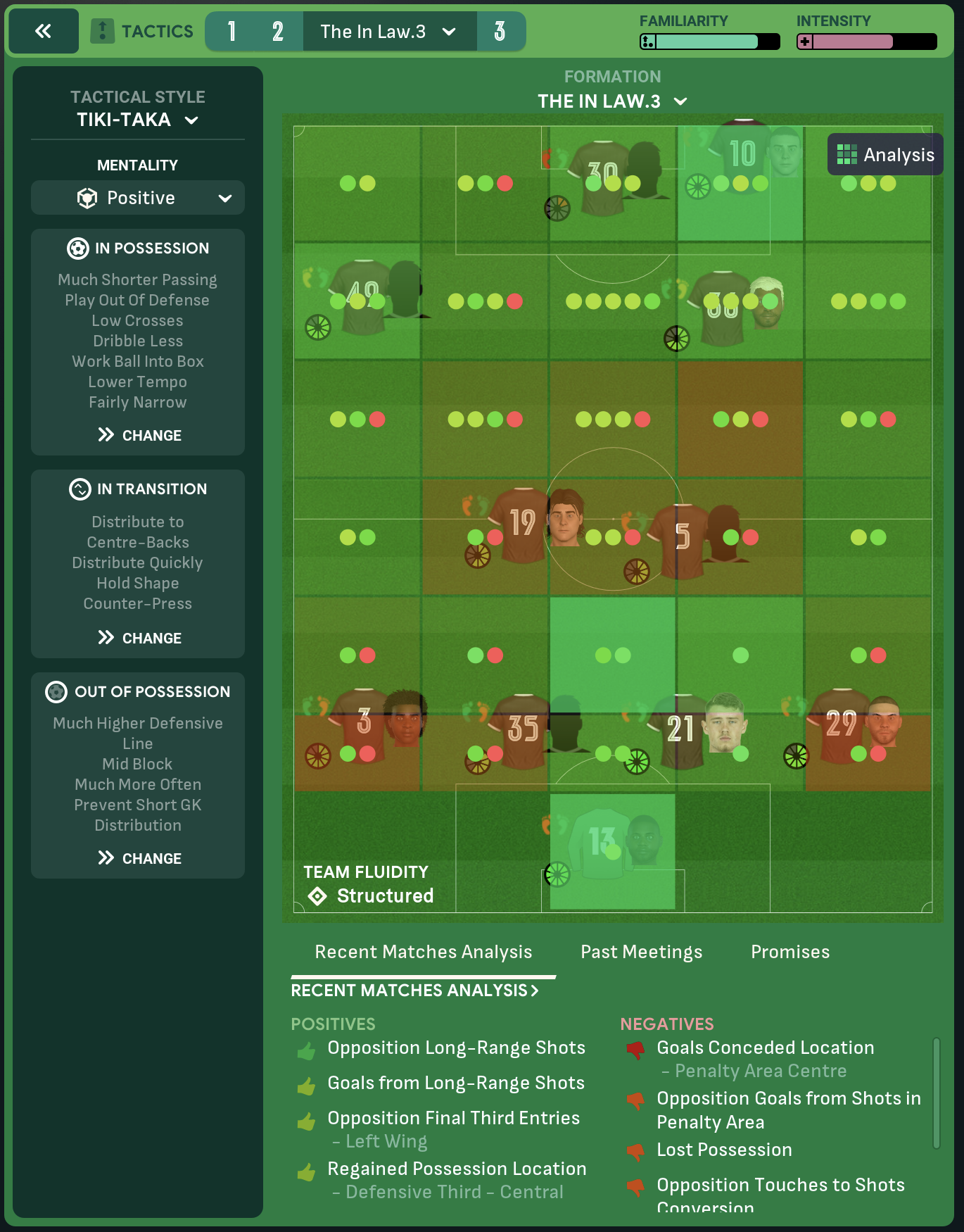
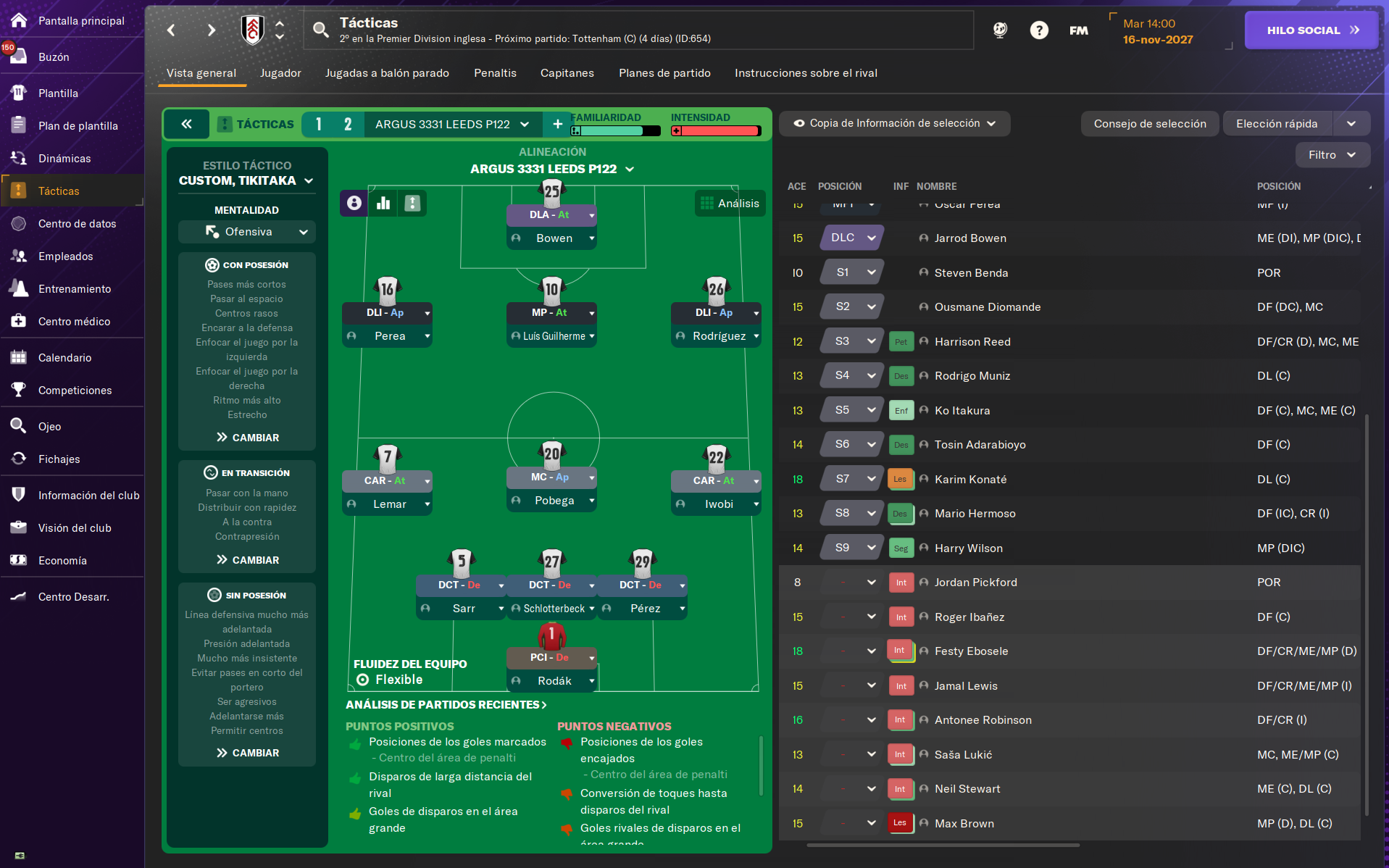
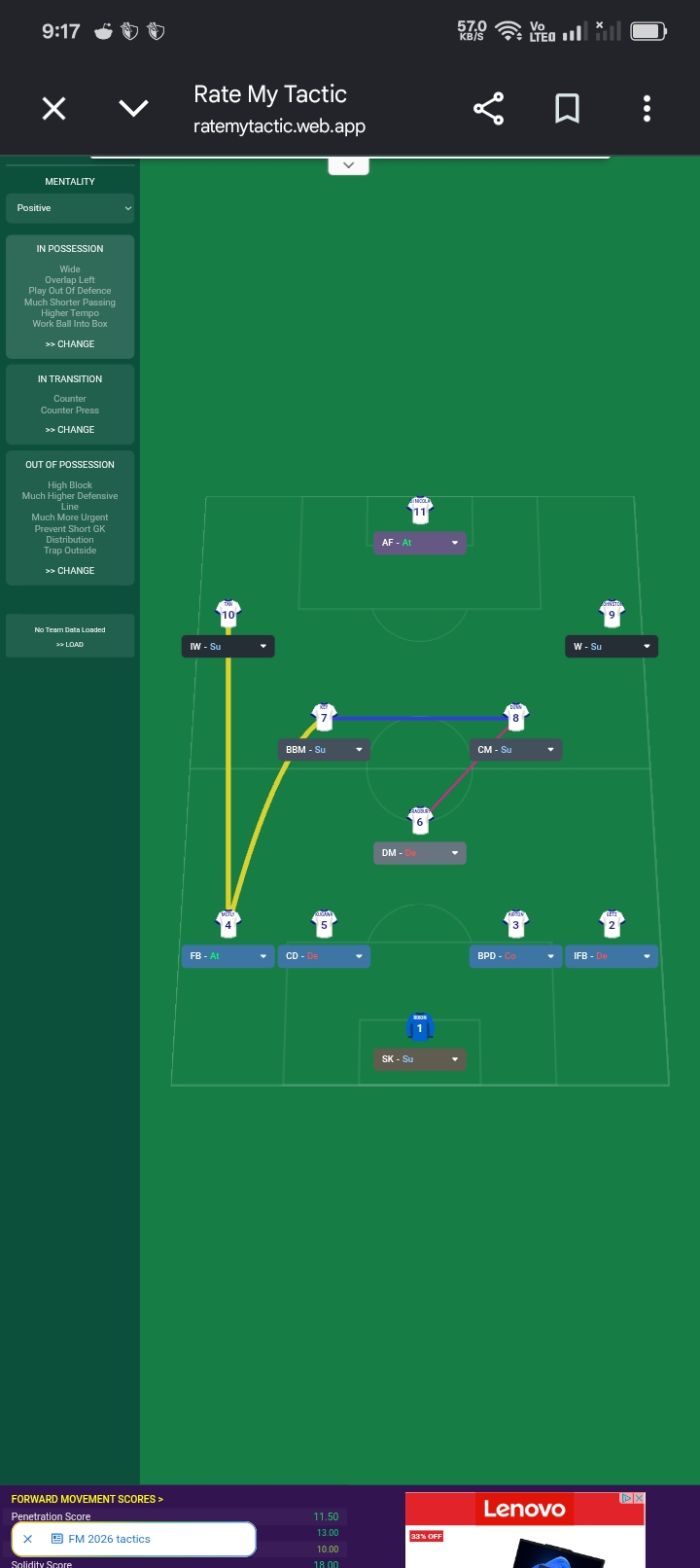
Guides for this formation
The tactical theory behind the 4-3-3: roles, instructions, and the trade-offs that decide whether the system holds up.
Foundations
Understanding the 4-3-3 Formation
Master the classic 4-3-3: player roles, tactical variations, and the trade-offs that decide whether it sings or stalls.
Read guide
Player pairings
Midfield Trios
Holder, runner, creator: the role distribution rule for three-man midfields, the AMC variants, and the antipatterns that break them.
Read guide
Playing styles
Gegenpressing: A Full Guide
Klopp-style gegenpressing in FM, including squad profile, line-and-press pairing, sustainable workload, and the antipatterns to avoid.
Read guide