Uploaded Tactic
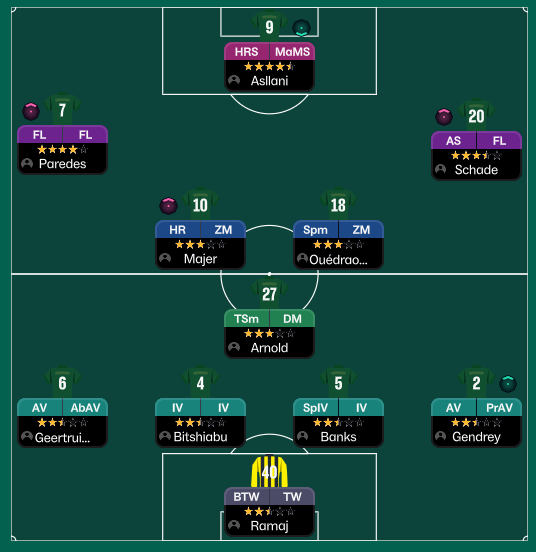
Formation & Style
Tactical Style:Control Possession
Mentality:Positive
Formation:4-3-3
Team Fluidity:Balanced
In Possession
Shorter Passing
Work Ball Into Box
Mixed Attack
In Transition
Counter-Press
Counter
Out of Possession
Higher Defensive Line
Prevent Short GK Distribution
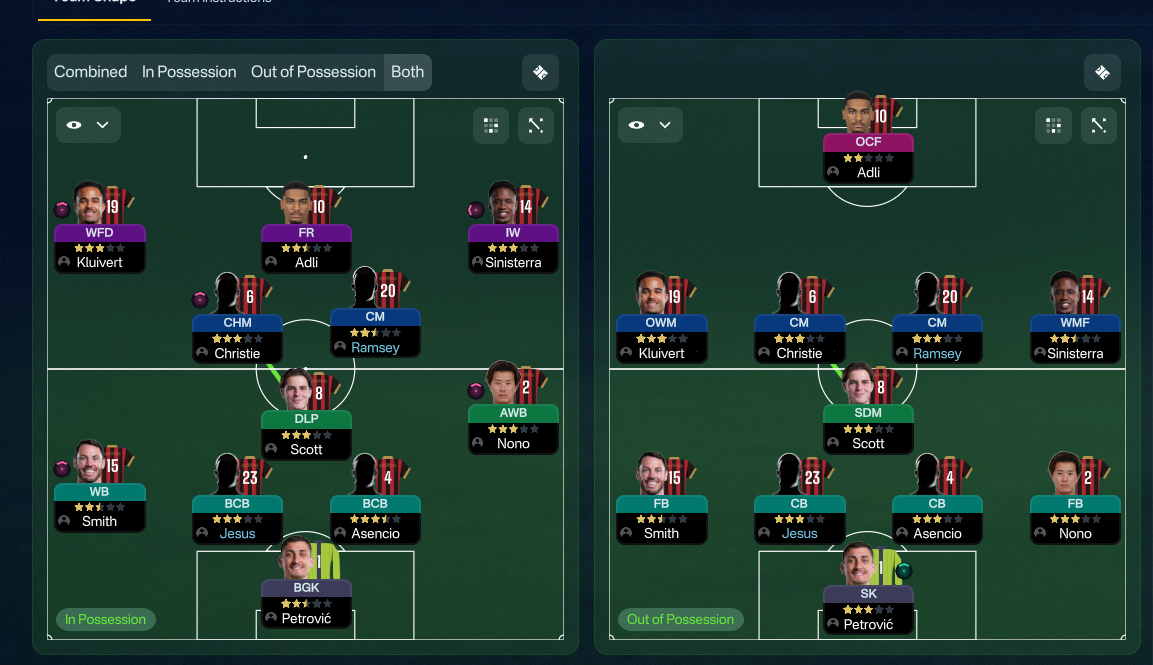
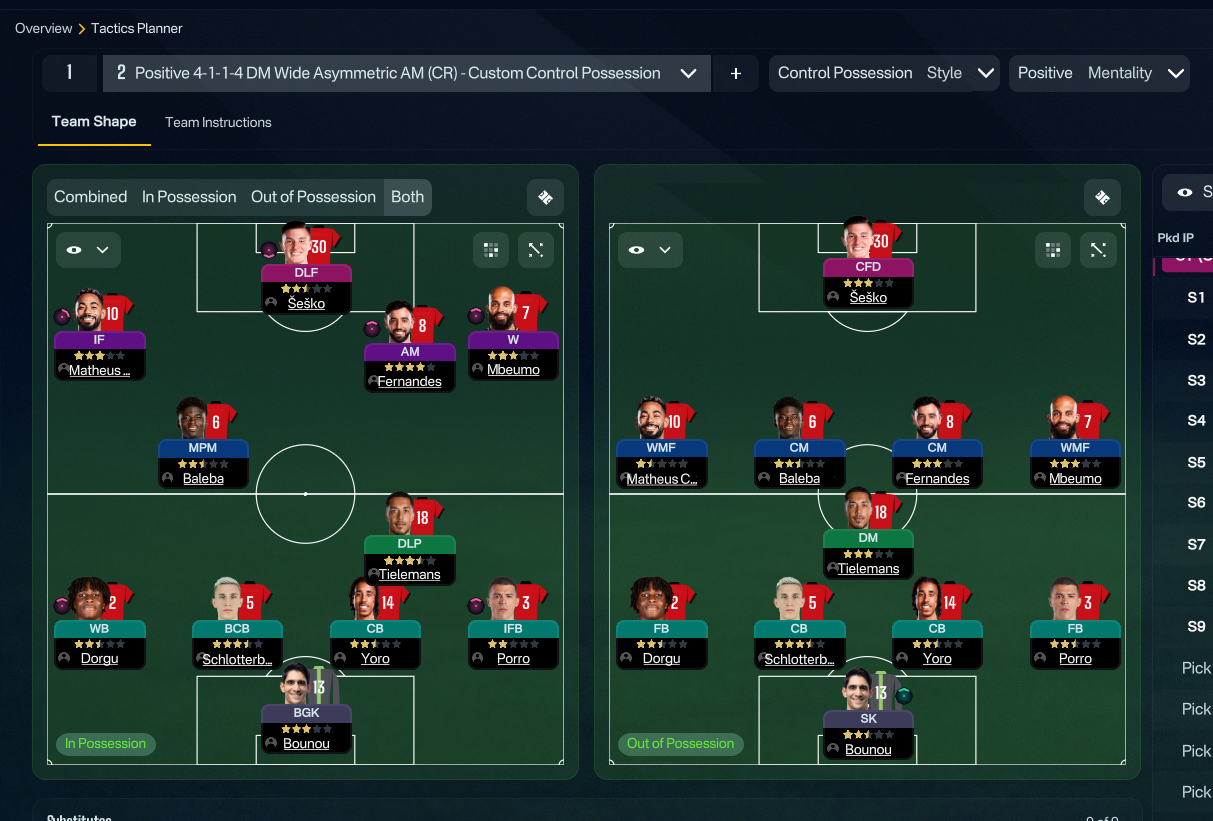
Team Shape Without Ball
Shape:4-1-4-1
Description:A solid shape allowing for defensive organization, with a dedicated player in the DM role to shield the backline.
Evidence:DM (Segundo Volante) at [3,3] supports the back four by providing an additional layer of defense.
Team Shape With Ball
Shape:4-3-3
Description:The attack maintains width with wingers and a central striker, creating space for midfielders to support the offensive transition.
Evidence:Winger (Support) at [6,2] and Inside Forward (Attack) at [6,4] combine with the ST (Advanced Forward) at [6,3].
Phase Description
Attacking Play
The team focuses on maintaining possession through short passes, utilizing the creativity of the advanced playmaker to unlock defenses.
Defensive Transition
The team employs a counter-pressing strategy to regain possession quickly when the ball is lost, transitioning swiftly into attack.
Main Focus
Dominate ball possession while creating goal-scoring opportunities through tactical flexibility.
Key Strengths
Fluid Midfield Dynamics
The combination of Advanced Playmaker and Deep-Lying Playmaker allows for creative depth and flexibility in the midfield.
Versatile Forward Threat
The presence of both an Inside Forward and a Winger provides dynamic attacking options on both flanks.
Solid Defensive Structure
A mix of defender roles providing both stability in defense and options for initiating attacks.
Conflicting Directions
Over-Reliance on Wing Play
While flanks are utilized, it may lead to predictability and potential exploitation of central areas.
Lack of Defensive Cover
The attacking mindset of the wingers can leave the full-backs exposed on the break.
Vulnerability on Transition
Counter-pressing strategy could be risky if players are caught out of position during offensive phases.
Tactical Suggestions
Adjust Midfield Roles
Consider modifying the roles of midfielders to enhance defensive stability while maintaining creativity.
Broaden Tactical Options
Introducing variations in attacking plays to avoid over-reliance on the wings.
Increase Compactness
A more compact defensive shape can prevent teams from exploiting spaces in behind.
Ask Questions About Your Lineup
Related Tactics
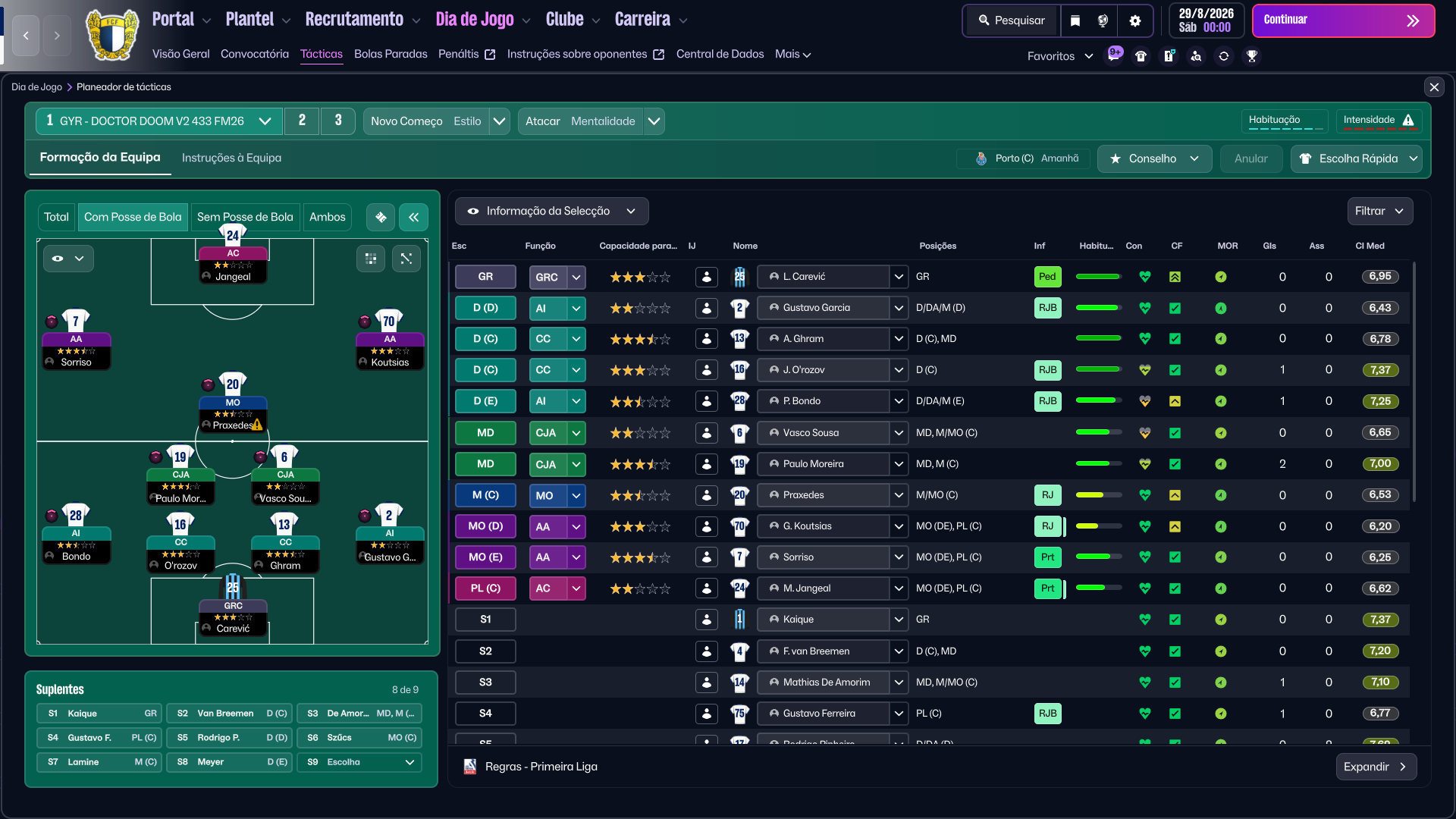
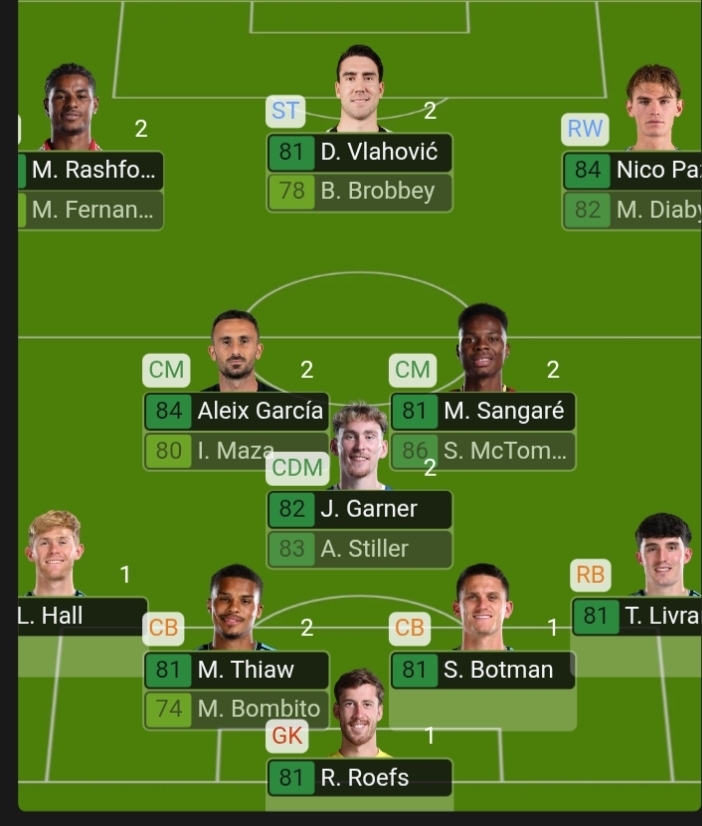
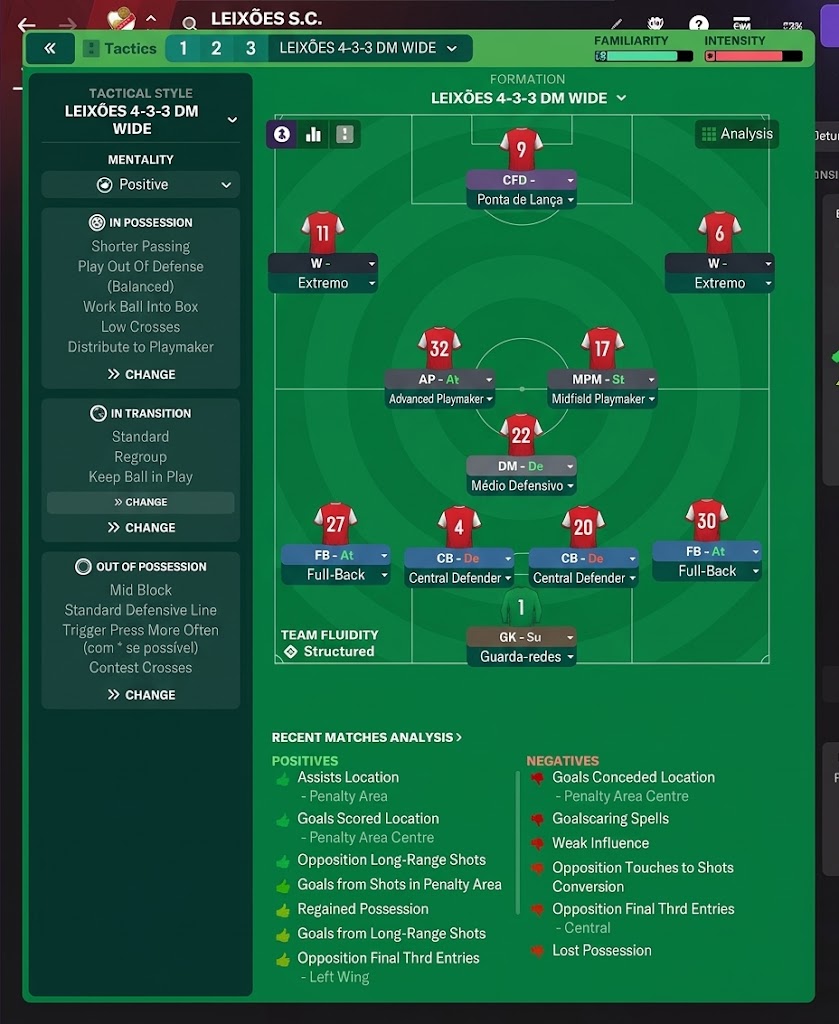
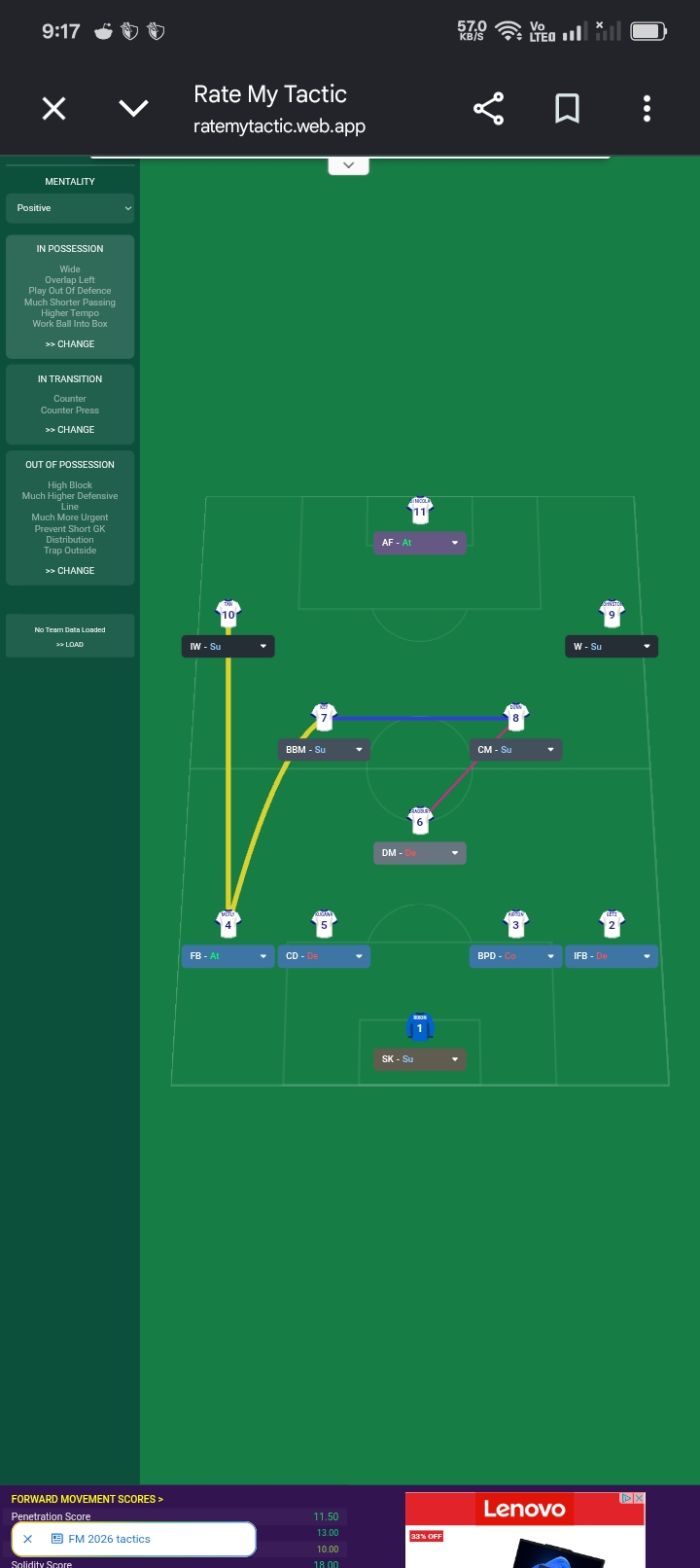
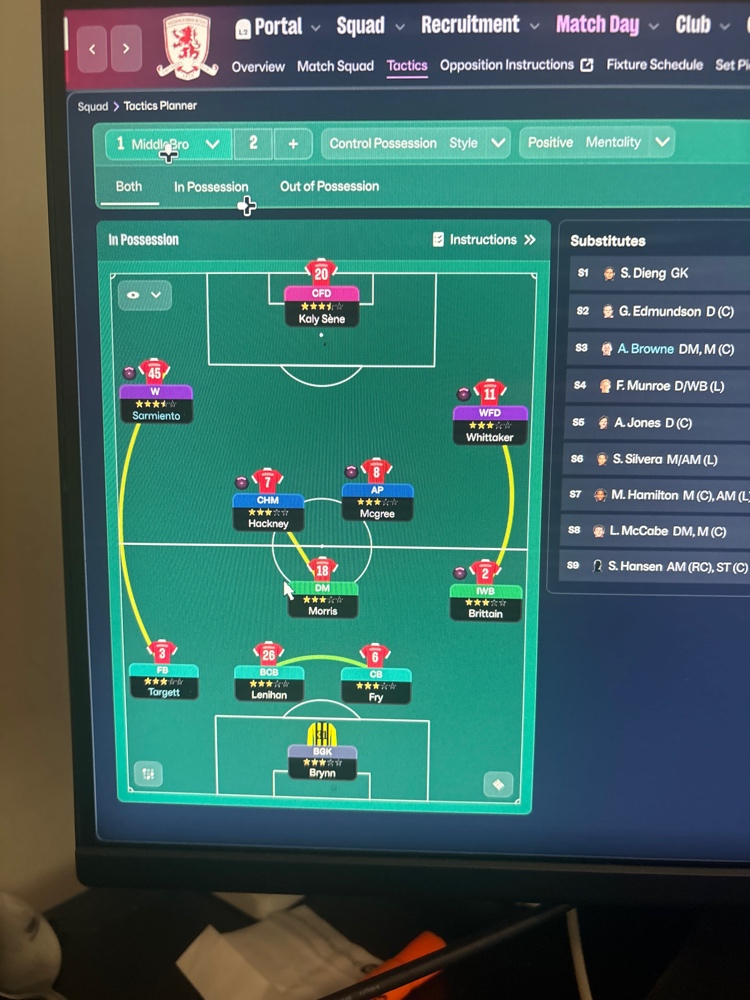
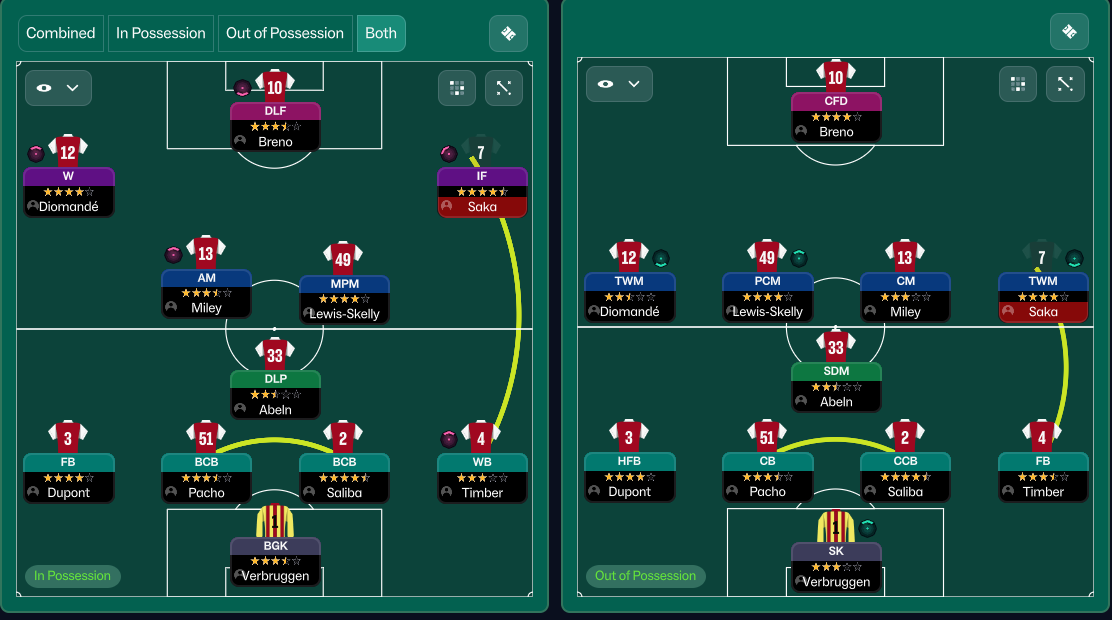
More Control Possession tactics
Guides for this formation
The tactical theory behind the 4-3-3: roles, instructions, and the trade-offs that decide whether the system holds up.
Foundations
Understanding the 4-3-3 Formation
Master the classic 4-3-3: player roles, tactical variations, and the trade-offs that decide whether it sings or stalls.
Read guide
Player pairings
Midfield Trios
Holder, runner, creator: the role distribution rule for three-man midfields, the AMC variants, and the antipatterns that break them.
Read guide
Playing styles
Gegenpressing: A Full Guide
Klopp-style gegenpressing in FM, including squad profile, line-and-press pairing, sustainable workload, and the antipatterns to avoid.
Read guide