Uploaded Tactic
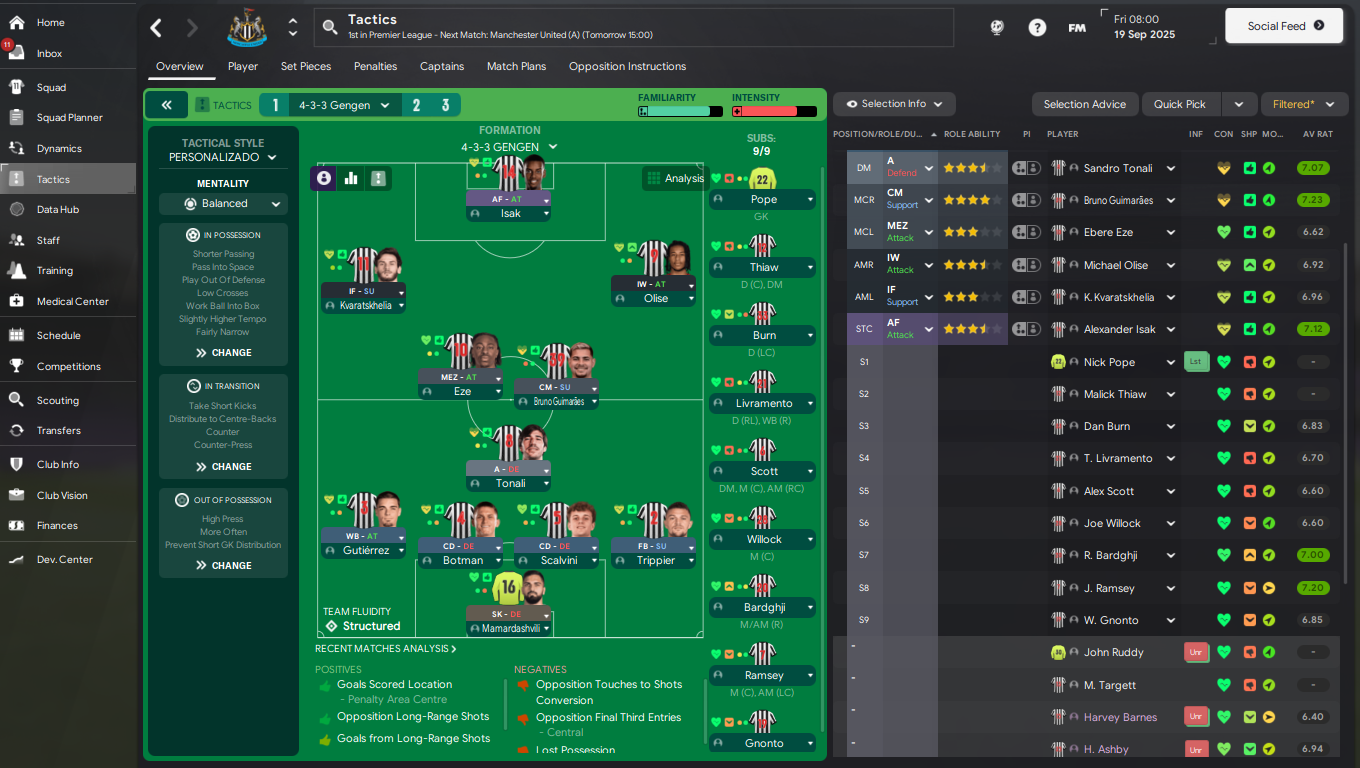
Formation & Style
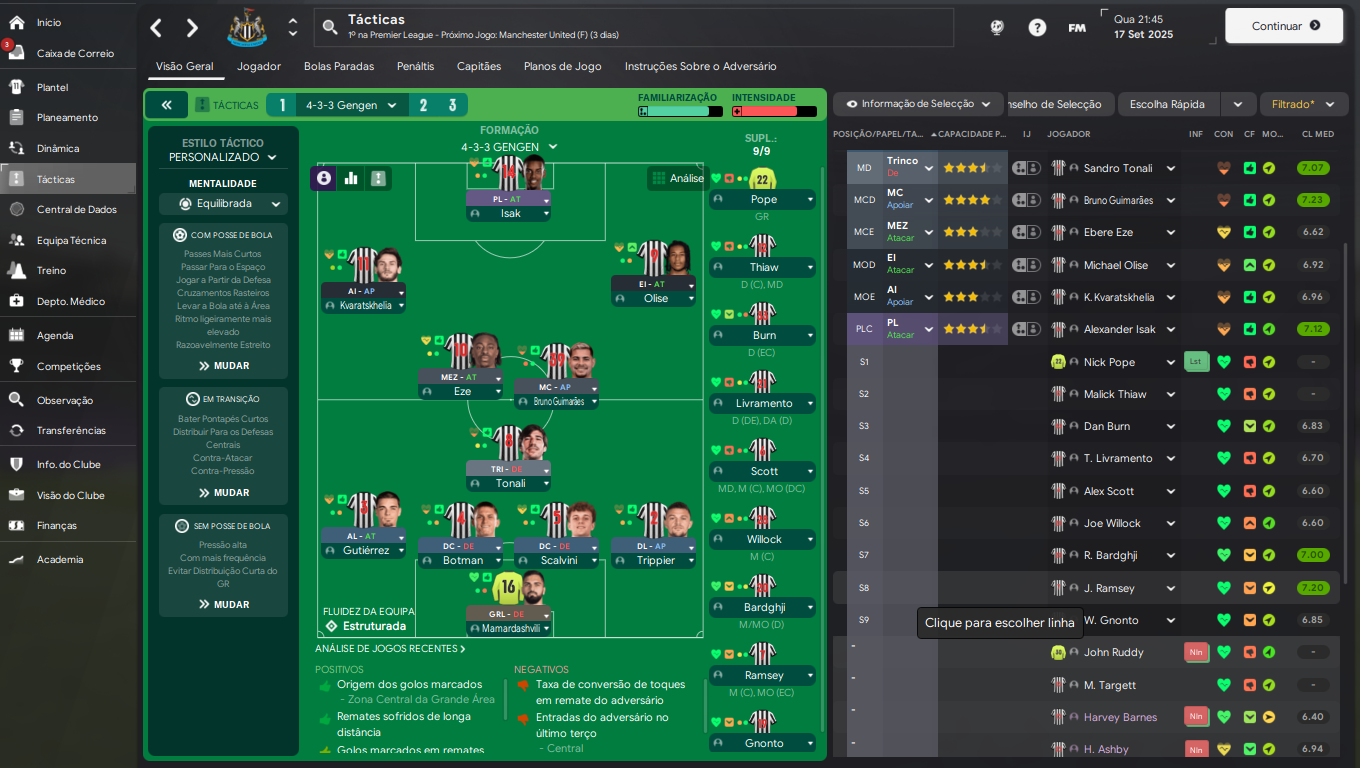
Tactical Style:Gengen
Mentality:Balanced
Formation:4-3-3
Team Fluidity:Structured
In Possession
Shorter Passing
Pass Into Space
Play Out Of Defense
Low Crosses
Work Ball Into Box
Slightly Higher Tempo
Fairly Narrow
In Transition
Take Short Kicks
Distribute to Centre-Backs
Counter
Counter-Press
Out of Possession
High Press
More Often Prevent Short GK Distribution
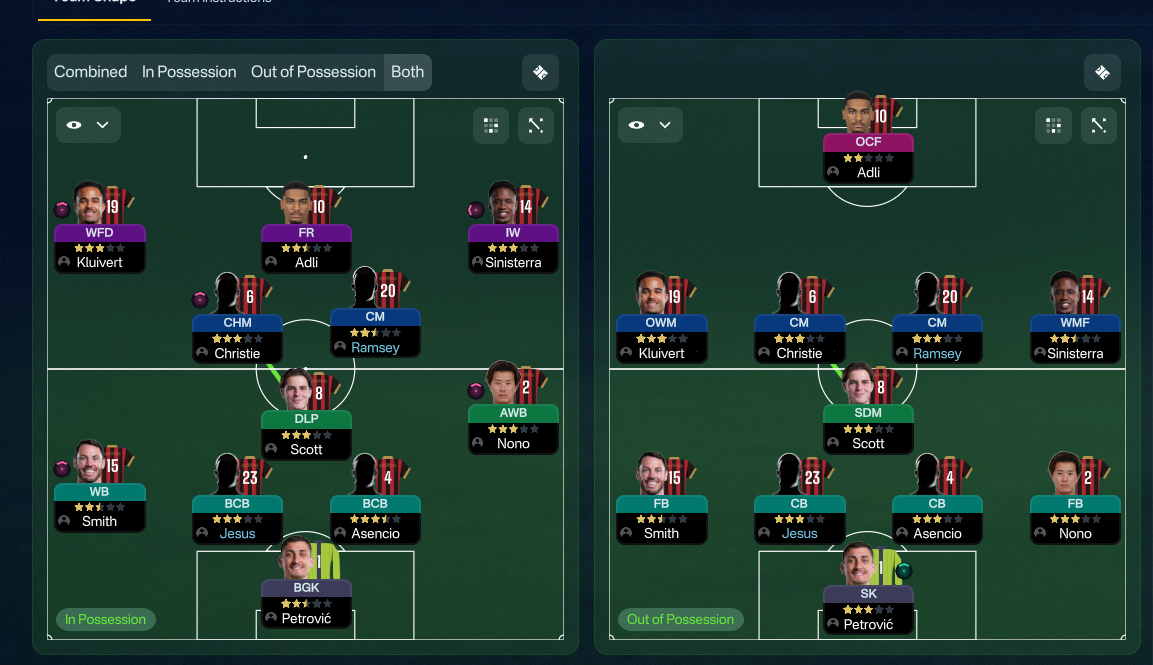
Team Shape Without Ball
Shape:4-1-2-3
Description:The team maintains a compact defensive shape with an anchor in front of the defense.
Evidence:The Anchor role at DM helps shield the back four, providing defensive stability (DM-A at [3,3]).
Team Shape With Ball
Shape:4-3-3
Description:Utilizes inside forwards to create space for the advancing wing back and play through the middle with a Mezzala.
Evidence:The Mezzala (MEZ-A at [4,3]) supports attacks by making runs into the box while maintaining midfield control.
Phase Description
Attacking Play
The team focuses on creating opportunities through shorter, deliberate passing and exploiting spaces with high tempo and width from inside forwards.
Defensive Transition
Quickly recover possession by applying a high press and counter-pressing once possession is lost.
Main Focus
To maintain a high-energy game, creating goal-scoring chances through movement and width in attacking areas.
Key Strengths
Dynamic Attacking Width
Utilizing two inside forwards allows the team to stretch defenses and create space.
Ball Retention and Build-Up
Shorter passing and working the ball into the box enable better control from the midfield.
High Pressing Game
A high press helps regain possession quickly after losing the ball.
Conflicting Directions
Overreliance on Inside Forwards
This setup may become predictable if the inside forwards are marked or subdued.
Potential Vulnerability to Counterattacks
The high pressing approach can expose gaps behind the backline if possession is lost.
Pressure on Midfielders
The CM-S must balance between supporting attacks and covering defensively.
Tactical Suggestions
Consider Tactical Flexibility
Implement a Plan B if the inside forwards are effectively eliminated from the game.
Improve Defensive Cohesion
Strengthen the communication between the backline and the anchoring midfielder.
Utilize Set-Piece Strategies
Capitalize on set pieces, especially with tall players in the box.
Ask Questions About Your Lineup
Related Tactics
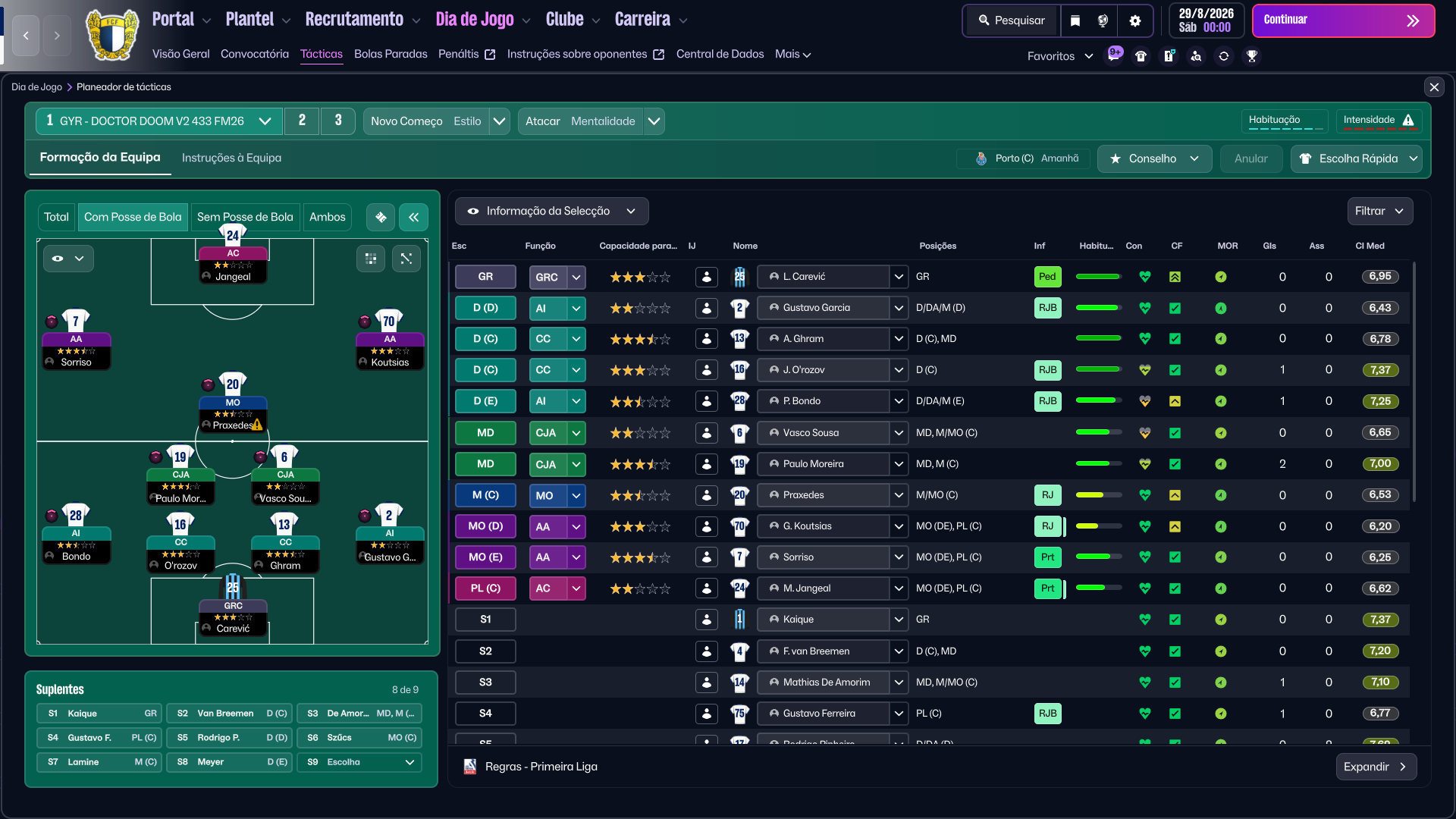
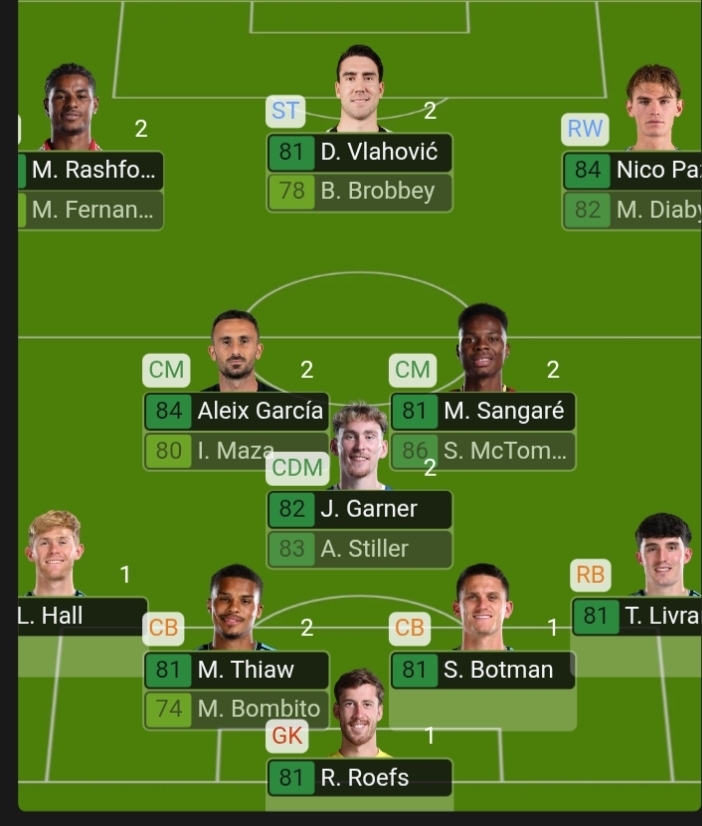
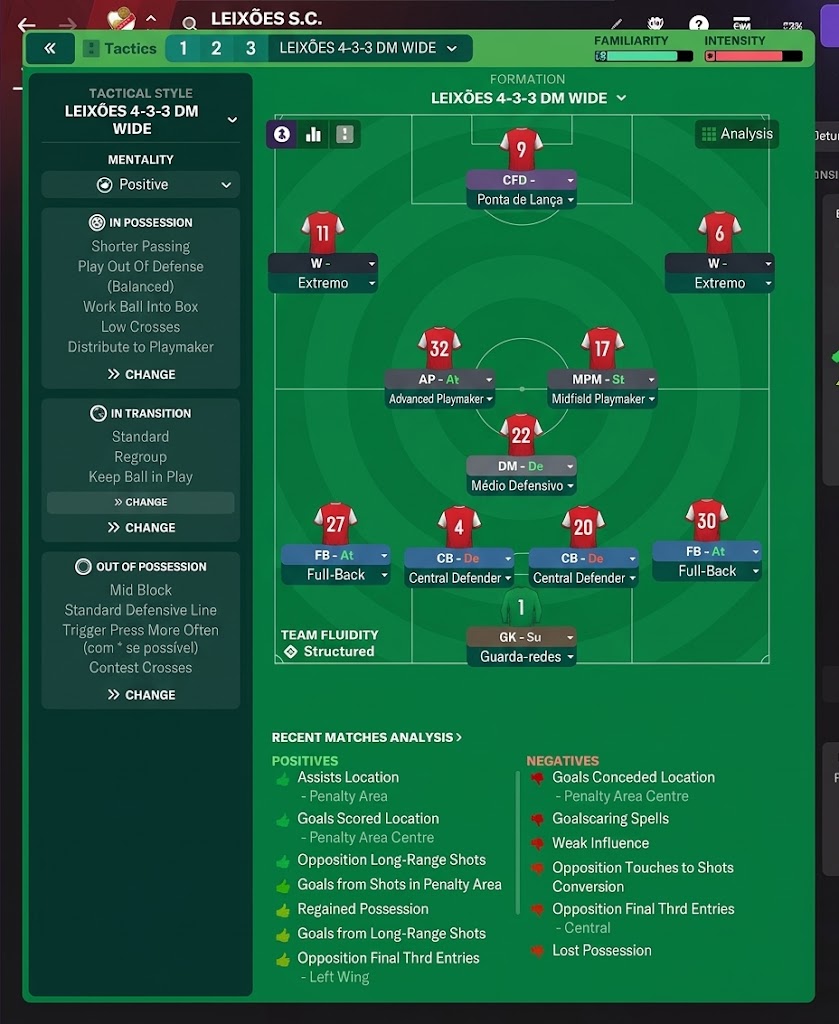
More Gengen tactics
Guides for this formation
The tactical theory behind the 4-3-3: roles, instructions, and the trade-offs that decide whether the system holds up.
Foundations
Understanding the 4-3-3 Formation
Master the classic 4-3-3: player roles, tactical variations, and the trade-offs that decide whether it sings or stalls.
Read guide
Player pairings
Midfield Trios
Holder, runner, creator: the role distribution rule for three-man midfields, the AMC variants, and the antipatterns that break them.
Read guide
Playing styles
Gegenpressing: A Full Guide
Klopp-style gegenpressing in FM, including squad profile, line-and-press pairing, sustainable workload, and the antipatterns to avoid.
Read guide